
Adult Mini Bernedoodle: The Complete Size, Temperament & Care Guide
If you've fallen in love with photos of a fluffy Bernedoodle puppy online, there's one question that probably keeps coming up before you commit:
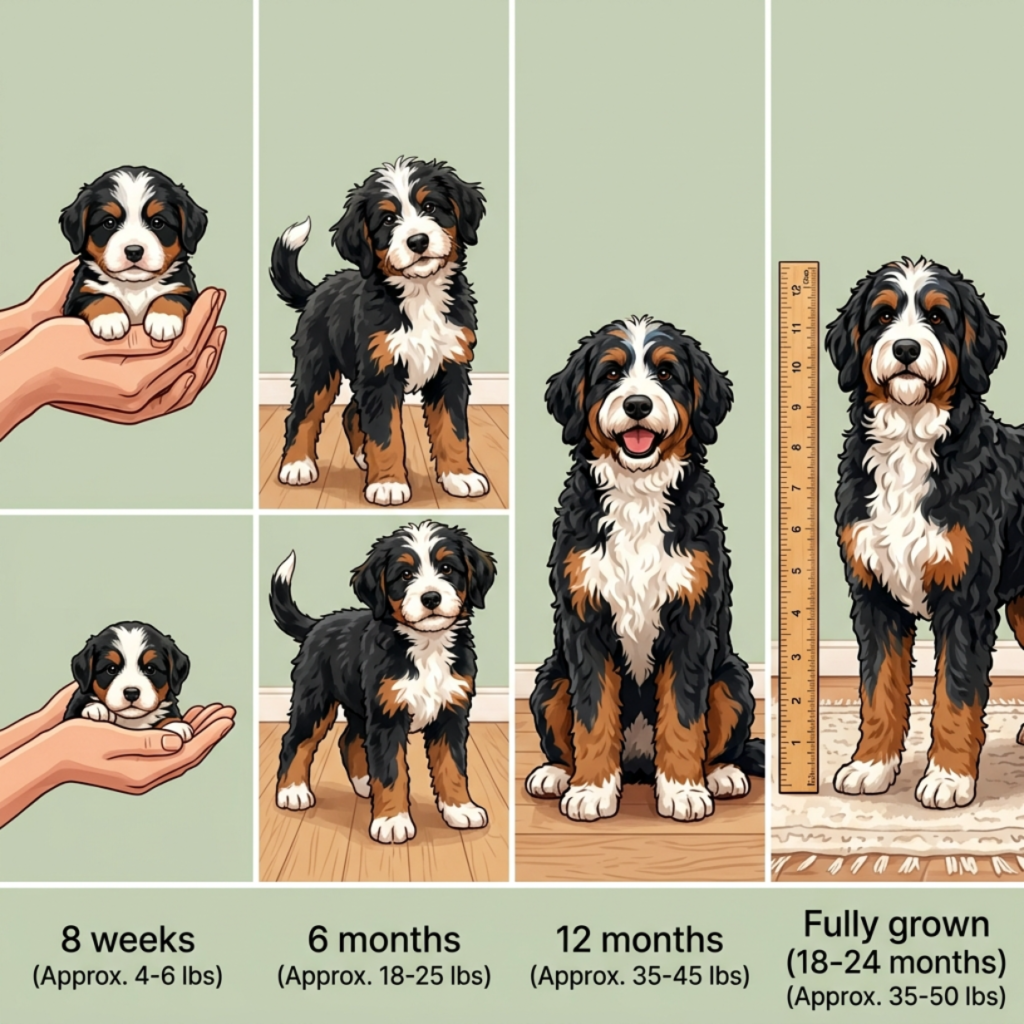
what does an adult mini Bernedoodle actually look like once the puppy fluff is gone? It’s one of the most searched questions among future Bernedoodle owners, and for good reason. Puppies are adorable no matter the breed, but you’re not bringing home a puppy for eight weeks — you’re bringing home a dog for the next twelve to eighteen years.
This guide breaks down everything you need to know about the mini Bernedoodle adult stage: final size, weight, coat changes, temperament shifts, health considerations, and what daily life really looks like once your dog is fully grown. Whether you’re comparing breeders, trying to predict your puppy’s future size, or simply curious about adult mini Bernedoodles before adopting one, you’ll find a clear, honest picture here — not just marketing fluff.
By the end, you’ll understand exactly what to expect from mini Bernedoodle adults, how their size compares to standard and tiny variations, and how to set realistic expectations for grooming, exercise, and lifestyle fit.
Table of Contents
- What Is a Mini Bernedoodle?
- Adult Mini Bernedoodle Size and Weight
- How Long Does It Take to Reach Full Adult Size?
- Mini Bernedoodle Adult Coat: What Changes
- Temperament of Adult Mini Bernedoodles
- Health and Lifespan in Adulthood
- Exercise and Activity Needs for Adults
- Grooming Requirements for Mini Bernedoodle Adults
- Nutrition and Feeding for Adult Dogs
- Mini vs. Standard vs. Tiny Bernedoodle: Adult Comparison
- Living with an Adult Mini Bernedoodle: Daily Life
- How to Predict Your Puppy’s Adult Size
- Choosing a Reputable Breeder
- FAQ: Adult Mini Bernedoodle Questions Answered
- Conclusion
What Is a Mini Bernedoodle?
A Mini Bernedoodle is a crossbreed between a Bernese Mountain Dog and a Miniature or Toy Poodle. The goal of this pairing is simple: keep the gentle, affectionate temperament of the Bernese Mountain Dog while reducing its massive size and shedding through the Poodle’s smaller frame and curlier, lower-shedding coat.
Breeders typically achieve “mini” status by using a Mini or Toy Poodle parent rather than a Standard Poodle, which is used for full-sized Standard Bernedoodles. This is why size predictions can vary so much from one litter to the next — genetics from two very differently sized parent breeds don’t always blend evenly.
When people search for mini bernedoodle adult information, they’re usually trying to answer one core question: will this dog stay small enough for my home, lifestyle, and energy level? Understanding the breeding behind the dog is the first step toward answering that.
Generations Matter: F1, F1B, F2, and Multigen
Bernedoodles are also categorized by generation, and this affects both adult size and coat type:
- F1 – First-generation cross (Bernese x Poodle), 50/50 genetics. More variable coat and shedding.
- F1B – Backcrossed to a Poodle (75% Poodle, 25% Bernese). Generally lower-shedding and more predictable curl.
- F2 – Second-generation Bernedoodle x Bernedoodle. More genetic variability.
- Multigen – Several generations of Bernedoodle-to-Bernedoodle breeding, often used to stabilize coat and temperament traits.
Each generation can produce a slightly different adult mini bernedoodle, even within the same litter, which is why reputable breeders track parent and grandparent sizes closely.
Adult Mini Bernedoodle Size and Weight
This is the section most readers are here for, so let’s get straight to the numbers.
A fully grown mini bernedoodle adult size typically falls within these ranges:
- Height: 18 to 22 inches at the shoulder
- Weight: 25 to 49 pounds
- Body type: Sturdy, medium-boned, slightly longer than tall
Compare that to a Standard Bernedoodle, which can reach 70–90+ pounds, and you can see why the mini variety has become so popular among apartment dwellers, families with limited space, and first-time large-breed-curious owners who want something more manageable.
There’s also a “Tiny” or “Petite” Bernedoodle category in some breeding programs, which uses a Toy Poodle parent and tends to mature between 10 and 24 pounds. If your goal is the smallest possible companion, it’s worth specifically asking breeders whether their litters are bred toward Mini or Tiny standards, since the terms aren’t always used consistently across the industry.
Why Size Varies So Much Between Litters
Because Mini Bernedoodles come from two physically different parent breeds, you’ll sometimes see siblings from the same litter grow into noticeably different adult sizes. Genetic factors that influence this include:
- The size of both parent dogs (not just the breed average)
- Whether the Poodle parent was Mini or Toy
- The generation (F1, F1B, F2, multigen)
- Genetic diversity passed down from grandparents
This is one of the most important things to understand before reserving a puppy — even with a careful breeding program, adult mini bernedoodles from the same litter can land at different points within the expected range.
How Long Does It Take to Reach Full Adult Size?
Most Mini Bernedoodles reach close to their adult height by around 12 months, but they often continue filling out in muscle and chest depth until 18–24 months of age. Smaller dogs generally mature faster than larger breeds, so a Mini Bernedoodle will typically finish growing well before a Standard Bernedoodle does.
A rough growth timeline looks like this:
- 0–4 months: Rapid bone and height growth
- 4–8 months: Growth slows; teenage “awkward” phase begins
- 8–12 months: Approaching adult height
- 12–18 months: Filling out with adult muscle and coat texture
- 18–24 months: Fully mature, both physically and often behaviorally
If your puppy seems to plateau in height around 10–12 months but still looks a bit lanky, that’s completely normal. The body composition catches up over the following months.

Mini Bernedoodle Adult Coat: What Changes
One of the biggest surprises for new owners is the “coat change” — a transition many doodle-mix puppies go through between 6 and 12 months of age. The soft, fluffy puppy coat gradually gives way to the denser, often curlier adult coat.
Here’s what typically shifts as a Mini Bernedoodle matures:
- Texture: Puppy fuzz becomes thicker and either wavy or curly, depending on Poodle genetics.
- Color: Many Bernedoodles lighten, darken, or develop more visible tri-color patterning as they age.
- Shedding level: Coats with more Poodle influence (like F1B) shed less; F1 coats may shed slightly more.
- Maintenance: Adult coats mat more easily than puppy coats and need more frequent brushing.
This coat transition is also when many owners notice their dog “looks different” almost overnight. It’s not unusual to barely recognize your sweet fluffy puppy in their gangly 8-month-old phase — but the adult coat that follows is usually well worth the wait.
Temperament of Adult Mini Bernedoodles
If size was the first reason people fall for this breed, temperament is usually the second — and arguably the more important one for long-term happiness.
Adult Mini Bernedoodles are widely described by owners and trainers as:
- Affectionate and people-oriented — they bond closely with their families and often follow owners from room to room.
- Gentle with children and other pets — a trait inherited largely from the Bernese Mountain Dog side.
- Intelligent and trainable — Poodle genetics contribute strong problem-solving skills and eagerness to please.
- Social — many adapt well to other dogs, though early socialization still matters.
- Sensitive — they tend to pick up on household tension and respond best to calm, positive training methods.
Does Temperament Change With Age?
Yes, somewhat. Puppies and adolescents (roughly 6–18 months) tend to be more energetic, mouthier, and easily distracted. By the time a Mini Bernedoodle reaches full adulthood — generally 2 years and beyond — most owners report a noticeable mellowing. The dog still enjoys play and activity but becomes calmer indoors, more focused during training, and generally easier to read.
This is an important point for anyone comparing puppy behavior videos online to what they can expect from a mini bernedoodle adult. The hyperactive 5-month-old in a video is not necessarily representative of how that same dog will behave at age 3.
Health and Lifespan in Adulthood
Mini Bernedoodles benefit from hybrid vigor in many cases, but they can still inherit health predispositions from both parent breeds. Knowing what to watch for helps you support your dog through every adult life stage.
Common Health Considerations
- Hip and elbow dysplasia – more common in Bernese-influenced lines; manageable with weight control and joint support.
- Progressive Retinal Atrophy (PRA) – an eye condition some Poodle lines carry; reputable breeders screen for this.
- Von Willebrand’s Disease – a blood clotting disorder seen in Bernese Mountain Dogs.
- Allergies and skin sensitivities – sometimes seen in curly-coated dogs prone to ear and skin issues if not groomed properly.
The good news is that responsible breeders perform health testing on parent dogs through organizations like the Orthopedic Foundation for Animals (OFA) and Embark or Wisdom Panel genetic testing, which significantly reduces the risk of passing on hereditary conditions.
Average Lifespan
Most mini bernedoodle adults live between 12 and 18 years, which is notably longer than purebred Standard Bernese Mountain Dogs (typically 7–10 years). Smaller body size combined with Poodle genetics tends to support a longer, healthier life — one more reason the mini variety has surged in popularity.
Annual Care Checklist for Adult Dogs
- Annual veterinary wellness exams
- Routine dental cleanings (doodles are prone to plaque buildup)
- Regular weight monitoring to protect joints
- Eye and ear checks, especially for curly-coated individuals
- Core vaccinations and parasite prevention as recommended by your vet
For deeper guidance on canine health testing standards, the American Kennel Club (AKC) and OFA both publish detailed breed health resources worth reviewing before and after adoption.
Exercise and Activity Needs for Adults
A common misconception is that smaller dogs need less exercise. That’s not entirely true for Mini Bernedoodles. While their exercise needs are lower than a high-drive working breed, adult mini bernedoodles still benefit from consistent daily activity to stay physically and mentally balanced.
Recommended Daily Exercise
- 30–60 minutes of physical activity per day
- A mix of walks, play sessions, and mental stimulation (puzzle toys, training games)
- Off-leash play in a secure area when possible
Because they’re intelligent dogs bred partly from working stock, mental stimulation matters just as much as physical exercise. Bored adult Bernedoodles can develop unwanted habits like excessive barking, chewing, or attention-seeking behaviors — not out of disobedience, but simply because their minds aren’t being engaged.
Good Activities for Mini Bernedoodle Adults
- Daily walks or light jogging
- Fetch and tug-of-war
- Swimming (many doodles enjoy water)
- Puzzle feeders and scent games
- Basic obedience or trick training sessions
If you’re an active household, your Mini Bernedoodle will happily join hikes and outdoor adventures. If your lifestyle is calmer, they adapt well too, as long as their baseline activity needs are consistently met.

Grooming Requirements for Mini Bernedoodle Adults
This is where prospective owners are sometimes caught off guard. The “low-shedding” reputation of doodle breeds doesn’t mean low-maintenance — quite the opposite, in many cases.
Adult Coat Grooming Essentials
- Brushing: 3–5 times per week minimum to prevent mats, especially behind ears, under legs, and around the collar area.
- Professional grooming: Every 6–8 weeks for trimming, sanitary clipping, and de-matting.
- Bathing: Every 3–4 weeks, or as needed, using a gentle dog-safe shampoo.
- Ear cleaning: Weekly checks, since floppy, hairy ears can trap moisture and cause infections.
- Nail trimming: Every 3–4 weeks to prevent overgrowth and joint strain.
Owners who skip regular brushing often end up with painful matting that requires a full shave-down to correct — something that’s avoidable with a simple, consistent routine. If you’re not confident handling at-home grooming, building a relationship with a local groomer early in your dog’s life makes adult coat maintenance far less stressful for both of you.
Nutrition and Feeding for Adult Dogs
Once a Mini Bernedoodle transitions from puppy to adult (generally around 12 months, though some vets recommend waiting until 15–18 months for medium breeds), their nutritional needs shift.
Feeding Guidelines for Adult Mini Bernedoodles
- Food type: A high-quality adult dog food formulated for small-to-medium breeds
- Protein: Look for real meat as the first ingredient
- Feeding frequency: Typically two meals per day
- Portion control: Based on weight, activity level, and the specific food’s caloric guidelines
- Treats: Should make up no more than 10% of daily caloric intake
Because joint health is a known concern in Bernese-lineage dogs, many owners choose adult formulas with added glucosamine and chondroitin, or speak with their veterinarian about joint-support supplements, particularly as the dog enters middle age (around 6–8 years).
Always consult your veterinarian before changing your dog’s diet significantly, especially if your mini bernedoodle adult has any pre-existing health conditions or weight concerns.
Mini vs. Standard vs. Tiny Bernedoodle: Adult Comparison
To put the Mini variety in context, here’s how the three common Bernedoodle sizes compare once fully grown:
| Size Type | Adult Weight | Adult Height | Best For |
|---|---|---|---|
| Tiny/Petite | 10–24 lbs | Under 18 in | Apartments, smaller living spaces |
| Mini | 25–49 lbs | 18–22 in | Families wanting a manageable, sturdy companion |
| Standard | 70–90+ lbs | 23–29 in | Larger homes, active households with space to spare |
This comparison is especially useful if you’re torn between size categories. The mini bernedoodle adult size tends to strike a popular middle ground: big enough to feel substantial and sturdy, small enough to manage in cars, on furniture, and during travel.
Living with an Adult Mini Bernedoodle: Daily Life
So what does a normal day actually look like once your dog reaches adulthood? Here’s a realistic snapshot based on common owner experiences:
- Morning: A walk or backyard playtime, followed by breakfast.
- Midday: Rest periods, occasional independent play with toys.
- Afternoon: Mental stimulation activity — training, puzzle toy, or short outdoor session.
- Evening: Family time, often involving cuddling on the couch (Mini Bernedoodles are famously affectionate lap-leaners, despite their size).
- Night: Settled, calm behavior, especially once past the adolescent stage.
Most owners describe their adult Mini Bernedoodle as a dog that “just fits in” — adaptable to apartment living, family homes, or quieter households with retirees, as long as basic exercise and grooming needs are met consistently.
Compatibility Snapshot
- Good with kids: Yes, generally excellent
- Good with other pets: Yes, with proper socialization
- Apartment-friendly: Yes, with daily exercise
- First-time owner friendly: Yes, due to trainability
- Alone-time tolerance: Moderate; prone to separation anxiety if left alone too long without training
How to Predict Your Puppy’s Adult Size
If you already have a puppy and you’re trying to estimate their future size before they’re fully grown, here are a few practical methods breeders and vets use:
- Check the parents’ sizes. This is the single most reliable predictor. Ask your breeder for the weight and height of both the Bernese parent and the Poodle parent.
- Use the paw-size method. Disproportionately large paws relative to the leg often (though not always) suggest more growing ahead.
- Track growth curves. Many vets use a growth chart based on weight at 4 months multiplied by roughly 2 to estimate adult weight for medium breeds.
- Ask about the litter average. Breeders who’ve raised multiple litters from the same parents can often give a fairly accurate size range based on past results.
- Genetic testing. Some at-home DNA kits now offer size-prediction features based on known growth-related genes.
None of these methods is perfectly precise, but combining a few of them generally gets you within a reasonably close range of your future adult mini bernedoodle’s size.
Choosing a Reputable Breeder
Because so much of an adult dog’s size, health, and temperament depends on breeding decisions, choosing the right breeder is arguably more important than anything else on this list.
Questions to Ask Before Reserving a Puppy
- Do you health test both parent dogs (hips, elbows, eyes, genetic panels)?
- Can I see documentation of the parents’ adult size and weight?
- What generation is this litter (F1, F1B, F2, multigen)?
- Do you offer a health guarantee?
- Can I speak with previous puppy buyers about their dog’s adult outcome?
A breeder who’s transparent about these details — and who can show you photos or stats of mini bernedoodle adults from previous litters by the same parents — is generally a strong sign of a responsible program. Avoid breeders who are vague about generation, health testing, or expected adult size, as these are red flags often associated with high-volume or backyard breeding operations.
If you already have an adult Bernedoodle and you’re now researching training resources, you may also want to explore a related guide on positive reinforcement training methods for doodle breeds, or an in-depth comparison guide between Bernedoodles and other popular doodle crosses like Goldendoodles, to help round out your research before your next dog or recommendation to a friend.
FAQ: Adult Mini Bernedoodle Questions Answered
1. How big do mini Bernedoodles get as adults?
Most mini bernedoodle adults weigh between 25 and 49 pounds and stand 18 to 22 inches tall at the shoulder. Exact size depends on the parents’ genetics, the Poodle parent’s size (Mini vs. Toy), and the breeding generation.
2. At what age is a mini Bernedoodle considered fully grown?
Most reach close to full height by 12 months, but they continue filling out in muscle, chest width, and coat density until around 18–24 months. Full physical and behavioral maturity is generally reached by age 2.
3. Do adult mini Bernedoodles shed a lot?
Shedding levels vary by generation. F1B Bernedoodles (more Poodle genetics) tend to shed minimally and are often better suited for allergy-sensitive households, while F1 Bernedoodles may shed somewhat more. No doodle is guaranteed 100% hypoallergenic, but most adult mini bernedoodles are considered low-shedding compared to many other breeds.
4. Are mini Bernedoodles good apartment dogs as adults?
Yes. Their moderate adult size, combined with a generally calm indoor temperament once past adolescence, makes them well-suited to apartment living — provided they get consistent daily exercise and mental stimulation.
5. How much grooming does an adult mini Bernedoodle need?
Plan on brushing 3–5 times weekly, professional grooming every 6–8 weeks, and regular ear and nail maintenance. Skipping grooming can lead to painful matting, especially in curlier coat types.
6. What’s the difference between a mini Bernedoodle and a tiny Bernedoodle as adults?
Mini Bernedoodles typically mature to 25–49 pounds, while Tiny or Petite Bernedoodles (bred using a Toy Poodle parent) usually mature smaller, often between 10 and 24 pounds. The terms aren’t always used consistently between breeders, so always confirm the specific Poodle parent size used.
7. How long do mini Bernedoodle adults typically live?
Most live between 12 and 18 years, which is notably longer than a purebred Bernese Mountain Dog, largely thanks to their smaller size and Poodle genetic contribution.
Conclusion
Understanding the adult mini bernedoodle stage before bringing home a puppy helps set realistic expectations for size, temperament, grooming, and lifestyle fit — and it’s one of the smartest things a future owner can do. To recap the essentials:
- Adult size typically lands between 25–49 pounds and 18–22 inches tall, though genetics from both parent breeds create natural variation.
- Full maturity is usually reached by 18–24 months, both physically and behaviorally.
- Temperament tends to mellow with age, producing an affectionate, intelligent, family-friendly adult companion.
- Health and lifespan benefit from hybrid vigor, with most dogs living 12–18 years when properly cared for.
- Grooming and exercise needs are moderate but consistent — not heavy, but not negligible either.
Whether you’re comparing mini bernedoodle adult size charts, researching adult mini bernedoodles from different breeders, or simply trying to picture what your puppy will look like in two years, the clearest answer is this: with the right breeding, care, and routine, a Mini Bernedoodle grows into a loyal, manageable, and deeply affectionate adult dog that fits comfortably into nearly any home environment.
If you found this guide helpful, consider bookmarking it for reference as your puppy grows, and check out our companion guide on Bernedoodle puppy training milestones to keep your new dog on track from day one through full adulthood.