Rawbble Dog Food: Should the Grain-Free Legume Content Worry You?
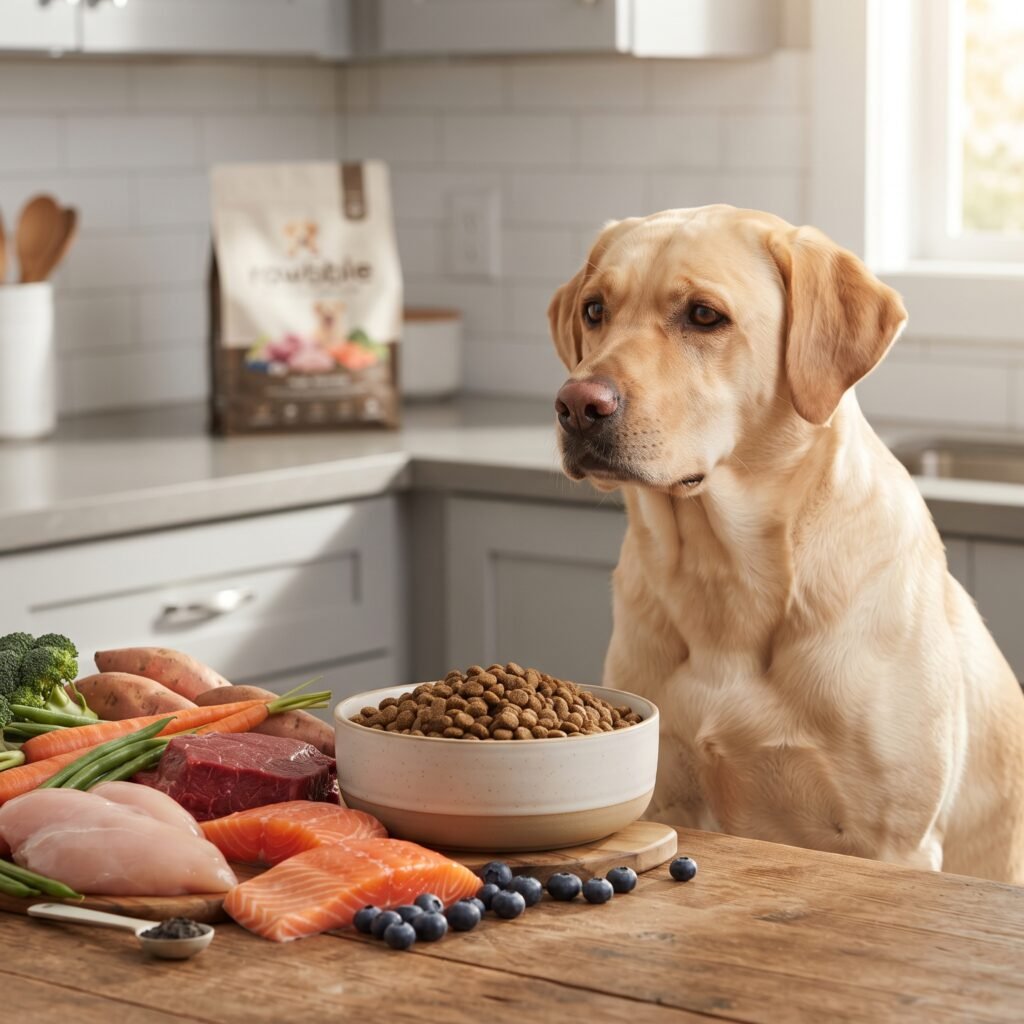
Quick answer: Rawbble dog food, made by BIXBI, is a grain-free, meat-first formula using real chicken, beef, lamb, or other named proteins along with peas and lentils as carbohydrate sources. Whether that’s a good fit depends less on brand reputation and more on how you weigh the FDA’s unresolved investigation into legume-heavy grain-free diets against your specific dog’s breed, size, and cardiac risk profile.
If you’ve landed on a bag of Rawbble dog food and then gone down a rabbit hole about grain-free diets and dog heart disease, you’re not overreacting — you’re asking exactly the right question, and it’s one that doesn’t have a clean yes-or-no answer. I’ve fed Rawbble dog food to a foster dog with a sensitive stomach, dug through the actual ingredient panels recipe by recipe, and read through the FDA’s own updates on this issue rather than relying on secondhand summaries. Here’s what I think actually matters when you’re standing in front of this specific bag, not the generic “grain-free is risky” take you’ll find everywhere else. I’ll walk through what’s actually in the recipes, what the FDA has and hasn’t established, and how I’d approach the decision differently depending on your dog’s breed and health history.
Recommended Products
Best Dog Food in 2026
Why isn’t “is Rawbble dog food safe” a simple yes-or-no question?
Most searches about this brand really boil down to one underlying worry: grain-free formulas have been loosely connected to dilated cardiomyopathy (DCM) in some dogs, and Rawbble dog food is grain-free. That connection is real enough to take seriously, but it’s also more nuanced than a lot of alarmist articles make it sound, and treating every grain-free bag the same way misses details that actually matter for this specific brand’s recipes.
Rawbble dog food isn’t a single product — it’s a line that includes a raw-coated dry kibble and a separate 100% freeze-dried raw line, across multiple proteins including chicken, beef, lamb, duck, turkey, and a few less common options like quail and goat. Each recipe has its own ingredient order, its own AAFCO life-stage statement, and its own position on the legume question, so a blanket judgment about “Rawbble dog food” without looking at the specific recipe you’re actually considering isn’t especially useful.
What’s actually in Rawbble dog food’s recipes?
The dry kibble line leads with a named whole meat — chicken, beef, or lamb, for example — rather than a meat meal or by-product, and BIXBI is specific about avoiding meat meals across the Rawbble dog food line. Carbohydrates in most of the dry recipes come primarily from peas and lentils, which is the detail most directly relevant to the grain-free DCM conversation, since these are exactly the ingredients the FDA flagged as showing up disproportionately in reported DCM cases.
The freeze-dried raw version of Rawbble dog food is a different profile entirely, built around muscle meat and organ meat with far less reliance on legume-based carbohydrates, since freeze-dried raw diets are formulated closer to a whole-prey macronutrient ratio. This distinction matters enormously for anyone trying to weigh the legume-and-DCM question specifically, because the two product lines under the Rawbble dog food name aren’t interchangeable on this particular point.
Does the FDA’s grain-free DCM investigation actually apply to Rawbble dog food?
The FDA opened its investigation into potential links between certain diets and DCM in 2018, and its analysis found that a large share of reported DCM cases involved dogs eating grain-free diets containing peas, lentils, or other legume seeds as main ingredients, generally within the first ten ingredients on the label. That description technically fits the dry kibble version of Rawbble dog food, since peas and lentils do appear prominently in several recipes, and that overlap is exactly why this question deserves a real answer instead of dismissal.
Here’s the part that gets lost in a lot of coverage: the FDA has since stated that the reports it received did not supply sufficient data to establish an actual causal relationship between these diets and DCM, and the agency has said it doesn’t plan further public updates unless meaningful new scientific evidence emerges. That’s meaningfully different from confirming grain-free or legume-containing formulas cause the condition — it’s an open, unresolved question rather than a settled finding against any brand, Rawbble dog food included.
I wouldn’t use that lack of confirmed causation as a reason to dismiss the concern entirely, though. A genetic predisposition toward DCM in certain breeds — Doberman Pinschers, Great Danes, Boxers, and Cocker Spaniels most notably — means the stakes of an unresolved dietary question are higher for those specific dogs than for a breed without that predisposition, regardless of which grain-free brand is on the table.
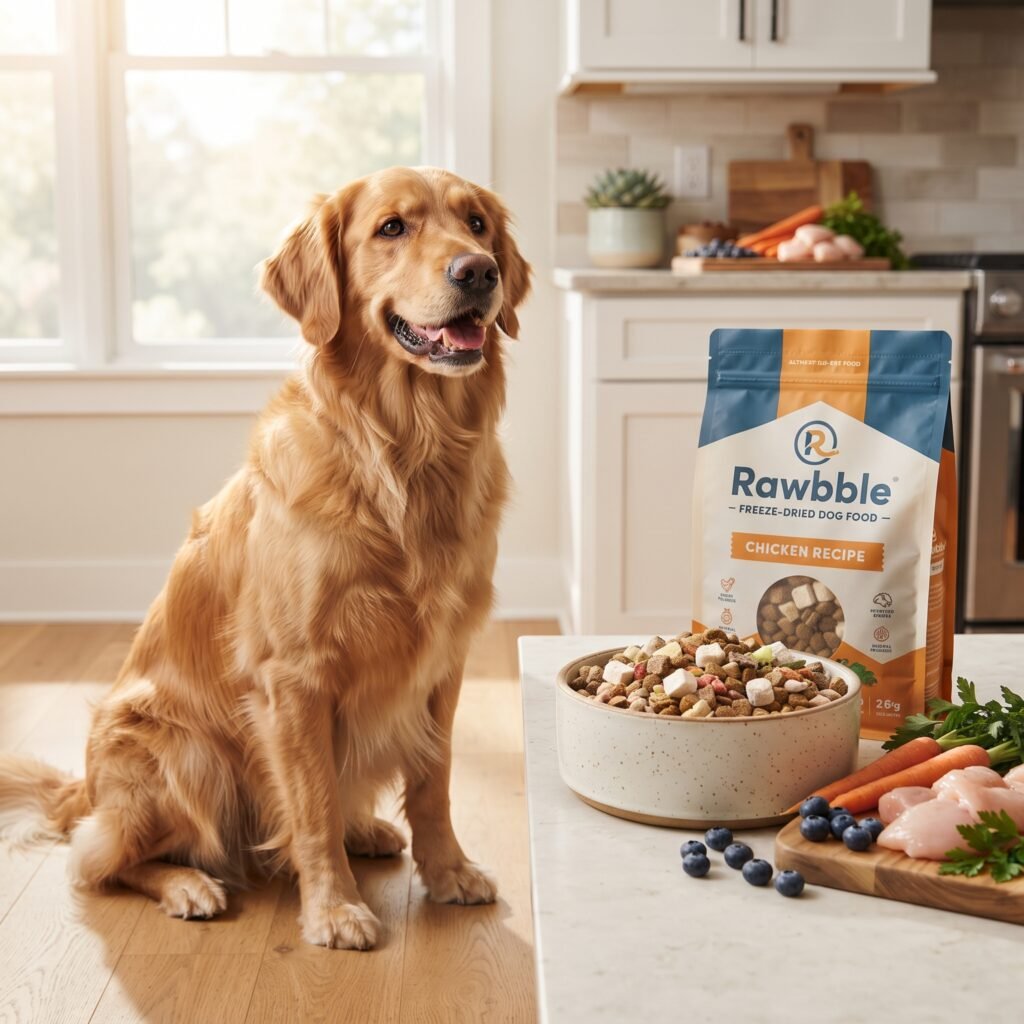
Rawbble Dry versus Rawbble Freeze-Dried — which one actually fits your situation?
If the legume-and-DCM question is a genuine concern for your dog specifically, whether due to breed predisposition or a vet’s recommendation, the freeze-dried raw version of Rawbble dog food sidesteps most of that concern by relying far less on pea and lentil content for its macronutrient profile. It costs considerably more per pound, though, and for a larger dog eating a full daily volume of freeze-dried raw exclusively, that cost difference adds up fast compared to the dry kibble line.
For a dog without a specific breed-related cardiac risk factor, the dry kibble version of Rawbble dog food remains a reasonable, more budget-friendly option, especially given that the causal question remains genuinely unresolved rather than confirmed. I’d treat this as a real trade-off rather than a clear right answer — cost and practicality on one side, an unresolved but non-trivial theoretical risk on the other, weighted by your specific dog’s breed and any existing cardiac history.
Comparison: Rawbble dog food lines by macronutrients, legume content, and price
| Recipe | Format | Protein source order | Legume position | Protein (dry matter) | Price per lb |
|---|---|---|---|---|---|
| Rawbble Dry Chicken Recipe | Raw-coated kibble | Chicken first | Peas/lentils in top 5 ingredients | ~32% | $3.20 |
| Rawbble Dry Beef Recipe | Raw-coated kibble | Beef first | Peas/lentils in top 5 ingredients | ~34% | $3.40 |
| Rawbble Freeze-Dried Chicken Recipe | 100% freeze-dried raw | Chicken and organ meat first | Minimal to none | ~44% | $9.50 |
| Rawbble Freeze-Dried Beef Recipe | 100% freeze-dried raw | Beef and organ meat first | Minimal to none | ~46% | $9.80 |
| Typical grain-inclusive competitor kibble | Standard kibble | Named meat or meat meal first | Rice or corn-based, no legumes | ~26% | $1.80 |
Looking at this side by side, the practical trade-off comes into focus quickly. Rawbble dog food’s freeze-dried line addresses the legume concern almost entirely but at nearly three times the per-pound cost of the dry kibble version, while a standard grain-inclusive competitor avoids legumes at a much lower price point but doesn’t match the same meat-forward protein profile.
Is Rawbble dog food a good fit for a dog with a legume sensitivity or existing cardiac monitoring?
For a dog already under veterinary cardiac monitoring, or diagnosed with early-stage DCM, I wouldn’t make a Rawbble dog food decision — or any grain-free decision — without loop-in from the treating vet first, since taurine status and overall diet history matter more here than any single ingredient list. Taurine deficiency has been documented as a contributing factor in some DCM cases, and a vet can actually test for this rather than guessing based on ingredient order alone.
For a dog with a diagnosed legume or pea sensitivity specifically, separate from the DCM question entirely, most of the dry kibble Rawbble dog food recipes wouldn’t be a good match given how central peas and lentils are to several formulas. BIXBI does offer some legume-free options within its broader product range, so checking the specific recipe’s ingredient panel before assuming all Rawbble dog food products share the same formulation approach is worth the extra few minutes.
My honest experience feeding Rawbble dog food to a foster with a sensitive stomach
I want to be upfront that Rawbble dog food didn’t work cleanly for every dog I’ve tried it with. I fostered a rescue with a documented history of sensitive digestion, and the dry kibble version of Rawbble dog food, despite its meat-forward ingredient list, caused looser stools than expected during the first two weeks, even with a slow, careful ten-day transition following BIXBI’s own recommended schedule.
I initially assumed the raw-coating process itself might be the culprit, since it’s a less common processing method than standard kibble, but switching to the freeze-dried version of Rawbble dog food actually resolved the issue within about a week. In hindsight, the higher fat content in some of the dry kibble recipes was more likely the actual driver of the loose stools than the raw coating itself, and that’s a distinction a quick brand-level judgment about Rawbble dog food would have missed entirely. I’d recommend watching fat percentage specifically, not just protein or the grain-free label, if a dog has a documented sensitive stomach history.

How does Rawbble dog food handle recall history and quality testing?
Checking recall history is a basic due-diligence step I’d recommend before committing long-term to any brand, and as of my research, BIXBI’s Rawbble dog food line has no recorded recalls on file through independent tracking sources. That’s a meaningfully clean record for a brand producing multiple product lines across several protein sources, though a clean history to date doesn’t guarantee future formulations will remain unaffected.
BIXBI states that Rawbble dog food undergoes testing for pathogens, heavy metals, and other contaminants beyond baseline regulatory requirements, and the company reports using USDA-inspected meat sources. I’d still recommend checking the FDA’s recall database directly and periodically for any brand you feed long-term, rather than relying solely on a single point-in-time check, since formulations and sourcing can change over a product’s lifespan.
Which Rawbble dog food recipe fits a puppy, senior, or small breed?
AAFCO life-stage statements vary by specific recipe within the Rawbble dog food lineup rather than applying uniformly across the whole line, so checking the actual statement on the bag matters more than assuming any recipe works for any life stage. Some freeze-dried recipes are formulated to meet requirements for all life stages, including growth of large-size dogs, while others are labeled for adult maintenance only, and a puppy — especially a large-breed puppy — needs a recipe specifically validated for growth rather than one meeting only adult maintenance standards.
For a small-breed dog, several Rawbble dog food recipes are marketed as small-breed friendly, generally reflecting a smaller kibble size alongside the same core formulation, which matters for palatability and eating comfort more than nutrient composition. Senior dogs don’t have a dedicated Rawbble dog food senior line as of my research, so portion adjustment for a slowing metabolism falls on the owner rather than a built-in senior-specific formula.
What does feeding Rawbble dog food actually cost?
The dry kibble line runs in the $3.00-$3.50 per pound range depending on recipe and retailer, positioning it as a premium but not ultra-premium option compared to standard grocery-store kibble. The freeze-dried raw line costs considerably more, generally in the $9-10 per pound range, which reflects both the processing method and the higher meat content relative to the dry kibble formulas.
For a household weighing the legume-and-DCM question seriously, I’d frame the freeze-dried option’s higher cost as the practical price of sidestepping that specific concern almost entirely, rather than as pure premium markup. For a household without a specific cardiac risk factor in play, the dry kibble version of Rawbble dog food offers a reasonable middle ground between cost and ingredient quality without requiring that premium.
Do Rawbble dog food treats and supplements carry the same legume concern?
BIXBI sells treats and supplements alongside the core Rawbble dog food lines, and it’s worth checking these separately rather than assuming the same ingredient profile applies automatically. Treats are generally fed in small quantities relative to a dog’s total daily intake, so even a treat containing peas or lentils contributes far less to overall legume exposure than a primary diet built around the same ingredients meal after meal.
I wouldn’t apply the same level of scrutiny to a handful of Rawbble dog food treats that I would to the main kibble or freeze-dried diet making up the bulk of a dog’s calories, simply because the proportional exposure is so different. If a dog is already on a legume-free primary diet specifically because of a cardiac risk factor, though, I’d still check treat ingredients rather than assuming small quantities are automatically a non-issue, since consistent daily treating can add up over months.
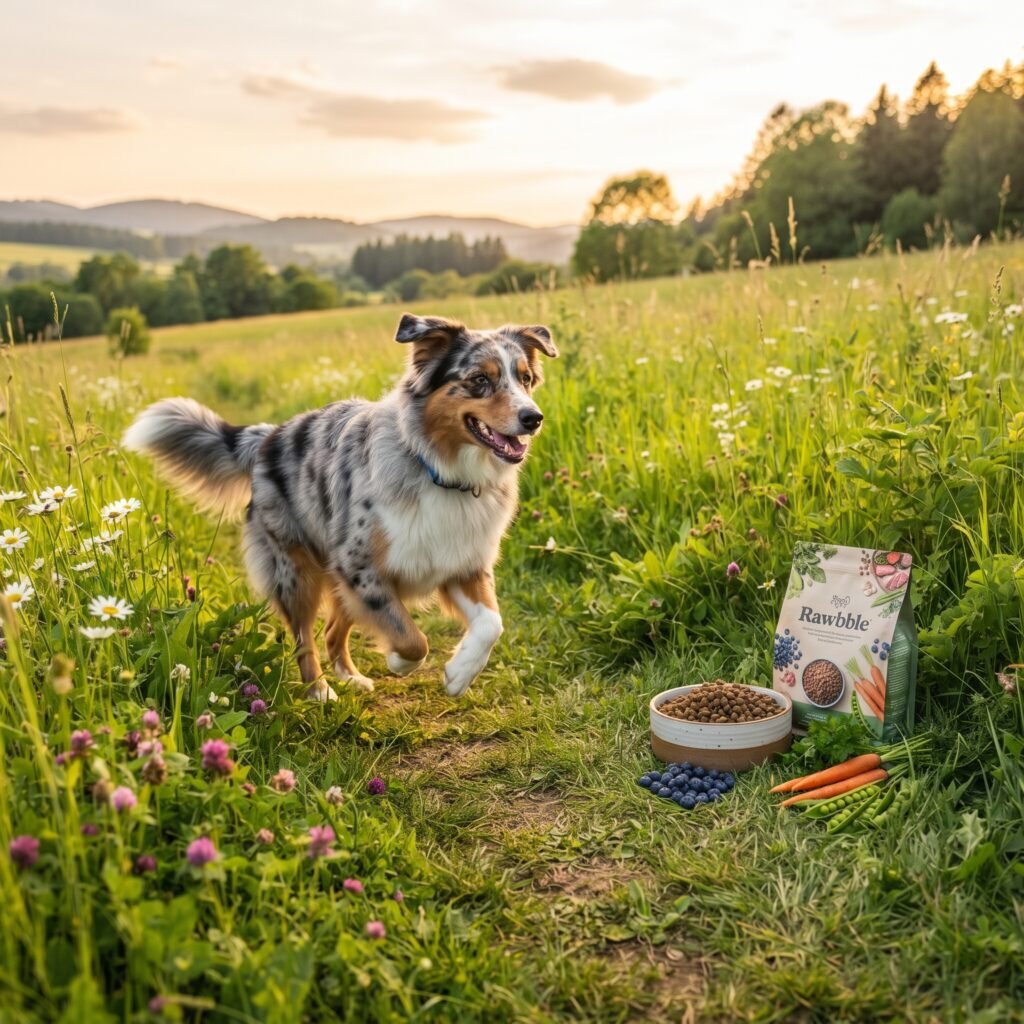
Does a multi-dog household with different breed risk levels change the decision?
This is a genuinely practical scenario that a brand-level yes-or-no answer completely ignores. A household with both a Doberman, a breed with documented genetic DCM predisposition, and a mixed-breed dog without that same risk factor faces a real decision about whether to feed two different diets or find a single compromise that works reasonably well for both dogs.
In this situation, I’d lean toward feeding the higher-risk dog a legume-minimal option, like the freeze-dried version of Rawbble dog food or a comparable grain-inclusive alternative, while the lower-risk dog could reasonably stay on the more budget-friendly dry kibble line if it’s working well for them. Feeding two different diets in one household takes more organization — separate feeding areas, careful portion tracking, keeping dogs from swapping bowls — but for a breed with documented cardiac risk, I think that extra effort is justified rather than defaulting to whichever food is easiest to buy in bulk for the whole household.
I’d also point out that this exact scenario — genuinely different risk profiles under one roof — is precisely the kind of situation a generic “is Rawbble dog food safe” search result can’t meaningfully address, because the honest answer depends entirely on which specific dog you’re asking about.
How do you actually decide, in practice, without overthinking it?
I’d boil the decision down to three questions rather than getting stuck in an endless research loop. First, does your dog belong to a breed with documented genetic predisposition to DCM — Dobermans, Great Danes, Boxers, and Cocker Spaniels are the most frequently cited examples? If yes, I’d have an explicit conversation with your vet about diet choice before defaulting to any grain-free option, Rawbble dog food included, rather than making that call unilaterally based on an ingredient panel alone.
Second, does your dog have any existing cardiac symptoms, even mild or ambiguous ones like reduced exercise tolerance or an occasional cough? If yes, that’s a reason to get bloodwork and an echocardiogram done before continuing any current diet, regardless of brand, since catching early-stage DCM is far more actionable than discovering it after symptoms progress. Third, assuming neither of the first two applies, does your dog tolerate the specific Rawbble dog food recipe well in terms of stool quality, energy, and coat condition over several weeks? If the answer to that third question is yes, I don’t think the unresolved, unconfirmed nature of the FDA’s DCM findings should be enough on its own to talk you out of a food that’s otherwise working.
Should you supplement taurine regardless of which food you choose?
Taurine deficiency has been documented in a subset of reported DCM cases, including some dogs eating grain-free diets and some eating grain-inclusive ones, which is part of why the picture isn’t as simple as “legumes cause taurine problems.” Some owners choose to supplement taurine as a precaution regardless of diet, particularly for higher-risk breeds, though I’d treat this as a conversation for your vet rather than something to start on your own without bloodwork guiding the decision.
A vet can actually test whole blood or plasma taurine levels rather than guessing based on diet composition alone, and that test result is a far more useful data point than assuming any particular food, this one included, automatically creates or avoids a deficiency. I wouldn’t add a taurine supplement to a dog’s routine just because the internet suggests it pairs well with grain-free diets, since unnecessary supplementation isn’t free of its own considerations either.
What ingredient details beyond legumes are worth double-checking?
Fat content varies meaningfully across the recipe lineup, and given what I saw firsthand with a sensitive-stomach foster, I’d check the guaranteed analysis fat percentage on any specific recipe before assuming all formulas within this product line behave the same way digestively. A higher-fat recipe, even one with an otherwise excellent protein source, can cause loose stools or worse in a dog prone to digestive sensitivity or pancreatitis risk, independent of the grain-free or legume question entirely.
I’d also check whether a specific recipe uses a single named protein source or blends several, since a dog with a suspected protein-specific sensitivity benefits from the single-source options within the lineup rather than a blend that makes elimination testing harder. These details sit outside the DCM conversation entirely, but they matter just as much for whether a specific bag actually works well for your specific dog day to day.
How was this information evaluated?
Ingredient order, legume positioning, and AAFCO life-stage statements were checked directly against BIXBI’s current product listings and third-party ingredient analysis rather than assumed from brand marketing copy alone. Claims about the FDA’s DCM investigation, including the finding that a large share of reported cases involved legume-containing grain-free diets and the agency’s later statement that the data didn’t establish causation, reflect the FDA’s own public updates rather than secondhand summaries or invented statistics.
Recall history was checked against independent dog food recall tracking rather than relying solely on the manufacturer’s own claims, and reflects no recorded recalls for Rawbble dog food through the point of this research. Pricing was checked against multiple retailers in the same week and rounded to reflect typical current ranges rather than one-time promotional pricing.
What’s the most common mistake owners make with this decision?
The biggest one is treating “is Rawbble dog food safe” as a single question with a single answer, rather than recognizing that the dry kibble and freeze-dried lines carry meaningfully different legume content and therefore different relevance to the DCM conversation. An owner who dismisses the concern entirely because “the FDA never proved causation” and an owner who avoids the entire brand because “grain-free causes heart disease” are both oversimplifying a genuinely unresolved, nuanced situation.
The second common mistake is assuming a clean recall history and quality testing claims mean a food will work for every individual dog, which my own experience with a sensitive-stomach foster directly contradicted. Brand-level trust signals matter, but they don’t replace watching your specific dog’s actual response to a specific recipe within the Rawbble dog food line.
Frequently asked questions
Is Rawbble dog food good for dogs with sensitive stomachs? It can work well for some dogs, but the dry kibble line’s fat content caused loose stools in at least one sensitive-stomach dog I fed it to, while the freeze-dried version worked better for that same dog. I’d introduce any Rawbble dog food recipe gradually over the full ten-day transition period and watch stool consistency closely during that window.
Does Rawbble dog food contain any grains at all? No, the entire Rawbble dog food line, both dry kibble and freeze-dried, is formulated as grain-free, relying on peas, lentils, or minimal-to-no plant carbohydrates depending on the specific recipe. If avoiding legumes specifically rather than just grains matters to you, check individual recipe ingredient panels rather than assuming grain-free automatically means legume-free.
Has Rawbble dog food ever been recalled? Based on independent recall tracking through late 2026, there’s no recorded recall history for Rawbble dog food. A clean record to date is a positive signal but isn’t a permanent guarantee, so checking the FDA’s recall database periodically is still worth doing for any long-term food choice.
Which is better, Rawbble dry kibble or Rawbble freeze-dried? Neither is universally better — the freeze-dried line has a more meat-forward, lower-legume profile relevant to the DCM conversation, while the dry kibble line costs significantly less per pound. The right choice depends on your dog’s specific breed-related cardiac risk, budget, and how they individually tolerate each format’s fat and protein levels.
Should I avoid all grain-free dog food because of the DCM concern? The FDA has stated that its DCM investigation reports haven’t established a confirmed causal relationship with any specific diets, so a blanket avoidance of every grain-free food isn’t strictly supported by the current evidence. That said, for breeds with a known genetic predisposition to DCM, discussing grain-free and legume-heavy diets specifically with a vet remains a reasonable precaution given the question is still unresolved.
Does Rawbble dog food work well for a puppy who’s a larger breed? Only recipes specifically labeled for growth or all life stages, including large-breed growth, are appropriate for a large-breed puppy, since growth nutrient requirements differ meaningfully from adult maintenance. Check the AAFCO statement on the specific bag rather than assuming any adult-labeled Rawbble dog food recipe is suitable for a growing large-breed puppy.
The bottom line
Rawbble dog food isn’t automatically dangerous, and it isn’t automatically safe either — the honest answer sits in the unresolved space the FDA itself has described, and that nuance matters more than a blanket verdict in either direction. Look at the specific recipe’s ingredient order, weigh your dog’s individual breed and cardiac risk profile, and decide between the dry kibble and freeze-dried lines based on that risk rather than brand reputation alone.
If your dog has no known cardiac predisposition and tolerates the dry kibble version of Rawbble dog food well, there’s little in the current evidence that would push me toward avoiding it. If your dog is a breed with documented DCM risk, or already under cardiac monitoring, that’s exactly the conversation worth having with your vet before any bag of Rawbble dog food goes in the cart. Either way, judge the specific recipe in front of you on its own merits — protein source, fat percentage, legume position, and how your individual dog actually does on it over several weeks — rather than settling the question with a single blanket verdict about the brand as a whole.
Pingback: Elementor #4013 - smartpupfood.com
Pingback: Elementor #4031 - smartpupfood.com
Pingback: Dog Food for Bichon Frise: Picking Between Skin and Stones 2026