Dog Food for Bichon Frise: How to Choose When Skin, Stones, and Weight Pull in Different Directions
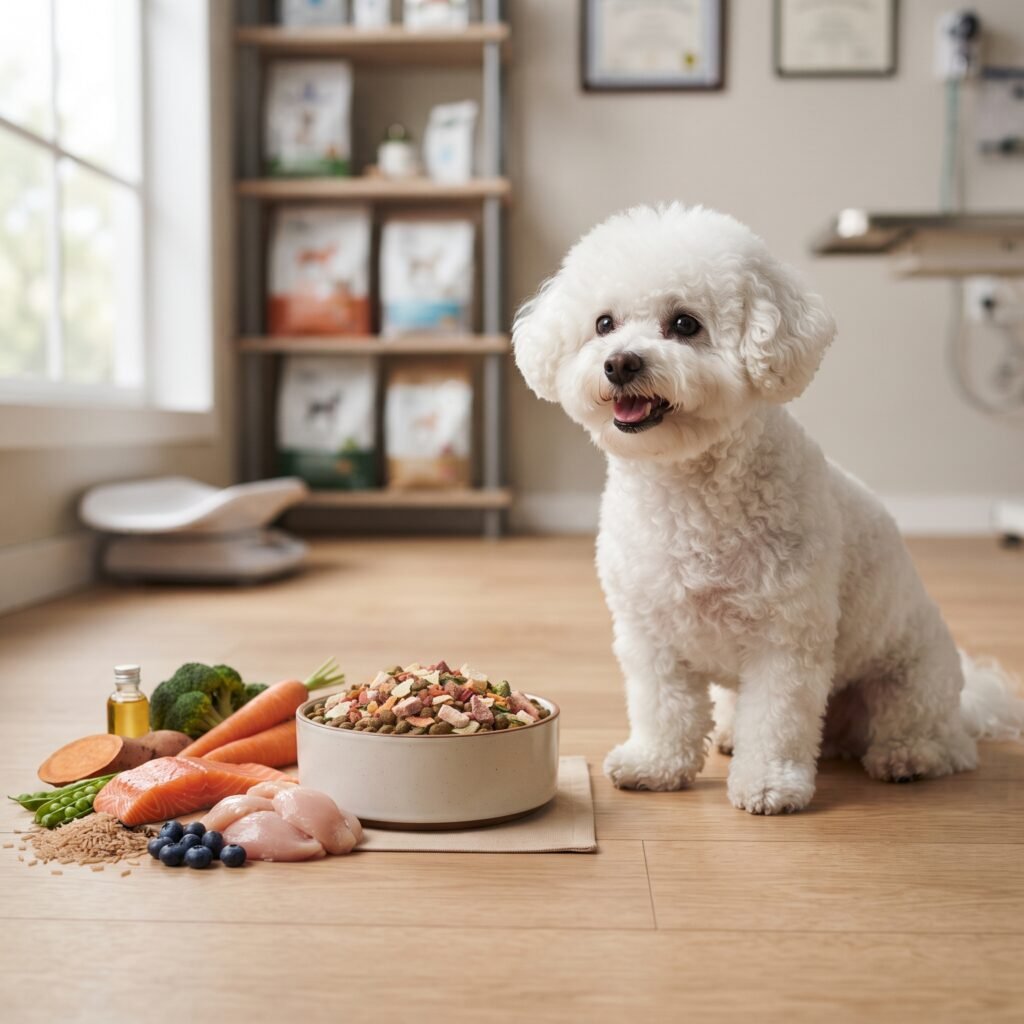
Short answer: The best dog food for bichon dogs is a complete, small-kibble diet matched to your dog’s biggest risk: itchy skin, bladder stones, or weight gain. No single bag wins all three. Pick one priority with your vet, check the AAFCO statement, weigh portions on a scale, and judge results over eight weeks.
Most Bichon owners I talk to aren’t really asking for a brand. They’re stuck between three problems that don’t share a solution: itchy skin, bladder stone risk, and a dog who gains weight if you glance at the pantry. Choosing dog food for bichon health means deciding which problem you solve first.
That’s the scenario this article is built around. I’ll show how I rank those priorities, what each one does to the ingredient panel, and where choosing dog food for bichon dogs gets uncomfortable, because a fix for one problem can make another worse.
Recommended Products
Best Dog Food in 2026
Why Is Choosing Dog Food for Bichon Dogs Harder Than for Other Small Breeds?
Bichons are 12 to 18 pounds of fluff with a long list of breed tendencies. Atopic dermatitis shows up often. Bladder stones, both calcium oxalate and struvite, are well documented in the breed. Dental disease arrives early, as it does in most small dogs. And most Bichons will happily eat until they waddle.
Each tendency pulls the label in a different direction. Skin-focused diets lean on omega-3 fats and carefully chosen proteins. Stone-focused feeding cares about minerals, water intake, and urine chemistry. Weight control wants fewer calories per cup. One dog food for bichon dogs rarely does all three, so you rank them.
Here’s my ranking method:
- What has your vet diagnosed? A stone history beats everything else.
- What do you see weekly? Scratching, paw licking, ear gunk, a greasy coat.
- What’s trending? Weight creeping up or a waistline disappearing.
When someone sends me a “best dog food for bichon frise” list, I ask which of those three the list was written for. Usually it’s none of them.
What Does Dog Food for Bichon Dogs With Itchy Skin Actually Need?
Itchy Bichons are common enough that I treat skin as the default suspect. But food is only one cause. Environmental allergies (pollen, dust mites) and fleas drive a lot of itching, and a new bag won’t fix those. The honest framing for Bichon frise skin allergies is that diet is one lever among several.
If food is involved, the gold standard is an elimination trial: a single novel protein or a veterinary hydrolyzed diet, fed exclusively for about 8 to 12 weeks, with no treats, flavored meds, or table scraps. Most owners fail this test at the treat jar, not the food bowl.
Should you try a novel protein or a hydrolyzed diet?
Novel protein means something your dog hasn’t eaten before, like rabbit or venison. It’s easier to find and often easier to get a Bichon to eat. Hydrolyzed diets break proteins into pieces too small to trigger most immune reactions, and vets generally prefer them for a clean trial. For a stubborn case, I’d ask my vet about hydrolyzed first.
One trap with over-the-counter “limited ingredient” foods: cross-contamination and hidden protein sources (chicken fat, for example) can spoil the trial. If you’re choosing dog food for bichon skin problems, a vet diet gives you a cleaner answer than a retail bag.
Omega-3 fatty acids (EPA and DHA from fish oil) have reasonable support for helping itchy skin in dogs, usually as a supportive measure rather than a cure. That’s where my trade-off starts. More fish oil and fat can help skin, but fat is exactly what some Bichons can’t handle, which brings us to pancreatitis. For the skin-first Bichon, I want omega-3 from a quality source and a total fat level your vet signs off on.
Is Dog Food for Bichon Bladder Stone Risk Something to Plan Around From Day One?
For a Bichon with no stone history, I don’t switch to a prescription diet preemptively. But I do plan around the risk. Bichons are among the breeds in which both struvite and calcium oxalate stones turn up regularly, and that shapes how I pick dog food for bichon dogs and how I feed them.
The two stone types behave differently:
- Struvite stones are often linked to urinary infections and can sometimes be dissolved with a vet-prescribed diet.
- Calcium oxalate stones can’t be dissolved by diet. They usually need removal, and diet is then used to lower the odds of recurrence.
That difference matters. If your Bichon has had a stone, the best dog food for bichon prevention is whatever your vet’s stone analysis points to, not whatever a pet store clerk recommends. The stone type decides the diet.
What I do for a Bichon without a history:
- Prioritize water intake. Wet food or water mixed into kibble raises urine volume, which dilutes stone-forming minerals.
- Avoid mineral megadoses. Don’t add calcium, vitamin D, or vitamin C supplements without asking your vet. Extra vitamin C can raise oxalate in urine.
- Ask about regular urinalysis. A yearly urine check catches crystals before they become stones.
- Know the signs. Straining, frequent small urinations, blood in urine, and licking the genital area all mean a call to the vet, and a blocked, straining male is an emergency.
This is the sharp edge of the trade-off. A skin-first diet with lots of fish and novel proteins isn’t designed around urine chemistry, and a stone-prevention diet usually isn’t designed for itchy skin. For a Bichon with both problems, this is a decision for your vet, not a product search.
How Much Fat Fits in Dog Food for Bichon Dogs Prone to Pancreatitis?
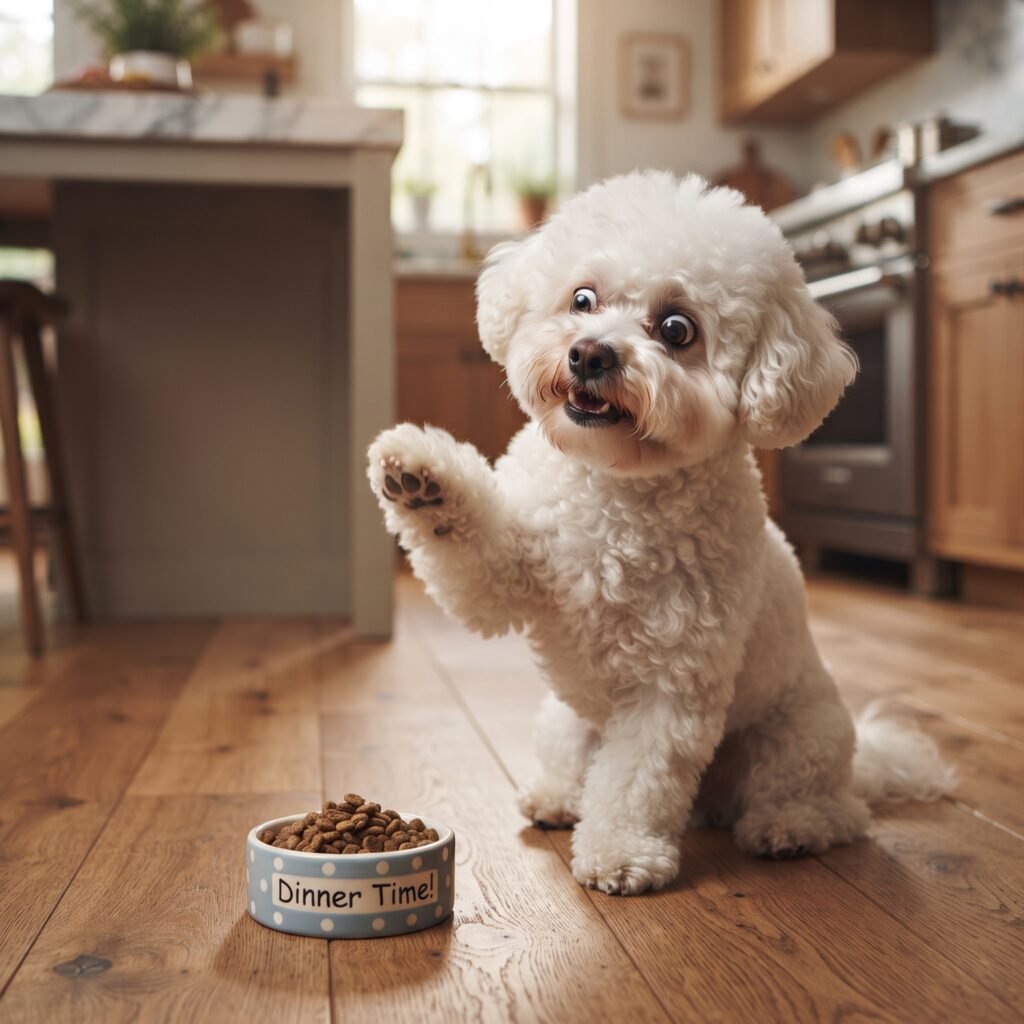
Small breeds seem to show up often with pancreatitis, and high-fat meals are a common trigger in dogs generally. I won’t claim a Bichon-specific fat number, because it doesn’t exist as a universal rule. Your vet sets the limit based on your dog’s history.
Here’s the practical conflict. The same rich, fish-based, omega-heavy formula that soothes a coat can be the formula that triggers a flare in a pancreatitis-prone dog. If your Bichon has ever had vomiting after a fatty meal, a “high-fat for skin” plan is the wrong dog food for bichon needs until your vet says otherwise.
AAFCO’s adult maintenance minimum for fat is 5.5% on a dry-matter basis. Most retail adult foods run well above that. Check the guaranteed analysis, then convert to dry matter so you’re comparing foods fairly. If you don’t know how, ask your vet’s office, because many techs will do it in a minute.
And remember treats. A few pieces of cheese or fatty trimmings can undo weeks of careful feeding. The best dog food for bichon pancreatitis prevention is a steady food plus boring treats.
How Much Dog Food for Bichon Dogs Should You Feed Each Day?
Calories matter more than cups, and Bichons gain weight easily. Here’s an illustrative calculation, with assumptions, so you can swap in your own numbers.
Take a neutered adult Bichon at 15 lb (about 6.8 kg). The standard resting energy formula is 70 × body weight in kg^0.75, which gives about 295 kcal. A typical multiplier for a neutered, moderately active adult is about 1.6. That puts this dog near 470 kcal a day as a starting estimate.
- At about 400 kcal/cup: roughly 1.2 cups daily.
- At about 350 kcal/cup: roughly 1.35 cups daily.
- At about 480 kcal/cup (a calorie-dense formula): roughly 1 cup daily.
Those numbers are starting points. Real needs vary by 20% or more with neuter status, age, and activity. A Bichon who lives on a couch needs less, and a young dog who plays daily may need more.
The mistake I see most often is the scoop. A standard dry measuring cup holds a different amount than a “scoop that came with the bag,” and with a 15-lb dog, an extra quarter cup a day is a meaningful calorie surplus. Weigh the food in grams on a kitchen scale. For a dog this size, it’s the cheapest weight-control tool there is.
Check body condition too. You should feel ribs under a thin layer of fat, and you should see a waist from above. In a Bichon, thick coat hides everything, so use your hands, not your eyes. If you can’t find the ribs, the portion is too big.
Cost is modest at this size. Even a premium food costs roughly a dollar a day for a 15-lb dog, which makes the cost of dog food for bichon owners far smaller than for large-breed owners. That’s a good reason to put money into food quality or a vet-guided diet instead of cutting corners.
How Do Different Types of Dog Food for Bichon Dogs Compare?
Here’s how I sort options by the priority they serve. The numbers are typical ranges, not brand claims. Always check the bag you’re holding.
| Food type | Typical crude fat (as fed) | Typical kcal/cup | Best fit | Main trade-off |
|---|---|---|---|---|
| Small-breed adult kibble (complete) | ~13–17% | ~380–450 | Healthy adult, no diagnoses | Calorie-dense, easy to overfeed |
| Weight-management small-breed kibble | ~8–12% | ~300–350 | Overweight or easy-gainer Bichon | More volume, may feel less satisfying |
| Limited-ingredient kibble | ~12–16% | ~370–440 | Suspected mild food sensitivity | Not a true elimination diet |
| Veterinary hydrolyzed diet | ~8–15% | ~300–400 | Confirmed or suspected food allergy | Cost, prescription required |
| Veterinary urinary diet | ~8–15% | ~290–400 | Stone history, vet-directed | Prescription, targeted to stone type |
| Fresh or gently cooked complete diet | ~10–20% | varies by recipe | Picky eaters, higher moisture | Cost, storage, check for AAFCO completeness |
Two notes. First, “complete and balanced” matters: look for an AAFCO statement on the label saying the food meets adult maintenance or all life stages. Second, fresh and homemade diets can be fine, but only if they’re formulated by a veterinary nutritionist. Recipes from the internet often miss calcium, zinc, or essential fatty acids.
Notice what the table says. There’s no winner column. The right dog food for bichon dogs depends on which row matches your dog’s problem, and a dog with two problems may need two rows’ worth of compromise.
Will the Right Dog Food for Bichon Tear Stains Make Them Disappear?
Probably not, and I’d rather say that than sell you a miracle. Reddish-brown tear staining on a white coat comes from porphyrins, pigments in tears and saliva. Bichons are prone to tear staining, and a main driver is often tear drainage, meaning narrow or blocked tear ducts, plus facial hair that wicks moisture. Diet is a smaller player.
Here’s what I’ve seen help, and what I’d check first:
- See the vet about the eyes first. Eye irritation, blocked ducts, ingrown lashes, and infections all cause excess tearing.
- Keep the face clean and dry. Gently wipe daily with a damp cloth, and trim the hair around the eyes.
- Switch to filtered or stainless-bowl water. I wouldn’t promise results, but plastic bowls and mineral-heavy tap water are easy things to change.
- Be skeptical of “tear stain” additives. Some products contain antibiotics, and ongoing antibiotic use without veterinary supervision isn’t something I’d do.
If you’re hunting for dog food for bichon tear stains, the honest advice is to treat staining as a cosmetic issue unless the eyes are red, painful, or leaking heavily. Choose the food for skin, weight, or urinary health, and handle the face as a grooming routine. Any dog food for bichon tear stains that promises overnight results is selling more than the evidence supports.
Does Dog Food for Bichon Puppies and Seniors Look Different?
Yes, with a few Bichon-specific details.
Puppies. A Bichon puppy is a small-breed puppy, so look for a food labeled for growth, with an AAFCO statement that matches. Small-breed puppies can drop their blood sugar if they skip meals, so most do well with three to four small meals daily until around four to six months. For dog food for bichon puppies, small kibble and frequent feeding matter as much as the formula.
Don’t rush to “adult” food. And don’t free-feed a puppy who may be a lifelong easy gainer. Habits you set at 10 weeks tend to stick.
Seniors. Many Bichons live into their teens, so senior feeding is a long game. Check weight monthly, ask about dental health, and get bloodwork before changing to a “senior” or lower-protein diet. Healthy senior dogs generally don’t need protein restriction, but dogs with kidney disease do, and a bag labeled “senior” can’t tell the difference. Dog food for bichon seniors should be chosen by bloodwork and dental condition, not by the age printed on the label.
Seniors also lose muscle. If a Bichon is thinning over the hips while the belly stays round, that’s a conversation about calories, protein, and thyroid or other conditions, not just a new bag.
What Kibble Size Works Best in Dog Food for Bichon Mouths?
Bichons have small jaws and crowded teeth, and dental disease is one of the most common problems I hear about. Kibble that’s too large gets swallowed whole or dropped, and kibble that’s too hard can be rough on a mouth with loose or broken teeth.
What I look for in dog food for bichon mouths:
- A small, round or flat kibble that a 15-lb dog can chew in two or three bites.
- A texture that breaks cleanly instead of shattering into dust.
- A plan for the dental routine. No kibble cleans teeth reliably. Brushing, vet cleanings, and dental-approved chews do more than any “dental formula.”
If your Bichon already has dental pain, soaking kibble or mixing in some wet food can help. It also nudges water intake up, which helps the urinary side. This is one place where the dental, urinary, and weight priorities line up, and it’s why I like a little moisture in a Bichon’s bowl.

When Did My Dog Food for Bichon Plan Fail?
I’d be doing you a disservice if I only described plans that worked.
The general lesson holds even if your story differs from mine. A skin-first plan with a rich, fish-heavy formula is a real risk for a dog with pancreatitis history, and a weight-loss formula can leave a hungry Bichon begging and stealing. A choice that’s right on paper can be wrong for the individual dog. That’s why I tell people to run any dog food for bichon change as a test with a defined end date, not a permanent commitment.
Another limitation: I can’t diagnose your dog from an article. If your Bichon has recurring ear infections, bloody urine, vomiting, or weight loss, the right next step is the vet. No bag of food replaces a stone analysis or a skin workup.
How I Evaluated These Recommendations: Methodology
Here’s what I checked, so you can repeat it:
- AAFCO nutrient profiles: protein and fat compared against adult-maintenance minimums on a dry-matter basis, plus the label’s adequacy statement for the right life stage.
- Breed-risk context: published veterinary literature and clinic guidance on atopic dermatitis, urolithiasis, pancreatitis, and dental disease in small breeds, including Bichons.
- Calorie math: resting-energy formula with a stated multiplier, checked against feeding guides.
- Recall check: the FDA’s recalls and safety alerts page, searched by brand, line, and lot number. Do this yourself before buying, because records change.
- Hands-on observation: feeding trials and notes, flagged in the bracketed sections above.
Numbers in the table are typical ranges, not guarantees. When I use general language like “AAFCO-established ranges suggest,” I’m declining to invent a precise statistic I can’t verify.
How Do You Switch Dog Food for Bichon Dogs Without Causing Diarrhea?
Bichons often have sensitive digestion, so slow transitions pay off. Plan 7 to 10 days:
- Days 1–3: about 25% new food, 75% old.
- Days 4–6: about 50/50.
- Days 7–9: about 75% new, 25% old.
- Day 10: 100% new.
If stool softens, hold at the current ratio for a few extra days. For a dog with a known sensitive stomach, I’d stretch it to two weeks. Weigh the new portion in grams, since calorie density often differs, and recheck your dog’s weight and body condition after four weeks.
The biggest mistake in switching dog food for bichon dogs is changing two things at once, such as new food plus a new treat or supplement. If something goes wrong, you won’t know which change caused it. Change one variable at a time.
FAQ: Real Questions About Dog Food for Bichon Dogs
What is the best dog food for bichon frise with allergies?
Start with your vet and an elimination trial using a hydrolyzed or true novel-protein diet for 8 to 12 weeks, with no other foods or treats. Many “allergy” cases turn out to be environmental, so don’t expect a bag of food to solve every itch.
How much dog food for bichon dogs per day is normal?
Most healthy 12 to 18 lb adults land somewhere around 1 to 1.5 cups of a typical small-breed kibble daily, but calories matter more than cups. Calculate from the label’s kcal/cup, weigh portions, and adjust by body condition.
Is grain-free dog food for bichon dogs a good idea?
There’s no proven benefit for most Bichons, and the FDA has investigated a possible link between certain grain-free diets and heart disease (DCM) without establishing a cause. Unless your vet recommends it for a specific reason, a grain-inclusive complete diet is the lower-drama choice.
Is wet or dry dog food for bichon dental health better?
Neither cleans teeth well on its own. Dry food can be easier to portion, while wet food adds moisture that helps the urinary side, so many Bichon owners mix a little of both and keep up with brushing and dental cleanings.
What’s the best dog food for bichon puppies?
Choose a complete diet labeled for growth, with small kibble, and feed three to four small meals daily until around four to six months. Check the AAFCO statement and ask your vet when to move to adult food.
So What’s the Best Dog Food for Bichon Dogs in the End?
The best dog food for bichon dogs is the one that fits your dog’s biggest risk, not the one with the prettiest bag. A stone history points toward vet-directed urinary feeding. Itchy skin points toward an elimination trial and thoughtful omega-3 use. A round waistline points toward weighed portions and a lower-calorie formula.
When those priorities collide, which is common in this breed, rank them with your vet and test one change at a time. Choosing dog food for bichon dogs isn’t a one-time purchase. It’s a loop of trying, watching, and adjusting.
Keep the loop simple. Weigh the food, check ribs and waist monthly, watch skin, stool, and urination, and give any new plan eight weeks. If you remember one thing about dog food for bichon owners, make it this: your dog’s results beat any review, including this one.