Grain Free Dog Food: How to Decide If Your Dog Should Stay On It
Short answer: If your dog is thriving on grain free dog food, don’t panic-switch. Audit the label first — count how many peas, lentils, chickpeas or other pulses appear in the top ten ingredients. High legume load plus a susceptible breed is the combination worth acting on. A single legume in a meat-forward formula is a much weaker signal.
That’s the compressed version. The rest of this is the part that actually decides it, because the honest answer depends on your specific bag, your specific dog, and what you’d be switching to.
I’ve had this conversation at least a dozen times with owners who walked out of an annual exam holding a printout about heart disease and a half-full bag of grain free dog food they no longer trust. The panic-switch is almost always the wrong first move. Pulling a dog off grain free dog food overnight solves nothing and buys you a week of digestive fallout. The label audit takes eleven minutes and usually tells you whether you need to move at all.
Recommended Products
Best Dog Food in 2026
Why did my vet suddenly bring up grain free dog food and heart disease?
In July 2018 the FDA announced it was investigating reports of dilated cardiomyopathy (DCM) in dogs eating diets labeled grain-free. What caught the agency’s attention wasn’t the absence of grain — it was what replaced it. Most reported diets listed peas, lentils, other legume seeds, or potatoes high on the ingredient panel.
A June 2019 update named the brands that appeared most often in reports. That update is what most of the internet still runs on, and it’s where a lot of the fear about grain free dog food comes from.
Here’s the part that rarely makes it into the summary: in December 2022 the FDA stated it did not have enough data to establish a causal relationship between these diets and DCM, and that it would not issue further updates unless new information warranted it. The investigation was never closed with a verdict. It was left open and quiet.
So your vet isn’t wrong to raise it, and the internet isn’t wrong that nothing was proven. Both are true at once, which is exactly why “is grain free dog food bad for dogs” doesn’t have a clean yes or no.
What I take from the record is narrower and more useful. The signal, such as it is, points at diets built heavily on pulses — not at grain-free as a category. Plenty of grain free dog food never goes near a lentil. That distinction is the whole decision.
What actually matters on the label: how much of the bag is legume?
Ingredients are listed by weight before cooking. That’s a flawed system — fresh meat is roughly 70% water, so it looks bigger than it is once the kibble is dry — but the top of the panel still tells you a lot.
I use a ten-ingredient window. Anything past the tenth ingredient is usually present in amounts too small to shift the macronutrient picture much, with one exception I’ll get to.
The count-to-ten audit
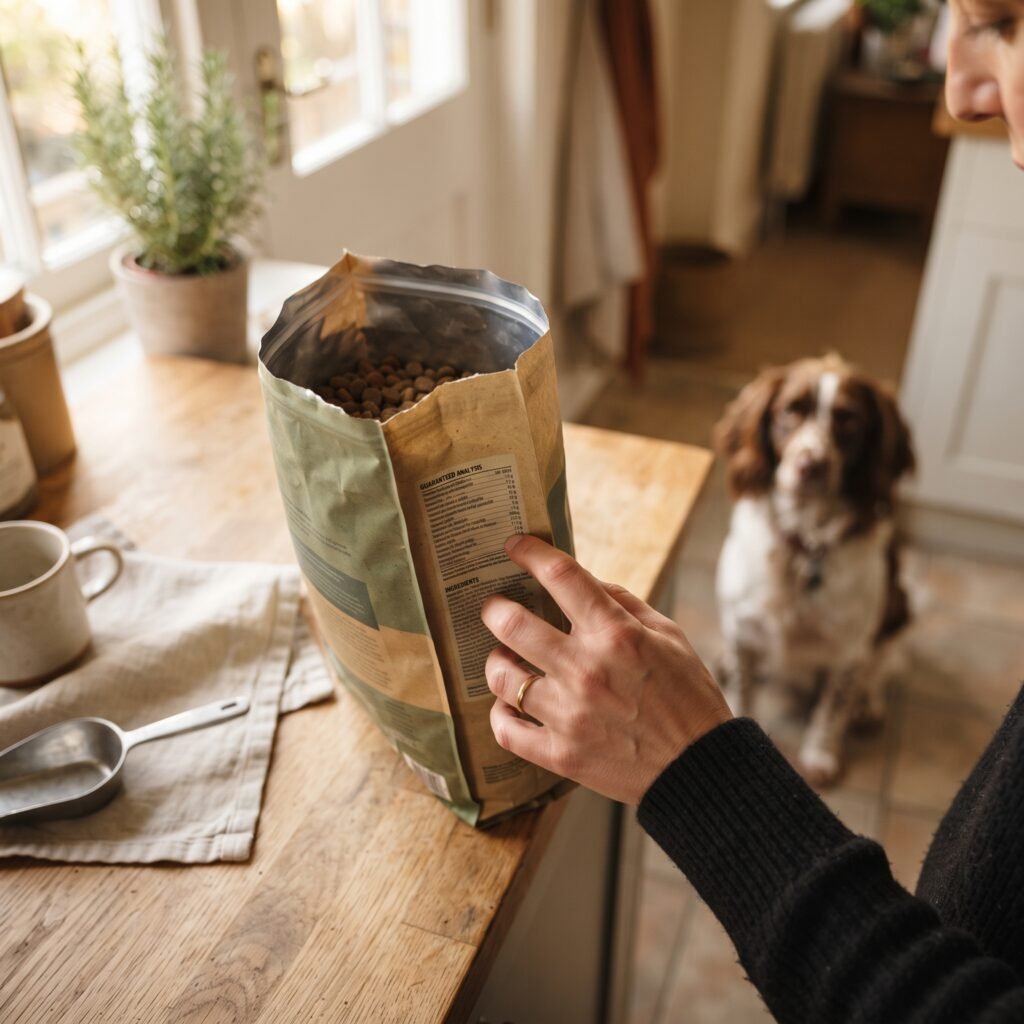
Grab the bag. Read the first ten ingredients out loud. Count every entry that is a pulse: peas, green peas, yellow peas, pea protein, pea starch, pea fiber, lentils, red lentils, chickpeas, garbanzo beans, faba beans, navy beans, pinto beans.
Zero or one pulse entry in the top ten: low legume load. This is the profile I’m least worried about, and plenty of good grain free dog food lands here.
Two or three: moderate. Worth a closer look at what’s holding up the protein number.
Four or more: high. This is the pattern the FDA reports clustered around. It doesn’t mean the food is dangerous, but it’s the profile where I’d want a conversation with your vet rather than a shrug. The grain free dog food that gives me pause almost always sits here.
Now the exception. Ingredient splitting means one raw material gets divided into several entries — pea protein, pea starch and pea fiber are all peas — which pushes each individual entry lower on the list. Three separate pea fractions sitting at positions 4, 6 and 9 can add up to more actual pea than the meat meal in position 2.
I once audited a bag where pea protein didn’t appear until eleventh and I called it low-load. Wrong. Pea starch was fourth and pea fiber was seventh; the eleventh entry was the third fraction of the same crop. Count fractions as separate hits and the picture flips instantly.
The protein source question underneath it all
Pea protein is roughly 80% protein by weight. Drop enough of it into a formula and the guaranteed analysis reads like a meat-rich food while the actual animal contribution is modest.
That’s not fraud, and plant protein isn’t poison. But amino acid profiles differ between plant and animal sources, and methionine and cysteine — the two sulfur amino acids dogs use to synthesize taurine — are where legume-heavy formulas tend to run leaner.
AAFCO’s dog food nutrient profiles set a minimum for total methionine-cystine rather than for taurine itself, because healthy dogs make their own taurine. That works until something interferes with the raw materials or the synthesis.
How do the numbers actually compare between formulas?
Below are four representative dry formula profiles I keep as reference points — three versions of grain free dog food and one grain-inclusive control. These aren’t brand claims — they’re composite panels built from typical guaranteed analyses in each category, converted to dry matter so they’re comparable. To do that conversion yourself: divide the as-fed percentage by (100 minus moisture percentage), then multiply by 100.
| A: Pulse-heavy grain-free | B: Low-pulse grain-free | C: Grain-inclusive | D: Potato-based grain-free | |
|---|---|---|---|---|
| Pulse entries in top 10 | 4 | 1 | 0 | 0 |
| Crude protein (dry matter) | 32.6% | 34.4% | 28.9% | 27.8% |
| Crude fat (dry matter) | 16.3% | 18.9% | 15.6% | 14.4% |
| Est. share of protein from animal sources | ~55% | ~75% | ~65% | ~60% |
| Primary carbohydrate | Peas, lentils, chickpeas | Sweet potato | Oats, barley, sorghum | Potato, sweet potato |
| Methionine-cystine on the panel | Not listed | Listed | Not listed | Not listed |
| Calories per cup | 385 | 412 | 375 | 398 |
| Cost per 1,000 kcal | $0.42 | $0.61 | $0.34 | $0.55 |
Three things jump out of that table.
Column A has the second-highest protein number and the lowest animal contribution. The pulses are doing the heavy lifting on paper. That gap between headline protein and animal protein is the single most useful thing the audit surfaces.
Column D is the one most people forget exists. It’s grain free dog food with no pulses at all — potato and sweet potato carry the carbohydrate load. If your dog needs to avoid grain and you want to sidestep the legume question entirely, this category is the answer, and it’s under-stocked in most stores.
Column B costs 45% more per calorie than column C. For a 60lb dog eating around 1,200 kcal a day, that’s roughly $8 a month versus $12.50. Small in isolation, real over a decade, and genuinely decisive for some households. That premium is roughly what better grain free dog food costs to make.
Which dogs actually benefit from grain free dog food?
This is where I push back on both camps. Grain free dog food is neither medicine nor poison. Grain-free got sold as a wellness upgrade it never was, and the backlash overcorrected into “no dog needs it,” which is also wrong.
The itchy dog who may not have a grain problem
Published case series on canine adverse food reactions consistently put animal proteins at the top of the offender list — beef, dairy and chicken lead. Wheat shows up, but well below them.
So when an owner tells me their itchy dog improved on grain free dog food, my first question is what protein the new food uses. Nine times out of ten they switched from a chicken-and-rice formula to a salmon-and-pea formula and changed two variables at once.
The improvement was real. The explanation was probably wrong. And that matters, because the next time they buy a bag on sale — a grain free dog food built on chicken — the itching comes back and they conclude grain free dog food “stopped working.”
An elimination trial is the only way to know: one novel or hydrolyzed protein, one carbohydrate source, nothing else for eight to twelve weeks. No treats, no flavored chews, no table scraps. Then reintroduce single ingredients and watch. It’s tedious and it’s the only method that produces an actual answer.
The genuinely grain-sensitive dog
They exist. I’ve worked with dogs whose symptoms mapped cleanly onto wheat and resolved on removal, confirmed by reintroduction. For those dogs, grain free dog food isn’t a lifestyle choice — it’s the treatment.
If your dog is in that group and stable, the risk math changes completely. You’d be trading a documented, reproducible reaction for a theoretical and unestablished one. I would not make that trade, and I’d say so to your vet in exactly those terms.
Grain free dog food for a sensitive stomach
Digestive cases are murkier. Some dogs do better without grain; plenty do better with it, because oats and barley are gentle fermentable fiber sources that feed the colon.
When someone asks me for grain free dog food for sensitive stomach cases, I look at fat before I look at grain. Fat is a far more common driver of loose stool and post-meal discomfort than any cereal, and column B in that table — 18.9% fat — is a lot of fat for a dog with a fragile gut.
The most reliable fix I’ve seen for chronic soft stool isn’t grain free dog food at all. It’s a moderate-fat food, a fixed feeding schedule, and a measured spoon of plain canned pumpkin. Unglamorous, and it works more often than a protein swap does.
What happened when I ran this with a 41lb spaniel mix
The dog: 41lb, six years old, chronic soft stool and intermittent ear inflammation, on a pulse-heavy grain free dog food for two years. Vet had flagged the DCM question at the annual and the owner arrived ready to throw the bag out.
The audit gave four pulse entries in the top ten — peas second, lentils fifth, pea protein seventh, chickpeas ninth. High load. Protein on the panel read 34% as fed, and my rough animal-share estimate came in near half of that.
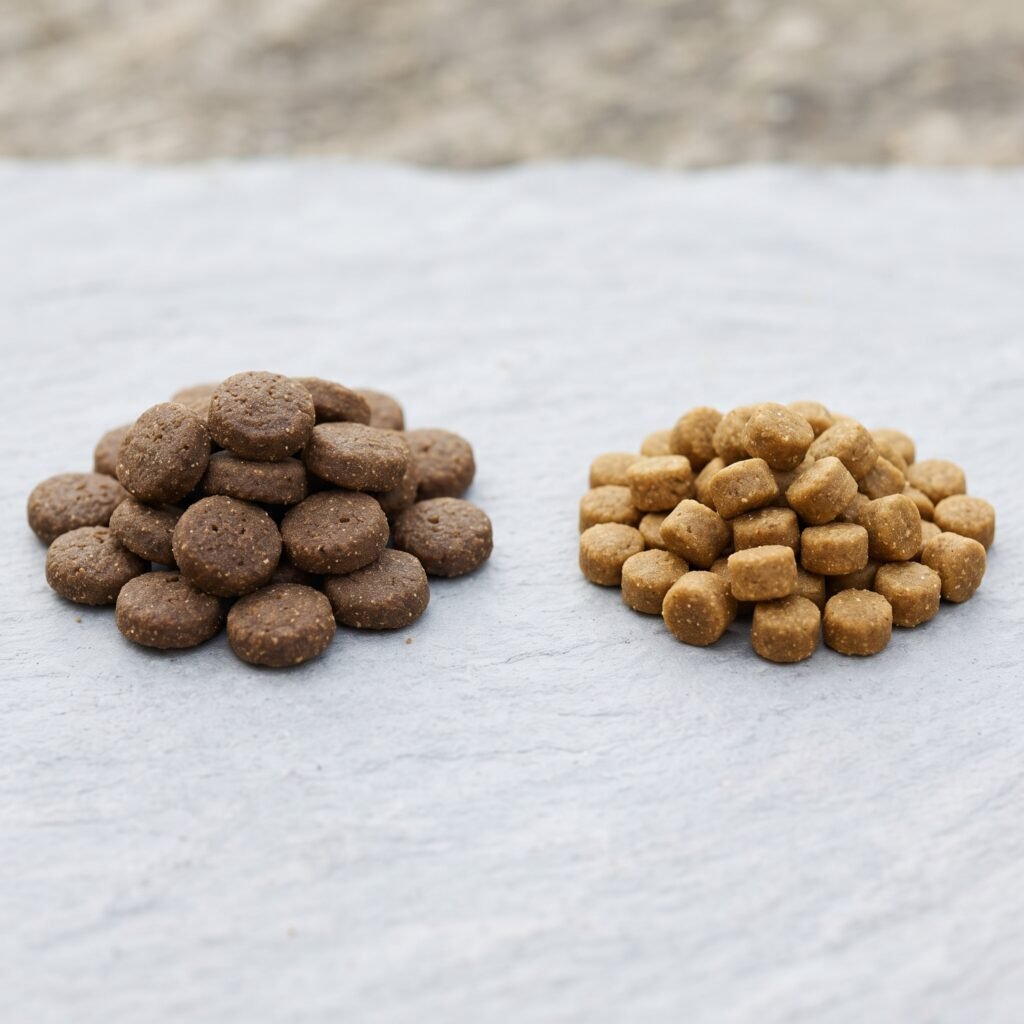
We moved him to a low-pulse formula over twelve days rather than the seven the bag suggests. Kibble on the new food was noticeably smaller — about 8mm across versus the 12mm discs he was used to — and he inhaled the first two meals in under a minute, which for a slow eater was a change I noted with some suspicion.
The bag itself smelled different too: less of that toasty legume-flour sweetness, more rendered-fat smell, the kind that lingers on your hands. That’s not a quality signal, just a real difference in how a higher animal-inclusion food presents.
Stool firmed up by day nine and stayed firm. Ears were unchanged, which was the honest and expected result — the ear problem was never a grain problem.
The owner’s takeaway was that grain free dog food had been “the issue.” I don’t think it was. We reduced legume load and raised animal protein simultaneously, and I can’t tell you which one the gut responded to.
Where this approach didn’t work
A Golden Retriever, eight years old, no cardiac symptoms, on grain-free for years because of documented chicken sensitivity — recurring otitis, resolved on removal, returned on reintroduction. Textbook.
The owner wanted maximum caution on the DCM question given the breed’s documented association with taurine-related DCM. Reasonable instinct. We moved him to a grain-inclusive formula.
The available grain-inclusive options in her budget and her town were overwhelmingly chicken-based. We chose the least-bad one — lamb primary, but chicken fat and chicken meal further down.
Five weeks later the ears were inflamed again and he was back on antibiotics and a steroid course.
That’s the failure, and it’s instructive. We traded a theoretical, unestablished risk for a confirmed, reproducible one, and the dog paid for it in ear infections. We went back to grain free dog food — a low-pulse, lamb-based formula from column B — added a baseline echocardiogram and taurine panel instead, and monitored. Both were normal. Three years on, still normal.
The lesson I took: caution isn’t automatically the safe choice. Switching has its own risk profile, and for a dog with a documented food reaction that risk can be larger than the one you’re avoiding.
What’s worth testing, and what isn’t
If the audit comes back high-load and you want data rather than guesswork, there are two tests worth discussing with your vet. Neither one tells you anything about grain free dog food in general — they tell you about your dog.
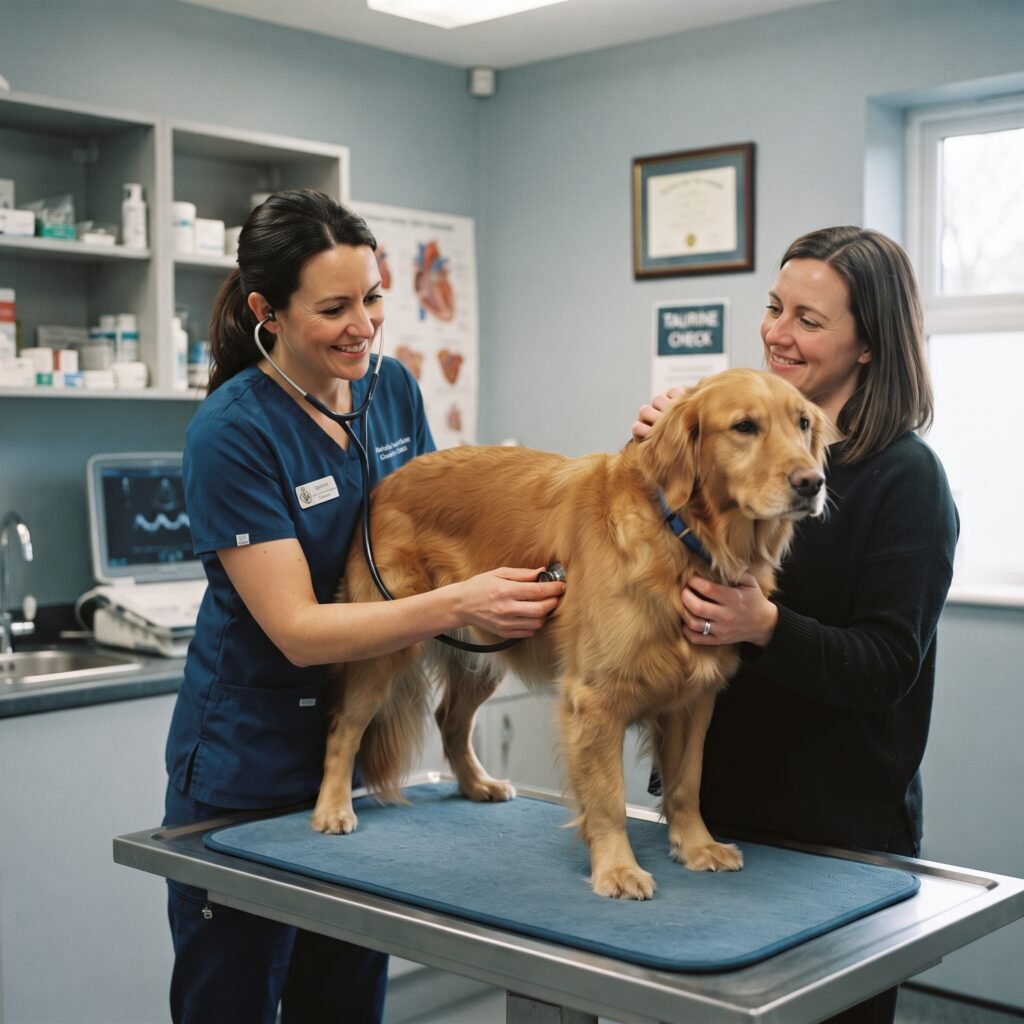
A whole blood taurine level is the cheaper one and the more commonly ordered. It’s most informative in the breeds with documented taurine-responsive DCM — Golden Retrievers, Newfoundlands, Cocker Spaniels, English Setters among them.
An echocardiogram is the definitive look at cardiac structure and function. It costs meaningfully more and usually means a referral, but it’s the only thing that tells you what the heart is actually doing right now.
For a mixed-breed dog with no symptoms on a low-pulse grain free dog food, I don’t think either test is a good use of money. For a Golden on a pulse-heavy formula, a baseline echo is money I’d spend without much hesitation.
Symptoms that should skip the label audit entirely and go straight to a vet: exercise intolerance, coughing, fainting or near-fainting, abdominal distension, or a dog who suddenly can’t manage a walk he handled last month.
Does breed, age or budget change the answer?
Yes, more than most articles admit.
Large breed puppies
Growth is the one life stage where I get genuinely conservative. Large breed puppy formulas need controlled calcium — AAFCO’s growth profile sets both a minimum and a maximum for calcium, and large breed puppies are specifically sensitive to the upper end because excess calcium during growth is associated with developmental orthopedic disease.
Feeding grain free dog food through growth is fine in principle; the constraint is calcium, not carbohydrate. Grain free puppy food isn’t inherently a problem here. But the pool of large-breed-specific grain free puppy food is small, and the temptation to feed an all-life-stages grain-free formula instead is real. All-life-stages means it meets the growth profile, but it doesn’t guarantee the calcium ceiling appropriate for a large breed puppy.
Check the nutritional adequacy statement for the phrase covering growth of large size dogs — 70lb or more as an adult. If it isn’t there, it isn’t formulated for your Great Dane puppy, grain-free or otherwise.
Seniors and dogs with kidney concerns
Protein restriction in early kidney disease is more nuanced than it used to be, and phosphorus matters more than the protein number. Pulse-heavy formulas can run higher in phosphorus than the panel suggests, and that’s as true of some grain-inclusive food as it is of grain free dog food. If your dog has documented renal values, that’s a therapeutic diet conversation, not a grain-free one.
The tight-budget household
Here’s the reality I won’t dress up: a good grain-inclusive food beats a cheap grain free dog food nearly every time, and the price gap in the table above is real money for a lot of families.
If your budget caps out around column C’s $0.34 per 1,000 kcal and your dog has no confirmed food reaction, feed column C and don’t feel bad about it. Grain free dog food at that price point tends to lean harder on pulses precisely because animal protein is the expensive part.
The worst outcome I see is an owner stretching for a premium grain free dog food, running out mid-month, and filling the gap with whatever’s cheapest at the corner store. Diet consistency beats diet optimization.
Does the same logic apply to wet, fresh and raw food?
Mostly no, and this is where the count-to-ten audit stops being the right tool.
Canned food is typically 75–78% moisture and naturally low in carbohydrate, so a wet grain free dog food often earns the label without doing anything unusual to its formula. There was never much grain in it to remove. The thickeners you’ll see — guar gum, cassia, carrageenan — aren’t pulses and don’t factor into the legume question at all.
Fresh and gently cooked options make comparison harder, not easier. At 70%-plus moisture, the guaranteed analysis looks alarmingly low in protein until you convert to dry matter, at which point many of them land right alongside kibble. Always convert before you judge.
Raw diets deserve the same nutritional adequacy statement scrutiny as anything else. Check that the food is formulated to meet an AAFCO profile for your dog’s life stage, and follow FDA handling guidance on raw pet food, which exists for the humans in the house as much as the dog.
Toppers are the quiet variable nobody accounts for. Adding a quarter can of wet food to a bowl of grain free dog food shifts the calorie split, the fat percentage and the calcium-phosphorus balance simultaneously — and if you’re feeding a large breed puppy, that last one matters.
If you’re feeding wet or fresh, the useful audit isn’t pulse-counting. It’s the adequacy statement, the dry matter conversion, and whether the company will send you a full nutrient analysis when you ask.
Three mistakes I see over and over
Treating grain-free as a diagnosis. It’s a formulation choice, not a treatment. Asking “is grain free dog food bad for dogs” or good for them skips the only question that resolves anything: what specifically is your dog reacting to, and how do you know?
Rotating brands within the same pattern. Owners whose dog does poorly on a pulse-heavy formula often switch to a different pulse-heavy formula with different packaging and conclude nothing changed because “grain-free doesn’t work for him.” They never actually changed the variable. Run the audit on the new bag before you buy it, not after.
Buying on the first ingredient. Fresh deboned chicken in position one is about 70% water before cooking. After processing, a chicken meal in position three can contribute more actual protein. The best grain free dog food I’ve recommended usually has a named meat meal near the top, not just a photogenic fresh-meat claim.
There’s a fourth I’ll mention briefly: switching foods during a flare. If your dog is mid-episode — itching hard, or three days into loose stool — that’s the worst possible moment to introduce a new formula, because you lose the ability to attribute anything that happens next.
How do I switch without wrecking my dog’s stool?
The seven-day schedule printed on most bags is too fast for a dog with any digestive history. I use twelve to fourteen days.
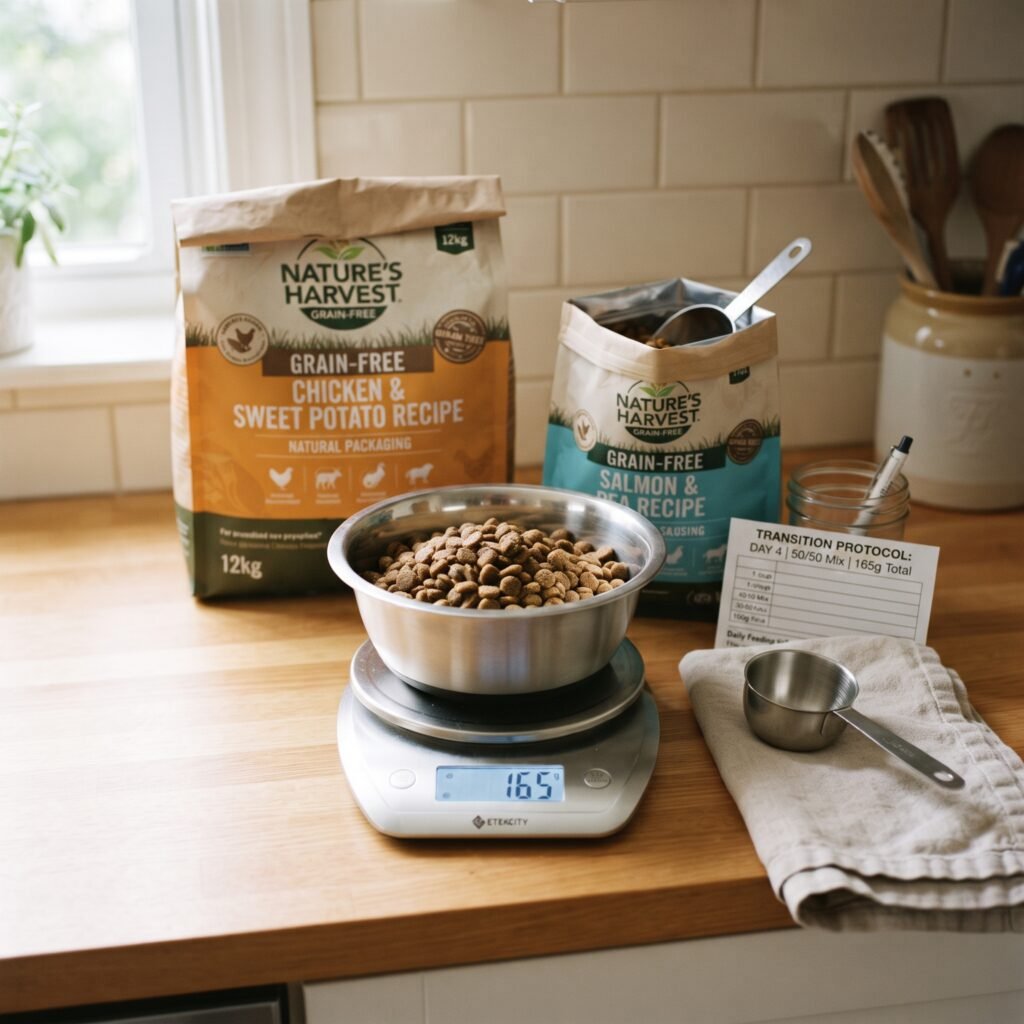
Days 1–3: 25% new, 75% old. Days 4–6: 50/50. Days 7–9: 75% new. Days 10–12: 100% new. If stool loosens at any stage, hold at that ratio for three extra days rather than pushing forward.
Moving between two kinds of grain free dog food is usually gentler than crossing categories, but I’d still take the full two weeks. Weigh the food rather than scooping it. Kibble density varies enough between formulas that a cup of one food and a cup of another can differ by 60 or 70 calories — that alone causes “the new food gave him diarrhea” reports that were actually 15% overfeeding.
Change one thing at a time. If you switch food and add a supplement in the same week, you’ve learned nothing from the result.
Give it three weeks before you judge coat or energy. Stool responds in days; skin and coat take a full turnover cycle, and I’ve watched owners abandon a food at day ten that would have worked at day forty.
How I evaluated this
Every formula archetype in the comparison table was built from guaranteed analysis panels and ingredient lists I read directly off retail bags, converted to a dry matter basis so the numbers are actually comparable across products. Calorie figures come from the manufacturer-declared kcal/cup on the package.
Nutrient adequacy was checked against AAFCO’s published dog food nutrient profiles for adult maintenance and for growth, including the large-size-growth calcium provisions. I checked the nutritional adequacy statement on every bag — whether the food was formulated to meet a profile or substantiated through feeding trials, and which life stage it claims.
Recall history was reviewed through the FDA’s animal and veterinary recall listings rather than aggregator sites, which frequently repeat delisted or expired notices. I also read each grain free dog food panel against its own front-of-bag marketing copy, which is where the gap between claim and formula usually shows.
For manufacturer quality I use the WSAVA-derived questions: does the company employ a qualified nutritionist, does it own its manufacturing plants, does it conduct feeding trials, and will it give you a full nutrient analysis on request. That last one is the fastest filter — companies that can answer it in a day are a different tier from companies that can’t answer it at all.
Where a claim isn’t verifiable, I’ve said so rather than reaching for a number. The association between grain free dog food and heart disease in particular remains unestablished, and anyone quoting you a precise risk percentage is inventing it.
Frequently asked questions
Is grain free dog food bad for dogs? There’s no established causal link between grain free dog food and heart disease, and the FDA’s own 2022 statement said it lacked the data to establish one. The concern that remains is specific to formulas built heavily on peas, lentils and other pulses, not to grain-free as a category.
Does my dog need a taurine supplement if he eats grain free dog food? For most dogs, no — healthy dogs synthesize taurine from methionine and cysteine, and AAFCO profiles set minimums for those amino acids. If your dog is a Golden Retriever, Newfoundland or Cocker Spaniel on a pulse-heavy formula, ask your vet about a blood taurine level before supplementing blindly.
What’s the best grain free dog food for a sensitive stomach? The best grain free dog food for a fragile gut is usually the plainest one: moderate fat, ideally under 16% on a dry matter basis, a single named animal protein and one carbohydrate source. A potato-based formula with no pulses is often easier to tolerate than a legume-heavy one.
Is grain free puppy food safe for large breed puppies? It can be, but check the nutritional adequacy statement for growth of large size dogs specifically. Grain free puppy food formulated only for general growth may not carry the calcium ceiling a large breed puppy needs during the first year.
How long until I know if grain free dog food is helping my dog’s itching? Give it eight to twelve weeks with zero dietary exceptions — no flavored treats, chews or table food. Skin turnover is slow, and anything shorter than eight weeks produces a result you can’t trust either way.
The bottom line
Don’t switch because of a headline. Switch because the label audit, your dog’s history and your vet’s read all point the same direction.
Count the pulses in the top ten. Watch for split fractions. Estimate the animal share behind the protein number. If you land at zero or one pulse entry and your dog is thriving, grain free dog food is a reasonable place to stay.
If you land at four or more and you own a breed with documented taurine-related DCM, that’s the conversation worth having — and a baseline echo is a better first step than a panicked bag swap.
The question is never whether grain free dog food is bad for dogs in the abstract. It’s whether this bag, for this dog, is the better of the options in front of you.
And if your dog has a confirmed food reaction that grain free dog food resolves, hold your ground. A documented problem you’ve already solved outranks a theoretical one you can’t measure.