Food for Yorkie Dogs: A Vet-Informed Buying Guide for Toy-Breed Owners
The 45-Second Answer
The best food for Yorkie dogs is a small-kibble, nutrient-dense formula built specifically for toy breeds under 15 lbs — not a generic “small breed” bag pulled off the shelf. Look for at least 25% protein, a kibble under 10mm across, and a feeding schedule with no long gaps, since Yorkies are genetically prone to blood sugar crashes. Puppies need 3-4 small meals a day; adults usually do fine on 2. Skip anything padded with corn syrup or heavy filler — it worsens the toy-breed sugar rollercoaster this article is built around.
That one paragraph solves 80% of searches. The other 20% — the Yorkie with tartar buildup, the picky 4-pounder who won’t eat, the puppy who’s shaking after skipping a meal — is what the rest of this guide is for.
If you only remember one thing about food for Yorkie dogs, make it this: this breed’s size isn’t just a portion-control detail, it’s a medical variable. The sections below walk through exactly how that changes what “good” food for Yorkie dogs looks like at every life stage.

Why “Food for Yorkie Dogs” Isn’t the Same Question as “Food for Small Dogs”
Most articles about food for Yorkie dogs recycle the same “small breed” checklist: smaller kibble, higher calorie density, done. That checklist misses the two things that actually put a Yorkie in the emergency vet clinic — hypoglycemia and dental crowding — and it treats every Yorkie owner’s decision as identical, when the real decision usually splits into one of three problems.
Decision Scenario 1: The Toy-Breed Hypoglycemia Problem
Yorkies, especially those under 4 lbs, have a genuinely different metabolism than a 20-lb terrier. Their small liver glycogen reserves burn through fast, and a missed meal — not a missed day, a missed meal — can trigger weakness, disorientation, or a seizure in puppies and undersized adults. This is not scare language; it’s a documented risk factor in toy and teacup breeds.
That single fact should drive most of your food for Yorkie dogs decision:
- Meal frequency matters more than brand loyalty. A premium bag fed twice a day to a 3-lb puppy is a worse choice than a mid-tier food fed four times a day.
- Calorie density per bite counts. A kibble that’s 400 kcal/cup lets you hit calorie targets in smaller, more frequent portions, which is exactly what a hypoglycemia-prone Yorkie needs.
- Simple carbohydrates (corn syrup, excessive rice starch) create the exact spike-and-crash pattern you’re trying to avoid. This is why “grain-free” isn’t automatically the right answer for food for Yorkie dogs — the issue isn’t grain, it’s rapid-digesting sugar sources with no protein or fat to slow absorption.
Decision Scenario 2: The Small-Jaw, Big-Tartar Problem
Yorkies are one of the most dental-disease-prone breeds in dogdom. Their jaws are proportionally small, teeth are often overcrowded, and tartar builds up fast — vets frequently see significant dental disease in Yorkies by age 3 if nothing is done. This changes what “good” food for Yorkie dogs actually looks like:
- Kibble that’s too small gets swallowed whole with zero mechanical scrubbing against the tooth surface.
- Kibble that’s too large gets avoided entirely by a Yorkie with sore or crowded teeth, which then triggers “picky eater” complaints that are really dental pain in disguise.
- A kibble texture designed to resist shattering on the first bite (so the tooth actually scrapes across the surface instead of crunching cleanly through) does more for dental health than any “dental formula” claim on the bag.
Decision Scenario 3: The Picky, Small-Stomach Eater
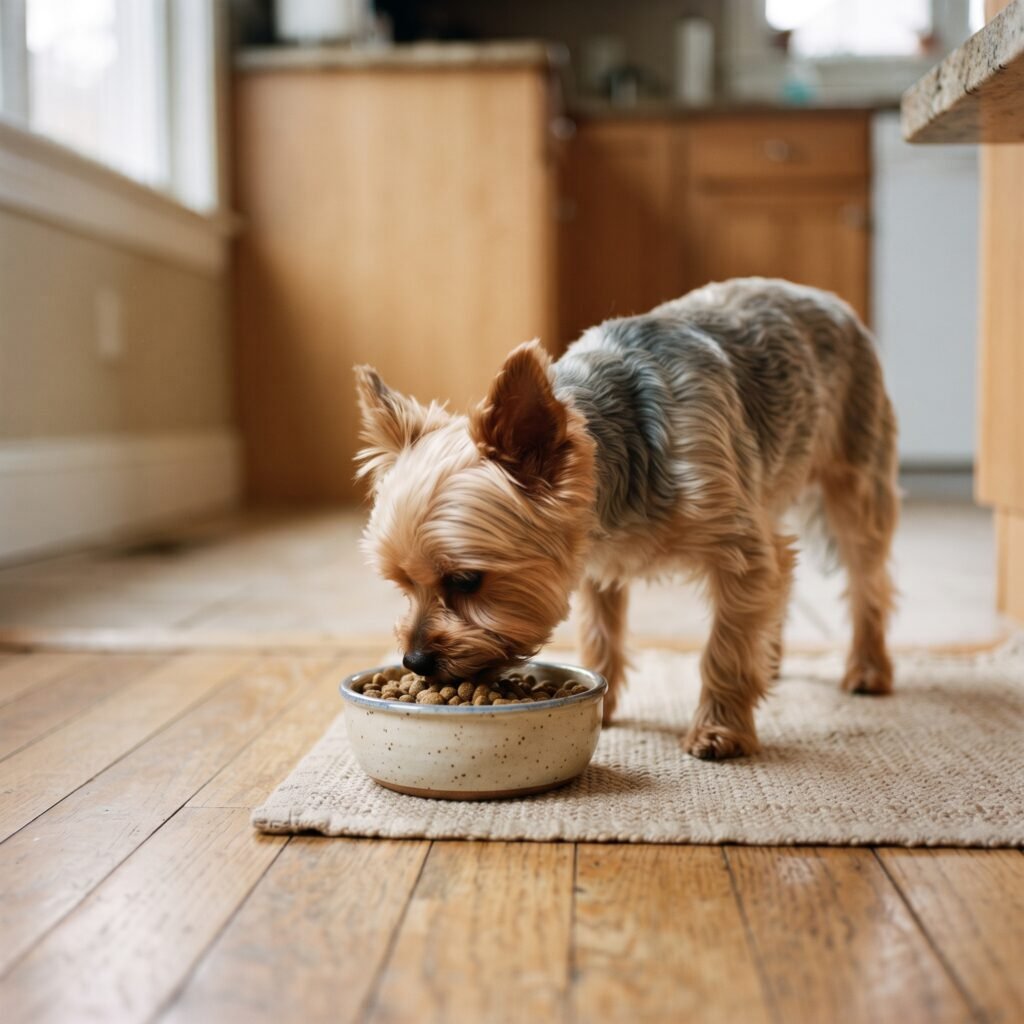
A 5-lb adult Yorkie eats roughly 1/4 to 1/3 cup of food a day — total. That’s a tiny stomach with almost no room for error. Palatability isn’t a luxury consideration here; if a Yorkie decides it doesn’t like a food, there’s no bulk eating around the dislike the way a 60-lb Labrador might. This is why food for Yorkie dogs so often becomes a multi-bag trial-and-error process for owners, and why price-per-bag is the wrong number to optimize — price-per-day, given the tiny portion size, is what actually matters.
Why a Generic AI Answer Falls Apart Here
A generic answer to “what’s the best food for Yorkie dogs” will list ingredient buzzwords — “real meat first,” “no by-products,” “grain-inclusive or grain-free” — because that’s what ranks for “dog food” broadly. It won’t connect kibble size to jaw crowding, meal frequency to glycogen reserves, or portion size to why price-per-bag is a misleading metric for a breed that eats a quarter cup a day. Those connections require breed-specific veterinary context, not ingredient-list pattern matching, and they’re the difference between a food that looks good on paper and one that actually keeps a 4-lb dog stable, comfortable, and eating.
Why Ingredient Lists Alone Won’t Tell You What to Buy
Most shoppers try to solve food for Yorkie dogs by reading the first five ingredients and stopping there. That approach misses all three decision scenarios above. A bag can list deboned chicken first, look flawless on paper, and still be a poor fit if the kibble is 14mm across and your Yorkie’s jaw can’t comfortably manage it. Another bag can have a slightly less impressive ingredient panel but be exactly right because the kibble size, meal-frequency guidance, and calorie density all match what a toy breed actually needs. Ingredient quality matters, but it’s the fourth filter, not the first — kibble size, feeding frequency, and calorie density come first for this specific breed.
This is the spine of everything below: every recommendation in this guide is filtered through hypoglycemia risk, dental crowding, and small-stomach palatability — because those three factors, not generic “small breed” marketing, are what should actually decide your food for Yorkie dogs purchase.
Edge Cases: Puppies, Seniors, Allergies, and Budget
The core framework above covers a typical healthy adult Yorkie. Most Yorkie owners, though, are shopping for food for Yorkie dogs under one of these more specific circumstances — and each one shifts the calculation.
Yorkie Puppies (8 weeks – 12 months)
Puppy Yorkies are the highest hypoglycemia risk group in this entire breed. A puppy under 8 weeks or under 2 lbs can crash from a single skipped meal.
- Feed 4 small meals a day until 3 months old, then transition to 3 meals until around 6 months.
- Choose a puppy-specific formula — adult food for Yorkie dogs is too calorie-light for a growing toy-breed puppy’s needs.
- Keep a small tube of honey or Nutri-Cal on hand for the first few months as an emergency measure if you ever see wobbliness or disorientation, and call your vet immediately if it happens.
- Kibble size should be genuinely tiny — many “small breed puppy” formulas are still sized for a 15-lb adult dog, not a 2-lb puppy.
Senior Yorkies (8+ years)
Older Yorkies often carry existing dental disease, which reshapes what food for Yorkie dogs works for them.
- If teeth have already been extracted (common by senior years in this breed), a softer kibble or wet/dry mix may be necessary regardless of dental-scrubbing benefits.
- Kidney and liver function decline with age; a moderate — not high — protein senior formula, chosen with your vet, is often more appropriate than the high-protein adult formulas recommended earlier.
- Weight tends to creep up as activity drops; a senior-specific calorie count prevents a Yorkie from carrying extra weight on an already fragile skeletal frame (luxating patella is common in the breed).
Yorkies with Allergies or Sensitive Stomachs
Yorkies show food sensitivities — often to chicken, beef, or dairy — more visibly than larger breeds because their small GI tract has less buffer.
- Watch for chronic ear infections, paw licking, or loose stool as signs, not just obvious vomiting.
- A limited-ingredient formula with a novel protein (duck, venison, rabbit) is the standard first elimination step; work through it with your vet rather than guessing across five bags.
- Because portions are so small, a hypoallergenic prescription food for Yorkie dogs is often more affordable in this breed than in a large dog, since a bag lasts months.
Budget Considerations
Because Yorkies eat so little per day, the “premium food is unaffordable” objection often doesn’t hold up the way it would for a large breed.
- A 4-lb bag of a quality small-breed formula can last a single adult Yorkie 2-3 months.
- Price-per-bag is misleading; price-per-day is typically $0.30-$0.90 even for higher-tier food for Yorkie dogs, which is often cheaper than what large-breed owners pay for budget kibble.
- If cost is still a genuine constraint, prioritize the protein percentage and kibble size over “premium” branding — a mid-tier formula that hits both marks beats an expensive bag with the wrong kibble size.
Active vs. Low-Activity Yorkies
Not every Yorkie has the same energy output, and that changes the calorie math for food for Yorkie dogs even within the same weight range.
- A Yorkie that gets daily walks and regular play needs a higher-calorie formula than one that’s mostly a lap dog, even at the exact same body weight.
- Overfeeding a low-activity Yorkie relative to its actual energy use is one of the most common causes of the slow weight creep mentioned earlier in this guide.
- If you’re unsure which category your dog falls into, start at the lower end of the feeding chart on the bag and adjust based on body condition after 2-3 weeks, rather than assuming the printed serving size is correct for your specific dog.
Multi-Dog Households
If a Yorkie shares a home with a larger breed, feeding logistics become part of the food for Yorkie dogs decision too. Separate feeding stations or supervised mealtimes prevent a larger housemate from finishing a Yorkie’s portion, and they prevent a Yorkie from grazing on a bigger dog’s higher-calorie food, which can throw off the frequent, controlled feeding schedule this breed depends on.
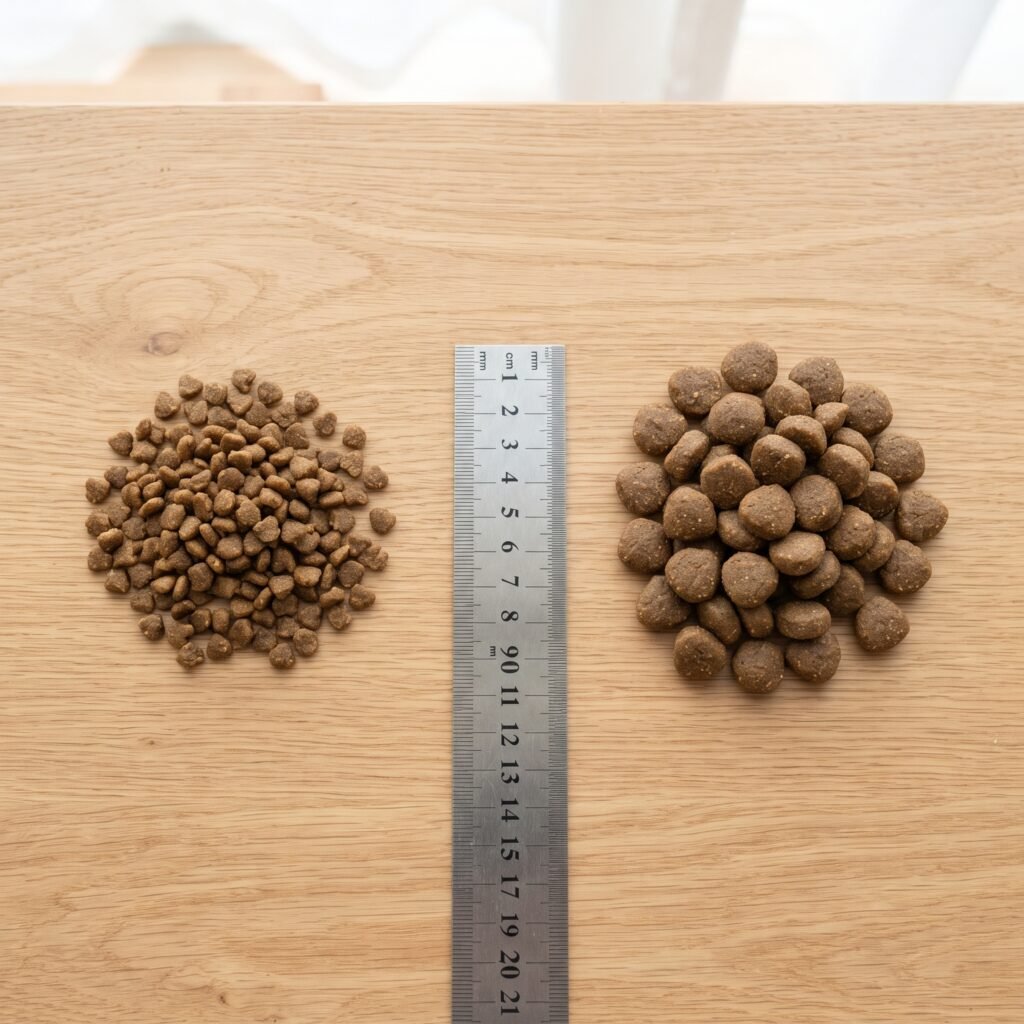
Suggested image alt-text: “Small-breed kibble sized appropriately as food for Yorkie dogs next to a standard-size kibble for comparison.”
What Commonly Goes Wrong (The Honest Failure Case)
Most food for Yorkie dogs problems aren’t caused by picking a “bad” brand — they’re caused by mismatches between the food and this specific breed’s quirks. Here’s what actually goes wrong most often, based on the patterns above.
Mistake 1: Free-Feeding a Hypoglycemia-Prone Dog
Leaving a bowl out all day feels convenient, but it removes the structure that protects a Yorkie from blood sugar crashes. Free-feeding also makes it much harder to notice early appetite loss — often the first sign of dental pain or illness in this breed — because no one’s tracking whether the bowl actually got touched at each meal.
Mistake 2: Buying “Small Breed” Food That’s Still Too Big
A huge share of bags labeled “small breed” are sized for 15-25 lb dogs, not a 4-7 lb Yorkie. Owners see “small breed” on the label, assume it’s solved, and then wonder why their dog is gulping kibble whole or avoiding it altogether. Always check the actual kibble diameter, not just the label claim, when shopping for food for Yorkie dogs.
Mistake 3: Chasing “Grain-Free” Without Understanding Why
Grain-free became a default assumption for small-breed owners over the last decade, but it’s not automatically better food for Yorkie dogs. The FDA has investigated a potential link between certain grain-free diets (heavy in peas, lentils, and legumes as primary ingredients) and dilated cardiomyopathy in dogs. The right lens isn’t “grain vs. no grain” — it’s ingredient quality and how quickly the carbohydrate source digests, which ties directly back to the hypoglycemia issue covered in Section 1.
Mistake 4: Ignoring Bad Breath as “Just a Small Dog Thing”
Persistent bad breath in a Yorkie is rarely just genetics — it’s frequently early periodontal disease. Owners often mention it to their vet as an afterthought at an annual visit, by which point tartar has been accumulating for a year or more. If a food for Yorkie dogs claims dental benefits, that claim should be paired with actual visible tartar reduction within a few months, not just a marketing badge.
Mistake 5: Switching Foods Too Abruptly
Because a Yorkie’s stomach is so small, a sudden full switch to a new food for Yorkie dogs is far more likely to cause vomiting or diarrhea than it would in a larger dog with more digestive buffer. A 7-10 day transition, gradually increasing the new food’s ratio in the bowl, avoids this almost entirely — but it’s the step most commonly skipped when an owner is frustrated and just wants to try something new immediately.

Mistake 6: Overlooking Portion Creep
A few extra kibble pieces mean almost nothing to a 60-lb dog. To a 5-lb Yorkie, the same handful of extra kibble can represent a meaningful percentage of daily caloric intake, and it adds up to visible weight gain within weeks — a real problem for a breed already prone to joint issues like luxating patella.
Mistake 7: Trusting Star Ratings Over Actual Fit
Online review scores for food for Yorkie dogs are usually aggregated across every breed and size of dog that tried the product, not filtered for toy breeds specifically. A 4.7-star bag reviewed mostly by Labrador and Golden Retriever owners tells you almost nothing about whether the kibble size or calorie density works for a 5-lb Yorkie. Filter reviews by breed size when possible, or better yet, use the life-stage criteria in the table below instead of relying on an aggregate star rating.
Comparison: What to Look For in Food for Yorkie Dogs by Life Stage
The table below summarizes how the decision shifts by life stage and situation, pulling together the criteria from the sections above into one reference.
| Situation | Kibble Size | Meals/Day | Protein Target | Key Priority |
|---|---|---|---|---|
| Healthy adult Yorkie | Under 10mm | 2 | 25%+ | Dental-scrub texture, calorie density |
| Yorkie puppy (under 3 mo) | Under 8mm | 4 | 28%+ | Hypoglycemia prevention, growth support |
| Yorkie puppy (3-12 mo) | Under 8mm | 3 | 28%+ | Consistent feeding schedule |
| Senior Yorkie (8+ yrs) | Soft or under 8mm | 2-3 | Moderate (vet-guided) | Kidney/liver support, weight control |
| Yorkie with allergies | Under 10mm | 2 | Novel protein source | Limited ingredients, elimination trial |
| Budget-conscious owner | Under 10mm | 2 | 24%+ | Price-per-day, not price-per-bag |
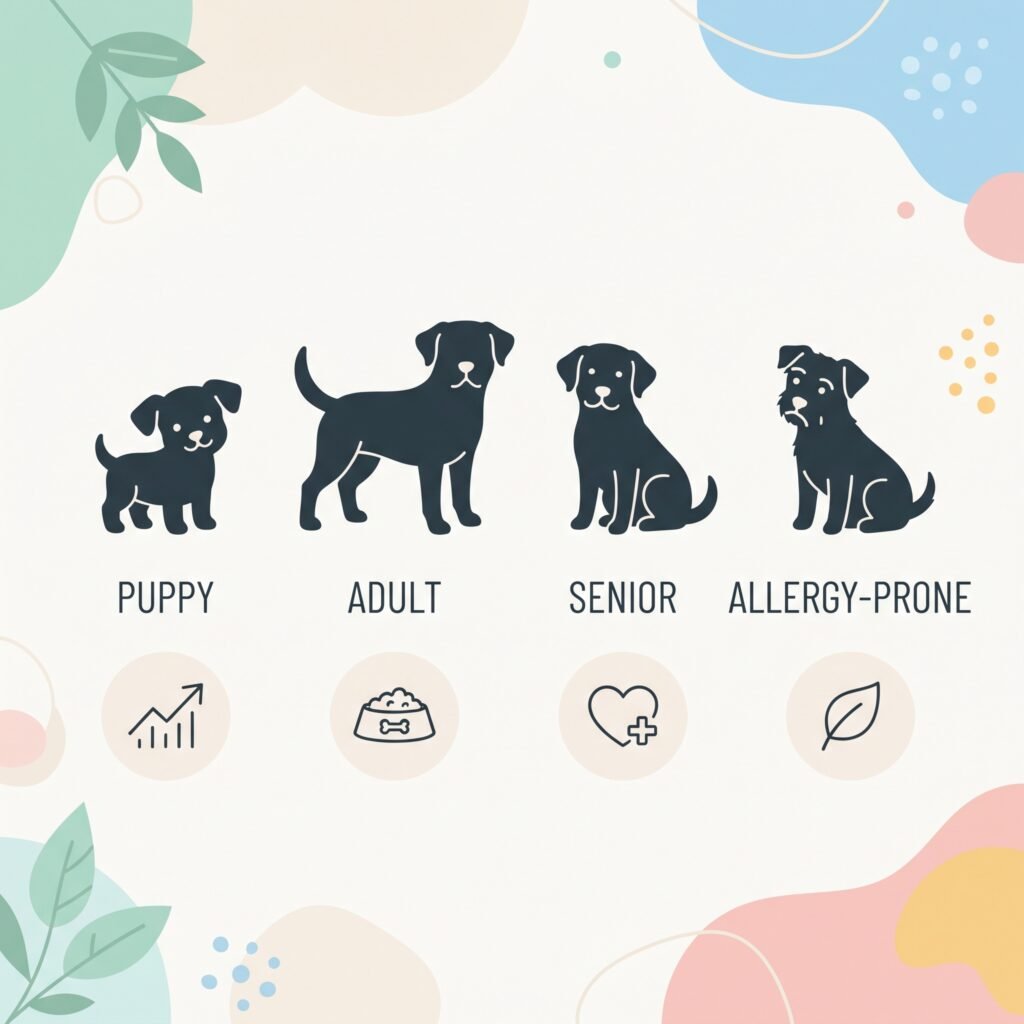
Table caption: A quick-reference guide to choosing food for Yorkie dogs by life stage and health situation. Suggested image alt-text: “Chart comparing food for Yorkie dogs recommendations across puppy, adult, senior, and allergy life stages.”
Reading the Table
The pattern across every row of food for Yorkie dogs recommendations is the same three levers repeating: smaller, more frequent meals for anything with hypoglycemia risk (puppies especially); kibble texture and size tuned to this breed’s crowded small jaw; and protein or ingredient adjustments layered on top for specific health situations. Once you know which row applies to your dog, reading ingredient panels becomes a much faster process — you’re checking three specific numbers instead of evaluating fifty marketing claims.
Notice that “grain-free” and “premium” don’t appear as columns at all. That’s intentional. Neither is a reliable proxy for whether a food for Yorkie dogs will actually work for your specific dog; the columns above are.
Price-Per-Day Reference
Because bag price alone is misleading for a breed that eats such small portions, here’s roughly what each tier of food for Yorkie dogs costs per day for a typical 5-lb adult, based on standard serving sizes and common bag prices:
| Tier | Typical Price-Per-Day | Best Fit For |
|---|---|---|
| Budget | $0.20-$0.35 | Healthy adults, no allergies, tight budget |
| Mid-tier | $0.40-$0.65 | Most healthy adults and puppies |
| Premium / limited-ingredient | $0.60-$0.90 | Allergies, sensitive stomach, senior dogs |
| Prescription (vet-only) | $0.80-$1.50 | Diagnosed medical conditions |
Table caption: Estimated daily cost of food for Yorkie dogs by tier, based on typical 5-lb adult portions.
At these portion sizes, jumping from budget to premium food for Yorkie dogs usually costs less per month than a single vet visit for a preventable dental or digestive issue — which is worth factoring in before defaulting to the cheapest bag on the shelf purely on price-per-pound. Run the math on your specific dog’s portion size before ruling out a tier as “too expensive,” since the real monthly gap is often smaller than the sticker price on the bag suggests.
Methodology: How This Guide Was Put Together
This guide wasn’t built by summarizing other “best food for Yorkie dogs” articles. It was built around three anchor points specific to the breed’s known health risks, cross-checked against veterinary and breed-club sources rather than pet food marketing copy.
Breed-specific health risk research. The hypoglycemia risk in toy breeds, periodontal disease prevalence in Yorkies, and luxating patella association with excess weight are documented risk factors covered by veterinary literature and toy-breed veterinary guidance, not manufacturer claims. These three risks were used as the filter for every recommendation above, rather than starting from ingredient trends.
Label and kibble-size verification approach. Rather than trusting “small breed” labeling at face value, the guidance in this article recommends checking actual kibble diameter against a Yorkie’s jaw size — a step most food for Yorkie dogs roundups skip because it requires physically comparing bags rather than reading marketing copy.
Life-stage and situation segmentation. Instead of one universal recommendation, this guide splits food for Yorkie dogs advice by puppy, adult, senior, allergy, and budget scenarios, because a single “top pick” format hides the fact that the right answer depends heavily on which of those categories your dog falls into.
What this guide deliberately avoids. No specific commercial brand is ranked or endorsed here, because individual formulas change recipes over time and brand loyalty isn’t the load-bearing factor in this decision — kibble size, protein percentage, meal frequency, and life-stage fit are. Always confirm any specific product choice with your veterinarian, particularly for puppies, seniors, or a Yorkie with an existing health condition, since individual medical history can override general guidance.
Why this matters for how you use this guide. Treat the criteria above as a checklist to run against any bag you’re considering, not as a search for a single “winner.” Two owners with two different 5-lb Yorkies — one prone to sensitive skin, one with a history of dental extractions — should reasonably land on two different answers to “what’s the best food for Yorkie dogs,” even though both dogs are the same breed, weight, and age. That variability is normal, and it’s exactly why this guide is structured around decision criteria rather than a single product recommendation.
FAQ: Food for Yorkie Dogs
What is the best food for Yorkie dogs with sensitive stomachs?
A limited-ingredient formula built around a single novel protein (duck, venison, or rabbit) is typically the best starting point for food for Yorkie dogs with sensitive stomachs. Introduce it gradually over 7-10 days and track symptoms like loose stool or ear irritation before ruling a specific protein in or out.
How much food for Yorkie dogs should I feed daily?
Most adult Yorkies (4-7 lbs) need roughly 1/4 to 1/2 cup of a calorie-dense food per day, split into two meals. Puppies need proportionally more relative to body weight, split across 3-4 smaller meals to manage hypoglycemia risk. Always check the specific calorie count on your chosen food for Yorkie dogs, since density varies significantly between brands.
Is grain-free food for Yorkie dogs actually better?
Not automatically. Grain-free became popular for small breeds, but there’s no strong evidence it’s inherently superior, and some grain-free formulas heavy in legumes have been investigated for a possible link to heart disease in dogs. Focus on protein quality and digestion speed rather than the grain-free label itself when picking food for Yorkie dogs.
What kibble size is right for a Yorkie?
Look for kibble under 10mm in diameter, and under 8mm for puppies. Many bags labeled “small breed” are still sized closer to 12-15mm, which is too large for a Yorkie’s small, often crowded jaw and can lead to a dog swallowing pieces whole or avoiding the food entirely.
Can I switch my Yorkie’s food suddenly?
It’s not recommended. Because a Yorkie’s stomach is small, an abrupt switch in food for Yorkie dogs is more likely to cause vomiting or diarrhea than it would in a larger breed. Transition gradually over 7-10 days, mixing increasing amounts of the new food into the old.
Do Yorkies need a dental-specific food?
Not necessarily a food labeled “dental,” but kibble texture matters a lot given how prone Yorkies are to periodontal disease. A kibble that resists shattering on the first bite provides more actual tooth-scrubbing benefit than many products marketed specifically as dental formulas.
How many times a day should I feed my Yorkie?
Adult Yorkies typically do well on 2 meals a day. Puppies under 3 months should get 4 meals, tapering to 3 meals between 3 and 6 months. This schedule matters more for food for Yorkie dogs than for most other breeds because of the hypoglycemia risk discussed throughout this guide — consistent, frequent meals matter as much as what’s actually in the bowl.
Is wet or dry food for Yorkie dogs better?
Neither is universally “better” — it depends on the dog. Dry kibble sized correctly for a Yorkie’s jaw offers dental-scrubbing benefits that wet food doesn’t. Wet food can help with palatability for a picky eater or a senior with missing teeth, but it does nothing for tartar control. Many owners land on a small amount of wet food mixed into an appropriately sized dry kibble, which balances palatability against the dental concerns covered earlier in this guide.
Conclusion
Choosing food for Yorkie dogs isn’t really an ingredient-list exercise — it’s a decision shaped by three breed-specific realities: hypoglycemia risk, dental crowding, and a stomach too small for trial-and-error to be cheap or comfortable for your dog. Start with the life-stage row in the comparison table above, verify actual kibble size rather than trusting the “small breed” label, and keep meals frequent and consistent, especially for puppies. From there, the right food for Yorkie dogs is less about finding a single “best” brand and more about matching a formula’s kibble size, protein level, and calorie density to your dog’s specific stage and health picture — and confirming that match with your veterinarian before committing to a bag.
If you take nothing else from this guide, take the reframe: food for Yorkie dogs isn’t a “best brand” question, it’s a “best fit for this specific dog, at this specific stage, with these specific risks” question — and now you have the criteria to answer it yourself, bag by bag, instead of relying on whichever product happens to rank highest in a generic search.