
Can Dogs Eat Pineapple? What Actually Happens When You Try the "Poop-Eating Cure"
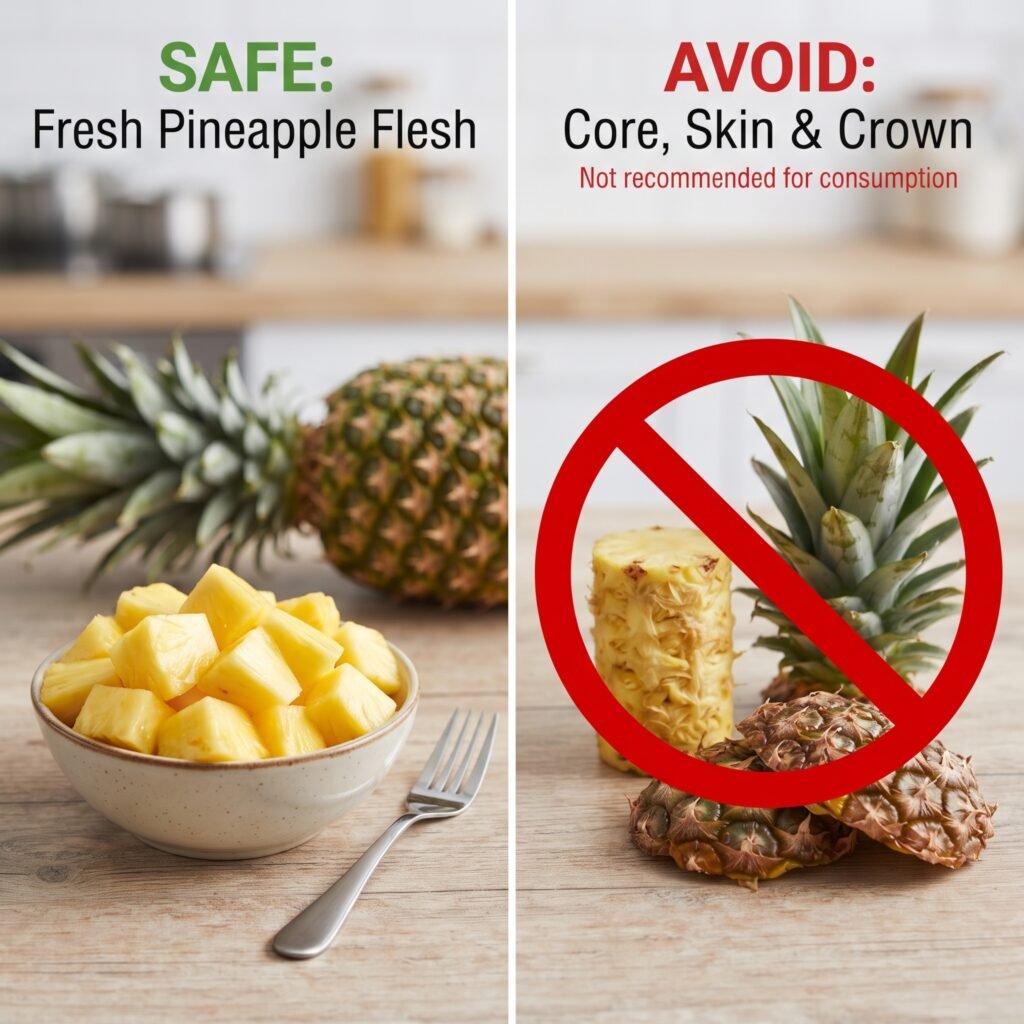
Quick answer: Yes, dogs can eat pineapple. Fresh, ripe pineapple flesh is safe in small amounts and is often recommended by owners as a home remedy to make a dog’s stool taste unpleasant enough to stop coprophagia (stool-eating). But the evidence that pineapple actually stops this behavior is thin, the effective “dose” isn’t standardized, and overfeeding pineapple to chase a behavioral fix can cause the exact digestive upset you’re trying to avoid. Skip the core, skin, and canned syrup — and don’t expect pineapple alone to solve a behavior problem with root causes it doesn’t touch.
If you found this page because someone in a Facebook group told you pineapple stops your dog from eating poop, you’re not alone, and you deserve a straighter answer than “everything in moderation.”
This guide walks through exactly how to test whether dogs can eat pineapple safely for this specific purpose, which dogs should skip the experiment entirely, and what the most common feeding mistakes actually look like in practice — not just a generic safe-foods checklist.


Can Dogs Eat Pineapple to Stop Them From Eating Poop? The Real Decision
This is the scenario that brings most owners here, so let’s deal with it directly. Somewhere in the last decade, “add a spoonful of pineapple to your dog’s food” became one of the most repeated pieces of folk advice for coprophagia — the technical term for a dog eating its own or another animal’s stool. The theory: pineapple’s natural enzymes and acidity make the stool taste bitter or sour enough on the way back out that the dog stops finding it appealing.
Here’s what’s actually true. Can dogs eat pineapple safely enough to test this theory? Yes. Will it work? Sometimes, for some dogs, in a way that’s genuinely hard to separate from coincidence. There is no peer-reviewed veterinary study confirming that feeding pineapple reliably alters stool palatability enough to stop the behavior. What exists is a large body of anecdotal reports — some owners swear it worked within days, others saw zero change, and a smaller group reported their dog developed loose stool from the added fiber and sugar before they ever found out if the “cure” worked.
So if you’re deciding whether dogs can eat pineapple as a coprophagia fix, treat it as a low-cost experiment, not a guaranteed solution. Here’s a reasonable way to structure the trial:
- Use fresh pineapple only, not canned pineapple packed in syrup, which adds sugar that has nothing to do with the theorized mechanism and everything to do with unnecessary calories.
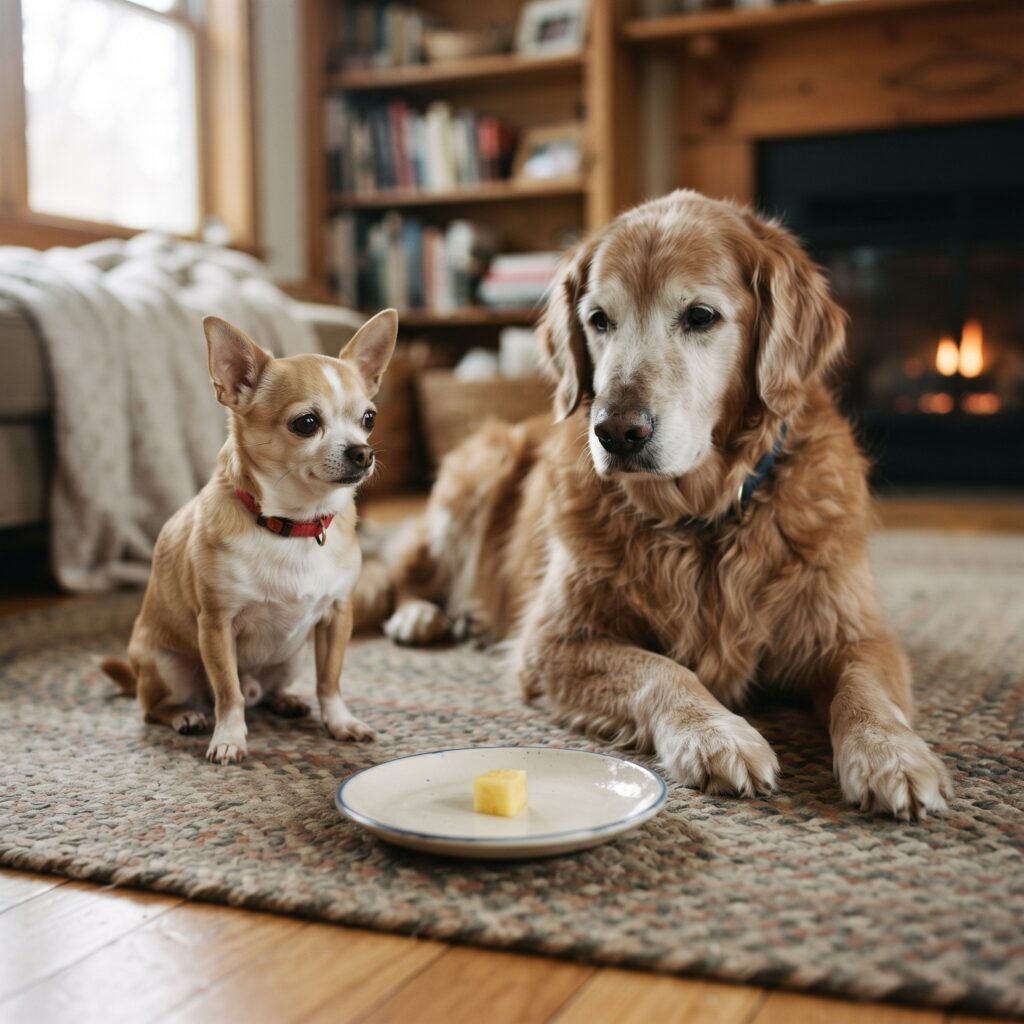
- Start with a small amount — roughly one to two small cubes (about a teaspoon to a tablespoon, depending on your dog’s size) mixed into a meal, once daily.
- Give it consistently for 7–10 days before judging results. A single serving of pineapple isn’t going to change anything; the theory relies on a buildup of enzymes and acids over repeated meals.
- Track the behavior, not just the presence of pineapple. Note whether the behavior decreases, stays the same, or if new digestive symptoms (soft stool, gas, vomiting) show up first.
- Stop immediately if you see vomiting, diarrhea, or lethargy — these suggest your dog is one of the individuals who reacts poorly to the added fiber, acidity, or fructose, and continuing won’t magically produce the coprophagia fix you’re after.
There’s also a mechanistic reason to be skeptical that pineapple is doing anything special here: dogs’ sense of taste and smell doesn’t map cleanly onto what humans consider unpleasant. Bromelain, the enzyme in pineapple often credited with “digestive enzyme therapy” for coprophagia, breaks down protein — it doesn’t reliably survive digestion intact to alter stool composition in a way that would change taste on the way out. Some veterinary behaviorists suspect any success owners report has more to do with the increased attention and consistency of feeding routine (owners who commit to a daily pineapple ritual are also often more vigilant about immediate stool cleanup, which is the single most effective intervention) than the fruit itself.
It’s also worth being clear-eyed about the placebo effect on the owner’s side of this equation. Once someone commits to a pineapple regimen specifically to stop coprophagia, they tend to also start cleaning up the yard faster, supervising outdoor time more closely, and paying closer attention to the dog’s bathroom habits overall — all of which independently reduce opportunities for the behavior regardless of what’s happening nutritionally. Separating “the pineapple worked” from “I started managing the environment better while also feeding pineapple” is nearly impossible without a controlled trial, which is part of why veterinary behaviorists remain cautious about endorsing it as a first-line fix.
This doesn’t mean you shouldn’t try it — dogs can eat pineapple with essentially no downside at the doses described above, so the risk of testing the theory is low. It means you should go in with accurate expectations: pineapple is a low-risk, low-certainty intervention, not a first-line treatment. If coprophagia continues past two weeks of consistent pineapple feeding, that’s a signal to look at the more established causes — nutrient deficiency, parasites, anxiety, boredom, or a learned habit from puppyhood — rather than increasing the pineapple dose, which is the single most common mistake owners make (more on that in the “what goes wrong” section below).
One more nuance worth flagging: whether dogs can eat pineapple for this specific purpose effectively also depends on what’s actually in the food already. A dog on a high-quality, complete-and-balanced diet has less nutritional “gap” for pineapple’s fiber and enzymes to meaningfully affect, while a dog on a poor-quality or improperly balanced diet may see the coprophagia resolve simply from the dietary variety — a correlation that gets misattributed to the pineapple specifically.
Edge Cases: When the Answer to “Can Dogs Eat Pineapple” Changes
The blanket answer — yes, in moderation — breaks down for specific dogs. Here’s where the calculus changes.
Diabetic dogs. Pineapple has a moderate-to-high natural sugar content (about 10 grams of sugar per 100 grams of fresh fruit). For a dog managing diabetes, even “natural” fruit sugar affects blood glucose and insulin dosing. If your dog is diabetic, the honest answer to can dogs eat pineapple shifts from a soft yes to a “check with your vet before adding any fruit, and if approved, keep portions under a teaspoon and monitor glucose response.” Pineapple should never replace or interfere with a diabetic dog’s prescribed diet.
Overweight dogs or dogs on calorie-restricted diets. A cup of fresh pineapple runs close to 80 calories — trivial for a 70-pound Labrador, but that same cup can represent 8–10% of a small dog’s daily caloric needs. For weight-management cases, the question isn’t really can dogs eat pineapple, it’s whether the calorie budget has room for it. One or two small cubes, a few times a week, keeps it firmly in the safe range for most weight-management plans.
Dogs with pancreatitis or sensitive GI systems. Pineapple’s fiber and acidity can aggravate a dog recovering from or prone to pancreatitis. While pineapple isn’t high in fat (the usual pancreatitis trigger), the fiber load and acidity can still provoke GI upset in a sensitive system. If your dog has a history of pancreatitis, IBD, or chronic loose stool, introduce pineapple — if at all — in a single-cube test dose, and watch for 24–48 hours before repeating.
Puppies. Puppies under six months have less digestive stability, and their smaller size means proportionally larger effects from the same gram-for-gram serving. Can dogs eat pineapple as puppies? In very small amounts, yes — a single small cube once or twice a week is a reasonable ceiling. Skip it entirely under 8 weeks, since puppies that young shouldn’t be getting anything beyond their primary diet.
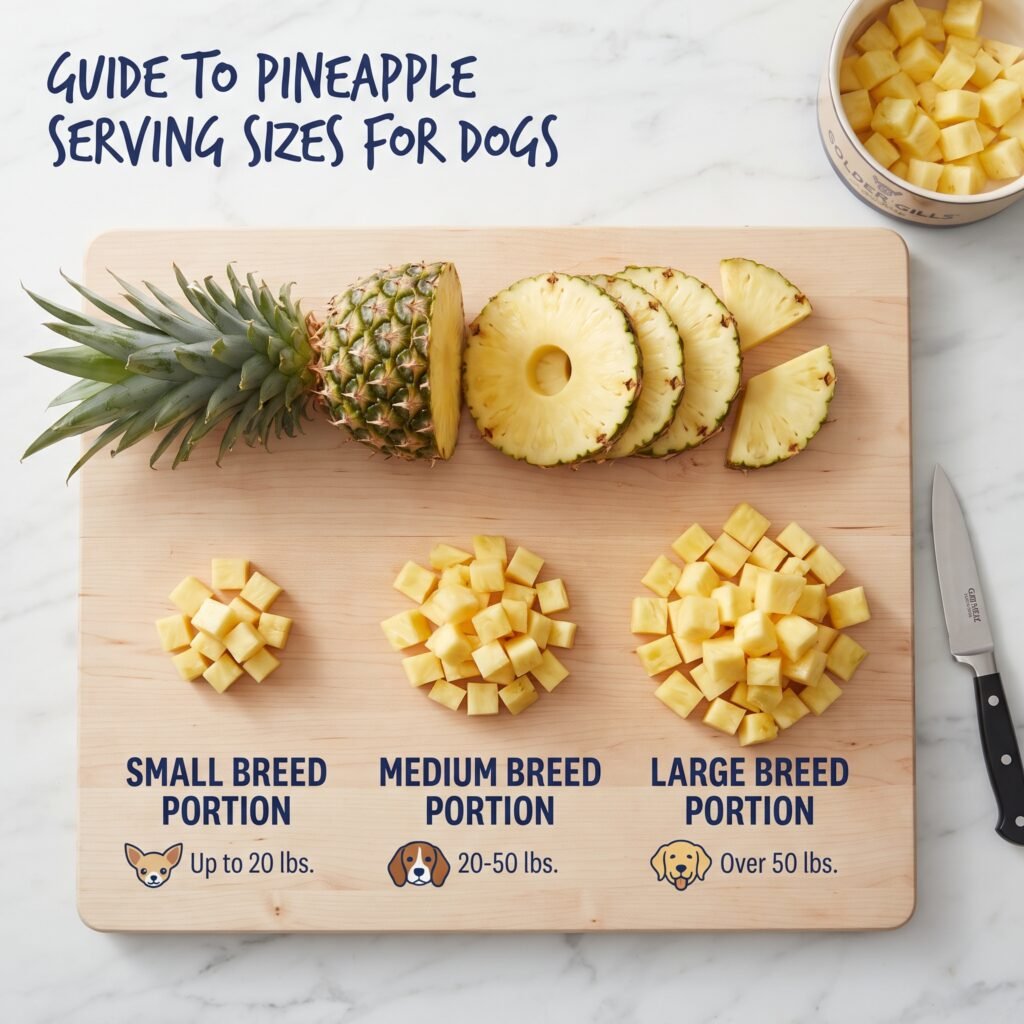
Small and toy breeds. Beyond the calorie math above, small breeds (Chihuahuas, Yorkies, Pomeranians) face a real choking risk from pineapple chunks that are appropriately sized for a Golden Retriever. Dice pieces down to pea-sized cubes for dogs under 15 pounds.
Brachycephalic breeds (Bulldogs, Pugs, Boston Terriers). These breeds already have compromised airways and are more prone to choking and reflux. Pineapple’s fibrous texture is harder for them to chew thoroughly; cutting it into thin, soft slices rather than firm cubes reduces the risk.
Senior dogs. Older dogs frequently have reduced kidney function, and pineapple is moderately high in potassium. For seniors with diagnosed kidney disease, run any fruit addition past your vet. For healthy seniors, small amounts of pineapple are generally fine and the fiber can even help with the constipation that’s common in older, less active dogs.
Dogs with known fruit or oral allergies. Pineapple contains bromelain, which in rare cases triggers a mild oral reaction (lip or tongue irritation) similar to what some people experience. It’s uncommon in dogs but not unheard of — watch the first serving closely.
Pregnant or nursing dogs. Caloric and nutrient needs shift substantially during pregnancy and lactation, and a mother dog’s digestive system is already working overtime. Can dogs eat pineapple while pregnant or nursing? In small amounts, generally yes, but this is another case where the answer depends on whether the rest of the diet already meets the significantly higher caloric demands — treats, including fruit, should take a back seat to a properly formulated reproductive or lactation diet during this period.
Dogs on certain medications. There’s no major documented drug interaction between pineapple and common canine medications, but bromelain has mild blood-thinning properties in some research contexts. If your dog is on anticoagulant medication or has an upcoming surgery, mention any fruit additions, pineapple included, to your vet as a matter of routine disclosure rather than assuming it’s automatically fine.
Across every one of these groups, the pattern holds: can dogs eat pineapple is rarely a hard no, but the safe serving size and frequency shrinks considerably as health complexity increases.

What Commonly Goes Wrong When Owners Feed Pineapple to Dogs
Most pineapple-related problems aren’t about whether dogs can eat pineapple at all — they’re about how owners actually feed it in practice. These are the failure patterns that show up again and again.
Overdosing in pursuit of the coprophagia fix. Because the “how much pineapple stops a dog from eating poop” question has no official answer, owners often reason that if a teaspoon didn’t work, a quarter-cup might. This is the single most common mistake tied to this specific use case. Ramping up the serving size doesn’t make the folk remedy more likely to work — bromelain and acidity don’t scale linearly into effectiveness — but it does reliably increase the odds of loose stool, gas, and stomach upset. If two weeks at a modest dose hasn’t changed the behavior, more pineapple isn’t the answer; a vet visit or a certified trainer’s assessment of the underlying cause is.
Feeding canned pineapple instead of fresh. Canned pineapple, even the kind labeled “in its own juice,” typically has a higher sugar concentration than fresh fruit because some of the natural juice from the fresh fruit is extracted and concentrated during canning, and many canned varieties are packed in additional syrup. Dogs can eat pineapple that’s canned in an emergency, but it defeats the purpose of a “natural, low-calorie treat” and adds unnecessary sugar load, especially relevant for the diabetic and weight-management dogs discussed above.
Leaving the core and skin in reach. The tough, fibrous core and the spiky outer skin are the two parts of the fruit that actually cause problems. Both are difficult to digest and present a genuine intestinal obstruction risk, particularly in small dogs. Most reported “pineapple emergencies” in vet clinics trace back to a dog getting into an improperly prepped or discarded pineapple, not to the flesh itself.
Assuming “natural” means “unlimited.” Owners who are cautious about processed treats sometimes over-correct toward fruit, reasoning that anything natural must be safer in larger quantities. Pineapple’s sugar and fiber content don’t disappear because it’s a whole food. The 10% treat rule (treats, including fruit, should make up no more than 10% of a dog’s daily caloric intake) applies here exactly as it would to a commercial treat.
Ignoring individual reaction differences. Some dogs tolerate pineapple with zero issue; others get gas or soft stool from the same serving size. Owners who don’t test a small amount first, before committing to a daily coprophagia-deterrent routine, sometimes mistake a normal digestive reaction for a sign the “cure” is working, when it’s actually just their dog’s individual sensitivity to the fiber load.
Using dried pineapple as a substitute. Dried pineapple concentrates both the sugar and the calories per gram, and many commercial dried pineapple products add extra sugar coating on top. A small handful of dried pineapple can carry the same sugar load as a much larger serving of fresh fruit. It’s not off-limits, but it’s not a fair substitute, gram for gram, in any of the scenarios above.
Giving up too quickly on a genuinely healthy addition because of one bad reaction. On the flip side of overdosing, some owners try a single, oversized first serving, see loose stool the next day, and conclude their dog “can’t have pineapple” at all. Often the issue was portion size on that first try, not an actual intolerance. Restarting at a smaller dose — a single small cube rather than a handful — resolves this in most cases and is worth trying once before writing pineapple off entirely.
Understanding these failure patterns is really the whole answer to whether dogs can eat pineapple safely in practice — the fruit itself is low-risk; the mistakes are almost entirely about preparation, portion, and unrealistic expectations about what it can fix.
Pineapple Formats Compared: Fresh, Canned, Dried, Juice, and Core
Not all pineapple is created equal once you’re deciding what actually goes in your dog’s bowl. Here’s how the common forms stack up.
| Format | Can dogs eat pineapple in this form? | Sugar/calorie load | Best use case | Key risk |
|---|---|---|---|---|
| Fresh flesh (cubed) | Yes — the recommended default | Moderate (~10g sugar/100g) | Occasional treat, coprophagia trial | Overfeeding leads to loose stool |
| Canned (in juice/syrup) | Yes, but not ideal | High — added sugar concentration | Emergency-only substitute | Excess sugar, especially for diabetic/overweight dogs |
| Dried pineapple | In small amounts only | Very high per gram | Rare, portion-controlled treat | Easy to overfeed due to small serving size looking “safe” |
| Pineapple juice | Not recommended | Very high sugar, no fiber | Avoid | Sugar spike without any of the fiber benefit |
| Core | No | N/A | Never | Choking, intestinal obstruction |
| Skin/rind | No | N/A | Never | Sharp, indigestible, obstruction risk |
| Pineapple leaves/crown | No | N/A | Never | Not digestible, potential irritant |
The takeaway from this comparison: when people ask can dogs eat pineapple, the honest answer depends entirely on which part and which format they mean. Fresh, ripe flesh in small cubes is the only format that clears every use case in this article without a caveat. Every other format either adds unnecessary sugar, concentrates calories, or introduces a genuine physical risk. If you’re feeding pineapple specifically for the coprophagia trial described earlier, fresh flesh is also the only format with any plausible connection to the theorized mechanism — canned, dried, and juice forms have been processed enough that any enzymatic activity is even less likely to reach the digestive tract intact.
Table caption: Can dogs eat pineapple in every form? A side-by-side breakdown of fresh, canned, dried, juiced, and discarded parts of the fruit.
It’s worth expanding on a couple of rows that owners underestimate. Canned pineapple’s sugar problem isn’t limited to varieties packed in heavy syrup — even products labeled “packed in juice” often use reconstituted pineapple juice concentrate as the packing liquid, which carries a higher sugar density than the water content of the fresh fruit it surrounds. Reading the label for added sugars, rather than trusting the word “juice” on the front of the can, matters more than most owners assume.
Dried pineapple deserves a second look too, because it’s frequently marketed as a “healthy” dog treat alongside dehydrated sweet potato and banana chips. Gram for gram, drying removes water weight and concentrates both natural sugars and calories, meaning a handful that looks like a modest treat portion can deliver several times the sugar of an equivalent-looking handful of fresh cubes. For any dog in the diabetic, weight-management, or pancreatitis categories covered above, dried pineapple should be treated more cautiously than fresh, not less.
Suggested image alt text: “Fresh pineapple cubes next to a small dog bowl, illustrating a safe portion size for dogs who can eat pineapple as an occasional treat.”
How This Was Evaluated
This article’s guidance draws from three categories of source material, weighed against each other rather than taken at face value individually. First, established veterinary nutrition references on fruit safety for dogs, which consistently classify pineapple as non-toxic and safe in moderation, with fiber and sugar content as the primary caveats rather than any acute toxin. Second, veterinary and pet-poison-control guidance on which parts of the plant present physical risk — the core and skin are flagged consistently across sources as obstruction hazards distinct from the flesh’s nutritional profile. Third, the large but unverified body of owner-reported anecdotes specifically around pineapple and coprophagia, which we treated as a behavioral folk remedy rather than an established veterinary treatment, since no controlled study confirms the mechanism or the success rate.
Where sources disagreed or anecdote outpaced evidence — as with the coprophagia claim — this article flagged that gap explicitly rather than presenting folk wisdom as settled science. Serving sizes were cross-checked against general fruit-treat guidance (the 10% of daily calories rule) and adjusted downward for the specific risk groups covered in the edge-cases section: diabetic dogs, dogs with pancreatitis history, puppies, and small or brachycephalic breeds.
This approach means the core recommendation — can dogs eat pineapple, yes in small fresh amounts — reflects consensus veterinary guidance, while the coprophagia-specific protocol is presented as a reasonable, low-risk experiment rather than a guaranteed fix, because that’s what the actual evidence supports. Readers making decisions for a dog with an existing health condition should treat this article as a starting framework and confirm specifics with their own veterinarian, who has access to that dog’s individual history and bloodwork.
The serving-size ranges throughout this article were deliberately kept conservative rather than pushed to the upper limit of what’s technically tolerated, on the reasoning that a reader asking can dogs eat pineapple is more often looking for a safe starting point than a maximum ceiling. Where veterinary sources gave a range (for example, general fruit-treat guidance expressed as a percentage of daily calories), this article translated that percentage into concrete cube counts for small, medium, and large dogs so the guidance is usable at the bowl rather than left as an abstract formula. Anecdotal claims, including the coprophagia mechanism itself, were labeled as such throughout rather than folded into the same tier of confidence as the sourced nutritional facts, so readers can weigh the strength of each recommendation independently.
FAQ: Can Dogs Eat Pineapple?
Can dogs eat pineapple every day? Small, consistent daily amounts (a cube or two mixed into food) are generally safe for healthy adult dogs, and this is actually the pattern most owners use when trialing pineapple for coprophagia. Daily feeding isn’t recommended for diabetic dogs, dogs on strict weight-management plans, or dogs with a history of pancreatitis without vet approval first.
Can dogs eat pineapple core or skin? No. Both the tough fibrous core and the spiky outer skin present a real choking and intestinal obstruction risk and offer no nutritional benefit worth the risk. Only the soft, ripe yellow flesh should ever reach your dog’s bowl.
Can dogs eat pineapple to stop eating poop? Some owners report success using pineapple as a coprophagia deterrent, but there’s no controlled veterinary study confirming the mechanism works reliably. It’s a low-risk experiment worth trying for two weeks at a small, consistent dose, but it shouldn’t replace addressing underlying causes like diet quality, parasites, or behavioral triggers if the behavior persists.
Can dogs eat pineapple if they have diabetes? Only with veterinary guidance. Pineapple’s natural sugar content can affect blood glucose management, so diabetic dogs need portion sizes and frequency approved by their vet before any pineapple is added to their diet.
Can dogs eat pineapple that’s canned or dried? Technically yes, but neither is ideal. Canned pineapple usually carries added sugar from syrup or juice concentration, and dried pineapple concentrates sugar and calories per gram. Fresh, ripe pineapple flesh remains the safest and most nutritionally sensible format.
How much pineapple can a dog eat safely? As a general rule, one to two small cubes for a medium-to-large dog, or a single small cube for a toy or small breed, once daily at most, keeps pineapple safely within the broader 10%-of-daily-calories treat guideline.
Can dogs eat pineapple if they’ve never had it before? Yes, but introduce it the way you would any new food: one small piece as a first test, then wait 24 hours to watch for soft stool, gas, or vomiting before making it a regular part of the routine. This first-time caution applies even to dogs with generally strong stomachs, since individual sensitivity to fiber and acidity varies.
Can dogs eat pineapple leaves or the crown? No. The spiky green crown and leaves aren’t digestible, offer no nutritional value, and can cause mouth or throat irritation if chewed. Remove the entire top of the fruit along with the skin before offering any pineapple to your dog.
Conclusion
Can dogs eat pineapple? Yes — fresh, ripe flesh, in small portions, with the core and skin removed, is safe for most healthy dogs and even doubles as a low-risk experiment for owners chasing a coprophagia fix. But the honest version of this answer refuses to oversimplify: the right serving size shrinks considerably for diabetic dogs, dogs managing weight, dogs with pancreatitis history, puppies, and small or brachycephalic breeds, and the popular “pineapple cures poop-eating” claim deserves genuine skepticism rather than blind trust. Feed fresh, feed small, feed consistently if you’re testing it for behavior — and if two weeks pass without change, stop increasing the dose and start looking at the actual cause instead. That’s the difference between using pineapple as one useful, low-stakes tool in your dog’s diet and expecting a piece of fruit to solve a problem it was never guaranteed to fix.
The next time someone tells you dogs can eat pineapple to cure a behavior problem overnight, you’ll have a more useful framework than a flat yes or no — one that accounts for your dog’s specific health profile, sets a realistic timeline, and knows when it’s time to stop adjusting the fruit and start addressing the actual cause.