
Health Extension Dog Food: Which Formula Actually Fits Your Dog (Not Just Your Cart)

Direct answer: Health Extension dog food is a budget-to-mid-tier kibble and canned line built around simple grain-inclusive and grain-free recipes, probiotics, and glucosamine for joint support. For most healthy adult dogs, the Original or Grain Free Chicken formulas are the safest starting point. For puppies, large breeds, or dogs with diagnosed food sensitivities, you’ll want a specific formula match — and in a few cases, Health Extension dog food isn’t the right fit at all. The rest of this guide walks through exactly how to make that call for your dog.
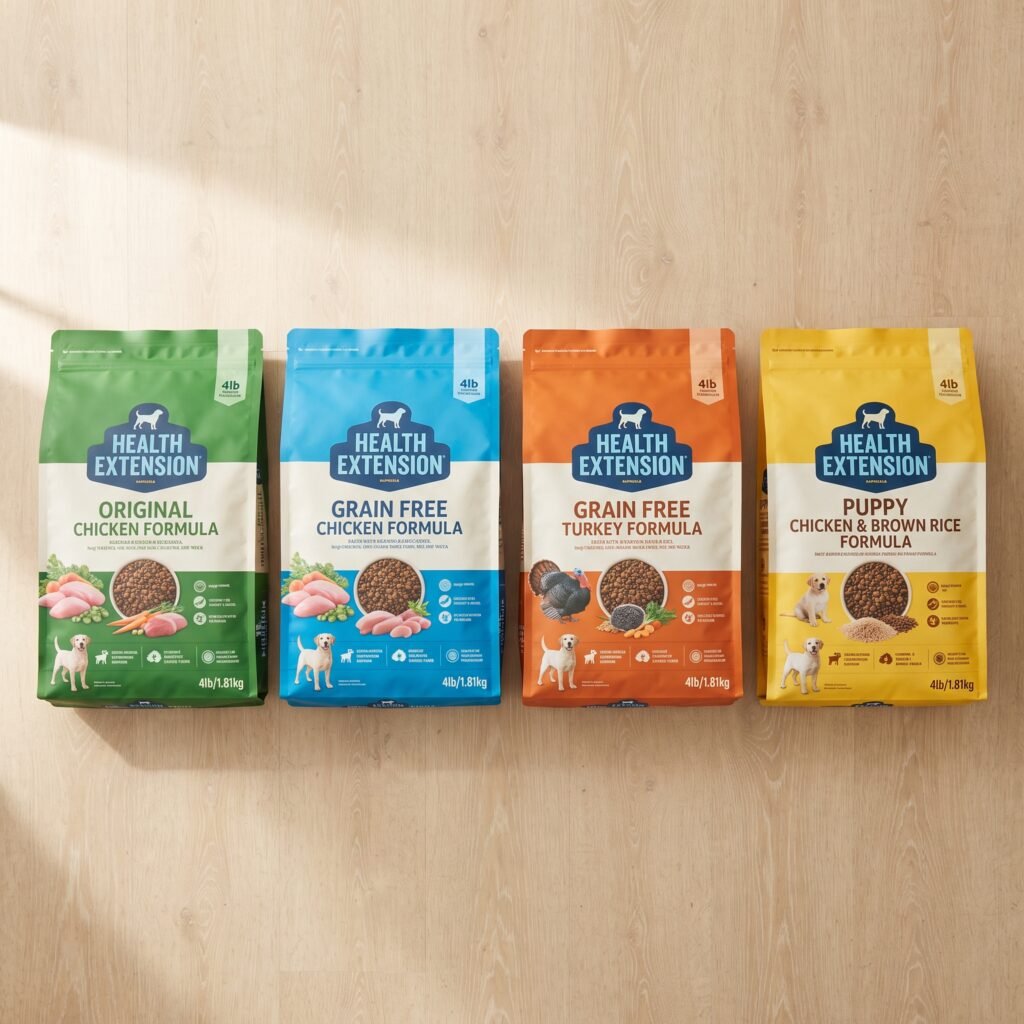
If you’ve landed on this page because you’re standing in a pet store aisle (or scrolling Chewy) with four different Health Extension bags in your cart comparison tabs, you already know the problem: the brand doesn’t make it obvious which formula belongs to which dog. There’s no breed-size color coding like Royal Canin, no life-stage wizard like Hill’s Science Diet. You’re left reading ingredient panels and guessing. This guide fixes that by walking through the actual decision — formula by formula, situation by situation — rather than repeating a spec sheet you could get from the bag itself.


Choosing Between Health Extension Formulas: The Core Decision
The single biggest mistake new buyers make with Health Extension dog food is treating the lineup as one product with different flavors. It isn’t. The five or six core recipes differ meaningfully in protein source, fat percentage, and carbohydrate base — and picking the wrong one is how owners end up with loose stools, itchy paws, or a dog who simply won’t eat the food after the second bag.
Here’s the decision tree that actually matters, based on what’s driving your search for Health Extension dog food in the first place.
If you’re buying for a healthy adult dog with no known sensitivities: Start with Health Extension Original Chicken Formula. It’s the most extensively fed recipe in the line, meaning more real-world feedback exists on stool quality and coat condition over time. It’s grain-inclusive (oatmeal and brown rice, not corn or wheat), which is actually a point in its favor — grain-free diets have drawn FDA scrutiny over a potential link to dilated cardiomyopathy (DCM) in dogs, and a moderate-grain formula sidesteps that conversation entirely for most healthy dogs.
If your dog has a known grain intolerance (not just a preference): Health Extension Grain Free Chicken or Grain Free Turkey are the next step. Note the distinction here — “grain-free” and “hypoallergenic” are not the same claim, and Health Extension dog food’s grain-free lines still use chicken or turkey as the primary protein, so they won’t help a dog with a poultry allergy specifically.
If your dog has had reactions to chicken (a very common trigger): This is where Health Extension dog food gets thinner. The brand’s protein diversity is limited compared to competitors like Taste of the Wild or Zignature, which offer bison, venison, or salmon as standalone novel proteins. Health Extension does offer a Grain Free Fish formula in some product lines, but availability varies by retailer, and it’s worth confirming current stock before committing a dog with an active allergy to it.
If you’re buying for a puppy: Health Extension makes a dedicated Puppy formula with higher fat and calcium calibrated for growth. Do not put a puppy — especially a large-breed puppy — on the adult Original or Grain Free formulas long-term. The calcium-to-phosphorus ratio in adult formulas isn’t built for controlled skeletal growth, and large-breed puppies fed adult-calibrated calcium levels are at higher risk for developmental orthopedic issues. This is one of the few non-negotiables in this whole guide.
If you’re buying for a senior dog: Health Extension doesn’t currently offer a dedicated senior line in most markets, which is a real gap. Owners often default to Original Chicken and simply reduce portion size to manage weight, or add a joint supplement on top of the food’s baseline glucosamine content. That baseline glucosamine and chondroitin inclusion is one of the more consistently praised features of Health Extension dog food, but at the amounts included in a maintenance kibble, it’s a mild joint-support add-on, not a substitute for a prescribed supplement if your dog already has diagnosed arthritis.
The through-line across all of these scenarios: Health Extension dog food works best when you match the specific formula to a specific, known trait about your dog — protein tolerance, life stage, activity level — rather than picking whichever bag is cheapest at the store that week. Owners who do that second thing are the ones who show up in reviews saying the food “didn’t work,” when often the formula simply wasn’t suited to that dog’s needs in the first place.
One more practical note worth flagging here: transition speed matters more with Health Extension dog food than with some ultra-premium brands, because the fiber and fat profiles shift noticeably between formulas. A 7-10 day transition (25% new food for two days, 50% for two days, 75% for two days, then full switch) will save you a week of soft stool compared to a same-day swap. This is standard advice for any kibble transition, but it’s worth repeating because Health Extension’s formulas vary enough from each other that even switching from one Health Extension recipe to another benefits from the same gradual approach — not just switching brands entirely.
There’s also a feeding-frequency question that doesn’t get enough attention in most Health Extension dog food reviews: how often you feed matters almost as much as what you feed. A healthy adult dog on Health Extension Original or Grain Free Chicken generally does best on two measured meals a day rather than free-feeding from a full bowl. Free-feeding a moderate-calorie kibble like this makes portion creep almost inevitable, especially in food-motivated breeds, because it’s harder to track how much your dog is actually eating across the day versus what the bag’s chart assumes. If you’re switching from a brand your dog was free-fed, treat the switch to Health Extension dog food as a good moment to also switch to scheduled meals — the two changes together tend to produce more stable weight and stool quality than either one alone.
It’s also worth setting expectations on timeline. Coat and stool improvements from a diet change — including a switch to Health Extension dog food — typically take four to six weeks to show up reliably, since a dog’s coat cycle and gut flora don’t reset overnight. Owners who judge the food after four or five days, during the transition window itself, are usually seeing transition symptoms, not a verdict on the formula. Give any new Health Extension dog food formula a full six-to-eight week trial, provided there’s no acute reaction like vomiting, hives, or facial swelling, before deciding it isn’t the right fit.

Edge Cases: Breed Size, Age, Health Conditions, and Budget
The core decision above covers most buyers, but a meaningful share of people searching for Health Extension dog food are dealing with a specific complicating factor. Here’s how each one changes the calculus.
Large and giant breeds (Labs, Shepherds, Great Danes, Mastiffs): As noted above, puppies of these breeds need the dedicated Puppy formula, not an adult recipe, to manage growth rate and reduce hip/elbow dysplasia risk. For adult large breeds, Health Extension’s Original and Grain Free formulas are calorically appropriate, but portion control matters more than the marketing suggests — large-breed dogs on a moderate-fat kibble like this can still gain weight quickly if you’re using the bag’s feeding guide rather than your dog’s actual body condition score. Ask your vet to assess body condition at the next visit rather than trusting the bag chart alone; this is true of Health Extension dog food and virtually every kibble on the market, not a brand-specific flaw.
Small and toy breeds (Chihuahuas, Yorkies, Pomeranians): Kibble size is the real issue here, not formula. Health Extension’s standard kibble runs larger than dedicated small-breed lines from brands like Royal Canin. Some owners with toy breeds report needing to moisten the kibble or use a food processor for puppies and small-mouthed adult dogs. This isn’t a dealbreaker, but it’s a detail that doesn’t show up until the bag is already open, so factor it in before buying a large bag size.
Dogs with diagnosed food allergies or sensitivities: This is the edge case where Health Extension dog food is honestly not always the strongest choice. Limited-ingredient and novel-protein diets are a different category — brands built specifically around single-protein, hydrolyzed, or prescription formulations (Purina HA, Royal Canin Hydrolyzed Protein, or single-protein lines like Natural Balance L.I.D.) are formulated with allergy elimination in mind in a way Health Extension’s mainstream lineup isn’t. If your dog has a vet-confirmed protein allergy (not just sensitive stomach symptoms), talk to your vet before assuming a Health Extension grain-free formula will solve it — grain-free doesn’t mean allergen-free, and the protein source is usually the actual trigger.
Dogs with sensitive stomachs (not diagnosed allergies): This is a much more common — and more solvable — situation, and it’s where Health Extension dog food tends to perform reasonably well. The inclusion of probiotics across the line is a genuine plus for general digestive support, and the moderate fat content (compared to high-fat performance formulas) is gentler on dogs prone to loose stool or occasional vomiting. Start with Original Chicken and give it the full transition window before concluding it isn’t working — a lot of “sensitive stomach” complaints in reviews trace back to too-fast transitions rather than the formula itself.
Budget considerations: This is probably the single biggest reason people search for Health Extension dog food to begin with — it sits in a price bracket below Orijen, Acana, or Farmer’s Dog, while offering ingredient quality closer to that tier than to bottom-shelf grocery-store kibble. If cost is the primary driver, know what you’re trading: you get real meat as a first ingredient and no corn/wheat fillers in the grain-free lines, but you don’t get the extensive third-party protein testing or fresh-food supply chain that ultra-premium brands publicize. For a healthy adult dog with no special needs, that trade-off is a genuinely reasonable one. For a dog with a real medical condition, the math changes, because vet bills from an unmanaged condition cost more than the price difference between tiers.
Multi-dog households with different needs: If you’re feeding a senior dog and a puppy in the same house, don’t default to one Health Extension bag for convenience. The nutritional gap between the Puppy formula and an adult maintenance formula is large enough that feeding one to both dogs shortchanges one of them — usually the puppy, since adult food underdelivers the calcium and fat a growing puppy needs.
High-activity and working dogs: Owners of working breeds, active herding dogs, or dogs in regular agility or sporting programs sometimes find that Health Extension’s standard adult formulas run slightly lean for sustained high energy output. The moderate fat content that makes these recipes gentle on sensitive stomachs is the same trait that can leave a genuinely high-drive dog under-fueled on standard portions alone. If your dog is burning significantly more calories than an average companion dog, you may need to increase the daily amount beyond the bag’s chart, or supplement with an additional protein source, rather than assuming Health Extension dog food alone at label portions will cover the gap. This isn’t a flaw in the formula so much as a mismatch between a moderate-tier maintenance recipe and an unusually high-output dog.
Dogs recovering from illness or surgery: For a dog on a temporary recovery diet prescribed by a vet, don’t substitute Health Extension dog food without checking with your vet first, even if it seems like a reasonable stand-in. Recovery diets are often calibrated for easy digestibility or specific caloric density in ways a standard maintenance kibble isn’t designed to replicate, and swapping without guidance can slow healing or trigger GI upset during an already vulnerable period.
Where Health Extension Dog Food Commonly Goes Wrong
Most negative reviews of Health Extension dog food trace back to one of four preventable mistakes, not to the food itself being defective. Being honest about these upfront will save you money and a frustrated dog.
Mistake 1: Skipping the transition period. This is the single most common thread in negative reviews, and it’s not unique to this brand — it just shows up more with Health Extension dog food because the formulas have a noticeably different fat and fiber profile from many grocery-store brands people are switching from. A dog coming off a corn-heavy, low-fat kibble and switched same-day to Health Extension Original will often have loose stool for a few days. That’s a transition issue, not a food-quality issue, but it gets reported as “this food gave my dog diarrhea” in reviews without that context.
Mistake 2: Assuming grain-free means hypoallergenic. Covered above, but worth repeating because it’s the second most common source of disappointment. Owners buy the grain-free chicken formula expecting it to solve a chicken allergy, when the grain-free label only addresses grain sensitivity. The protein source is unchanged. If your dog’s issue is the protein, not the grain, switching within Health Extension’s grain-free lineup won’t fix it.
Mistake 3: Feeding puppy-appropriate portions off the adult bag’s chart. The feeding guidelines printed on Health Extension dog food bags are calorie estimates based on average activity levels, not your specific dog. Working dogs, high-energy breeds, and food-motivated dogs can all need meaningfully more or less than the chart suggests. Weight creep over several months is the usual result of following the chart blindly rather than adjusting to your dog’s actual body condition.
Mistake 4: Buying based on price alone, then being surprised by protein diversity limits. As covered in the edge cases section, Health Extension dog food’s protein range is narrower than premium novel-protein brands. Owners who buy it purely because it’s cheaper than Orijen, without checking whether their dog’s specific dietary needs (elimination diet, novel protein requirement) are met by chicken or turkey, sometimes end up needing to switch brands again within a few months — which costs more in the long run than researching the fit upfront.
Mistake 5: Not accounting for kibble size with small or senior dogs. A less commonly reported but still real issue: owners of small-breed puppies or senior dogs with dental issues sometimes find the standard Health Extension dog food kibble size harder to manage than expected, and end up assuming the dog “doesn’t like” the food when the actual barrier is bite size. Moistening the kibble with warm water for a few minutes before serving solves this in most cases, but it’s a step that isn’t obvious from the packaging.
The honest failure case: If your dog has a diagnosed, vet-confirmed protein allergy to both chicken and turkey, or needs a hydrolyzed/prescription diet for a GI condition like IBD, Health Extension dog food is not going to be the solution, regardless of which formula you pick. This isn’t a knock on the brand — it’s simply outside what a mainstream, moderately priced kibble line is formulated to do. In that specific situation, a prescription diet from your vet is the right move, and no amount of formula-shopping within the Health Extension lineup will substitute for that.
It’s worth being direct about this because a lot of pet food content online avoids saying anything negative about a brand it’s discussing, which doesn’t actually help someone trying to make a real decision for a dog with a real medical condition. Health Extension dog food is a solid, honest mid-tier product for the majority of healthy dogs and dogs with mild, non-diagnosed digestive sensitivity. It is not a specialty allergy-elimination diet, a prescription therapeutic food, or a novel-protein line, and it was never marketed as one. Judging it against that standard — rather than against what it’s actually built to do — is where most disappointment with the brand comes from.
Health Extension Dog Food Formula Comparison
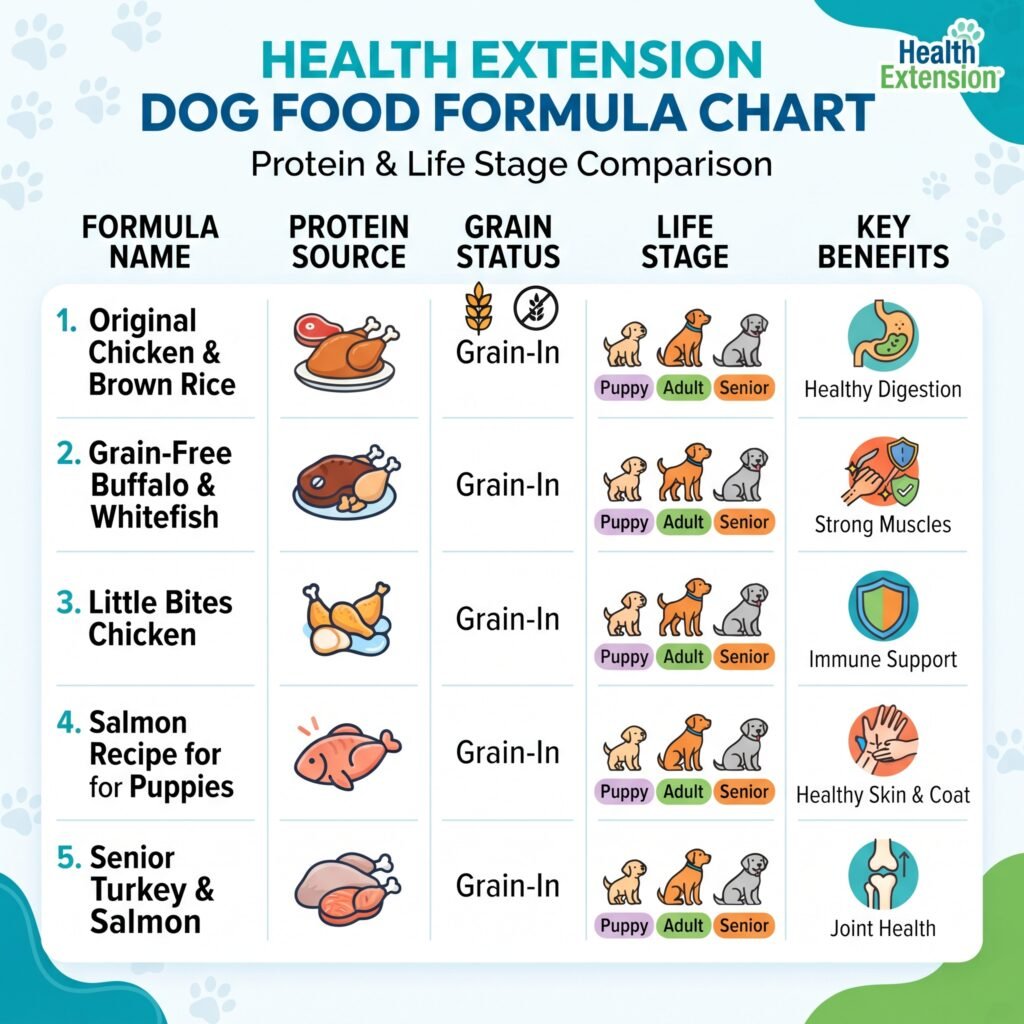
The table below breaks down the core Health Extension dog food formulas side by side, so you can match features to your dog’s actual profile rather than re-reading four separate ingredient panels.
Table: Health Extension dog food formula comparison by protein source, life stage, and best-fit scenario
| Formula | Primary Protein | Grain Status | Best For | Watch-Outs |
|---|---|---|---|---|
| Original Chicken | Chicken | Grain-inclusive (oatmeal, brown rice) | Healthy adult dogs, first-time buyers | Not for chicken-sensitive dogs |
| Grain Free Chicken | Chicken | Grain-free | Dogs with grain sensitivity, not protein sensitivity | Same protein as Original — doesn’t help chicken allergies |
| Grain Free Turkey | Turkey | Grain-free | Dogs doing well on Original but wanting protein rotation | Still poultry-based; not novel-protein for allergy elimination |
| Puppy Formula | Chicken | Grain-inclusive | Puppies, especially large-breed | Do not substitute with adult formulas long-term |
| Senior/Weight Management (where available) | Chicken | Varies by region | Overweight or lower-activity adult dogs | Availability inconsistent across retailers — confirm in stock before planning around it |
A few things jump out when you lay Health Extension dog food’s lineup out this way. First, four of the five common formulas are chicken-based — the “variety” in the line is really about grain content and life stage, not protein diversity. Second, the Puppy formula is the one place where substituting a different Health Extension dog food recipe isn’t a matter of preference; it’s a growth and skeletal-health issue. Third, availability of the senior/weight-management options varies more than the core lineup, so don’t build a long-term feeding plan around a formula you haven’t confirmed your local retailer or online supplier actually stocks consistently.
If you’re comparing Health Extension dog food against a competing budget-tier brand, the practical questions to ask are: does my dog need protein diversity beyond chicken and turkey, does my dog need a dedicated senior formula, and am I buying a large-breed puppy that needs tightly controlled calcium levels? If the answer to all three is no, Health Extension’s lineup covers the need well. If any answer is yes, that’s your signal to look at a formula outside this brand for that specific dog, even if you keep Health Extension dog food for others in the household.
It also helps to place Health Extension dog food on a rough price-tier map rather than evaluating it in isolation. Below it sit grocery-store and mass-market kibbles that typically lean on corn, wheat, or soy as primary fillers and rarely disclose specific glucosamine or probiotic inclusion rates. Above it sit ultra-premium brands like Orijen, Acana, or fresh-food subscription services, which charge substantially more per pound and lean heavily on marketing around sourcing and novel proteins. Health Extension dog food sits in the middle: real named-meat proteins, no corn or wheat in the grain-free lines, and a functional (if not extensive) probiotic and joint-support inclusion, at a price point that’s noticeably lower than the top tier. For a dog without a diagnosed medical need pushing you toward a specialty formula, that middle position is exactly why Health Extension dog food shows up so often in budget-conscious comparison searches — it’s priced like a mid-tier brand but reads on the ingredient panel closer to a premium one.
How This Health Extension Dog Food Guide Was Put Together
This guide was built by cross-referencing Health Extension’s published ingredient panels and feeding guidelines against general veterinary nutrition guidance — specifically around large-breed puppy calcium requirements, the grain-free/DCM discussion the FDA has investigated, and standard practice for diet transitions to reduce GI upset. None of this replaces an individual veterinary consultation, and it shouldn’t be read as one.
The scenario-based structure — matching specific dog profiles (breed size, life stage, known sensitivities, budget) to specific Health Extension dog food formulas — reflects the actual questions that come up when a dog owner is standing in front of the shelf or the checkout page trying to decide between four bags with similar-looking labels. Where the brand has a genuine gap (protein diversity for allergy elimination, dedicated senior formulas, consistent nationwide availability of every SKU), this guide says so directly rather than smoothing it over, because an owner managing a real health condition needs that information more than a uniformly positive review does.
Pricing and availability details for Health Extension dog food change by retailer and region, so treat the comparison table as a framework for the questions to ask rather than a live pricing or stock guide — always confirm current formula availability with your retailer of choice before finalizing a feeding plan, especially for less commonly stocked options like the senior or weight-management lines.
This guide also deliberately weighted the edge cases and failure scenarios as heavily as the core recommendation, rather than treating them as an afterthought tacked on at the end. A formula-by-formula spec comparison is easy to generate and easy to find elsewhere; what’s harder to find — and more useful to an owner making a real purchase decision — is a clear answer to “when does this brand stop being the right choice for my specific dog.” That question doesn’t have a universal answer, which is exactly why it’s framed here around specific, checkable traits: a vet-confirmed allergy, a large-breed puppy’s growth stage, a working dog’s caloric needs. Match those traits to your own dog before finalizing a Health Extension dog food purchase, and the formula choice becomes far more straightforward than reading five ingredient panels side by side.
Health Extension Dog Food: Frequently Asked Questions
Is Health Extension dog food good for dogs with sensitive stomachs? Generally yes, for dogs with general digestive sensitivity rather than a diagnosed allergy. The built-in probiotics and moderate fat content across the Health Extension dog food line tend to be gentle on digestion, provided you use a gradual transition period rather than switching foods abruptly.
What’s the difference between Health Extension’s grain-free and original formulas? The grain-free formulas swap oatmeal and brown rice for grain-free carbohydrate sources but keep the same chicken or turkey protein base. Choose grain-free only if your dog has a confirmed grain sensitivity — it won’t help with a chicken or poultry allergy, since the protein source doesn’t change between Health Extension’s grain-inclusive and grain-free lines.
Can I feed my large-breed puppy an adult Health Extension formula? No — use the dedicated Puppy formula. Adult Health Extension dog food recipes aren’t calibrated for the controlled calcium-to-phosphorus ratio large-breed puppies need during their growth window, and feeding an adult formula long-term to a growing large-breed puppy raises the risk of developmental skeletal issues.
Does Health Extension dog food help with joint problems? The formulas include baseline glucosamine and chondroitin, which offers mild ongoing joint support for a healthy adult or aging dog. It’s not dosed at therapeutic levels for a dog already diagnosed with arthritis or a joint condition — for that, talk to your vet about a dedicated supplement or prescription joint formula alongside whatever food you’re feeding.
Is Health Extension dog food a good option for dogs with diagnosed food allergies? Not usually, if the allergy is to chicken or turkey specifically, since those are the primary proteins across nearly the entire Health Extension dog food lineup. For a vet-confirmed protein allergy or a condition requiring a hydrolyzed or novel-protein diet, a prescription or dedicated limited-ingredient brand is a better fit than shopping within Health Extension’s formulas.
How does Health Extension dog food compare to premium brands on price? Health Extension dog food is priced below ultra-premium brands like Orijen or Acana but above bottom-shelf, grocery-store kibble. For most healthy adult dogs without a diagnosed medical condition, that middle-tier pricing buys real named-meat protein and no corn or wheat filler in the grain-free lines, which is a reasonable trade-off for budget-conscious owners. The gap shows up mainly in protein diversity and the absence of a dedicated senior line — areas where premium brands typically offer more options.
Bottom Line on Choosing Health Extension Dog Food
Picking the right Health Extension dog food formula comes down to matching three things to your specific dog: life stage, known sensitivities (grain versus protein), and how consistently your local retailer stocks the formula you’re considering. For a healthy adult dog with no diagnosed allergies, Original Chicken or Grain Free Chicken are both solid, well-tested starting points. For puppies — especially large-breed puppies — the dedicated Puppy formula isn’t optional. For dogs with a real, vet-confirmed protein allergy or a GI condition needing prescription-level management, this is one of the rare cases where the honest answer is to look outside the Health Extension dog food lineup rather than trying to formula-shop your way to a fix.
The brand does what it’s built to do well: real meat as a first ingredient, no corn or wheat filler in the grain-free lines, built-in probiotics, and a price point that undercuts the ultra-premium tier without dropping to bottom-shelf quality. Match the formula to the dog in front of you, transition gradually, and adjust portions to your dog’s actual body condition rather than the bag’s printed chart, and Health Extension dog food is likely to be a reasonable long-term fit for most healthy dogs.