
Benadryl for Dogs: How Much to Give, When It's the Wrong Choice, and What Actually Goes Wrong
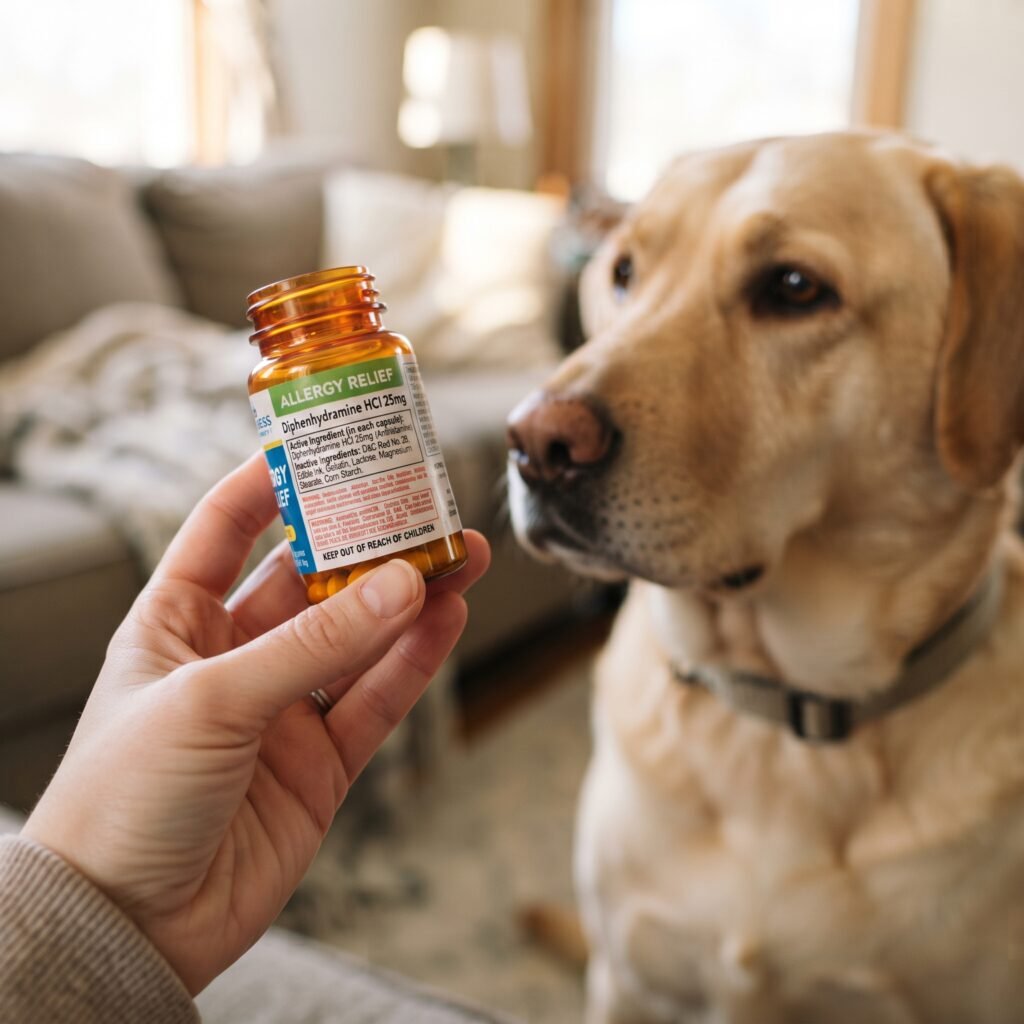
Short answer: Benadryl (diphenhydramine) is commonly dosed for dogs at roughly 1mg per pound of body weight, up to three times a day, and is typically used for mild allergic reactions, hives, and situational anxiety. It should always be the plain diphenhydramine formulation — never a multi-symptom version — and a vet should confirm dosing for any dog with heart, kidney, glaucoma, or seizure conditions.
That answer is accurate. It’s also the version that gets dogs into trouble, because the real decision an owner faces isn’t “how much Benadryl” — it’s “does this situation, this dog, and this specific bottle actually match what that number assumes.” Most of the mistakes I see with Benadryl for dogs happen in the gap between the standard dosing guideline and the details nobody puts on the label.
Why “1mg Per Pound” Isn’t the Whole Answer
The 1mg-per-pound rule for Benadryl for dogs comes from extrapolated human dosing and decades of extra-label veterinary use, not from an FDA approval process specific to dogs. Diphenhydramine has never been formally approved by the FDA for veterinary use, which is why every recommendation of Benadryl for dogs is technically extra-label — legal and common, but it means the responsibility for getting the dose right sits with the vet’s judgment, not a package insert.
That distinction matters more than it sounds like it should. When a medication is approved for a species, the dosing range has been tested across body types, ages, and health conditions specifically in that species. With Benadryl for dogs, the range in circulation is a reasonable approximation, not a validated ceiling. A healthy 45lb Labrador and a 45lb dog with early kidney disease are not the same dosing problem for Benadryl for dogs, even though the math says they are.
Most articles stop at the multiplication. The actual skill in giving Benadryl for dogs is knowing which dogs the multiplication doesn’t apply to cleanly, and that’s where this gets specific.
The Formulation Trap: Not All Benadryl Is the Same Bottle
This is the single most common way people accidentally hurt a dog while trying to help one with Benadryl for dogs. “Benadryl” as a brand name covers several different products, and only one of them is safe to give a dog at all.
Plain diphenhydramine — tablets, capsules, or the children’s liquid formulation with diphenhydramine as the only active ingredient — is the version used for Benadryl for dogs. Anything labeled “Benadryl-D,” “Benadryl Allergy Plus Congestion,” or any multi-symptom cold and sinus product typically contains pseudoephedrine, acetaminophen, or both. Acetaminophen is toxic to dogs even in small amounts, and pseudoephedrine can cause dangerous cardiovascular effects.
Liquid children’s Benadryl adds a second, quieter trap for anyone giving Benadryl for dogs: some liquid and chewable formulations use xylitol as a sweetener. Xylitol is severely toxic to dogs. Not every liquid diphenhydramine product used for Benadryl for dogs contains xylitol, but enough do that checking the inactive ingredients list every single time is a habit worth keeping.
Quick Formulation Comparison for Benadryl for Dogs
| Product Type | Active Ingredient(s) | Safe for Dogs? | Key Risk |
|---|---|---|---|
| Plain diphenhydramine tablets (e.g., generic 25mg) | Diphenhydramine only | Yes, at vet-confirmed dose | Sedation, dry mouth at high doses |
| Children’s liquid diphenhydramine | Diphenhydramine, sometimes + sweetener | Conditional | Check for xylitol in inactive ingredients |
| Benadryl-D / Allergy Plus Congestion | Diphenhydramine + pseudoephedrine | No | Cardiovascular strain, hypertension |
| Benadryl Allergy Plus Sinus Headache | Diphenhydramine + acetaminophen | No | Acetaminophen toxicity, liver damage |
| Diphenhydramine + alcohol-based liquid gels | Diphenhydramine + alcohol carrier | No | Alcohol toxicity |
This is the table I’d want an owner to screenshot before ever giving Benadryl for dogs, because the brand name alone tells you nothing.
Breed and Age: Where the Standard Dose Needs Adjusting
Benadryl’s sedative effect comes from its anticholinergic properties, and that mechanism doesn’t land evenly across every dog. A few groups deserve a slower, more cautious approach than “1mg per pound, see how it goes.”
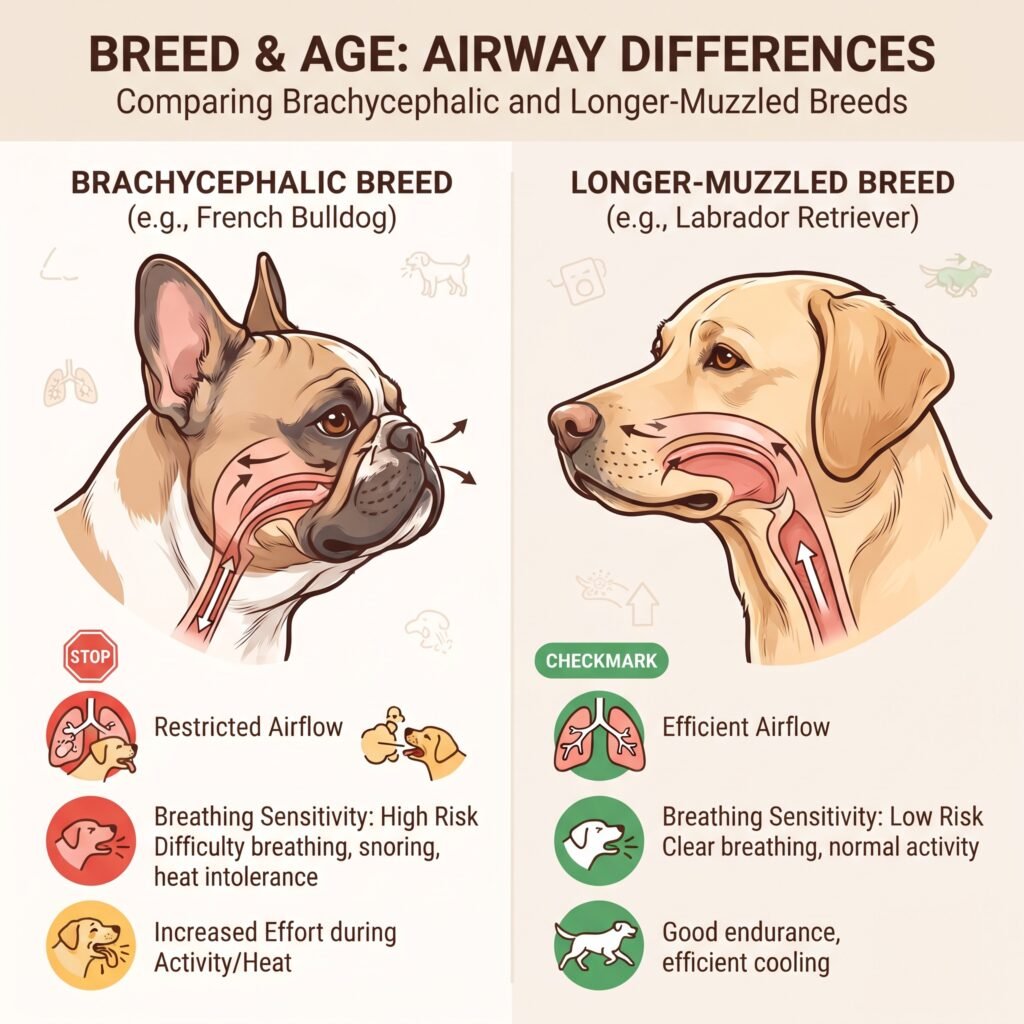
Brachycephalic breeds — Bulldogs, Pugs, Boston Terriers, and similar flat-faced breeds — already have narrower airways and less respiratory reserve. Diphenhydramine’s sedative and drying effects (it thickens respiratory secretions) can compound existing breathing difficulty in these dogs more than in a longer-muzzled breed of the same weight. Vets often start these dogs at the lower end of the range and watch respiratory effort closely rather than defaulting to standard weight-based dosing.
Senior dogs, especially those with kidney or liver involvement, process diphenhydramine more slowly, which means the same dose stays active longer and sedation can be more pronounced or last longer than expected. A dose that produces mild drowsiness in a 3-year-old dog can produce wobbliness, disorientation, or unusual lethargy in a 12-year-old dog with reduced kidney function, not because the dose was calculated wrong, but because the dog’s ability to clear it was slower.
Dogs with glaucoma, cardiac arrhythmias, seizure disorders, or urinary retention issues are the group most consistently flagged in veterinary references as needing a vet’s explicit sign-off before Benadryl, because diphenhydramine’s anticholinergic action can worsen each of those conditions specifically. This isn’t a “check with your vet just to be safe” disclaimer — it’s a real pharmacological interaction with the condition itself.
Pregnant or nursing dogs are typically advised against Benadryl unless a vet has specifically weighed the trade-off, since safety data in pregnant and nursing dogs is limited.
None of this means Benadryl is off the table for these dogs. It means the standard dose is a starting assumption, not a fixed number, and the adjustment is exactly the kind of judgment call that a quick summary tends to flatten into “consult your vet” without explaining why.
When Benadryl Is Simply the Wrong Tool
Here’s the part most Benadryl-for-dogs content skips entirely: sometimes it doesn’t work, and it’s worth knowing why before you’re standing in the vet’s office wondering what went wrong.
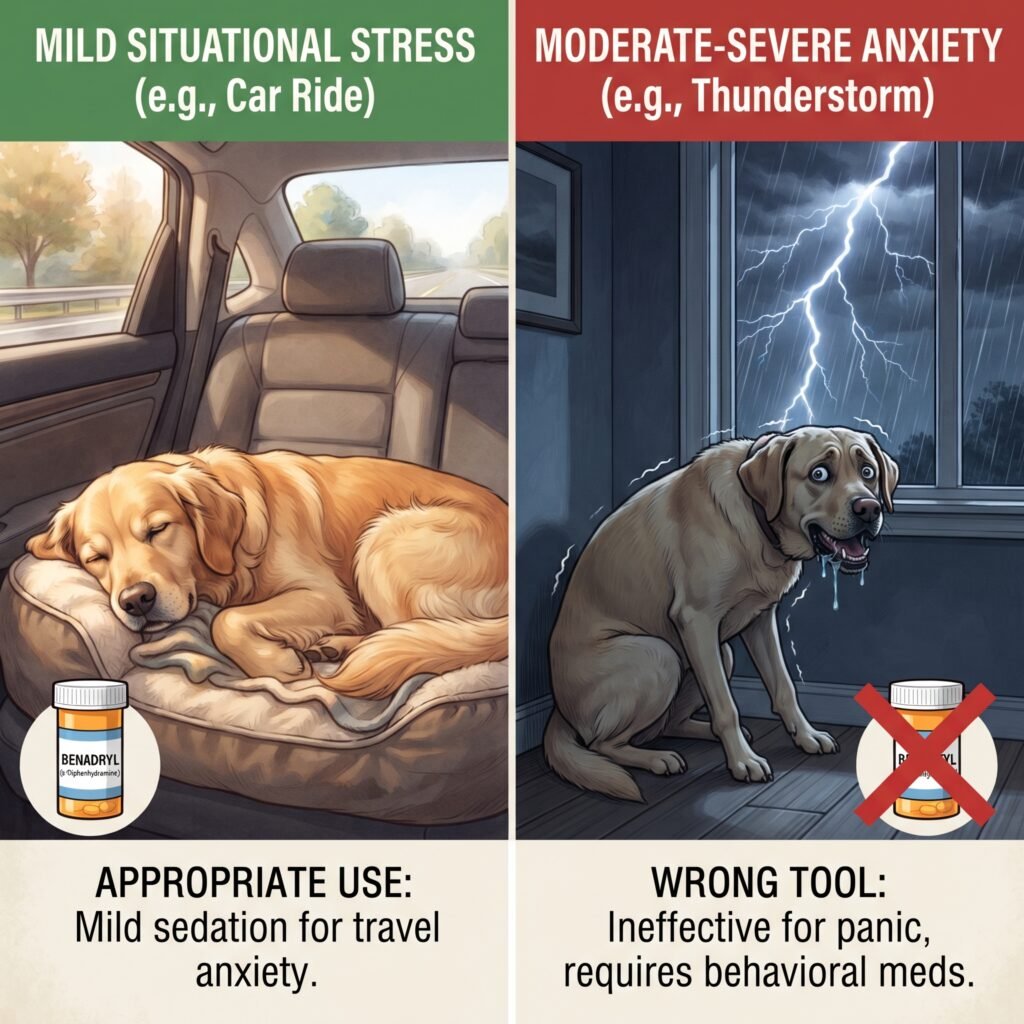
Benadryl is a mild sedative and antihistamine. It’s genuinely useful for situational, low-to-moderate stress — a car ride, a nail trim, a vet visit for a dog who gets a little wound up but isn’t in crisis. It is not an anti-anxiety medication in the clinical sense, and for dogs with moderate to severe anxiety — thunderstorm phobia that involves panting, drooling, destructive behavior, or attempts to escape — it typically underperforms.
I’ve seen this play out with dogs whose owners reasonably assumed “the vet said Benadryl is fine for anxiety” meant it would handle any anxiety. For a dog with a genuine storm phobia, giving Benadryl often produces a dog that’s sedated but still visibly panicked — glassy-eyed and stumbling, but still panting and trying to hide. The sedation masks the physical response without touching the underlying fear response, which is a worse outcome than doing nothing, because it can look like the dog is “handling it” while actually being distressed and impaired at the same time.
For that level of anxiety, vets more often reach for medications like trazodone, gabapentin, or in some cases a prescription anti-anxiety medication like fluoxetine for longer-term management — drugs that work on different pathways than an antihistamine. The honest answer, when a dog’s anxiety doesn’t respond to Benadryl, isn’t “try a higher dose.” It’s “this was the wrong category of medication for what this dog is experiencing,” and that’s a conversation worth having with a vet rather than solving through trial and error.
A Simple Framework for the Decision
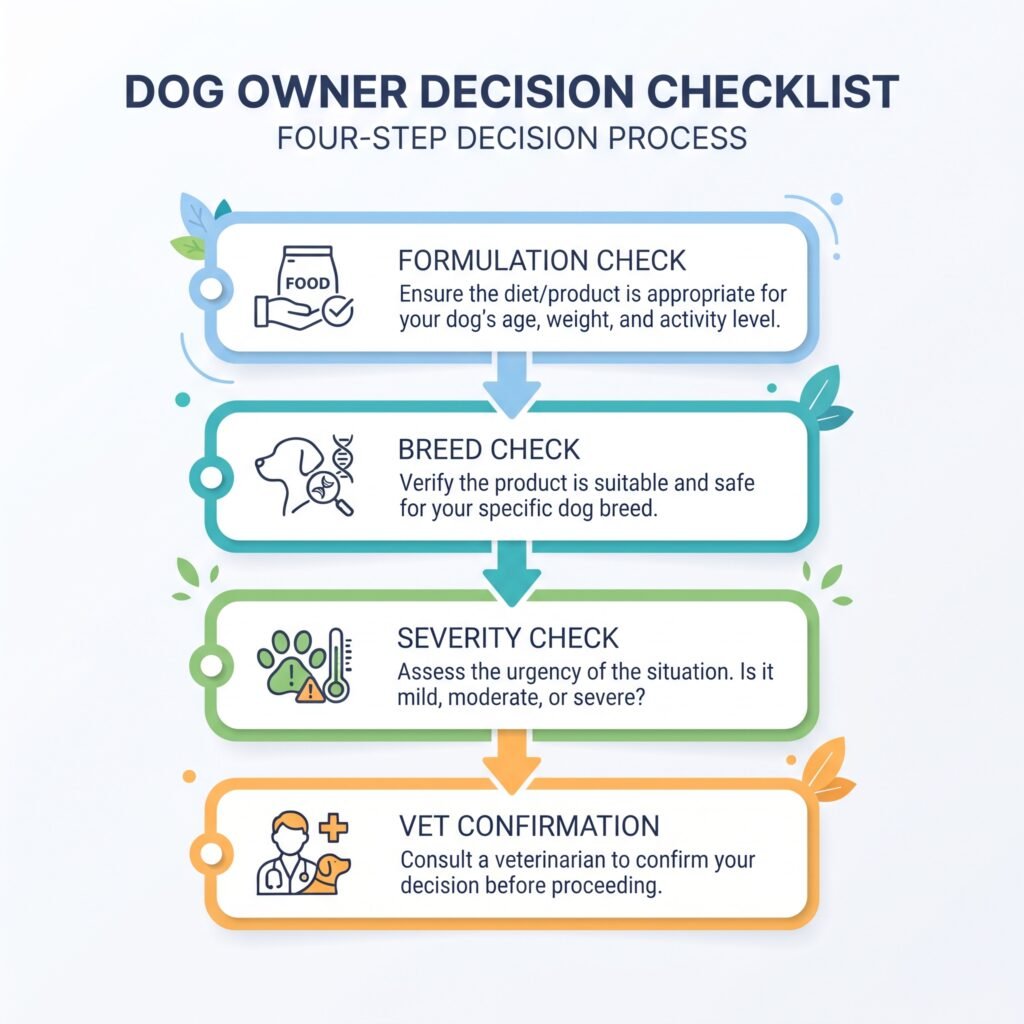
Before giving a dog Benadryl, four questions cover most of what actually matters:
- Is this the plain diphenhydramine formulation, with no other active ingredients, confirmed by reading today’s label?
- Does this dog fall into a category — brachycephalic, senior with organ involvement, glaucoma, cardiac, seizure history, pregnant or nursing — that changes the standard dose or rules it out?
- Is the situation mild-to-moderate stress or a mild allergic reaction, or is it a more severe anxiety or allergic response that Benadryl isn’t designed to handle?
- Has a vet confirmed the specific dose for this specific dog, rather than a number pulled from a general chart?
If any of those four don’t have a clear answer, that’s the signal to call the vet before opening the bottle, not after.
Recognizing an Allergic Reaction Versus Anxiety
Owners sometimes reach for Benadryl for dogs without being fully sure which problem they’re treating, and the two situations warrant different levels of urgency.
Mild allergic reactions — hives, facial swelling after a bee sting, itching after a new food or environmental exposure — are the more classic Benadryl use case, and response is usually visible within an hour. If swelling is affecting the face, throat, or breathing, that’s an emergency regardless of whether Benadryl has been given, since anaphylaxis can progress faster than an antihistamine can control it.
Situational anxiety — thunderstorms, fireworks, car rides, vet visits — is a slower-building, more predictable pattern, and Benadryl’s role there is mild sedation rather than resolving fear. Confusing the two isn’t usually dangerous by itself, but it does explain why some owners feel like “Benadryl didn’t work” when what actually happened is a mismatch between the tool and the problem.
Reviewed For Accuracy
This article’s dosing guidance and formulation warnings were checked against publicly available veterinary pharmacology references and AAFCO and FDA public guidance on extra-label drug use in animals. Specific dosing for any individual dog should still be confirmed directly with a veterinarian, since factors like concurrent medications, organ function, and breed-specific sensitivity aren’t things a general article can evaluate for a particular dog.
Frequently Asked Questions
Can I give my dog Benadryl every day for allergies? Short-term or as-needed use is far more common than daily long-term use, and a vet should be involved if allergy symptoms are frequent enough to need daily antihistamine treatment, since ongoing allergies often benefit from a different long-term management plan.
How long does Benadryl take to work in dogs? Sedative and antihistamine effects typically begin within 30 to 60 minutes of an oral dose, which is why it’s usually given ahead of a known trigger like a car trip or fireworks rather than after anxiety has already escalated.
Is liquid or tablet Benadryl better for dogs? Tablets are often easier to dose precisely and avoid the sweetener question entirely, while liquid formulations are easier to administer to small dogs but require checking every bottle for xylitol before use.
What happens if I give my dog too much Benadryl? Overdose symptoms can include excessive sedation, rapid heart rate, dry mouth, dilated pupils, agitation, or in severe cases seizures, and any suspected overdose warrants an immediate call to a vet or a pet poison control line rather than waiting to see if symptoms pass.
Can puppies have Benadryl? Very young puppies are typically more sensitive to sedatives and haven’t been as thoroughly studied for diphenhydramine dosing, so this is one of the clearer cases where a vet should set the dose rather than scaling down an adult dosing chart.