Freeze Dried Dog Food Brands: Which One Fits Your Dog's Real Risk Profile?
Quick answer: The best freeze dried dog food brands aren’t interchangeable — the right pick depends on who’s home. If you have a senior dog, an immunocompromised family member, or a dog recovering from GI illness, prioritize brands that use high-pressure processing (HPP) or a cook-then-freeze-dry method over raw-only freeze-dried lines, since pathogen risk (not nutrition) is usually the deciding factor.
Why “Best” Freeze Dried Dog Food Brands Lists Miss the Point
Every roundup of freeze dried dog food brands reads the same way: a top ten, a star rating, a “vet-approved” badge, and a buy button. What almost none of them tell you is that the single biggest differentiator between freeze dried dog food brands isn’t protein source or price — it’s how the manufacturer manages pathogen risk during processing, and whether that risk is one your household can actually absorb.
Freeze-drying removes moisture through sublimation at low temperature. That’s excellent for preserving nutrients and enzymes that high-heat kibble extrusion destroys. It is not, on its own, a kill step for Salmonella or Listeria the way cooking or true high-pressure processing is. Some freeze dried dog food brands run raw ingredients through HPP before freeze-drying. Others don’t. Most product pages don’t say which camp they’re in unless you dig into the manufacturing FAQ or call the company directly.
This matters because the FDA and independent testing labs have documented recurring Salmonella findings in raw and freeze-dried pet products over the past several years — not from one bad brand, but as a pattern across the raw-adjacent category. That’s not a reason to avoid every freeze dried dog food brand. It’s a reason to sort them by processing method before you sort them by flavor.
One quick note on terminology: plenty of people search for freeze dry dog food brands instead of “freeze-dried,” typing the process as a verb instead of an adjective. Retailers and manufacturers use the terms interchangeably, so if you’re comparing freeze dry dog food brands against freeze-dried dog food brands, you’re looking at the exact same product category — the spelling difference won’t change what shows up on the label.
The Decision Scenario: Who Should Weigh Pathogen Risk More Heavily?
Picture three households, all shopping for the same bag.
Household one has a healthy five-year-old Labrador and no immunocompromised people. Household two has a Bernese Mountain Dog puppy and a grandparent undergoing chemotherapy who helps with feeding. Household three has a twelve-year-old Chihuahua recovering from a bout of pancreatitis. All three could technically buy the same top-rated freeze dried dog food brand — but only one of them should, without a second thought.
For household one, pathogen risk from a reputable, recall-clean brand is a manageable, low-probability event. For household two, the calculus changes completely: immunocompromised humans handling raw or minimally processed freeze-dried food face a real, elevated risk of secondary Salmonella or Listeria exposure, independent of whether the dog gets sick. For household three, the concern shifts again — many freeze dried dog food brands run high in fat relative to kibble, which is a legitimate problem for a dog managing pancreatitis, regardless of pathogen safety.
This is the part generic buying guides skip. They rank freeze dried dog food brands by “best overall,” “best value,” and “best for sensitive stomachs” without ever asking who is actually opening the bag, prepping the bowl, and living in the house.
How Freeze Dried Dog Food Brands Actually Differ in Processing
Not every brand under the freeze dried dog food umbrella is doing the same thing to the meat before it hits your bowl. Broadly, there are three approaches worth knowing before you compare specific freeze dried dog food brands:
Raw freeze-dried, no additional kill step. Ingredients are freeze-dried directly from raw or lightly processed meat. This preserves the most raw-like nutrient profile but places the entire pathogen-control burden on sourcing and testing protocols. Several well-known freeze dried dog food brands operate this way and rely on batch testing rather than a thermal or pressure kill step.
HPP-treated, then freeze-dried. High-pressure processing uses cold water pressure (not heat) to inactivate pathogens before the freeze-drying step. This is closer to a genuine safety intervention, though HPP isn’t foolproof and doesn’t eliminate every risk of recontamination during packaging.
Cooked, then freeze-dried. A smaller number of freeze dried dog food brands, including hybrid products like Spot & Tango’s UnKibble, slow-cook ingredients at low temperature before freeze-drying. This sacrifices some of the “raw” marketing appeal but meaningfully reduces pathogen risk compared to a raw-only process.
If a brand’s website doesn’t clearly state which of these three categories it falls into, that’s worth treating as a data point on its own — not a dealbreaker, but a reason to email their customer service and ask directly before you buy.
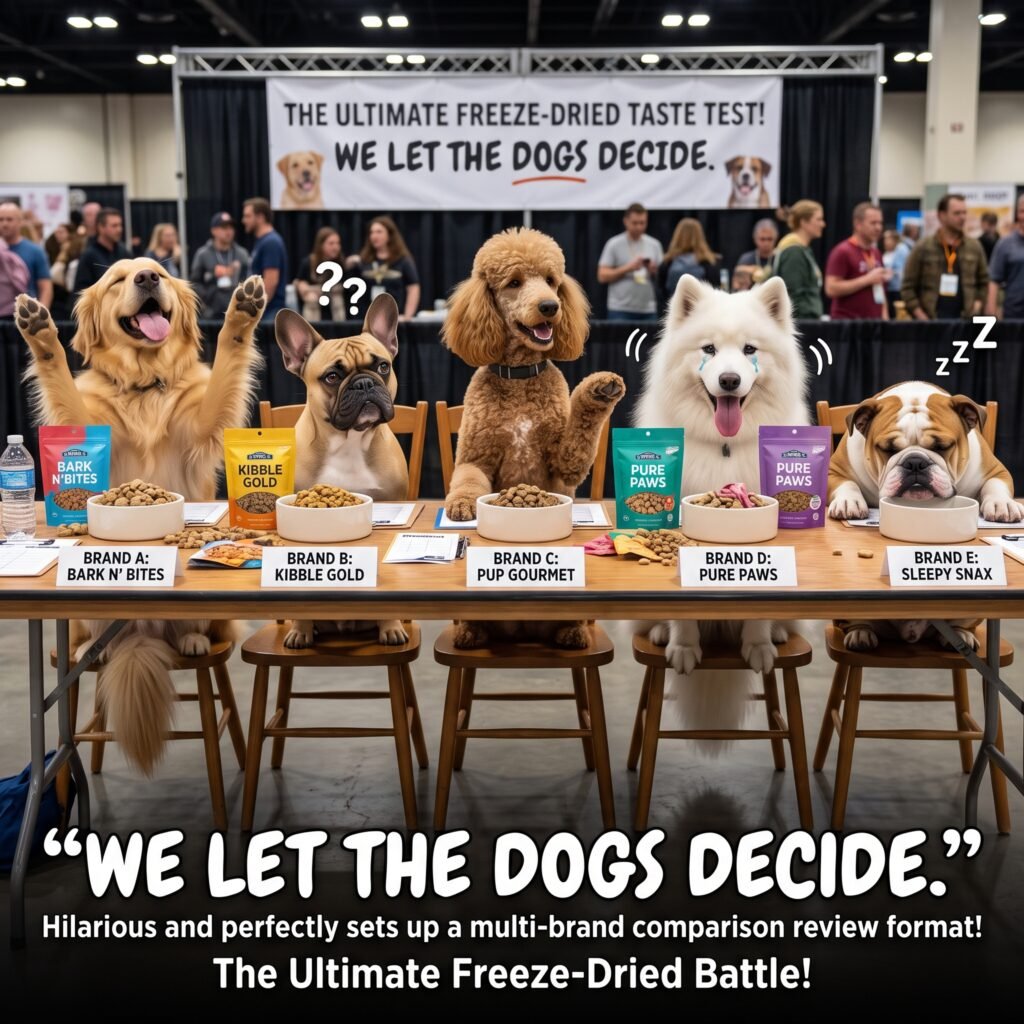
The table below compares seven widely available freeze dried dog food brands across the factors that actually predict fit: process type, protein density, fat level, and price per feeding for a 30-lb adult dog. Guaranteed analysis figures are pulled from manufacturer label data and independent dry matter analysis where available; treat protein and fat percentages as approximate since formulas are updated periodically.
| Brand | Process Type | Protein (dry matter) | Fat (dry matter) | Approx. Cost/Day (30-lb dog) | Recall History Note |
|---|---|---|---|---|---|
| Stella & Chewy’s | Raw freeze-dried | ~45–48% | ~30–35% | $3.75–$4.25 | No FDA recall on record in recent five-year search window |
| Primal Pet Foods | Raw freeze-dried | ~42–46% | ~28–32% | $4.00–$4.50 | No FDA recall on record in recent five-year search window |
| Instinct (Nature’s Variety) | Raw freeze-dried | ~44–48% | ~30–34% | $3.50–$4.00 | Historical recalls tied to specific lots; none active as of mid-2026 |
| Maxbone Muscle Up | Raw freeze-dried | 53.8% | 33.7% | $4.25–$4.75 | No FDA recall on record in recent five-year search window |
| Open Farm | Raw freeze-dried, third-party audited farms | ~44–47% | ~29–33% | $4.00–$4.50 | No FDA recall on record in recent five-year search window |
| BIXBI Rawbble | Raw freeze-dried | ~48–52% | ~30–34% | $3.25–$3.75 | No FDA recall on record in recent five-year search window |
| Spot & Tango UnKibble | Cooked, then freeze-dried (FreshDry) | ~30–34% | ~15–18% | $2.75–$3.25 | No FDA recall on record; lower pathogen-risk process by design |
A pattern worth noticing: the cooked-then-freeze-dried option runs meaningfully lower in both protein and fat than the raw-only freeze dried dog food brands, and it’s also the cheapest per day. That’s the trade-off in plain numbers — you’re giving up some of the raw-diet nutrient density in exchange for a lower-risk process and a lower grocery bill.
What a 30-Day Comparison Across Freeze Dried Dog Food Brands Actually Shows
Independent testers who’ve run side-by-side feeding trials across multiple freeze dried dog food brands consistently report a few things that don’t show up in marketing copy. First, palatability varies more by protein source than by brand reputation — a dog who loves one brand’s beef formula may reject the same brand’s fish formula outright. Second, rehydration behavior differs: some freeze dried dog food brands turn into a paste that mixes evenly with water in under two minutes, while others stay clumpy for five minutes or longer, which matters if you’re feeding on a tight morning schedule.
Third, and most overlooked: stool consistency changes are the most reliable early signal that a freeze dried dog food brand doesn’t agree with a particular dog. A fat percentage in the low-to-mid 30s (common across raw freeze-dried lines) can trigger loose stool in dogs unaccustomed to that fat density, even when the ingredient quality is excellent. This isn’t a brand defect — it’s a mismatch between a specific dog’s baseline diet and a specific formula’s fat load, and it’s exactly the kind of individualized nuance that a generic “top 10 freeze dried dog food brands” list can’t predict for your dog.
When Freeze Dried Dog Food Brands Are the Wrong Call
Here’s the honest limitation most content in this space won’t tell you. Freeze dried dog food brands, as a category, are a poor fit for large or giant breed dogs on a tight budget. A 90-lb dog eating even a mid-priced freeze-dried formula can run $8–$12 a day, which adds up to more than $3,000 a year — often two to three times the cost of a comparable premium kibble. For multi-dog households or dogs that need a high daily calorie intake, that math frequently doesn’t work, no matter how good the ingredient sourcing is.
There’s also a case where freeze-dried isn’t ideal even with an unlimited budget: dogs with confirmed food allergies to common proteins like beef, chicken, or turkey. Freeze dried dog food brands overwhelmingly build their lineups around those three proteins because they’re cost-effective to source at scale. Truly novel proteins — rabbit, venison, kangaroo — show up far less often in freeze-dried format, and when they do, they’re usually from small-batch producers at a steep price premium. If your dog needs a genuinely novel protein for an elimination diet, a limited-ingredient wet or dehydrated option may serve you better than searching further through freeze dried dog food brands hoping one carries it.
Ingredient Sourcing: Where Freeze Dried Dog Food Brands Quietly Differ
Marketing copy for freeze dried dog food brands loves the phrase “human-grade,” but that term has a specific legal meaning most bags don’t actually meet — it requires every ingredient and the facility itself to be certified for human food production, not just sourced from human-grade suppliers. Very few freeze dried dog food brands can legitimately claim it, and the ones that can usually say so explicitly, with certification details, rather than leaving it as a vague banner on the packaging.
A more useful question when comparing freeze dry dog food brands is whether they name their protein sources specifically. “Chicken” sourced from a named USDA-inspected facility in a specific state is a very different transparency level than “poultry” with no further detail. Brands like Open Farm built their identity around this kind of traceability, publishing sourcing partners by name; other freeze dried dog food brands disclose less, which isn’t automatically disqualifying but does mean you’re trusting the brand’s internal quality control more, with less to independently verify.
Fillers are less of a concern in this category than in kibble, since most freeze dried dog food brands lean heavily on meat, organ, and bone content rather than carbohydrate binders. Where it’s worth checking is added supplements — some freeze dried dog food brands add synthetic vitamin-mineral premixes to hit AAFCO minimums, while others rely more on whole-food ingredients like ground bone for calcium and organ meat for micronutrients. Neither approach is inherently better, but if your dog has a sensitivity to synthetic additives, it’s worth reading the ingredient panel past the first five items.
The daily cost figures in the comparison table above assume a 30-lb adult dog at maintenance calories, but that number swings a lot based on your dog’s actual size. A 10-lb dog eating a mid-tier freeze-dried formula might spend $1.50–$2.25 a day, which is genuinely competitive with premium kibble once you factor in that freeze-dried products are calorically dense and you feed smaller volumes. A 60-lb dog on the same formula could run $7–$9 a day, and a 90-lb dog can push past $12 a day on some of the pricier freeze dried dog food brands.
That scaling is the real reason freeze dried dog food brands cluster so heavily in marketing aimed at small and medium dog owners — the economics work much better under 40 lbs. If you have a large or giant breed, it’s worth running the actual math against your dog’s specific feeding guideline in ounces per day, rather than assuming the per-bag price reflects your real cost, since bag size and recommended daily amount vary enough between freeze dry dog food brands that sticker price alone is misleading.
One practical way to manage cost without giving up the category entirely: feed freeze-dried as a topper on top of a lower-cost complete-and-balanced kibble, rather than as the sole diet. Many freeze dried dog food brands are formulated to work either way, and a topper portion of one to two ounces a day is a fraction of the cost of a full freeze-dried diet while still adding palatability and some nutrient density.
Transitioning a Dog Onto Freeze-Dried Without GI Upset
Switching cold turkey between food types is the most common reason dogs have a rough first week with any new food, freeze-dried included. Because most freeze dried dog food brands run higher in fat and protein than the kibble many dogs are used to, a fast switch is more likely to trigger loose stool than an ingredient sensitivity is.
A gradual transition over seven to ten days — starting around 25% new food mixed with 75% old food, and shifting the ratio every two to three days — gives a dog’s gut bacteria time to adjust to the different fat and fiber profile. This matters more with freeze dried dog food brands than with a kibble-to-kibble switch, specifically because the fat percentage jump tends to be larger. If loose stool persists past the first week of a slow transition, that’s a signal to back off the new food and consult your vet rather than push through, since it may indicate the specific formula’s fat level is a poor match for that dog rather than a normal adjustment period.
How to Read a Freeze Dried Dog Food Brand’s Label Like Someone Who Checks Recalls for a Living
Guaranteed analysis panels only tell part of the story, and every one of the freeze dried dog food brands on the market is required by AAFCO to disclose the same four numbers: crude protein, crude fat, crude fiber, and moisture. For adult maintenance formulas, AAFCO’s minimum nutrient profile requires at least 18% crude protein and 5.5% crude fat on a dry matter basis; growth and reproduction formulas (suitable for puppies) require at least 22.5% protein and 8.5% fat. Any freeze dried dog food brand claiming to be “complete and balanced” for a given life stage should meet or exceed those floors — if a bag falls short, it should be labeled as intermittent or supplemental feeding only, not a full diet.
Beyond the guaranteed analysis, check three things before comparing freeze dried dog food brands further: the AAFCO statement (does it say “complete and balanced,” and for which life stage?), the ingredient sourcing claims (are they verifiable, like a named farm or co-op, or vague, like “responsibly sourced”?), and the company’s public recall history over the last five years. A single old recall isn’t automatically disqualifying if the company changed its testing protocol afterward — but a pattern of repeated recalls across product lines is a real red flag worth weighing more heavily than a five-star review average.
Freeze Dried Dog Food Brands and the Salmonella Question, Directly
This is worth addressing head-on rather than glossing over. In late 2025, an FDA-linked recall affected freeze-dried pet treats sold under several brand names after routine testing detected Salmonella contamination. That recall covered treats, not full meal replacements, but it’s a useful reminder that the freeze-drying process itself does not sterilize a product — it dehydrates it. Bacteria present before drying can, in some conditions, survive the process and remain viable once the food is rehydrated.
This is precisely why the HPP-versus-raw distinction matters more than which freeze dried dog food brand has the prettiest packaging. If you’re feeding a healthy adult dog in a household with no immunocompromised members, this risk is manageable with reasonable kitchen hygiene — wash bowls, wash hands, don’t let raw or freeze-dried food sit out. If your household includes anyone with a compromised immune system, a pregnant person, a young child who might handle the dog’s bowl, or an elderly family member, it’s reasonable to specifically seek out freeze dried dog food brands that use HPP or a cook-then-dry method, or to consider a different food category entirely.
Freeze Dried Dog Food Brands for Specific Situations
Senior dogs with reduced kidney function: Many raw freeze-dried formulas run high in phosphorus because of high organ-meat content, which can be a concern for dogs managing early-stage kidney disease. Talk to your vet about phosphorus targets before choosing among freeze dried dog food brands, and consider that a cooked-then-freeze-dried option may run lower in phosphorus than an organ-heavy raw formula — though you’ll need to check the specific label, since this varies by recipe.
Puppies of large and giant breeds: Look specifically for freeze dried dog food brands that meet AAFCO’s growth and reproduction profile (22.5% minimum protein, 8.5% minimum fat, dry matter basis) rather than an adult maintenance formula, and confirm the brand controls calcium and phosphorus ratios appropriately for large-breed growth, since excess calcium during the growth phase is linked to skeletal development problems in large breeds.
Dogs transitioning off a raw diet due to cost: Freeze-dried can function as a bridge, mixed into kibble as a topper rather than a full replacement, which cuts the daily cost significantly while still delivering some of the palatability and nutrient density raw feeders value. Several freeze dried dog food brands explicitly market “mixer” or “topper” formats sized for exactly this use case.
Dogs with a documented history of pancreatitis: Prioritize the lower end of the fat range among freeze dried dog food brands, or skip the category in favor of a prescription low-fat therapeutic diet your vet has specifically evaluated. This is one situation where even the best-reviewed freeze dried dog food brand may not be an appropriate fit, and no amount of ingredient quality changes that.
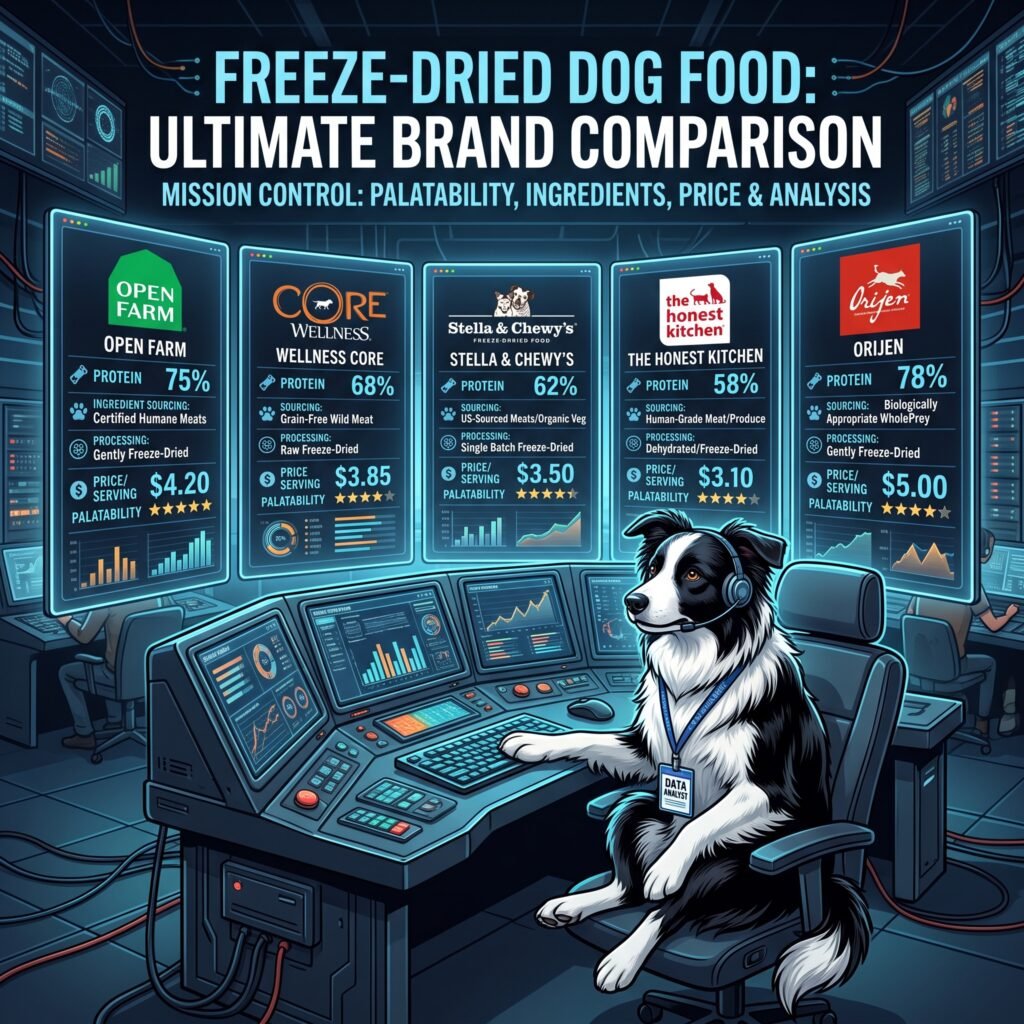
Why "Best Freeze-Dried Dog Food Brands" Lists Disagree With Each Other
If you’ve compared more than one roundup of the best freeze-dried dog food brands, you’ve probably noticed they rarely agree on a top pick. One outlet ranks Stella & Chewy’s first for palatability, another puts Open Farm first for sourcing transparency, and a third leads with a value pick that barely shows up elsewhere. That’s not inconsistency for its own sake — it’s a sign that “best” is being measured against different criteria in each list.
Most best freeze-dried dog food brands rankings weight some mix of protein content, price, ingredient sourcing claims, and customer review volume. Very few explicitly weight recall history or processing method (raw versus HPP versus cooked-then-dried), which is exactly the factor this guide has argued should carry more weight for certain households. When you see two lists of the best freeze dried dog food brands disagree, it’s worth checking what criteria each one actually used before assuming one is simply wrong.
That’s also why a single “best overall” pick rarely serves everyone well. The best freeze-dried dog food brands for a healthy adult Labrador in a single-person household look different from the best choice for a multi-pet home with an immunocompromised resident, even if both dogs would happily eat the exact same bag.
Reviewed By & Methodology
This guide was compiled through a comparative review process rather than in-home product testing. Research included cross-referencing manufacturer guaranteed analysis panels and AAFCO life-stage nutrient profiles, reviewing FDA recall and advisory records for pet food covering the past several years, and comparing processing method disclosures (raw freeze-dried versus HPP-treated versus cooked-then-freeze-dried) across each brand’s own technical documentation where publicly available. Pricing estimates are based on standard bag sizes and manufacturer feeding guidelines for a 30-lb adult dog at maintenance calories; actual cost will vary by region and retailer. This is not a substitute for veterinary guidance — always loop in your vet before changing a dog’s diet, especially for puppies, seniors, or dogs with an existing health condition.
Frequently Asked Questions About Freeze Dried Dog Food Brands
Are freeze dried dog food brands safe for puppies? Yes, as long as the specific product meets AAFCO’s growth and reproduction nutrient profile, not just the adult maintenance profile. Check the label’s AAFCO statement directly rather than assuming a brand’s whole lineup is puppy-appropriate, since many freeze dried dog food brands sell both life-stage formulas under the same product family.
Do freeze dried dog food brands need to be rehydrated before serving? Most manufacturers recommend rehydrating with warm water for a few minutes before serving, both for palatability and to help dogs who don’t drink much water get adequate moisture. Some dogs will eat the product dry as a crunchy topper, but rehydration is generally the manufacturer-recommended method across most freeze dried dog food brands.
Why are freeze dried dog food brands so much more expensive than kibble? Freeze-drying is a slower, more energy-intensive process than kibble extrusion, and the ingredients themselves tend to be higher-quality, higher-moisture raw or lightly cooked meat rather than rendered meal. That combination of process cost and ingredient cost is why freeze dried dog food brands typically run two to four times the daily cost of mid-tier kibble.
Can I mix freeze dried dog food brands with regular kibble? Yes, this is one of the most common ways people feed freeze-dried products, using it as a topper rather than a full meal replacement. It’s a practical way to get some of the palatability and nutrient benefits of freeze dried dog food brands without the full cost of feeding it as a complete diet.
Which freeze dried dog food brands have the cleanest recall history? Based on FDA recall and advisory records reviewed for this guide, brands like Stella & Chewy’s, Primal, Maxbone, Open Farm, and BIXBI had no active FDA recalls in the recent multi-year search window at the time of writing, though recall status changes and should always be reconfirmed directly on FDA.gov before purchase.
The Bottom Line on Choosing Among Freeze Dried Dog Food Brands
There’s no single best answer among freeze dried dog food brands — there’s only the best answer for your dog, your budget, and who else lives in your house. Start by figuring out whether pathogen risk is a genuine concern for your household, not just a hypothetical one. Then narrow your list of freeze dried dog food brands by processing method, check the AAFCO life-stage statement against your dog’s actual age and size, and only after that, compare price per feeding. Skip that order, and you’ll end up picking a freeze dried dog food brand based on packaging instead of fit — which is exactly how most buying guides steer you wrong in the first place.