
Lactose Free Dog Milk: The Complete Guide to Safe, Healthy Treats for Your Dog
Picture this: you're pouring yourself a bowl of cereal, and your dog is sitting by your feet, eyes locked on the milk carton like it's the last treat on Earth.

It’s tempting to pour a little splash into their bowl. But before you do, there’s something every dog owner needs to understand — regular cow’s milk can upset a dog’s stomach, and that’s where lactose free dog milk comes into the picture.
Over the last few years, lactose free dog milk has become one of the most searched-for pet nutrition topics, and for good reason. Dogs, much like many adult humans, often lose the ability to properly digest lactose as they age. That doesn’t mean milk has to be off the table entirely — it just means you need the right kind. This guide will walk you through everything you need to know: what lactose free dog milk actually is, why regular milk can be risky, how to choose the best product, and how to safely introduce it into your dog’s diet.
Whether you’re here because your dog just begged for a sip of your latte, or you’re actively researching lactose free milk for dogs as a healthier alternative, this article will give you the clarity — and confidence — to make the right choice for your furry companion.
Table of Contents
- What Is Lactose Free Dog Milk?
- Why Regular Milk Is a Problem for Most Dogs
- Can Dogs Drink Lactose Free Milk? The Honest Answer
- Can Dogs Have Lactose Free Milk Every Day?
- The Nutritional Benefits of Lactose Free Milk for Dogs
- How to Choose the Best Lactose Free Milk Dogs Can Safely Enjoy
- Homemade vs. Store-Bought Lactose Free Dog Milk
- How to Introduce Lactose Free Milk into Your Dog’s Diet
- Signs Your Dog Might Still Be Sensitive
- Alternatives to Lactose Free Dog Milk
- Common Mistakes Dog Owners Make With Dairy
- Expert Tips for Using Milk as a Training or Comfort Treat
- Frequently Asked Questions
- Conclusion
1. What Is Lactose Free Dog Milk?
Lactose free dog milk is a specially formulated or processed dairy product where the lactose — the natural sugar found in milk — has been broken down or removed. In regular milk, lactose is digested by an enzyme called lactase. Puppies produce plenty of this enzyme while nursing, but as dogs mature, lactase production drops significantly, sometimes almost disappearing altogether.
This is precisely why lactose free milk for dogs exists as a category of its own. Manufacturers either:
- Add lactase enzymes to standard milk to pre-digest the lactose, or
- Filter out the lactose molecules entirely during processing, or
- Formulate a milk substitute using goat’s milk, coconut milk, or a plant-based base that’s naturally low in lactose.
The result is a product that looks and tastes like milk but doesn’t trigger the digestive upset that regular dairy often causes in adult dogs.
Why This Distinction Matters
Not all “dog milk” products on the market are created equal. Some are simply flavored water with milk solids added, while genuine lactose free dog milk is formulated with digestive sensitivity in mind. Reading the label carefully — and understanding what “lactose free” actually means on packaging — is the first step toward making a smart purchase.
2. Why Regular Milk Is a Problem for Most Dogs
Here’s something a lot of pet parents don’t realize: dogs are not designed to drink milk past puppyhood. Just like many adult humans develop lactose intolerance, the majority of adult dogs experience a natural decline in lactase enzyme production.
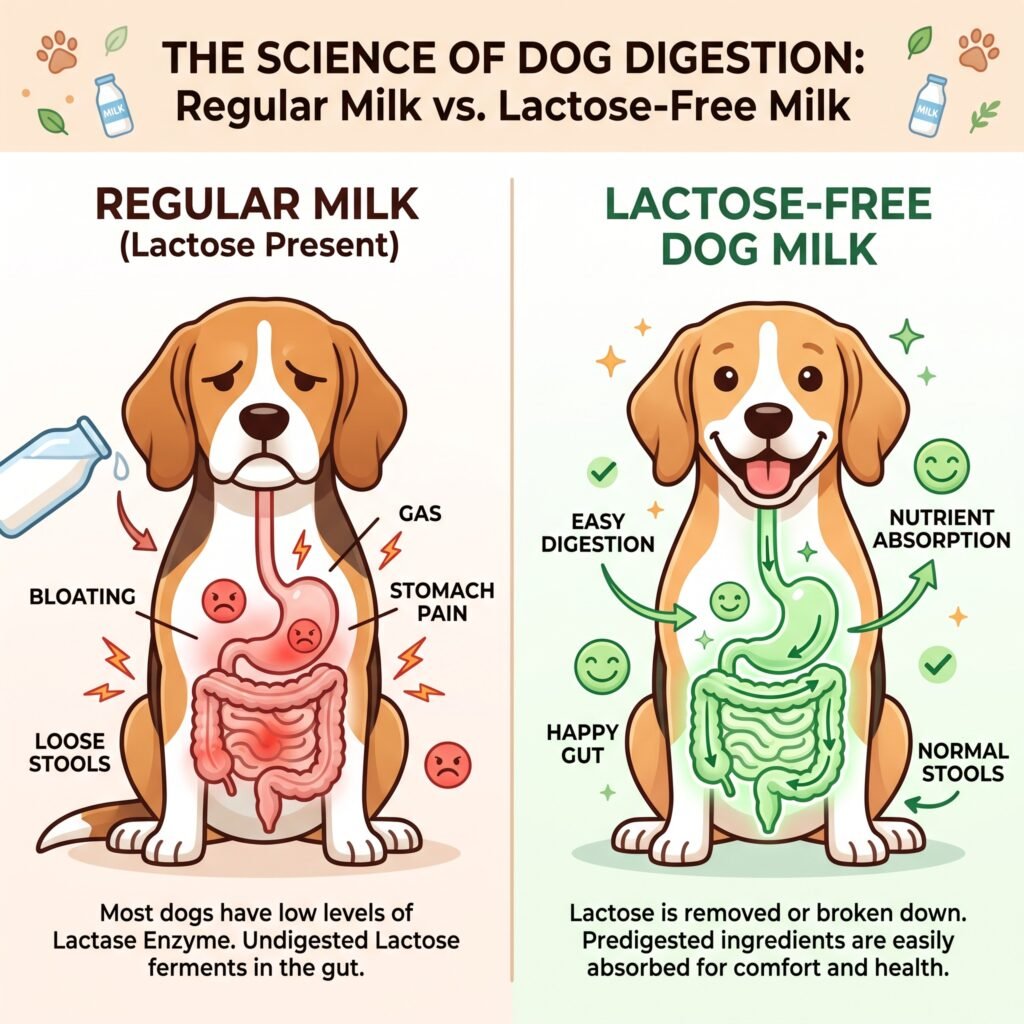
When a lactose-intolerant dog drinks regular milk, the undigested lactose travels into the colon, where it ferments and draws in water. This typically leads to:
- Bloating and gas
- Loose stools or diarrhea
- Abdominal discomfort or cramping
- Vomiting in more sensitive dogs
According to veterinary nutrition experts at institutions like the American Kennel Club and Cornell University’s College of Veterinary Medicine, most adult dogs fall somewhere on the lactose-intolerant spectrum, even if they’ve tolerated dairy in the past. This is why so many pet owners start searching for lactose free milk dogs can actually digest without side effects.
The Puppy Exception
Puppies are a different story. While nursing, they naturally produce high levels of lactase to digest their mother’s milk. But once weaning begins, that enzyme production starts to taper off — which means even puppies shouldn’t be given unlimited regular cow’s milk as a substitute for proper puppy formula.
3. Can Dogs Drink Lactose Free Milk? The Honest Answer
This is probably the question that brought you here: can dogs drink lactose free milk safely? The short answer is yes, in moderation, for most healthy adult dogs.
Because the lactose has already been broken down or removed, lactose free milk eliminates the primary digestive trigger that causes discomfort in regular dairy. That said, “safe” doesn’t mean “unlimited.” A few important caveats apply:
- Portion size matters. Even lactose free milk is calorie-dense and can contribute to weight gain if given frequently.
- Fat content should be considered. Full-fat lactose free milk may still cause loose stools in dogs with sensitive stomachs or a history of pancreatitis.
- Additives are a concern. Flavored or sweetened lactose free milk products (vanilla, chocolate, or sweetened with xylitol) should be avoided entirely, as some sweeteners are toxic to dogs.
So when someone asks, can dogs have lactose free milk as a regular part of their diet, the more accurate answer is: yes, occasionally, as a treat — not as a dietary staple or water replacement.
What Vets Generally Recommend
Most veterinarians agree that lactose free milk is a reasonable occasional treat for dogs without other underlying health issues, such as obesity, diabetes, or pancreatic conditions. As always, it’s worth having a quick conversation with your vet, especially if your dog has a sensitive digestive history.
4. Can Dogs Have Lactose Free Milk Every Day?
This is where many owners get it wrong. Just because a treat is labeled “safe” doesn’t mean it should become a daily habit. Lactose free dog milk should be treated the way you’d treat any other indulgence — sparingly.
Here’s a simple guideline framework many pet nutritionists suggest:
| Dog Size | Suggested Serving | Frequency |
|---|---|---|
| Small breeds (under 20 lbs) | 1–2 tablespoons | 1–2 times per week |
| Medium breeds (20–50 lbs) | 2–4 tablespoons | 1–2 times per week |
| Large breeds (50+ lbs) | 1/4 to 1/2 cup | 1–2 times per week |
Daily consumption, even of lactose free products, can lead to unnecessary calorie intake and may disrupt the balance of a dog’s regular diet. Treats — including milk — should never exceed about 10% of a dog’s total daily caloric intake, a rule widely echoed by veterinary nutrition guidelines.
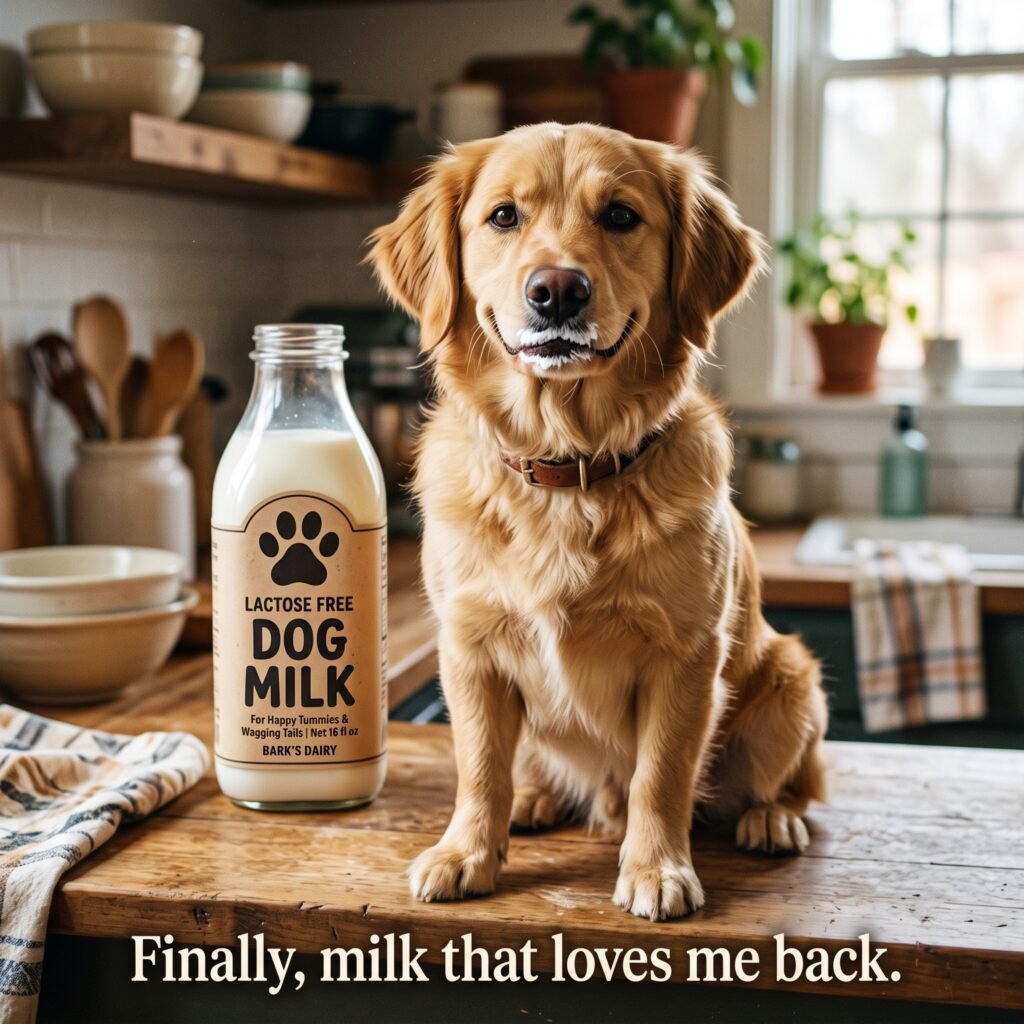
5. The Nutritional Benefits of Lactose Free Milk for Dogs
When given appropriately, lactose free milk isn’t just a treat — it can offer some real nutritional value:
- Calcium – Supports bone and teeth health, particularly important for growing puppies and senior dogs with joint concerns.
- Protein – Contributes to muscle maintenance and repair.
- Vitamin D and B12 – Support immune function and energy metabolism.
- Hydration boost – Especially useful for dogs who are picky drinkers or recovering from mild illness.
- Digestive comfort – Unlike regular milk, the lactose free version won’t trigger the fermentation process that leads to gas and bloating.
It’s worth noting that milk should never replace a dog’s primary source of nutrition. It’s a supplement or occasional treat, not a meal replacement.
6. How to Choose the Best Lactose Free Milk Dogs Can Safely Enjoy
Not every product marketed toward pets is created with the same level of care. Here’s what to look for when shopping for lactose free milk for dogs:
Check the Ingredient List
Look for products with minimal, recognizable ingredients. A high-quality lactose free dog milk should list milk (or a milk alternative), lactase enzyme, and little else.
Avoid These Red Flags
- Added sugars or artificial sweeteners (especially xylitol, which is toxic to dogs)
- Chocolate or cocoa flavoring
- Excessive preservatives or artificial coloring
- Vague labeling like “milk product” without clarity on the source
Consider the Base
Some lactose free dog milk products use:
- Cow’s milk with lactase added – Closest to traditional milk in taste and texture.
- Goat’s milk – Naturally lower in lactose and often easier to digest, even for dogs with mild sensitivities.
- Coconut-based alternatives – Naturally lactose-free, though these should be checked for added sugars.
Look for Pet-Specific Formulations
Many brands now manufacture milk specifically designed for dogs and cats, often labeled as “pet milk” or “dog milk,” which is formulated to be lactose free and free of harmful additives. These are generally a safer bet than repurposing human lactose free milk, which may contain higher sugar content or flavorings unsuitable for dogs.
(Internal linking suggestion: Link this section to a related article such as “Best Dog-Friendly Treats for Sensitive Stomachs” or “How to Read Pet Food Labels Like a Pro.”)
7. Homemade vs. Store-Bought Lactose Free Dog Milk
If you enjoy a hands-on approach to pet care, making your own lactose free dog milk at home is entirely possible.
Homemade Option
You can create a simple lactose free dog milk by:
- Using plain, unsweetened goat’s milk (naturally lower in lactose).
- Diluting it slightly with water to reduce fat content.
- Avoiding any added flavors, sugars, or sweeteners.
This gives you full control over ingredients and ensures nothing harmful sneaks into the mix.
Store-Bought Option
Store-bought lactose free dog milk offers convenience and consistency. Reputable pet nutrition brands formulate their products specifically with a dog’s digestive system in mind, often fortifying them with beneficial nutrients like taurine or omega fatty acids.
Pros of store-bought:
- Convenient and shelf-stable
- Nutritionally balanced for pets
- Consistent lactose-free formulation
Pros of homemade:
- Full ingredient transparency
- Customizable to your dog’s needs
- Often more cost-effective
Whichever route you choose, always introduce new products gradually and monitor your dog’s reaction.
8. How to Introduce Lactose Free Milk into Your Dog’s Diet
Even though lactose free milk is gentler on digestion than regular dairy, every dog is different. Here’s a safe introduction process:
- Start small. Offer just a teaspoon or two to see how your dog reacts.
- Wait 24 hours. Watch for any signs of digestive upset, itching, or unusual behavior.
- Gradually increase, if tolerated. Move toward the recommended serving size based on your dog’s weight.
- Keep a food journal. Especially useful if your dog has a history of food sensitivities.
- Avoid mixing with other new foods. This makes it easier to identify the source if a reaction does occur.
This cautious approach applies whether you’re testing lactose free milk dogs haven’t had before, or simply switching brands.
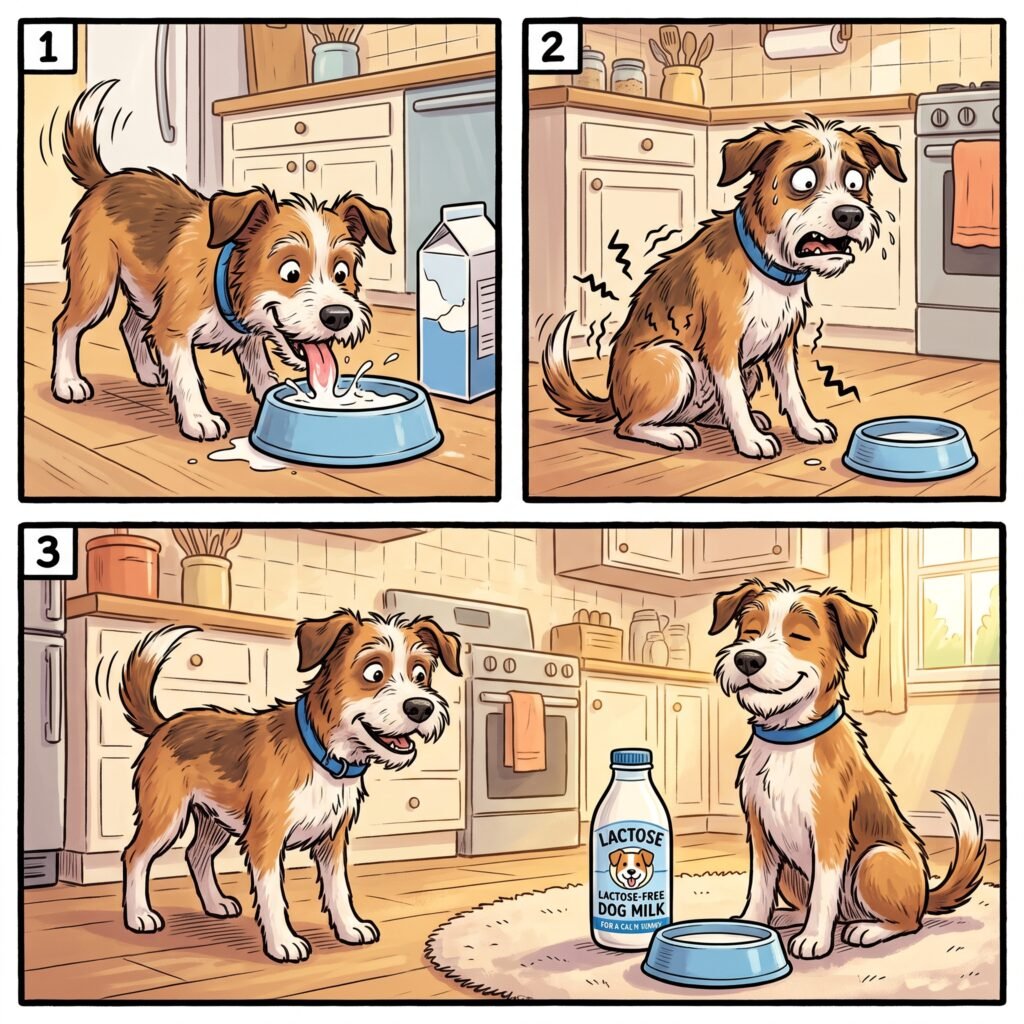
9. Signs Your Dog Might Still Be Sensitive
Even lactose free milk isn’t 100% risk-free for every dog. Some pets have broader dairy sensitivities unrelated to lactose specifically — meaning they may react to milk proteins like casein or whey.
Watch for these signs after introducing lactose free milk:
- Excessive scratching or skin irritation
- Vomiting shortly after consumption
- Diarrhea that persists beyond a single incident
- Lethargy or noticeable discomfort
- Loss of appetite
If any of these symptoms appear, discontinue the milk immediately and consult your veterinarian. It’s possible your dog has a broader dairy allergy rather than simple lactose intolerance, and the two require different management approaches.
10. Alternatives to Lactose Free Dog Milk
If your dog doesn’t respond well to milk — lactose free or otherwise — there are plenty of other ways to give them a similar treat experience:
- Bone broth – Packed with flavor and nutrients, and generally very gentle on digestion.
- Plain yogurt (in small amounts) – Contains live cultures that partially break down lactose during fermentation, though it should still be given sparingly.
- Pet-specific milk replacers – Designed for puppies but sometimes formulated for adult dogs too.
- Coconut water (unsweetened) – A hydrating, low-calorie alternative with a mild natural flavor dogs often enjoy.
These alternatives can be excellent substitutes for owners who want to treat their dog without any dairy-related risk at all.
11. Common Mistakes Dog Owners Make With Dairy
Even well-meaning pet parents fall into a few common traps:
- Assuming “milk” is always safe simply because their dog has had it before without issue.
- Overfeeding treats, even lactose free ones, without adjusting the rest of the dog’s diet.
- Choosing flavored products that contain sugar, cocoa, or artificial sweeteners.
- Ignoring portion guidelines and treating milk as a beverage rather than an occasional snack.
- Confusing “dairy-free” with “lactose-free.” These are not always the same — always check labels carefully.
Avoiding these mistakes ensures that milk remains a safe, enjoyable treat rather than a source of digestive distress.
12. Expert Tips for Using Milk as a Training or Comfort Treat
Many trainers use small amounts of lactose free milk (often frozen into ice cube trays) as a high-value reward during training sessions or hot weather cooling treats. Here are a few practical tips:
- Freeze it into small cubes for a long-lasting, low-mess summer treat.
- Mix it with pureed pumpkin for a digestive-friendly frozen snack.
- Use it as a topper on dry kibble to encourage picky eaters.
- Pair it with puzzle feeders to slow down fast eaters while adding enrichment.
These creative uses allow you to incorporate lactose free milk into your dog’s routine without overdoing the quantity.
(Internal linking suggestion: Consider linking to “DIY Frozen Dog Treats for Summer” or “Best Enrichment Toys for Bored Dogs.”)
Frequently Asked Questions
1. Can dogs drink lactose free milk safely?
Yes, most healthy adult dogs can safely drink lactose free milk in moderate amounts. Since the lactose has already been broken down, it’s far gentler on digestion than regular cow’s milk.
2. Can dogs have lactose free milk every day?
It’s not recommended as a daily staple. While occasional consumption is generally safe, daily intake can add unnecessary calories and may disrupt a balanced diet. Stick to one or two servings a week.
3. Is lactose free milk for dogs the same as regular lactose free milk for humans?
Not always. Human lactose free milk can sometimes contain added sugars or flavorings that aren’t ideal for dogs. Pet-specific lactose free milk products are formulated with a dog’s digestive system and nutritional needs in mind.
4. What happens if my dog drinks regular milk instead of lactose free milk?
Regular milk can cause bloating, gas, diarrhea, and stomach discomfort in lactose-intolerant dogs, which describes the majority of adult dogs. Symptoms usually appear within a few hours of consumption.
5. Can puppies have lactose free milk?
Puppies generally tolerate dairy better than adult dogs because they still produce higher levels of lactase. However, it’s best to stick with a proper puppy milk replacer rather than human-grade lactose free milk, especially for very young puppies.
6. How much lactose free milk can I give my dog?
A general guideline is one to two tablespoons for small dogs and up to half a cup for large breeds, given no more than once or twice a week.
7. Are there any dogs that should avoid lactose free milk entirely?
Yes. Dogs with pancreatitis, obesity, diabetes, or a diagnosed dairy allergy (as opposed to lactose intolerance) should avoid milk products altogether unless specifically cleared by a veterinarian.
Conclusion
So, can dogs drink lactose free milk? For most healthy adult dogs, the answer is a reassuring yes — as long as it’s given thoughtfully and in moderation. Lactose free dog milk offers a way to satisfy your dog’s curiosity (and your own desire to share a treat) without the digestive fallout that regular dairy often causes.
The key takeaways to remember:
- Lactose free milk for dogs removes the digestive trigger found in regular dairy, making it a much safer option for adult dogs.
- Moderation is essential — even lactose free milk shouldn’t become a daily habit.
- Always check labels for hidden sugars, artificial sweeteners, or flavorings that could be harmful.
- Introduce any new dairy product slowly, and watch for signs of sensitivity beyond lactose intolerance.
- When in doubt, consult your veterinarian, especially if your dog has existing health conditions.
At the end of the day, lactose free dog milk can be a wonderful, occasional way to bond with your dog and add a little variety to their routine — as long as it’s done with care, moderation, and a good understanding of what’s actually in the bowl.