
Is Glycerin Bad for Dogs? The Complete 2026 Vet-Reviewed Guide
Is Glycerin Bad for Dogs? Safety, Risks & What Vets Say in 2026 Meta Description: Is glycerin bad for dogs? Learn the truth about glycerin in dog food and treats in 2026 — is vegetable glycerin safe for dogs, risks, diabetic dogs, and what vets recommend.
Is Glycerin Bad for Dogs? The Direct Answer
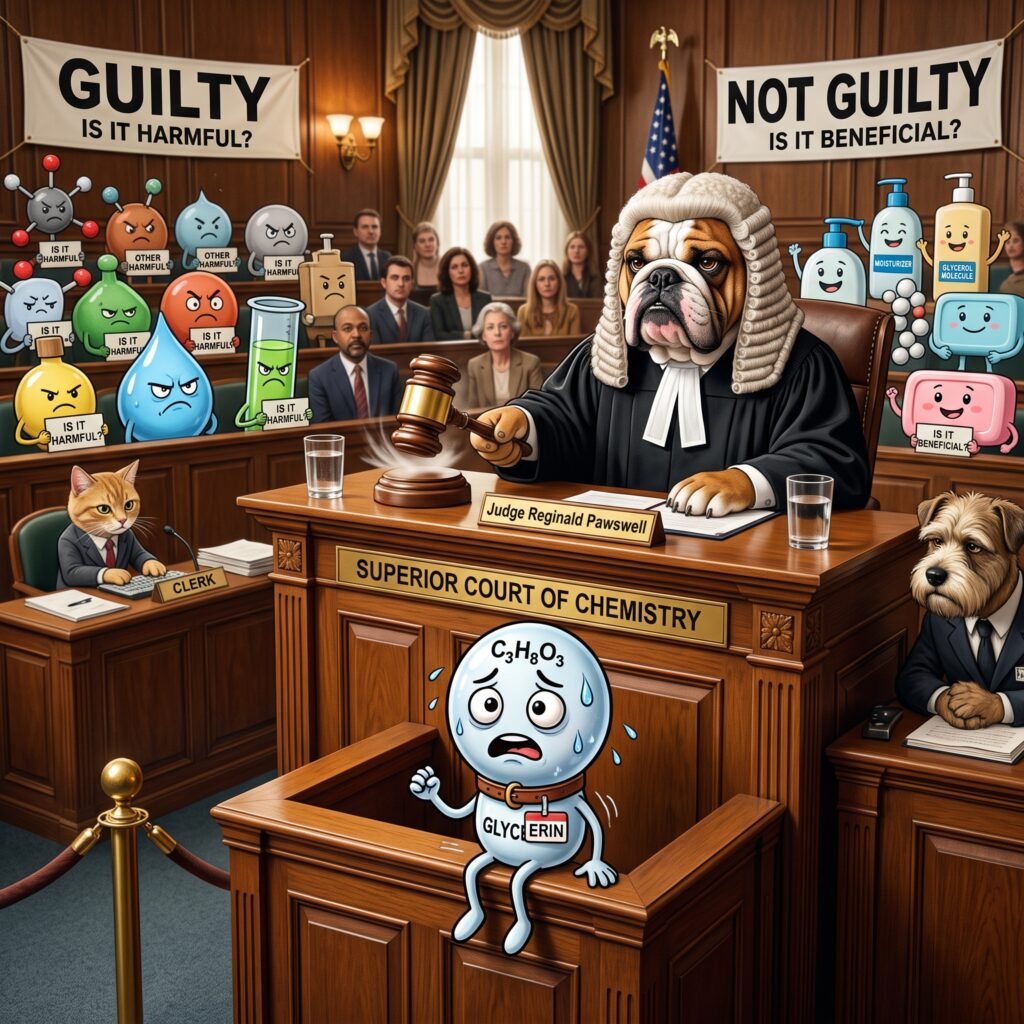
Is glycerin bad for dogs? This is one of the most searched pet nutrition questions in 2026 — and the answer requires more nuance than a simple yes or no. The short version: glycerin is not bad for dogs when it is food-grade, sourced from vegetable oils, and consumed in normal amounts found in commercial dog food and treats. The FDA has classified glycerin as safe for use in pet food when used in accordance with good manufacturing practice.
However, is glycerin bad for dogs in all contexts? Not quite. There are specific situations where glycerin warrants caution — particularly for diabetic dogs, dogs consuming very large quantities of glycerin-heavy treats, and dogs exposed to low-quality synthetic or animal-derived glycerin sourced from unvetted suppliers. The type, source, and quantity of glycerin all determine whether it poses any risk to your dog.
This 2026 guide — reviewed against the latest veterinary research and FDA guidance — answers every dimension of is glycerin bad for dogs: what it is, how it is used, when it is safe, when it is a concern, how it differs from the genuinely dangerous propylene glycol, and exactly which dogs should have glycerin minimized or removed from their diet entirely.
Table of Contents
- Is Glycerin Bad for Dogs? The Direct Answer
- What Is Glycerin? Understanding the Basics
- Types of Glycerin in Dog Food: Not All Are Equal
- Why Is Glycerin Used in Dog Food and Treats?
- Is Glycerin Safe for Dogs? What the FDA Says
- Is Vegetable Glycerin Safe for Dogs?
- Glycerin in Dog Food: Potential Risks and Concerns
- Is Glycerin Bad for Dogs With Diabetes?
- Glycerin vs. Propylene Glycol: A Critical Difference
- The Chicken Jerky Controversy: When Glycerin Became a Concern
- Is Glycerin Bad for Dogs in Skincare and Topical Products?
- How to Read Dog Food Labels for Glycerin
- Which Dogs Should Avoid Glycerin?
- Glycerin-Free Alternatives for Your Dog
- Frequently Asked Questions
What Is Glycerin? Understanding the Basics
Before answering is glycerin bad for dogs, it helps to understand what glycerin actually is at a chemical and functional level.
Glycerin, also known as glycerol, is a colorless, odorless, sweet-tasting sugar alcohol. It occurs naturally as part of the breakdown of fats and is also found in fermented foods. As a sugar alcohol — alongside erythritol, sorbitol, and xylitol — glycerin shares structural characteristics with both sugars and alcohols, though it behaves differently from either in the body.
Crucially, glycerin is not xylitol. This distinction matters enormously when owners ask is glycerin bad for dogs, because xylitol (another sugar alcohol) is highly toxic to dogs and causes life-threatening hypoglycemia. Glycerin does not share xylitol’s toxicity mechanism and does not trigger the same dangerous response.
Glycerin has an extremely broad range of commercial and industrial applications — pharmaceuticals, cosmetics, soap production, food manufacturing, and increasingly, biodiesel production as a by-product. This last use — biodiesel — is where some of the concern about glycerin quality in pet food has originated, as crude biodiesel by-product glycerin contains impurities including soap, salts, methanol, and other compounds that are unsuitable for food use without significant refinement.
The key question for pet owners is not simply is glycerin bad for dogs in the abstract — it is whether the specific glycerin in a specific product is food-grade, properly sourced, and present at appropriate concentrations. Quality and sourcing are everything.
Types of Glycerin in Dog Food: Not All Are Equal
Understanding the different types of glycerin is fundamental to evaluating is glycerin bad for dogs in any specific product.
Vegetable Glycerin (Natural)
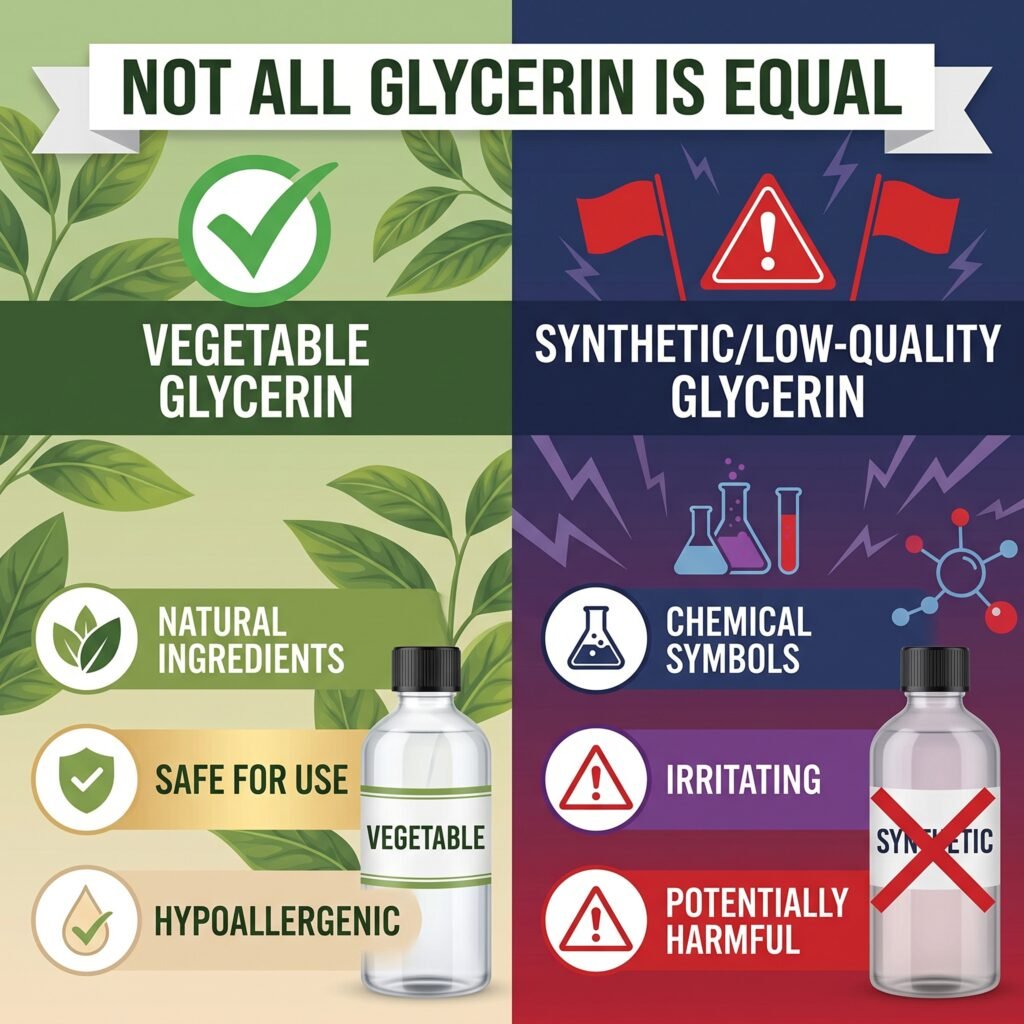
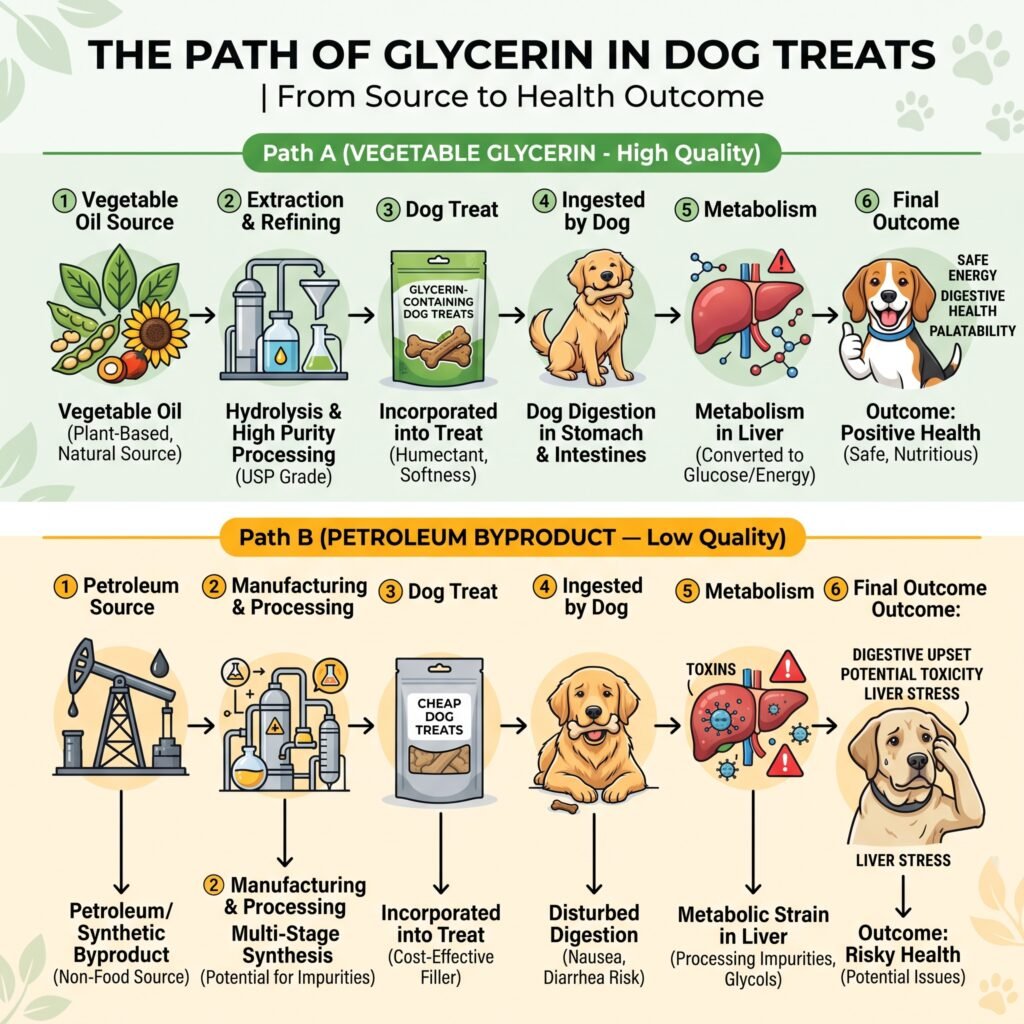
Vegetable glycerin is derived from plant-based oils — most commonly coconut oil, soybean oil, rapeseed oil (canola), or palm oil. It is produced through a process called hydrolysis or saponification of these plant-based fats. Vegetable glycerin from organic soybean, coconut, or rapeseed oil is the preferred type for pet products.
Is vegetable glycerin bad for dogs? No — vegetable glycerin is the safest and most appropriate form of glycerin for use in dog food and treats. It is food-grade, plant-derived, and recognized by the FDA as safe for pet food use. Vegetable glycerin is the type you are most likely to find in quality commercial dog treats and semi-moist foods in 2026.
One environmental note: vegetable glycerin from palm oil raises sustainability concerns due to deforestation in producing countries like Malaysia and Indonesia. While this is not a dog health issue, it is a consideration for environmentally conscious pet owners evaluating their dogs’ food.
Animal-Derived Glycerin
Animal glycerin is extracted from animal fats such as tallow (beef fat) or lard (pork fat). While it functions identically to vegetable glycerin as a humectant, animal-derived glycerin is considered less desirable in pet products due to less predictable sourcing transparency and quality control. It is not toxic, but it is a lower-quality option than vegetable glycerin.
Synthetic (Petrochemical) Glycerin
Synthetic glycerin is produced from propylene — a petroleum-based compound. This type of glycerin is considered unsuitable for dogs and should be avoided in pet food. The same cannot be said for low-quality glycerin: synthetic glycerin obtained from petroleum is not appropriate for use in dog food products. When asking is glycerin bad for dogs, synthetic glycerin is the type most likely to warrant concern about purity and safety.
Crude Biodiesel By-Product Glycerin
The least suitable form of glycerin for any food application, crude biodiesel glycerin contains significant impurities and requires extensive refining before it can be used safely. This form is not used in legitimate commercial pet food production but has appeared in adulterated products from unscrupulous manufacturers — which is part of the reason the is glycerin bad for dogs question gained momentum in the mid-2010s.
Why Is Glycerin Used in Dog Food and Treats?
Understanding why glycerin is added to dog food and treats provides important context for the is glycerin bad for dogs discussion.
Primary Role: Humectant
Glycerin is primarily used in dog food as a humectant — an ingredient that attracts and binds water molecules. In practical terms, this means glycerin keeps dog treats and semi-moist foods from drying out, maintains their soft, chewy texture, and prevents mold growth by reducing water activity (the availability of free moisture that microorganisms need to proliferate).
Without a humectant like glycerin in the formulation, soft-bake and semi-moist dog treats would either become hard and unpalatable within days or require synthetic chemical preservatives to prevent mold. Glycerin allows manufacturers to create shelf-stable soft treats without relying on preservatives like BHA, BHT, or ethoxyquin — ironically making it a natural alternative to ingredients many dog owners find more concerning.
Secondary Role: Sweetener and Palatability Enhancer
Glycerin has a naturally sweet taste — approximately 60% as sweet as table sugar. This sweetness makes glycerin-containing treats more appealing to dogs, encouraging consumption even in picky eaters. Because glycerin adds sweetness without being a sugar, it allows manufacturers to enhance palatability without adding corn syrup, sucrose, or other sugar-based sweeteners.
Tertiary Role: Texture Modifier and Binder
In addition to moisture retention and sweetness, glycerin functions as a texture modifier and binder in dog food formulations — helping ingredients hold together, achieving a consistent chew texture, and improving the overall mouthfeel of soft treats.
Where You Find Glycerin in Dog Products
Glycerin appears primarily in:
- Semi-moist or soft-bake dog treats and training treats
- Dental chews and dental care products
- Soft dog food pouches and wet-dry hybrid products
- Herbal glycerites and liquid supplements
- Dog shampoos, conditioners, and paw balms
- Some dental rinses and oral care products
Is Glycerin Safe for Dogs? What the FDA Says
The regulatory answer to is glycerin safe for dogs is unambiguous. The FDA has declared glycerin safe when used in accordance with good manufacturing practice. Vegetable glycerin is specifically approved as a preservative ingredient in pet food. It is non-toxic and safe for pets in recommended dosage quantities when sourced as food-grade.
Dog Food Advisor’s nutritionist Laura Ward provides useful practical context: glycerin is found primarily in semi-moist or soft-bake foods and treats, where its role as a humectant is to bind water in the food. Without a humectant like glycerin, the food would quickly become moldy. Despite some negative press, glycerin has been deemed non-toxic and safe for animals when sourced as food-grade and used in proper concentrations.
So is glycerin safe for dogs in the products you buy at pet stores and major retailers? Yes — provided those products are from reputable manufacturers following FDA-compliant good manufacturing practices. The risk, as with many ingredients, comes not from glycerin itself but from low-quality sourcing, manufacturing shortcuts, or contaminated supply chains.
The Freeze-Dried Coating
Every kibble in Orijen senior dry food is coated with freeze-dried raw liver — a palatability enhancement that provides a burst of raw flavor dogs instinctively respond to. This coating makes Orijen dog food senior highly palatable even for picky senior dogs whose appetite may have diminished with age, and it adds a nutrient-dense raw ingredient layer on top of the kibble itself.
A Note on Legumes
Orijen senior food contains legumes — lentils, peas, chickpeas, and navy beans — as carbohydrate and fiber sources. The FDA’s investigation into a potential link between legume-heavy grain-free diets and dilated cardiomyopathy (DCM) in dogs is ongoing as of 2026. While no definitive causal link has been established for any specific brand including Orijen, this remains an important discussion to have with your veterinarian before choosing Orijen dog food for senior dogs, particularly for breeds with known cardiac predispositions (Dobermans, Boxers, Golden Retrievers, Cavalier King Charles Spaniels).
Is Vegetable Glycerin Safe for Dogs?
Is vegetable glycerin safe for dogs? This is the most commonly asked variation of the glycerin safety question, and the answer is clearly yes — with the same caveats about moderation and quality that apply to any food ingredient.
Vegetable glycerin is a natural component of many foods and can even be beneficial for dogs. It supports moisture balance, provides an easily digestible source of energy, and can positively affect gut health. Its presence in high-quality dog snacks helps improve consistency, retain moisture, and optimize taste without artificial additives.
Vegetable glycerin can be used in dog treats without concern when it is obtained from natural oils such as soybean, rapeseed, or coconut oil and fed in moderation. It is well tolerated by the vast majority of healthy dogs.
Is vegetable glycerin safe for dogs who are sensitive or prone to digestive upset? Generally yes, though highly sensitive dogs may experience mild gastrointestinal adjustment when first consuming high-glycerin treats. Starting with small amounts and gradually introducing glycerin-containing products allows the GI tract to adapt without distress.
The practical takeaway: is vegetable glycerin safe for dogs? Yes, for healthy adult dogs and puppies consuming normal amounts from quality commercial products. The caveats involve diabetic dogs (discussed below), dogs with known sensitivities, and the importance of product quality and sourcing.
Glycerin in Dog Food: Potential Risks and Concerns
While the answer to is glycerin bad for dogs is generally no, there are legitimate concerns worth understanding.
Gastrointestinal Upset From Excessive Intake
In very large amounts, vegetable glycerin can cause gastric discomfort including cramping, gas, loose stools, vomiting, and diarrhea. This is a dose-dependent effect — the amount of glycerin in a normal serving of commercial dog treats is not sufficient to cause these symptoms in healthy dogs. However, if a dog consumes an extremely large quantity of glycerin-heavy treats in a short period, digestive upset is possible.
The practical risk is most relevant when dogs help themselves to an unattended bag of soft treats rather than in normal feeding. Is glycerin bad for dogs who steal half a bag of soft chews? Temporary digestive discomfort is likely, but serious toxicity is not.
Caloric Contribution
Glycerin is metabolized as an energy source in the body — it is broken down and used similarly to carbohydrates. Treats high in glycerin carry a meaningful caloric load, and overfeeding glycerin-containing treats contributes to weight gain just as overfeeding any calorie-containing food does. This is not a unique risk of glycerin but is worth noting for owners who give large quantities of soft treats.
Impurity Risk in Low-Quality Sources
The most serious concern about is glycerin bad for dogs relates not to food-grade vegetable glycerin but to low-quality glycerin from unregulated sources. Crude glycerin can contain methanol, soap residues, heavy metals, and other contaminants that are genuinely harmful. This is why sourcing and manufacturing quality matter enormously — and why is glycerin bad for dogs cannot be answered the same way for all products.
Stick to treats and foods from reputable brands that disclose their sourcing practices, are manufactured in facilities complying with FDA or equivalent food safety standards, and are regularly third-party tested.
Sensitive Dogs and Glycerites
Some sensitive dogs may drool excessively after dosing with glycerites — liquid herbal extracts using glycerin as a solvent. This is a mild sensitivity response to the glycerin itself. If your dog shows this reaction, switch to a water-based herbal extract formulation and discontinue the glycerite.
Is Glycerin Bad for Dogs With Diabetes?
This is the most clinically important nuance in the is glycerin bad for dogs discussion. Is glycerin bad for dogs with diabetes? The answer is: potentially yes, and diabetic dogs require specific management.
One small study examined the effects of oral glycerol administration on blood glucose levels in dogs. The researchers found that glycerol significantly increased blood glucose concentrations. These findings suggest that glycerin-containing products may be inappropriate for diabetic dogs since they can affect blood glucose levels.
Why does this happen? While glycerin is not a sugar itself, it can be metabolized into glucose in the body. Excessive intake of glycerin-rich treats, especially in dogs with diabetes or insulin resistance, can contribute to spikes in blood sugar levels leading to hyperglycemia. This metabolic conversion is the key concern for diabetic dogs.
Important context: the amounts of glycerol used in the blood glucose study were much higher than what a dog would typically consume from a serving of commercial treats. Veterinary experts note that in real-world treat quantities, the glycerin itself is generally too small to significantly alter a diabetic dog’s blood sugar — and that the overall caloric content of overfeeding treats would likely have a greater impact on blood sugar than the glycerin content specifically.
Nevertheless, the conservative and responsible answer to is glycerin bad for dogs with diabetes is: yes, warrants avoidance or strict limitation. Diabetic dogs require careful diet management, and glycerin-containing treats — particularly in higher quantities — introduce an unnecessary variable that complicates glycemic control. Always consult your veterinarian about appropriate treats for a diabetic dog.
Glycerin vs. Propylene Glycol: A Critical Difference
One reason is glycerin bad for dogs gets confused with more serious concerns is that glycerin is sometimes conflated with propylene glycol — a related compound that is genuinely more problematic.
Propylene glycol is also used as a humectant in some pet treats and semi-moist foods. While it is used in small amounts in some dog products and is considered moderately safe for dogs in very limited quantities, it carries real risks: propylene glycol can cause red blood cell damage (Heinz body formation) leading to destruction of red blood cells and anemia. It can also cause allergic reactions and sensitivities.
Propylene glycol is explicitly banned in cat food by the FDA due to feline red blood cell sensitivity, though it remains permitted in dog food in small quantities. However, many veterinary nutritionists and dog food quality reviewers recommend avoiding propylene glycol in dog treats where possible.
Glycerin does not share propylene glycol’s red blood cell toxicity mechanism. The two compounds are chemically related but functionally different in terms of risk profile. When reading labels, it is worth distinguishing between the two: glycerin (or glycerol) is the lower-risk humectant; propylene glycol is the one more worth seeking to avoid.

The Freeze-Dried Coating
Every kibble in Orijen senior dry food is coated with freeze-dried raw liver — a palatability enhancement that provides a burst of raw flavor dogs instinctively respond to. This coating makes Orijen dog food senior highly palatable even for picky senior dogs whose appetite may have diminished with age, and it adds a nutrient-dense raw ingredient layer on top of the kibble itself.
A Note on Legumes
Orijen senior food contains legumes — lentils, peas, chickpeas, and navy beans — as carbohydrate and fiber sources. The FDA’s investigation into a potential link between legume-heavy grain-free diets and dilated cardiomyopathy (DCM) in dogs is ongoing as of 2026. While no definitive causal link has been established for any specific brand including Orijen, this remains an important discussion to have with your veterinarian before choosing Orijen dog food for senior dogs, particularly for breeds with known cardiac predispositions (Dobermans, Boxers, Golden Retrievers, Cavalier King Charles Spaniels).
The Chicken Jerky Controversy: When Glycerin Became a Concern
The question is glycerin bad for dogs gained significant public attention following the chicken jerky treat illness cases that began surfacing in 2012. Cases of dogs getting sick after eating chicken jerky treats led to involvement from the Canadian Veterinary Medical Association and the FDA.
FDA investigators traveling to the treats’ source in China determined that the company was using glycerin in the manufacturing process. However, subsequent investigations found that the actual cause of illness was likely not glycerin itself but other contaminants — including residues from Jatropha, a toxic plant whose oil contains compounds exhibiting acute and chronic toxicity to humans and animals.
The key takeaway from this incident is not that glycerin itself is dangerous — it is that ingredient sourcing and supply chain integrity are critical. The episode reinforced the importance of buying treats from reputable manufacturers with transparent sourcing and rigorous quality control, rather than from brands importing ingredients from unregulated facilities where contamination risk is higher.
Is glycerin bad for dogs because of this history? No — but the history correctly points to the importance of quality sourcing of every ingredient, including glycerin.
Is Glycerin Bad for Dogs in Skincare and Topical Products?
Pet owners also ask is glycerin bad for dogs when they notice it in shampoos, paw balms, dental rinses, and other topical products. The answer for topical application is even more clearly no — glycerin is an excellent moisturizing agent for dog skin and coat.
Glycerin in dog shampoos and conditioners functions as a humectant for the skin and coat — attracting moisture and helping to prevent dryness, flakiness, and irritation. It is a common and safe ingredient in quality canine skincare products and is not absorbed through the skin in significant amounts.
If a dog licks up a small amount of lotion or skincare product containing glycerin — which dogs occasionally do — it is generally not harmful, as glycerin is considered non-toxic to dogs in small quantities. Monitor for any unusual symptoms such as vomiting or diarrhea, ensure access to fresh water, and contact a veterinarian if you notice persistent or severe symptoms, which would be unusual from small topical glycerin exposure.
Is glycerin bad for dogs in dental care products? No. Glycerin appears in some dog dental gels, rinses, and toothpaste formulations where its moisturizing and humectant properties support oral tissue health and the spreadability of the product. Dental glycerin products are used in trace amounts and are safe for incidental ingestion, as dogs inevitably swallow some dental product during brushing or chew toy use.
How to Read Dog Food Labels for Glycerin
Understanding how glycerin appears on dog food labels helps owners make informed decisions about is glycerin bad for dogs in specific products they are considering.
Label Names for Glycerin
Glycerin may appear on dog food and treat labels under several names:
- Glycerin (most common)
- Glycerol (the chemical name)
- Vegetable glycerin (specifies plant origin — preferred)
- Glycerine (British spelling variant)
Where It Appears in the Ingredient List
Because ingredient lists are ordered by weight (highest to lowest), glycerin appearing early in the list indicates a significant quantity. In most soft treats, glycerin typically appears in the top five to eight ingredients. In dry kibble and hard treats, it is less common and appears later in the list when present at all.
What to Look For
When evaluating is glycerin bad for dogs in a specific product, look for:
- “Vegetable glycerin” specified — confirms plant-based sourcing
- Country of manufacture — products made in FDA-regulated facilities in the US, Canada, or EU have stronger quality control standards than those from unregulated overseas facilities
- Third-party testing — brands that voluntarily publish third-party testing results offer additional assurance of ingredient purity
What to Watch For
- Generic “glycerin” without specification of source — may be animal-derived or synthetic
- Products from manufacturers with limited transparency about ingredient sourcing
- Very high glycerin concentration in the ingredient list for a product that is not a semi-moist treat (where it has a functional purpose)
Which Dogs Should Avoid Glycerin?
While is glycerin bad for dogs generally gets a no, specific groups of dogs warrant more careful management.
Diabetic Dogs
As discussed, diabetic dogs should have glycerin-containing treats minimized or eliminated from their diet. Glycerin can be metabolized to glucose and may affect blood sugar management. Work with your veterinarian to select treats appropriate for glycemic control.
Dogs With Confirmed GI Sensitivity
Dogs prone to chronic digestive upset, inflammatory bowel disease (IBD), or food sensitivities may react to higher glycerin quantities with loose stools or vomiting. For these dogs, hard baked treats or freeze-dried single-ingredient treats are preferable alternatives to glycerin-heavy soft chews.
Dogs on Calorie-Restricted Diets
Because glycerin contributes calories that metabolize similarly to carbohydrates, dogs on calorie-restricted diets for weight management should have glycerin-containing treats factored into their daily caloric budget rather than given freely.
Dogs Consuming Treats From Unverified Sources
The most practical risk of is glycerin bad for dogs scenarios comes from low-quality treats made with poorly sourced glycerin from unregulated suppliers. For all dogs, but particularly puppies, seniors, and immunocompromised dogs, sourcing treats from reputable manufacturers with transparent quality control is the most important safety measure.
The Freeze-Dried Coating
Every kibble in Orijen senior dry food is coated with freeze-dried raw liver — a palatability enhancement that provides a burst of raw flavor dogs instinctively respond to. This coating makes Orijen dog food senior highly palatable even for picky senior dogs whose appetite may have diminished with age, and it adds a nutrient-dense raw ingredient layer on top of the kibble itself.
A Note on Legumes
Orijen senior food contains legumes — lentils, peas, chickpeas, and navy beans — as carbohydrate and fiber sources. The FDA’s investigation into a potential link between legume-heavy grain-free diets and dilated cardiomyopathy (DCM) in dogs is ongoing as of 2026. While no definitive causal link has been established for any specific brand including Orijen, this remains an important discussion to have with your veterinarian before choosing Orijen dog food for senior dogs, particularly for breeds with known cardiac predispositions (Dobermans, Boxers, Golden Retrievers, Cavalier King Charles Spaniels).
Glycerin-Free Alternatives for Your Dog
If you prefer to avoid glycerin entirely after asking is glycerin bad for dogs, several excellent alternatives exist.
Freeze-dried single-ingredient treats — chicken breast, salmon, beef liver, or sweet potato, freeze-dried without any additives, glycerin, or preservatives. These are the cleanest possible treat option and are appropriate for dogs with virtually any dietary restriction.
Air-dried or dehydrated meat treats — beef jerky, chicken strips, or fish skins made without humectants are naturally preserved through moisture removal rather than glycerin-based water activity control.
Fresh whole food treats — small pieces of plain boiled chicken, blueberries, apple slices (no seeds), carrot sticks, or cucumber are naturally glycerin-free and provide nutritional value alongside treat satisfaction.
Hard-baked kibble-style treats — baked biscuit treats that are fully dried do not require humectants and are naturally glycerin-free, though they are firmer and may not suit dogs with dental issues.
If you are feeding your dog a wholesome raw diet and avoiding processed dog treats, glycerin is simply not a concern — it does not appear in whole food or raw feeding approaches.
Frequently Asked Questions
Is glycerin bad for dogs overall?
Is glycerin bad for dogs in general? No. Food-grade vegetable glycerin in normal amounts found in commercial dog treats and food is not bad for dogs. The FDA has classified it as safe for pet food use. The caveats are quality sourcing, avoiding synthetic or crude glycerin, and specific caution for diabetic dogs.
Is vegetable glycerin safe for dogs?
Yes — is vegetable glycerin safe for dogs is one of the clearest yes answers in dog nutrition. Plant-derived, food-grade vegetable glycerin from reputable sources is non-toxic, approved by the FDA for use in pet food, and well-tolerated by the vast majority of healthy dogs in normal quantities.
Can glycerin kill dogs?
No. Glycerin is not toxic to dogs in the way that xylitol, grapes, or theobromine are. Very large quantities may cause temporary digestive upset, but glycerin does not trigger the organ damage, blood sugar crashes, or neurological effects associated with truly toxic foods. Is glycerin bad for dogs in a lethality sense? No.
Is glycerin the same as xylitol?
No — and this distinction is critical. Both are sugar alcohols, but they are completely different compounds with completely different effects. Xylitol is highly toxic to dogs, causing dangerous hypoglycemia and potentially liver failure. Glycerin does not share this toxicity profile. Confusing the two is a common error that unnecessarily escalates concern about is glycerin bad for dogs.
Should I avoid dog treats with glycerin?
Not necessarily. For healthy adult dogs, treats containing food-grade vegetable glycerin from reputable manufacturers are safe in normal quantities. For diabetic dogs or those with GI sensitivities, glycerin-free alternatives are worth seeking. For all dogs, prioritizing treats from transparent, quality-controlled manufacturers is more important than any single ingredient concern.
How much glycerin is too much for a dog?
Normal commercial treat servings do not contain enough glycerin to cause harm in healthy dogs. Problems arise at very high quantities — far beyond normal treat allowances. The 10% rule for treats applies regardless of glycerin content: treats should constitute no more than 10% of a dog’s daily caloric intake.
Is glycerin in dog dental products safe?
Yes. Glycerin in dog dental gels, toothpaste, and rinses is safe and functions appropriately as a humectant and texture agent. The small amounts ingested during dental care are not a concern for healthy dogs.
Conclusion: The 2026 Verdict on Glycerin and Dogs
The complete answer to is glycerin bad for dogs in 2026 is this: no — not when it is food-grade vegetable glycerin from a reputable source, present in normal commercial quantities, fed to a healthy dog as part of a balanced diet.
Is glycerin safe for dogs in standard commercial treats? Yes. Is vegetable glycerin safe for dogs specifically? Yes — it is the preferred and safest form. Is glycerin bad for dogs with diabetes? Yes, this specific population warrants caution and veterinary guidance. Is glycerin bad for dogs in low-quality treats from unverified manufacturers using crude or synthetic glycerin? Potentially — not because of glycerin itself, but because of what else may be present in poorly sourced ingredients.
The most important takeaways: buy treats from reputable manufacturers, look for “vegetable glycerin” specifically on labels, keep all treats within appropriate daily limits, consult your veterinarian if your dog is diabetic before feeding glycerin-containing products, and do not confuse glycerin with the genuinely dangerous xylitol. Apply those principles and the answer to is glycerin bad for dogs remains a clear and confident no.
Last updated: July 2026. This article has been reviewed against current FDA guidance and published veterinary research. Always consult a licensed veterinarian about your specific dog’s dietary needs and health conditions.