
Full Grown Mini Bernedoodle: Size, Weight Charts & What to Expect
Before you reserve a puppy, there's one question that matters more than almost any other: how big will this dog actually be when it's done growing?
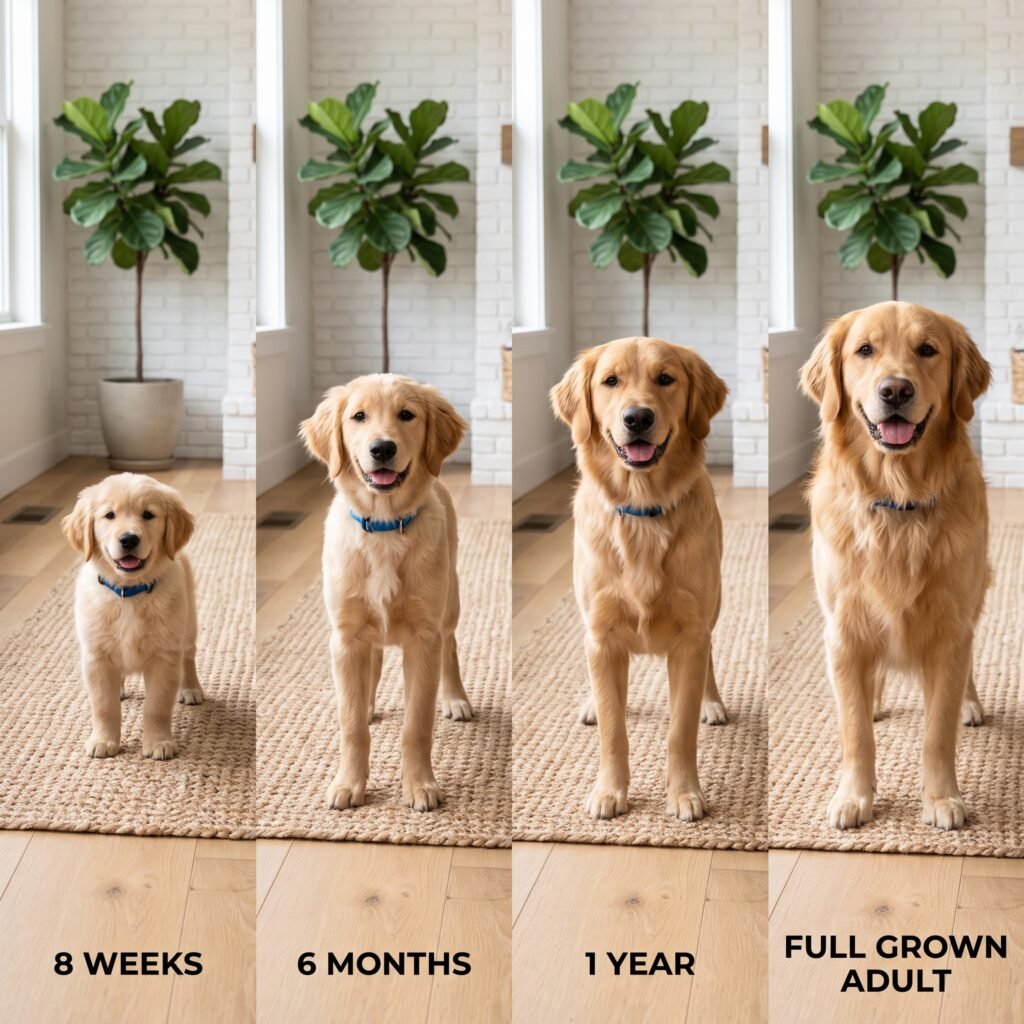
For prospective buyers researching a full grown mini bernedoodle, the honest answer requires a little more nuance than most breeders lead with — because “mini” is a relative term, and the size range within this category is wider than most people expect.
A mini bernedoodle full grown can weigh anywhere from 18 to 49 pounds depending on generation, parent sizes, sex, and individual genetics. That’s a meaningful spread. A dog at the lower end of that range is genuinely compact and apartment-friendly. A dog at the upper end is solidly medium-sized and will need real space. Understanding the difference — before you bring a puppy home — is exactly what this guide is designed to help with.
We’ll cover the full-grown size of every bernedoodle mini full grown variation, from F1 to F1B to micro mini, with actual weight and height ranges based on breeder-reported data. We’ll also explain how to predict your specific puppy’s adult size, what the growth timeline looks like, and how the f1b mini bernedoodle full grown size compares to other generations.
Table of Contents
- Full Grown Mini Bernedoodle: The Size Reality Check
- Mini Bernedoodle Full Grown Size Chart by Generation
- F1 Mini Bernedoodle Full Grown Size
- F1B Mini Bernedoodle Full Grown Size
- Micro Mini Bernedoodle Full Grown Size
- Multigen Bernedoodle Mini Full Grown: Size Consistency
- Full Grown Mini Bernedoodle: Male vs. Female Size Differences
- Growth Timeline: When Is a Mini Bernedoodle Full Grown?
- How to Predict Your Puppy’s Full Grown Size
- Why Mini Bernedoodles Sometimes Grow Bigger Than Expected
- Full Grown Mini Bernedoodle Coat: What Changes
- Full Grown Mini Bernedoodle Appearance and Build
- Practical Planning: Crates, Gear, and Space
- Comparing Bernedoodle Sizes: Micro vs. Mini vs. Standard
- FAQ: Full Grown Mini Bernedoodle
- Conclusion
Full Grown Mini Bernedoodle: The Size Reality Check
Let’s address the most important thing upfront: the term “mini” is not regulated in the designer dog world. There’s no formal breed standard that pins the full grown mini bernedoodle to a specific weight range, which means what one breeder calls a “mini” another might call a “medium” — and those labels can reflect genuinely different adult sizes.
The generally accepted range for a full grown mini bernedoodle is:
- Height: 18 to 22 inches at the shoulder
- Weight: 25 to 49 pounds
However, real-world data from multiple established breeders shows that actual mini bernedoodle full grown weights routinely land outside these ranges in both directions. Some mini-labeled dogs finish closer to 18 pounds; others reach 55 or 60 pounds from litters originally marketed as mini. The most important size indicator isn’t the label on the listing — it’s the documented weight of both parent dogs combined with the generation of the litter.
Mini Bernedoodle Full Grown Size Chart by Generation
Generation is one of the most useful predictors of where a mini bernedoodle full grown will land in terms of adult size, since it directly influences how much Poodle genetics (and therefore size-reducing influence) are present in the puppy’s makeup.
| Generation | Genetic Makeup | Typical Adult Weight | Typical Adult Height |
|---|---|---|---|
| F1 Mini | 50% Bernese, 50% Mini Poodle | 30–50 lbs | 18–22 inches |
| F1B Mini | 25% Bernese, 75% Mini Poodle | 20–38 lbs | 15–20 inches |
| F2 Mini | Two F1 Bernedoodle parents | 25–35 lbs | 12–15 inches |
| Micro Mini | Toy Poodle cross or multigen mini | 10–25 lbs | 12–16 inches |
| Multigen | Multi-generation Bernedoodle x Bernedoodle | Variable (most consistent within 25–40 lbs) | 14–20 inches |
These ranges represent the most consistent data across breeder reports — though individual dogs can still fall outside them.
F1 Mini Bernedoodle Full Grown Size
The F1 is the first-generation cross between a purebred Bernese Mountain Dog and a purebred Miniature Poodle. This generation has the widest size variation because it’s drawing from two dramatically different-sized parent breeds — the Bernese Mountain Dog averaging 70 to 100 pounds, and the Miniature Poodle averaging 10 to 20 pounds.
Based on breeder data from multiple established programs:
- F1 full grown mini bernedoodle weight: Most commonly 30 to 55 pounds
- Height at the shoulder: Typically 18 to 22 inches
- Male vs. female split: Males tend to land toward 35–45 lbs; females closer to 28–38 lbs
- Size predictability: Lower than backcrossed generations, since 50/50 genetics can pull strongly in either direction
The F1 generation is not the right choice if your primary concern is keeping your full grown mini bernedoodle firmly within a small size bracket. It’s better suited for owners who want the classic Bernese-Poodle look and personality and are comfortable with a wider potential adult size range.

F1B Mini Bernedoodle Full Grown Size
The f1b mini bernedoodle full grown is the result of crossing an F1 Mini Bernedoodle back to a Miniature Poodle — producing a puppy that is 75% Poodle and 25% Bernese Mountain Dog. That higher Poodle percentage has two practical effects: the coat becomes more consistently low-shedding and curly, and the adult size tends to run somewhat smaller and more predictably than F1 litters.
What the F1B Mini Bernedoodle Full Grown Actually Looks Like
- Weight range: Approximately 20 to 38 pounds at full maturity
- Height: Generally 15 to 20 inches at the shoulder
- Coat: More reliably curly and low-shedding than F1
- Size predictability: Meaningfully better than F1, though parent size is still the dominant predictor
The f1b mini bernedoodle full grown is frequently the generation recommended for owners with mild dog allergies or for those who specifically want a dog that trends toward the smaller half of the mini range. It’s also the generation most commonly produced by breeders who prioritize coat quality and lower-shedding characteristics.
One important note: while the F1B generation trends smaller on average, it’s still not a guarantee. A f1b mini bernedoodle full grown from parents at the upper end of their respective size ranges can still land in the 35+ pound category, which is why always asking for documented parent weights matters regardless of generation label.
Micro Mini Bernedoodle Full Grown Size
The micro mini bernedoodle full grown is a specific subcategory that has become increasingly popular among buyers who want the bernedoodle personality in a smaller, more portable package. Most micro mini programs achieve this smaller size by incorporating a Toy Poodle (rather than a Mini Poodle) into the crossing, or through multigeneration breeding that selects for smaller parent sizes consistently over several generations.
Micro Mini Bernedoodle Full Grown Measurements
- Weight: Typically 10 to 25 pounds at full maturity
- Height: 12 to 16 inches at the shoulder
- Build: Compact and sturdy rather than fragile — not a toy dog in the fragile sense, but noticeably smaller than a standard mini
- Full growth timeline: Reaches adult height around 8 to 10 months; may continue adding muscle and chest depth through 12 to 15 months
The micro mini bernedoodle full grown is particularly well-suited for apartment living, frequent travelers, or owners who specifically want a dog they can comfortably lift and manage throughout the dog’s full adult life. A 24-inch crate typically works for most fully grown micro minis, compared to a 36-inch crate for a standard full grown mini bernedoodle.
One practical consideration: the term “micro mini” is also not standardized across breeders. Some breeders use it to describe dogs that others would call a “tiny” or “toy” bernedoodle. Always confirm the parent weights before reserving a micro mini puppy, since the label alone doesn’t guarantee the smaller adult size.
Multigen Bernedoodle Mini Full Grown: Size Consistency
Multigenerational Bernedoodles — produced by breeding Bernedoodle to Bernedoodle across several generations — generally offer the most predictable adult size compared to early-generation crosses, since breeders can track actual outcomes from the same parent pairings over multiple litters.
A well-established multigen program typically produces a bernedoodle mini full grown in the 25 to 40 pound range with less variation than F1 litters, though “well-established” is the operative phrase. The consistency only exists in breeding programs that have genuinely tracked parent and offspring weights over time and used that data to make informed pairing decisions.
Full Grown Mini Bernedoodle: Male vs. Female Size Differences
Sex is a meaningful and consistently reported predictor of where a specific dog will land within its generation’s size range.
Typical Size Difference by Sex
- Males tend to finish at the upper end of their generation’s weight range
- Females typically land toward the lower end of the same range
- In F1 mini litters, this often translates to males finishing 5 to 10 pounds heavier than females from the same litter
- In F1B litters, the gap is somewhat smaller but still consistently present
This matters practically: if you want your full grown mini bernedoodle to stay closer to 25 pounds than 40 pounds, a female from an F1B or multigen litter gives you a better statistical starting point than a male from an F1 litter.

Growth Timeline: When Is a Mini Bernedoodle Full Grown?
Understanding when growth peaks matters both for planning (crate sizing, food transitions) and for setting realistic expectations about when the “final version” of your dog actually arrives.
Mini Bernedoodle Growth Stages
- 0–3 months: Rapid foundational growth; puppies double in size quickly from week to week
- 3–6 months: Continued rapid height growth; legs lengthen noticeably, often creating a gangly, long-legged adolescent look
- 6–9 months: Growth rate slows significantly; most of the height is established by the end of this phase
- 9–12 months: The frame is largely set; the dog starts filling out in chest depth and muscle rather than continuing to grow taller
- 12–18 months: Muscle mass, coat density, and overall body composition continue to develop even though height is essentially complete
- 18–24 months: Full physical and behavioral maturity for most full grown mini bernedoodle individuals
The key distinction most owners miss: height and weight mature on different timelines. A mini bernedoodle full grown in terms of height at 12 months may still add 5 to 8 pounds of muscle and body mass over the following six months, which is why dogs at 12 months often look slightly rangier than they will at 18 to 24 months.
How to Predict Your Puppy’s Full Grown Size
Several practical methods can help estimate where your specific puppy will end up as a full grown mini bernedoodle, though none is perfectly precise.
Method 1: The 16-Week Weight Doubling Trick
One of the most widely cited estimation methods: weigh the puppy at 16 to 18 weeks, then double that number. This gives a rough ballpark for adult weight in mini and micro mini doodles. It’s not foolproof — individual genetics can deviate — but it performs reasonably well as a starting point.
Method 2: 8-Week Weight x 4
Some breeders use an alternative formula of multiplying 8-week weight by 4, particularly for F1 and F1B litters. Blue Diamond Family Pups notes this as a reliable estimator based on tracking hundreds of their own puppy weights through to adulthood.
Method 3: Parent Weight Average
The most reliable single predictor remains documented parent weights. Ask your breeder for the actual scale weights of both the dam and the sire, not just their breed descriptions. If the Mini Poodle father is 12 pounds and the Bernese mother is 80 pounds, the expected adult range for a mini bernedoodle full grown from that pairing is going to be meaningfully different than if the Poodle father is 18 pounds.
Method 4: Track Growth Against Breed Averages
Several online doodle growth calculators use your puppy’s age and current weight to project adult size against known breed curves. These can be useful as a secondary check, though breeder-specific data always outperforms generic charts.
Why Mini Bernedoodles Sometimes Grow Bigger Than Expected
This is genuinely one of the most common frustrations among bernedoodle buyers, and it deserves an honest explanation.
The core issue is that bernedoodle size prediction involves crossing two breeds with dramatically different size ranges, and genetics don’t always blend predictably. Breeders at Fawn River Doodles openly acknowledge having litters marketed as mini/medium that produced puppies reaching 70 pounds at full maturity — nearly double the expected size — simply because the Bernese genetics expressed more strongly than anticipated.
Common Reasons for Unexpected Size
- The Poodle parent was actually closer to the upper end of the Miniature range (18–20 lbs), not the typical mid-range
- The Bernese parent passed on stronger growth genetics than the litter average suggested
- The generation (F1) allowed greater genetic variability than later backcrossed generations
- Overfeeding during the growth phase pushed the puppy toward the top of its genetic weight potential
- The breeding program didn’t actually verify parent sizes formally, relying on informal descriptions
This is why the label “mini” on a breeder’s website isn’t sufficient assurance on its own. A full grown mini bernedoodle can only be estimated reliably when both parent weights are documented and the generation of the litter is verified.
Full Grown Mini Bernedoodle Coat: What Changes
Most owners notice a significant coat shift between puppyhood and adulthood, and it catches many new owners off guard in terms of grooming demands.
The Puppy-to-Adult Coat Transition
- Timing: Most commonly between 6 and 12 months of age
- Texture shift: Soft puppy coat thickens into denser adult wavy or curly coat
- Color changes: Many mini bernedoodles lighten, darken, or develop clearer tri-color or sable patterning during this phase
- Grooming demand increase: Adult coats mat more easily, particularly behind ears, in the armpits, and under collars
A full grown mini bernedoodle with a curly coat (common in F1B and multigen) will typically need professional grooming every 6 to 8 weeks, along with brushing 3 to 5 times per week. Wavy-coated dogs are somewhat easier to maintain but still require consistent brushing to prevent matting.

Full Grown Mini Bernedoodle Appearance and Build
Beyond the numbers, it helps to know what the full grown mini bernedoodle actually looks like physically in everyday life.
Typical Physical Characteristics
- Body type: Sturdy, slightly longer than tall, moderately athletic — not as compact as a Corgi but considerably more compact than a Standard Bernedoodle
- Head: Rounded, soft-featured, often described as “teddy bear” in appearance due to wavy or curly coat framing the face
- Coat colors: Most commonly black, white, and rust/tan tri-color reflecting the Bernese Mountain Dog patterning; some breeders also produce sable, merle, and phantom colorations
- Overall impression: In person, a mini bernedoodle full grown at 30 to 35 pounds looks appropriately proportioned for a medium-small dog — substantially more substantial than a toy dog, but clearly manageable compared to a full-sized Bernese
Practical Planning: Crates, Gear, and Space
Knowing the expected adult size lets you buy once rather than upgrading multiple times as the dog grows.
Recommended Equipment by Adult Size
| Expected Adult Size | Crate Size | Collar Width | Harness Size |
|---|---|---|---|
| Micro mini (10–25 lbs) | 24-inch | 3/4 inch | XS to S |
| Standard mini (25–40 lbs) | 36-inch | 1 inch | S to M |
| Larger mini (40–50 lbs) | 42-inch | 1 to 1.5 inch | M |
For most full grown mini bernedoodle individuals landing in the 30 to 40 pound range, a 36-inch crate purchased at adoption is appropriate for the adult dog. Males trending toward 45+ pounds are better served by a 42-inch crate at go-home to avoid buying twice.
Comparing Bernedoodle Sizes: Micro vs. Mini vs. Standard
For buyers still choosing between size categories, here’s a clear side-by-side.
| Size Category | Adult Weight | Adult Height | Best For |
|---|---|---|---|
| Micro Mini | 10–25 lbs | 12–16 in | Apartments, travelers, smaller spaces |
| Mini | 25–49 lbs | 18–22 in | Families, medium homes, balanced size |
| Moyen/Medium | 40–70 lbs | 18–26 in | Larger homes, active families |
| Standard | 70–90+ lbs | 23–29 in | Spacious homes, very active households |
The full grown mini bernedoodle sits firmly in the middle of this range — manageable without feeling small, affectionate without being overwhelming in terms of space or food cost.
FAQ: Full Grown Mini Bernedoodle
1. How big is a full grown mini bernedoodle?
A full grown mini bernedoodle typically weighs 25 to 49 pounds and stands 18 to 22 inches at the shoulder, though actual size varies significantly by generation, parent size, and sex.
2. When is a mini bernedoodle full grown?
Most reach full height by 12 to 14 months, with full muscle mass and body composition typically completing by 18 to 24 months. The mini bernedoodle full grown timeline is shorter than standard-sized bernedoodles, which take longer due to greater overall growth volume.
3. How big does a micro mini bernedoodle full grown get?
A micro mini bernedoodle full grown typically weighs 10 to 25 pounds and stands 12 to 16 inches tall. This category is achieved through Toy Poodle crosses or multigeneration programs selecting for consistently smaller parent sizes.
4. Is the f1b mini bernedoodle full grown smaller than an f1?
Generally yes. The f1b mini bernedoodle full grown trends smaller than an F1 because its 75% Poodle genetics introduce more of the Miniature Poodle’s smaller frame. Typical F1B adults run 20 to 38 pounds, compared to 30 to 55 pounds for F1s.
5. How can I predict my mini bernedoodle’s full grown size?
The most reliable methods are: doubling the puppy’s weight at 16 to 18 weeks, asking for documented parent weights from your breeder, and understanding the generation of your litter. A bernedoodle mini full grown can only be estimated accurately with parent weight data — breed labels alone are not sufficient.
6. Why did my mini bernedoodle grow bigger than expected?
The most common reasons include F1 genetic variability pulling toward the Bernese side, parent dogs at the upper end of their own size ranges, or overfeeding during the growth phase. This is a well-documented reality in the bernedoodle world — a full grown mini bernedoodle can occasionally exceed the breeder’s initial estimate due to the inherent unpredictability of hybrid genetics.
7. What’s the difference between a mini and micro mini bernedoodle full grown?
The key difference is size. A micro mini bernedoodle full grown typically weighs 10 to 25 pounds, while a standard full grown mini bernedoodle lands in the 25 to 49 pound range. Both share the same temperament characteristics, but the micro mini is noticeably smaller in daily life — smaller lap presence, lower food cost, easier to travel with.
Conclusion
Understanding what a full grown mini bernedoodle actually looks like — in real weight numbers rather than optimistic marketing language — is one of the most valuable things a prospective owner can do before committing to a puppy. The mini bernedoodle full grown size range is genuinely wide, and the difference between an 18-pound dog and a 50-pound dog is significant enough to affect your daily life, your home setup, and your travel plans.
Here’s what to take away:
- A full grown mini bernedoodle typically lands between 25 and 49 pounds, but real-world outcomes regularly fall outside those boundaries in both directions
- The f1b mini bernedoodle full grown consistently trends smaller than F1 counterparts due to higher Poodle genetics, usually finishing at 20 to 38 pounds
- A micro mini bernedoodle full grown is a genuinely distinct size category — typically 10 to 25 pounds — achieved through Toy Poodle crosses or careful multigen selection
- The most reliable size predictor is always documented parent weight, not generation labels or breed averages
- A bernedoodle mini full grown reaches adult height by 12 to 14 months but continues developing muscle and body composition until 18 to 24 months
- Always ask your breeder for actual scale weights of both parent dogs — this single piece of information is more useful than any chart or formula alone
Whether you’re deciding between a mini and a micro, comparing F1 versus F1B generations, or simply trying to figure out what size crate to buy, having a clear picture of your full grown mini bernedoodle‘s expected adult dimensions makes every practical decision that follows significantly easier.