
Can Dogs Eat Chicken Bones? What to Do If Your Dog Already Ate One
If your dog just ate a chicken bone and you're reading this in a panic right now:
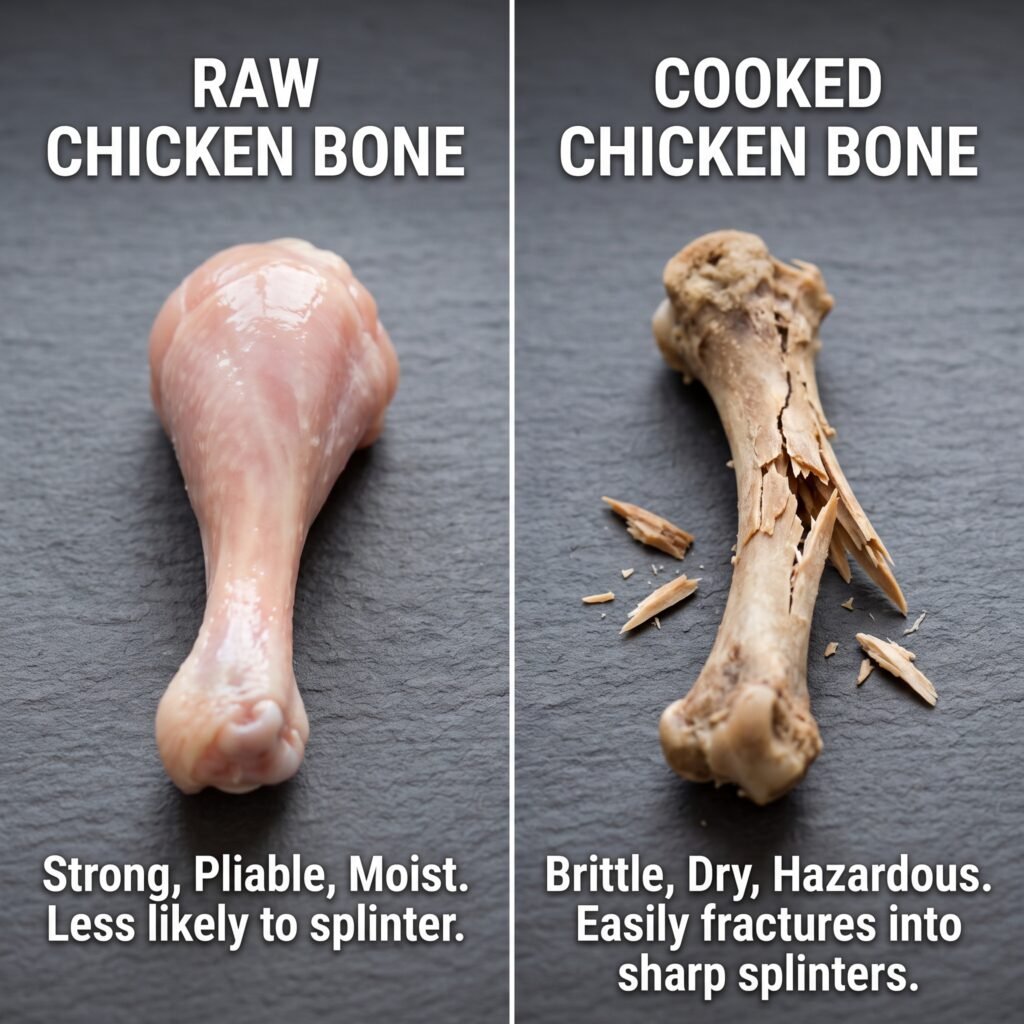
stay calm, don’t try to make your dog vomit, and call your veterinarian or local emergency animal hospital immediately for guidance specific to your dog’s size, the type of bone, and how much they ate. Most dogs that swallow a chicken bone end up completely fine, but it’s still important to act quickly and watch closely. Keep reading for the full breakdown of warning signs, what to do in the first hour, and when this becomes a true emergency.
So, can dogs eat chicken bones safely? The short, clear answer from veterinarians is no — chicken bones, especially cooked ones, are not considered safe for dogs to eat. But the reality of dog ownership means accidents happen anyway, whether it’s a bone snatched off a plate, fished out of the trash, or dropped by a toddler at a barbecue. If your dog already got to one, you need clear, accurate information fast, not vague reassurance or unnecessary panic.
This guide covers everything: why chicken bones are risky in the first place, exactly what to do if your dog swallowed a chicken bone, the warning signs that mean an emergency vet visit is necessary, and how to prevent this from happening again.
Table of Contents
- Can Dogs Eat Chicken Bones? The Veterinary Answer
- My Dog Ate Chicken Bones: What to Do Right Now
- Why Chicken Bones Are So Dangerous for Dogs
- Cooked vs. Raw Chicken Bones: Is One Safer?
- Dog Swallowed Chicken Bone: Immediate Emergency Signs
- What Happens Inside Your Dog’s Body
- The First 24 to 72 Hours: What to Watch For
- What NOT to Do
- When to Call the Vet vs. When to Go to the Emergency Room
- What Happens at the Vet’s Office
- Does Bone Size or Dog Size Matter?
- Safe Alternatives to Chicken Bones
- How to Prevent This From Happening Again
- FAQ: Can Dogs Eat Chicken Bones
- Conclusion
Can Dogs Eat Chicken Bones? The Veterinary Answer
The consistent veterinary consensus is clear: dogs should not eat chicken bones, whether cooked or raw, intentionally or by accident. While dogs have technically been scavenging and eating bones for thousands of years in the wild, the specific structure of chicken bones makes them more risky than many people assume.
Why “Can Dogs Eat Chicken Bones” Doesn’t Have a Simple Yes Answer
Chicken bones are hollow, lightweight, and prone to splintering — especially once cooked. That splintering is the core of the danger. A bone that simply cracks into a couple of large, blunt pieces is far less concerning than one that shatters into multiple sharp, jagged fragments capable of cutting or puncturing tissue on the way down.
This is why even though many dogs do swallow chicken bones and pass them without incident, the risk is never zero, and it’s not something to intentionally allow, regardless of how eagerly your dog goes after that drumstick.
My Dog Ate Chicken Bones: What to Do Right Now
If you’re dealing with this in real time, here’s the practical step-by-step approach veterinarians generally recommend.
Step 1: Stay Calm
Your dog will pick up on your stress, which can make the situation more difficult to manage. Speak calmly and avoid scolding your dog, since a startled or anxious dog may swallow faster or try to run off with any remaining bone in their mouth.
Step 2: Check for Choking
Look for signs of an airway obstruction: gagging, pawing at the mouth, distress, or visible difficulty breathing. If your dog appears to be choking, this is an immediate emergency requiring urgent veterinary care, and in some cases, a vet may walk you through emergency first-aid steps over the phone while you head to the clinic.
Step 3: Remove Any Remaining Bone Safely
If there’s still bone visible in your dog’s mouth and you can remove it without risking a bite or pushing it further back, do so calmly. Never reach deep into your dog’s throat, as this can push a bone further down or cause additional injury.
Step 4: Call Your Veterinarian or Emergency Clinic
This step matters even if your dog seems completely fine. Describe what happened — how many bones, what type (raw or cooked), roughly how long ago, and your dog’s size and breed. Veterinary staff will give you guidance tailored to your specific situation, since the real answer to can dogs eat chicken bones safely in your particular case depends heavily on these details.
Step 5: Follow Their Specific Guidance
In many cases, a vet may recommend feeding a small amount of plain white bread or soft canned food shortly after ingestion. The idea is that the soft food can help cushion sharp bone edges as they move through the digestive tract. This isn’t a universal fix, and it should only be done if your vet specifically recommends it for your situation.
Step 6: Monitor Closely Over the Next 72 Hours
Even after an initial call, ongoing observation matters enormously, since complications can take time to develop. We’ll cover exactly what to watch for in the sections below.
Why Chicken Bones Are So Dangerous for Dogs
Understanding the “why” behind the warnings helps explain why veterinarians consistently say no when asked can dogs eat chicken bones, even when most individual cases turn out fine.
Key Risk Factors
- Splintering: Cooked chicken bones become brittle and tend to break into sharp, jagged pieces rather than blunt fragments
- Hollow structure: Bird bones are naturally hollow, which makes them lighter but also more prone to shattering compared to denser bones from larger animals
- Sharp edges: These fragments can scrape, cut, or puncture tissue anywhere along the path from mouth to intestines
- Choking risk: Larger fragments can become lodged in the throat or airway
- Bacterial contamination: Raw or undercooked bones may carry bacteria like salmonella, posing a separate food-safety risk on top of the physical danger
This combination of factors is exactly why the answer to can dogs eat chicken bones remains a consistent “no” across veterinary sources, even though the actual outcome varies quite a bit from case to case.
Cooked vs. Raw Chicken Bones: Is One Safer?
This is a common point of confusion when people ask can dogs eat chicken bones, so it’s worth addressing directly.
Cooked Chicken Bones
Cooking changes the structure of bone, making it more brittle and significantly more likely to splinter into sharp fragments when chewed. This is precisely why, when people ask can dogs eat chicken bones that have been cooked — leftover dinner scraps, fast food bones, or barbecue leftovers — vets consider this the higher-risk category.
Raw Chicken Bones
Raw bones are more flexible and somewhat less prone to splintering compared to cooked bones. However, when weighing can dogs eat chicken bones that are raw, remember that “less likely to splinter” doesn’t mean “safe.” Raw bones still carry:
- A real choking hazard, particularly with larger pieces
- A risk of bacterial contamination (salmonella, campylobacter)
- Some splintering risk, especially with smaller or weaker bones, or aggressive chewers
Some raw-feeding advocates do include raw bones in carefully managed feeding programs, but this is approached very differently from a dog unexpectedly scavenging cooked bones from a trash can or dinner plate, and it should only be done under informed, careful supervision — not treated as a free pass after an accidental ingestion.
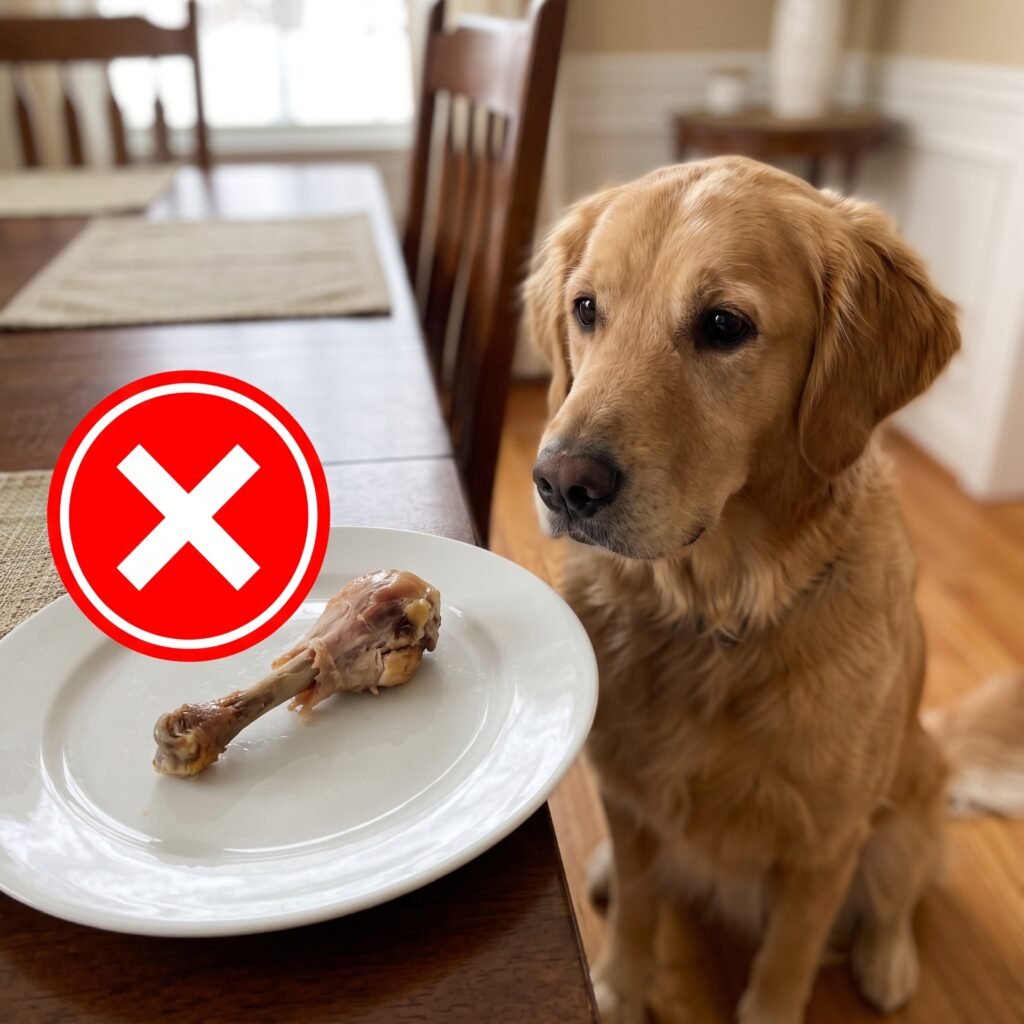
Dog Swallowed Chicken Bone: Immediate Emergency Signs
If your dog swallowed a chicken bone, certain symptoms mean you need emergency veterinary care immediately — not a “wait and see” approach.
Seek Emergency Care Immediately If You See:
- Difficulty breathing or gasping
- Persistent coughing, gagging, or retching that doesn’t resolve
- Pawing frantically at the mouth or face
- Pale or blue-tinged gums
- Collapse or extreme weakness
- Repeated vomiting, especially if blood is present
- A visibly swollen, bloated, or painful abdomen
- Inability to keep water down
Any of these signs point toward a possible airway obstruction, esophageal blockage, or internal injury — all of which require prompt professional evaluation. Waiting to “see if it gets better” in these situations can allow a manageable problem to become much more serious.
What Happens Inside Your Dog’s Body
Understanding the mechanics helps explain why some cases resolve without issue while others escalate quickly — and why the answer to can dogs eat chicken bones isn’t as simple as a flat yes or no.
Possible Outcomes After a Dog Swallows a Chicken Bone
- Successful digestion: In many cases, especially with smaller bone fragments, stomach acid breaks the bone down enough that it passes through the digestive system without incident.
- Esophageal lodging: If a bone doesn’t fully travel down on the first swallow, it can become stuck in the esophagus, causing drooling, gagging, and visible distress.
- Airway obstruction: Less commonly, a bone can become lodged in the upper airway or back of the throat, which is an immediate, severe emergency.
- Gastrointestinal irritation: Even bones that pass without a full blockage can scrape or irritate the stomach and intestinal lining, leading to vomiting, diarrhea, or general gastrointestinal upset (sometimes called gastroenteritis).
- Obstruction or perforation: In more serious cases, sharp fragments can become lodged further down the digestive tract, causing a blockage, or in rare cases, actually puncture the intestinal wall — a life-threatening complication requiring surgery.
This range of outcomes is exactly why monitoring matters so much, even in dogs who initially seem completely unaffected, and why can dogs eat chicken bones safely is ultimately a question of risk management rather than a guaranteed outcome either way.
The First 24 to 72 Hours: What to Watch For
Most veterinarians recommend close observation for at least 24 to 72 hours after a known or suspected chicken bone ingestion, since symptoms can develop gradually rather than immediately. This monitoring window is a core part of answering can dogs eat chicken bones safely in hindsight, since the outcome often isn’t clear right away.
Daily Monitoring Checklist
- Appetite: Is your dog eating normally, or showing reduced interest in food?
- Energy level: Watch for unusual lethargy or reluctance to move
- Stool: Check for blood, straining, constipation, or visible bone fragments passing through
- Vomiting: Any vomiting at all warrants a call to your vet; vomiting with blood requires immediate attention
- Abdomen: Gently note whether your dog’s belly seems tender, swollen, or painful to the touch
- General behavior: Pacing, restlessness, or apparent discomfort can all be early signs something isn’t right
Mild vs. Serious Symptom Patterns
- Mild and likely manageable: Brief lip licking, a single episode of vomiting without blood, slightly reduced appetite that resolves within a day
- Serious and requiring prompt veterinary attention: Repeated vomiting, bloody stool or vomit, visible abdominal swelling, persistent straining to defecate, lethargy, fever, or collapse
If you’re ever unsure which category your dog’s symptoms fall into, it’s always reasonable to call your veterinarian and describe what you’re seeing rather than guessing on your own.
What NOT to Do
In the panic of the moment, well-meaning owners sometimes take actions that can actually make things worse — another reason can dogs eat chicken bones deserves a careful, informed response rather than a rushed, instinctive one. Avoid these common mistakes.
Don’t Do This
- Don’t try to induce vomiting without explicit veterinary instruction. Sharp bone fragments can cause additional injury to the esophagus on the way back up.
- Don’t reach deep into your dog’s throat trying to grab a bone, as this risks pushing it further down or causing injury to both you and your dog.
- Don’t give over-the-counter medications like antacids or anti-diarrheal medication without veterinary guidance, since these can interfere with digestion or mask important symptoms.
- Don’t feed cotton balls or other “cushioning” home remedies that aren’t specifically recommended by a veterinarian — these can create their own blockage risk.
- Don’t assume “no symptoms yet” means “all clear.” Complications can take hours or even a couple of days to develop, which is exactly why the question of can dogs eat chicken bones safely can’t be answered with confidence in the first few minutes alone.
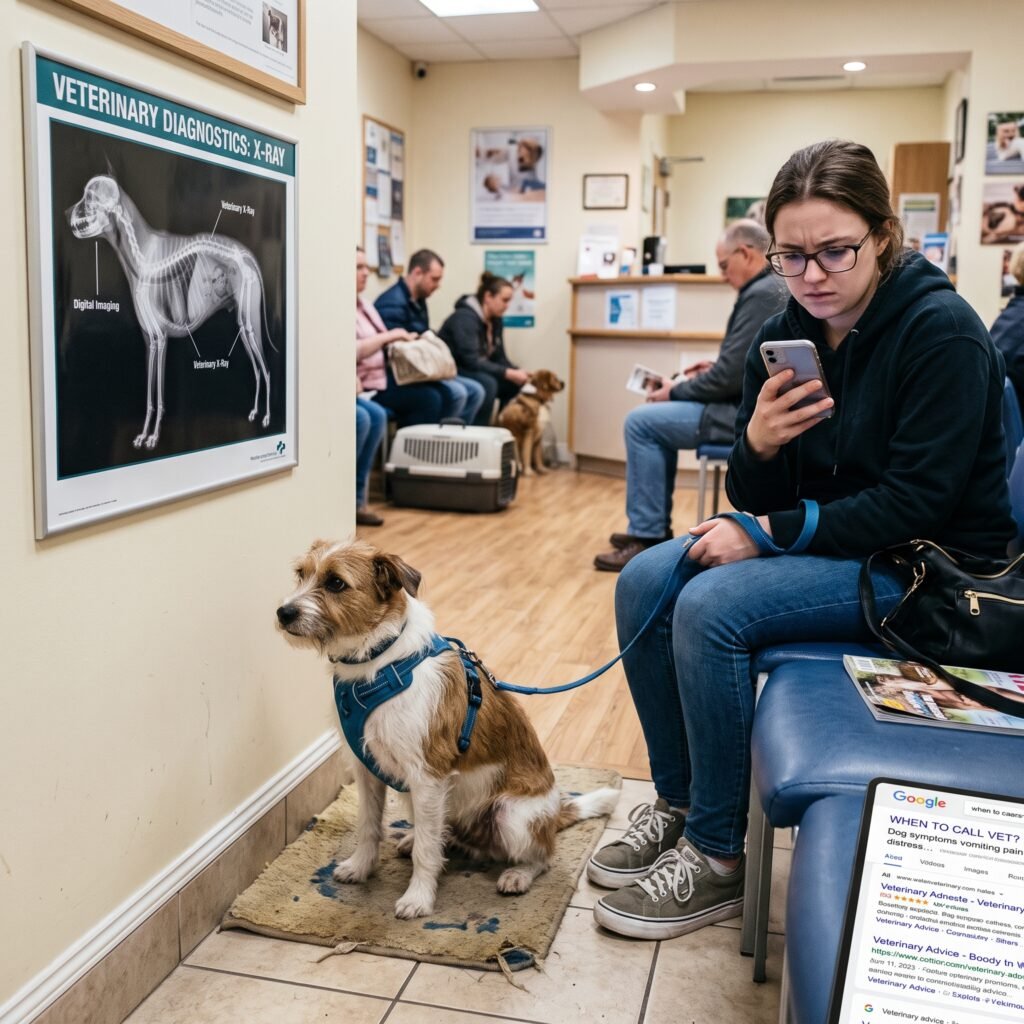
When to Call the Vet vs. When to Go to the Emergency Room
Knowing the difference between “call for advice” and “go immediately” can reduce panic and help you respond appropriately.
Call Your Regular Veterinarian (or an Emergency Line) When:
- Your dog ate the bone recently and currently shows no symptoms
- You’re unsure whether the situation warrants an in-person visit
- You want guidance on feeding (such as the bread or soft-food approach)
- Mild symptoms like slight lip-licking or brief discomfort appear
Go to an Emergency Clinic Immediately When:
- Your dog is choking, gasping, or struggling to breathe
- You see pale or blue gums
- There’s repeated vomiting, especially with blood
- Your dog collapses, becomes extremely weak, or seems to be in significant pain
- The abdomen appears swollen, hard, or tender
When genuinely in doubt, erring on the side of an in-person evaluation is always the safer choice, even if it turns out to be unnecessary.
What Happens at the Vet’s Office
If you do bring your dog in, here’s a general idea of what to expect, so the visit feels less unpredictable.
Typical Veterinary Evaluation Steps
- Physical examination — checking the mouth, throat, abdomen, and overall vital signs
- X-rays — often recommended to locate any remaining bone fragments and assess for signs of obstruction or injury
- Bloodwork, if internal injury or infection is suspected
- Observation or hospitalization, in some cases, to monitor for developing complications
- Endoscopy or surgery, in more serious cases where a bone is lodged or has caused significant internal damage
Most cases resolve with monitoring alone, but in situations involving small dogs that consumed a large bone, multiple fragments, or visible signs of obstruction, more advanced intervention may be necessary to ensure a safe outcome.
Does Bone Size or Dog Size Matter?
Yes, significantly. Risk isn’t uniform across every situation, and a few key factors shift the overall danger level.
Factors That Increase Risk
- Small dogs have narrower digestive tracts, making blockages more likely even from relatively small bone fragments
- Large bones relative to body size — such as a small dog swallowing a whole chicken thigh bone — pose a higher obstruction risk
- Multiple bones consumed at once increase the overall fragment load moving through the digestive system
- Aggressive chewers are more likely to create sharp, splintered fragments rather than swallowing a bone relatively whole
- Puppies, due to smaller size and less predictable eating behavior, generally warrant a lower threshold for seeking veterinary advice
This is part of why a vet will always ask about your dog’s size and the type/amount of bone consumed — the appropriate response genuinely depends on these specifics rather than a single universal answer.
Safe Alternatives to Chicken Bones
If your dog loves to chew, there are plenty of genuinely safer options that satisfy that instinct without the splintering risk.
Vet-Approved Chewing Alternatives
- Commercial dental chews designed specifically for dogs
- Rubber chew toys built for durability and safe chewing
- Specially formulated bully sticks or chews, ideally appropriately sized for your dog and supervised during use
- Frozen stuffed puzzle toys, which provide both mental stimulation and safe chewing satisfaction
- Vet-recommended dental chews that support oral health without the splintering risk of real bone
Always supervise any chew time, and choose products sized appropriately for your dog to avoid separate choking risks unrelated to bones specifically.
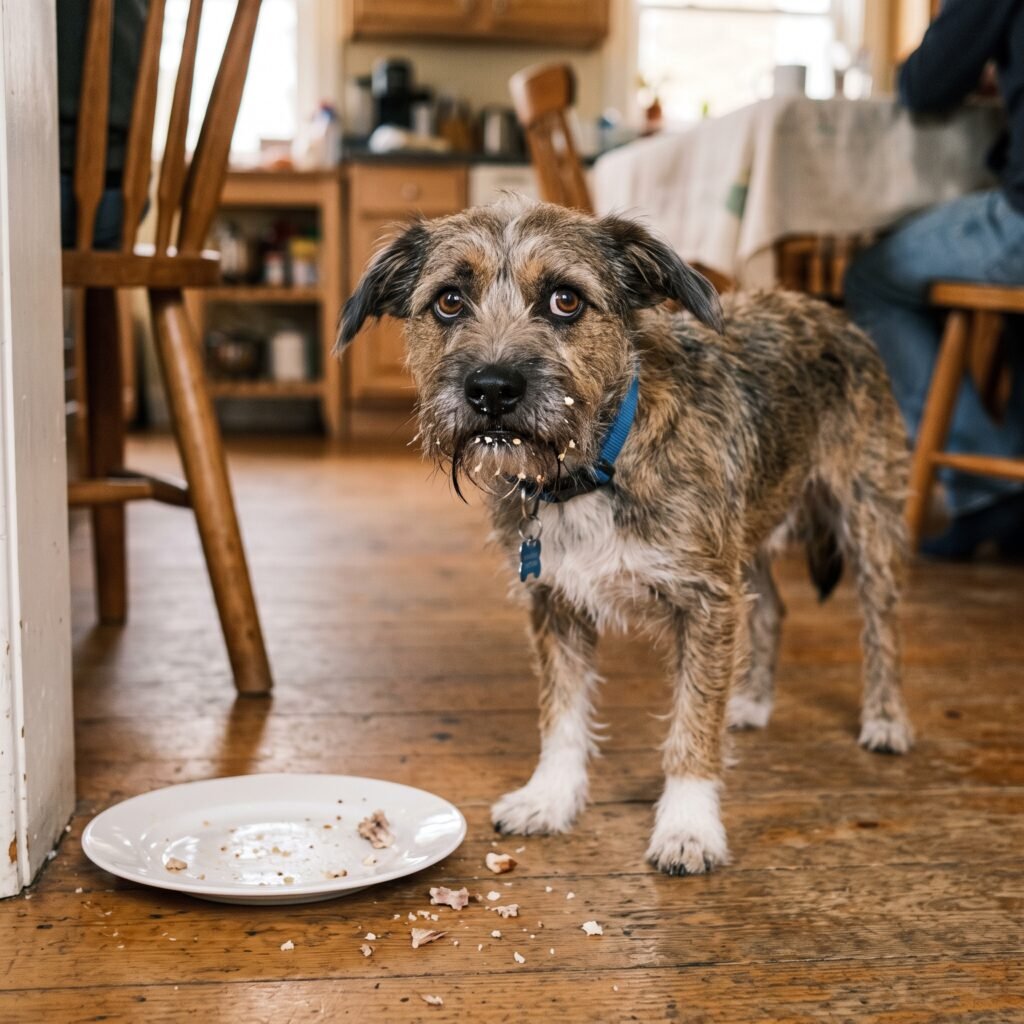
How to Prevent This From Happening Again
Most chicken bone incidents are accidental, which means prevention largely comes down to environmental management rather than training alone.
Practical Prevention Steps
- Use a trash can with a secure, locking lid, or store it inside a cabinet your dog can’t access
- Never leave plates with bones unattended, especially around counters or low tables
- Be extra cautious during holidays and gatherings, when food scraps are more likely to end up within reach
- Teach a reliable “drop it” or “leave it” command, which can be genuinely life-saving if your dog grabs something dangerous
- Inform guests and family members not to feed table scraps, even with good intentions
- Double-check outdoor spaces like patios or yards after barbecues, where dropped bones are easy to miss
A combination of secure storage and a strong “drop it” cue covers most of the realistic accidental-exposure scenarios that lead to this situation in the first place.
FAQ: Can Dogs Eat Chicken Bones
1. Can dogs eat chicken bones safely under any circumstances?
Generally, no. Veterinarians consistently advise against feeding chicken bones, cooked or raw, due to the splintering and choking risks involved. Some raw-feeding programs incorporate raw bones carefully, but this is different from casual or accidental feeding.
2. My dog ate chicken bones but seems totally fine — should I still worry?
Yes, it’s still worth monitoring closely and calling your veterinarian for guidance, even if your dog seems normal. Some complications develop gradually over 24 to 72 hours rather than immediately.
3. My dog swallowed a chicken bone whole — is that more dangerous than chewing it?
It depends. Swallowing a bone relatively whole can reduce the immediate splintering risk during chewing, but it raises the risk of the bone becoming lodged somewhere along the digestive tract, especially in smaller dogs.
4. What should I feed my dog after they eat a chicken bone?
Some veterinarians recommend a small amount of plain white bread or soft canned food shortly after ingestion to help cushion sharp edges, but this should be done based on your specific vet’s guidance rather than as a universal home remedy.
5. How long should I monitor my dog after they eat a chicken bone?
Most veterinarians recommend close monitoring for at least 24 to 72 hours, watching closely for vomiting, changes in appetite, abnormal stool, abdominal pain, or lethargy.
6. Are raw chicken bones safer than cooked ones for dogs?
Raw bones are generally more flexible and less prone to splintering compared to cooked bones, but they still carry choking risks and potential bacterial contamination, so they aren’t considered automatically safe.
7. When should I take my dog to the emergency vet after eating a chicken bone?
Seek emergency care immediately if your dog shows difficulty breathing, repeated vomiting (especially with blood), pale or blue gums, collapse, or a swollen, painful abdomen.
Conclusion
So, can dogs eat chicken bones? The clear veterinary answer remains no — they pose real risks of splintering, choking, and internal injury that simply aren’t worth taking on intentionally. But if your dog already snuck one, or you’re dealing with a dog swallowed chicken bone situation right now, the most important things to remember are:
- Stay calm and avoid inducing vomiting or attempting home remedies without veterinary guidance
- Call your veterinarian promptly, even if your dog seems fine, to get advice specific to your dog’s size and situation
- Watch closely for 24 to 72 hours, paying attention to appetite, stool, vomiting, and overall behavior
- Seek emergency care immediately for choking, repeated vomiting with blood, pale gums, collapse, or visible abdominal distress
- Prevent future incidents with secure trash storage, supervised eating areas, and a reliable “drop it” command
Most dogs who eat chicken bones do end up perfectly fine, especially with attentive monitoring and prompt veterinary guidance when needed. But because the risk is never truly zero, the safest long-term approach is simple: keep chicken bones out of reach entirely, and offer your dog safer, vet-approved chewing alternatives instead.
If this guide was helpful, check out our companion article on common human foods that are dangerous for dogs, or our deeper breakdown of pet first-aid essentials every dog owner should have ready at home.