
Is Kibble Bad for Dogs? What the Science Actually Says
Scroll through any dog ownership forum or social media group, and you'll inevitably run into a heated debate:

is kibble bad for dogs, or is it a perfectly reasonable way to feed your pet? You’ll find passionate voices on both sides — raw-feeding advocates who insist kibble is little more than processed junk, and veterinarians who point out that the vast majority of healthy dogs thrive on it for their entire lives.
So who’s right? The honest answer is more nuanced than either extreme suggests, and it deserves a clear-eyed look at the actual evidence rather than marketing claims from either direction.
In this guide, we’ll break down exactly why is kibble bad for dogs according to its critics, what the actual nutritional science says, when kibble genuinely is a smart, healthy choice, and how to evaluate quality so you’re making an informed decision rather than following internet outrage in either direction. We’ll also take a closer, brand-specific look at a few common concerns, including whether is Kibbles and Bits bad for dogs specifically, since that’s one of the most recognizable (and most criticized) names in the pet food aisle.
Table of Contents
- Is Kibble Bad for Dogs? The Honest, Balanced Answer
- What Exactly Is Kibble, and How Is It Made?
- Why Is Kibble Bad for Dogs? The Main Criticisms Explained
- Why Kibble Is Bad for Dogs in Some Specific Cases
- The Case for Kibble: Why Most Vets Don’t Consider It “Bad”
- What the Research Actually Shows
- Is Kibbles Bad for Dogs Because of Carbohydrate Content?
- Is Kibbles and Bits Bad for Dogs Specifically?
- How to Tell High-Quality Kibble From Low-Quality Kibble
- Signs Kibble Might Not Be Working for Your Dog
- Alternatives to Kibble Worth Considering
- Mixing Kibble With Fresh or Wet Food
- How to Choose the Right Food for Your Specific Dog
- FAQ: Is Kibble Bad for Dogs
- Conclusion
Is Kibble Bad for Dogs? The Honest, Balanced Answer
Here’s the most accurate answer available: kibble is not inherently bad for dogs, but quality varies enormously between brands, and some legitimate concerns about processing and ingredient sourcing are worth taking seriously.
A high-quality, complete and balanced kibble formulated to meet AAFCO (Association of American Feed Control Officials) nutritional standards genuinely can provide everything a healthy dog needs nutritionally. At the same time, low-quality kibble loaded with cheap fillers, vague ingredient sourcing, and unnecessary additives is a fair target for criticism.
So when someone asks is kibble bad for dogs, the most honest response isn’t a flat yes or no — it’s “it depends heavily on the specific product, and on your individual dog’s needs.”
What Exactly Is Kibble, and How Is It Made?
Before diving deeper into the debate, it helps to understand exactly what kibble is and how it’s produced, since the manufacturing process itself is central to most of the criticism.
The Extrusion Process
Most kibble is created through a process called extrusion:
- Raw ingredients (meat, meat meal, grains, vegetables) are ground into a uniform mixture
- Water and steam are added to the mixture
- The blend is forced through a machine under extremely high heat and pressure, often exceeding 250°F
- The mixture is pushed through a shaping die, creating the familiar kibble pieces
- The pieces are dried and often coated with fats or flavor enhancers for palatability
- Synthetic vitamins and minerals are typically sprayed on afterward, since the high heat of extrusion destroys many naturally occurring nutrients during processing
This process was originally developed for efficiency, shelf stability, and affordability — not specifically to preserve maximum nutrient bioavailability, which is exactly where much of the modern criticism originates.
Why Is Kibble Bad for Dogs? The Main Criticisms Explained
To give a fair, complete picture, let’s lay out the legitimate concerns raised by critics, including holistic veterinarians, canine nutritionists, and raw-feeding advocates.
Common Arguments for Why Kibble Is Bad for Dogs
- High-heat processing destroys natural nutrients, requiring synthetic replacements that may be less bioavailable than nutrients found in whole foods
- Low moisture content (typically around 10%) compared to a dog’s natural prey-based diet, which is naturally much higher in moisture
- High carbohydrate content in many formulas, often 30–60%, which exceeds what dogs would naturally consume in the wild
- Use of low-quality protein sources, including unnamed “meat by-products” or “animal digest,” which can vary significantly in quality between brands
- Fillers like corn, wheat, and soy, added primarily to reduce cost rather than to provide optimal nutrition
- Artificial preservatives and colors, such as BHA, BHT, and synthetic dyes, which some studies have raised concerns about in animal models
These concerns aren’t baseless fabrications — they’re genuine talking points within veterinary nutrition circles, even if reasonable experts disagree about how much practical impact they have on a healthy dog’s day-to-day wellbeing.
Why Kibble Is Bad for Dogs in Some Specific Cases
While blanket statements about kibble being universally harmful go beyond what the evidence supports, there are specific situations where why kibble is bad for dogs becomes a more individually relevant question.
Dogs Who May Struggle More With Kibble
- Dogs with food sensitivities or allergies, especially to common kibble ingredients like corn, wheat, or soy
- Dogs with digestive issues, who may have difficulty processing high-carbohydrate, low-moisture formulas
- Dogs prone to obesity, since some kibble formulas are calorie-dense and easy to overfeed
- Dogs with dental sensitivity, for whom hard kibble may be uncomfortable, despite the common claim that kibble cleans teeth (a claim with fairly limited supporting evidence for most standard kibble shapes)
- Senior dogs with reduced kidney function, who may benefit from the additional hydration found in wet or fresh diets
For these dogs specifically, the conversation around whether kibble is appropriate becomes much more individualized, and it’s worth discussing alternatives with a veterinarian rather than assuming kibble is automatically the wrong or right choice.
The Case for Kibble: Why Most Vets Don’t Consider It “Bad”
Despite the criticisms above, it’s important to present the other side fairly, since the majority of practicing veterinarians do not consider quality kibble to be harmful for most healthy dogs.
Why Kibble Remains the Standard Recommendation for Many Vets
- Complete and balanced formulation: Reputable kibble brands are formulated specifically to meet all of a dog’s essential nutrient requirements according to AAFCO standards, removing the guesswork involved in homemade diets
- Consistency: Manufactured kibble offers the same nutritional profile bag after bag, which matters for dogs with specific health conditions requiring precise nutrient control
- Safety: Properly cooked, shelf-stable kibble carries essentially none of the bacterial contamination risk associated with raw diets
- Affordability and accessibility: Quality kibble remains far more affordable and convenient than fresh, raw, or freeze-dried alternatives for most households
- Long track record: Generations of dogs have lived long, healthy lives eating kibble as their primary diet, and large-scale veterinary practice doesn’t reflect widespread harm from quality commercial kibble
This is precisely why so many board-certified veterinary nutritionists continue to recommend high-quality kibble as a perfectly reasonable primary diet for most dogs, rather than viewing it as something to be avoided.
What the Research Actually Shows
Rather than relying purely on opinion from either side, it’s worth looking at what controlled research actually demonstrates.
One notable peer-reviewed comparison study examined health markers in dogs fed either raw meat-based diets or high-quality extruded kibble for more than a year, evaluating bloodwork, urinalysis, and clinical health scores including dental, ear, and skin condition. Interestingly, despite strong owner beliefs favoring raw diets for perceived health benefits, the study found that limited objective data actually exists comparing health outcomes between dogs fed differently prepared diets, and direct comparisons of clinical health markers between the two feeding groups did not show dramatic across-the-board superiority for either approach.
This kind of research matters because it cuts through anecdote on both sides. It doesn’t prove kibble is perfect, and it doesn’t prove raw diets are dangerous — but it does suggest that the quality of the specific diet matters more than the broad feeding category alone, which lines up well with the more measured, evidence-based answer to “is kibble bad for dogs” that most veterinary nutritionists actually give.
Is Kibbles Bad for Dogs Because of Carbohydrate Content?
One of the most frequently cited concerns is carbohydrate content, so it’s worth examining this specific issue more closely, since it tends to dominate the broader “is kibbles bad for dogs” discussion online.
The Carbohydrate Argument
Critics point out that dogs, as primarily carnivorous animals descended from wolves, aren’t biologically dependent on high carbohydrate intake the way omnivorous species are. Many kibble formulas rely on starches like corn, rice, or potatoes to achieve the binding structure needed for the extrusion process, which naturally pushes carbohydrate content higher than what a dog might consume in a truly ancestral diet.
The Counterpoint
However, dogs have evolved over thousands of years alongside humans, including dietary adaptation that allows them to digest starches more effectively than wolves can. Moderate carbohydrate content isn’t inherently harmful for most healthy dogs, and carbohydrates do provide usable energy, fiber, and in some cases, beneficial nutrients depending on the specific source used.
Where the Real Concern Lies
The legitimate concern isn’t carbohydrates existing in dog food at all — it’s specifically very high carbohydrate percentages (toward the 50–60% range) combined with low-quality protein sources, which together can contribute to weight gain, blood sugar fluctuations, and lower overall diet quality. Choosing a kibble with a more moderate carbohydrate percentage and a clearly named, high-quality protein source addresses much of this concern directly.
Is Kibbles and Bits Bad for Dogs Specifically?
Among all the specific products people ask about, Kibbles and Bits comes up constantly, largely due to its name recognition and long-standing presence in grocery and big-box stores. So is Kibbles and Bits bad for dogs specifically, beyond the general kibble debate?
What’s in Kibbles and Bits
Independent ingredient reviews consistently point to a few recurring characteristics across the Kibbles ‘n Bits product line:
- Corn and soybean meal typically appear among the first ingredients in most recipes, ahead of named animal protein sources
- Beef and bone meal is generally the primary animal protein source, rather than fresh, named meat
- Corn syrup appears in some recipes, added primarily for palatability rather than nutritional value
- Artificial colors, including dyes like Yellow 5 and Red 40, appear in small quantities in several formulas
- BHA, a chemical preservative that some studies have flagged as a potential carcinogen in animal models, is used in some recipes
- The brand’s overall protein content tends to run lower than many competing brands, often around 19%, with a meaningful portion of that protein coming from plant sources rather than animal sources
Important Context
To be fair to the brand, all Kibbles ‘n Bits dry food recipes do meet AAFCO’s nutritional standards for adult maintenance, meaning they technically provide complete and balanced nutrition according to regulatory minimums. The brand also has a long history and a large base of loyal customers who report their dogs doing well on it long-term, including some anecdotal reports of dogs living well into their teens while eating it consistently.
It’s also worth noting that a 2018 FDA action involving discontinued wet food products from the brand found trace amounts of pentobarbital (a drug used in veterinary euthanasia) at levels considered unlikely to cause harm — but the discovery itself raised understandable concern among pet owners about sourcing transparency, even though the products involved have since been discontinued.
The Bottom Line on Kibbles and Bits
If you’re asking is Kibbles and Bits bad for dogs, the most accurate answer is that it meets minimum nutritional standards and most dogs tolerate it without immediate issues, but it’s generally considered a budget-tier product with several ingredient choices (plant-heavy protein, artificial coloring, BHA preservative) that nutrition-focused owners and veterinary reviewers commonly flag as worth upgrading from if your budget allows for a higher-quality alternative.
How to Tell High-Quality Kibble From Low-Quality Kibble
Regardless of brand name recognition, here’s a practical framework for evaluating any kibble product on its own merits.
Quality Indicators to Look For
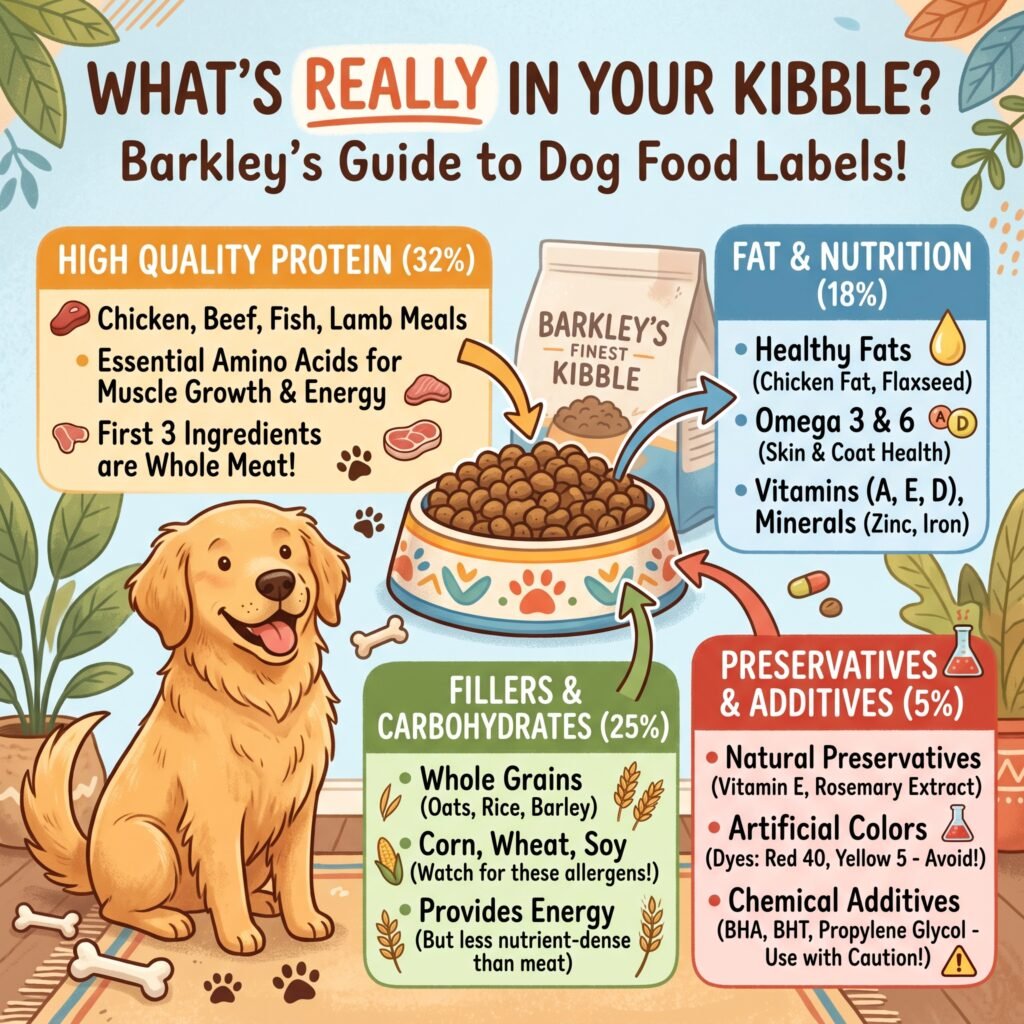
- Named animal protein as the first ingredient (e.g., “chicken,” “beef,” “salmon”) rather than vague terms like “meat” or “animal by-product”
- Minimal use of corn, wheat, or soy as primary ingredients, especially within the first few items on the list
- No artificial colors, since coloring exists purely for human visual appeal, not nutritional benefit
- Natural preservatives (like mixed tocopherols, a form of vitamin E) instead of synthetic options like BHA or BHT
- AAFCO nutritional adequacy statement clearly listed, confirming the food meets complete and balanced standards for your dog’s specific life stage
- Transparent sourcing information, including country of origin and manufacturing details
Red Flags Worth Avoiding
- Multiple grain or starch sources appearing before any named protein
- Vague ingredient descriptions that don’t specify the animal source
- Excessive use of artificial flavoring or coloring agents
- No clear life-stage formulation (puppy, adult, senior, or all life stages)
Signs Kibble Might Not Be Working for Your Dog
Even high-quality kibble isn’t automatically the right fit for every individual dog. Watch for these signs that your current food might not be agreeing with your specific pet.
Warning Signs to Watch For
- Frequent loose stools, excessive gas, or digestive upset
- Persistent itching, skin irritation, or a dull, flaky coat
- Noticeable lack of energy despite adequate rest and exercise
- Difficulty maintaining a healthy weight, either gaining or losing unexpectedly
- Excessive thirst or unusually frequent urination (worth a vet visit to rule out underlying health issues)
If you notice several of these signs persisting over a few weeks, it may be worth discussing a diet change with your veterinarian rather than assuming kibble as a category is automatically the cause.
Alternatives to Kibble Worth Considering
If you’ve decided kibble isn’t the right primary diet for your specific dog, here’s an overview of the main alternatives, along with their respective tradeoffs.
Common Kibble Alternatives
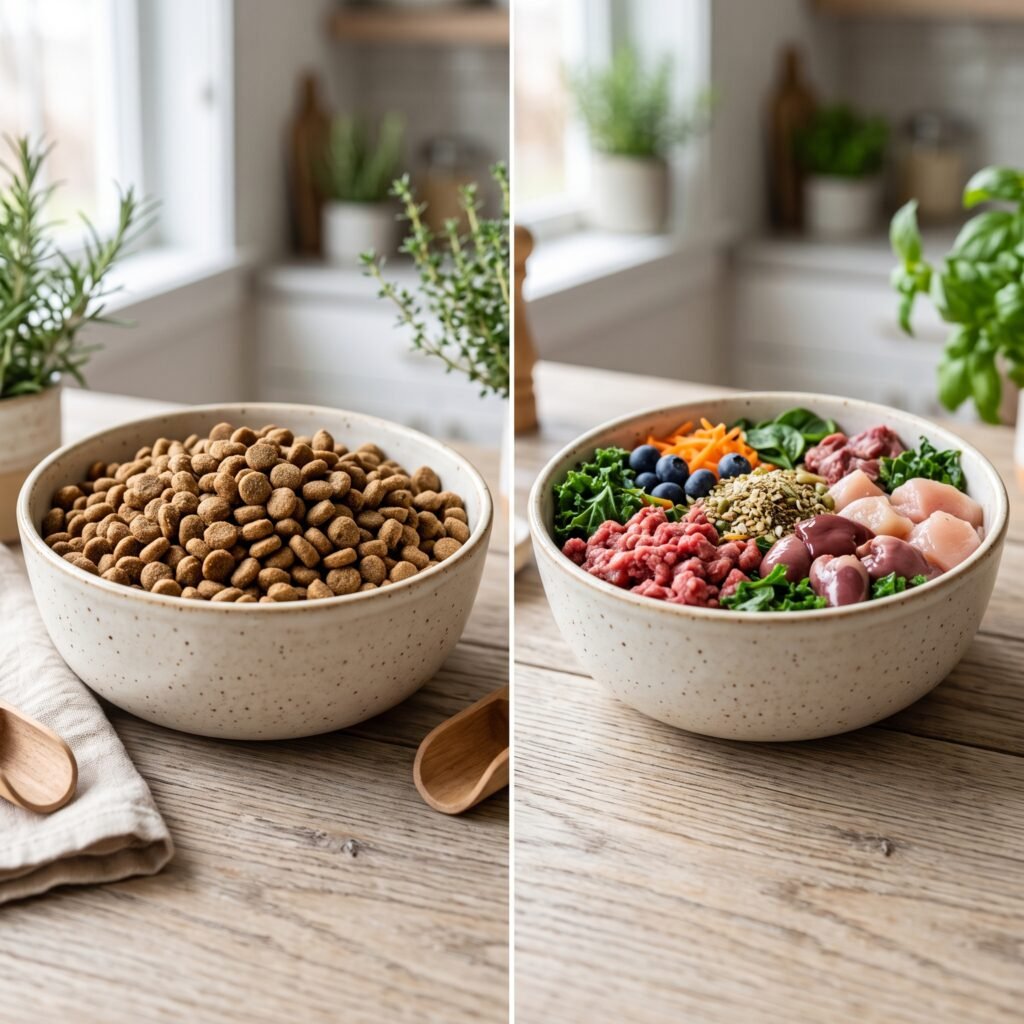
- Wet/canned food: Higher moisture content, often more palatable, but generally more expensive per calorie and less convenient to store long-term
- Raw diets: Higher moisture and minimally processed, but carry bacterial contamination risk and require careful handling and balanced formulation, ideally with veterinary nutritionist guidance
- Freeze-dried or air-dried food: Retains more nutrients than extruded kibble while offering similar convenience and shelf stability, though typically at a higher price point
- Fresh-cooked diets: Gently cooked, often delivered in pre-portioned packages, offering a middle ground between raw and kibble in terms of processing and nutrient retention
- Homemade diets: Allow full ingredient control, but require careful, often veterinary-nutritionist-guided formulation to avoid serious nutritional gaps
Each of these alternatives has genuine benefits, but also genuine tradeoffs in cost, convenience, and safety — there’s no single universally “best” option that fits every dog and every household equally well.
Mixing Kibble With Fresh or Wet Food
For many owners, the most practical middle ground isn’t choosing kibble versus alternatives exclusively, but combining approaches.
Benefits of a Mixed Feeding Approach
- Adds moisture and palatability without abandoning the convenience and nutritional completeness of kibble entirely
- Allows gradual introduction of fresh or raw elements without a full dietary overhaul
- Can help picky eaters engage more enthusiastically with otherwise plain kibble
- Offers some variety, which many owners (and dogs) appreciate over time
How to Combine Safely
- Introduce any new food gradually over 7–10 days to avoid digestive upset
- Keep portions balanced so you’re not unintentionally overfeeding total daily calories
- Choose complementary products specifically labeled as safe to mix with a complete kibble diet, since some toppers are not nutritionally balanced on their own
How to Choose the Right Food for Your Specific Dog
Ultimately, deciding whether kibble is the right choice comes down to your individual dog’s needs, your budget, and your lifestyle — not a one-size-fits-all internet verdict.
Questions Worth Asking Before Deciding
- Does my dog have any known food allergies or sensitivities?
- What’s realistic for my budget and time commitment long-term?
- Does my dog have any underlying health conditions that affect dietary needs (kidney issues, diabetes, obesity)?
- Am I comfortable with the handling and storage requirements of raw or fresh alternatives?
- Has my veterinarian recommended anything specific based on my dog’s individual health history?
Answering these honestly will get you much further than simply following whichever feeding philosophy is loudest online at the moment.
FAQ: Is Kibble Bad for Dogs
1. Is kibble bad for dogs overall?
Not inherently. High-quality, complete and balanced kibble can provide everything a healthy dog needs nutritionally. Quality varies significantly between brands, which matters more than the broad category of “kibble” itself.
2. Why is kibble bad for dogs according to critics?
Critics point to high-heat processing that destroys natural nutrients, low moisture content, high carbohydrate levels in many formulas, low-quality filler ingredients, and artificial preservatives or coloring agents as their main concerns.
3. Is Kibbles and Bits bad for dogs specifically?
Kibbles and Bits meets AAFCO’s minimum nutritional standards for adult maintenance, but ingredient reviews commonly note corn and soybean meal as leading ingredients, lower overall protein content, and the presence of artificial coloring and a synthetic preservative (BHA), making it a budget-tier option that many nutrition-focused reviewers suggest upgrading from when possible.
4. Is kibbles bad for dogs because of how it’s processed?
The extrusion process used to manufacture most kibble involves high heat that can degrade some natural nutrients, which manufacturers compensate for with added synthetic vitamins and minerals. This processing method is a legitimate point of nutritional discussion, though it doesn’t make kibble inherently dangerous for most healthy dogs.
5. Can switching from kibble actually improve my dog’s health?
For dogs with specific sensitivities, allergies, or digestive issues, switching to a different format (wet, fresh, or raw) sometimes does lead to noticeable improvement. For healthy dogs already thriving on quality kibble, switching isn’t necessarily required or beneficial.
6. What should I look for if I want to keep feeding kibble but choose a better-quality option?
Look for a named animal protein as the first ingredient, minimal corn/wheat/soy content, no artificial colors, natural preservatives instead of BHA or BHT, and a clear AAFCO life-stage adequacy statement on the label.
7. Is it safe to mix kibble with raw or fresh food?
Generally yes, when introduced gradually and balanced appropriately. Many owners successfully combine a quality kibble base with fresh or raw toppers for added moisture and variety, though total daily calories should still be monitored carefully.
Conclusion
So, is kibble bad for dogs? The most accurate, evidence-based answer is: not inherently, but quality and individual fit matter enormously. Generic claims that all kibble is harmful oversimplify genuine nutritional science, while assuming all kibble is automatically fine ignores legitimate concerns about ingredient quality and processing that are worth taking seriously.
Key takeaways from this guide:
- Why is kibble bad for dogs, according to critics, generally comes down to processing methods, lower moisture content, and ingredient quality variation — not the concept of dry food itself
- High-quality kibble that meets AAFCO standards with named protein sources remains a perfectly reasonable primary diet for most healthy dogs, according to the majority of practicing veterinarians
- Specific products like Kibbles and Bits sit toward the budget end of the quality spectrum, technically meeting nutritional minimums while relying more heavily on plant-based protein and including some additives many nutrition-conscious owners prefer to avoid
- Individual dog needs — allergies, digestive sensitivity, weight management, and underlying health conditions — matter more than blanket statements about an entire feeding category
- A mixed or flexible approach, combining quality kibble with fresh or wet additions, works well for many households seeking a practical middle ground
Rather than treating this as a binary, all-or-nothing decision, the smartest approach is evaluating your specific dog’s needs, reading labels carefully, and consulting your veterinarian when you’re unsure — that combination will serve your dog far better than following whichever feeding philosophy happens to be loudest in your social media feed this week.
If this guide was helpful, check out our companion article on how to read a dog food label like a nutrition expert, or our deeper breakdown comparing raw, fresh, and freeze-dried diets for dogs with specific health needs.