Weight Management Dog Food: The Complete 2026 Guide to Helping Your Dog Lose Weight Safely
Updated: June 2026 · Veterinary Nutrition Informed · Includes BCS Scoring, Calorie Calculator & Top Food Picks
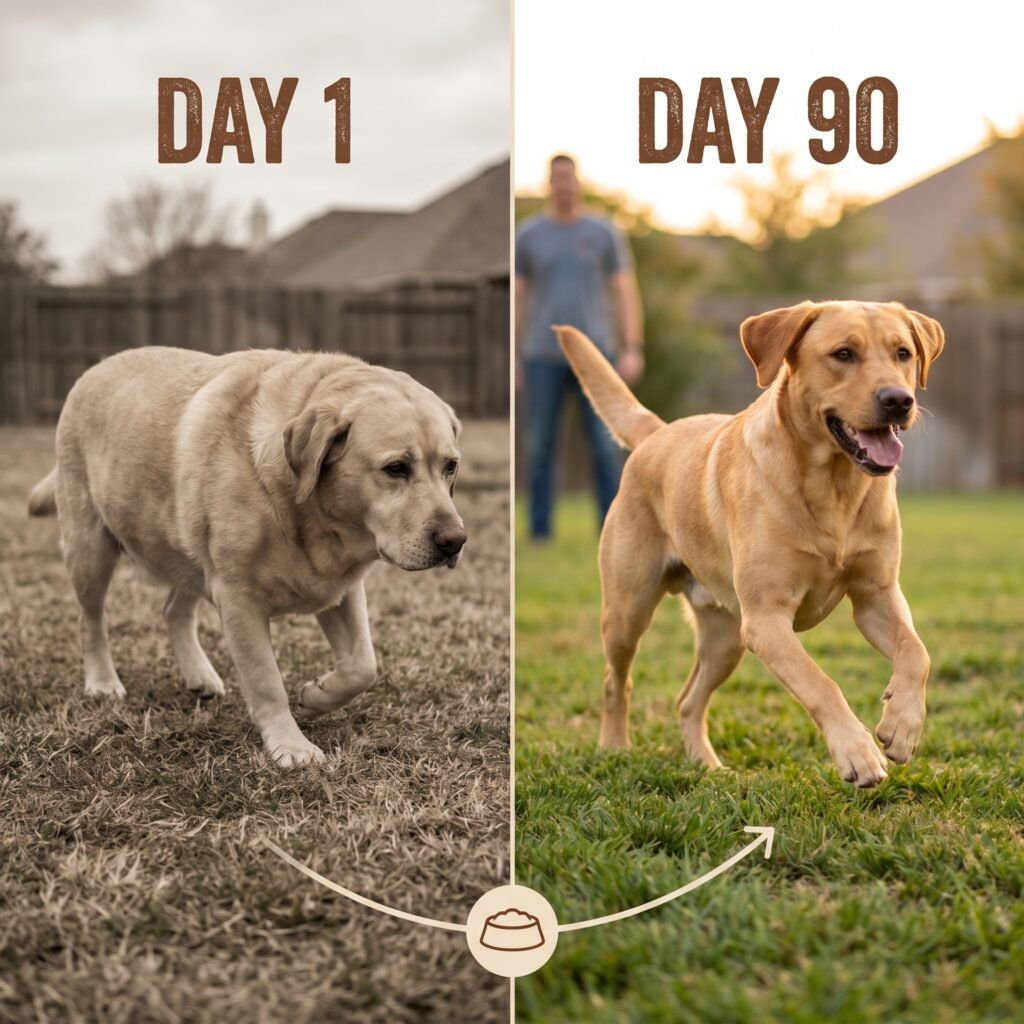
Four out of five dog owners who try to help their dog lose weight fail. Not because they don’t care. Not because they’re lazy. But because they start in the wrong place — they pick a “weight management dog food” off a shelf without first understanding why their dog gained weight, how much weight they actually need to lose, or what the food they’re buying actually does differently from regular kibble.
Only 1 in 4 dog owners reported that their pet reached and maintained a healthy body condition, according to APOP’s 2025 Pet Obesity and Nutrition Survey. That gap between effort and outcome isn’t a motivation problem — it’s an information problem.
This guide fixes that. It gives you the full operating system: how to assess your dog’s current condition, calculate their real calorie needs, understand what makes weight management dog food actually different, choose the right formula for your dog’s specific situation, and build a feeding plan that produces real, lasting results.
Navigate This Guide
- The Scale of the Problem: Dog Obesity in 2026
- Step 1: Diagnose Before You Diet — The Body Condition Score System
- Step 2: Understand Why Your Dog Gained Weight
- Step 3: Calculate Your Dog’s Real Daily Calorie Target
- What Makes Weight Management Dog Food Different?
- The 5 Non-Negotiable Features of Good Weight Management Dog Food
- Key Ingredients That Drive Weight Loss in Dog Food
- Best Weight Management Dog Food: 2026 Top Picks by Category
- Prescription vs. Over-the-Counter Weight Management Dog Food
- Wet vs. Dry Weight Management Dog Food
- Treats During Weight Management: The Rules
- Feeding Schedule and Portion Management
- How Fast Should Your Dog Lose Weight?
- Exercise: The Other Half of the Equation
- When Diet Alone Won’t Work: Medical Causes of Canine Obesity
- Monthly Progress Tracking: The System That Makes It Stick
- Frequently Asked Questions
- Final Verdict
The Scale of the Problem: Dog Obesity in 2026
According to the Association for Pet Obesity Prevention (APOP), approximately 59 percent of dogs are overweight or obese, up from 56 percent just five years ago. That means if you have two dogs, statistically at least one of them is carrying more weight than is healthy.
Keeping your dog at their ideal weight can add two years to their life. Conversely, the consequences of sustained obesity compound over time: excess weight in dogs can lead to a wide range of health issues, including diabetes, heart disease, cancer, and joint issues like osteoarthritis.
Obesity affects nearly every major organ and body system and often leads to shorter life expectancy. Obesity also puts dogs at a higher risk of complications should they need to go under anesthesia because of the added weight on their lungs and respiratory system.
The encouraging part: the right combination of daily exercise and balanced nutrition can make a meaningful difference. Diets designed for weight management typically focus on higher fiber, controlled calories, and quality protein, helping dogs feel satisfied while supporting lean muscle and gradual fat loss.
The starting point is not picking a food. It is understanding exactly where your dog sits right now.
Step 1: Diagnose Before You Diet — The Body Condition Score System
The most important tool in canine weight management is not a calorie calculator or a food label — it is the Body Condition Score (BCS).
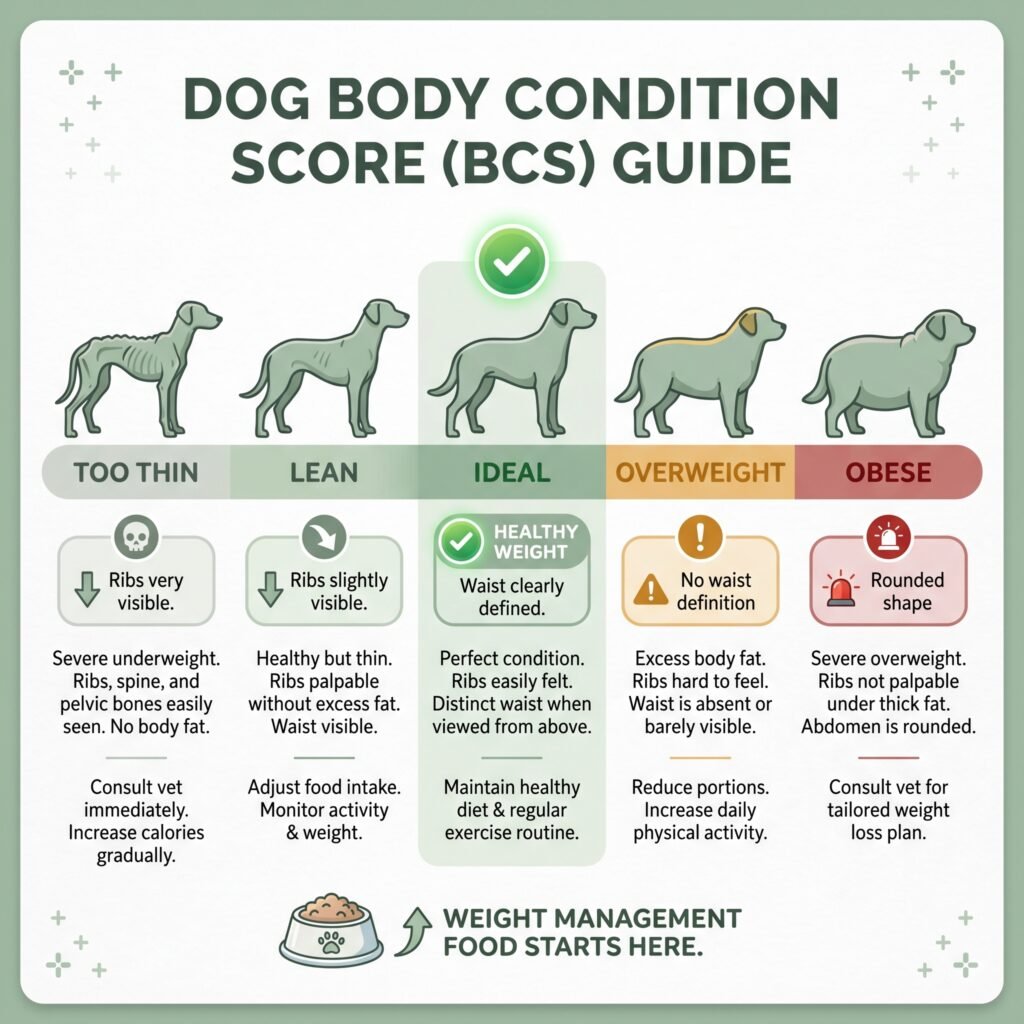
Your veterinarian can help to evaluate your dog and rank them with a body condition score (BCS) of 1-9, with 4 or 5 being ideal. An ideal weight allows the ribs to be felt but not seen, and your dog should have a tucked abdomen when viewed from the side and a tucked waist when viewed from above.
How to Score Your Dog at Home
The BCS system uses a combination of visual assessment and physical touch — no scale required. Here is how to read each score category:
BCS 1–3: Underweight Ribs, spine, and hip bones are clearly visible without touching the dog. No fat coverage. Significant muscle loss. Weight gain is the goal — this guide does not apply.
BCS 4–5: Ideal BCS 4–5 is ideal (approximately 15–24% body fat). You should be able to feel the ribs without excessive pressure, and there should be minimal fat coverage. A clear waist is visible from above; a defined abdominal tuck is visible from the side. Maintain this — do not restrict calories.
BCS 6–7: Overweight BCS 6–7 is overweight (25–34% body fat). Ribs are palpable with difficulty under heavy fat cover. Noticeable fat deposits over lumbar area and base of tail. Waist is absent or barely visible. No abdominal tuck. Weight management dog food and modest caloric reduction appropriate.
BCS 8–9: Obese BCS 8–9 is obese (35% or more body fat). Ribs are not palpable under very heavy fat cover. Heavy fat deposits over lumbar area and base of tail. Waist and abdominal tuck are absent. Veterinary supervision strongly recommended before starting any diet. Prescription weight management dog food is usually appropriate.
The BCS-to-Target Weight Calculation
Each number on the body condition score deviating from the ideal is approximately 10% of the dog’s current weight.
Example: A 70-pound dog with a BCS of 7 is approximately 20% over ideal weight. That means their target weight is approximately 58–60 pounds, and they need to lose 10–12 pounds total.
This calculation gives you a concrete weight loss goal — which is critical for calculating daily calorie targets and tracking progress meaningfully.
Step 2: Understand Why Your Dog Gained Weight
Choosing the right weight management dog food requires understanding the cause of the weight gain — because not all obesity has the same root.
The Common Causes
Overfeeding and free-choice feeding The most common causes of obesity in an otherwise healthy dog are feeding patterns such as offering high-fat and low-fiber diets, free-choice feeding instead of portioned feedings, excessive treats or table scraps, and sedentary lifestyles. Many owners underestimate portion sizes significantly, especially when switching between food brands with different caloric densities.
Neutering and hormonal changes Neutered dogs have lower resting metabolic rates than intact dogs. Many owners continue feeding pre-neuter portions post-surgery, creating a sustained caloric surplus over months and years. Dogs that are less active, neutered, or otherwise prone to weight gain benefit from weight management formulas even if they are not yet overweight.
Age and reduced activity Older dogs naturally lose muscle mass and move less. Muscle is metabolically active — less muscle means fewer calories burned at rest. A senior dog eating the same portions they did at age 3 will gradually gain weight without any change in feeding behavior.
Breed predisposition Certain breeds are genetically predisposed to weight gain: Labrador Retrievers, Beagles, Dachshunds, Cocker Spaniels, Basset Hounds, and Pugs among the most commonly identified. Labrador Retrievers in particular carry a documented genetic variant (POMC mutation) that impairs satiety signaling — they feel less full after eating than other dogs, driving overconsumption.
Medical conditions Medical conditions such as hypothyroidism, Cushing’s Disease, genetics, or certain medications can also play a role. These require diagnosis and treatment before dietary intervention alone can succeed. See the medical causes section below.
Treat calories This is one of the most consistently underestimated causes of weight gain. A medium-sized Milk-Bone biscuit contains approximately 40 calories. For a 20-pound dog whose daily calorie budget is 400 calories, three treats represents 30% of their total daily intake — often not counted at all by the owner.
Step 3: Calculate Your Dog’s Real Daily Calorie Target
This is the step most guides skip — and it is the most important one.
The RER Formula
Resting Energy Requirement (RER) = 70 × (body weight in kg)^0.75
To convert pounds to kilograms: divide weight in pounds by 2.2.
Examples:
| Dog Weight (lbs) | Weight (kg) | RER (kcal/day) |
|---|---|---|
| 15 lbs | 6.8 kg | 70 × (6.8)^0.75 = 296 kcal |
| 30 lbs | 13.6 kg | 70 × (13.6)^0.75 = 498 kcal |
| 50 lbs | 22.7 kg | 70 × (22.7)^0.75 = 731 kcal |
| 70 lbs | 31.8 kg | 70 × (31.8)^0.75 = 945 kcal |
| 100 lbs | 45.5 kg | 70 × (45.5)^0.75 = 1,213 kcal |
Converting RER to Daily Feeding Target
RER is the energy needed at complete rest. For a weight loss program, multiply RER by 1.0 (feeding at resting level promotes gradual fat loss while preserving muscle).
Important: For weight loss, feed calories based on the dog’s target ideal weight, not their current weight. This automatically creates the caloric deficit needed for fat loss.
Example: A 70-pound dog with a BCS of 7 whose ideal weight is 58 pounds:
- RER based on ideal weight of 58 lbs (26.4 kg) = 70 × (26.4)^0.75 ≈ 820 kcal/day
- This dog needs approximately 820 calories per day to lose weight safely
Calculating Portion Size
Once you know the daily calorie target, divide by the caloric density of your chosen weight management dog food (listed on the bag as kcal/cup or kcal/kg):
Daily portion (cups) = Daily calorie target ÷ Calories per cup
Example: 820 kcal/day target ÷ 320 kcal/cup (a typical weight management kibble) = 2.56 cups per day, divided across two meals.
Always use a digital kitchen scale or a calibrated measuring cup — a “heaped” versus a “level” cup can differ by 20–30% in actual calories delivered.
What Makes Weight Management Dog Food Different?
Not all “light” or “weight control” dog food products are genuinely formulated for meaningful weight management. Understanding exactly what differentiates effective weight management dog food from standard formulas is essential for choosing correctly.
Reduced Caloric Density
Weight management dog food formulas achieve lower calories per cup through one or more of the following:
- Higher water content (for wet food)
- Increased dietary fiber (adds bulk without calories)
- Reduced fat content (fat is calorie-dense at 9 kcal/gram vs 4 kcal/gram for protein and carbohydrates)
- Lower overall ingredient caloric density
Weight-loss dog food should generally have fewer calories per cup to help your dog lose weight. Choosing a food with fewer calories per cup will allow you to continue to feed your dog a healthy amount while still encouraging weight loss.
Standard adult dry dog food typically contains 350–420 kcal/cup. Quality weight management dog food formulas typically deliver 260–340 kcal/cup — a meaningful reduction that creates a caloric deficit even when feeding similar volumes.
Higher Protein-to-Calorie Ratio
Weight management dog food maintains or increases protein content relative to calories. This matters for two critical reasons:
First, protein preserves lean muscle mass during caloric restriction. A dog losing weight on a low-protein diet loses both fat and muscle — resulting in a lighter but metabolically weaker dog that regains weight faster. A dog losing weight on a high-protein, calorie-controlled diet loses predominantly fat while maintaining muscle.
Second, protein is more satiating than carbohydrates per calorie. Lean protein such as fish or chicken supports muscle mass and promotes fat burning during weight loss.
Elevated Dietary Fiber
Dietary fiber is a secret weapon for weight management in dogs. High-fiber foods slow digestion, which means your dog feels full longer after each meal — and fewer “feed me” performances between meals. Most standard adult dog foods have around 3–5% crude fiber. Weight-loss formulas typically run 8–12%, and prescription options like Royal Canin Satiety Support push as high as 19%. The difference in how satisfied a dog feels is dramatic.
Fiber achieves satiety through multiple mechanisms: physical volume in the stomach, slowed gastric emptying, and fermentation by gut bacteria that produces short-chain fatty acids signaling fullness.
L-Carnitine
L-carnitine is a naturally occurring nutrient that assists the body in converting stored fat into usable energy. It acts as a biological shuttle that transports long-chain fatty acids across the mitochondrial membrane, where they are burned for energy rather than stored. Therapeutic levels of L-carnitine are designed to help burn fat while increasing lean muscle mass.
Not all weight management dog foods include L-carnitine, but the best formulas do. Look for it explicitly in the ingredient list.
The 5 Non-Negotiable Features of Good Weight Management Dog Food
Use this as your checklist when evaluating any weight management dog food label:
Feature 1: Named Animal Protein as the First Ingredient
Look for a named meat such as chicken, turkey, or salmon as the first ingredient, and aim for at least 25–30% crude protein on the label. Generic “meat meal,” “poultry meal,” or “animal by-product” as the primary protein is a sign of lower ingredient quality that compromises muscle preservation during weight loss.
Feature 2: Minimum 8% Crude Fiber
Weight management dog food needs meaningfully more fiber than standard adult food. Any formula with less than 6% crude fiber on the guaranteed analysis is unlikely to provide adequate satiety support for an overweight dog. Premium weight management formulas typically deliver 8–12%; prescription-grade formulas 12–19%.
Feature 3: Maximum 10–12% Crude Fat
Diets formulated for weight loss are typically high in fiber and low in calories and made with lean protein. Fat should be deliberately controlled in weight management dog food — but not eliminated. A minimum of 8% fat is needed to support skin and coat health, fat-soluble vitamin absorption, and palatability.
Feature 4: L-Carnitine in the Ingredient List
L-carnitine actively accelerates fat metabolism. Its presence in the ingredient list — or listed separately in the guaranteed analysis — distinguishes performance-level weight management formulas from formulas that are simply lower-calorie versions of standard food.
Feature 5: AAFCO Nutritional Adequacy Statement for Adult Maintenance
Weight management dog food must still be nutritionally complete. An AAFCO statement reading “formulated to meet the nutritional levels established by AAFCO Dog Food Nutrient Profiles for maintenance” (or confirmed by feeding trials) is non-negotiable. A food that creates weight loss by being nutritionally inadequate is not a weight management food — it is a deficient food.
Key Ingredients That Drive Weight Loss in Dog Food
High-Value Ingredients in Weight Management Dog Food
Chicken, Turkey, or White Fish (deboned, as first ingredient) Lean protein sources that provide complete amino acids for muscle preservation with minimal associated fat. White fish in particular (cod, haddock, tilapia) is one of the leanest protein sources available in commercial dog food.
Pea Fiber, Beet Pulp, and Psyllium Husk Highly effective soluble and insoluble fiber sources. Beet pulp ferments slowly in the gut, feeding beneficial bacteria and signaling satiety through short-chain fatty acid production. Psyllium husk swells significantly in water, creating physical bulk that extends the feeling of fullness.
Powdered Cellulose A purified plant fiber source used in many prescription weight management dog foods (including Hill’s r/d and Royal Canin Satiety Support). It adds zero calories while dramatically increasing food bulk — the dog eats what feels like a full meal while receiving significantly fewer calories.
Sweet Potato and Brown Rice Complex carbohydrates with moderate fiber content, good digestibility, and a lower glycemic response than refined starches. Provide sustained energy without blood sugar spikes that drive hunger.
L-Carnitine As discussed above — the metabolic catalyst that converts stored fat into usable energy. Found in meat naturally, but therapeutic levels in weight management formulas exceed what diet alone provides.
Pumpkin (as pumpkin meal or pumpkin powder) A natural high-fiber ingredient increasingly used in quality weight management dog food. Provides both soluble and insoluble fiber, is highly palatable to dogs, and supports healthy gut motility.
Omega-3 Fatty Acids (EPA and DHA from fish oil) Particularly relevant during weight loss: EPA directly reduces fat cell proliferation and supports anti-inflammatory pathways that are chronically activated by excess body fat. Dogs losing weight through caloric restriction benefit significantly from adequate omega-3 intake.

Ingredients That Undermine Weight Management
Corn Syrup or Molasses Simple sugars that provide empty calories, spike blood glucose, and promote fat storage through insulin response. No place in weight management dog food.
Animal Fat as the Primary Fat Source (in high quantities) While some animal fat is necessary and normal, fat-heavy formulas defeat the purpose of caloric restriction. Check the guaranteed analysis: fat above 15% in a weight management formula is counterproductive.
Soy Hulls and Low-Quality Fillers as Primary Fiber Soy hulls provide fiber on paper but with poor palatability and lower fermentable fiber fractions compared to beet pulp, pea fiber, or psyllium. They are commonly used in budget weight management formulas to hit fiber numbers cheaply.
“Wheat Gluten” or “Corn Gluten Meal” as Primary Protein These plant-based protein boosters inflate the protein percentage without delivering the amino acid quality of meat protein. In weight management dog food where muscle preservation during restriction is critical, protein source quality matters enormously.
Best Weight Management Dog Food: 2026 Top Picks by Category
Every formula below meets all five non-negotiable features: named animal protein first, meaningful fiber content, controlled fat, L-carnitine, and AAFCO nutritional adequacy.
1. Purina Pro Plan Weight Management (Chicken & Rice)
Best Overall Weight Management Dog Food
Purina Pro Plan Weight Management Chicken & Rice is the best overall weight management dog food, offering high protein content, clinical backing, and over 4,000 five-star reviews.
Why it leads:
- Chicken as the first ingredient, chicken meal as the second — strong dual protein anchoring
- Rice as primary carbohydrate — digestible, gentle, and naturally gluten-free
- High protein content (34% dry matter basis) relative to calories — outstanding for muscle preservation during weight loss
- Live probiotics for digestive health
- L-carnitine included
- Backed by Purina’s feeding trial research — not just formulation compliance
- Approximately 326 kcal/cup — meaningfully lower than standard adult Pro Plan formulas
Guaranteed Analysis: Protein min 34% | Fat min 10% | Fiber max 5% | Approx. 326 kcal/cup
Best for: Most healthy adult dogs needing moderate weight loss (BCS 6–7), owners who want a vet-trusted formula without a prescription.
2. Hill’s Science Diet Perfect Weight (Adult)
Best Clinically Proven Weight Management Dog Food
Hill’s Science Diet Perfect Weight is clinically proven to help dogs of all shapes and sizes achieve a healthy weight. The formula contains a special fiber blend that promotes a healthy metabolism, plus natural, protein-rich ingredients to support lean muscles.
Why it stands out:
- Contains approximately 24% protein and 9% fat — a ratio that supports muscle maintenance while gradually lowering overall calorie intake.
- Includes L-carnitine, a naturally occurring nutrient that assists the body in converting stored fat into usable energy.
- “Clinically proven” designation is backed by actual feeding trial data
- Natural fiber blend for between-meal satiety
- Available in formulas for small breeds, large breeds, and senior dogs
- Approximately 310–320 kcal/cup depending on variant
Best for: Owners who prioritize clinical trial data and want a brand widely recognized by veterinarians. Ideal for dogs with BCS 6–8.
3. Royal Canin Satiety Support (Prescription)
Best Prescription Weight Management Dog Food for Significant Obesity
Royal Canin Satiety Support is the gold standard prescription weight management dog food for dogs with BCS 8–9 (obese) or those who have failed over-the-counter weight management attempts.
Why it is the prescription leader:
- Royal Canin Satiety Support pushes fiber content as high as 19% — the highest of any commercial weight management formula. This level of fiber creates genuine satiety that fundamentally changes the eating experience for chronically hungry dogs.
- Calorie density is dramatically reduced (approximately 248 kcal/cup) — the lowest of any dry weight management formula on the market
- Specifically designed for dogs who appear perpetually hungry on other weight loss diets — the satiety formula solves the behavioral challenge of weight management, not just the caloric one
- Requires veterinary prescription
Best for: Significantly obese dogs (BCS 8–9), dogs who beg constantly on other weight management formulas, breeds with documented satiety disorders (Labradors).
4. Hill’s Prescription Diet r/d (Reducing Diet)
Best Prescription Option for Fast, Medically Supervised Weight Loss
Hill’s r/d is one of the oldest and most evidence-backed prescription weight management formulas in veterinary medicine. It is developed for obese dogs, including those with obesity-related conditions, such as diabetes mellitus, hyperlipidemia (elevated cholesterol), and colitis. It contains therapeutic levels of L-carnitine designed to help burn fat while increasing lean muscle mass, and an optimal blend of soluble and insoluble fiber to promote satiety.
- Very low calorie density (approximately 243 kcal/cup in dry formula)
- Therapeutic L-carnitine levels
- Specifically designed for dogs with obesity-related metabolic conditions
- Available in dry and canned formulas
- Requires veterinary prescription
Best for: Dogs with obesity-related conditions (diabetes, hyperlipidemia, colitis) or dogs requiring medically supervised rapid caloric restriction.
5. Blue Buffalo Life Protection Healthy Weight (Chicken & Brown Rice)
Best Over-the-Counter Option for Budget-Conscious Owners
Blue Buffalo Life Protection Healthy Weight offers natural ingredients and no chicken by-products, providing the best cost-per-pound for natural weight management brands.
- Deboned chicken as first ingredient
- Brown rice as primary carbohydrate — no corn, wheat, or soy
- LifeSource Bits: targeted vitamin and mineral blend
- L-carnitine included
- No artificial colors, flavors, or preservatives
- Approximately 353 kcal/cup (higher than the top two picks — portion discipline is important)
Best for: Health-conscious owners on a moderate budget who want a natural-ingredient weight management formula without a prescription.
6. Wellness Core Reduced Fat (Turkey & Chicken)
Best High-Protein Weight Management Dog Food
For dogs that need weight management but also maintain high activity levels — or for owners concerned about muscle loss during restriction — Wellness Core Reduced Fat delivers an exceptionally high protein-to-calorie ratio.
- Turkey and chicken meal as dual protein sources
- Grain-free formula (note DCM advisory for grain-free + legume-heavy formulas — discuss with vet)
- Very high protein content relative to calories
- L-carnitine for fat metabolism support
- Omega-3 fatty acids from menhaden fish oil for anti-inflammatory support
- Probiotics for digestive health
Best for: Active adult dogs with weight management needs who also need protein levels sufficient for athletic muscle maintenance.
7. IAMS Proactive Health Healthy Weight Control
Best Budget Weight Management Dog Food
IAMS Proactive Health Healthy Weight Control features real chicken and L-Carnitine and is available under $20 for a 7 lb bag.
- Real chicken as first ingredient
- L-carnitine included
- Formulated to support fat metabolism
- Widely available at grocery stores, big-box retailers, and online
- Approximately 340 kcal/cup
Best for: Owners who need an accessible, affordable entry point to weight management feeding with core L-carnitine and lean protein inclusion.
Prescription vs. Over-the-Counter Weight Management Dog Food
One of the most common questions about weight management dog food is whether a prescription formula is actually necessary — or whether a quality over-the-counter product delivers the same results.
Here is the honest answer:
| Characteristic | OTC Weight Management | Prescription Weight Management |
|---|---|---|
| Calorie density | 310–370 kcal/cup | 240–300 kcal/cup |
| Fiber content | 5–10% | 10–19% |
| L-carnitine levels | Present (standard levels) | Present (therapeutic levels) |
| Clinical trial backing | Varies | Yes (required for Rx designation) |
| Cost | $1–$2.50/lb | $2.50–$4.50/lb |
| Availability | Everywhere | Vet prescription required |
| Best BCS range | BCS 6–7 (overweight) | BCS 7–9 (obese) |
When OTC is sufficient: Dogs with BCS 6–7 who need modest caloric reduction and respond to satiety management.
When prescription is necessary: Dogs with BCS 8–9; dogs with obesity-related medical conditions; dogs who remain constantly hungry and fail to lose weight on OTC formulas; dogs under active veterinary weight management supervision.
Wet vs. Dry Weight Management Dog Food
Wet food can be better at creating the sensation of feeling full. Increased satiety is useful in weight management, encouraging less caloric intake. Some pets may also benefit from the added hydration or simply prefer wet canned diets. That being said, every dog and situation is different, and dogs can experience healthy weight loss on a canned, dry, or combination diet.
The practical comparison:
Dry kibble advantages for weight management:
- Easier to measure precise portions
- Lower cost per serving
- Dental health benefit from chewing
- Slower to eat (reduces gulping and improves satiety)
- Longer shelf life
Wet food advantages for weight management:
- Higher moisture content means fewer calories per gram of food — a dog eats a physically larger meal for fewer calories
- Significantly higher satiety for most dogs
- Excellent for dogs who remain hungry on dry formulas
- Particularly useful for small breeds where even a quarter-cup difference in kibble has major caloric implications
The hybrid strategy: Mix 25–30% wet weight management food into dry weight management kibble. This approach increases satiety, adds palatability, and improves hydration — without dramatically increasing the cost of full wet feeding. The total calories must still be calculated and controlled.
Treats During Weight Management: The Rules
Treats are the most commonly overlooked calorie source during weight management programs — and the most frequent reason dogs fail to lose weight despite an appropriate food switch.
The 10% Rule
Treats should represent no more than 10% of your dog’s total daily calorie intake. For a dog on an 800 kcal/day weight management plan, that is 80 kcal from treats maximum.
Common treats and their calories:
- Standard dog biscuit (medium): 35–45 kcal each
- Milk-Bone small: 20 kcal each
- Training treat (Zuke’s Mini): 3–5 kcal each
- Baby carrot: 4 kcal each
- Plain rice cake (small piece): 10–15 kcal
- Blueberries (one): 1 kcal each
The Smartest Treats for Weight Management
Vegetables and low-calorie whole foods are the best treat strategy during weight loss. Carrots, cucumber slices, blueberries, watermelon pieces (no seeds or rind), and plain green beans are all low-calorie, high-volume options that provide a treat experience without meaningful caloric consequence.
Portion your daily kibble for treats. Set aside 10% of your dog’s daily kibble portion before feeding. Use individual kibbles as training treats throughout the day — they are already counted in the calorie budget, they are complete nutrition, and they maintain the dog’s enthusiasm because training context increases their perceived value.
Feeding Schedule and Portion Management
How you feed matters as much as what you feed when it comes to weight management dog food success.
Feed Twice Daily, Minimum
Free-choice feeding (always leaving food out) is incompatible with weight management. Every gram of food must be measured and served at defined meal times. Free-choice feeding consistently results in caloric overconsumption and makes monitoring impossible.
CARE does NOT recommend free-feeding your dog during weight loss.
Two meals per day, measured precisely, is the minimum structure. Three meals (dividing the daily portion into three equal servings) increases satiety further without adding calories.
Measure Every Single Meal
A study of pet owner feeding behavior found that owners using volumetric measures (cups) routinely over-serve by 20–30% due to variations in how cups are filled. Use a kitchen scale set to grams — it is the only truly accurate method. Weigh the daily portion in the morning, divide it in half, and serve half at each meal.
Slow-Feeder Bowls
Dogs that eat very rapidly experience less satiety from the same meal compared to dogs that eat slowly — hunger hormones do not have time to register fullness before the food is gone. Slow-feeder bowls or puzzle feeders extend meal duration by 4–10x, improving the satiety response from the same caloric input.
Water Access
Ensure fresh water is continuously available. Adequate hydration supports metabolic function, gut motility, and can reduce hunger — thirst is sometimes misinterpreted as hunger by dogs. If your dog is on a dry weight management kibble, adding warm water to the bowl before serving creates a broth-like consistency that increases water intake and slows eating simultaneously.
How Fast Should Your Dog Lose Weight?
This is one of the most important parameters in any weight management program — and one of the most commonly misjudged.
A safe and recommended rate of weight loss for dogs is approximately 1% to 2% of their body weight per week. This means that a 50-pound dog might safely lose about half a pound to one pound each week.
While on a weight loss plan, dogs can expect to safely lose 1-2% of their weight weekly. Any faster might indicate their calories have been restricted too severely or indicate a health concern.
Why Too-Fast Weight Loss Is Dangerous
- Muscle mass is lost alongside fat when calories are restricted too severely
- Hepatic lipidosis (fatty liver disease) can occur in dogs losing weight too rapidly
- Nutritional deficiencies develop when caloric restriction is so severe that even complete formulas cannot deliver adequate micronutrients
- Lost muscle reduces basal metabolic rate, making maintaining target weight harder
The Weight Loss Timeline
For a 70-pound dog (BCS 7) targeting 58 pounds — needing to lose 12 pounds:
At 1% per week: approximately 17–18 weeks (4–5 months) At 1.5% per week: approximately 12–13 weeks (3–4 months)
This is not a rapid process. Setting realistic expectations from the outset prevents owners from abandoning an effective plan because they expected faster results than the biology allows.
Exercise: The Other Half of the Equation
Weight loss plans are most effective when they include a combination of reduced calories and increased activity.
For weight management, exercise serves multiple functions beyond simple calorie burning:
Muscle preservation — resistance-type activity (walking uphill, swimming, structured play) signals the body to preserve muscle during caloric restriction.
Metabolic rate maintenance — muscle is metabolically active tissue; maintaining muscle through exercise keeps the resting metabolic rate from dropping during caloric restriction.
Behavioral benefits — exercise reduces boredom-driven food seeking, improves mood and reduces stress-related overconsumption, and builds positive associations with activity that support long-term weight maintenance.
Starting an Exercise Program Safely
For significantly obese dogs (BCS 8–9) or dogs with joint disease, a sudden increase in exercise can cause injury or pain that derails the entire program. Start conservatively:
Week 1–2: 10-minute leash walks, twice daily on flat terrain. Assess tolerance. Week 3–4: Extend to 15-minute walks. Add gentle inclines if tolerated. Month 2: 20–25 minute walks twice daily. Consider adding swimming if available — water exercise is excellent for overweight dogs because it provides resistance without joint impact. Month 3+: Maintain and gradually increase as the dog’s fitness improves and weight decreases.
Dogs with severe arthritis or respiratory compromise due to obesity should have their exercise program designed in consultation with a veterinarian.
When Diet Alone Won’t Work: Medical Causes of Canine Obesity
If a dog is eating a carefully measured weight management dog food diet, exercising regularly, and still not losing weight after 4–6 weeks, a medical cause should be investigated.
Medical conditions such as hypothyroidism, Cushing’s Disease, genetics, or certain medications can also play a role.
Hypothyroidism
The most common endocrine cause of obesity in dogs. An underactive thyroid reduces the metabolic rate significantly, making weight gain easy and weight loss nearly impossible through diet alone. Diagnosed through a blood test (total T4 or free T4). Treated with once or twice daily oral thyroxine (levothyroxine) — after which normal dietary management becomes effective.
Signs alongside weight gain: lethargy, cold intolerance, hair loss (especially on the trunk), symmetrical skin darkening, recurring skin infections.
Cushing’s Disease (Hyperadrenocorticism)
Chronic excess cortisol production causes fat redistribution (particularly to the abdomen), increased appetite, increased water consumption, and muscle wasting alongside apparent weight gain. Weight management dog food does not effectively address Cushing’s-related obesity without concurrent medical treatment.
Signs: “pot belly” abdomen, excessive thirst and urination, thinning hair coat, panting, muscle weakness.
Medications
Corticosteroids (prednisone, dexamethasone), phenobarbital, and some other medications increase appetite and promote fat storage. Dogs on long-term steroid therapy require higher vigilance around caloric control.
Insulinoma
A rare pancreatic tumor that causes chronic low blood sugar, driving constant hunger and overeating.
Request these diagnostics if weight loss fails despite dietary compliance:
- Full blood chemistry panel including glucose
- Total T4 (thyroid function)
- ACTH stimulation test or low-dose dexamethasone suppression test (Cushing’s screen)
- Urinalysis
Monthly Progress Tracking: The System That Makes It Stick
Recheck body condition and weight about once a month. Keeping a monthly record makes small changes easier to notice early.
The Monthly Weight Management Log
Track these four data points every four weeks:
1. Body weight (in pounds or kg) — weigh at the same time of day, before a meal, on the same scale.
2. Body Condition Score (1–9) — reassess using the visual and palpation method described in Step 1.
3. Waist measurement — measure around the widest point of the abdomen with a soft tape measure. Waist reduction is often visible before significant scale weight changes occur.
4. Food and treat log for the previous week — a brief notation of what was fed, how much, and any departures from the plan. This surfaces the caloric “leaks” that derail progress.
When to Adjust the Plan
If losing more than 2% body weight per week: Increase daily calories by 10% and recheck in two weeks.
If losing less than 0.5% per week after 4 weeks of compliance: Decrease daily calories by 10% and confirm all treat calories are being counted. Recheck in four weeks.
If not losing at all after 6 weeks of strict compliance: Schedule a veterinary visit for a medical workup.
If losing weight successfully but dog seems very hungry: Consider upgrading to a higher-fiber formula (Royal Canin Satiety Support or Hill’s r/d) and discuss with your vet.
Frequently Asked Questions About Weight Management Dog Food
How long does it take weight management dog food to work?
Expect 4–6 weeks before meaningful scale weight change is visible. The gut microbiome adjusts, metabolic rate adapts, and the caloric deficit accumulates. Total weight loss to target takes 3–6 months for most dogs, depending on how much weight needs to be lost. While on a weight loss plan, dogs can expect to safely lose 1-2% of their weight weekly.
Can I just feed less of my dog’s regular food instead of buying weight management dog food?
Technically yes — but there are meaningful trade-offs. Reducing a regular adult food to weight-loss caloric levels often leaves the dog feeling chronically hungry because the food lacks the elevated fiber content of weight management formulas. More importantly, reducing portions significantly can create marginal deficiencies in vitamins and minerals that are calibrated to full feeding volumes. Weight management dog food is reformulated to deliver complete nutrition at the reduced caloric levels, making it the safer and more effective approach.
Is weight management dog food safe for long-term feeding?
Yes, as long as the formula carries an AAFCO nutritional adequacy statement for adult maintenance. Weight management dog food is not a temporary “crash diet” — for dogs prone to weight gain (neutered dogs, certain breeds, seniors), it may be the appropriate long-term maintenance diet for life.
My dog seems very hungry on weight management food — what should I do?
First, verify you are feeding the correct portion using a kitchen scale. Second, divide the daily portion into three meals instead of two. Third, add plain canned pumpkin (1–2 teaspoons per meal) as a fiber booster that adds bulk without meaningful calories. Fourth, consider upgrading to a higher-fiber formula — particularly Royal Canin Satiety Support, which is specifically designed for dogs with strong hunger drives.
Can puppies or senior dogs eat weight management dog food?
Standard adult weight management dog food should not be fed to puppies — puppies have significantly higher protein, fat, and caloric needs for growth. Senior dogs can benefit from reduced-calorie formulas, but look for senior-specific weight management products (Hill’s Science Diet Adult 7+ Light, Purina Pro Plan Bright Mind Active 7+) that are calibrated for the senior metabolic profile including higher protein for muscle preservation.
What is the difference between “light,” “lean,” “healthy weight,” and “weight management” on dog food labels?
These terms are regulated by AAFCO: “light” or “lean” indicates a specific maximum calorie or fat content. “Healthy weight,” “weight management,” “calorie control,” and similar terms are not strictly regulated in the same way and can be used more loosely. Always check the actual caloric density (kcal/cup) and guaranteed analysis rather than relying on label terminology alone.
Final Verdict: Building a Weight Management System That Actually Works
Pet obesity is a disease, not a discipline issue. Treating it requires a system, not a single product purchase.
The weight management dog food you choose matters — but it is one component of a four-part system:
Part 1: Accurate diagnosis. Use the BCS scale to know exactly where your dog stands and set a specific target weight.
Part 2: Correct calorie math. Calculate your dog’s RER based on their target weight. Feed to that number. Measure everything on a scale.
Part 3: The right weight management dog food. Choose a formula with named animal protein first, fiber above 8%, fat below 12%, L-carnitine included, and caloric density below 350 kcal/cup. Match formula tier (OTC vs prescription) to your dog’s BCS and hunger level.
Part 4: Consistent tracking. Weigh monthly. Adjust portions based on results. Investigate medically if diet compliance is confirmed but weight loss fails.
Our top recommendations:
For most overweight adult dogs (BCS 6–7): Purina Pro Plan Weight Management — the strongest combination of protein quality, clinical backing, L-carnitine, and caloric control in the OTC category.
For clinically obese dogs (BCS 8–9): Royal Canin Satiety Support (prescription) — the highest fiber content and lowest caloric density available, specifically designed for dogs that fail OTC weight management.
For dogs with obesity-related conditions: Hill’s Prescription Diet r/d under veterinary supervision — the most established prescription weight loss formula in veterinary medicine.
Weight management is a long game. The dogs who reach and maintain healthy weight are the ones with owners who commit to the system — not just the food. Start with the right weight management dog food, track monthly, adjust with data, and give the process the time the biology requires.
This article is for educational and informational purposes only. It does not constitute veterinary medical advice. Before starting any weight loss program for your dog, consult with a licensed veterinarian — especially if your dog has existing health conditions, is significantly obese (BCS 8–9), or is on medication.