Low Purine Dog Food: The Complete Owner's Science-to-Bowl Guide (2026)
There's a moment every owner of a Dalmatian — or a dog that's just passed a urate stone — knows well. The vet says the words "low purine diet," and suddenly everything you thought you knew about feeding your dog needs to be rethought.
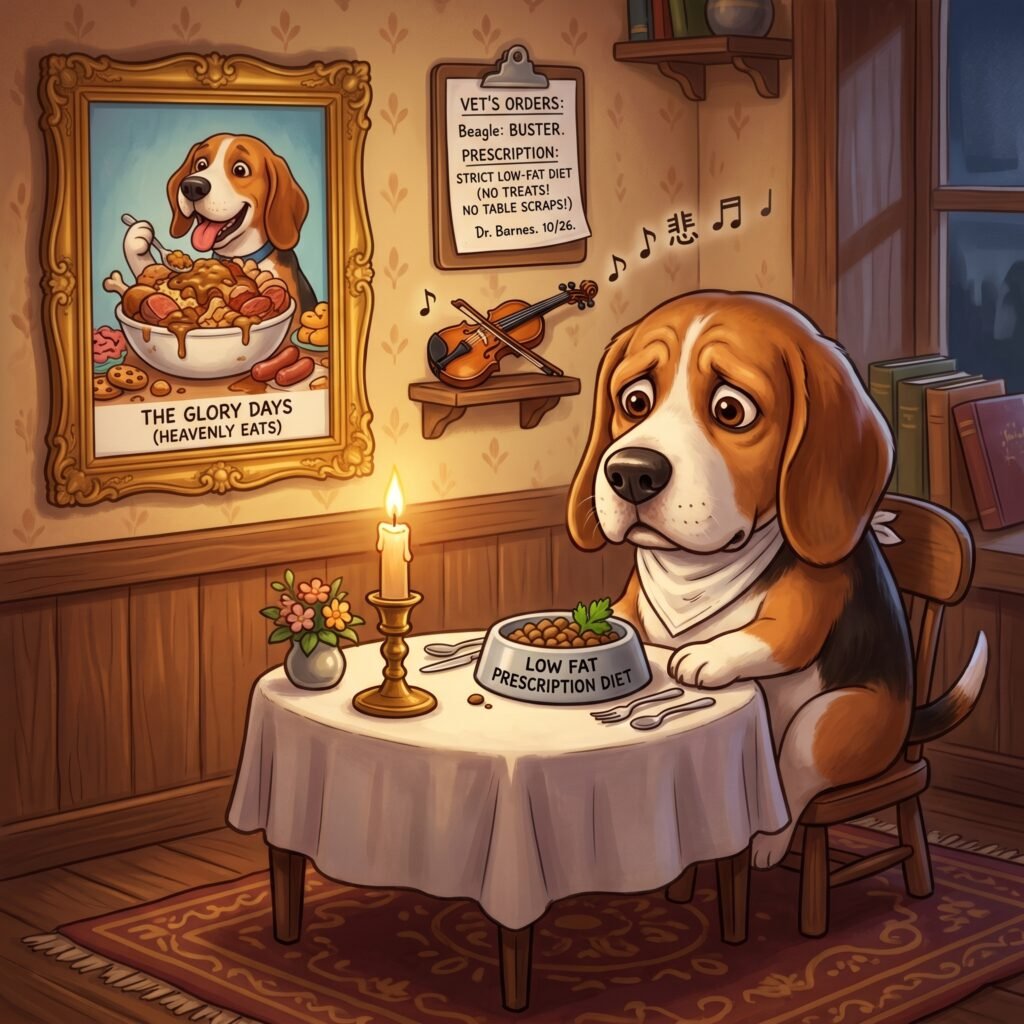
What even are purines? Why does it matter which protein you pick? Is Purina EN low fat dog food the right call, or is it overkill? Is there a commercial food your Dalmatian can actually eat long-term, or do you need to cook every meal from scratch?
This guide gives you the full picture: the science behind purines, the breeds and conditions that require dietary intervention, a complete purine food chart, a detailed breakdown of Purina low fat dog food and other vet-recommended options, plus a breed-specific section on low purine dog food for Dalmatians that goes deeper than any generic list.
What You’ll Learn in This Guide
- What Are Purines — and Why Do They Matter for Dogs?
- How the Body Processes Purines (And What Goes Wrong)
- Which Dogs Need a Low Purine Diet?
- Low Purine Dog Food for Dalmatians: The Full Breed Guide
- The Purine Content Chart: High, Moderate & Low Purine Foods
- Purina EN Low Fat Dog Food: Full Review & Analysis
- Other Purina Low Fat Dog Food Options
- Best Commercial Low Purine Dog Foods (2026 Picks)
- Homemade Low Purine Dog Food: What to Know
- Feeding Tips That Multiply the Effect of a Low Purine Diet
- What to Avoid: Common Mistakes in Low Purine Feeding
- Frequently Asked Questions
What Are Purines — and Why Do They Matter for Dogs?
Purines are organic compounds found in the cells of virtually every living organism — in your dog’s body tissues, in the meat they eat, in vegetables, and in grains. They’re a natural and unavoidable part of food.
In a healthy body, the metabolism of purines follows a clean, predictable path:
- Purines from food and cell breakdown are converted to uric acid in the liver
- The liver then converts uric acid to allantoin — a water-soluble compound
- Allantoin is filtered by the kidneys and excreted harmlessly in the urine
The key word in step 2 is converted. As long as uric acid is efficiently transformed to allantoin, it doesn’t build up. The urine stays dilute, the urinary tract stays clear, and nothing crystallizes.
The problem begins when that conversion fails.
The bottom line on purines: They’re not inherently dangerous — they become dangerous when the metabolic pathway that processes them is compromised, either by genetics or by disease.
How the Body Processes Purines — and What Goes Wrong
The Normal Pathway
Dietary purines → Uric Acid → Allantoin → Excreted in urine ✅When It Breaks Down
In dogs with hyperuricosuria (excessive uric acid in the urine), the conversion from uric acid to allantoin doesn’t complete properly. Instead:
Dietary purines → Uric Acid → [conversion blocked] → Uric acid excreted directly ⚠️Uric acid is not water-soluble. When it accumulates in urine, it forms crystals — then sludge — then stones. These stones (called urate uroliths) can:
- Cause pain and difficulty urinating
- Lead to urinary tract infections
- Block the urethra (a life-threatening emergency, especially in males)
- Require surgical removal or intervention
Two different mechanisms can cause this failure:
1. Genetic mutation (breed-specific hyperuricosuria) Certain breeds carry an inherited defect in liver transport proteins that prevents normal uric acid processing. This is fixed — the dog is born with it and carries it for life.
2. Portosystemic shunting (liver bypass) Abnormal blood vessels that bypass the liver reduce its ability to process uric acid. This can occur in any breed and may be correctable with surgery.
3. Chronic kidney disease Impaired kidney function can reduce the efficiency of urate excretion, allowing buildup.
Which Dogs Need a Low Purine Diet?
Breeds with Genetic Hyperuricosuria
Several breeds carry a genetic predisposition to urate stone formation due to abnormal purine metabolism, including Dalmatians, English Bulldogs, Russian Black Terriers, Large Munsterlanders, Weimaraners, German Shepherd Dogs, Giant Schnauzers, American Staffordshire Terriers, and Australian Shepherds. Miniature Schnauzers and Yorkshire Terriers also develop urate stones due to their tendency to have portosystemic shunts.
Dogs that should be proactively managed with a lower-purine diet — even before stones form:
- Any Dalmatian (male especially; see section below)
- English Bulldogs
- Black Russian Terriers
Dogs that should be evaluated for urinary stone type before dietary changes:
- German Shepherds, Giant Schnauzers, American Staffordshire Terriers
- Any dog with diagnosed liver disease
- Any dog with a history of urinary stones (stone type analysis required first)
Dogs Recovering from Urate Stone Episodes
Any dog — regardless of breed — who has been diagnosed with urate urolithiasis should be managed with a low-purine diet as a long-term maintenance strategy to prevent recurrence.
Important: Not all urinary stones are urate stones. Dogs can form calcium oxalate, struvite, or other stone types that are managed very differently. Always get stone type analysis done before assuming a low-purine diet is the right intervention. Your vet can send stones for analysis after removal, or use urinalysis to guide dietary decisions.
Low Purine Dog Food for Dalmatians: The Complete Breed Guide
Dalmatians occupy a unique and well-studied position in canine nutrition. Their purine metabolism issue isn’t a disease — it’s a genetic quirk built into nearly every Dalmatian on the planet.
The Science Behind Dalmatian Purine Metabolism
In Dalmatians, purine breakdown starts normally, but the final step doesn’t work as it should. Their liver cells can’t efficiently absorb uric acid, so the conversion to allantoin simply doesn’t happen. Instead, uric acid builds up in the bloodstream and is passed into the urine.
As a result, the urinary uric acid levels in affected dogs are nearly 10 times higher than those of other breeds, causing crystals and stones to form as it passes through the urinary tract.
How Common Is This Problem?
In the case of Dalmatians, it is estimated that roughly one third of all males will go on to develop urate stones that require veterinary intervention. It’s less of a problem for females because they have a wider urethra which allows them to pass small stones automatically.
This means if you own a male Dalmatian, the odds are essentially 1-in-3 that he will need veterinary treatment for urate stones at some point in his life — unless diet intervention reduces the risk proactively.
What Dalmatian Feeding Actually Requires
The goal for Dalmatians is not to eliminate protein (they need protein; they’re dogs) — it’s to choose proteins low in purines while avoiding the highest-purine options.
The answer to creating a low purine diet for a dog is not to avoid meat, but to avoid high purine meats and foods.
Secondary goals for Dalmatian diet management:
- Keep urine well diluted (high water intake = more dilute urine = less crystallization risk)
- Maintain urine at a neutral-to-alkaline pH (around 7.0) — this keeps uric acid dissolved
- Achieve and maintain ideal body weight
- Feed multiple small meals rather than one large daily meal
What Makes a Food Safe for Dalmatians?
The Royal Canin Dalmatian Adult formula has been specially formulated with a low purine content and carefully selected protein sources. Protein sources like eggs and plant-based proteins, which naturally have low purine content, are specifically featured in breed-targeted formulas.
Key nutritional targets for Dalmatian-appropriate diets:
- Protein source matters more than protein percentage — egg and dairy proteins are naturally very low in purines
- Moderate overall protein — very high protein diets increase purine load even from low-purine sources
- High moisture — wet food or water-added kibble directly reduces urine concentration
- No organ meats — liver, kidney, heart, and gizzards are extremely high in purines
- Moderate sodium — excess sodium increases urine output but can also strain kidneys over time
The Purine Content Chart: Know Before You Feed
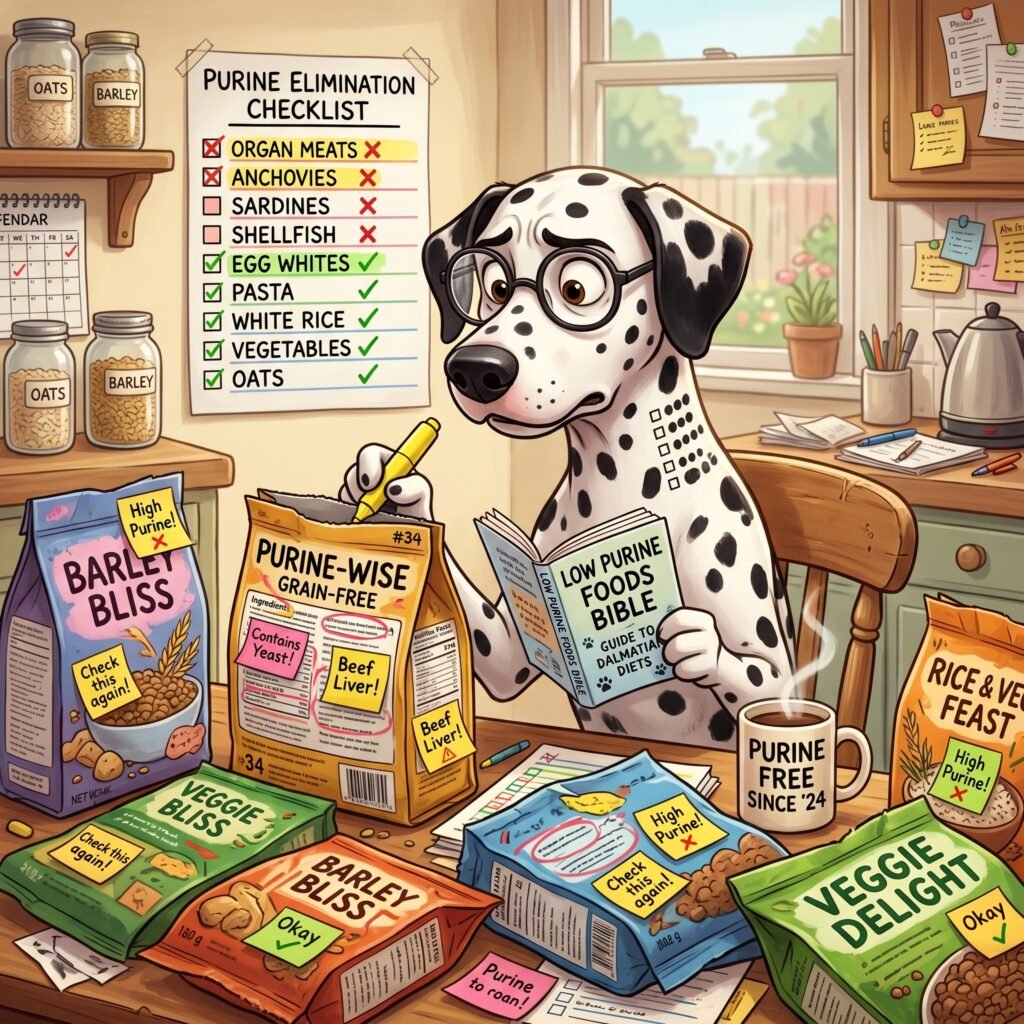
This is one of the most clinically useful tools for low-purine feeding — and one most online guides don’t include in enough detail.
 HIGH Purine — Avoid or Strictly Limit
| Food | Purine Level | Notes |
|---|---|---|
| Liver (beef, chicken, pork) | Very High | #1 ingredient to eliminate |
| Kidney | Very High | Common in some dog foods |
| Heart | High | Often in raw diets |
| Sardines | Very High | Avoid entirely |
| Mackerel | High | Avoid |
| Anchovies | High | Common in fish-based kibble |
| Duck | High | Popular protein — not Dalmatian-safe |
| Venison | Moderate-High | Varies by cut |
| Goose | High | Rare but worth noting |
| Shellfish | Very High | Any crustacean or mollusk |
| Brewer’s yeast | High | Common kibble ingredient |
| Bone broth (heavy) | Moderate-High | Use cautiously |
 MODERATE Purine — Feed in Controlled Amounts
| Food | Notes |
|---|---|
| Salmon | Fine in moderate amounts; avoid high-salmon diets |
| Lamb | Generally acceptable, watch quantities |
| Turkey | Lower than duck; moderate for most dogs |
| White fish (cod, tilapia, haddock) | Acceptable in moderation |
| Brown rice | Mild purine content; generally fine |
| Oatmeal | Generally fine |
| Peas, lentils | Moderate; limit in urate-prone dogs |
| Mushrooms | Moderate; use sparingly |
| Asparagus | Moderate; limit frequency |
 LOW Purine — Safe Core Foods
| Food | Notes |
|---|---|
| Eggs | Excellent low-purine protein; ideal for Dalmatians |
| Cottage cheese | Great dairy protein, very low purines |
| Tofu / plant proteins | Minimal purines; high-quality protein source |
| Chicken (white meat, boneless) | Lower purines than organ meat or red meats |
| White rice | Excellent neutral carbohydrate |
| Sweet potato | Ideal carbohydrate base |
| Potato | Digestible, low purine |
| Corn | Low purine |
| Carrots | Excellent low-purine vegetable |
| Green beans | Safe and beneficial |
| Broccoli | Safe in moderate amounts |
| Blueberries | Low purine, antioxidant-rich |
| Apple (no seeds) | Safe snack |
| Peanut butter (no xylitol) | Low purine; use in moderation due to fat content |
| Cheese | Low purine; high in fat, so portion-control |
| Yogurt (plain, unsweetened) | Probiotic and low-purine |
Practical rule for Dalmatian owners: Build meals around eggs, cottage cheese, white chicken meat, rice, and vegetables. These low-purine foundations can be combined with a commercial formula to dramatically reduce urate risk.
Purina EN Low Fat Dog Food: Full Review & Analysis
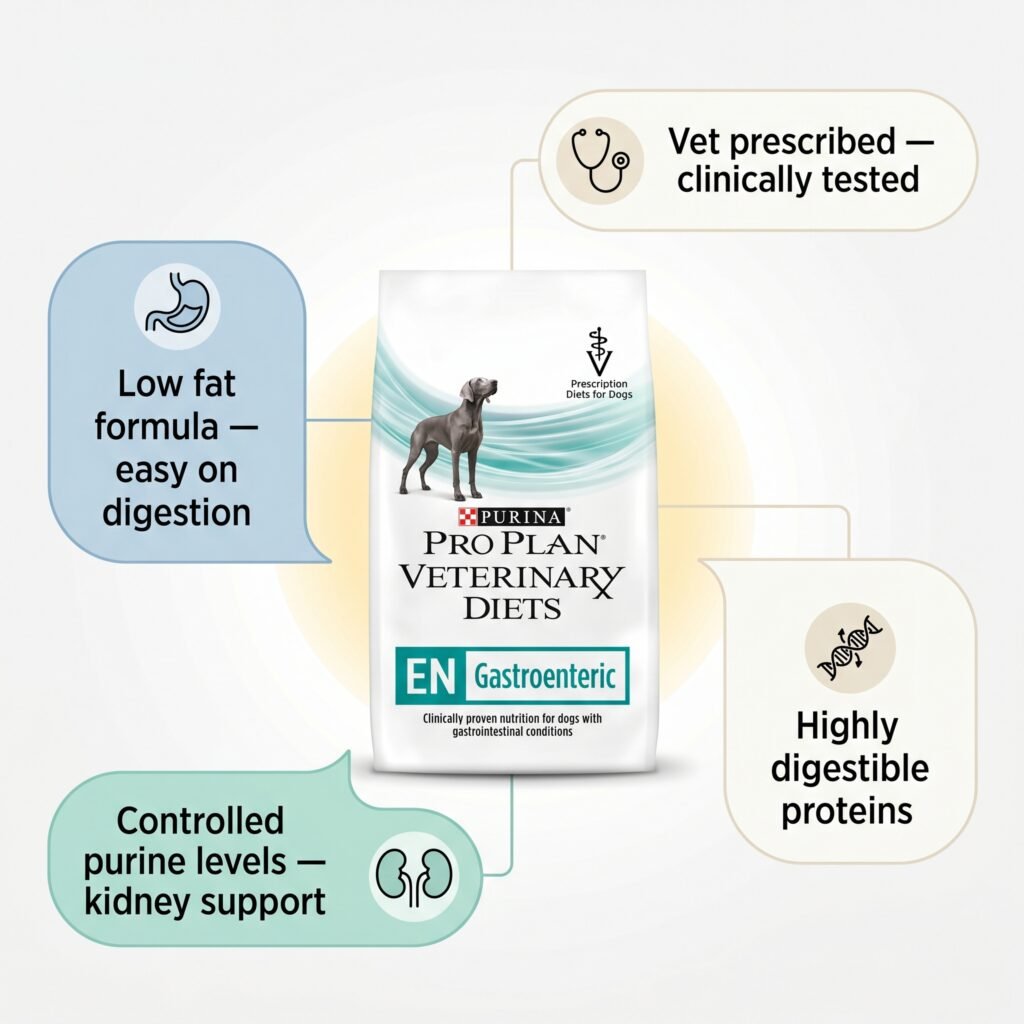
Purina Pro Plan Veterinary Diets EN Gastroenteric Low Fat is one of the most prescribed therapeutic dog foods in veterinary medicine — but it’s often confused with being a “low purine” food, when its actual purpose is quite specific.
Let’s clear this up completely.
What Is Purina EN Low Fat Dog Food?
If your vet has recommended Purina EN low fat dog food, you’re likely dealing with a digestive condition that makes fat hard to process — not a purine problem. Purina EN low fat dog food, officially called Purina Pro Plan Veterinary Diets EN Gastroenteric Low Fat Canine Formula, is specifically formulated for dogs with gastrointestinal conditions that cause fat digestion difficulties, including pancreatitis, lymphangiectasia, and hyperlipidemia.
“EN” stands for “Enteric” — this purina low fat dog food targets digestive tract disorders, specifically fat malabsorption. It is not a low purine dog food, and owners searching for low purine dog food for Dalmatians or urate stone management should not confuse the two — they serve entirely different clinical purposes.
Who Is Purina EN Low Fat Dog Food Actually For?
Purina EN low fat dog food is a prescription-only formula prescribed for dogs with:
- Pancreatitis — fat triggers further pancreatic inflammation, making this ultra-low-fat purina low fat dog food a frontline management tool
- Lymphangiectasia — dilated intestinal lymph vessels that impair fat absorption
- Hyperlipidemia — abnormally high blood fat or triglyceride levels
- EPI (Exocrine Pancreatic Insufficiency) — used alongside enzyme supplementation
- Post-surgical GI recovery — requiring highly digestible, ultra-low-fat nutrition
- Chronic colitis or IBD with confirmed fat sensitivity
None of these conditions are the same as the purine metabolism disorder that makes owners search for low purine dog food or low purine dog food for Dalmatians. If your dog has urate stones or hyperuricosuria, this is not the formula you need — skip ahead to the dedicated section.
Purina EN Low Fat Dog Food: Guaranteed Analysis
| Nutrient | Dry Formula | Wet Formula |
|---|---|---|
| Crude Protein | Min 18% | Min 5.5% |
| Crude Fat | Max 5% | Max 1.5% |
| Crude Fiber | Max 3.5% | Max 1.5% |
| Moisture | Max 12% | Max 82% |
This purina en low fat dog food formula offers the lowest fat content of any dry, gastrointestinal-focused therapeutic diet on the market — 5% maximum fat on an as-fed basis is extraordinarily low for any dry kibble, prescription or otherwise.
Purina EN Low Fat Dog Food: Full Ingredient Breakdown
The complete dry formula ingredient list: Brewers Rice, Barley, Corn Protein Meal, Poultry By-Product Meal, Animal Digest, Beef Fat preserved with Mixed-Tocopherols, Calcium Carbonate, Inulin, Potassium Chloride, Sodium Bicarbonate, Salt, L-Lysine, Vitamin E Supplement, Zinc Proteinate, Choline Chloride, Vitamin C, Manganese Proteinate, Ferrous Sulfate, Niacin, Vitamin A, Copper Proteinate, B-Vitamins (B1, B2, B5, B6, B12), Folic Acid, Menadione Sodium Bisulfite Complex, Calcium Iodate, Vitamin D-3, Biotin, Sodium Selenite.
What stands out in this purina low fat dog food formula:
✅ Inulin as a prebiotic fiber — A soluble fiber that nourishes beneficial gut microflora and actively promotes gastrointestinal tract health. A meaningful inclusion for dogs with chronic digestive conditions.
✅ Beef fat preserved with mixed-tocopherols — Natural vitamin E preservation rather than synthetic BHA or BHT. A quality marker rarely seen in therapeutic formulas at this price range.
✅ Zinc Proteinate & Manganese Proteinate — Chelated minerals that deliver superior absorption compared to standard sulfate forms — important when the GI tract is already compromised.
✅ Brewers rice and barley as primary carbohydrates — Two of the most digestible, stomach-gentle carbohydrate sources available in dry dog food.
⚠️ Poultry By-Product Meal — Contains organ meats (liver, kidney, lungs) which carry elevated purine levels. Perfectly acceptable for pancreatitis management, but this is precisely why Purina EN low fat dog food is not a low purine dog food — owners searching for low purine dog food for Dalmatians must look elsewhere.
⚠️ Corn Protein Meal — A plant-based protein booster that raises the total protein percentage. Common in fat-restricted therapeutic diets where low fat content forces creative protein sourcing.
Critical: Purina EN Low Fat Dog Food ≠ Low Purine Dog Food
This is the most important distinction on this entire page. Many owners — especially those with Dalmatians or dogs recovering from bladder stones — find Purina EN low fat dog food in their research and assume “low fat” and “low purine” mean the same thing. They don’t.
| Goal | Right Formula |
|---|---|
| Dog has pancreatitis / fat digestion issues | ✅ Purina EN Low Fat Dog Food |
| Dog needs low purine dog food (urate stones) | ❌ Not this formula |
| Searching for low purine dog food for Dalmatians | ❌ Not this formula — see Royal Canin Dalmatian or Hill’s u/d |
Because purina en low fat dog food contains poultry by-product meal with organ tissue, it is not appropriate as a primary low purine dog food strategy. For Dalmatians or dogs managing urate stones, your vet will direct you to more targeted options.
This purina low fat dog food IS the right choice when your dog has:
- Pancreatitis (acute or chronic)
- Lymphangiectasia
- Hyperlipidemia
- Other fat-malabsorption GI conditions
Requires a veterinary prescription to purchase.
Purina EN Low Fat Dog Food: Overall Score
| Category | Score |
|---|---|
| Clinical effectiveness (fat restriction) | 5 / 5 |
| Ingredient quality | 3.5 / 5 |
| Suitability as a low purine dog food | 2.5 / 5 |
| Palatability | 4 / 5 |
| Value (prescription pricing) | 3 / 5 |
Other Purina Low Fat Dog Food Options
Purina low fat dog food extends beyond the EN prescription line. Here’s how the broader range maps to different needs — including whether any doubles as a low purine dog food:
Purina Pro Plan Veterinary Diets OM (Overweight Management)
- Fat: ~8–9% | Requires prescription | Not a low purine dog food
Purina Pro Plan Adult Light & Healthy Weight
- Fat: ~9% | No prescription needed | Not a low purine dog food
Purina Pro Plan Sensitive Skin & Stomach (Salmon)
- Fat: ~14% — not a low-fat or low purine dog food formula; salmon is a moderate-purine protein
Purina Pro Plan Veterinary Diets NF (Kidney Function)
- Very low phosphorus, controlled protein | Some reduced purine load vs. high-protein diets | Designed for kidney disease, not urate stones | Requires prescription
Bottom line: For a dog with pancreatitis or fat malabsorption, Purina EN low fat dog food is the strongest clinical option available — bar none. But if your search is driven by urate stones, hyperuricosuria, or the need for low purine dog food for Dalmatians, this purina low fat dog food range won’t solve the right problem. The next section covers what actually will.

Best Commercial Low Purine Dog Foods (2026 Picks)
Finding a genuinely low-purine commercial dog food requires reading beyond marketing labels. Here are the best currently available options, categorized by approach:
 1. Royal Canin Breed Health Nutrition Dalmatian Adult
Best Overall for Dalmatians | Breed-Specific Formula
Royal Canin Dalmatian Adult is specially formulated with a low purine content and carefully selected protein sources. It contains specific nutrients, including taurine, EPA & DHA, to help support optimal cardiac health, and helps support the skin’s role as a barrier with an exclusive complex of B vitamins and amino acids.
Why it stands out:
- The only commercially available dry food built from the ground up specifically for Dalmatian purine metabolism
- Protein sources prioritize egg and plant-based proteins — naturally very low in purines
- Kibble is shaped for the Dalmatian’s jaw structure
- Contains EPA & DHA for skin and cardiac support — important secondary health needs for the breed
Limitation: Higher price point; uses corn as a carbohydrate base, which some Dalmatians tolerate less well.
Best for: Dalmatian owners who want a breed-verified, off-the-shelf solution without prescription complications.
🥈 2. Hill’s Prescription Diet u/d Urinary Care
Best Prescription Option for Urate Stone Management
Hill’s u/d is specifically formulated to manage urate urolithiasis and is one of the most evidence-backed prescription diets for dogs with confirmed urate stones.
- Very low purine content by design
- Moderate protein, primarily from plant-based sources (lowest purine load)
- Alkalinizing formula — helps keep urine pH neutral-to-alkaline, reducing crystallization risk
- Available in both dry and wet
Limitation: Plant-forward protein may not be ideal for long-term use without veterinary monitoring; palatability is mixed. Requires prescription.
Best for: Dogs with active urate stone disease or confirmed hyperuricosuria under veterinary supervision.
🥉 3. Blue Buffalo Basics Limited Ingredient — Salmon & Potato
Best Over-the-Counter Option for Purine-Sensitive Dogs
Blue Buffalo Life Protection Formula is among the commercial options known for their low purine content when exploring options for Dalmatian dietary management.
Blue Buffalo Basics LID uses salmon (moderate purine — lower than organ-heavy formulas) with potato as the primary carbohydrate — a natural low-purine combination. It avoids chicken by-products, organ meats, and brewer’s yeast.
- No chicken by-products (which contain organ meats — high purines)
- No corn, wheat, or soy
- Single animal protein source
- Potato and pea as clean carbohydrate/fiber sources
Limitation: Salmon is a moderate-purine protein — suitable for many low-purine dogs but not a strict urate-stone therapeutic diet.
Best for: Dogs with mild-moderate purine sensitivity, Dalmatians without active stone disease, and owners who prefer OTC over prescription.
4. Merrick Classic Chicken + Brown Rice
Best Everyday Option for Mild Purine Sensitivity
Merrick’s Classic line uses deboned chicken (low to moderate purine) and brown rice (low purine) without organ-heavy by-products dominating the ingredient panel. It’s a clean formula at a reasonable price.
- Deboned chicken as the first ingredient (not by-products)
- Brown rice and oatmeal for digestible carbohydrates
- No artificial preservatives
- Glucosamine and chondroitin for joint support
Best for: Dogs with mild purine sensitivity who don’t need strict therapeutic management, or as a rotation option alongside a prescription diet.
5. Wellness Complete Health (Chicken & Oatmeal)
Best for Whole-Food, Low-Purine Everyday Feeding
Wellness Complete Health avoids organ meat concentrations, uses deboned chicken and oatmeal as primary ingredients, and includes a variety of low-purine vegetables. It’s one of the cleaner mainstream options for purine-conscious feeding.
- No meat by-products in the primary formula
- Whitefish and flaxseed for omega-3s
- Prebiotic fiber from chicory root
- Antioxidant-rich whole foods (blueberries, spinach, apples)
Best for: Dalmatian owners wanting a high-quality everyday commercial diet without prescription requirements.
Homemade Low Purine Dog Food: The Real Pros and Cons
Some veterinary nutritionists advocate for homemade diets for dogs with severe urate stone problems, arguing that commercial foods can’t achieve the same level of purine control.
By feeding a homemade diet, you can easily choose and prepare food ingredients that are high in protein and low in purines, such as eggs, cheese, and yogurt. Feeding fresh, moist food rather than dry kibble also helps increase your dog’s water intake.
A Vet-Informed Basic Homemade Template
For a dog requiring strict purine management (always build this with a veterinary nutritionist for balance):
Protein Base (40%): Eggs (whole, cooked) and/or cottage cheese (low-fat) Carbohydrate Base (35%): White rice or sweet potato (cooked) Vegetables (15%): Carrots, green beans, broccoli, pumpkin (all low purine) Fat (small amount): A measured drizzle of olive oil or coconut oil Supplements: Calcium carbonate (to balance phosphorus), plus a complete vitamin/mineral supplement — essential, not optional
The Non-Negotiable Warning About Homemade
A homemade low-purine diet is NOT complete and balanced without professional formulation. Egg-and-rice diets are severely deficient in calcium, zinc, vitamin D, vitamin E, and multiple other essential nutrients when fed long-term without careful supplementation. Dogs fed improperly balanced homemade diets can develop nutritional deficiencies that are as serious as urinary stones.
Work with a board-certified veterinary nutritionist (DACVN) before committing to homemade feeding. The consultation fee is worth every dollar.
Feeding Tips That Multiply the Effect of a Low Purine Diet
Dietary purine reduction is the foundation — but these strategies amplify its effectiveness significantly:
1. Maximize Water Intake (This Is Critical)
Feeding fresh, moist food rather than dry kibble helps increase water intake. Ideally, maintaining urine specific gravity below 1.020 and a neutral urine pH of around 7.0 helps keep uric acid dissolved and reduces the chance of crystal formation.
Practical ways to increase water intake:
- Add warm water to dry kibble and let it soak for 5 minutes before serving (creates a broth-like consistency)
- Mix a small amount of wet/canned food into dry food
- Use a pet water fountain (moving water encourages drinking)
- Place multiple water bowls around the home
- Offer plain, unsalted bone broth as an occasional water enhancer
2. Feed Multiple Small Meals
Two or three small meals are better than one large meal per day. Smaller meals produce a more consistent, lower-level acid load on the kidneys rather than a large periodic spike.
3. Encourage Frequent Urination
Encouraging the animal to perform frequent urination — by taking them out a bit more often than normal — reduces the residence time of uric acid in the bladder and decreases crystallization risk. This is a simple but genuinely effective management strategy.
4. Keep Treats Low-Purine Too
The diet means nothing if high-purine treats are added regularly. Safe low-purine treats include:
- Carrot sticks or baby carrots
- Apple slices (no seeds)
- Plain rice cakes (no salt)
- Small cubes of low-fat cheese
- Blueberries
- Plain, cooked egg pieces
- Pumpkin (plain, canned, no spices)
Avoid: Jerky treats, liver treats, organ-based chews, fish-based treats made from sardines or anchovies, and brewer’s yeast supplements.
5. Consider Wet Food Over Dry
Wet food’s higher moisture content meaningfully increases daily water intake. If your dog has had urate stones, your vet may recommend transitioning partially or fully to wet food to maintain urine dilution.
Common Mistakes in Low Purine Dog Feeding
Even well-intentioned owners get these wrong:
Mistake 1: Thinking “grain-free” means “low purine” Grain-free foods are not low-purine foods. Many grain-free formulas use organ-meat proteins, pea protein, and legume-heavy ingredients that are not appropriate for urate management.
Mistake 2: Feeding organ meat supplements or raw diets with heavy offal Raw diet advocates sometimes include liver, kidney, and heart as nutritional cornerstones. For urate-prone dogs, these are the highest-purine ingredients possible and should be strictly avoided.
Mistake 3: Giving “healthy” high-purine supplements Brewer’s yeast, sardines, and certain fish oil products (anchovy-based) are often marketed as healthy dog supplements. For purine-sensitive dogs, these can undermine an entire low-purine diet.
Mistake 4: Assuming chicken is always safe White meat chicken is relatively low-purine. Chicken by-products (which include liver, kidney, and gizzards) are high-purine. Always check whether a formula uses named muscle meat or generic by-product meal.
Mistake 5: Skipping the vet consultation Low-purine diets and urate stone management require monitoring — urine pH checks, periodic urinalysis, and occasionally imaging to check for stone recurrence. Diet alone, without follow-up, is not a complete management strategy.
Frequently Asked Questions
Is Purina EN the same as a low purine diet?
No. Purina EN Low Fat is designed for dogs with fat malabsorption disorders (pancreatitis, lymphangiectasia, hyperlipidemia) — not specifically for urate stones. It contains poultry by-product meal, which includes organ tissue and carries a moderate-to-higher purine load. If your vet has recommended Purina EN, it’s for a fat-related GI issue, not a purine issue. These are different conditions with different dietary solutions.
What is the best low purine dog food for Dalmatians?
The two most clinically sound options are Royal Canin Dalmatian Adult (the only breed-specific commercial formula designed around Dalmatian purine metabolism) and Hill’s Prescription Diet u/d (the most evidence-backed therapeutic option for urate urolithiasis). For Dalmatians without active stone disease, high-quality formulas using muscle meat proteins (no by-products), eggs, and low-purine carbohydrates — like Blue Buffalo Basics Salmon & Potato or Wellness Complete Health — are reasonable over-the-counter choices.
Can a dog with urate stones ever eat a normal diet again?
In most cases, no — once a dog has formed urate stones, they are at elevated lifetime risk of recurrence. Dietary management should be considered ongoing, not temporary. However, “low purine” doesn’t mean the diet has to be joyless — once you know which proteins and foods to prioritize, it becomes second nature.
Is low fat dog food the same as low purine dog food?
Not at all. Fat content and purine content are unrelated. A food can be low in fat and high in purines (think: organ meat-based therapeutic diets that restrict fat) or high in fat and low in purines (think: egg-based homemade diets). The two nutritional targets serve completely different health conditions and should not be conflated.
What protein is lowest in purines for dogs?
Eggs are the gold standard — they are among the lowest-purine protein sources available, contain a complete amino acid profile, and are highly digestible. Cottage cheese and other low-fat dairy proteins are close behind. Among meats, white chicken breast (muscle meat only, no by-products) is one of the lower-purine options.
How do I know if my dog needs a low purine diet vs. a low fat diet?
- If your vet mentions pancreatitis, lymphangiectasia, hyperlipidemia, or fat digestion problems → low fat diet (Purina EN Low Fat or similar)
- If your vet mentions urate stones, hyperuricosuria, bladder crystals, or Dalmatian-specific metabolism → low purine diet (Royal Canin Dalmatian, Hill’s u/d, or appropriate commercial formulas)
- Some dogs need both (rare but possible) — this requires individualized veterinary nutritional planning
Is there a low purine prescription dog food?
Yes. Hill’s Prescription Diet u/d (Urinary Care) is the most established prescription formula specifically targeting urate urolithiasis. Royal Canin Urinary UC Low Purine is another veterinary prescription option designed for urate and cystine stone management. Both require a veterinary prescription and are specifically designed for dogs confirmed to have purine metabolism disorders.
The One Thing to Remember
Low purine and low fat are not the same dietary goal. Purina EN low fat dog food is a legitimate, well-designed therapeutic formula — but for fat disorders, not purine disorders. For dogs managing urate stones, Dalmatians, or any dog with hyperuricosuria, the purine content of the protein source is what matters, and the right formula looks very different from a GI fat-restriction diet.
The good news: with the right food, the right hydration habits, and regular veterinary check-ins, most dogs on low-purine management live completely normal, comfortable lives. The diet change is real — but so is the payoff.
This guide is for educational purposes and does not constitute veterinary medical advice. Dogs with urinary stone disease, pancreatitis, kidney disease, or other diagnosed conditions should receive individualized dietary guidance from a licensed veterinarian or board-certified veterinary nutritionist.