
Dog Food for Irish Setters: The Breed-Specific Nutrition Blueprint (2026)
Updated: June 2026 · Breed-Informed · Vet-Aligned · 16-Minute Read
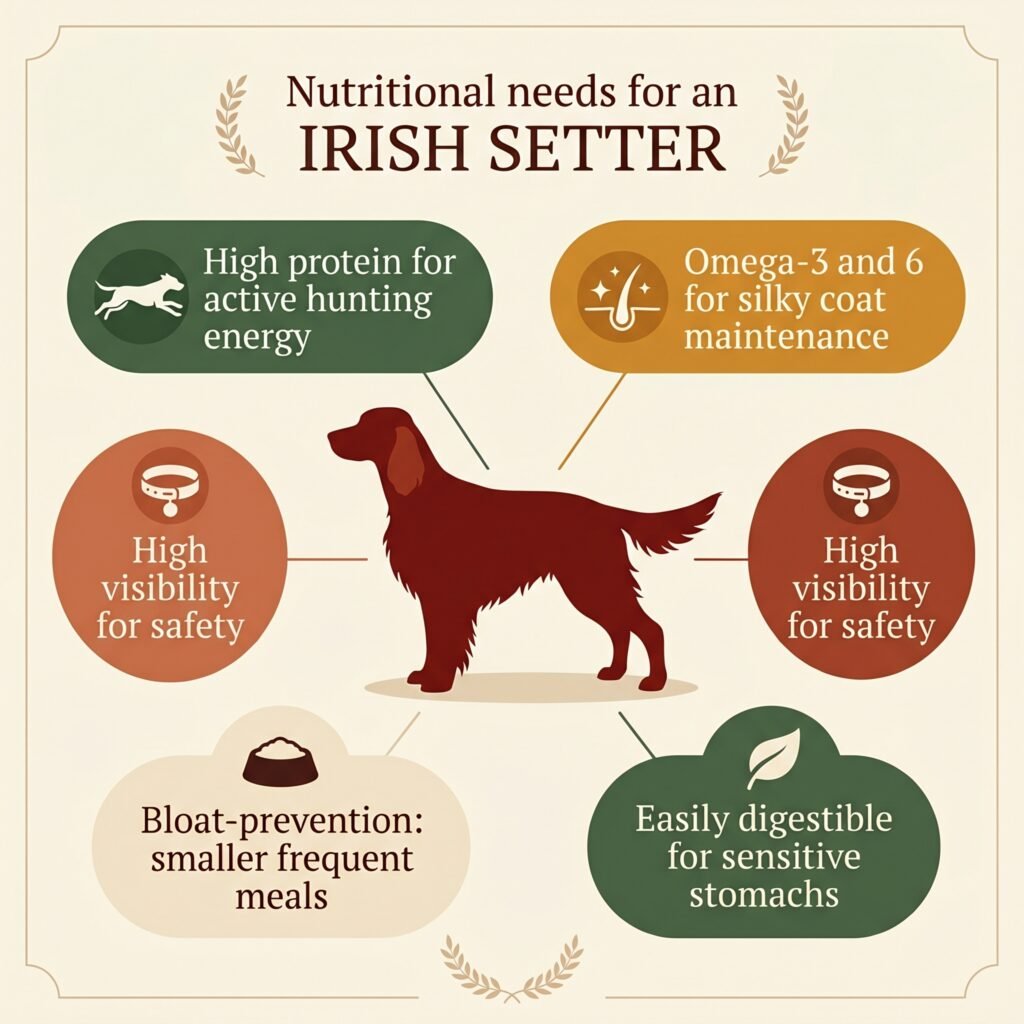
There is no other dog quite like an Irish Setter. That flame-red coat. That boundless, joyful energy. That nose that never stops working. Irish Setters are athletic, affectionate, and built to move — and what goes into their bowl every single day determines whether they move well, feel well, and live long.
The problem is that dog food for Irish Setters is not a generic topic. This breed has three specific biological vulnerabilities that make generic “large breed” feeding advice genuinely inadequate — and sometimes harmful. Choose food without knowing these, and you risk triggering digestive disease, increasing bloat risk, or accelerating joint degeneration.
This guide covers all three vulnerabilities in full, then maps every recommendation directly to food choices. By the end, you’ll know exactly which ingredients to look for, which to avoid, how to feed by life stage, and which specific formulas are the strongest options in 2026.
Your Navigation Map
- Why Irish Setters Need Breed-Specific Food
- The Three Health Vulnerabilities That Drive Every Food Choice
- Vulnerability 1: Gluten-Sensitive Enteropathy (GSE)
- Vulnerability 2: Bloat (GDV) — The Deep-Chest Risk
- Vulnerability 3: Hip & Elbow Dysplasia — Joint Nutrition
- What Irish Setters Need Nutritionally: The Full Breakdown
- The Irish Setter Food Scorecard: What to Look For on Every Label
- Best Dog Food for Irish Setters: 2026 Top Picks by Category
- Dog Food for Irish Setter Puppies
- Dog Food for Adult Irish Setters
- Dog Food for Senior Irish Setters
- Feeding Schedule & Portion Guide
- Foods & Ingredients Irish Setters Should Never Eat
- Frequently Asked Questions
- Final Verdict
Why Irish Setters Need Breed-Specific Dog Food
Most large breed dogs share basic nutritional requirements. Irish Setters share those too — but they come with three additional biological factors that push their dietary needs into territory that generic “large active breed” formulas don’t adequately address.
Irish Setters were developed for endurance and sustained movement, not short bursts of activity. That means they typically burn calories faster than many companion breeds and can lose condition quickly if underfed — or gain weight surprisingly fast if overfed during low-activity periods. Nutrition must flex with their lifestyle, not stay static year-round.
This already separates them from many companion breeds. But there’s more.
Irish Setters typically weigh 60–70 lbs and need approximately 1,400–2,200 calories per day, depending on age, activity level, and metabolism. Given their high energy levels, active Irish Setters may need 20–30% more calories than the average dog of their size.
Layered on top of this energy demand are three specific health vulnerabilities — gluten sensitivity, bloat risk, and joint disease — each of which has direct dietary implications. Understanding all three is the prerequisite for choosing genuinely good dog food for Irish Setters.
The Three Health Vulnerabilities That Drive Every Food Choice
Before we discuss any specific product, these three vulnerabilities must be understood. They are the lens through which every ingredient, every formula, and every feeding practice in this guide is evaluated.
Vulnerability 1: Gluten-Sensitive Enteropathy (GSE) — The Breed’s Most Unique Risk
This is the factor that most separates dog food for Irish Setters from food for any other large breed.
What Is Gluten-Sensitive Enteropathy?
Irish Setters are the only dog breed with a scientifically documented, reproducible gluten-sensitive enteropathy comparable to human coeliac disease. The condition is triggered by wheat gliadin and causes partial villous atrophy, mucosal barrier dysfunction, and chronic diarrhoea in affected dogs. GSE is transmitted via autosomal recessive inheritance and resolves fully on a gluten-free diet, with pathology returning on rechallenge.
In plain terms: gluten, during digestion, is toxic to the cells of the mucous membrane layer of the stomach, or the mucosal cells. This toxicity causes an immune response by way of a malabsorption of vital nutrients, such as calcium and iron.
How Common Is It in the Breed?
GSE is specific to Irish Setters among dog breeds and is transmitted via autosomal recessive inheritance. Not every Irish Setter carries the condition, but the breed is the only one in canine medicine with a fully documented, reproducible form of gluten-sensitive enteropathy, and the condition has been confirmed in UK-bred Irish Setters over multiple generations.
What Are the Signs?
Irish Setters affected by gluten-sensitive enteropathy present with chronic intermittent diarrhea and weight loss. Additional signs can include:
- Vomiting and regurgitation
- Dull, poor-quality coat despite adequate grooming
- Lethargy and reduced energy
- Failure to thrive in puppies (GSE is typically evident by 6–12 months of age)
- Increased appetite without weight gain (nutrient malabsorption)
The Gluten-IBD Connection
Gluten may also play a role in Irish Setters developing inflammatory bowel disease (IBD), which tends to be related to bacteria and/or food sensitivities. This means the consequences of feeding a gluten-containing diet to a sensitive Irish Setter extend beyond acute digestive upset — they can trigger a chronic inflammatory condition requiring long-term management.
What Gluten-Free Means for Dog Food Labels
Gluten is found in wheat, barley, rye, and some oats. When evaluating dog food for Irish Setters, scan ingredient lists for:
❌ Avoid these gluten-containing ingredients:
- Wheat flour, whole wheat, wheat bran, wheat germ
- Wheat middlings or wheat mill run
- Barley, barley flour
- Rye
- Oat flour (in some sensitive individuals)
- “Cereal grains” (unspecified — could contain wheat)
- Wheat gluten (sometimes added as a protein booster)
✅ Safe grain and carbohydrate sources for Irish Setters:
- White rice and brown rice (naturally gluten-free)
- Sweet potato and potato
- Corn and corn meal (gluten-free despite the name “corn gluten meal” — this refers to the protein fraction, not wheat-type gluten)
- Oatmeal (generally tolerated, not a primary trigger)
- Quinoa, millet, sorghum
- Tapioca and cassava
- Peas and lentils (moderate — see bloat note below)
Important nuance: Not all Irish Setters are affected. GSE has a genetic component but is not universal in the breed. If your dog thrives on a wheat-containing diet with no digestive issues, there may be no need to eliminate gluten. However, for any Irish Setter puppy or a dog showing digestive symptoms, starting wheat-free is the safest approach.

Vulnerability 2: Bloat (GDV) — The Deep-Chest Emergency Risk
Irish Setters have one of the highest bloat (gastric dilatation-volvulus, GDV) rates of any breed. Their deep, narrow chest creates the ideal anatomical setup for the stomach to twist on its axis.
Bloat is not simply an upset stomach. Gastric Dilatation-Volvulus (GDV) occurs when the stomach fills with gas, food, or fluid and then twists — trapping its contents, cutting off blood supply, and creating a life-threatening emergency that can kill within hours without surgery.
How Food Choices Affect Bloat Risk
While GDV has a genetic and anatomical component, several dietary and feeding factors significantly influence risk:
High-risk feeding behaviors to eliminate:
- One large meal per day (raises intragastric pressure dramatically)
- Eating too fast (excessive air ingestion)
- Exercising immediately before or after meals (the stomach can swing freely when full)
- Using elevated food bowls (controversial — some research suggests elevation may increase risk, not reduce it; ask your vet)
- Feeding foods with high fat content immediately after exercise
Dietary factors that modulate risk:
- Kibble size and density: Very large kibble pieces that must be gulped or very small pieces that allow fast eating both increase air ingestion
- Foods with fermentable ingredients (certain legumes in large quantities) can increase gas production
- High-moisture food (wet food or water-added kibble) moves through the stomach faster than dry kibble, potentially reducing bloat risk
The Anti-Bloat Feeding Protocol for Irish Setters
Regardless of which dog food for Irish Setters you choose, these practices are non-negotiable for a GDV-prone breed:
- Feed two or three smaller meals daily — never one large meal
- Use a slow-feeder bowl — reduces air gulping by 30–40%
- Enforce a 45–60 minute rest period before and after every meal
- Add water to dry kibble — increases satiety, slows eating, adds moisture
- Avoid vigorous exercise within 1 hour of feeding
- Monitor for early bloat symptoms: unproductive retching, distended abdomen, restlessness, excessive drooling — this is an emergency; go to a vet immediately
Vulnerability 3: Hip & Elbow Dysplasia — Joint Nutrition Matters from Day One
Irish Setters are prone to hip dysplasia and elbow dysplasia, common in active, medium-to-large breeds, so joint-supporting nutrients like glucosamine and chondroitin are beneficial.
Hip dysplasia is a developmental condition where the hip socket doesn’t form properly, leading to joint instability, cartilage degradation, pain, and — over time — arthritis. In Irish Setters, the combination of their athletic build, long legs, and high daily activity load puts significant mechanical stress on hips and elbows throughout their lives.
Key Joint-Support Nutrients in Dog Food for Irish Setters
Glucosamine & Chondroitin These naturally occurring compounds support cartilage structure, joint lubrication, and inflammation reduction. Glucosamine and chondroitin support cartilage repair and reduce inflammation. Opt for supplements with 500–1,000 mg glucosamine and 400–800 mg chondroitin daily, based on a 70–80 lb adult. Many quality large breed formulas include these — but amounts vary significantly. Check the guaranteed analysis panel for actual mg values.
Omega-3 Fatty Acids (EPA & DHA) Marine-source omega-3s (from fish oil, salmon, or menhaden fish meal) directly reduce joint inflammation. Omega-3 fatty acids, particularly EPA, further decrease joint degradation. This makes fish-based formulas or formulas with added fish oil a meaningful advantage for Irish Setters.
Controlled Calcium in Puppyhood Excess dietary calcium during the rapid growth phase directly increases the risk of developmental orthopedic disease including dysplasia. This is why large breed puppy formulas with controlled calcium-to-phosphorus ratios are essential for Irish Setter puppies — standard “all breeds” puppy food provides calcium levels appropriate for small breeds, which is too high for large breed development.
Maintaining Lean Body Weight Every excess pound of body weight puts disproportionate mechanical stress on hip and elbow joints. Obesity is one of the most significant modifiable risk factors for hip dysplasia severity. Dog food for Irish Setters must provide the right caloric density for activity level — not more.

What Irish Setters Need Nutritionally: The Full Breakdown
With the three vulnerabilities as context, here is the complete nutritional profile of ideal dog food for Irish Setters:
Protein: The Foundation
Protein should come mainly from named animal sources like chicken, turkey, fish, lamb, or beef. Irish Setters do best on diets where protein is clearly listed and easy to identify. Very low-protein foods often lead to muscle loss, low energy, or constant hunger.
Target protein ranges:
- Puppies: 22–28% (dry matter basis)
- Active adults: 25–30%
- Senior/less active adults: 22–26%
Named proteins to prioritize: deboned chicken, turkey, salmon, whitefish, lamb. Avoid formulas where the primary protein is unspecified “poultry meal” or heavily supplemented with plant proteins.
Fat: Energy & Coat Quality
To maintain their signature glossy, feathered coat and supple skin, Irish Setters require healthy fats — particularly omega-3 and omega-6 — found in quality meats and oily fish. These fats also help cognitive function and immunity.
Target fat range: 12–18% for most adult Irish Setters. Active dogs at the higher end; overweight or less active dogs at the lower end.
The omega-3 to omega-6 ratio matters. Aim for formulas with:
- Omega-6: 2–4% (supports coat and skin barrier)
- Omega-3 (EPA/DHA): at least 0.5% from marine sources (fish oil, salmon)
Carbohydrates: Digestible, Gluten-Free Sources
Digestible carbohydrates and fibre provide steady energy and support gut health, important because many Setters have sensitive digestion.
Best carbohydrate sources for Irish Setters: sweet potato, white rice, brown rice, oatmeal, potato. Avoid wheat-based ingredients in any form.
Key Micronutrients for Irish Setters
| Nutrient | Why It Matters | Where to Find It |
|---|---|---|
| Glucosamine | Joint cartilage support | Large breed formulas, chicken meal |
| Chondroitin | Joint lubrication | Large breed formulas |
| Omega-3 (EPA/DHA) | Coat, joints, inflammation | Fish oil, salmon, menhaden |
| Biotin | Coat quality and skin health | Eggs, liver (in small amounts) |
| Zinc | Skin barrier and coat texture | Zinc proteinate (chelated) |
| Vitamin E | Antioxidant; coat and immune health | Oils, added supplement |
| Calcium/Phosphorus (balanced) | Bone density, joint development | Whole meats, balanced formulas |
| B Vitamins | Energy metabolism, nerve function | Meat proteins, brewer’s yeast* |
*Note: Brewer’s yeast is a common B vitamin source but is relatively high in purines — not a concern for most Irish Setters, but worth knowing.
The Irish Setter Food Scorecard: What to Check on Every Label
Use this checklist every time you evaluate a new dog food for Irish Setters:
✅ Green lights — look for these:
- Named animal protein in the first ingredient (chicken, salmon, turkey, lamb, beef)
- No wheat, barley, or rye anywhere in the ingredient list
- Omega-3 source present (fish oil, salmon oil, flaxseed)
- Glucosamine and chondroitin listed (large breed formulas)
- Chelated minerals (zinc proteinate, manganese proteinate — better absorption)
- AAFCO statement for the correct life stage
- Probiotics or prebiotics for gut health (especially relevant given GSE risk)
- Calorie content appropriate for your dog’s activity level
❌ Red flags — avoid these:
- Wheat flour, wheat bran, wheat middlings, wheat gluten as any ingredient
- Barley or rye in any form
- “Cereal grains” without specification
- Artificial colors (Red 40, Yellow 5, Blue 2)
- Artificial preservatives (BHA, BHT, ethoxyquin)
- Corn syrup or sugar as an ingredient
- Unnamed meat meals (“poultry meal,” “meat meal,” “animal digest” as primary protein)
- Very high fat content (>20%) in an already-overweight or less active dog
Best Dog Food for Irish Setters: 2026 Top Picks by Category
Every formula below has been evaluated against the Irish Setter scorecard: named protein first, wheat-free, omega-rich, joint-supportive, and appropriate for a large, active, GDV-prone breed.

1. Purina Pro Plan Large Breed Adult (Chicken & Rice)
Best Overall Dog Food for Irish Setters
Purina Pro Plan’s Large Breed formula is the most consistently veterinarian-recommended option for active large breeds — and it hits every key requirement for Irish Setters.
Why it works for Irish Setters:
- Deboned chicken as the #1 ingredient — high-quality named protein
- Rice as the primary carbohydrate — wheat-free, highly digestible, gentle on sensitive digestive tracts
- Glucosamine (400 mg/kg) and EPA/DHA for joint support
- Live probiotics for digestive health — directly beneficial for a breed with GSE susceptibility
- Backed by AAFCO feeding trials (not just formulation compliance)
- Strong track record in active, athletic large breeds
Protein: 26% | Fat: 16% | Calories: ~388 kcal/cup
Best for: Active adult Irish Setters without confirmed gluten sensitivity who want the most veterinary-supported option.
Note: Double-check the current ingredient list — formulas can update. The Chicken & Rice formula does not contain wheat.
🥈 2. Hill’s Science Diet Adult Large Breed (Chicken & Barley)
⚠️ Important: The standard Hill’s Large Breed formula contains barley — a gluten-containing grain. Irish Setters with confirmed or suspected GSE should choose the Hill’s Science Diet Sensitive Stomach & Skin (which uses chicken, brown rice, and no gluten grains) instead.
Hill’s Science Diet Sensitive Stomach & Skin — Recommended Alternative:
- Chicken and brown rice formula
- No wheat, no barley
- Prebiotic fiber for gut microbiome support
- Omega-6 and vitamin E for coat health
- Clinically proven for digestive sensitivity
Protein: 23.5% | Fat: 13% | Calories: ~363 kcal/cup
Best for: Irish Setters with sensitive digestion or confirmed gluten sensitivity who need a vet-trusted brand.
🥉 3. Royal Canin Large Adult (or Medium Adult)
Best for Coat & Skin Support
Royal Canin’s breed-aware formulation philosophy makes it one of the strongest options when it comes to matching food to specific physiological needs. Their Large Adult formula includes:
- Targeted omega-3 (EPA/DHA) and omega-6 ratios for coat health
- Glucosamine and chondroitin for joint support
- L-carnitine to support lean muscle maintenance
- High-quality digestibility
Key check: Royal Canin does not currently offer an Irish Setter-specific breed formula (unlike their Dalmatian or Labrador lines). Verify the current ingredient list carefully for wheat or barley content — some Royal Canin formulas do include grains. Choose their grain-free or rice-based lines for GSE-sensitive dogs.
Best for: Irish Setters where coat quality and joint support are the primary concerns.
4. Blue Buffalo Life Protection Formula Large Breed (Chicken & Brown Rice)
Best Value Option for Irish Setters
Blue Buffalo Life Protection Formula is formulated to provide your dog with sustained, healthy energy from high-quality animal-based proteins. This dog food helps build strong, lean muscles and maintain optimal body conditions. It is made with real meat, brown rice, and sweet potatoes, which are easily digestible and provide a balanced diet for adult dogs.
Why it works for Irish Setters:
- Deboned chicken first, followed by chicken meal — strong meat-based protein foundation
- Brown rice and sweet potatoes — naturally wheat-free carbohydrates
- LifeSource Bits: a precise antioxidant, vitamin, and mineral blend
- No corn, wheat, or soy (the large breed formula)
- Added glucosamine and chondroitin
- Omega-3 and omega-6 fatty acids for coat health
Protein: 27% | Fat: 12% | Calories: ~355 kcal/cup
Best for: Irish Setter owners who want a widely available, affordable option that checks the gluten-free and joint-support boxes without a prescription.
5. Merrick Grain Free Large Breed (Real Chicken + Sweet Potato)
Best Grain-Free Option for Confirmed GSE Cases
For Irish Setters with confirmed gluten-sensitive enteropathy where a completely wheat-free diet is required, Merrick Grain Free offers a clean, meat-first formula.
- Deboned chicken as the #1 ingredient
- Completely grain-free — no wheat, barley, rye, corn, or soy
- Sweet potato, peas, and chickpeas as carbohydrate base
- Added fish oil for omega-3 fatty acids
- Glucosamine and chondroitin
- No artificial colors, flavors, or preservatives
⚠️ DCM Note: Grain-free formulas using high legume content are under ongoing FDA investigation for a potential link to dilated cardiomyopathy. Merrick Grain Free contains peas and chickpeas. For Irish Setters confirmed to need grain-free, discuss this with your vet and monitor for cardiac symptoms during annual checkups.
Protein: 34% | Fat: 15% | Calories: ~380 kcal/cup
Best for: Irish Setters with veterinarian-diagnosed GSE or confirmed grain allergy requiring a completely gluten-free diet.
6. Wellness CORE Large Breed (Chicken, Turkey & Chicken Meal)
Best High-Protein Option for Very Active Irish Setters
For Irish Setters in active working or sporting roles — field dogs, agility competitors, or very high-exercise companion dogs — Wellness CORE’s Large Breed formula delivers:
- Deboned chicken and turkey as the primary proteins
- No wheat, corn, or soy
- High protein content (34%) for athletic muscle maintenance
- Added DHA from salmon oil for joint and cognitive support
- Probiotics for gut health
- Glucosamine and chondroitin
- Omega fatty acids for coat quality
Protein: 34% | Fat: 12% | Calories: ~370 kcal/cup
Best for: Highly active adult Irish Setters with significant daily exercise demands.
Dog Food for Irish Setter Puppies
Choosing the right dog food for Irish Setter puppies is arguably more important than any other life stage decision. The rapid growth phase between 8 weeks and 18 months is when nutrition most directly shapes skeletal development, joint health, and long-term digestive function.
Critical Rules for Irish Setter Puppies:
1. Always use a Large Breed Puppy formula Irish Setter puppies need a balanced intake of nutrients that supports both their rapid physical growth and seemingly boundless vivacity. Irish Setter puppies need a diet with 22% protein, 8% fat, and 40 to 50% carbohydrates. Generic “all breeds” puppy formulas typically have higher fat and calcium content designed for small breeds — feeding these to a large breed puppy accelerates bone growth too rapidly, increasing dysplasia risk.
2. Watch for early GSE signs The condition (GSE) is typically evident by 6–12 months of age. If your Irish Setter puppy has chronic loose stools, low weight gain, poor coat quality, or episodes of vomiting despite normal parasite control, consult your vet and consider a wheat-free trial diet.
3. Puppy Feeding Schedule Irish Setter pups aged 8 to 12 weeks need one-quarter or half a cup of dry food four times a day. By 3–6 months, this transitions to 3 meals; by 12 months, move to 2 daily meals (maintaining the anti-bloat two-meal minimum).
Top Puppy Picks for Irish Setters:
- Purina Pro Plan Large Breed Puppy (Chicken & Rice) — vet-preferred, AAFCO feeding trial data, appropriate calcium levels, wheat-free
- Hill’s Science Diet Large Breed Puppy (Chicken Meal & Rice) — controlled mineral balance, wheat-free, science-backed
- Blue Buffalo Life Protection Large Breed Puppy — DHA from fish oil for brain development, wheat-free, widely available
Dog Food for Adult Irish Setters
Adult Irish Setters (roughly 12 months to 7 years) need food calibrated to their actual activity level — which can vary significantly between a dog that runs 5 miles a day and one that gets moderate daily walks.
Key adjustments by activity level:
| Activity Level | Calorie Target | Protein % | Fat % |
|---|---|---|---|
| Low (< 1 hr exercise/day) | 1,400–1,600 kcal | 22–25% | 10–13% |
| Moderate (1–2 hrs/day) | 1,600–1,900 kcal | 25–28% | 13–16% |
| High (2+ hrs/day, field work) | 1,900–2,200 kcal | 28–32% | 15–18% |
Body condition check: Run your hands along your Irish Setter’s ribcage. You should be able to feel each rib without pressing hard, but not see them clearly. Visible hip bones or a very “tucked” abdomen = underfed. You can’t feel ribs without firm pressure = overfed. Adjust food portions every 4–6 weeks based on body condition, not just by following the bag’s feeding guide.
Serve smaller, regular meals — two a day is ideal — to help reduce bloat risk and stabilise energy levels.
Dog Food for Senior Irish Setters
Irish Setters are generally considered senior from around 7–8 years of age. Their nutritional needs shift in several important ways:
Changes to expect:
- Metabolism slows — caloric needs typically decrease 15–20%
- Joint pain and stiffness may emerge — omega-3 and glucosamine become even more important
- Digestive efficiency can decline — highly digestible proteins become a priority
- Immune function needs more antioxidant support
As Irish Setters age, their metabolism often slows and mobility can become more sensitive, especially if hip dysplasia or joint wear is present. Older dogs may digest food differently and need nutrient support for joints and antioxidant protection to help overall health.
Top Senior Picks:
- Purina Pro Plan Bright Mind Adult 7+ (Large Breed) — enhanced DHA for cognitive support, joint nutrients, appropriate calorie reduction
- Hill’s Science Diet Adult 7+ Large Breed — clinically proven antioxidant formulation, controlled calories, joint support
- Royal Canin Large Adult 8+ — targeted nutrition for aging large breed physiology
Senior feeding tips:
- Consider transitioning partially to wet food — increases moisture intake, easier to chew, higher palatability for dogs with reduced appetite
- Add a fish oil supplement (EPA/DHA) if not already present in the formula — directly reduces joint inflammation
- Discuss joint supplements (glucosamine, chondroitin, UC-II collagen) with your vet
Given the bloat risk, a precise feeding schedule matters as much as food choice.
Daily Meal Structure
| Age | Meals Per Day | Timing |
|---|---|---|
| 8–12 weeks | 4 meals | Every 4–5 hours |
| 3–6 months | 3 meals | Morning, midday, evening |
| 6–12 months | 2–3 meals | Morning and evening (+ optional midday) |
| 12+ months (adult) | 2 meals | Morning and evening |
| Senior 7+ | 2 meals | Morning and evening |
Approximate Daily Portion Guide (Adult, Dry Kibble ~380 kcal/cup)
| Weight | Low Activity | Moderate Activity | High Activity |
|---|---|---|---|
| 55 lbs | 2.5–3 cups | 3–3.5 cups | 3.5–4 cups |
| 65 lbs | 3–3.5 cups | 3.5–4 cups | 4–4.5 cups |
| 75 lbs | 3.5–4 cups | 4–4.5 cups | 4.5–5 cups |
These are starting estimates only. Caloric density varies significantly between brands. Always check the specific food’s feeding guide and adjust based on your dog’s body condition every 4–6 weeks.
Foods & Ingredients Irish Setters Should Never Eat
Beyond breed-specific restrictions, these foods are unsafe for any dog:
Toxic to all dogs:
- Grapes and raisins (kidney failure)
- Onions, garlic, leeks, chives (red blood cell destruction)
- Chocolate (theobromine toxicity)
- Macadamia nuts (neurological effects)
- Xylitol/birch sugar (hypoglycemia, liver failure)
- Raw yeast dough (alcohol production)
- Alcohol
Specifically problematic for Irish Setters:
- Wheat, barley, rye — GSE triggers; potentially toxic to gut lining in sensitive individuals
- Very high-fat meals or treats — increase bloat risk, especially around exercise
- Large single meals — dramatically increase GDV risk
- Organ-heavy raw diets without balance — liver and kidney are very high in vitamin A and purines; can cause toxicity when overfed
- Human bread and baked goods — wheat-based, often contain xylitol in some brands
Frequently Asked Questions About Dog Food for Irish Setters
Do all Irish Setters need gluten-free food?
No — but all Irish Setters are at risk. Not all Irish Setters are affected. GSE has a genetic component but is not universal in the breed. If your dog thrives on a wheat-containing diet with no digestive issues, there may be no need to eliminate gluten. That said, choosing a wheat-free formula from the start is a low-risk, potentially high-benefit precaution. If your Irish Setter shows any signs of digestive sensitivity — loose stools, poor weight gain, dull coat — eliminate wheat before investigating other causes.
Is grain-free food good for Irish Setters?
It’s complicated. Irish Setters are the only breed with a documented gluten-sensitive enteropathy, which might seem to make grain-free an obvious choice. However, you don’t need a grain-free diet for your Irish Setter unless they have a confirmed grain allergy. Most grain-free formulas replace grains with legumes, which may increase the risk of diet-associated dilated cardiomyopathy (DCM). The safer path for most Irish Setters is a wheat-free, grain-inclusive formula (using rice, oats, or corn) rather than a fully grain-free legume-heavy formula.
How many times a day should I feed my Irish Setter?
Adults should always be fed at least twice daily — never once. Given the breed’s bloat risk, spreading daily food into two equal meals (morning and evening) significantly reduces intragastric pressure and GDV risk compared to single large meals. Three meals are even better for very food-motivated or fast-eating dogs.
What protein is best in dog food for Irish Setters?
Chicken, turkey, salmon, and whitefish are all strong choices — named, easily digestible, and naturally lower in allergenicity than beef or lamb for most dogs. Salmon and fish-based formulas have the added benefit of naturally higher omega-3 content, which supports both coat quality and joint inflammation management — two specific Irish Setter priorities.
Should I give my Irish Setter joint supplements?
Yes, you should give your Irish Setter joint supplements, especially as they age. These large, active dogs commonly develop hip and elbow dysplasia. Glucosamine and chondroitin support cartilage repair and reduce inflammation. Opt for supplements with 500–1,000 mg glucosamine and 400–800 mg chondroitin daily, based on a 70–80 lb adult. Always choose vet-approved, third-party tested products for safety and potency. If your chosen food already lists glucosamine and chondroitin, check the actual mg content — many foods provide amounts that are lower than therapeutic dosing for a dog actively managing joint disease.
Can Irish Setters eat raw food?
Raw diets can work for Irish Setters but require careful management. The gluten-sensitive enteropathy issue is less relevant on a raw diet (which naturally excludes wheat), but the balance of nutrients — particularly calcium and phosphorus for growing puppies — is harder to achieve correctly. Raw diets also typically exclude the highly processed organ meats that would be problematic, which is a positive. If pursuing raw feeding for an Irish Setter, work with a veterinary nutritionist to ensure complete and balanced nutrition.
What’s the best dog food for an Irish Setter with a dull coat?
A dull coat in an Irish Setter almost always signals inadequate omega-3 fatty acids, zinc deficiency, or — importantly — undiagnosed gluten sensitivity causing malabsorption. Start by switching to a formula with a verified marine omega-3 source (fish oil, salmon). If the coat doesn’t improve in 6–8 weeks, consider whether gluten sensitivity is causing nutrient malabsorption and discuss a wheat elimination trial with your vet.
Final Verdict
The best dog food for Irish Setters is not about finding the trendiest formula or the most expensive bag. It’s about understanding what makes this breed biologically different — and choosing accordingly.
Three things set Irish Setters apart from any other large breed:
- They are the only breed with a scientifically confirmed, reproducible gluten-sensitive enteropathy. Wheat is not just a generic “filler” concern for Irish Setters — it’s a documented dietary trigger for gut damage in a subset of the breed.
- They have one of the highest GDV (bloat) rates of any breed. Every feeding decision — how much, how often, how fast, what ingredients — must account for this.
- They are athletic, long-lived dogs whose joint health depends on sustained nutritional support from puppyhood through senior years.
Get these three things right in your food choice and feeding practice, and your Irish Setter has every opportunity to live the 12–15 years of their expected lifespan at full vitality — with that iconic red coat gleaming and those long legs still covering ground.
Our Top Recommendation: Purina Pro Plan Large Breed Adult (Chicken & Rice) for most healthy adult Irish Setters. Wheat-free, vet-backed, joint-supportive, and probiotic-enriched.
For confirmed GSE cases: Merrick Grain Free Large Breed, under veterinary supervision with DCM monitoring.
For puppies: Purina Pro Plan Large Breed Puppy (Chicken & Rice) — the most veterinarian-recommended large breed puppy formula on the market.
This article is for informational purposes only and does not replace individualized veterinary advice. Irish Setters with diagnosed health conditions including GSE, GDV history, hip dysplasia, or heart disease should receive dietary guidance from a licensed veterinarian or board-certified veterinary nutritionist.