Coprophagia Dog Food: What to Feed a Dog That Eats Poop (The Full Owner's Guide)
Updated: June 2026 · Science-Based · Vet-Informed · No Judgment — Just Solutions
Let’s get the awkward part out of the way immediately: your dog eats poop. You’ve watched it happen. You’ve smelled it on their breath. You may have Googled this at midnight, hoping no one notices the search history.
You are not alone. Coprophagia — the clinical term for stool eating in dogs — is one of the most commonly reported behavioral complaints in veterinary practice, affecting an estimated 16–23% of all dogs at some point in their lives. And yet it’s one of the least-discussed topics in pet nutrition, because nobody wants to talk about it.
This guide changes that. We’re going to cover exactly what coprophagia is, why dogs do it, what role coprophagia dog food choices play in causing or solving the problem, which specific dietary strategies and food types work, which supplements can help, and what to do when food alone isn’t the answer.
By the end, you’ll have a clear, practical action plan — and your dog will hopefully stop doing the thing that’s been making you cringe.
Navigate This Guide
- What Is Coprophagia? The Plain-Language Definition
- Is This Normal? When Stool Eating Is Expected vs. Concerning
- The Real Causes of Coprophagia: A Diagnostic Framework
- How Diet Causes Coprophagia: The Nutritional Connection
- The Coprophagia Dog Food Strategy: What to Change and Why
- Specific Ingredients That Help Stop Coprophagia
- Best Dog Food Types for Dogs with Coprophagia
- Natural Food Add-Ins That Deter Stool Eating
- Coprophagia Supplements: What the Science Says
- Feeding Schedule Changes That Reduce Coprophagia
- When Food Isn’t Enough: Medical Causes That Need a Vet
- When Food Isn’t Enough: Behavioral Causes That Need Training
- The 30-Day Coprophagia Elimination Plan
- Frequently Asked Questions
- Final Verdict: The Truth About Coprophagia Dog Food Solutions
What Is Coprophagia? The Plain-Language Definition
Coprophagia (pronounced kop-ruh-FAY-jee-uh) is the act of eating feces — either a dog’s own stool (autocoprophagia) or the stool of other animals (allocoprophagia).
It can be classified into several types:
Autocoprophagia — eating their own feces. The most common type in house dogs.
Intraspecific coprophagia — eating another dog’s feces. Often seen in multi-dog households where one dog “leads” the behavior and others follow.
Interspecific coprophagia — eating feces from a different species. Cat feces (from the litter box) is the most common example; this is sometimes called “raiding the litter box.” Some dogs also consume rabbit, deer, or horse feces when given outdoor access.
Understanding which type your dog is engaging in matters for diagnosis and treatment. A dog eating its own stool is often driven by different factors than one that exclusively targets other animals’ feces.
Is This Normal? When Stool Eating Is Expected vs. Concerning
Not all coprophagia is a problem requiring intervention. Context matters.
When Coprophagia Is Considered Normal
Mother dogs with nursing puppies — there are periods in the life of dogs in which coprophagia is considered normal, for example, by females during lactation to keep the nest clean. This is an instinctive hygiene behavior that requires no intervention.
Very young puppies — puppies explore the world through their mouths. Brief stool investigation and even occasional ingestion is common in dogs under 4–6 months. Most puppies grow out of it naturally.
Dogs that have experienced starvation or extreme deprivation — a dog that was previously starved or fed severely inadequate diets may develop stool eating as a survival mechanism. This is understandable, and dietary correction is the primary treatment.
When Coprophagia Is Concerning
Stool eating becomes a genuine concern when it is:
- Persistent in an adult dog beyond puppyhood
- Accompanied by weight loss, loose stools, increased hunger, or dull coat
- Sudden in onset after years of normal behavior (potential medical trigger)
- Occurring alongside other unusual appetite behaviors (eating non-food items, excessive grass eating)
- Causing secondary health problems (parasite transmission, exposure to pathogens in other animals’ feces)
In these cases, a veterinary evaluation is warranted — and dietary intervention may form a meaningful part of the solution.
The Real Causes of Coprophagia: A Diagnostic Framework
One of the most persistent myths about coprophagia is that it’s always a nutritional problem. It is a common misconception that coprophagia often occurs as a result of the diet lacking in nutrients. Dog food that is labelled as complete must by law supply all the nutrients required.
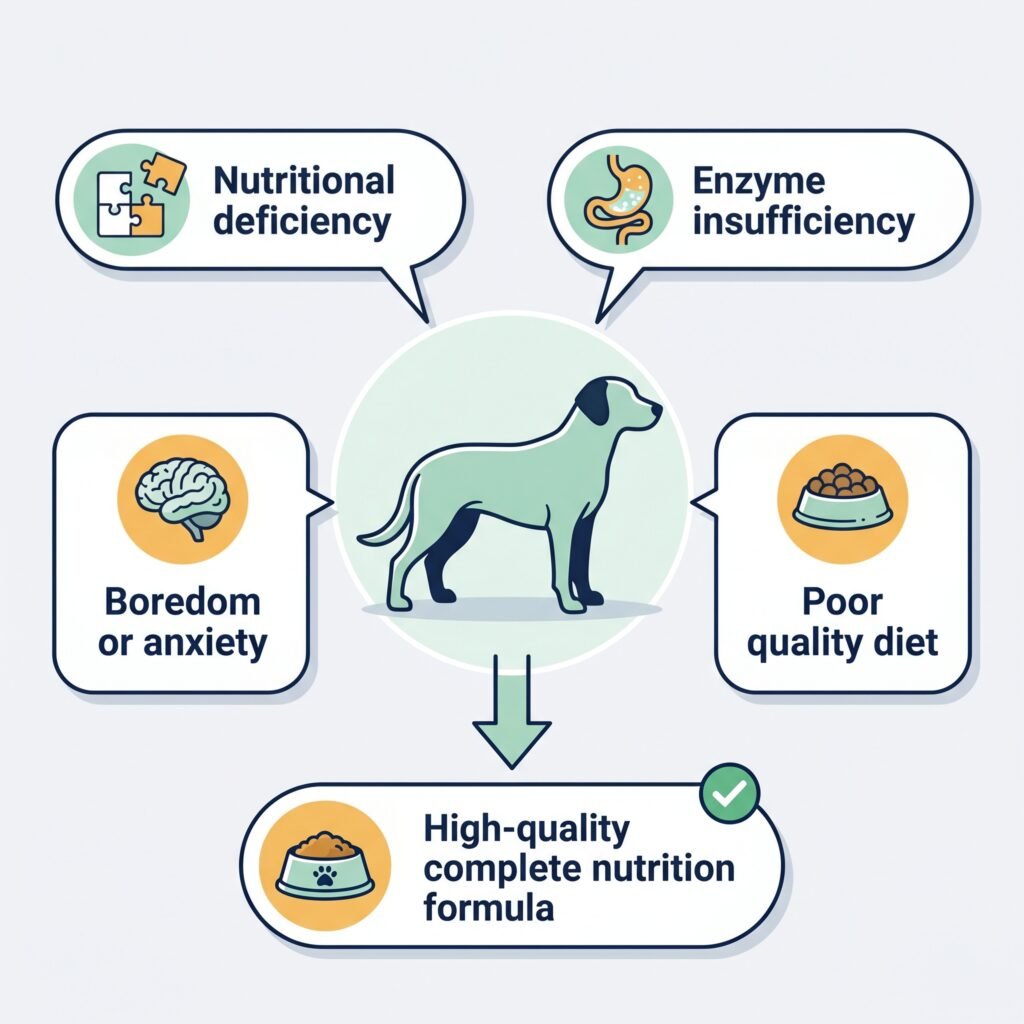
The reality is more nuanced. Coprophagia has multiple possible causes that fall into three broad categories — and most cases involve more than one factor simultaneously.
Category 1: Dietary and Nutritional Causes
These are the causes most directly addressed through coprophagia dog food changes:
Poor diet digestibility — When a dog is fed a low-quality, poorly digestible diet, a significant portion of the food passes through the gut undigested. The resulting stool is rich in unprocessed nutrients that smell and taste similar to food. This is one of the most actionable dietary causes of coprophagia: sometimes. Dogs eating low-digestibility kibble pass more undigested nutrients in stool, which can drive the behavior. Switching to a higher-quality, more digestible food (often with named animal protein as the first ingredient and minimal fillers) can reduce coprophagia.
Underfeeding or caloric restriction — energy-restricted diets, especially those that are not balanced or do not adequately satiate the dog, may also lead to coprophagia. A hungry dog will seek calories wherever they can find them — including in stool, which retains caloric value.
Specific nutrient deficiencies — Reed and Harrington (1981) reported that Beagles started to show coprophagia after deprivation of thiamine (vitamin B-1). Vitamin B deficiency in general, and B12 in particular, has been associated with coprophagia — especially in dogs with underlying absorption problems. Vitamin B and K deficiency have been implicated, but this is not proven, and is most likely to stem from cases in dogs with EPI where serum levels of B12 may be low.
Enzyme deficiency — Dogs with insufficient digestive enzyme production cannot fully break down the nutrients in their food. The result is nutrient-dense, partially digested stool that provides a powerful olfactory signal. This is most pronounced in dogs with Exocrine Pancreatic Insufficiency (EPI).
Excessive carbohydrate intake — Excess carbohydrates, especially from low-quality sources, can produce fermentation in the gut, loose stools, and high-residue feces that attract coprophagic interest.
Category 2: Medical Causes
Any medical problem that leads to a decrease in absorption of nutrients, causes gastrointestinal upset or causes an increase in the appeal of the dog’s stool, could lead to coprophagia.
Specific medical conditions that drive coprophagia:
- Exocrine Pancreatic Insufficiency (EPI) — the pancreas fails to produce adequate digestive enzymes; food is poorly digested; stool contains high levels of unprocessed protein and fat. EPI is one of the most direct medical causes of coprophagia.
- Intestinal parasites — compete for nutrients, increase hunger, and may alter stool composition
- Diabetes mellitus — causes increased appetite (polyphagia) that can drive stool eating
- Cushing’s disease (hyperadrenocorticism) — excess cortisol increases appetite significantly
- Thyroid disease — both hypo and hyperthyroid states can alter appetite and behavior
- Intestinal malabsorption conditions — chronic pancreatitis, IBD, intestinal lymphosarcoma
- Medication side effects — potential iatrogenic causes include treatment with medications which increase appetite such as benzodiazepines, gabapentin, corticosteroids, Entyce, mirtazapine, and phenobarbital.
- Anemia (iron deficiency) — drives unusual appetite behaviors including coprophagia and pica
Category 3: Behavioral Causes
Potential behavioral diagnoses include attention-seeking behavior, lack of stimulation/enrichment, learned behavior from other dogs in the household, learned behavior through pet parent reinforcement, self-reinforcing behavior (presumed attractive smell/taste), hunger, play, environmental stress, and anxiety.
Key behavioral drivers:
- Social learning — coprophagic behavior may be influenced by the presence of a coprophagic cohabitant. In multi-dog households, one dog often initiates and others learn the behavior through observation. This creates a cycle that requires treating all dogs in the household simultaneously.
- Attention-seeking — dogs that have learned that stool eating produces a strong reaction from their owner may repeat the behavior for engagement
- Boredom and under-stimulation — insufficient physical exercise and mental enrichment drives dogs toward self-stimulating behaviors including coprophagia
- Anxiety and stress — kenneling, separation anxiety, and environmental stressors correlate with increased coprophagia
How Diet Causes Coprophagia: The Nutritional Connection
Understanding the dietary pathway to coprophagia is essential for choosing the right coprophagia dog food strategy.
Here is how low-quality feeding produces a stool-eating dog:
Step 1: Poor Ingredient Quality → Poor Digestibility
Dog foods built around low-quality protein sources (unnamed meat meals, by-products, plant protein fillers) and cheap carbohydrates (corn distillers dried grains, soy hulls, cellulose) are significantly less digestible than foods built around named animal proteins and whole-food carbohydrates.
Digestibility is not prominently listed on dog food labels, but it can be estimated: high-quality dry foods typically achieve 80–88% digestibility. Low-quality foods may fall to 60–75% — meaning up to 40% of the food passes through the dog undigested.
Step 2: Undigested Nutrients → Nutrient-Rich Stool
That undigested 25–40% of the food exits in the stool. It contains proteins, fats, and fermentable carbohydrates that retain their nutritional profile and their smell. To a dog’s nose — which is estimated to be 10,000–100,000 times more sensitive than a human’s — this stool literally smells like food, because to a significant degree, it is.
Step 3: Hunger + Attractive Stool → Coprophagia
If the dog is simultaneously underfed (or the food is so poorly digested that they’re chronically nutritionally hungry despite eating), the combination of hunger-driven food-seeking and highly attractive, nutrient-dense stool creates a perfect condition for coprophagia to develop and self-reinforce.
Step 4: Self-Reinforcement Locks In the Behavior
Every time the dog eats stool and experiences even a marginal caloric or nutritional reward, the behavior is reinforced. Over time, coprophagia can become a habit that persists even after dietary improvements — which is why behavioral management must accompany food changes in many cases.
The Coprophagia Dog Food Strategy: What to Change and Why
Improving the dog’s diet is one of the most actionable interventions available — especially when poor digestibility or caloric inadequacy is a contributing factor. Here is the complete dietary strategy:
Priority 1: Switch to a Highly Digestible, Named-Protein Formula
The single most impactful coprophagia dog food change is moving to a formula where:
- A named animal protein (chicken, turkey, salmon, beef, lamb) is the first ingredient — not “meat meal,” “animal digest,” or unnamed by-products
- The food achieves high digestibility — typically signaled by a premium-grade ingredients list without heavy grain by-products, soy hulls, or cellulose fillers
- Protein content is adequate for the dog’s life stage and activity level (minimum 22–25% for adult dogs; 28–30% for active dogs)
Feeding a poorly digestible diet, underfeeding, and medical conditions that decrease absorption such as digestive enzyme deficiencies or parasites, could lead to malnutrition or vitamin and mineral deficiencies, and therefore an increased appetite and possibly stool eating. In addition, if the stools contain large amounts of undigested food material, there is an increased likelihood that the puppy would eat the stools.
A high-digestibility switch means less unprocessed material exits in the stool, less nutritional attractiveness in the stool, and — in dogs driven primarily by this mechanism — a meaningful reduction in coprophagia within 4–6 weeks.
Priority 2: Ensure Adequate Caloric Intake
Review the daily portion your dog is receiving against their actual caloric needs. Energy-restricted diets, especially those that are not balanced or do not adequately satiate the dog, may also lead to coprophagia.
Most feeding guides on dog food bags are designed to sell food — they often suggest slightly more than necessary. However, significantly underfeeding is a real driver of coprophagia. A dog should have clearly visible (but not sharp) waist definition, easily palpable ribs without pressing hard, and no visible hip bones. If your dog is ribby or losing weight, they are likely underfed.
Calculate daily caloric needs using the Resting Energy Requirement (RER) formula:
RER = 70 × (body weight in kg)^0.75
For a moderately active adult dog, multiply RER by 1.6. For a highly active dog, by 1.8–2.0. For a sedentary or senior dog, by 1.2–1.4. Use this as a baseline and adjust monthly based on body condition.
Priority 3: Improve Fiber Quality and Prebiotic Content
Sweet potatoes, pumpkin, and other fiber-rich foods, such as ground flaxseeds, can enhance digestive health and create a feeling of fullness. This, in turn, can help prevent your pup from seeking out feces to supplement their diet.
Specific dietary fiber benefits for coprophagia:
- Soluble fiber (pumpkin, sweet potato, chicory root/inulin) feeds beneficial gut bacteria, improves nutrient absorption, and increases satiety
- Prebiotic fiber (inulin, FOS, mannanoligosaccharides) supports gut microbiome diversity — a healthy microbiome is associated with better digestive efficiency overall
- Adequate total fiber (3–5% in the guaranteed analysis) normalizes stool consistency and reduces the window of “attractive” partially-digested stool
Priority 4: Add or Verify Probiotic Content
A disrupted gut microbiome can significantly impair nutrient absorption — essentially creating a nutritionally deficient state even in a dog eating a complete, balanced diet. Probiotics directly address this by restoring beneficial bacterial populations that support efficient nutrient extraction.
Look for dog food formulas that include live probiotic cultures (Lactobacillus acidophilus, Bacillus coagulans, or Enterococcus faecium) in the guaranteed analysis — or add a standalone probiotic supplement.
Priority 5: Ensure Complete B-Vitamin Profile
Reed and Harrington (1981) reported that Beagles started to show coprophagia after deprivation of thiamine (vitamin B-1). B vitamins — particularly thiamine (B1), riboflavin (B2), niacin (B3), B6, and B12 — are critical for energy metabolism, neurological function, and appetite regulation.
While frank B vitamin deficiency is rare in dogs eating AAFCO-complete commercial food, dogs with malabsorption conditions (EPI, IBD, chronic diarrhea) can become B12 deficient despite eating adequate food. If your dog has chronic loose stools or GI issues alongside coprophagia, ask your vet to check serum B12 levels specifically.
Specific Ingredients That Help Stop Coprophagia
When evaluating coprophagia dog food options, look for these specific ingredients and avoid the ones that worsen the problem:
✅ Ingredients That Help
High-quality animal protein (first ingredient) Chicken, turkey, beef, salmon, whitefish, lamb, or duck listed as the first ingredient. Supports lean muscle, adequate satiety, and high digestibility.
Whole grains or digestible carbohydrates Brown rice, white rice, oatmeal, sweet potato, barley (in dogs without gluten sensitivity). These provide clean, fermentable-but-manageable energy without the residue issues of grain by-products.
Pumpkin (or pumpkin meal) One of the most consistently recommended additions for coprophagia. Pumpkin is a superfood for dogs. It makes poop unappetizing while aiding digestion. Pumpkin seeds are also natural dewormers. For small to medium dogs, go for one or two teaspoons of pumpkin puree mixed with their daily food. For large or giant breeds, go for one tablespoon of pumpkin per day.
Digestive enzymes Many dogs suffer from improper digestion, leading them to seek out additional nutrients elsewhere. Digestive enzyme supplements, which can be mixed with regular food, can assist your dog in better absorbing nutrients. Key enzymes to look for: protease (breaks down protein), lipase (breaks down fat), amylase (breaks down carbohydrates), and cellulase (breaks down plant fiber).
Probiotics (live cultures) Support microbiome diversity, improve nutrient absorption, normalize stool consistency, and reduce the overall nutritional attractiveness of the stool.
Inulin / chicory root (prebiotic) Feeds beneficial bacteria, supports gut lining integrity, improves digestive efficiency.
Yucca schidigera extract Yucca is the most studied ingredient for changing stool palatability, and the included enzymes assist food breakdown that may reduce the underlying nutritional drive. Yucca appears in the ingredient lists of many coprophagia deterrent supplements and some premium dog foods. It binds ammonia compounds in stool, reducing their odor and palatability to the dog.
Zinc (chelated) Zinc proteinate or zinc methionine supports immune function, skin health, and — relevant here — is involved in the enzymatic processes of nutrient absorption. Deficiency can drive unusual appetite behaviors.
❌ Ingredients That Worsen Coprophagia
Corn distillers dried grains, soy hulls, cellulose Low-value carbohydrate by-products with poor digestibility. High residue in stool.
Unnamed meat meals (“poultry meal,” “meat meal,” “animal by-product meal”) Variable quality and lower digestibility than named single-source proteins.
Artificial preservatives (BHA, BHT, ethoxyquin) Associated with GI inflammation in sensitive dogs; may contribute to malabsorption.
High simple carbohydrate load without fiber balance Excess simple sugars ferment in the gut, disrupting microbiome balance and producing loose, nutritionally attractive stools.
Corn syrup or molasses Used in some budget dog food formulas for palatability. Disrupts gut bacteria and produces high-fermentation stools.
Best Dog Food Types for Dogs with Coprophagia
Not all food formats are equal when it comes to managing coprophagia. Here is how to think about food type selection:
High-Quality Dry Kibble: The Foundation
For most dogs with coprophagia, the first step is switching from a budget to a premium dry kibble — one built on named animal protein, whole food carbohydrates, and added probiotics and fiber.
What to look for on the bag:
- Named protein (chicken, turkey, salmon, beef) as the first ingredient
- No generic by-product meals in the top 5 ingredients
- Guaranteed analysis showing: protein >22%, fat 10–18%, fiber 3–5%
- AAFCO nutritional adequacy statement for the dog’s life stage
- Probiotic inclusion (often listed near the end of the ingredient panel as “dried fermentation products” or specific strains)
- Chelated minerals (zinc proteinate, manganese proteinate) — signal of quality formulation
Well-regarded formulas for digestive health and coprophagia management include:
Purina Pro Plan Sensitive Skin & Stomach (Salmon & Rice) — one of the most vet-recommended options for dogs with digestive sensitivity. Highly digestible salmon protein, prebiotic fiber, live probiotics, no wheat or soy. The high digestibility leaves less residue in stool.
Hill’s Science Diet Sensitive Stomach & Skin (Chicken & Barley) — clinically proven digestibility, prebiotic fiber blend, omega fatty acids for gut lining health. One of the most accessible science-backed formulas for GI-sensitive dogs.
Royal Canin Digestive Care — specifically formulated for optimal stool quality and digestive health. Uses a proprietary fiber blend (psyllium, inulin) that significantly improves stool consistency and reduces the nutritional appeal of excreted material. Highly digestible proteins and targeted nutrient profile.
Purina Pro Plan Veterinary Diets EN Gastroenteric — for dogs with more significant digestive dysfunction, this prescription formula achieves exceptional digestibility through highly refined ingredients, making it one of the most effective options when poor digestibility is a confirmed driver of coprophagia.
Wet/Canned Food: Useful as a Supplement
High-quality wet food offers superior digestibility compared to kibble in most cases, and higher moisture content that supports gut motility. For dogs whose coprophagia is partly driven by hunger or low satiety, mixing 20–30% wet food into dry kibble can increase fullness without significantly increasing calories — addressing the hunger-driven component of stool seeking.
Look for wet food formulas where meat is the first ingredient and by-products and starchy fillers are minimal or absent.
Fresh and Gently Cooked Dog Food: Highest Digestibility
Fresh, gently cooked dog food formulas — brands like The Farmer’s Dog, Ollie, or Nom Nom — typically achieve the highest digestibility ratings of any commercial food format, often exceeding 90%. For dogs where poor digestibility is the confirmed primary driver, this format produces the least nutritionally attractive stool.
The trade-offs are cost (significantly more expensive per serving than kibble) and practicality (requires refrigeration and careful portioning). For a dog that is suffering medically from coprophagia and its consequences, this investment may be worthwhile during a diagnostic trial period.
Natural Food Add-Ins That Deter Stool Eating
Several natural foods can be added directly to your dog’s regular meals as a deterrent strategy. These work by altering the taste and odor of the excreted stool, making it less appealing to the dog when encountered again.
Pineapple
The bromelain enzyme in pineapple changes the dogs’ stool and makes it bitter. Add about 2-3 small chunks per day so they find their poop unappetizing. Never use canned pineapple and never overfeed, as it could result in diarrhea due to the high fiber content.
Fresh pineapple only — canned versions contain added sugars. The bromelain concentration in fresh pineapple actively changes the stool’s digestive profile and taste. Results vary significantly between individual dogs — some owners report dramatic improvement within 2 weeks; others see no change.
Canned Pumpkin (Plain, Unsweetened)
Plain pumpkin puree — not pie filling, which contains spices and sugar — serves a dual function: it improves digestive efficiency (reducing stool nutritional attractiveness) and alters stool consistency and odor. Add 1–2 teaspoons for small dogs, 1–2 tablespoons for large dogs, mixed directly into food daily.
Apple Cider Vinegar
A small amount (½ teaspoon for small dogs, 1 teaspoon for large dogs) of raw, unfiltered apple cider vinegar added to food may alter gut pH and stool composition. Evidence is anecdotal rather than clinical, but it is widely used, safe in these amounts, and occasionally effective.
Spinach and Leafy Greens
Dark leafy greens contain compounds that may make stool less palatable. They also provide iron, B vitamins, and fiber — useful for dogs showing any nutritional insufficiency component to their coprophagia.
Meat Tenderizer (Unseasoned, MSG-Free)
This is a very commonly recommended folk remedy. Unseasoned meat tenderizer contains papain (a papaya-derived enzyme) that, when added to food, passes through and alters the odor and palatability of the resulting stool. Use sparingly — just a small pinch daily. It works for some dogs and not others, and should not be used long-term.
Important: All natural deterrents work best as one component of a multi-approach strategy, not as standalone solutions. A dog whose coprophagia is driven by behavior rather than food content will not be deterred by pineapple alone.
Coprophagia Supplements: What the Science Says
A dedicated category of coprophagia deterrent supplements exists specifically to address this problem. Coprophagia supplements for dogs work by making the feces taste bitter or less palatable to dogs. Some of these supplements also contain digestive enzymes that increase nutrient absorption and decrease the amount of protein in excrement, so there will be less of these enticing substances to attract a dog with coprophagia.
The most evidence-supported supplements for coprophagia management:
For-Bid (Sodium Glutamate-Based Deterrent)
One of the oldest and most veterinarian-recommended coprophagia products. Sprinkled onto food, it alters the digestive byproducts that end up in stool. Recommended by veterinarians for over 60 years, For-Bid is a staple for the treatment of coprophagia in dogs. This was one of the first ever stool eating deterrent products released aimed directly at solving this problem. Note: it contains glutamate — dogs on sodium-restricted diets should avoid it.
NaturVet Coprophagia Deterrent Plus Breath Aid
NaturVet Coprophagia Deterrent Plus Breath Aid are veterinarian-approved dog treats that keep your pup from wanting to ingest his poop, while simultaneously freshening breath with a specialized blend of yucca, parsley, chamomile and proprietary enzyme blend.
The yucca schidigera extract is the active stool-deterrent component; the enzyme blend addresses the digestive efficiency component; parsley and chamomile help with secondary breath and GI issues.
Key application rule for multi-dog households: if your pup is eating another dog’s poop, that dog should also take the chews to ensure the poop becomes unappealing to everyone. If you only supplement the stool-eater and not the stool source, the intervention fails.
Digestive Enzyme Supplements
For dogs where poor digestion is a confirmed or suspected driver, standalone digestive enzyme supplements (protease, lipase, amylase, cellulase) added to food can significantly improve nutrient extraction. Less residue in the stool → less nutritionally attractive stool → reduced coprophagic interest.
For dogs with confirmed EPI, veterinary-grade enzyme replacement (Pancrezyme, Viokase) is the correct treatment.
Probiotic Supplements
Products like Purina FortiFlora, Proviable-DC, or Visbiome Vet provide concentrated doses of beneficial bacteria that can rapidly normalize a disrupted microbiome. When gut bacteria are in poor balance, digestive efficiency drops — creating the malabsorption pattern that drives nutritional coprophagia. A 4–6 week probiotic course alongside dietary changes addresses this from two angles simultaneously.
Feeding Schedule Changes That Reduce Coprophagia
Dietary content is only part of the coprophagia dog food equation. When and how you feed matters significantly.
Feed More Frequently
Some studies that aim to understand the reasons for coprophagy have cited potential predisposing causes such as food-related factors such as extreme hunger, provision of a single daily meal. A single daily meal creates a prolonged hunger window that significantly increases food-seeking behavior — including stool eating. Moving to two meals per day, or even three for smaller dogs or those with EPI, reduces hunger-driven coprophagia substantially.
Control Meal Timing Relative to Defecation
Many dogs defecate within 20–40 minutes of eating (the gastrocolic reflex). If a dog with coprophagia is allowed unsupervised access to the yard immediately after eating, the timing perfectly aligns peak coprophagia opportunity with peak post-meal defecation. Manage this by:
- Feeding, then waiting 30 minutes
- Taking the dog outside on leash
- Collecting stool immediately after the dog defecates
- Rewarding the dog for moving away from the stool
Immediate stool removal after defecation is the most effective environmental management strategy and works in tandem with any dietary changes.
Use a Slow-Feeder Bowl
Dogs that eat very quickly are more likely to experience incomplete digestion due to large, poorly chewed food pieces moving through the gut rapidly. A slow-feeder bowl extends meal duration by 4–8x, improving chewing and initial mechanical digestion.
Measure Portions Precisely
Guessing food portions — especially with calorie-dense premium kibble — leads to either underfeeding (driving hunger-related coprophagia) or overfeeding (creating loose, high-residue stools). Use a kitchen scale or calibrated measuring cup and recalculate portions every time you switch food formulas, since caloric density varies considerably between products.
When Food Isn’t Enough: Medical Causes That Need a Vet
If coprophagia is sudden in onset, accompanied by other symptoms, or persists despite significant dietary improvements over 6–8 weeks, a medical workup is warranted.
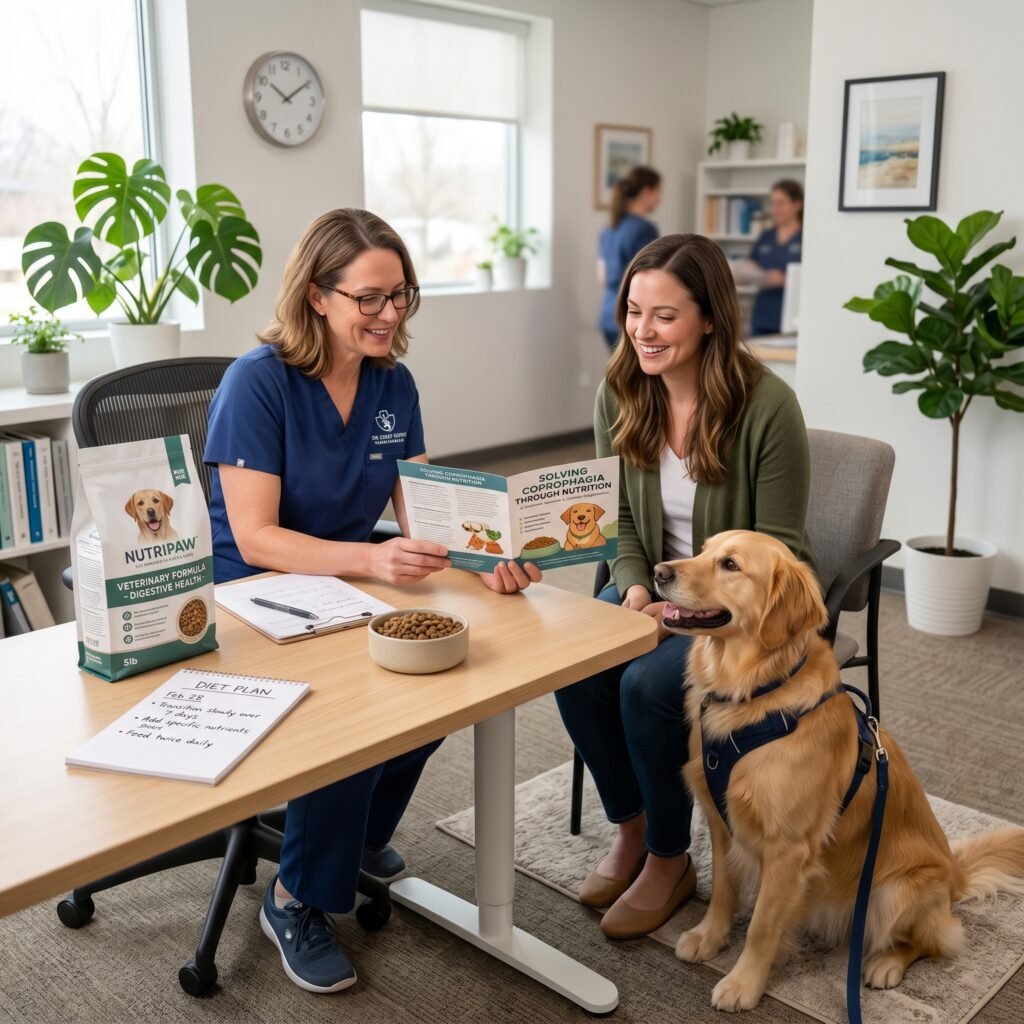
Coprophagia can occur in normal dogs with no apparent gastrointestinal disease, but it is sensible to check exocrine pancreatic function, occult blood and for evidence of bacterial overgrowth. These are all conditions that can encourage a dog to become interested in its own faeces. Although dietary deficiency is rarely a cause of coprophagia or pica, it is worth checking that the animal’s diet is balanced and complete.
Request these tests from your veterinarian if dietary management fails:
Essential workup:
- Complete blood count (CBC) and serum chemistry panel — screens for metabolic disease, diabetes, Cushing’s, anemia
- Fecal flotation and direct smear — parasites compete for nutrients and drive hunger-based coprophagia
- Fecal occult blood test
- Urinalysis
If malabsorption or EPI is suspected:
- Serum Trypsin-like Immunoreactivity (TLI) — the definitive test for EPI
- Serum cobalamin (B12) and folate — both become deficient in EPI and severe IBD; B12 deficiency directly correlates with neurological and appetite dysregulation
- Serum folate — elevated folate with low B12 suggests bacterial overgrowth (SIBO)
If hormonal causes are suspected:
- ACTH stimulation test or low-dose dexamethasone suppression test (for Cushing’s disease)
- Thyroid panel (T4, Free T4)
When Food Isn’t Enough: Behavioral Causes That Need Training
When medical and dietary causes have been addressed and coprophagia persists, the treatment shifts to behavior modification. Food changes create better conditions for behavioral work — they do not replace it.
Core Behavioral Strategies
“Leave it” command training — one of the most effective tools. Teach a solid “leave it” response to the stool before the dog reaches it. Practice first with low-value objects, gradually working toward high-value items including stool.
Immediate stool removal — remove all feces from the environment as soon as possible after defecation. This removes the opportunity for the behavior entirely. In the yard, scoop immediately. On walks, avoid areas where other animals defecate.
Supervised outdoor time — leash walks and leashed yard time allow intervention before coprophagia occurs. This is not a forever solution but is essential during the active training and dietary intervention period.
Enrichment and exercise — boredom or anxiety: dogs left alone or under-stimulated might engage in poop eating for attention or stress relief. Increasing both physical exercise and mental enrichment (puzzle feeders, scent work, training sessions) directly reduces boredom-driven coprophagia.
No punishment — punishing a dog for stool eating after the fact is ineffective. The dog cannot connect the punishment to the past behavior. Worse, if the dog is eating stool partly to seek owner attention, an angry reaction constitutes attention and reinforces the behavior. Ignore stool eating when you catch it after the fact; intervene calmly before it happens.
The 30-Day Coprophagia Elimination Plan
This is a structured, multi-approach plan combining all the dietary and management strategies above. Most dogs with dietary-driven or hunger-driven coprophagia show meaningful improvement within 4 weeks.
Week 1: Assessment and Foundation
Day 1–3:
- Schedule a vet visit if there are any accompanying symptoms (weight loss, loose stools, increased appetite, lethargy)
- Assess current food: check the ingredient list for unnamed proteins, grain by-products, wheat gluten. Note the protein %, fat %, and fiber % from the guaranteed analysis
- Calculate your dog’s daily caloric needs (using the RER formula above)
- Verify you are feeding the correct portion for their weight and activity level
Day 4–7:
- Begin transitioning to a higher-digestibility formula if current food has quality concerns. Start with 75% old food / 25% new food
- Add 1–2 tsp of plain canned pumpkin to each meal (small-medium dogs) or 1 tbsp (large dogs)
- Begin immediate stool removal after every outdoor visit
- Start leashed outdoor time only for the first 30 days
Week 2: Dietary Transition and Supplement Introduction
Day 8–14:
- Continue food transition: move to 50% old / 50% new
- Add a probiotic supplement to one meal per day (FortiFlora, Proviable, or a similar vet-grade option)
- If the dog eats other animals’ stool in the household: begin coprophagia deterrent supplement (NaturVet, For-Bid, or similar) on all dogs whose stool is being consumed
- Begin “leave it” command training — 5-minute sessions, twice daily
- Track: is stool consistency improving? Firmer, smaller-volume stool is a positive indicator
Week 3: Full Transition and Behavioral Focus
Day 15–21:
- Complete food transition: 100% new formula
- If using pineapple as an additional deterrent, add 2–3 small fresh chunks per day alongside pumpkin
- Increase physical exercise by 20–30% if the dog is currently under-exercised
- Add one puzzle feeder or enrichment activity per day for mental stimulation
- Continue probiotic and deterrent supplementation consistently
- Continue immediate stool removal and leashed outdoor supervision
Week 4: Evaluation and Long-Term Planning
Day 22–30:
- Evaluate: has the frequency of coprophagia decreased? Is stool quality better?
- If significant improvement: continue the new coprophagia dog food, continue stool removal, begin gradually testing off-leash access in controlled environments
- If no improvement despite dietary and behavioral changes: return to your vet for the medical workup described above. EPI, B12 deficiency, or another medical condition may be driving the behavior
- If improvement is partial: extend the protocol to 60 days before reassessing. Some deeply habituated coprophagic dogs require longer intervention periods
Frequently Asked Questions About Coprophagia Dog Food
Can changing dog food stop coprophagia?
It depends on the cause. If the coprophagia is being driven by low food digestibility — leaving nutritionally attractive residue in the stool — then switching to a higher-quality, more digestible coprophagia dog food can produce meaningful improvement within 4–6 weeks. If the cause is primarily behavioral, food changes create better conditions but won’t solve the problem on their own without concurrent behavioral management.
What is the best dog food to stop a dog from eating poop?
There is no single “anti-coprophagia” dog food. However, the characteristics of a dietary choice that most consistently reduces coprophagia are: named animal protein as the first ingredient, high digestibility (achieved through quality ingredients, not fillers), adequate fiber (3–5%), added probiotics, and appropriate caloric density for the dog’s weight and activity level. Purina Pro Plan Sensitive Skin & Stomach, Hill’s Science Diet Sensitive Stomach & Skin, and Royal Canin Digestive Care are among the most frequently recommended by veterinarians for dogs with digestive issues that may be driving coprophagia.
Does pineapple really stop dogs from eating poop?
For some dogs, yes — anecdotally, pineapple is one of the more consistently reported home remedies for coprophagia. The bromelain enzyme in fresh pineapple appears to alter the digestive byproducts that end up in the stool, changing its taste and making it less palatable to the dog. Results are highly individual — some dogs stop the behavior within 2 weeks of daily pineapple addition; others show no change. Use fresh pineapple only (not canned), limit to 2–3 small chunks per day, and combine with other interventions.
Is coprophagia dangerous for my dog?
Eating their own stool carries relatively low risk if the dog is healthy and parasite-free, since the stool is their own biological material. The main risks are: intestinal parasite transmission (if the dog was recently infected), bacterial exposure if the stool is old, and social/hygiene problems for the owner (especially around face-licking). Eating other animals’ feces carries higher risks — cat stool can contain Toxoplasma; wild animal feces can carry a range of pathogens, parasites, and in some geographic regions, rabies exposure risk.
My dog only eats cat poop from the litter box — is this coprophagia?
Yes — this is interspecific allocoprophagia, and it is extremely common. Cat food is higher in protein and fat than dog food, making cat stool genuinely more calorie-dense and nutritionally interesting to a dog’s nose. Solutions include: placing the litter box in a location the dog cannot access (baby gate, cat door), using a covered litter box with a cat-flap entry, or elevating the litter box. Dietary management of the dog is less effective for this specific type since the attractiveness is about the cat food, not the dog’s own digestive output.
Why does my puppy eat poop but my adult dog never did?
Puppies explore their world through their mouths and have not yet developed the learned food-versus-non-food distinctions that adult dogs have. A puppy eating stool is often normal exploratory behavior that resolves on its own by 4–6 months. However, if it persists beyond 6 months, increases in frequency, or is accompanied by poor weight gain or loose stools, dietary and medical evaluation is appropriate.
How long does it take for dietary changes to stop coprophagia?
A food trial of four to six weeks is needed to evaluate any change. Expect a minimum of 4 weeks before concluding that a dietary change is or isn’t working. The gut microbiome takes several weeks to adjust to new food; digestibility improvements take time to manifest in stool quality changes; and habituated behavioral patterns persist even after the dietary driver is removed.
Final Verdict: The Truth About Coprophagia Dog Food Solutions
Here is the honest answer about the relationship between coprophagia and dog food:
Diet is a real and frequently underaddressed contributing factor to coprophagia — but it is rarely the only factor, and it is almost never the complete solution on its own.
The dogs most likely to resolve coprophagia through dietary changes alone are those where:
- The current food is genuinely low quality and poorly digestible
- The dog is being underfed relative to actual caloric needs
- There is an underlying but undiagnosed GI issue (EPI, SIBO, IBD) that dietary management helps address
The dogs who need dietary change as one component of a broader plan are those where:
- Behavior, attention-seeking, boredom, or learned social behavior is also contributing
- Medical conditions beyond nutritional issues are involved
- The coprophagia is long-established and deeply habituated
The roadmap is clear: start with the best coprophagia dog food you can choose — high digestibility, named protein, probiotics, adequate fiber, correct portions. Add stool removal, deterrent supplements if needed, and behavioral management. Give it six weeks. If it hasn’t improved, bring your vet the full picture.
Your dog is not gross. They are a dog doing a very dog thing, for reasons that almost always have a traceable cause. Find the cause, address the coprophagia dog food, manage the behavior — and move forward.
This guide is for informational and educational purposes only and does not constitute veterinary advice. If your dog is showing additional symptoms alongside coprophagia — weight loss, loose stools, increased appetite, lethargy — consult your veterinarian promptly. Medical causes of coprophagia require professional diagnosis and treatment.