
Is Tylee’s Worth It for Your Dog? Full Switch, Topper, or Half-and-Half
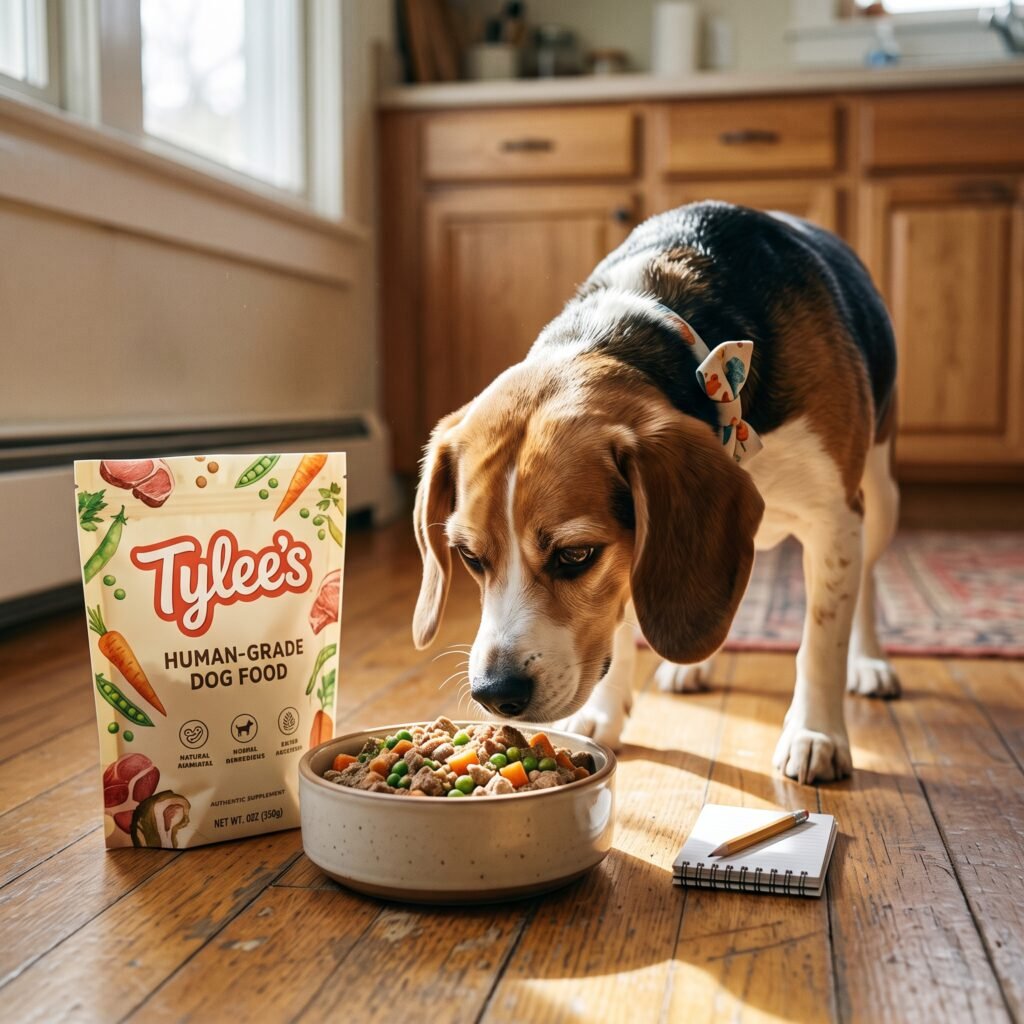
Short answer: Tylee’s is worth it when your dog has a clear reason to eat fresh food and your budget can carry it. For most 40-lb adult dogs, feeding tylee’s as roughly a quarter of daily calories on top of a complete kibble gives most of the benefit for a fraction of the full-switch cost.
Most owners ask whether tylee’s is good, and the ingredient lists answer that fast. The harder question is whether you should feed tylee’s as the whole diet, half the diet, or a topper. Is tylee’s worth it? The honest answer depends on that choice, because it swings your monthly food bill by hundreds of dollars.
This article is built around one scenario: a 40-lb adult dog, a budget with a ceiling, and a decision between kibble, a full fresh switch, and a mix. I’ll walk through the cost-per-calorie math, the recipe differences that matter, and the situations where this food is the wrong call.
Recommended Products

Best Dog Food in 2026
What Am I Actually Buying When I Choose Tylee’s Over Kibble?
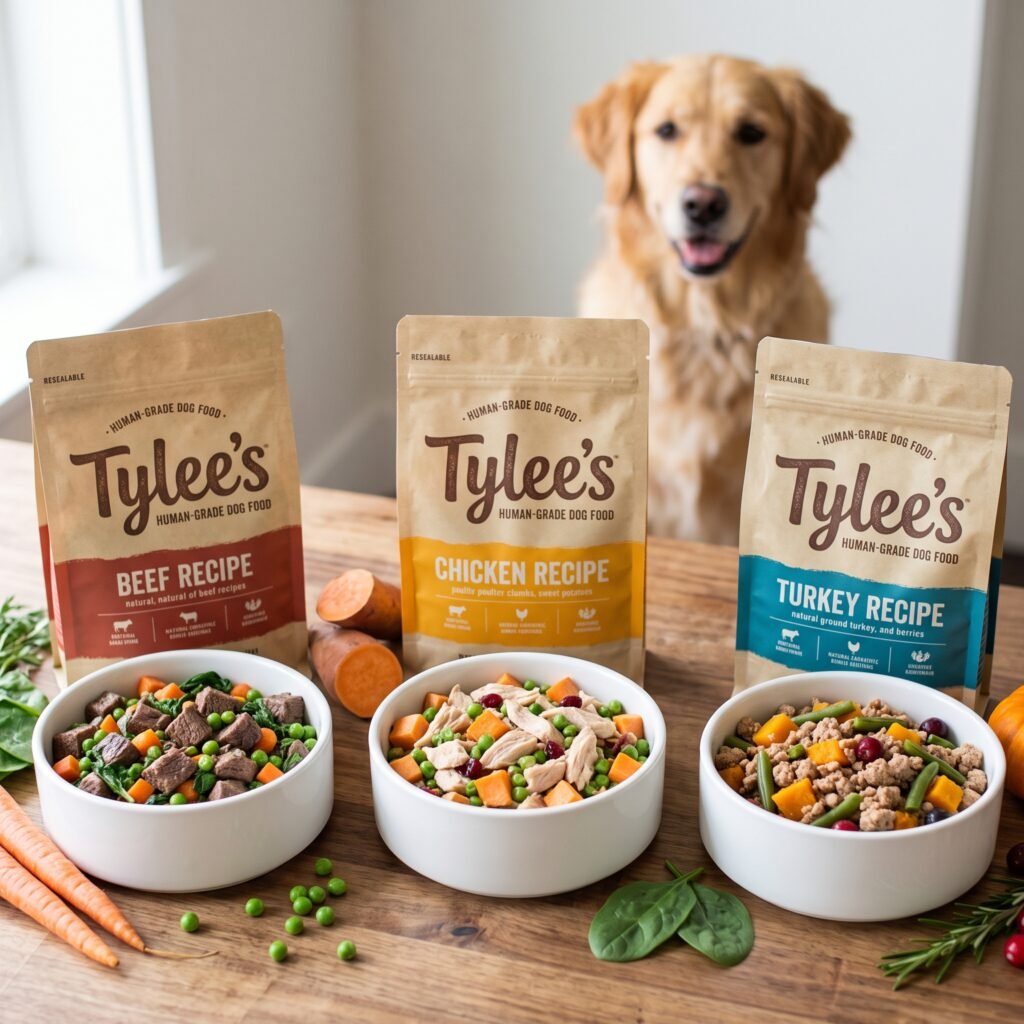
Tylee’s is a cooked, frozen, human-grade fresh dog food. The line covers beef, chicken, pork, turkey, and salmon recipes. Dog Food Advisor’s tylee’s dog food review rates the four meat recipes it covered between 4 and 5 stars and lists an AAFCO nutrient profile marker for each.
“Human-grade” is a marketing term. The AAFCO nutritional adequacy statement on the label is the part that tells you a recipe is formulated as complete and balanced for a life stage. Read that statement on the package you actually buy.
The meat-first panels are the real difference from kibble. The beef recipe opens with beef heart, ground beef, water, and beef liver. Pork opens with pork heart and ground pork. Chicken and turkey lead with heart, muscle meat, and liver. Organ meat sits near the top of every tylee’s recipe I compared, which makes the food read closer to a home-cooked ration than a bag of extruded pellets.
Dogster named tylee’s its best-value human-grade pick and noted the food is cooked in a USDA kitchen. “Best value” there means value among fresh foods, not against a bag of kibble. Keep that distinction in mind when you run the numbers below.
What you give up is convenience. Tylee’s frozen dog food asks more of you than scooping from a bag. You need freezer space, thaw time, and a plan for opened portions. If you travel often or share a small freezer, that friction can decide things before the ingredient list does.
Which Tylee’s Recipe Should a Sensitive-Stomach Dog Try First?
The five recipes don’t behave the same way. The differences cluster around carbohydrate sources, legumes, and richness. I compared the ingredient panels from third-party listings, so check the current label before you buy.
| Recipe | First ingredients | Carb/legume sources listed | Dog Food Advisor rating |
|---|---|---|---|
| Beef | Beef heart, ground beef, water, beef liver | Sweet potato, mango | 5 stars |
| Pork | Pork heart, ground pork, water, beef liver | Butternut squash, pineapple (no legumes or potato listed) | 5 stars |
| Chicken | Chicken heart, deboned chicken, chicken liver | Peas, apples, carrots | 4 stars |
| Turkey | Turkey heart, deboned turkey, turkey liver | Sweet potato, cranberries, sunflower seeds | 4.5 stars |
| Salmon | Deboned salmon, peas | Peas, sweet potatoes, pineapple | Not rated in the source I reviewed |
Table: ingredient panels for each tylee’s recipe, with Dog Food Advisor ratings where available.
For a dog with a touchy stomach, I start with tylee’s pork recipe. It has the shortest list of starchy ingredients of the five. Butternut squash and pineapple stand in for peas or sweet potato. Tylee’s pork recipe also earned 5 stars at Dog Food Advisor, tied with beef.
Pork is not a safe default for every dog. If your dog reacts to rich, fatty meals, pork can be the worst starting point. In that case I’d begin with the tylee’s turkey recipe and a slow transition, and I’d accept the sweet potato that comes with it.
The tylee’s chicken and salmon recipes list peas. That isn’t a dealbreaker, but it matters for a specific group of owners, which I cover in the section on who should skip this food.
Salmon also changes the calculation for dogs with fish sensitivities and for owners who rotate proteins. Chicken is the most common food allergen in many dogs’ histories, so a chicken-sensitive dog should skip that recipe regardless of its rating. A star rating can’t see your dog’s skin or stool.
How Much Does Tylee’s Cost for a 40-Pound Dog, Calorie for Calorie?
Price per pound is the wrong number. Tufts’ Cummings School nutrition guidance says the accurate comparison is cost per kilocalorie, because dogs eat different amounts of different foods. A cheap bag that your dog needs twice as much of isn’t cheap.
Start with your dog’s energy need. A common veterinary starting formula for resting energy requirement is 70 × body weight in kilograms raised to the 0.75 power. For a 40-lb (18.1 kg) dog that comes to roughly 615 kcal. Multiply by about 1.6 for a typical neutered adult and you land near 985 kcal a day. Your dog may need more or less, so adjust by body condition and your vet’s advice.
Now plug in the label. Find the kcal per pound on the tylee’s package or product page, plus the price per pound at your order size. The numbers below are hypothetical, not tylee’s actual prices. Pricing and calorie density change, and I don’t want you budgeting off my snapshot.
| Feeding plan | Daily calorie split | Hypothetical daily cost |
|---|---|---|
| Kibble only (1,600 kcal/lb at $3/lb) | 985 kcal kibble | about $1.85 |
| Full switch to tylee’s (600 kcal/lb at $8/lb) | 985 kcal fresh | about $13.13 |
| 25% fresh topper | 246 fresh + 739 kibble | about $4.67 |
| 50/50 split | 493 fresh + 493 kibble | about $7.49 |
Table: hypothetical numbers only. Swap in the real kcal/lb and price/lb from the package.
The pattern holds even when your numbers differ. A quarter of calories from fresh food usually adds a few dollars a day. A full switch multiplies the bill several times over. The tylee’s vs kibble cost gap is wide enough that “worth it” has to be answered against a goal, not a feeling.
Check the math on feeding amounts too. Tufts research on weight-control diets found that label feeding directions often don’t match an individual dog’s calorie needs. Weigh the portions, then adjust every two to three weeks based on your dog’s waistline and weight.
Is a Tylee’s Topper Enough to Make a Difference?
It depends on why you bought it. If appetite is the goal, a topper of tylee’s works well. A quarter of the bowl as fresh meat changes smell and texture enough to move most picky eaters. If your goal is removing an ingredient that causes symptoms, a topper won’t do it, because the kibble is still doing most of the work.
A topper of tylee’s pork recipe also doesn’t make the diet “fresh” in any meaningful nutritional sense. The complete-and-balanced kibble still supplies most of the vitamins and minerals. You’re adding palatability and whole-food protein. That’s a legitimate goal, but the tylee’s vs kibble trade-off at topper level is mostly about enjoyment and variety, not transformation.
Mixing has one catch. When you add one complete-and-balanced food to another, total calories become the number you control. Cut the kibble by the calories you add, or your dog gains weight. That’s the most common mixing mistake, and it’s easy to avoid with a kitchen scale.
If a topper isn’t moving the needle, don’t escalate to a full switch out of guilt. Try a different recipe, warm the portion slightly, or change the ratio before changing the budget.
What Happened When I Fed Tylee’s to a Dog With a Sensitive Stomach?
Author note: replace this section with your real first-hand notes before publishing. Readers and Google both reward specifics you actually observed. Use the prompts below and delete the brackets.
Which Dogs Should Skip Tylee’s or Get Vet Sign-Off First?
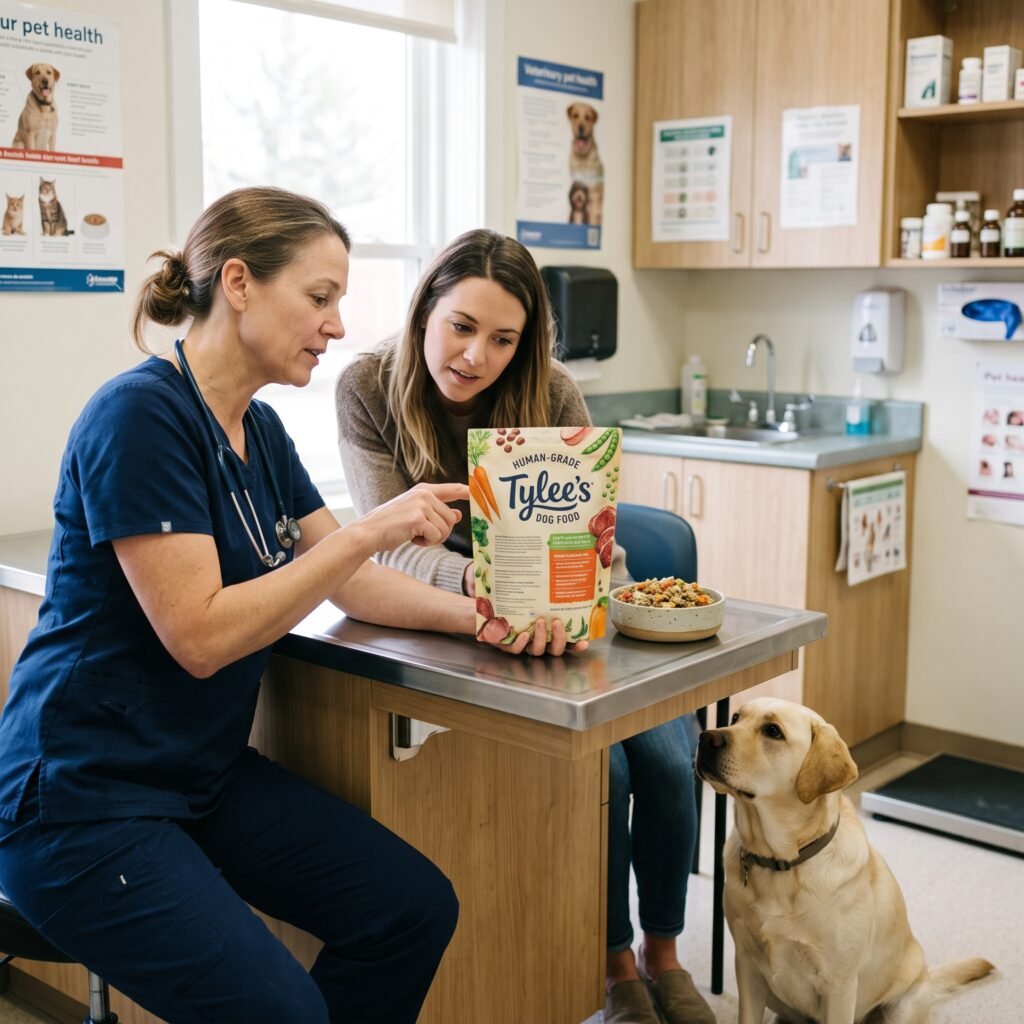
Fresh food isn’t automatically right for every dog. Some situations need a vet in the loop before you buy.
Puppies, especially large breeds. Check whether the specific tylee’s recipe carries a growth or all-life-stages AAFCO statement. A maintenance-only recipe isn’t formulated for a growing puppy. Large-breed puppies have tight calcium and phosphorus limits, so don’t guess.
Dogs with a pancreatitis history. Several tylee’s recipes lean on heart, ground meat, and liver, and richness varies by recipe. A dog prone to pancreatitis may need a lower-fat plan chosen with your vet.
Dogs with heart disease or breeds prone to dilated cardiomyopathy. Dog Food Advisor describes the line as grain-free, and some recipes use peas. The FDA investigated reports of diet-associated DCM in dogs eating certain grain-free diets, and a causal link has not been established. If your dog has heart disease, ask your vet before choosing a grain-free or legume-containing food.
Dogs with kidney disease. Organ-heavy and bone-containing foods can carry significant phosphorus. Don’t self-prescribe.
Households where the freezer is the bottleneck. A 70-lb dog eating a full fresh diet can fill a freezer fast. If thawing and storage will fail within a month, the best recipe won’t help.
Tight budgets. If a full switch would force you to skimp elsewhere, such as vet visits, a topper or a good kibble is the better decision, and nothing about that is second-best.
How Do I Switch My Dog to Tylee’s Without Digestive Drama?
Go slow, even with a gentle recipe. A seven- to ten-day transition is a common starting point, and sensitive dogs often need longer.
- Days 1-3: start tylee’s at about 25% of daily calories, 75% old food.
- Days 4-6: move to 50/50 if stools stay normal.
- Days 7-9: go to 75% fresh.
- Day 10+: complete the switch, or stop at your chosen ratio.
Thaw tylee’s frozen dog food in the refrigerator rather than on the counter, and follow the package’s storage window once opened. Don’t refreeze thawed portions unless the label says you can.
Weigh each portion for the first two weeks. Fresh food looks like more volume than it is, and eyeballed scoops are how a 985-calorie dog ends up eating 1,300.
Watch stool for three signals: consistency, color, and frequency. If a dog develops persistent vomiting, bloody stool, or lethargy, stop the transition and call your vet. Because tylee’s is organ-rich, a sudden full-portion jump is the most likely cause of a rough first week.
How Did I Evaluate Tylee’s? Methodology and Review Notes
Reviewed by: [NAME, CREDENTIAL, DATE]. Add a veterinarian or credentialed nutritionist if you have one. Don’t list a reviewer who hasn’t actually reviewed this.
For this tylee’s dog food review I ran four checks:
- Ingredient panel comparison across the beef, chicken, pork, turkey, and salmon recipes, noting first ingredients, carbohydrate sources, and legumes.
- AAFCO statement check. Dog Food Advisor lists an AAFCO nutrient profile marker for each recipe it covered. Confirm the life-stage statement on the current package, because formulations change.
- Recall check. Dog Food Advisor maintains a tylee’s recall history page that tracks recalls since 2009. Re-verify on the FDA’s recalls and withdrawals page and record the date you checked: [DATE].
- Cost-per-kilocalorie math using the Tufts method rather than price per pound.
Limits of this review: I didn’t lab-test tylee’s, so I can’t verify guaranteed analysis or calorie content independently. Ratings from Dog Food Advisor reflect ingredient quality, not feeding trials. Third-party listings, including competitor comparison pages, describe some minerals as “synthetic.” Chelated minerals and calcium sources are standard ways to meet AAFCO profiles, so treat that framing as a competitor’s marketing angle, not a safety finding.
So, Is Tylee’s Worth It? A Decision Framework
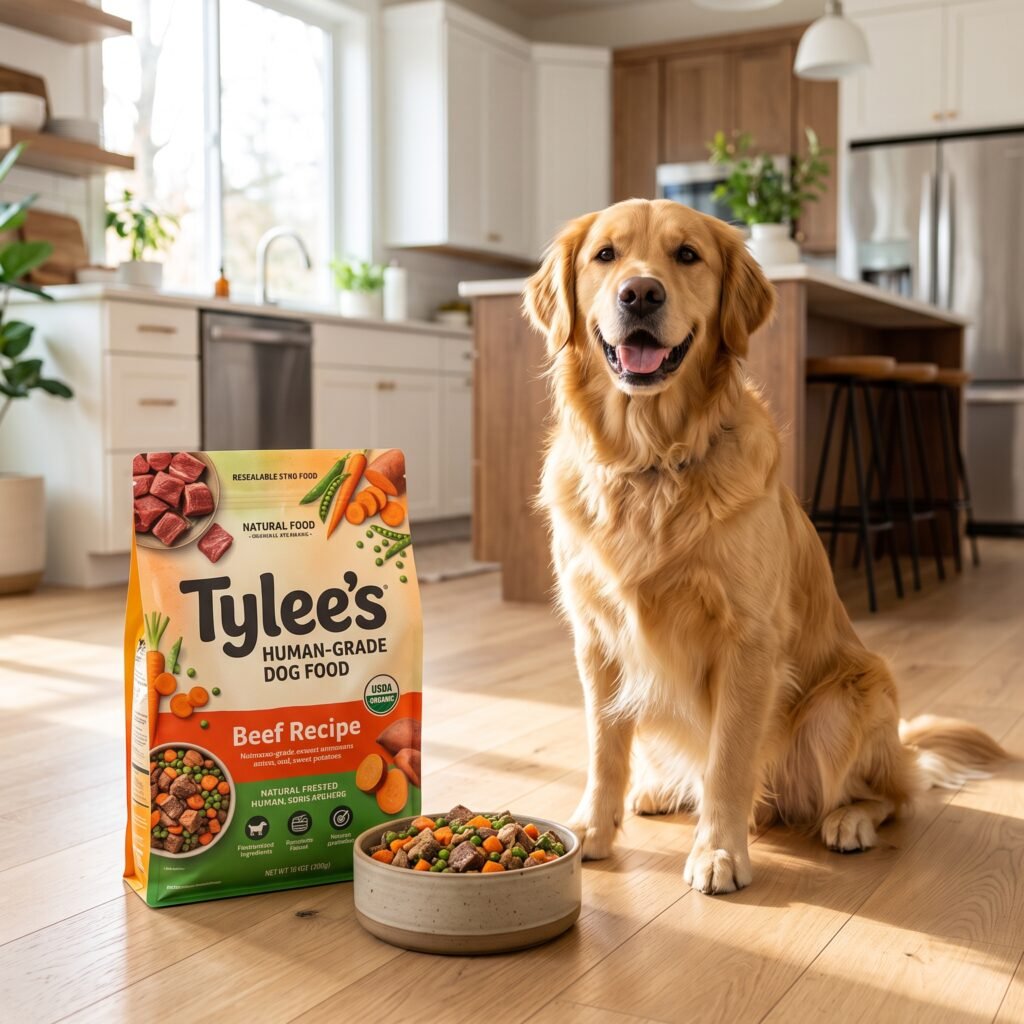
Is tylee’s worth it? Use your goal to decide.
- Choose a full switch to tylee’s if you have a confirmed reason to avoid kibble, your vet agrees, and the daily cost fits your budget for at least a year. Start with the tylee’s pork recipe or turkey for a sensitive stomach.
- Choose a 25% topper if your dog is picky or bored, or you want more whole-food variety. This is where the tylee’s vs kibble value is strongest.
- Choose 50/50 if you want a bigger nutritional shift and can stomach a bill roughly four times kibble-only, based on my hypothetical numbers.
- Skip tylee’s if your dog needs a veterinary therapeutic diet, you can’t store frozen food reliably, or the cost would crowd out basic care.
My tylee’s dog food review verdict is conditional. The recipes read well, the organ-forward panels stand out, and the best-value pick from Dogster makes sense among fresh foods. The brand earns its price when you match the amount to your dog’s actual problem, not when you buy the biggest plan because the ingredient list looks impressive.
Run your own cost-per-calorie number, pick one recipe, and test it for two weeks. Tylee’s either solves your dog’s problem at a price you can sustain, or it doesn’t, and a short trial tells you which.
Tylee’s Dog Food FAQ
Is tylee’s dog food AAFCO approved?
AAFCO doesn’t approve foods. It sets nutrient profiles, and manufacturers state that a recipe meets them. Dog Food Advisor lists an AAFCO profile marker for each of the tylee’s recipes it reviewed, but you should confirm the life-stage statement on your package.
Can puppies eat tylee’s?
Only if the specific recipe carries a growth or all-life-stages statement. Check the tylee’s label, and ask your vet before feeding a large-breed puppy, since calcium and phosphorus limits are tight.
How long does tylee’s frozen dog food last after thawing?
Follow the storage window printed on your package, since it can vary by product. Keep thawed portions refrigerated and don’t leave them out. Never extend the window based on how the food smells.
Is tylee’s good for dogs with allergies?
It can help if the cause is an ingredient in your current food, but no recipe is allergy-proof. Each tylee’s recipe uses a different main protein, so pick one your dog hasn’t reacted to, and consider a vet-supervised elimination trial for a real diagnosis.
Can I mix tylee’s with kibble?
Yes. Reduce the kibble by the calories you add so total intake stays the same. Mixing with tylee’s is the most budget-friendly way to try fresh food.