How to Stop Food Aggression in Dogs (Step-by-Step Guide)
How to stop food aggression in dogs? Learn simple, effective training steps to fix this behavior safely.
How to Stop Food Aggression in Dogs: Safe, Effective Training for Dogs Around People, Dogs, and Other Animals 

Food aggression is one of the most stressful behaviors dog owners face because it often appears suddenly: a growl at the bowl, stiff posture near treats, snapping when another dog walks close, or guarding food from cats and other animals. If you are searching how to stop food aggression in dogs, how to stop food aggression in a dog, how to stop food aggression in dogs towards other dogs, how to stop food aggression in dogs with other dogs, or how to stop food aggression in dogs towards other animals, the most important thing to understand is this:
Food aggression is usually fear-based resource guarding—not dominance.
Your dog is not trying to “take control.” Your dog is protecting something valuable because they fear losing it.
That means punishment often makes the problem worse, while structured training gradually changes the emotional response.
What Food Aggression Really Is
Food aggression is a form of resource guarding, where a dog protects:
food bowls
treats
bones
chew items
feeding space
dropped food
sometimes empty bowls
Dogs may guard food from:
humans
other dogs
cats
other household animals
Signs can range from mild to severe.
Early Signs Most Owners Miss
Before biting happens, dogs often show subtle warning signals:
eating faster when someone approaches
freezing over the bowl
head lowering over food
side-eye (“whale eye”)
stiff tail
lip tension
low growl
body blocking
These early signals matter because they are the safest stage to address the issue.
Why Dogs Develop Food Aggression
Food aggression usually develops because of one or more of these reasons:
1. Fear of losing food
Many dogs simply worry that someone will take their meal.
2. Past competition
Dogs from shelters, large litters, or competitive feeding environments often learned that food disappears fast.
3. Repeated bowl interference
Owners sometimes accidentally create guarding by repeatedly grabbing bowls “to test behavior.”
4. Stress or insecurity
Dogs under stress often guard more intensely.
5. Learned success
If growling made others back away, the dog learns that guarding works.
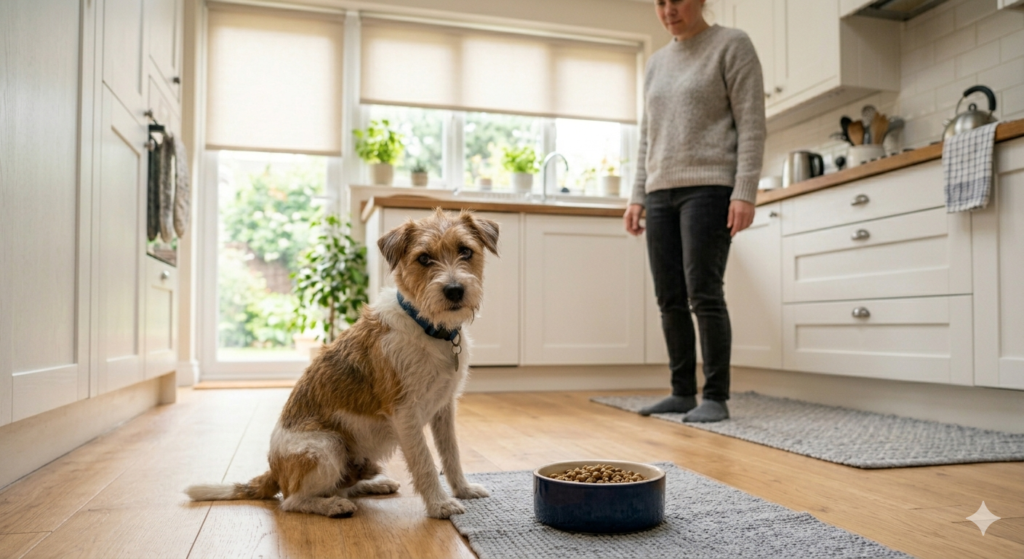
Important Rule: Never Punish Growling
A growl is communication.
If you punish growling:
the warning disappears
the fear remains
biting can happen faster next time
A dog that stops growling because of punishment is not “fixed”—the dog may simply skip directly to biting.
How to Stop Food Aggression in a Dog Safely
The goal is not forcing sharing.
The goal is teaching:
“Approaching humans make food better, not worse.”
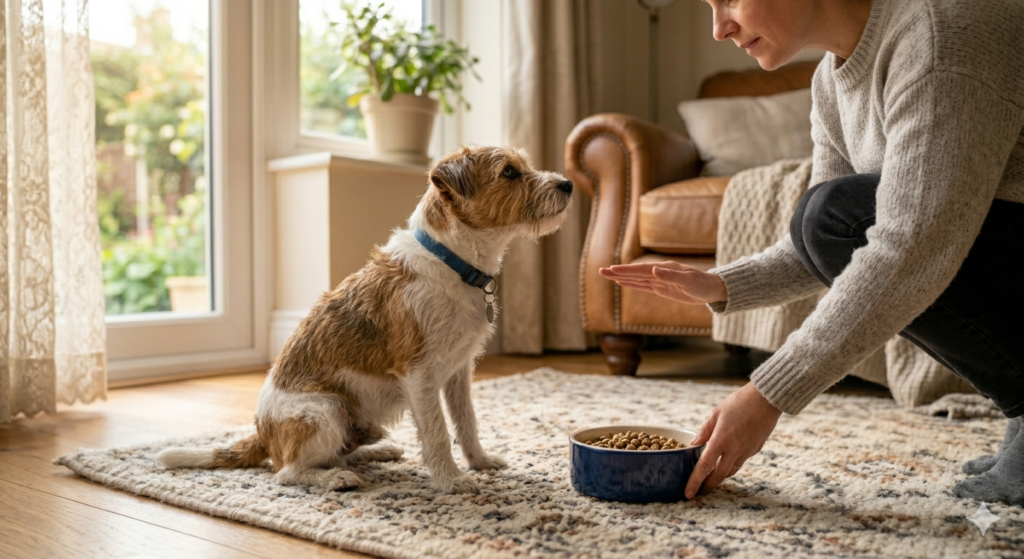
Step 1: Stop Challenging the Dog During Meals
Do NOT:
grab the bowl
stare at the dog while eating
reach suddenly
force touching
Instead:
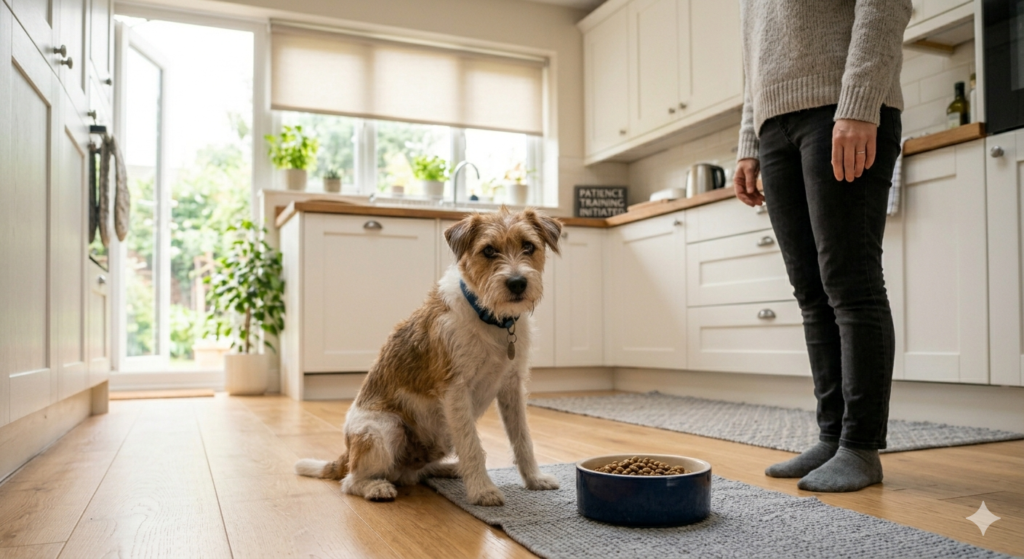
Give full feeding space.
This lowers tension immediately.
Step 2: Start Food Addition Training
This is one of the most effective methods.
How to do it:
Walk by calmly and drop something better into the bowl:
chicken
turkey
high-value treat
small meat piece
Then walk away.
The dog learns:
Human near bowl = bonus food
Not:
Human near bowl = food loss
Repeat daily.
Step 3: Respect Distance First
If your dog stiffens when you get close:
Start farther away.
Even standing too close too soon can slow progress.
Distance creates success.
Step 4: Use Calm Body Language
Avoid:
leaning over
direct staring
sudden reaching
Use:
sideways body position
calm movement
soft voice
Dogs read body pressure strongly.
Step 5: Trade Instead of Taking
If you must remove an item:
Never grab suddenly.
Instead trade:
offer better treat
dog releases item
then remove object
This builds trust.
How to Stop Food Aggression in Dogs Towards Other Dogs
Multi-dog food aggression is extremely common.
Why?
Dogs naturally notice food competition.
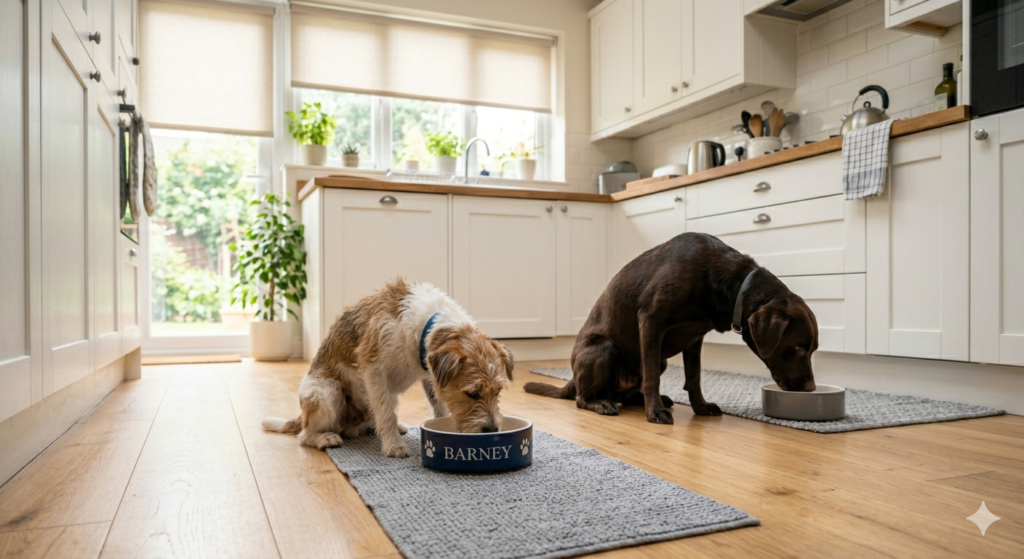
Rule #1: Separate Feeding Always
Best immediate solution:
Feed dogs separately.
Use:
different rooms
crates
gates
distance barriers
Even friendly dogs can guard food under pressure.
Why Feeding Together Slows Training
When dogs eat side by side:
tension rises
one dog finishes faster
staring starts
guarding escalates
Distance prevents rehearsal of aggressive behavior.
Step-by-Step Multi-Dog Improvement
Feed fully apart first
No visual pressure.
Remove bowls after meals
No lingering resource guarding.
No treat drops near each other initially
Treats can trigger guarding too.
Supervise all high-value chews
Bones often trigger stronger aggression than meals.
How to Stop Food Aggression in Dogs With Other Dogs During Treat Time
Treat time often causes hidden aggression.
Signs include:
freezing
staring
blocking
fast swallowing
Best method:
Give treats separately
Each dog gets a fixed space.
Use names clearly
Call one dog, reward, then the other.
Avoid floor scatter feeding in guarding homes
This increases competition.
Dogs Guarding Food From Cats or Other Animals
If searching how to stop food aggression in dogs towards other animals, the same rule applies:
Separate feeding completely.
Dogs and Cats: Why Risk Is Higher
Cats move unpredictably.
A dog eating may react suddenly if a cat passes too close.
Best prevention:
feed dog separately
feed cat elevated if needed
remove bowls immediately after meals
Never Let Other Animals “Test” Progress
Do not intentionally allow:
cat approaching bowl
rabbit near feeding zone
another dog hovering
Controlled distance matters.
Common Mistakes That Make Food Aggression Worse
Mistake 1: Taking bowl to show control
This often increases guarding.
Mistake 2: Hand in bowl repeatedly
This can create discomfort instead of trust.
Mistake 3: Punishing growls
Suppresses warning signals.
Mistake 4: Feeding dogs too close
Creates repeated tension.
Mistake 5: Allowing free access to chews around multiple animals
High-value items trigger guarding fast.
Can Hand Feeding Help?
Sometimes yes—but not always.
Hand feeding works best if dog is mild and relaxed.
If dog is already guarding severely:
Direct hand feeding may add pressure.
Best to use bowl addition training first.
What About Puppies?
Puppies can show early food guarding too.
Good prevention:
occasionally add treats while puppy eats
avoid disturbing every meal
teach gentle trade games early
Early prevention works extremely well.
When Food Aggression Is Severe
Call a professional if you see:
lunging
snapping
biting
guarding empty bowls
aggression spreading to toys and furniture
Look for a certified positive reinforcement behavior professional.
Punishment-based trainers often worsen guarding.
Children and Food Aggression: Critical Safety Rule
Children should never approach a dog eating if guarding exists.
Even mild dogs can bite under food stress.
Best household rule:
Dog eats privately, child stays away.
How Long Does Improvement Take?
Depends on:
severity
history
consistency
environment
Mild cases improve in weeks.
Moderate cases often need months of repetition.
Signs Training Is Working
You’ll see:
softer body posture
slower eating
less freezing
relaxed tail
ability to approach safely
Progress is emotional before behavioral.
Advanced Trust Exercise
Once basic improvement happens:
Approach → drop treat → walk away.
Sometimes pause.
Sometimes approach and leave nothing.
Dog learns approach is neutral or positive—not threatening.
Should You Ever Test the Dog?
No forced testing.
Do not challenge progress.
Real success is calm daily routine—not provoking reactions.
Feeding Schedule Helps Too
Predictable meals reduce insecurity.
Feed same times daily when possible.
Dogs often relax when food becomes predictable.
Best Household Setup for Multi-Animal Homes
Separate bowls
Separate spaces
Remove leftovers
Control treats
Supervise chews
Management prevents setbacks.
FAQ
How to stop food aggression in a dog fast?
There is no instant fix. Management plus trust-building works safest.
How to stop food aggression in dogs towards other dogs?
Separate feeding is the first and most effective step.
How to stop food aggression in dogs towards other animals?
Never allow close feeding contact; use barriers and separate feeding zones.
Can food aggression be cured?
Many dogs improve dramatically, but management often remains important.