
Low Protein Dog Food: When to Start It and When to Wait

uick answer: Low protein dog food is a therapeutic tool, not a wellness upgrade. Most dogs with early kidney disease need phosphorus restriction before protein restriction. Starting low protein dog food too early can cause muscle loss without slowing disease. Timing depends on IRIS stage, bloodwork, muscle condition, and appetite — not on the diagnosis alone.
Your vet said the words “low protein” and handed you a printout. You went home, searched it, and found forty articles that all say the same three things: kidney disease, liver disease, ask your vet.
None of them answered the question you actually have, which is whether you should start this week or wait, and what happens to your dog either way.
I want to walk you through that decision the way I’d walk a friend through it at their kitchen table, with the bag in front of us and the label math done out loud.
Because the honest version of this topic is messier than the summaries let on. Low protein dog food is genuinely life-extending for some dogs and quietly harmful for others, and the line between those two groups is not the diagnosis. It’s the stage, the numbers, and the muscle over your dog’s spine.
Recommended Products

Best Dog Food in 2026
What did your vet actually mean by “low protein”?
Here’s the first thing that surprises people. When a vet recommends a renal diet, protein reduction is often not the main event. Phosphorus restriction is.
Damaged kidneys stop clearing phosphorus efficiently. Rising phosphorus drives secondary hyperparathyroidism and further kidney damage, which is why the International Renal Interest Society (IRIS) guidelines build their staging and treatment recommendations around phosphorus targets tied to stage.
Therapeutic renal diets happen to be lower in protein and lower in phosphorus, because the two travel together. Meat and organ meats are phosphorus-dense. Reduce one, you reduce the other.
So when a bag of low protein dog food is doing its job in a kidney patient, a large share of the benefit is coming from the phosphorus column, not the protein column. That distinction matters enormously for what you do next.
It means an over-the-counter “senior” formula with slightly less protein and no phosphorus control is not a substitute. It also means that if you’re home cooking, dropping the chicken by 30% without touching the bone meal or the organ content misses the point entirely.
The second thing your vet meant, though they may not have spelled it out: protein restriction is aimed at reducing uremic waste products, the nitrogen byproducts that build up when kidneys can’t filter well. Those byproducts are what make a dog nauseated, flat, and disinterested in food.
That’s a symptom-management goal, and it becomes relevant when symptoms exist. Which brings us to timing.
When does low protein dog food actually help — and when does it backfire?
This is the section I wish someone had written for me years ago.
Almost every search for low protein dog food for kidney disease starts from the assumption that the diagnosis itself is the trigger. It isn’t. The stage is.
Dogs in IRIS Stage 1 and early Stage 2 chronic kidney disease usually feel fine. They’re eating, they’re drinking a bit more, and the diagnosis came from a routine senior panel or a pre-dental screen. There are no uremic signs to manage.
In that window, the evidence-supported priority is phosphorus control, hydration, blood pressure management, and monitoring proteinuria. Aggressive protein restriction is not the first lever, and starting low protein dog food purely because a diagnosis exists can cost you something you can’t easily get back.
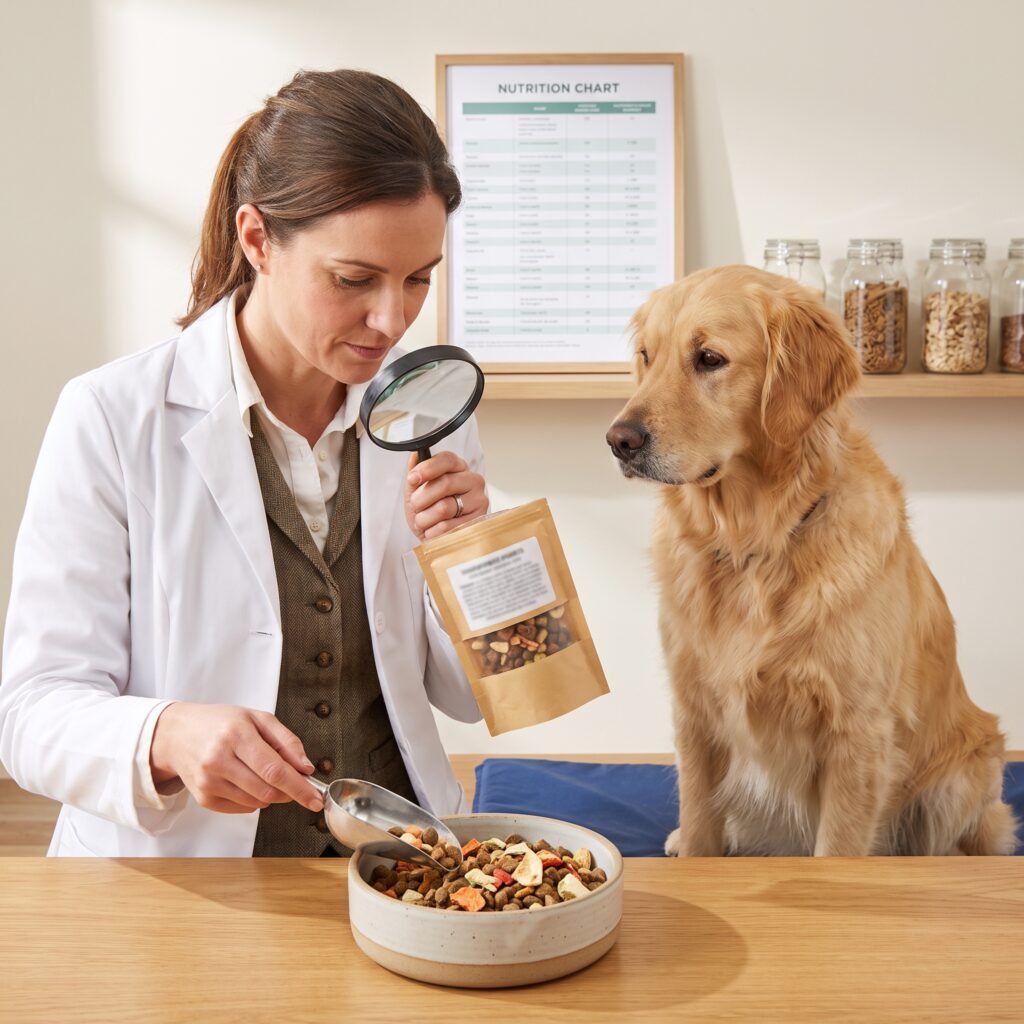
Older dogs are already fighting an uphill battle against sarcopenia, age-related muscle loss. Dogs with kidney disease are fighting it harder, because chronic illness pushes them into a catabolic state where the body breaks down muscle for amino acids.
Feed a marginal protein intake into that situation and you don’t get a healthier dog. You get a dog with a normal-looking body condition score and a topline you can feel every vertebra along.
I learned this on a dog named Bailey, a 58-pound Lab mix, IRIS Stage 2, creatinine mildly elevated, phosphorus squarely in range. Her owner wanted to be proactive. I supported a full switch to a low protein dog food designed for renal support, and we did it cleanly over twelve days.
Ten weeks later Bailey’s bloodwork was unchanged. Her weight was unchanged. But her muscle condition score had dropped from normal to mild-to-moderate wasting, most obvious over the lumbar spine and the tops of her hind legs. Her owner noticed she was hesitating at the back step.
We hadn’t slowed anything. We’d just taken protein away from a dog who wasn’t yet in a position to benefit from losing it. We moved her to a moderate-protein diet with strict phosphorus control and added a phosphorus binder later, per her vet, and she regained condition over the following months.
That failure taught me the sequencing I now use: control phosphorus first, restrict protein when the dog’s numbers or symptoms tell you it’s time, and watch muscle the entire way. Low protein dog food is a Stage 3 and Stage 4 tool far more often than it’s a Stage 1 tool.
The flip side is equally real. Wait too long with a dog who is symptomatic — nauseated, vomiting, refusing meals, breath that smells faintly of ammonia — and you’re leaving comfort on the table. In advanced kidney disease, therapeutic renal diets are one of the few interventions with meaningful evidence behind them for extending both quality and length of life.
So the answer to “when” is: when your dog’s stage, symptoms, and muscle status line up. Not on diagnosis day by default.
How much protein is “low,” in actual numbers?
Guaranteed analysis numbers on a bag are as-fed, which means moisture is baked into them. A canned food showing 8% protein and a kibble showing 24% can be closer than they look.
Convert to dry matter before you compare anything:
Dry matter % = (as-fed % ÷ (100 − moisture %)) × 100
A kibble at 24% protein and 10% moisture is 26.7% on a dry matter basis. A canned food at 8% protein and 78% moisture is 36.4% dry matter, which is higher, not lower. This single calculation prevents most low protein dog food shopping mistakes I see.
Here’s where the categories actually sit. These are typical published ranges, not guarantees for any specific product, and you should verify against the manufacturer’s own nutrient data sheet:
| Food category | Crude protein (% dry matter) | Phosphorus (% dry matter) | Typical use case |
|---|---|---|---|
| AAFCO adult maintenance minimum | 18% | 0.4% | Regulatory floor for a complete adult diet |
| AAFCO growth/reproduction minimum | 22.5% | 0.8% | Puppies, pregnancy — never restrict here |
| Typical adult maintenance kibble | 24–32% | 0.8–1.4% | Healthy adult dogs |
| Typical OTC “senior” formula | 20–26% | 0.7–1.1% | Marketing tier, not a renal diet |
| Therapeutic renal, early-stage | 14–18% | 0.3–0.5% | IRIS Stage 2 with rising phosphorus |
| Therapeutic renal, advanced | 12–16% | 0.2–0.4% | IRIS Stage 3–4, uremic signs present |
| Therapeutic hepatic formula | 15–18% | Moderate, copper-restricted | Hepatic encephalopathy, copper storage disease |
| Vet-formulated homemade renal diet | 13–18% | Formulated to target | When commercial low protein dog food is refused |
Notice the gap between the OTC senior column and the therapeutic column. A senior formula at 22% protein and 0.9% phosphorus is not low protein dog food in any clinically meaningful sense. It’s regular food with a picture of a grey-muzzled dog on the front. That gap is why shopping for low protein dog food for senior dogs by label claim alone goes wrong so often.
Notice also that therapeutic renal diets sit below the AAFCO adult maintenance minimum for phosphorus, and sometimes near or below it for protein. That’s intentional and it’s exactly why they’re sold through veterinarians. These diets are formulated for a disease state, not for general maintenance, and they’re the wrong food for a healthy dog.
This is also why the best low protein dog food for one dog is the wrong food for the dog next door. The category spans a 6-point protein spread and a 3-fold phosphorus spread.
That’s the single most important thing to understand about low protein dog food: it is not a safer, gentler, or cleaner version of normal food. It’s a targeted intervention with real trade-offs.
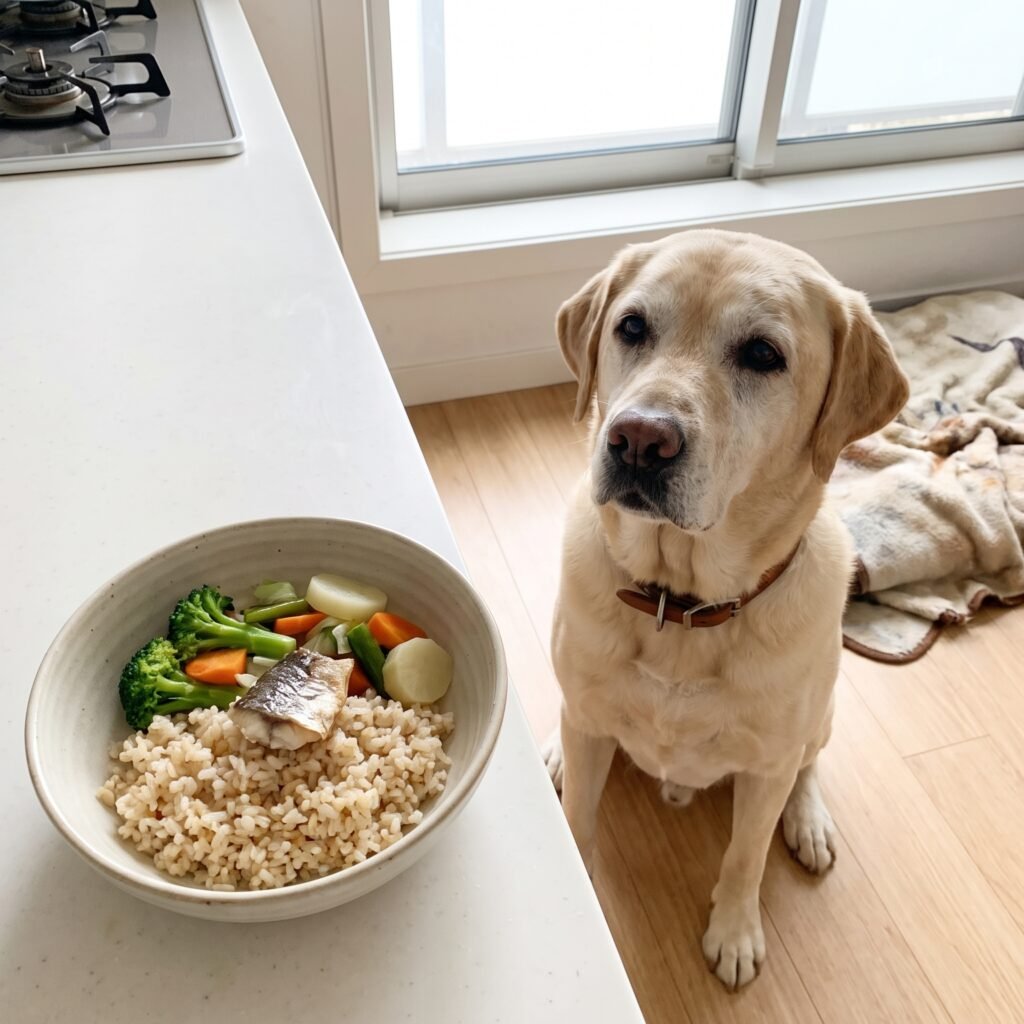
Why did my dog stop eating the prescription food?
This is the failure mode nobody warns you about, and it derails more low protein dog food transitions than any other issue.
Kidney dogs are often nauseated. Nausea creates food aversion. If you introduce a brand-new food during a nausea window, your dog doesn’t learn “this is my new food,” he learns “that food makes me feel sick.” That aversion can be permanent for that specific food.
I’ve now seen three separate households burn through two or three different therapeutic bags this way before anyone addressed the nausea. The fix is to talk to your vet about anti-nausea medication before the diet transition, not after the third rejection.
Practical things that have worked for me, in rough order of how often they’ve helped:
- Warm the food to roughly body temperature. This does more for aroma than anything else you can do for free.
- Transition over 10–14 days, not 5. Kidney dogs need the slower ramp.
- Use the canned version of the same therapeutic line as a topper over the dry, so you’re not introducing a second flavor profile.
- Feed smaller meals more often. Four small meals beat two large ones for a nauseated dog.
- Add water. Extra moisture supports hydration and softens texture for dogs with mouth ulcers, which advanced kidney disease can cause.
On texture, since you can’t smell a bag through a screen: therapeutic renal kibble tends to run smaller and denser than standard adult kibble, with a noticeably greasier surface because fat is boosted to replace calories lost from reduced protein. It leaves a faint oil film on your fingers. The smell is malty and slightly liver-sweet rather than sharply fishy.
The canned versions are usually a dense pâté that holds a clean edge when you cut it, which makes them easy to portion into a silicone mold and freeze into meal-sized pucks.
Some dogs love that greasiness. Some dogs, particularly ones raised on lean, high-protein kibble, find it foreign for the first week. Give it the full two weeks before concluding a low protein dog food has failed.
And the hard rule underneath all of this: a dog eating a moderate-protein diet enthusiastically is in better shape than a dog picking at a perfect low protein dog food. Calories come first. A renal patient who stops eating loses ground fast.
What if my dog can’t tolerate the standard renal diet?
Here’s the edge case that taught me to stop treating “low protein dog food” as one category.
Therapeutic renal diets replace lost protein calories with fat. That’s a smart trade for most kidney dogs and a genuine problem for a specific subset.
Miniature Schnauzers are the classic example. The breed is predisposed to hyperlipidemia and pancreatitis, and a fat-boosted renal formula can push an already-high triglyceride level somewhere you don’t want it. I’ve worked with a nine-year-old Schnauzer where the standard renal recommendation was the wrong answer for exactly this reason.
The solution there wasn’t a different bag off the shelf. It was a consult with a board-certified veterinary nutritionist (ACVN) to formulate a diet that was protein-restricted, phosphorus-restricted, and moderate in fat all at once. No commercial low protein dog food hits all three of those constraints well.
Other tolerance issues worth flagging with your vet:
Dogs with concurrent inflammatory bowel disease may need a hydrolyzed or novel protein source, which limits which low protein dog food options are even on the table.
Dogs with protein-losing nephropathy are a different animal entirely. They’re losing protein through the kidneys, and the approach involves moderate rather than severe restriction, plus omega-3 fatty acids and blood pressure management. Over-restricting these dogs is a known way to make them worse.
Dogs on a strict budget deserve an honest answer too. Therapeutic diets cost meaningfully more per pound than grocery food, and home cooking is usually more expensive once you account for a formulation consult and the supplement panel. If cost is the constraint, the therapeutic dry food from any major manufacturer, bought in the largest bag size, is nearly always the cheapest safe route to a genuine low protein dog food.
What isn’t a safe route: cutting your dog’s regular food with rice to “dilute” the protein. That reduces every nutrient, not just protein, and creates deficiencies over a matter of weeks.
Is a liver dog different from a kidney dog?
Yes, substantially, and the low protein dog food you’d choose is not the same one.
Dogs with hepatic encephalopathy — usually from a portosystemic shunt or advanced liver disease — struggle to clear ammonia produced from protein metabolism. Moderate protein restriction helps, but the source matters more than the amount.
Dairy and vegetable proteins are generally preferred over meat proteins in these dogs, because of their amino acid profiles and lower ammoniagenic potential. A therapeutic hepatic diet is built around that principle. A low protein dog food for kidney disease is not built on that principle, and swapping one for the other is a common and avoidable mistake.
Copper storage disease is a third category that gets lumped in wrongly. Bedlington Terriers, and to varying degrees Labradors, Dobermans, and West Highland White Terriers, can accumulate hepatic copper. The dietary intervention there is copper restriction, not protein restriction.
If you have a Bedlington and you’re shopping for low protein dog food, you may be solving the wrong problem. Ask your vet whether copper is the actual target.
What about Dalmatians and urate stones?
Same trap, different mechanism, and it’s worth its own section because the search volume around it is full of bad advice.
Dalmatians have a well-documented difference in uric acid metabolism, and English Bulldogs and Black Russian Terriers carry elevated risk too. Dogs with portosystemic shunts can also form urate stones.
The dietary target for these dogs is purines, not protein as a category. Organ meats — liver, kidney, sweetbreads — are extremely purine-dense. So are sardines, anchovies, mussels, and yeast-based supplements.
You can build a low-purine diet that isn’t especially low in protein, because eggs and dairy are relatively low-purine protein sources. Blindly reaching for a generic low protein dog food may reduce purines somewhat as a side effect, but it’s an imprecise instrument for the job.
Alkalinizing the urine and driving water intake matter as much as the food itself here. Therapeutic urinary formulas designed for urate management do all three. That’s what you want, rather than a renal diet borrowed from a different disease.
Can I just buy an over-the-counter low protein dog food?
Sometimes, with clear eyes about what you’re getting.
Most people asking about low protein dog food for senior dogs land here, so it deserves a straight answer. There are legitimate reasons to use an OTC option. Your dog may be in early Stage 2 where moderate protein plus phosphorus awareness is appropriate, or he may flatly refuse every therapeutic bag, or cost may be non-negotiable.
If you go OTC, do these four things:
Call the manufacturer and ask for the full nutrient profile on a dry matter basis, including phosphorus. Phosphorus is almost never on the guaranteed analysis. Any company that can’t produce this on request tells you something useful about itself.
Compare the phosphorus number to the therapeutic range in the table above. If it’s above 0.6% dry matter, you’re not getting meaningful renal support, whatever the front of the bag implies.
Ask who formulated the diet and whether they employ a qualified nutritionist. WSAVA’s guidelines on selecting pet foods lay out exactly which questions to ask, and this is the one most manufacturers dodge.
Check the FDA’s pet food recall page for that brand’s history. It’s free, it’s searchable, and a pattern of repeat recalls is a legitimate reason to walk away from an otherwise reasonable low protein dog food.
Understand the ceiling here, though. An OTC formula can be a bridge or a compromise. It cannot replicate a therapeutic diet’s phosphorus restriction, and for a Stage 3 or Stage 4 dog, that gap is the whole ballgame.
Is homemade low protein dog food a good idea?
It can be excellent, and it fails more often than it succeeds, for one predictable reason.
The successes I’ve seen share a common feature: the recipe came from a board-certified veterinary nutritionist who saw the dog’s actual bloodwork, or from a formulation service that adjusts for the specific stage. The failures came from recipes found online.
Homemade renal cooking is genuinely difficult. You’re simultaneously restricting protein and phosphorus, keeping calories high enough to prevent weight loss, keeping sodium controlled, hitting essential amino acid minimums with less total protein to work with, and supplementing calcium in a form that doesn’t add phosphorus back.
That last one catches almost everyone. Bone meal and dicalcium phosphate both add phosphorus. Calcium carbonate does not. An online recipe that says “add a calcium supplement” without specifying which one can undo the entire purpose of a homemade low protein dog food.
There’s also a compliance reality. Homemade diets require weekly cooking, precise weighing, and a supplement routine that doesn’t get skipped on busy weeks. When people drift, they drift toward more meat and fewer supplements, which is the opposite of the goal.
My honest take: homemade low protein dog food is the right answer for dogs who refuse every commercial option, dogs with multiple concurrent conditions that no single bag addresses, and owners who genuinely enjoy the routine. For everyone else, a therapeutic diet the dog will eat beats a perfect recipe that gets made three weeks out of four.
How I evaluate low protein dog food (methodology note)
So you know what’s behind the recommendations above, here’s the process I apply to any low protein dog food before I’d suggest it to anyone:
Dry matter conversion first. Every protein, fat, and phosphorus number gets converted from as-fed before any comparison happens. Guaranteed analysis comparisons across moisture levels are meaningless otherwise.
Nutrient profile against AAFCO reference values. I check where the food lands relative to AAFCO adult maintenance minimums and note explicitly where a therapeutic formula falls below them by design.
Phosphorus verification with the manufacturer. If phosphorus isn’t published, I request it. Unpublished and unavailable are different answers, and only one of them is disqualifying.
Formulation and manufacturing questions. Who formulated it, what are their credentials, does the company own its plants, and does it run feeding trials or formulate to profile.
Recall history via the FDA pet food recall database. Frequency, cause, and how the company communicated matter more than the existence of a single event.
Palatability under real conditions. The best low protein dog food on paper is worthless in a bowl a sick dog walks away from, so acceptance gets weighted heavily.
Real-world feeding observation. Kibble size, texture, aroma, stool quality over a two-week period, and whether dogs actually finish meals. A nutritionally perfect low protein dog food with a 40% refusal rate isn’t useful.
Reviewed by: SmartPupFood editorial review, cross-checked against AAFCO nutrient profiles, IRIS staging guidelines, and current FDA recall listings. This article is educational and does not replace your veterinarian’s assessment of your individual dog. Therapeutic diets require veterinary authorization for good reason, and staging decisions need bloodwork, not blog posts.
A practical six-week plan
If your vet has recommended a diet change and you want a concrete sequence, this is what I’d do:
Week 1: Get the full picture. Ask for the IRIS stage, current phosphorus, creatinine, SDMA, and urine protein:creatinine ratio. Ask your vet to record a muscle condition score, not just body condition score. Weigh your dog and write it down.
Week 2: Address nausea before touching the food bowl. If there’s any hint of it, get medication on board first. Order the food. Get both the dry and the canned version of the same line.
Weeks 3–4: Transition slowly. Start at 25% new food, move up every three to four days. Warm each meal. Track how much your dog actually eats, in grams if you can, not in “seemed fine.”
Week 5: Watch the trend lines. Is he finishing meals? Is his energy holding? Run a hand along his spine and hips twice a week so you’d notice change early.
Week 6: Recheck bloodwork and muscle condition score with your vet. This is the appointment that turns a generic low protein dog food for kidney disease into a plan tailored to your dog. This is where you learn whether the low protein dog food is doing what you hoped, and whether the protein level needs adjusting up or down.
The recheck is the part people skip, and it’s the part that makes the whole plan work. Low protein dog food isn’t a set-and-forget decision. It’s a dial you adjust as your dog’s disease progresses.
Frequently asked questions
Is low protein dog food bad for healthy dogs?
Yes, as a routine diet. Healthy adult dogs have no benefit to gain from protein restriction, and long-term feeding below their needs risks muscle loss and poor coat and immune function. Low protein dog food should be fed to healthy dogs only under specific veterinary direction.
How much protein should a dog with kidney disease eat?
It depends on stage. Early-stage dogs often do well on moderate protein with strict phosphorus control, while advanced-stage dogs typically need therapeutic formulas in the 12–16% dry matter range. Your vet sets the target based on bloodwork, symptoms, and muscle condition, not on a general rule.
What is the best low protein dog food for senior dogs?
There isn’t a universal best, because “senior” isn’t a health condition. If your senior dog has no diagnosed kidney or liver disease, a high-quality adult maintenance food with controlled phosphorus is usually more appropriate than a low protein dog food. If disease is confirmed, the therapeutic diet matched to that condition and stage wins.
Can I make low protein dog food at home?
You can, but only with a recipe formulated by a board-certified veterinary nutritionist for your specific dog. Internet recipes commonly get calcium supplementation wrong and add phosphorus back through bone meal. Homemade low protein dog food that isn’t properly formulated causes deficiencies within weeks.
Do I need a prescription for low protein dog food?
Therapeutic renal and hepatic diets require veterinary authorization in most regions, because they’re formulated below general maintenance profiles for specific disease states. Over-the-counter options with modestly reduced protein exist without a prescription, but they don’t deliver the phosphorus restriction that makes therapeutic diets effective.
The bottom line
Low protein dog food is one of the genuinely useful therapeutic tools in canine nutrition, and it’s also one of the most frequently misapplied. The mistake isn’t usually choosing the wrong brand. It’s choosing the right food at the wrong time.
The best low protein dog food is the one matched to your dog’s stage that he’ll actually finish. Control phosphorus first. Restrict protein when the stage and symptoms justify it. Convert to dry matter before you compare anything. Watch muscle as closely as you watch weight, because the scale will lie to you about it. That’s doubly true for low protein dog food for senior dogs, where age-related muscle loss is already in play.
And keep your dog eating. A moderate diet he finishes beats a perfect low protein dog food he walks away from, every single time.