
Fiber Rich Foods for Dogs: The Complete Veterinary Guide for 2026
Fiber is one of the most underappreciated nutrients in canine nutrition — and one of the most practically powerful tools a dog owner has for managing digestive health, weight, blood sugar, and even anal gland problems.

Yet most discussions of dog nutrition focus exclusively on protein and fat, leaving the fiber conversation to occasional pumpkin can recommendations on pet forums.
This guide changes that. Fiber rich foods for dogs are more than a digestive fix — they are a foundational dietary component that affects everything from stool quality to colon cancer risk. Understanding what fiber actually does, which types matter most, which foods deliver it most effectively, and how much your dog actually needs is the difference between guessing and knowing what to put in your dog’s bowl.
This is the most comprehensive, scientifically grounded guide to fiber rich food for dogs in 2025. We cover the biology of fiber, the two critical fiber types and their distinct roles, the best whole-food and commercial sources, the best fiber rich foods for dogs for specific health conditions, how to add fiber to your dog’s diet safely, and when fiber isn’t the answer. Whether you’re managing loose stools, chronic constipation, anal gland disease, diabetes, or obesity — or simply want to optimize a healthy dog’s diet — this guide gives you the complete picture.
What Is Dietary Fiber and Why Do Dogs Need It?
Fiber is a form of carbohydrate found exclusively in plant-based foods — grains, vegetables, fruits, and legumes. Unlike other carbohydrates that are broken down and absorbed in the small intestine, fiber resists enzymatic digestion. Dogs cannot digest dietary fiber in the conventional sense. Nevertheless, when fed at the proper quantity as a good dietary source of fiber or a fiber supplement, this indigestible material can have a positive impact on your dog’s microbiome, gut health, and stool quality.
This apparent paradox — an indigestible nutrient that is nonetheless essential — is the key to understanding how fiber rich foods for dogs work. Fiber’s value lies precisely in what it doesn’t do: it doesn’t get absorbed. Instead, it travels through the digestive tract modifying the physical and chemical environment in ways that produce significant health benefits.
The Two Types of Fiber: Soluble and Insoluble
Not all fiber behaves the same way, and the distinction between soluble and insoluble fiber is critical for understanding which fiber rich food for dogs is appropriate for your dog’s specific situation.
Soluble fiber dissolves in water, forming a viscous gel in the digestive tract. This gel slows gastric emptying, regulates nutrient absorption, and moderates blood glucose response after meals. Soluble fiber is also fermented by beneficial gut bacteria in the large intestine — producing short-chain fatty acids (SCFAs) like butyrate that serve as the primary energy source for colonocytes (colon lining cells). This fermentation supports a healthy gut microbiome and reduces the population of pathogenic bacteria. Examples of soluble fiber sources include pumpkin, psyllium husk, beet pulp, and oats.
Insoluble fiber does not dissolve in water and is not fermented to a significant degree. Instead, it absorbs water and adds bulk to the stool, accelerating transit time through the colon and promoting regular defecation. Insoluble fiber is the primary tool for managing constipation and firm, difficult-to-pass stools. Examples include cellulose (from plant cell walls), wheat bran, and the skin of many vegetables.
The most effective approach for digestive health is a blend of both types, which is why foods like pumpkin — which naturally contains both soluble and insoluble fiber — are so commonly recommended by veterinarians. The best fiber rich foods for dogs for general digestive support combine both types to achieve regularity without tipping into diarrhea or constipation.
How Much Fiber Does a Dog Actually Need?
An adult dog’s diet usually consists of 2.5% to 4.5% fiber. However, some dogs with health issues — like diabetes, loose stools, digestive problems, or obesity — may need higher-than-average fiber in their food.
Most dogs do well with a moderate amount of fiber, generally around 2–5% of the total diet. Your veterinarian can help guide the right amount for your dog. Dogs with specific medical conditions — particularly diabetes, inflammatory bowel disease, obesity, or anal gland disease — may benefit from therapeutic fiber levels of 8–12% or higher, but these levels should be implemented under veterinary supervision as they can interfere with nutrient absorption and create gas if introduced too rapidly.
Why Dogs Need Fiber Rich Foods: The Health Benefits
Before diving into specific food rich in fiber for dogs, understanding the full spectrum of benefits fiber provides helps contextualize why it matters so much.
Digestive Regularity and Stool Quality
This is the most recognized benefit of fiber rich foods for dogs. Dietary fiber can help dogs with loose stools or diarrhea and add bulk to the diet of a dog who needs to lose weight.
The mechanism works in both directions: soluble fiber gels in the intestine, slowing transit and firming loose stools; insoluble fiber adds bulk and speeds transit, relieving constipation. The right balance of rich in fiber foods for dogs produces firm, well-formed stools that are easy to pass — the clearest indicator of a healthy digestive system.
Anal Gland Health
This is the most underappreciated benefit of dietary fiber and one of the most practically important for dog owners managing chronic anal gland problems. The anal glands are two small scent-secreting pouches on either side of a dog’s anus that empty naturally during defecation through the physical pressure of a firm, well-formed stool passing across them.
When stools are consistently soft, loose, or small — often the result of a low-fiber diet — this natural emptying mechanism fails. Anal gland secretions accumulate, causing discomfort, scooting, and eventual impaction or infection. Fiber is one of the most practical tools you can add to your dog’s diet. It supports firm stool, healthy digestion, and even plays a direct role in preventing anal gland problems.
For dogs with chronic anal gland issues, a systematic increase in dietary fiber from fiber rich foods for dogs is often the most effective long-term intervention — addressing the root cause rather than symptom management through manual expression alone.
Weight Management
High-fiber dog food can add bulk without calories, helping your dog feel fuller and more satisfied to aid in weight management. This is one of the most clinically validated benefits of fiber rich food for dogs for overweight and obese dogs.
Fiber-rich ingredients add physical volume to a meal without proportionally increasing caloric density. A dog fed a high-fiber formula consumes the same meal volume but fewer calories per gram — feeling satiated while maintaining a caloric deficit. This is precisely why veterinary weight management formulas consistently feature elevated fiber levels: they allow portion-controlled feeding without the persistent hunger that causes dogs to beg, steal food, and lose the behavioral compliance that makes weight loss sustainable.
Blood Sugar Regulation
Soluble fiber’s ability to slow gastric emptying and moderate nutrient absorption has direct implications for blood glucose management. In dogs with diabetes mellitus, fiber rich foods for dogs reduce the post-meal blood glucose spike by slowing the absorption of dietary carbohydrates — requiring less insulin response for the same caloric load.
The American Animal Hospital Association (AAHA) Diabetes Management Guidelines recommend moderate-to-high fiber diets for diabetic dogs, particularly formulas that emphasize soluble fiber sources like psyllium husk and beet pulp alongside insoluble fiber for stool bulk.
Gut Microbiome Support
The fermentation of soluble fiber in the large intestine produces short-chain fatty acids — particularly butyrate — that are the primary energy source for colon lining cells and serve as a critical signal for maintaining the integrity of the gut barrier. Consistent production of SCFAs from dietary fiber supports a diverse, balanced gut microbiome, reduces intestinal inflammation, and decreases the population of pathogenic bacteria that compete with beneficial species.
This microbiome-supporting function makes rich in fiber foods for dogs particularly valuable for dogs recovering from antibiotic treatment (which disrupts the microbiome), dogs with inflammatory bowel disease, and any dog that experiences frequent digestive upset.
Colon Health and Cancer Risk Reduction
Butyrate produced by fiber fermentation has anti-tumor properties specifically relevant to colorectal cancer risk. While colorectal cancer is less common in dogs than in humans, it does occur — and the evidence that dietary fiber reduces its incidence in the canine colon is consistent with the established mechanism in human medicine. Regular consumption of fiber rich foods for dogs supports the colon’s self-renewal capacity and reduces exposure to potential carcinogens in the intestinal environment.
The Best Fiber Rich Foods for Dogs: A Complete Guide
The following section covers both natural whole-food sources and commercial formula options — giving dog owners the flexibility to add fiber through food toppers and treats alongside a complete dietary approach.
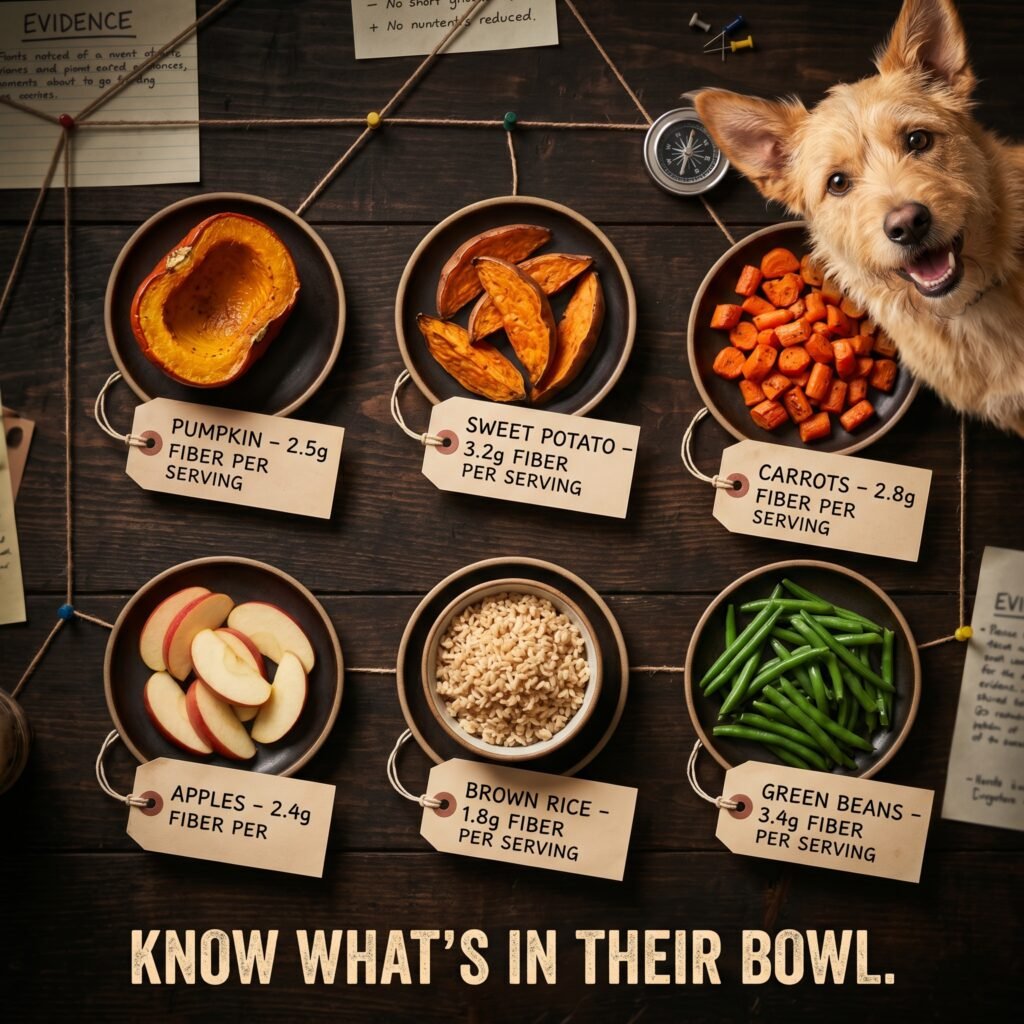
Pumpkin — The Gold Standard Fiber Rich Food for Dogs
Pumpkin is the most widely recommended fiber rich food for dogs across veterinary, nutritional, and owner communities — and for excellent reason. It contains both soluble and insoluble fiber, is palatable to most dogs, and is easy to mix into food. Use plain canned pumpkin — not pumpkin pie filling, which contains added sugar, spices, and sometimes xylitol.
Start with about one teaspoon per 10 pounds of body weight per day as an addition to regular meals. Pumpkin works bidirectionally — its soluble fiber firms loose stools by absorbing excess water, while its insoluble fiber adds bulk that stimulates transit in constipated dogs. It is gentle enough for puppies, seniors, and dogs with sensitive stomachs. Pumpkin is also rich in beta-carotene (the precursor to vitamin A), potassium, and vitamin C — making it a genuine nutritional contribution alongside its fiber benefits.
Fiber-rich ingredients like pumpkin, pumpkin seeds, and sweet potato also boast antioxidant richness. For dogs with anal gland problems specifically, plain canned pumpkin added to every meal is one of the first-line dietary interventions veterinarians recommend.
Sweet Potato — Rich in Fiber and Nutrients
Sweet potato is one of the most nutritionally comprehensive fiber rich foods for dogs available. Rich in dietary fiber, beta-carotene, vitamin B6, vitamin C, potassium, and manganese, cooked sweet potato provides meaningful fiber alongside a genuinely dense micronutrient profile.
Cooked, peeled sweet potato is rich in fiber and well-tolerated by most dogs. It can be baked, boiled, or steamed — do not add butter, salt, or seasoning. Mash it and mix into your dog’s regular food.
Human foods that are high in fiber like green beans and sweet potatoes are good sources of fiber and fine to give in small quantities. But on a safety note, only give your dog small, cooked portions of sweet potatoes. Raw sweet potato is harder to digest and may cause digestive upset — always cook before feeding.
Sweet potato appears frequently in commercial best fiber rich foods for dogs formulas — particularly grain-free kibble and limited ingredient diets — where it serves as both a primary carbohydrate and fiber source.
Green Beans — Low-Calorie Fiber Rich Food for Dogs
Green beans are a favorite among veterinarians and dog owners seeking food rich in fiber for dogs without adding significant calories — making them particularly valuable for weight management programs. A cup of green beans contains approximately 3.7 grams of fiber at only 31 calories — a dramatically better calorie-to-fiber ratio than most commercial treats or food additions.
Green beans, carrots, apples, and leafy greens like spinach or kale are rich in fiber and safe in moderation, such as for treats. Green beans and carrots are favorites for many dogs. They can be fed raw, steamed, or boiled — always without seasoning, garlic, or onion. Many veterinarians recommend the “green bean diet” — replacing 10–20% of a dog’s regular food volume with green beans — as a practical caloric reduction strategy for overweight dogs that maintains the physical fullness of a normal-sized meal while reducing calorie intake.
Apples — Soluble Fiber with Natural Sweetness
Apples provide pectin — a highly soluble fiber with powerful prebiotic and gel-forming properties — alongside vitamin C and antioxidant polyphenols. As rich in fiber foods for dogs, apples offer a palatable, naturally sweet fiber source that most dogs accept enthusiastically.
Always remove seeds and core before feeding — apple seeds contain amygdalin, which releases cyanide when metabolized. Feed in small slices as a treat or food topper, keeping portions modest to avoid excessive fruit sugar intake. One to two small slices per day for a medium-sized dog is an appropriate serving.
Carrots — Fiber Rich Food for Dogs With Dental Benefits
Carrots deliver insoluble fiber alongside beta-carotene and vitamin K, while the mechanical action of crunching raw carrot provides mild dental cleaning that makes them doubly practical as fiber rich food for dogs. Carrots are one of the safest vegetables to feed dogs — they pose no toxicity risk and are very well tolerated by dogs with sensitive stomachs.
Raw carrots can be fed whole as chews (excellent dental benefit), sliced as training treats, or shredded and mixed into food. Cooked carrots are softer and more digestible but lose some insoluble fiber effect. For dogs that need dental enrichment alongside digestive support, raw carrots are an excellent dual-purpose fiber rich food for dogs.
Oats and Brown Rice — Grain-Based Fiber Rich Foods for Dogs
Cooked brown rice and whole oats (plain, no additives cooked oatmeal) can both contribute fiber while also providing energy in the form of complex carbohydrates. Brown rice can be fed at a ¼ cup to a 1 cup depending upon your dog’s size. For cooked oatmeal, start with about a spoonful of cooked oatmeal at a time. You can work up to about 6 ounces of oatmeal a day per 25 pounds of the dog’s bodyweight.
Oats provide beta-glucan — a highly soluble, gel-forming fiber with strong evidence for blood glucose regulation and cholesterol reduction. Oatmeal is one of the most commonly included grains in sensitive stomach and digestive support commercial formulas, reflecting its gentle, well-tolerated fiber profile. These grain-based fiber rich foods for dogs are particularly valuable for dogs that react poorly to legume-based fiber sources (peas, lentils) which are common in grain-free formulas.
Psyllium Husk — The Clinical Fiber Supplement
Psyllium husk is the most concentrated soluble fiber source available for dogs and the primary active ingredient in human fiber supplements like Metamucil. Its gel-forming capacity is approximately five times higher than most food-based fiber sources, making it particularly powerful for managing soft stools, diarrhea, and anal gland problems.
When using soluble fiber products like Metamucil, too much of it can lead to diarrhea. Start with small amounts — ½ to 1 teaspoon mixed into food with adequate water for medium-sized dogs — and increase gradually under veterinary guidance. Plain psyllium husk (without artificial sweeteners, flavorings, or xylitol) is safe for dogs. Never use flavored human fiber supplements, as they frequently contain xylitol, which is highly toxic to dogs.
Flaxseed — Fiber with Omega-3 Benefits
Ground flaxseed provides a combination of soluble and insoluble fiber alongside alpha-linolenic acid (ALA) — an omega-3 fatty acid with anti-inflammatory properties. As food rich in fiber for dogs, ground flaxseed is more bioavailable than whole flaxseed, whose seed coat resists digestion. Always use ground flaxseed rather than whole.
Add one teaspoon to one tablespoon of ground flaxseed to food daily depending on dog size. Keep ground flaxseed refrigerated after opening to prevent the omega-3 fatty acids from going rancid — rancid flaxseed produces inflammatory compounds that negate the anti-inflammatory benefits.
Leafy Greens — Spinach, Kale, and Broccoli
Green beans, carrots, apples, and leafy greens like spinach or kale are rich in fiber and safe in moderation. Spinach provides dietary fiber alongside iron, calcium, and vitamins A, C, and K — but should be fed in small quantities as its oxalate content can contribute to kidney stone formation in dogs with predisposition to urinary tract issues.
Kale is another nutrient-dense rich in fiber food for dogs but should be fed in modest amounts — its glucosinolate content can cause gastrointestinal irritation in large quantities. Lightly steamed and mixed into food is the most effective preparation for both palatability and safety.
Broccoli is high in fiber and safe for dogs but contains isothiocyanates that can cause gastric irritation in large quantities. Feed in small amounts — florets only, no stems — as a treat or food mixer.

Best Fiber Rich Foods for Dogs by Health Condition
The specific fiber needs of dogs vary meaningfully by health condition. Here is a targeted guide to the best fiber rich foods for dogs for the most common presentations.
For Loose Stools and Diarrhea
Soluble fiber is the primary tool. Pumpkin (plain canned) is the first intervention — start with one teaspoon per 10 pounds of body weight per meal, twice daily. Psyllium husk provides more concentrated soluble fiber if pumpkin alone is insufficient. Oatmeal mixed into meals provides gentle soluble fiber alongside easily digestible carbohydrates.
Avoid insoluble fiber-heavy foods during acute diarrhea — bran, raw vegetables, and high-cellulose ingredients accelerate transit and may worsen loose stools in the short term.
For Constipation
Insoluble fiber and adequate hydration are the primary tools. Green beans, raw carrots, wheat bran (small amounts), and additional moisture — either through wet food or water added to dry kibble — collectively increase fecal bulk and stimulate transit. Ensure the dog has constant access to fresh water — fiber without adequate hydration can worsen constipation by creating dry, hard fecal matter.
Within 24 hours a high-fiber diet dog food helps firm up loose stool and reduces the risk of future GI upset, making commercial high-fiber formulas effective for dogs with chronic constipation patterns when combined with adequate hydration.
For Anal Gland Problems
Consistent, firm stool production is the goal — requiring a reliable daily fiber source. Pumpkin added to every meal is the most practical first step. Sweet potato mixed into dry kibble provides additional bulk. For dogs with chronic anal gland issues that don’t resolve with dietary addition alone, a commercial high-fiber formula delivering 6–8%+ fiber on a dry matter basis may be needed.
Senior dogs often develop a variety of medical conditions that increase their need for fiber. If your senior dog is experiencing constipation or soft stools, talk to your veterinarian about whether a fiber-rich therapeutic diet such as Hill’s Prescription Diet Gastrointestinal Biome dog food could benefit them.
For Overweight Dogs
Replace 10–20% of regular food volume with green beans as a low-calorie bulking strategy. Choose a commercial formula with elevated fiber (5–8% dry matter) to reduce caloric density while maintaining meal satisfaction. This Solid Gold Fit & Fabulous blend is packed with fiber-rich and filling ingredients like peas, pearled barley, oatmeal, and brown rice — low in calories and fat, featuring Alaskan pollock as the lean protein source.
The goal is caloric deficit with maintained satiety — fiber rich foods for dogs that add volume without adding meaningful calories are the most effective practical tool for owner-managed weight loss between veterinary check-ins.
For Diabetic Dogs
Soluble fiber is the primary therapeutic tool for diabetic dogs — slowing post-meal glucose absorption and reducing insulin demand. Psyllium husk, oats (beta-glucan), and beet pulp are the most evidence-supported soluble fiber sources for blood glucose regulation. Combine with a low-glycemic carbohydrate base (sweet potato, brown rice) rather than high-glycemic sources like white rice or corn.
Always implement dietary changes for diabetic dogs in partnership with your veterinarian — insulin dosing may need adjustment as dietary fiber changes glucose response.
Commercial Dog Foods Rich in Fiber: What to Look For
For owners who want the benefits of fiber rich foods for dogs through their dog’s primary diet rather than food additions alone, understanding how to evaluate commercial high-fiber formulas is essential.
Reading Fiber Content on Dog Food Labels
The guaranteed analysis on every commercial dog food label lists a maximum crude fiber percentage. This maximum represents insoluble fiber only — it does not include fermentable soluble fiber, which can be significant in formulas with oats, beet pulp, or psyllium husk. The true functional fiber content of a formula may therefore be higher than the crude fiber label suggests.
Convert the as-fed crude fiber percentage to a dry matter basis for meaningful comparison: divide the as-fed crude fiber by (1 minus the moisture percentage). For a kibble with 3.5% crude fiber on an as-fed basis at 10% moisture, the dry matter fiber is 3.5 / 0.90 = 3.9%.
Quality Fiber Sources in Commercial Formulas
Look for these food rich in fiber for dogs ingredients in commercial formulas:
- Beet pulp — a moderately fermentable fiber that balances soluble and insoluble properties; one of the most well-researched fiber sources in commercial dog food
- Oatmeal and whole oats — provide beta-glucan soluble fiber alongside digestible complex carbohydrates
- Sweet potato and pumpkin — whole-food fiber sources with genuine micronutrient contributions
- Brown rice — provides insoluble fiber with excellent digestibility as a carbohydrate base
- Flaxseed — soluble and insoluble fiber with omega-3 benefit
- Chicory root and inulin — prebiotic soluble fibers that specifically feed beneficial gut bacteria; excellent for microbiome support but can increase gas in sensitive dogs
Avoid formulas where the primary fiber source is cellulose (often listed as “powdered cellulose”) — this is essentially purified wood pulp added as a bulking agent. While technically fiber, it provides no meaningful fermentable fraction for microbiome support and is a lower-quality ingredient than whole-food fiber sources.
Top Commercial High-Fiber Dog Food Formulas
Hill’s Prescription Diet Gastrointestinal Biome — the most clinically validated fiber-focused veterinary formula, combining soluble and insoluble fibers with prebiotic support in a prescription-grade product. Requires veterinary approval but within 24 hours helps firm up loose stool and reduces the risk of future GI upset. It contains a blend of soluble and non-soluble fibers to support gastrointestinal regularity, plus fish oils and omega fatty acids to soothe GI upset.
Solid Gold Fit & Fabulous with Alaskan Pollock — a commercially available high-fiber weight management formula using pearled barley, oatmeal, and brown rice alongside lean protein. At approximately 10% crude fiber (dry matter basis), it provides meaningful fiber support without prescription access.
Purina Pro Plan Sensitive Skin & Stomach Salmon & Rice — includes prebiotic fiber blend specifically calibrated for gut microbiome support alongside highly digestible protein, making it effective for dogs who need both digestive support and skin/coat improvement simultaneously.
Spot & Tango UnKibble — gently dried rather than extruded, using real whole-food ingredients like spinach, carrots, apples, and pumpkin — all excellent sources of fiber. These recipes are formulated by veterinary nutritionists and gently processed to preserve nutrients while improving digestibility.

How Much Fiber Is Too Much? The Risk of Over-Supplementation
It is unusual for dogs to develop severe side effects from fiber supplementation. However, mild to moderate symptoms from too much fiber are possible. When using soluble fiber products like Metamucil, too much of it can lead to diarrhea. Also, excess amounts of insoluble fibers like cellulose can worsen constipation, and too much of the rapidly fermentable fiber types can increase gas production and thus flatulence.
Additionally, large amounts of all fiber types can inhibit digestive enzymes from metabolizing certain nutrients — particularly minerals like calcium, iron, and zinc. Dogs fed very high fiber diets long-term without appropriate mineral supplementation may develop deficiencies.
The practical guideline: always introduce any new food gradually. Start with small amounts of any new fiber rich food for dogs, increase incrementally over one to two weeks, and monitor stool quality throughout. Ideal stool on an appropriate fiber intake is well-formed, slightly firm, easy to pick up cleanly, and produced regularly once or twice per day.
If you notice excessive gas, significant changes in stool consistency, reduced appetite, or weight loss after increasing fiber intake, consult your veterinarian before continuing.
Fiber Rich Foods for Dogs to Avoid
Not every high-fiber human food is safe for dogs. These foods are either toxic, poorly tolerated, or present a risk that outweighs their fiber benefit:
Onions and garlic: Both are high in fiber but highly toxic to dogs — they contain thiosulfates that destroy red blood cells and cause hemolytic anemia. Never feed.
Grapes and raisins: High in fiber but cause acute kidney failure in dogs through an unknown mechanism. Never feed.
Avocado: Contains persin — a fungicidal toxin — particularly in the skin, pit, and leaves. The flesh is less toxic but still carries risk and the high fat content far outweighs the fiber benefit. Avoid.
Human fiber supplements with xylitol: Products like flavored Metamucil, FiberChoice gummies, and many prebiotic powders contain xylitol — highly toxic to dogs, causing hypoglycemia and potentially fatal liver damage. Always choose plain, unflavored psyllium husk or supplements specifically formulated for dogs. Can I give my dog fiber supplements made for humans? No. Many human fiber supplements contain artificial sweeteners or additives that are not suitable for dogs. Always choose supplements specifically formulated for canine digestion.
Beans and legumes in large quantities: While not toxic, large quantities of kidney beans, black beans, and similar legumes produce significant gas and digestive discomfort from their high raffinose content. Small amounts of cooked, plain legumes are safe but are not among the best fiber rich foods for dogs for practical feeding.
Frequently Asked Questions About Fiber Rich Foods for Dogs
What are the best fiber rich foods for dogs overall? The most consistently recommended and practical best fiber rich foods for dogs are: plain canned pumpkin, cooked sweet potato, green beans, apples (without seeds), carrots, cooked oatmeal, and ground flaxseed. These provide a balance of soluble and insoluble fiber, are safe for most dogs, are widely available, and are accepted by most dogs palatably.
How much fiber should I add to my dog’s food? Start conservatively and increase gradually. A reasonable starting point is one teaspoon of pumpkin per 10 pounds of body weight per day, or a tablespoon of green beans or cooked sweet potato mixed into meals. Monitor stool quality and increase only if improvement is needed. Most dogs do well with fiber additions representing 5–10% of their total daily calorie intake.
Is pumpkin the best fiber rich food for dogs? Pumpkin is the most widely recommended fiber rich food for dogs because it contains both soluble and insoluble fiber, is safe for almost all dogs, is highly palatable, is inexpensive and widely available, and works effectively for both loose stools and constipation. It is not the highest-fiber food available, but it is the most practically effective for most situations.
Can I give my dog too much fiber? Yes. Excess fiber — particularly rapidly fermentable types — can cause gas, bloating, diarrhea, and over time may reduce mineral absorption. Always introduce fiber rich food for dogs gradually and monitor stool quality. If stool becomes too firm, too loose, or gas increases significantly, reduce the amount and consult your veterinarian.
Which fiber rich foods for dogs are best for weight loss? Green beans are the most practical choice — extremely low calorie density, high fiber content, and well-tolerated by most dogs. Replace 10–20% of regular food volume with green beans to reduce daily caloric intake while maintaining meal satisfaction. Commercial weight management formulas with elevated fiber (8–12% dry matter) amplify this effect when combined with controlled portions.
What fiber rich food for dogs helps most with anal glands? Consistent firm stool production is the goal for anal gland health. Plain canned pumpkin added to every meal is the most evidence-supported first-line dietary intervention. Dogs with chronic anal gland issues that do not respond to pumpkin alone may benefit from a commercial high-fiber formula delivering 6–8%+ crude fiber, or a veterinary prescription fiber-enriched diet.
Are leafy greens a good rich in fiber food for dogs? Yes, in moderation. Spinach, kale, and cooked broccoli are all rich in fiber foods for dogs that provide meaningful fiber alongside micronutrients. Feed in small amounts — no more than 10% of daily calorie intake — as a food mixer or treat. Avoid feeding large quantities of spinach (oxalates) or kale (glucosinolates) daily.
Final Verdict: Making Fiber Rich Foods for Dogs Work for Your Dog
Fiber rich foods for dogs are among the most practical and evidence-supported dietary additions available to dog owners. Whether you’re managing loose stools, chronic anal gland impaction, canine diabetes, obesity, or simply optimizing a healthy dog’s gut microbiome, a well-chosen fiber rich food for dogs delivers measurable, visible results.
Start with pumpkin. It is the single most accessible, most recommended, and most effective fiber rich food for dogs for the widest range of dogs and health situations. Add cooked sweet potato, green beans, and carrots as complementary sources for variety and nutrient diversity. Consider ground flaxseed for dogs who also need skin and coat support alongside fiber benefits. And if your dog’s needs exceed what whole-food additions can address, work with your veterinarian to evaluate commercial high-fiber formulas or prescription gastrointestinal diets.
The best fiber rich foods for dogs are the ones your dog will actually eat consistently, in appropriate amounts, that produce the stool quality and digestive comfort that signals a healthy gut. That’s the most reliable metric of all — and with the options this guide covers, you have everything you need to achieve it.
This article is for informational purposes only. Always consult a licensed veterinarian before making significant changes to your dog’s diet, particularly if your dog has existing health conditions, diagnosed gastrointestinal disease, diabetes, or specific dietary requirements.