Best Bison Dog Food for Allergies, Lean Protein & Optimal Health
Bison dog food delivers more iron, less fat, and a novel protein most allergic dogs have never encountered. We ranked the best bison dog food brands by ingredient quality, nutrition, and real results.
If you’ve been researching alternative protein sources for your dog and keep landing on bison dog food, you’re asking exactly the right question. Bison is one of the most nutritionally impressive proteins available in the pet food market — lean, rich in micronutrients, and genuinely rare enough to qualify as a novel protein for dogs with food sensitivities. And yet, despite its growing popularity, most dog owners know very little about what bison actually delivers, which brands to trust, and how it compares to the proteins they’re already using.
This guide covers everything. What bison is and why it matters for canine nutrition, the specific benefits of dog food with bison, how it stacks up against beef, chicken, and other common proteins, what to look for on the label, the best bison dog food brands available in 2025, and the one label deception problem that catches even careful buyers off guard. By the time you finish reading, you’ll have everything you need to make a confident, well-informed decision.
What Is Bison — and Why Is It in Dog Food?
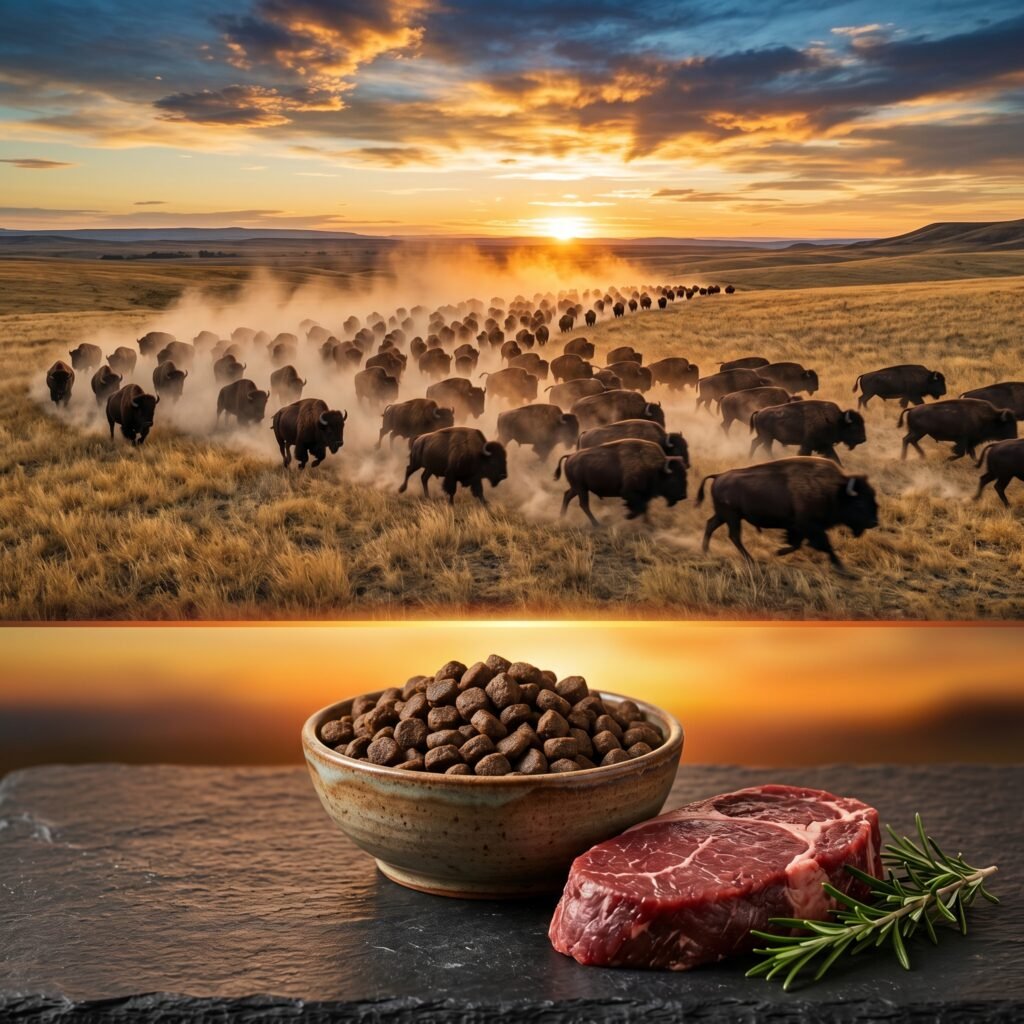
Bison — also known as American buffalo — is the largest land mammal native to North America. Once numbering in the tens of millions and roaming freely across the Great Plains, bison were nearly hunted to extinction by the late 19th century. Conservation efforts over the past century have brought their population back to sustainable levels, and today bison are commercially ranched across the American West and Midwest, providing meat for both human and pet consumption.
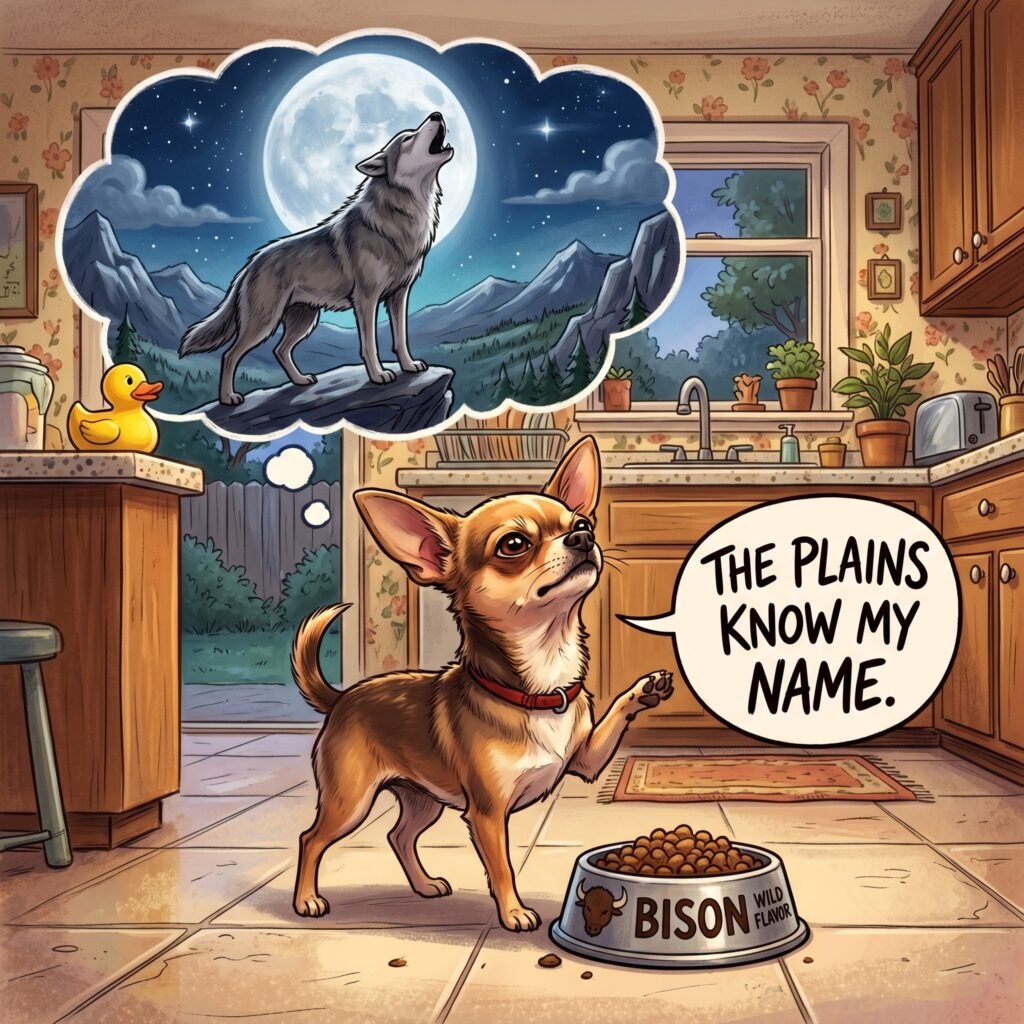
In the dog food industry, bison entered the conversation as part of the broader shift toward novel and exotic proteins. The logic is straightforward: dogs that have eaten chicken or beef their entire lives may develop sensitivities to those proteins over time — not because the proteins are inherently bad, but because repeated exposure to the same immune-triggering protein can sensitize the body. A protein the dog has never encountered — like bison — is far less likely to provoke that reaction.
Beyond the novelty factor, bison has genuine nutritional merits. It is a red meat like beef, which means it carries a familiar macronutrient profile that dogs are biologically well-suited to digest. But bison is leaner than beef, denser in several key micronutrients, and carries a nutrient profile that many veterinary nutritionists consider superior for dogs needing weight management or anti-inflammatory dietary support.
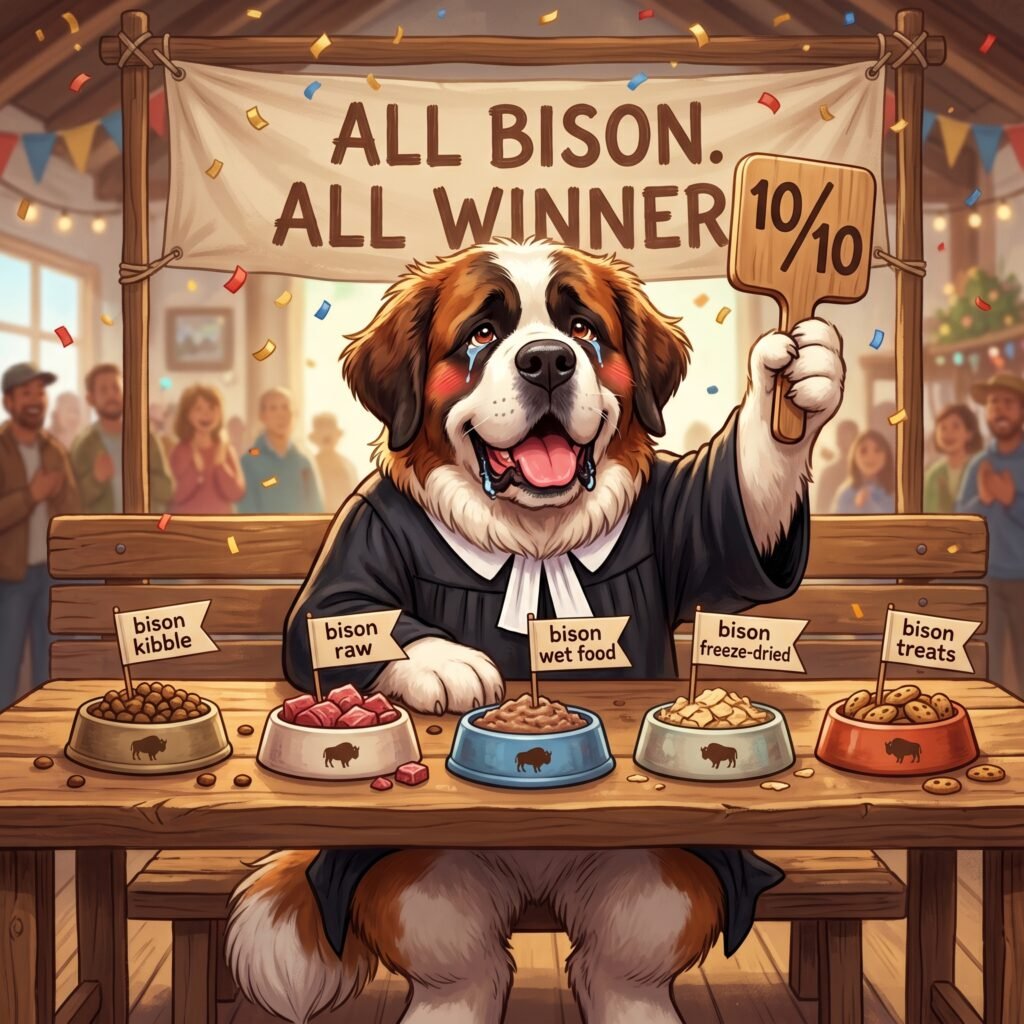
Dog food with bison has moved from a niche specialty product to a mainstream option across dry kibble, wet food, freeze-dried, and raw formats — with brands ranging from budget-friendly grocery-store options to premium, grass-fed, single-ingredient raw products.
The Nutritional Case for Bison Dog Food
Understanding why bison is gaining ground requires looking at what’s actually in the meat — not just the marketing language on the front of the bag.
Exceptional Protein Quality
Bison delivers between 18 and 22 grams of protein per 100 grams of raw meat — a high-quality, complete protein with all the essential amino acids dogs require for muscle development, immune function, enzyme production, and energy. The protein in bison is highly bioavailable, meaning a greater proportion of what your dog eats is actually absorbed and used by the body, rather than excreted.
This is particularly relevant when comparing bison to lower-grade protein sources common in mainstream dog food — by-product meals, anonymous “poultry meal,” and plant proteins like pea protein or soy. While these sources contribute to the protein percentage on the label, their biological value and amino acid completeness are inferior to named animal proteins like bison.
Significantly Leaner Than Beef
One of bison’s most frequently cited advantages is its fat content — or more accurately, its lack of it. Bison is substantially leaner than beef, with significantly lower saturated fat per serving. For dogs managing their weight, recovering from pancreatitis, or prone to conditions exacerbated by dietary fat, this is a meaningful practical advantage.
Importantly, being leaner doesn’t mean bison is calorie-poor. The protein density ensures dogs still receive the energy they need from a smaller fat load, which is the ideal macronutrient profile for weight management without muscle loss.
Rich Micronutrient Profile
Bison’s micronutrient content is where it genuinely distinguishes itself from other red meats. Key nutrients found in meaningful concentrations include:
Iron: Bison is exceptionally high in heme iron — the most bioavailable form of iron for dogs. Adequate iron is essential for healthy red blood cell production, oxygen transport, and prevention of anemia. Bison contains more iron per serving than beef, chicken, or pork.
Zinc: Critical for immune function, wound healing, skin health, and coat quality. Zinc deficiency is one of the most common nutritional deficiencies in dogs, and bison provides a meaningful natural source.
Vitamin B12: Essential for neurological function, DNA synthesis, and red blood cell formation. B12 is found almost exclusively in animal-derived foods, and bison is a particularly concentrated source.
Selenium: An antioxidant mineral that works synergistically with vitamin E to protect cells from oxidative damage, support thyroid function, and maintain immune health.
Omega-3 Fatty Acids: Grass-fed and pasture-raised bison contain higher concentrations of omega-3 fatty acids than conventionally raised beef or chicken. These fatty acids reduce inflammation, support skin and coat health, and contribute to cardiovascular and cognitive function.
Natural Glucosamine and Chondroitin: Bison meat — particularly when organ meats and connective tissue are included — contains natural levels of glucosamine and chondroitin, the compounds most associated with joint health and mobility. For senior dogs or large breeds prone to arthritis and hip dysplasia, this is a meaningful dietary bonus.
Bison vs. Beef and Other Common Dog Food Proteins
A fair evaluation of bison dog foods requires understanding how bison compares to the proteins your dog may already be eating. Here’s a direct head-to-head breakdown:
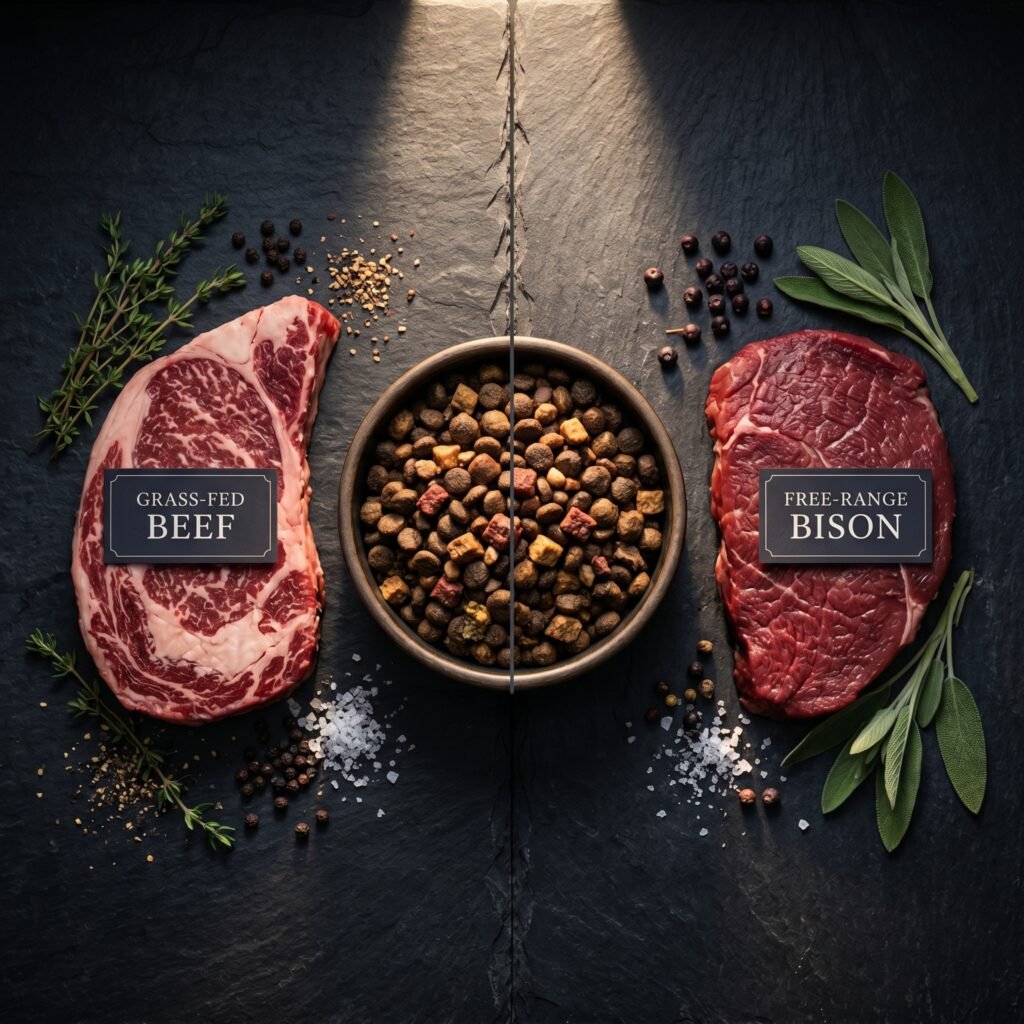
Bison vs. Beef
These are the most commonly compared proteins because they’re both red meats with similar flavor profiles and macronutrient structures. The differences:
- Fat: Bison is leaner. Significantly lower saturated fat per serving than beef of comparable cuts.
- Iron: Bison is higher. This matters for active dogs and those with anemia risk.
- Novel protein status: Beef is one of the most commonly used proteins in dog food — many dogs have already been sensitized to it. Bison is still genuinely novel for most dogs.
- Flavor: Both are palatable, but bison’s slightly sweeter, richer flavor is often preferred by picky eaters.
Beef and bison dog food combinations are offered by some brands — Purina ONE’s True Instinct line being the most widely available example. These blends are nutritionally sound and provide a broader amino acid and micronutrient spectrum than either protein alone, though they lose the “novel protein” advantage for dogs undergoing elimination diets.
Bison vs. Chicken
Chicken is by far the most common protein in commercial dog food. It’s affordable, widely available, and nutritionally complete. However, it’s also the most common protein trigger in canine food sensitivity cases. Dogs that have been eating chicken their entire lives are more likely to have developed a sensitivity to it than to any other protein.
Bison offers everything chicken provides — complete protein, energy density, B vitamins — without the allergen risk for sensitized dogs. The switch from chicken to a bison-based dog food with bison is one of the most common dietary changes veterinary dermatologists recommend for dogs with chronic itchy skin, ear infections, or gastrointestinal upset of unknown origin.
Bison vs. Salmon/Fish
Fish-based diets are often the first alternative protein owners consider for dogs with chicken or beef sensitivities. Fish is nutritionally excellent — particularly for omega-3 content — but not every dog does well on it. Digestive upset from fish-based food is not uncommon, and the strong odor is a palatability issue for some dogs.
Bison offers higher protein per serving, natural glucosamine content, and greater palatability for dogs who struggle with fish-based formulas. For dogs that don’t tolerate fish, bison is the strongest alternative novel protein on the market.
The Bison vs. Buffalo Labeling Problem: What Every Owner Must Know
Before going any further, there is a label deception issue in the bison dog food market that every buyer needs to understand — because it directly affects what your dog is actually eating.
Bison and buffalo are not the same animal.
American bison (Bison bison) is the animal native to North America that we’ve been discussing throughout this article. Water buffalo (Bubalus bubalis) is a completely different species, native to South and Southeast Asia, and widely farmed in countries including India, China, and Vietnam.
The problem: some pet food brands label their products as “bison” or use imagery of the American plains animal on their packaging, while the ingredient list actually contains water buffalo — a significantly cheaper imported protein. Because the terms are sometimes used interchangeably in casual conversation (the bison was historically called “buffalo” by early American settlers), some brands exploit this ambiguity to use cheaper water buffalo meat while positioning the product as premium American bison.
Why this matters beyond price: Water buffalo has a different nutritional profile than American bison — lower in certain micronutrients, different fatty acid ratios, and different flavor. More critically, if your dog has been sensitized to water buffalo (perhaps from a previous food), a switch to a “bison” product that actually contains water buffalo will not resolve the sensitivity.
How to protect yourself: Always read the actual ingredient list, not just the front-of-bag marketing. Look for “bison,” “bison meal,” or “bison meat” as the named ingredient. If you see “buffalo,” “water buffalo,” or no specific species designation, the product may not contain American bison. Reputable brands are transparent about their sourcing — if a brand can’t confirm whether their “bison” is American or water buffalo, that’s a red flag worth taking seriously.
Blue Bison Dog Food: What Is It and Is It Worth Buying?
Among the most recognizable names in the bison dog food space is Blue Buffalo — specifically their Blue Bison dog food line marketed under the BLUE Wilderness brand. The flagship formula is BLUE Wilderness Rocky Mountain Recipe with Deboned Bison, which has been one of the most searched and purchased bison-forward dog foods in the US for several years.
The Rocky Mountain Recipe leads with deboned bison as the first ingredient, followed by beef meal, chicken meal, and sweet potatoes. The formula is grain-free and protein-rich, with added flaxseed (for omega-3 fatty acids), blueberries (antioxidants), and Blue Buffalo’s proprietary LifeSource Bits — a blend of vitamins, minerals, and antioxidants processed at a lower temperature to preserve potency.
From a nutritional standpoint, the BLUE Wilderness bison formula is a solidly formulated product. The protein content sits around 34% on a dry matter basis — well above average for premium kibble. The grain-free carbohydrate sources (sweet potato, peas, tapioca) are all digestible and gentle. The inclusion of beef meal alongside the deboned bison means it’s not a single-source protein formula, which makes it less appropriate for strict elimination diets but perfectly suitable for dogs without specific protein sensitivity testing requirements.
Owner feedback on the Blue Bison dog food line is largely positive, with the most common reported outcomes being improved coat quality, better stool consistency, and increased palatability for previously picky dogs. Critical feedback typically centers on price — Blue Buffalo sits at the higher end of the mass-market premium segment — and on Blue Buffalo’s 2007 class-action lawsuit related to by-product content misrepresentation, a historical concern that has since been addressed but occasionally resurfaces in owner discussions.
Blue Buffalo is one of the most accessible bison dog food brands in the US, available at major pet retailers including Petco, PetSmart, Chewy, and Amazon, making it a practical entry point for owners new to bison-based nutrition.
Best Bison Dog Food Brands in 2025: A Complete Overview
The bison dog food market has matured considerably, offering options across every format and price point. Here is a breakdown of the most notable brands and formulas available in 2025:
Taste of the Wild High Prairie — Best Overall Value
The most widely recommended bison dog food for owners balancing quality and budget. The High Prairie formula leads with roasted bison and roasted venison — two novel proteins — alongside sweet potatoes, peas, and a diverse micronutrient pack including K9 Strain probiotics that survive the kibble manufacturing process. Protein sits at approximately 32% on a dry matter basis.
At roughly $1.84 per pound for the 28-pound bag, Taste of the Wild offers a strong cost-per-serving ratio for a grain-free, multi-novel-protein formula. It is manufactured in the USA and has a solid recall-free track record for the High Prairie line. For most dogs transitioning from chicken or beef, this is the first bison formula to try.
CANIDAE Grain-Free PURE Bison, Lentil & Carrot — Best for Sensitive Dogs
CANIDAE’s PURE line is purpose-built for limited-ingredient feeding. The bison formula contains fewer than ten key ingredients, with bison as the sole animal protein — making it genuinely appropriate for elimination diet protocols and dogs with confirmed multi-protein sensitivities. The lentil and carrot base provides digestible carbohydrates without common allergens.
Protein is approximately 27% — slightly lower than Taste of the Wild — which suits less active dogs or those at risk of weight gain. Owner feedback consistently highlights improvements in skin and coat condition and reduced digestive upset.
Merrick Grain-Free Real Bison & Sweet Potato — Best for Palatability
Merrick is a Texas-based brand with a strong reputation for palatable, meat-first formulas. The bison and sweet potato recipe uses deboned bison as the first ingredient followed by bison meal, ensuring a high animal-protein contribution in the finished product. At 30% protein and 17% fat on a dry matter basis, it hits a balanced macronutrient profile suitable for active adult dogs.
Merrick is particularly well-regarded among owners of picky eaters — the flavor profile of their bison formula is consistently praised for palatability even with dogs that have rejected other novel proteins.
Earthborn Holistic Weight Control with Bison — Best for Weight Management
For overweight dogs that need a lower-calorie diet without sacrificing protein, Earthborn Holistic’s Weight Control formula uses bison meal alongside whitefish meal for a dual-protein, reduced-fat profile. The formula averages around 28% protein and only 8% fat on a dry matter basis — an excellent ratio for dogs needing to shed weight without losing muscle mass. Added L-carnitine supports fat metabolism.
Purina ONE High Protein True Instinct (Beef & Bison) — Best Accessible Option
For owners looking for a widely available, affordable entry point into beef and bison dog food, Purina ONE’s True Instinct wet food line — available at most major grocery and pet store chains — provides bison-inclusive nutrition at a mainstream price point. While not a limited-ingredient formula, the protein quality and Purina’s manufacturing rigor make it a credible option for healthy dogs without specific dietary requirements.
Shepherd Boy Farms Freeze-Dried Bison — Best Premium/Raw-Adjacent Option
For owners seeking raw-food nutrition without freezer management, Shepherd Boy Farms’ freeze-dried bison formula combines raw bison, goat’s milk, and organic produce into shelf-stable nuggets. Manufactured in Indiana with third-party testing, this is among the most transparently produced bison dog foods on the market. The price per ounce is high, but the rehydration factor (nuggets expand to four times their weight) brings the effective cost in line with boutique wet diets.
What to Look for on a Bison Dog Food Label
Knowing which brands are reputable is useful, but understanding how to evaluate any bison dog food label independently is a more durable skill. Here’s what to look for:
Bison as the first ingredient: The first ingredient by weight should be a named bison source — “deboned bison,” “bison,” or “bison meal.” If bison appears fourth or fifth and the first three ingredients are plant-based, the formula is bison-flavored, not bison-forward.
Protein percentage of 26–32%: For most adult dogs, this range represents optimal protein density for a bison-based kibble. Below 24% is low for an active dog; above 34% may be excessive for sedentary dogs or those with kidney concerns.
Named fat sources: Look for specific fat sources like “bison fat,” “chicken fat” (if the formula isn’t single-protein), or “sunflower oil.” Anonymous “animal fat” is a lower-quality, less traceable ingredient.
Chelated minerals: Zinc proteinate, iron proteinate, copper proteinate — these chelated forms are significantly more bioavailable than inorganic mineral salts and signal a more thoughtfully formulated product.
Taurine and L-carnitine: Given the ongoing FDA investigation into DCM (dilated cardiomyopathy) in grain-free, legume-heavy diets, look for added taurine and L-carnitine in any grain-free bison formula. Their presence shows the brand is proactively addressing this concern.
AAFCO statement: Any bison dog food you feed as a primary diet must carry an AAFCO nutritional adequacy statement — either “formulated to meet” standards or “animal feeding tests.” Treats and toppers don’t require this statement, but primary foods do.
Is Bison Dog Food Right for Your Dog? A Practical Decision Guide
Bison dog food is an excellent choice if:
Your dog has diagnosed or suspected food sensitivities to chicken, beef, or other common proteins. Bison’s novel protein status makes it ideal for elimination diets and long-term management of food-triggered allergies. Expect to see meaningful improvements in skin and coat condition within four to eight weeks of consistent feeding.
Your dog needs to lose weight or maintain a lean body composition. The lower fat content relative to beef, combined with high protein density, makes bison dog food one of the better options for weight management without sacrificing muscle mass or satiety.
Your dog is a picky eater who has rejected other novel proteins. Bison has a rich, slightly sweet flavor profile that most dogs find highly palatable — often more so than venison, rabbit, or fish-based alternatives.
You prioritize ethically sourced, sustainable protein. Quality bison dog foods use animals raised on pasture under regenerative ranching practices — a significantly more sustainable model than factory-farmed chicken or beef.
Bison dog food may be unnecessary if:
Your dog is completely healthy, has no sensitivities, and is thriving on their current food. There is no nutritional reason to switch a healthy dog to a more expensive novel protein simply for novelty’s sake.
Your dog has a confirmed sensitivity to bison (rare, but possible). If your dog has been tested and reacts specifically to bison, dog food with bison is obviously not the solution.
You are on a strict budget. Bison dog food brands consistently sit at the premium end of the market — the novel protein sourcing and smaller-scale production make it inherently more expensive than chicken or beef-based formulas.
Transitioning Your Dog to Bison Dog Food
Switching proteins — even from a food your dog currently tolerates — requires a careful, gradual transition. The gut microbiome needs time to adapt to new protein structures and carbohydrate sources, and bison’s richer micronutrient profile can occasionally cause mild digestive adjustment in the first week.
Follow this schedule for a smooth transition:
- Days 1–3: 75% current food, 25% new bison formula
- Days 4–6: 50% current food, 50% bison formula
- Days 7–9: 25% current food, 75% bison formula
- Days 10–14: 100% bison formula
If you are transitioning as part of an elimination diet protocol — to identify a specific protein sensitivity — the transition approach changes. Your veterinarian or veterinary dermatologist will guide this process, but the key principle is that no other protein sources should be introduced simultaneously. All treats, chews, flavored medications, and supplements must be assessed for hidden protein content during this period.
Frequently Asked Questions About Bison Dog Food
Is bison the same as buffalo in dog food? No — and this distinction matters. American bison (Bison bison) and water buffalo (Bubalus bubalis) are different species with different nutritional profiles. Some brands use these terms interchangeably or substitute water buffalo for bison. Always read the full ingredient list and look for “bison” specifically.
Is bison dog food grain-free? Not necessarily. Bison is a protein source, not a carbohydrate source — it can appear in both grain-inclusive and grain-free formulas. Always check the full ingredient list to confirm whether grains are included.
Can puppies eat bison dog food? Yes, provided the formula carries an AAFCO nutritional adequacy statement for puppies or “all life stages.” Not all bison formulas meet puppy growth requirements, so confirm this before feeding to a dog under 12 months.
How long before I see results after switching to bison dog food? Digestive improvements — firmer stools, less gas, improved consistency — typically appear within two to four weeks. Skin and coat improvements take longer, usually eight to twelve weeks, reflecting the skin’s natural renewal cycle.
Is bison dog food good for dogs with pancreatitis? Bison’s lower fat content relative to beef makes it a reasonable choice for dogs with pancreatitis or fat sensitivity, but always consult your veterinarian before making dietary changes for dogs with this condition. Very low-fat formulas may be more appropriate for acute cases.
Does bison dog food cause taurine deficiency? Bison itself is a taurine-containing protein. The DCM concern associated with grain-free diets relates more to the legume-heavy carbohydrate sources (peas, lentils) than to the protein source. Look for formulas with added taurine and discuss cardiac monitoring with your vet if your dog is on a grain-free bison formula long-term.
Final Verdict: Is Bison Dog Food Worth It?
Bison dog food is not a trend. It’s a nutritionally sound, practically motivated choice for a clearly defined group of dogs — and for those dogs, it delivers real, measurable results.
For dogs with food sensitivities, bison’s novel protein status and clean ingredient profile make it one of the most effective dietary interventions available without a prescription. For overweight dogs, its lean protein-to-fat ratio supports healthy weight loss without the palatability problems that plague many light formulas. And for picky eaters who have rejected other alternatives, bison’s rich flavor often succeeds where fish, rabbit, and venison have failed.
Dog food with bison — whether you choose the accessibility of Blue Bison dog food from BLUE Wilderness, the limited-ingredient rigor of CANIDAE PURE, the value-driven performance of Taste of the Wild High Prairie, or the premium integrity of Shepherd Boy Farms’ freeze-dried formula — starts with understanding exactly what you need it to do for your dog. Use this guide to make that evaluation confidently, read every label carefully, and give the transition enough time — at least eight to twelve weeks — before drawing conclusions.
Your dog’s response is ultimately the most reliable measure of any dietary change. A shinier coat, more consistent digestion, less scratching, and more energy are the metrics that matter. With bison dog food, for the right dog, they’re outcomes you can realistically expect.
This article is for informational purposes only. Always consult a licensed veterinarian before making significant changes to your dog’s diet, particularly if your dog has existing health conditions, diagnosed allergies, or specific nutritional requirements.