Low Fat Dog Diet: How to Choose and Actually Stick With It
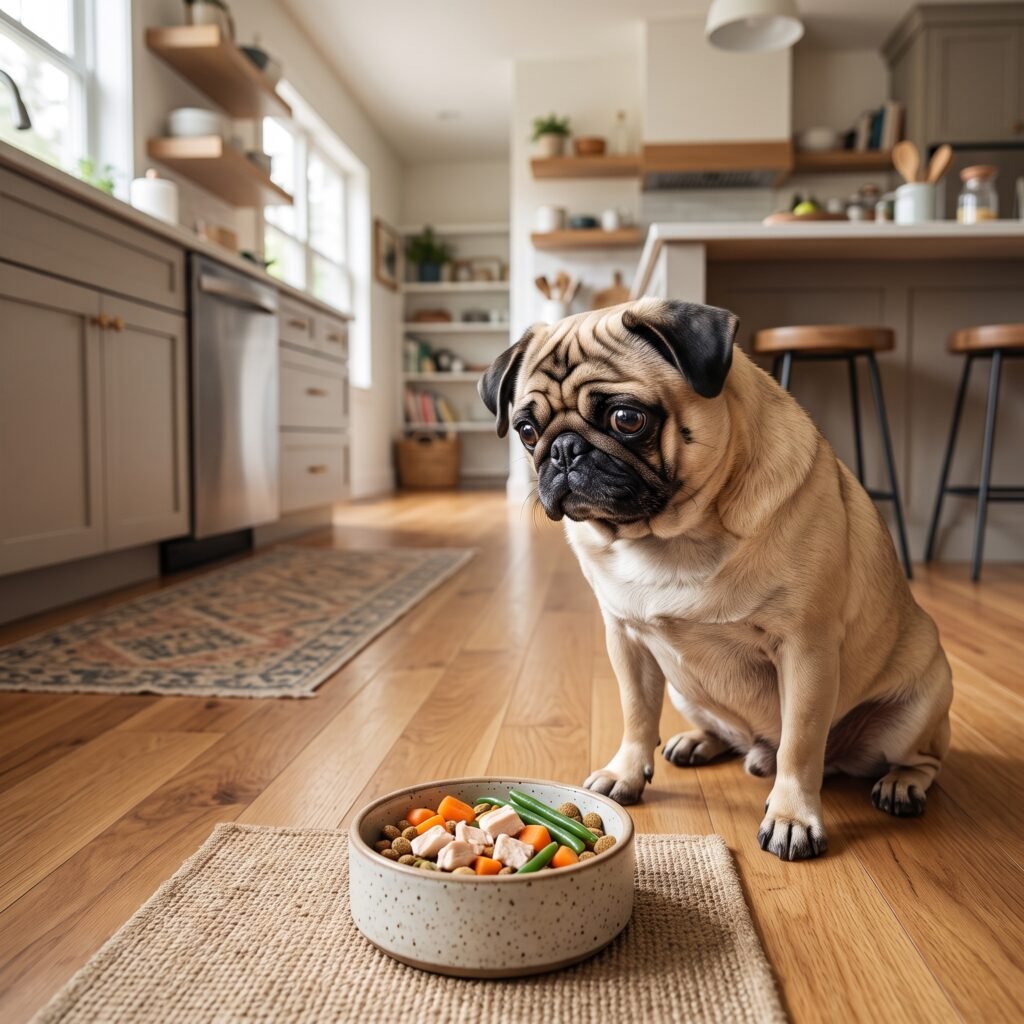
A low fat dog diet limits dietary fat for dogs with conditions like pancreatitis, high blood lipids, or obesity. There’s no single legal definition of “low fat,” so compare foods on a dry-matter basis and follow your vet’s target. Never start a low fat dog diet for a sick dog without veterinary guidance.
Last year a reader forwarded me a text from her vet: “Let’s put Biscuit on a low fat diet.” That was the whole message. She stood in the pet food aisle holding three bags that each said “light,” “healthy weight,” or “lean,” and she had no idea which one counted.
That moment is where most owners get stuck. A low fat dog diet sounds simple, but the label language is loose, and the wrong pick can cost you months.
This article is built around that decision. You’ll learn how to read a label for fat, when a prescription food is worth it, when home cooking helps or hurts, and how to keep a low fat dog diet from failing because of treats and table scraps.
Recommended Products
Best Dog Food in 2026
Why would a vet recommend a low fat dog diet?
Vets recommend a low fat dog diet for several different reasons, and the reason shapes the plan. Ask your vet exactly why, because the answer changes how strict you need to be.
Here are the situations I see most often. Your vet may be concerned about more than one at once.
- Pancreatitis. High-fat meals are a known trigger in some dogs, and a low fat dog diet is a common part of management.
- High blood fats (hyperlipidemia). Some dogs, including certain breeds, carry high triglycerides or cholesterol that diet can help control.
- Obesity. Fat is calorie-dense, so trimming it can help weight loss, though calories matter most.
- Certain digestive conditions. Some dogs absorb fat poorly or react to rich food with diarrhea or vomiting.
Each case needs a different level of strictness in a low fat dog diet. A dog recovering from pancreatitis may need a very tight limit, while an overweight but otherwise healthy dog may need only a modest trim.
Can I start a low fat dog diet without a vet?
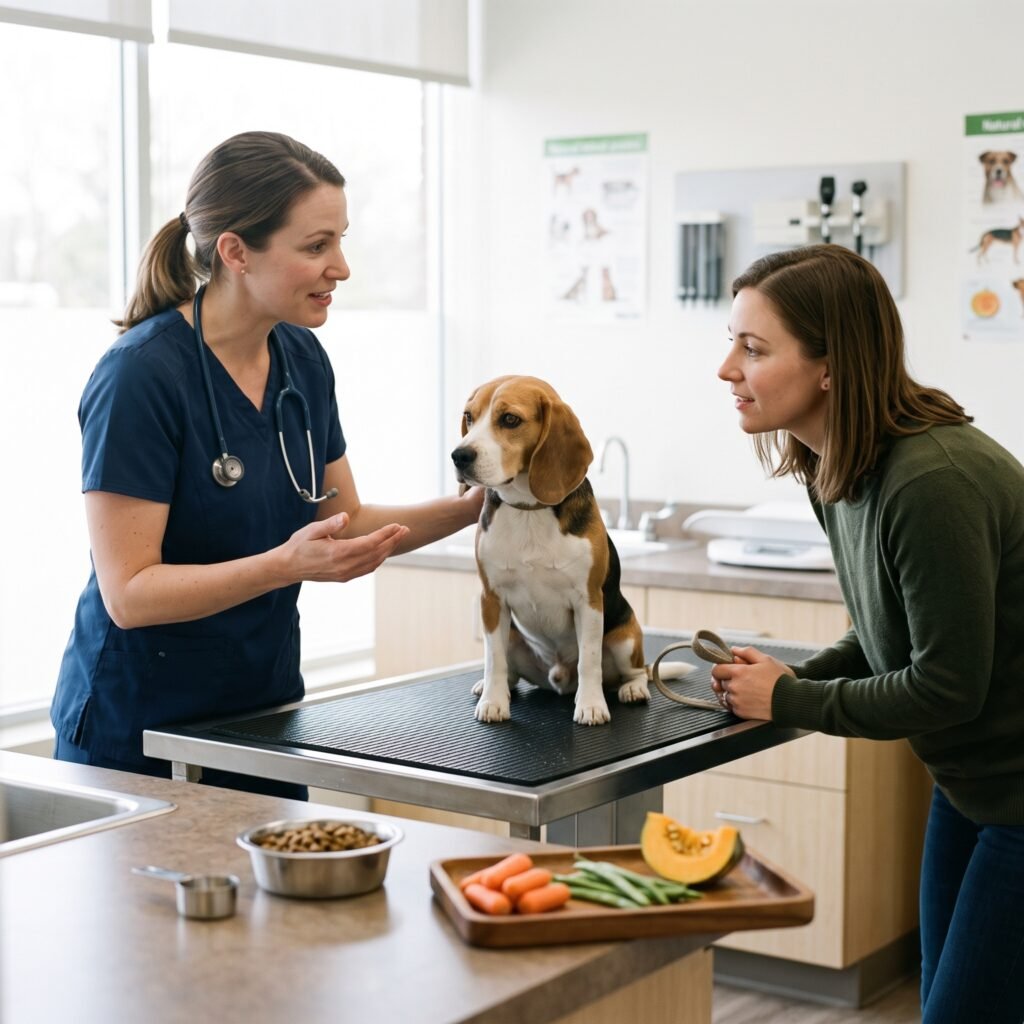
I wouldn’t. Several of the conditions above can look alike at home, and a food change can hide symptoms or delay tests. Vomiting, belly pain, lethargy, or repeated diarrhea call for a vet visit, not a diet experiment.
If your dog is healthy and just a little heavy, a gentler step is possible. Even then, ask your vet to set a calorie and weight target first.
What does “low fat” actually mean on a dog food label?
Here’s the uncomfortable truth about any low fat dog diet: there’s no single official cutoff. Companies use “light,” “lean,” “healthy weight,” and “low fat” differently, and the front of the bag tells you very little.
AAFCO nutrient profiles set minimum fat levels for complete dog foods, around 5.5 percent on a dry-matter basis for adult maintenance. That’s a floor, not a ceiling. It means a low fat dog diet can’t drop below a basic level without leaving the “complete and balanced” category.
Veterinary nutritionists often talk about fat as a share of calories or per 1,000 calories, not as a simple percent. Your vet may give you a specific target, and if so, use theirs.
How do I compare fat on a dry-matter basis?
This is the single most useful skill for choosing a low fat dog diet. The label lists crude fat as a percent of the food as-fed, which includes water. Wet and dry foods can’t be compared until you remove the moisture.
Here’s the method:
- Find the moisture percent on the label and subtract it from 100. That’s the dry-matter portion.
- Divide the fat percent by the dry-matter portion.
- Multiply by 100.
Example: a canned food with 5 percent fat and 78 percent moisture has 22 percent dry matter. Divide 5 by 22 and you get about 23 percent fat on a dry-matter basis. That’s not low at all.
Now compare a dry food listed at 9 percent fat and 10 percent moisture. Its dry-matter portion is 90 percent, so fat is 10 percent on a dry-matter basis. The wet food that “looked” lower is actually much richer.
What about fat per 1,000 calories in a low fat dog diet?
That number is even more useful, but it takes a little math. Find the calories per cup or per kilogram, and the fat percent. Then work out grams of fat per 1,000 kcal.
If your vet or a nutritionist uses that measure, ask them for a target and a way to calculate it. For many owners, the dry-matter percent is enough to rank foods.
What are my main options for a low fat dog diet?
You have four realistic routes. Each has trade-offs in cost, convenience, and the level of control you’ll have.
| Option | Typical fat profile | Vet involvement | Best for | Main trade-off |
|---|---|---|---|---|
| Prescription low-fat food | Formulated to a vet-directed fat limit | High | Pancreatitis, high blood lipids | Higher cost, needs vet authorization |
| Over-the-counter weight-management food | Reduced fat, varies by brand | Low to moderate | Overweight dogs without other disease | “Light” doesn’t guarantee low fat |
| Home-cooked low-fat meals | You control ingredients | High, ideally a nutritionist | Dogs with restrictions and a committed owner | Easy to unbalance, time-consuming |
| Regular food, smaller portions | Unchanged | Low | Mild weight gain only | Doesn’t lower fat percent |
The table shows why “just buy a light food” isn’t always enough for a low fat dog diet. For a dog with a medical reason, a prescription or home-cooked plan may be safer than an over-the-counter bag.
What does a prescription low-fat food look like?
Vet-directed therapeutic foods are made to hit specific fat targets. As one example, a retailer’s copy of Hill’s data sheet for Prescription Diet i/d Low Fat lists about 7.5 percent fat on a dry-matter basis and roughly 300 calories per cup, with a cup weighing about 3.2 ounces. That’s a single product, shown only to illustrate the range, and you should check the bag you’re buying.
Other makers sell comparable therapeutic dog food for pancreatitis, and the vet may prefer one brand, and your vet may prefer a particular one. Ask which fits your dog’s diagnosis, because “low fat” isn’t one recipe.
When does an over-the-counter food work?
Over-the-counter low fat dog food can work for a healthy dog who needs to lose a few pounds, if you check the numbers. Compare the dry-matter fat against other options, and look at calories per cup.
Don’t assume a “healthy weight” label means low fat. Some weight-management foods trim calories through fiber and keep fat moderate. That may be fine for obesity, and it may be wrong for pancreatitis.
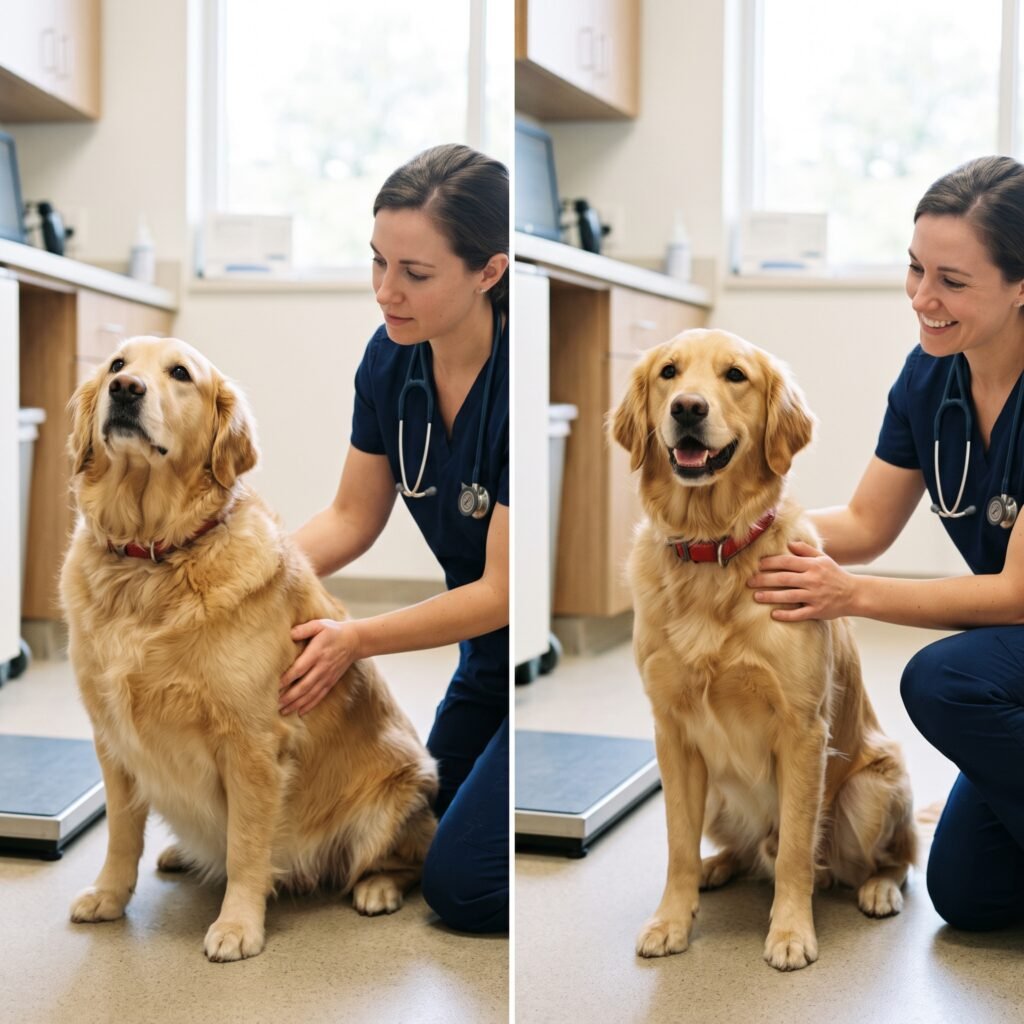
How much does a low fat dog diet cost compared with regular food?
The cost of a low fat dog diet depends on the route, and I’d rather give you a way to calculate than a made-up price. Prices vary by region and retailer.
Here’s the quick method. Divide the bag price by the number of cups in the bag, then multiply by the cups your dog eats per day. Do the same for your current food and compare.
Prescription foods usually cost more per pound than standard kibble. Over-the-counter weight-management foods often land in between. Home cooking can look cheap, but add the cost of a professional recipe and any supplements.
If cost is a barrier, say so at the vet’s office. Some clinics can suggest an alternative, a smaller bag size, or a plan to step down once your dog is stable.
What went wrong when I tried a low fat dog diet at home?
Here’s my honest failed attempt. A few years ago I helped a friend with her 12-year-old miniature schnauzer, whose vet had flagged high blood fats. We were eager, and we decided to cook.
We boiled skinless chicken breast and white rice, and fed it for about three weeks. The kitchen smelled of plain broth, and the dog ate it eagerly. His coat, though, started to look dull, and he seemed hungrier between meals.
The problem was simple. A plain chicken-and-rice mix isn’t complete and balanced, and cutting fat to almost nothing can leave a dog short on essential fatty acids and other nutrients. We had traded one risk for another.
We switched to a vet-recommended low fat dog food while the vet reviewed the case. The coat improved, and his bloodwork improved over the following months.
That experience changed how I recommend a low fat dog diet. Home cooking can work, but only with a balanced recipe from a professional, and “boiled chicken and rice” is a short-term bland diet, not a long-term plan.
How do I transition to a low fat dog diet safely?
Slowly, unless your vet says otherwise. A sudden swap can upset a stomach that’s already sensitive, and dogs with pancreatitis risk are especially vulnerable to rich or unfamiliar meals.
Here’s the schedule I use for a healthy adult dog. Follow your vet’s plan first if it differs.
| Days | Old food | New low fat food |
|---|---|---|
| 1 to 3 | 75% | 25% |
| 4 to 6 | 50% | 50% |
| 7 to 9 | 25% | 75% |
| 10 | 0% | 100% |
Weigh portions on a scale instead of using a cup, especially in a low fat dog diet. A cup of one food can weigh quite differently from a cup of another, and the calories change with it.
Check stool daily during the switch. Firm and consistent is the goal, and loose stool or vomiting means slow down and call your vet.
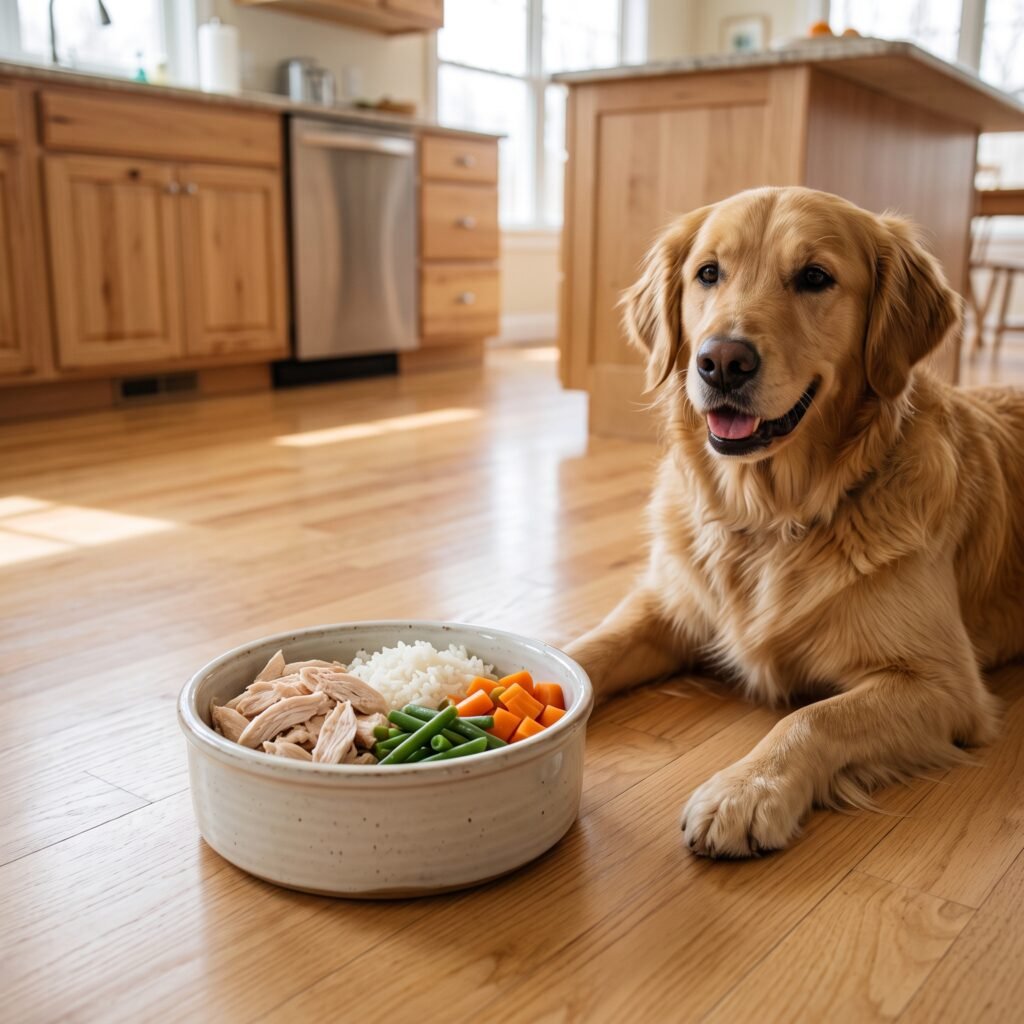
Why do low-fat foods sometimes make dogs hungrier?
Fat helps dogs feel full, so a lower-fat food can leave some dogs seeking more. Higher fiber, measured portions, and splitting the daily amount into more meals can help.
Don’t solve hunger in a low fat dog diet by adding fatty extras. That undoes the plan.
What are the hidden fat traps in a low fat dog diet?
Most low fat dog diet failures happen outside the bowl. The food is right, but the extras ruin it. These are the traps I see most.
Treats. Many commercial treats are high in fat. A few can add a surprising share of a day’s fat intake.
Table scraps. Bacon, cheese, buttered bread, and gravy all carry heavy fat loads. For a dog with pancreatitis, one fatty meal can cause a flare-up.
Chews. Pig ears, some bully sticks, and similar chews can be fat-rich. Ask your vet before offering any.
Medication wrappers. Peanut butter and cheese are common pill pockets, and they carry fat. Ask your vet about lower-fat options.
Other people in the house. A visitor with good intentions can undo weeks of effort. Tell everyone the rules.
What can I use for low fat dog treats?
Some owners use small pieces of vegetables that dogs tolerate, such as carrot or green beans, or a portion of the daily kibble. Check with your vet, because tolerance and safety vary by dog. Avoid onions, garlic, grapes, raisins, and anything else known to be toxic.
If you buy commercial treats, read the fat percentage and the calories per treat. Low fat dog treats exist, but “natural” and “grain free” don’t mean low in fat.
Can I make homemade low fat dog food safely?
Homemade low fat dog food is possible, but it takes care. Home-prepared diets are easy to unbalance, and a low fat dog diet adds restrictions that make mistakes more likely.
A board-certified veterinary nutritionist can design a balanced recipe around your dog’s condition, and many offer remote consults. Ask your vet for a referral. A one-time consult often costs less than months of trial and error.
If you cook, follow the recipe exactly. Swapping ingredients, skipping supplements, or eyeballing amounts can change the nutrient balance.
What lean ingredients do nutritionists often use?
Recipes vary, but lean proteins, digestible starches, and measured supplements are common building blocks. I won’t give a recipe, because a safe one depends on your dog’s weight, age, and diagnosis. Treat any recipe from a general article as a starting point to review with a professional.
What does a day on a low fat dog diet look like?
Here’s an example routine, so you can picture it. It’s built around a 30-pound adult dog on a vet-approved plan, and your vet’s numbers come first.
- Morning meal. A weighed portion of the low fat food, served at the same time each day.
- Midday. A walk, then a quick look at stool. I note it on my phone.
- Evening meal. The second weighed portion, with no toppers unless the vet approved them.
- Treats. A few kibbles pulled from the daily ration, counted so the total stays on target.
I used a kitchen scale for every meal. The kibble in my example was small and pale, with a slightly dry, toasty smell, and the dog sniffed it twice before eating. That’s common with a new low fat dog food, and most dogs adjust within a few days.
The routine looks boring because it’s meant to. A low fat dog diet succeeds on consistency, and variety is where mistakes sneak in.
How often should I weigh my dog?
Every two weeks works for most dogs. Use the same scale, and weigh at the same time of day. If your dog is too big for a home scale, many clinics let you stop in and weigh for free.
Share the numbers with your vet. A pattern over weeks tells you more than a single reading.
Is dog food for pancreatitis the same as a regular low fat dog food?
Not always. A dog food for pancreatitis is chosen to match a diagnosis, and your vet may pick a therapeutic formula built for that purpose. A general low fat dog food from the pet store may reduce fat but isn’t designed for a medical case.
That distinction matters because pancreatitis can be serious. If your dog has been diagnosed, ask your vet to name the exact product, and don’t swap it for a similar-looking bag.
Some dogs also need a long-term approach after a flare-up, and others return to a regular diet. The plan depends on the dog, so follow your vet’s schedule.
How do I read a dog food label for a low fat dog diet?
Labels hold more clues than the front of the bag. Here’s how I scan one in under a minute.
- Guaranteed analysis. Find crude fat, and note it’s a minimum or maximum as stated. Convert to dry matter.
- Calories. Look for kcal per cup or per kilogram. A low-fat food can still be calorie-rich.
- Ingredient list. Fat sources like chicken fat, salmon oil, or tallow show where the fat comes from. Higher placement means more of it by weight.
- AAFCO statement. Look for “complete and balanced” for your dog’s life stage.
- Feeding guide. Compare the suggested amount against your vet’s calorie target.
If a label doesn’t list calories, call the company or choose a brand that does. You can’t manage a diet you can’t measure.
Do named fat sources matter in a low fat dog diet?
They matter less than the total amount. A named source tells you what’s in the bag, but a low fat dog diet cares most about the percent and the calories. Don’t chase ingredient names and miss the numbers.
What should I ask my vet about a low fat dog diet?
Appointments go fast, so I bring a short list. These questions turn a vague “go low fat” into a plan you can follow.
- Why is my dog on this diet, and how will we measure success?
- What fat target should I use, and on what basis (dry matter or per 1,000 calories)?
- Which specific foods fit, and is a prescription needed?
- Is homemade low fat dog food an option, and can you refer me to a nutritionist?
- Which treats and chews are safe, and how many calories can they add?
- When do we recheck weight or bloodwork?
Write the answers down. A low fat dog diet involves a lot of small details, and they’re easy to forget by the time you reach the store.
If you plan homemade low fat dog food, ask for the recipe in writing, with exact weights and supplements. Guessing is how a good idea turns into a deficiency.
What if my vet’s advice and the food label disagree?
Trust your vet, then ask why. The label is marketing and the vet knows your dog. If something doesn’t add up, request a specific product name, and compare the numbers yourself.
How I evaluated the information in this article
Methodology note. I based this guide on AAFCO nutrient profile minimums for fat, on general veterinary nutrition principles about dry-matter comparisons and calorie density, and on one manufacturer data sheet as reproduced by a veterinary retailer, used only as an example. I did not invent statistics or cite studies I couldn’t verify. This article isn’t medical advice. Dogs with pancreatitis, high blood lipids, or other conditions need a plan from a veterinarian.
How do I know a low fat dog diet is working?
Judge a low fat dog diet by the whole dog and your vet’s data. Changes can take weeks, and some are only visible in bloodwork.
Signs it’s going well:
- Stool stays firm and regular.
- Vomiting and belly discomfort stop or become rare.
- Weight moves toward the goal, if weight loss is the aim.
- Energy and appetite are steady.
- Follow-up bloodwork improves, if that was the reason for the diet.
Signs to call your vet:
- Vomiting, a hunched posture, or a tender belly.
- Weight loss that’s faster than planned.
- A dull coat, flaky skin, or constant hunger.
- Any return of the original symptoms.
Keep a short log of weight, stool, treats, and symptoms. It helps your vet adjust the plan.
Should every dog with pancreatitis be on a low fat dog diet?
Not necessarily. Vets differ in how they manage pancreatitis, and the right approach depends on the dog, the severity, and the history. Many do recommend limiting fat, and a low fat dog diet is a common part of long-term care.
But the details are your vet’s call. Some dogs need strict limits, and others tolerate moderate fat. Don’t change the plan on your own because an article, including this one, suggests otherwise.
If your dog has had a flare-up, treat all fatty foods as off-limits until your vet says otherwise. That includes holiday leftovers.
What about puppies, seniors, and small breeds?
Edge cases matter here.
Puppies. Growing dogs need adequate fat and calories. Don’t put a puppy on a low fat dog diet unless your vet directs it, because growth requirements are higher than adult maintenance.
Seniors. In a low fat dog diet, older dogs often slow down and gain weight, and some develop conditions that call for less fat. A senior may also need more protein, so the vet’s guidance matters.
Small breeds. Miniature schnauzers and some other breeds are known to be more prone to high blood fats and pancreatitis. If you own one, ask your vet whether screening or a preventive diet makes sense.
Large, active dogs. A working dog burns plenty of calories. Cutting fat too far can leave them short on energy, so don’t trim without guidance.
Frequently asked questions
What is a good low fat dog diet for pancreatitis?
Your vet decides, because severity and history vary. Many vets recommend a therapeutic low-fat food, and some prefer a carefully formulated home-prepared diet. Avoid treats and table scraps unless your vet approves them.
How much fat should be in a low fat dog diet?
There’s no universal number, and the right level depends on the condition. AAFCO sets a minimum for complete foods, and your vet may give a specific target on a dry-matter or per-calorie basis. Ask for that number in writing.
Is a weight-management dog food the same as a low fat dog diet?
Not always. Weight-management foods often cut calories using fiber, and fat may stay moderate. Compare the dry-matter fat percent before you assume it’s low.
Can I feed boiled chicken and rice as a low fat dog diet?
Only briefly, and with vet advice. It isn’t complete and balanced, so a long stretch can cause nutritional gaps. Ask your vet for a balanced plan if the diet needs to continue.
Are there low fat dog treats I can use?
Yes, but check the label for fat and calories, and ask your vet before choosing. Small pieces of kibble from the daily ration, or vegetables your dog tolerates, are common ideas. Skip fatty chews and human snacks.
Final thoughts: choose the plan you can actually follow
So how do you set up a low fat dog diet? Start with the why. Ask your vet for a target, compare foods on a dry-matter basis, and pick the route that fits your dog’s condition and your budget.
Then protect your low fat dog diet. Treats, scraps, and chews break more diets than the bowl does. A low fat dog diet works when everyone in the house follows the same rules.
If you remember one thing, make it this: a “low fat” label isn’t a plan. A number, a vet, and a routine are. Build those three, and your low fat dog diet has a real chance to work.