
Good Fats for Dogs: Should You Add Any to the Bowl?
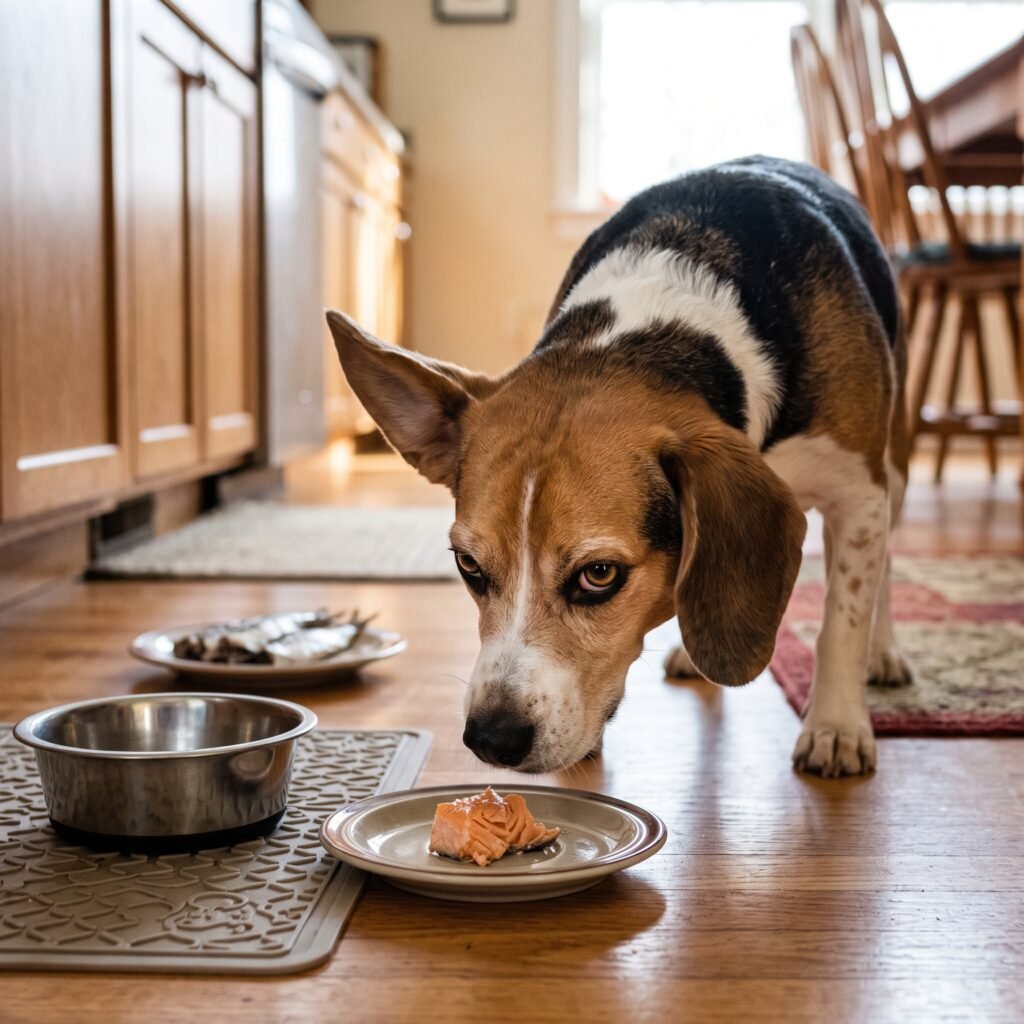
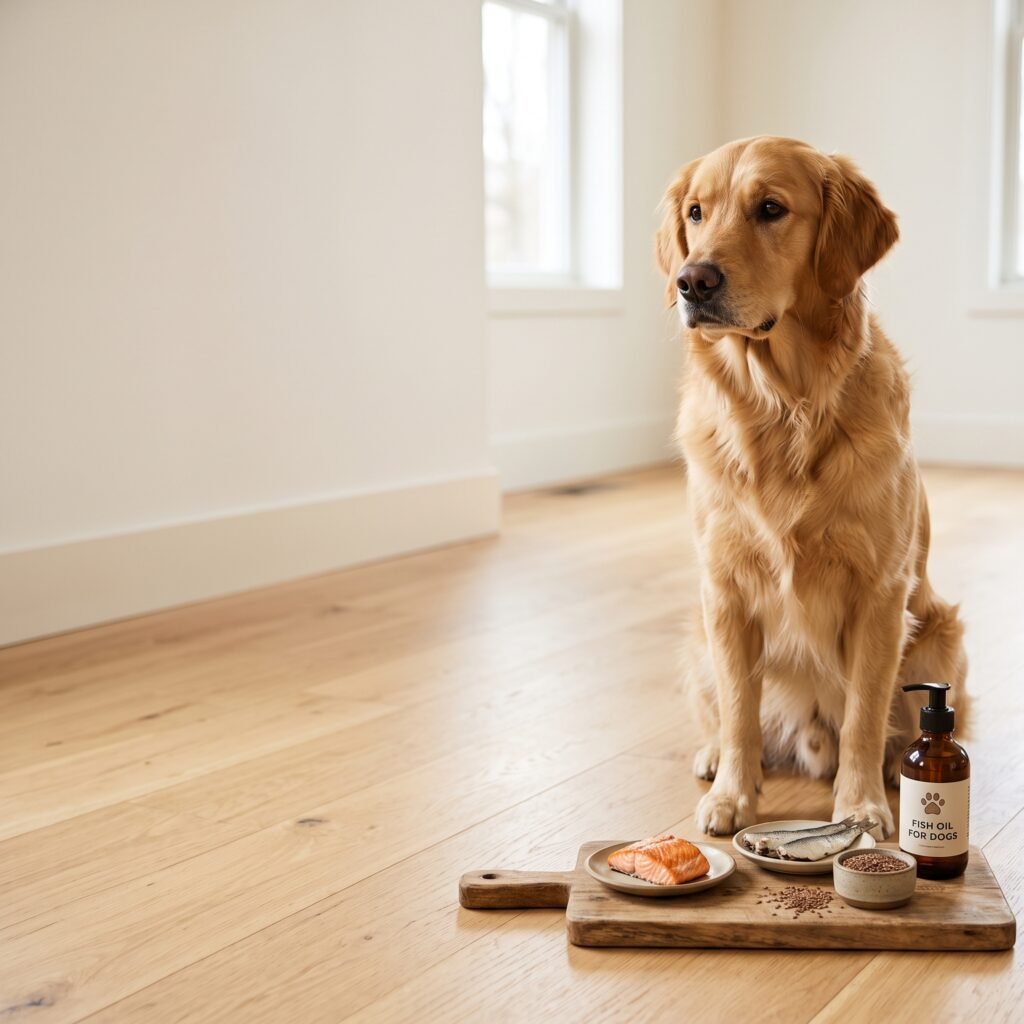
Good fats for dogs include omega-3 sources like fish oil and sardines, plus quality animal fats and eggs in small amounts. Most dogs already get enough fat from complete food, so extras are optional. Add them slowly, count the calories, and skip them if your dog has had pancreatitis.
A reader once asked me which oil she should pour on her lab’s dinner to fix his dull coat. She’d read three articles listing good fats for dogs, and each one named a different winner.
My answer surprised her. Before choosing among the good fats for dogs, we had to decide whether her dog needed more fat at all, because he was already carrying about five pounds more than his vet wanted.
That’s the decision this article is built around. You’ll learn how to tell whether good fats for dogs belong in your dog’s bowl, which sources earn their place, and where the risks hide.
Recommended Products
Best Dog Food in 2026
Does my dog actually need more fat?
Probably not, and this is where most advice about good fats for dogs goes wrong. Fat in dog food is already built in, because dogs need it for energy, for absorbing fat-soluble vitamins, and for healthy skin.
AAFCO’s nutrient profiles set minimum crude fat levels for complete dog foods: about 5.5 percent on a dry-matter basis for adult maintenance and 8.5 percent for growth and reproduction. Those are minimums, and plenty of foods contain more.
So the first question isn’t “which fat?” It’s “what is my dog missing?” If the answer is nothing, then adding good fats for dogs may just add calories.
What signs suggest a dog could use more of the right fats?
A few signals make me think about it, though none of them proves a deficiency on its own:
- Dry, flaky skin and a dull coat that haven’t improved with a vet-checked diet.
- A very lean, high-energy dog who struggles to hold weight.
- A dog on an ultra-low-fat food with no medical reason for it.
- Stiff joints, where your vet has suggested omega-3 support.
Each of these has other possible causes, so good fats for dogs are never the first guess. including allergies, parasites, thyroid problems, and dental pain. Talk to your vet before you decide that the answer is good fats for dogs.
When should I skip extra fat entirely?
Skip it, or ask your vet first, if your dog is overweight, has a history of pancreatitis, has had recurring stomach upset, or eats a prescription diet. Fat is the most calorie-dense nutrient, so a small splash can make a real difference to a small dog.
That matters for good fats for dogs because a teaspoon of oil can add around 40 calories, which is a big deal for a 10-pound dog. I’ll show the math later in the article.
What counts as good fats for dogs?
When people say good fats for dogs, they usually mean fats that supply essential fatty acids, especially omega-3s. Fat itself isn’t good or bad, and healthy fats for dogs are defined by source, amount, and context. The source, the amount, and your dog’s situation decide that.
Here’s how I sort the common options. This table reflects general nutrition knowledge and my own practice, not a clinical standard, so check details with your vet.
| Fat source | Main benefit | Typical form | Watch-outs |
|---|---|---|---|
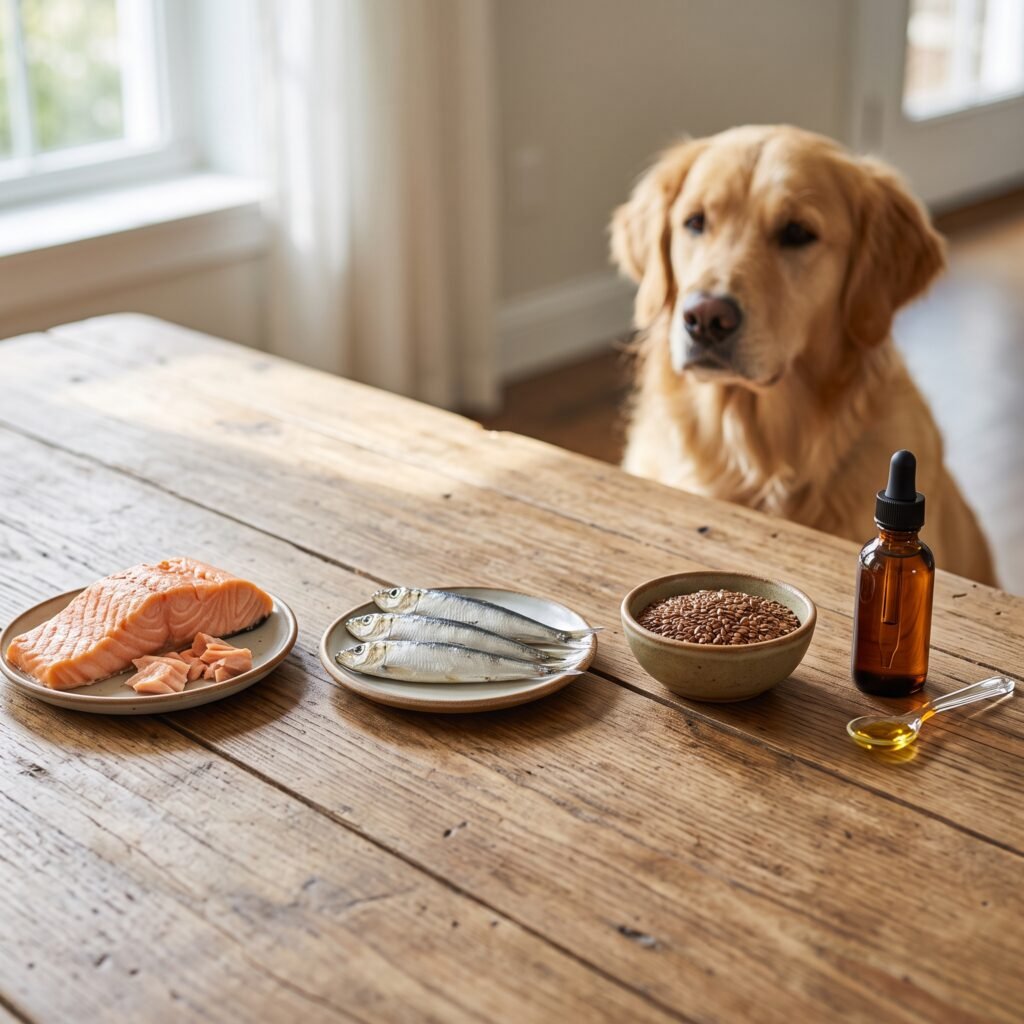
| Fish oil (salmon, anchovy, sardine) | EPA and DHA omega-3s | Liquid or capsule | Calories, fishy smell, dose matters |
| Whole sardines or anchovies in water | Omega-3s plus protein | Canned, no salt added | Sodium if packed in brine |
| Eggs (cooked) | Fat, protein, and nutrients | Whole egg | Calories, allergies, cook thoroughly |
| Chicken fat | Omega-6 linoleic acid, palatable | In food or small amounts | Rich, can upset sensitive guts |
| Flaxseed oil | ALA, a plant omega-3 | Liquid or ground | Dogs convert ALA poorly |
| Olive oil | Monounsaturated fat | Small drizzle | Calories, not an omega-3 source |
| Coconut oil | Medium-chain triglycerides | Spoonful | Limited evidence, rich, easy to overdo |
The table shows something many articles skip. These good fats for dogs aren’t interchangeable. Fish oil does one job, chicken fat another, and olive oil is mostly extra calories with a pleasant taste.
Why do omega-3s get most of the attention?
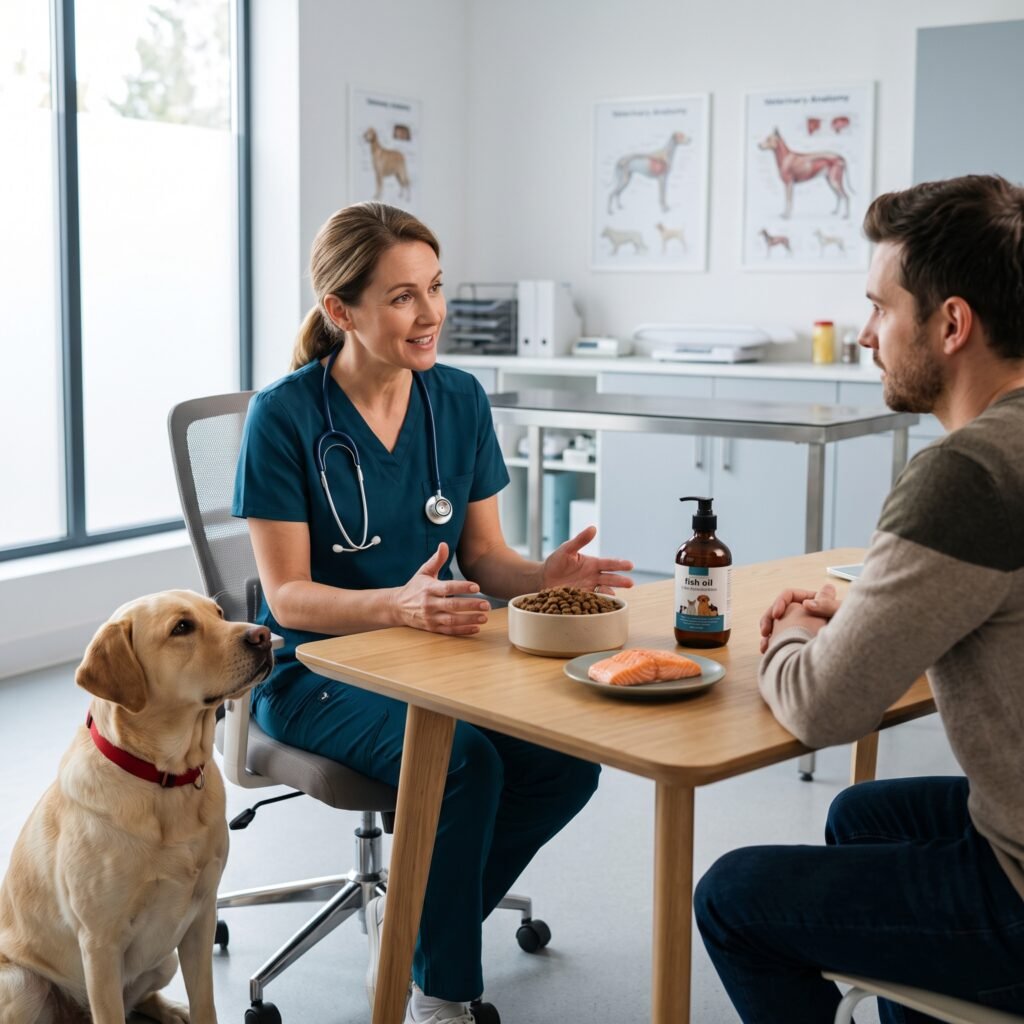
EPA and DHA are the omega-3s found in marine sources, and they’re the ones researchers study most for skin, joint, and heart support in dogs. Many vets recommend them for specific conditions.
That makes fish oil for dogs the headline entry among good fats for dogs. Still, “many vets recommend” isn’t the same as “every dog needs it,” and the right amount depends on your dog’s weight and health.
Is fish oil the best of the good fats for dogs?
For most owners who want one addition, fish oil is where I’d start. It supplies EPA and DHA directly, which flaxseed can’t do as efficiently for dogs.
I say that with limits, because fish oil for dogs varies a lot by brand. Product quality varies widely, and the label may not list the actual EPA and DHA content per serving. I look for a product that states those numbers, avoids vague “fish oil blend” claims, and comes from a company that shares testing for purity.
How much fish oil for dogs is enough?
I won’t give a universal dose, because the right amount depends on your dog’s weight, diet, and health, and I don’t want you to guess. Ask your vet to set the amount in milligrams of combined EPA and DHA.
Start well below the target and build up over a week or two. A sudden full dose can cause loose stool, and that’s the most common problem I hear about with fish oil.
Which fish oil form is easiest to use?
Pumps and liquids let you measure small amounts of fish oil for dogs, which suits little dogs. Capsules suit big dogs who will swallow them. If you use a capsule for a tiny dog, check whether your vet is comfortable with you puncturing it.
Store fish oil in the fridge once opened, and watch for a sharp, rancid smell. Rancid oil is worse than none at all, and it defeats the point of choosing good fats for dogs.
What does extra fat do to the calorie count?
This is the part owners underestimate, and it’s why I keep returning to the decision about good fats for dogs instead of just listing sources. Fat carries roughly 9 calories per gram, compared with about 4 for protein or carbohydrate.
Run the numbers for a small dog. A teaspoon of oil is about 4.5 grams, so around 40 calories. If your 12-pound dog needs roughly 400 calories a day, that single teaspoon is about 10 percent of the day’s food.
For a 70-pound dog who needs far more calories, the same teaspoon barely registers. That’s why one rule doesn’t fit every dog.
How do I add fat without overfeeding?
Treat added fat as part of the daily calorie budget, not an extra. Healthy fats for dogs still count. If you add a teaspoon of fish oil, trim a matching amount of calories from the meal.
I do this with a kitchen scale. I weigh the kibble in grams, subtract the calories the fat adds, and adjust the portion. It takes a minute and keeps weight steady.
How do I introduce good fats for dogs without upsetting the stomach?
Slowly. Dogs’ digestive systems often react to rich additions with soft stool, gas, or vomiting. A gradual introduction lets you spot a problem early.
Here’s the schedule I use for a healthy adult dog. If your vet gave different instructions, follow those.
| Days | Amount of the target dose |
|---|---|
| 1 to 3 | One quarter |
| 4 to 6 | One half |
| 7 to 9 | Three quarters |
| 10 and after | Full target dose |
Change one thing at a time when adding good fats for dogs. If you add fish oil and a new treat in the same week, you won’t know which one upset the stomach.
Check stool daily. Firm and consistent is the goal, and soft stool is a signal to slow down.
What went wrong when I added fat too fast?
Here’s my honest failed attempt. A few years ago I added a generous spoonful of fish oil to the dinner of a 50-pound shepherd mix with a dull coat. I wanted fast results, and I figured more was better.
Within two days he had greasy, loose stool, and he started licking his lips and refusing breakfast. The oil smelled strongly of the sea and settled in a shiny film on top of his kibble. He sniffed it, backed away, and waited.
I had skipped the gradual start and ignored the calorie math. I cut the dose to a quarter, built up over two weeks, and things settled. That’s how I learned to introduce good fats for dogs.
The lesson stuck. Good fats for dogs work best in small, steady amounts. This approach also doesn’t work well for dogs with sensitive guts or pancreatitis history, where even a modest addition can cause trouble.
Are good fats for dogs safe for dogs with pancreatitis?
This is the most important caution in the article. Pancreatitis is inflammation of the pancreas, and high-fat meals are a well-known trigger in some dogs. Your vet may recommend a low-fat diet, and adding fat could undo that plan.
If your dog has had pancreatitis, don’t add any fat source without explicit vet approval. That includes oils, fatty treats, and table scraps.
Some breeds and individual dogs seem more prone to it, which limits good fats for dogs in those homes, and a single fatty meal can be enough to cause a flare-up. I’ve watched owners learn this the hard way after a holiday dinner.
For these dogs, the best “good fats for dogs” plan may be no added fat at all, and that’s a perfectly good answer.
What about omega-3s for dogs with pancreatitis risk?
Vets disagree on how to handle this, and the right call depends on the dog. Some allow carefully dosed omega-3 supplements. Others prefer to avoid anything fatty during recovery.
Let your vet decide, and don’t rely on a general article, including this one, for that choice.
What are the best fat choices for specific dogs?
Edge cases matter more than averages when you’re choosing good fats for dogs. Here’s how I think through a few common situations.
The overweight lab. For him, good fats for dogs mean fewer extras, not more. Skip added oils and focus on portion control. If your vet wants omega-3s for joints, use a measured fish oil and cut the meal to match.
The lean, athletic dog. A working dog who burns a lot may benefit from a food with higher fat. A change of food is usually simpler than adding oil to a bowl.
The toy breed. Tiny dogs feel every calorie. A few drops of fish oil, measured with a dropper, may be enough, and a spoonful is far too much.
The senior with stiff joints. Omega-3 for dogs is a common vet suggestion here. Ask about dose and about interactions with any medications.
The puppy. Growing dogs need balanced nutrition, and large-breed puppies have tighter calcium and energy needs. Don’t add fat to a puppy diet without asking your vet.
The budget-constrained household. Whole canned sardines in water can be a cost-effective omega-3 source for some dogs. Check the label for salt, and ask your vet about portions.
Which sources of good fats for dogs should I avoid?
Some fats cause real harm, and others are simply poor choices. Here are the ones I steer clear of.
- Bacon grease and fried scraps. High in fat and salt, and a classic pancreatitis trigger.
- Macadamia nuts. Toxic to dogs, even in small amounts.
- Cooking fat from table meals. Rich, seasoned, and often loaded with onion or garlic.
- Rancid or old oils. They can upset the stomach and aren’t worth the risk.
- Cod liver oil in large amounts. It contains vitamins A and D, which can build up to harmful levels.
If you’re unsure about a specific food, check with your vet or a poison-control service before feeding it. Good fats for dogs should be chosen, not improvised from the pantry.
What about coconut oil?
Coconut oil is popular, and the claims online run well ahead of the evidence in dogs. It’s rich in saturated fat and calories, and it can cause loose stool or worse in sensitive dogs.
If you use it, use very small amounts, and skip it for dogs with pancreatitis risk or weight problems. I don’t consider it a first choice among good fats for dogs.
What should I look for in a dog food’s fat content?
Before adding anything, read the food you already feed. The label lists crude fat as a minimum percentage, and that number is on an as-fed basis, which includes moisture.
To compare foods fairly, convert to dry matter. Subtract the moisture percentage from 100, then divide the fat percentage by that number and multiply by 100. A canned food with 6 percent fat and 78 percent moisture is about 27 percent fat on a dry-matter basis, which is far richer than the label suggests.
Also check where the fat comes from, since the source decides whether it counts among good fats for dogs. Named sources like chicken fat or salmon oil tell you more than a vague “animal fat.” Foods that name their fat sources make good fats for dogs easier to evaluate.
Fat in dog food is only one line on the label, so finish the check. Look for a statement that the food is complete and balanced for your dog’s life stage, per AAFCO nutrient profiles. That statement matters more than any single ingredient.
Do I need to supplement if my food already has fish oil?
Often not. Many foods already include omega-3s, and adding more can overshoot. Check the guaranteed analysis and ask the company for EPA and DHA levels if they aren’t listed.
Can good fats for dogs help with itchy skin and shedding?
Sometimes, but not as often as the marketing suggests. Dry skin has many causes, including food allergies, fleas, mites, yeast, thyroid disease, and environmental triggers. Fat is rarely the whole story.
That’s why I tell owners to see the vet before they reach for a bottle. If a dog is itching until the skin is raw, a supplement is the wrong first step. Treat the cause, then think about good fats for dogs as support.
When omega-3 for dogs does help, the change is gradual. I’ve watched coats look sleeker after six to eight weeks on a measured amount, with less flaking along the spine. I’ve also watched dogs show no change at all, and in those cases the real issue was elsewhere.
Why can’t I just rely on the coat to tell me?
A coat can look great and still hide a problem. And a dull coat can be a sign of illness. Use the coat as one clue, along with weight, stool, energy, and appetite.
Think of it as a dashboard. No single light tells you what’s wrong with the engine.
How does fat in dog food differ between kibble, wet, fresh, and raw?
The form changes the math. Fat in dog food looks very different across formats, and comparing labels without adjusting for moisture misleads people.
Dry kibble. Moisture is low, so the label percentage is close to the dry-matter figure. Small differences between bags still add up over a month of feeding.
Canned food. The label looks low, but the dry-matter fat can be high, as the earlier example showed. Convert before you compare.
Fresh or gently cooked food. These foods often contain more moisture and may use named animal fats. Ask the company for dry-matter values and calories per serving.
Raw diets. Fat levels can swing a lot by cut and recipe. A fatty cut can overshoot what a dog needs, so ask your vet or a board-certified veterinary nutritionist about balance.
Whatever the format, the main takeaway is the same. Good fats for dogs show up in the recipe first, and your bowl second. Check the base diet before you add anything.
What does a day with measured good fats for dogs look like?
Here’s the routine I used with a 60-pound dog whose vet had suggested omega-3s for stiff joints. It’s an example only, and your vet’s plan comes first.
- Weigh the meal. I weighed his kibble in grams on a kitchen scale and wrote the number on a card.
- Trim for the oil. I reduced the kibble by the calories the fish oil added, so the day’s total stayed the same.
- Add the oil at the meal. I stirred it into the food just before serving, so it didn’t sit and go stale.
- Log the results. A note on my phone tracked stool, energy, and how he got up from his bed each morning.
The kibble was medium-sized, tan, and slightly oily to the touch, and the fish oil gave the bowl a faint, briny smell. He ate it without hesitation, which isn’t guaranteed. Some dogs turn up their noses at fishy meals.
That routine is the quiet side of good fats for dogs. The oil is the easy part, and the portion math is what keeps the results healthy.
How should I store the fats I add?
Oils spoil, and spoiled fat is worse than none. Keep fish oil in the fridge after opening and close the cap tightly. Check the date, and use it within the time on the label.
If it smells sharply fishy or like old paint, throw it out. Capsules should also be kept away from heat and light.
Buy small bottles unless you have a big dog. Fresh oil in small amounts beats a huge bottle that goes rancid halfway through.
Should I talk to a veterinary nutritionist about good fats for dogs?
For most healthy dogs, a regular vet is enough. For dogs with complex conditions, like pancreatitis, kidney disease, or multiple food sensitivities, a board-certified veterinary nutritionist can build a plan around the whole diet.
That’s especially helpful if you cook for your dog. Home-prepared diets can be nutritionally unbalanced, and fat levels are only one piece. A professional can check that the whole recipe meets AAFCO-style nutrient targets.
If cost is a worry, ask your vet about a one-time consult. It often costs less than a year of trial-and-error with supplements.
How I evaluated the information in this article
Methodology note. I based this guide on AAFCO nutrient profile minimums for crude fat, on general veterinary nutrition principles about calorie density and fatty acids, and on my own hands-on feeding experience with dogs of different sizes and health histories. I did not invent statistics or cite studies I couldn’t verify. Where evidence is limited, as with coconut oil, I said so. This article isn’t a substitute for advice from your veterinarian, especially for dogs with pancreatitis, obesity, or other medical conditions.
How do I know if good fats for dogs are working?
Give it time and track changes, because healthy fats for dogs work slowly. Skin and coat improvements, when they come, usually take several weeks, not days. I check in at two-week intervals.
Look for these signs that good fats for dogs are helping:
- A softer, shinier coat with less shedding.
- Less flaking and itching along the back.
- Steady weight and firm stool.
- More comfortable movement in older dogs, if joints were the goal.
Watch for signs that it isn’t working or is causing trouble: loose stool, vomiting, greasy coat, weight gain, or a dog who refuses meals.
If you see problems, stop and call your vet. If you see no benefit after two to three months, the cause may be something other than fat, and that’s a signal to look further.
Frequently asked questions
What are the best good fats for dogs to add to food?
Fish oil is the most common choice because it provides EPA and DHA omega-3s. Cooked eggs and canned sardines in water are other options in small amounts. Ask your vet which fits your dog.
Can dogs have olive oil as one of their good fats?
A small amount of olive oil is generally tolerated, but it adds calories and doesn’t supply omega-3s. It isn’t a substitute for fish oil. Skip it for dogs with pancreatitis risk.
How much fat should a dog eat per day?
It depends on size, age, activity, and health, and AAFCO sets only minimum levels in dog foods. A complete food usually covers it. Ask your vet before adding more.
Are good fats for dogs safe for puppies?
Puppies need balanced nutrition, and large-breed puppies have specific needs. Don’t add oils or supplements to a puppy’s diet without veterinary advice.
Is salmon oil better than fish oil for dogs?
Salmon oil is a kind of fish oil, and quality varies by product. Choose one that lists EPA and DHA content and shares purity testing. The source matters less than the dose and quality.
Final thoughts: decide first, then choose
So, are good fats for dogs worth adding? Sometimes. If your dog is healthy, lean, and has a specific reason like skin or joint support, a measured omega-3 can be a useful tool.
If your dog is overweight, has a history of pancreatitis, or already eats a complete food that covers the basics, the best choice may be to leave the bowl alone.
Remember the order: decide whether your dog needs more fat, choose a quality source, start small, count the calories, and watch the results. That’s how good fats for dogs help instead of hurt.