How to Stop Food Aggression in Dogs
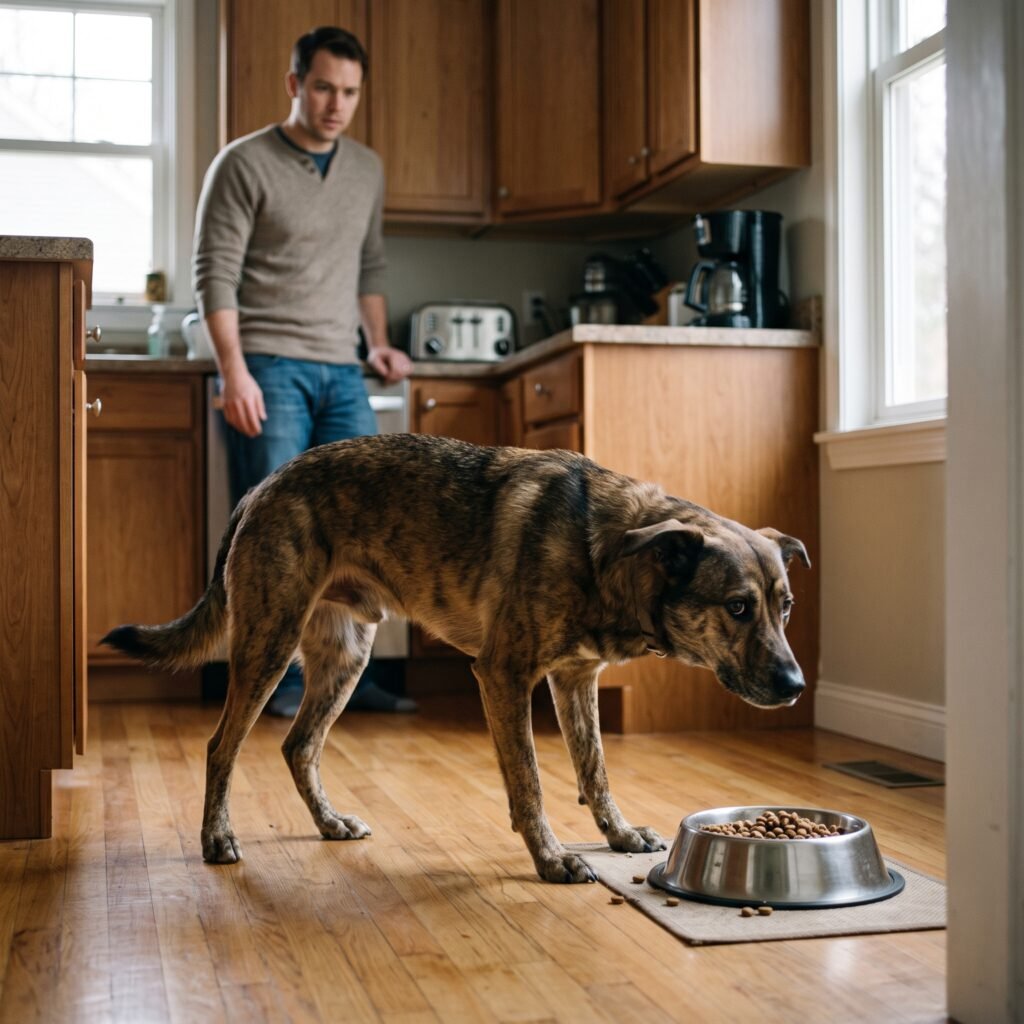
How to stop food aggression in dogs starts with safety, not obedience. Separate your dog from kids and other pets at mealtime, rule out pain with your vet, then change what approaching the bowl predicts. Teach your dog that people near food mean better food. Severe cases need a qualified behavior professional.
Last spring a reader wrote to me about her rescue terrier, who froze, stiffened, and curled a lip every time her four-year-old walked past the bowl. She asked how to stop food aggression in dogs fast, because she was scared to leave the two alone in the kitchen.
My honest answer was that “fast” was the wrong goal. The right goal was a plan that matched her household, her dog’s warning signs, and how much risk she could live with.
This article is built around that decision, and around how to stop food aggression in dogs without raising the risk of a bite. You’ll find out how to read what your dog is telling you, how to choose between managing, training, and getting help, and what each path costs you.
Recommended Products
Best Dog Food in 2026
Is it really food aggression, and how serious is it?
Most owners use the phrase loosely when they search how to stop food aggression in dogs. A dog who eats fast and sulks when you reach for the bowl is in a different place than a dog who lunges. Before you pick a plan for how to stop food aggression in dogs, place your dog on the scale. Dog food aggression covers a wide range, and the range decides everything.
Behavior professionals often call this problem resource guarding in dogs, because the dog is protecting something valuable. Food is just the most common prize. Resource guarding in dogs also shows up around bones, toys, a spot on the couch, or even you.
What does mild, moderate, and severe guarding look like?
Here is how I sort what I see in homes. This is my working scale, not a clinical standard, so treat it as a way to start a conversation with your vet or trainer.
| Level | What you see | Typical body language | Safe first step |
|---|---|---|---|
| Mild | Eats faster, hovers over the bowl, glances at you | Stiff shoulders, hard stare, “whale eye” (white of the eye shows) | Management plus gentle trade training |
| Moderate | Growls, freezes, shields food with body | Low growl, lip lift, body blocks the bowl | Management plus professional guidance |
| Severe | Snaps, lunges, or bites, even at a distance | Fast air snap, charges, stays tense after food is gone | Strict management, call a vet and a qualified behaviorist |
The line between moderate and severe is about how fast things escalate, and it changes how to stop food aggression in dogs safely. A dog who growls and then backs off is communicating. A dog who skips the warning and goes straight to contact is much harder to work with.
That difference matters for how to stop food aggression in dogs, because the more severe the case, the less you should try at home on your own.
Should I punish a dog for growling at the bowl?
No. A growl is information, and a dog growls when eating for a reason worth understanding. If you punish it, the dog may learn to hide the growl while still feeling the same fear.
I’ve met dogs who bit “out of nowhere” after months of corrections. The warning had simply been trained out of them. Silence is not progress when you’re working on how to stop food aggression in dogs.
Why does my dog guard food in the first place?
There is rarely one cause behind dog food aggression. Understanding the likely reason helps you choose the right approach for how to stop food aggression in dogs, because the fix for a scared dog differs from the fix for a dog in pain.
Fear of losing it. This is the cause I see most when owners ask how to stop food aggression in dogs adopted from shelters. Dogs who went through scarcity, shelters, or heavy competition for meals often learn that food disappears. This is common in rescues, though plenty of well-fed pets guard too.
Genetics and temperament. Some dogs are simply more inclined to guard. Breeders and trainers see this pattern within certain lines, though I’d never claim a breed is guaranteed to guard or guaranteed not to.
Learned history. Your own habits are part of how to stop food aggression in dogs, so review them honestly. If hands have repeatedly taken a bowl away mid-meal, a dog may decide hands are a threat. Well-meaning “test” removals can backfire.
Pain or illness. A dog with dental pain, an upset stomach, or arthritis may growl at approach because eating hurts or because they feel vulnerable. Rule this out with your vet before you start training.
Could my dog’s food or feeding schedule be part of the problem?
Sometimes, yes. A dog fed once a day may arrive at the bowl very hungry, which can raise intensity. Free-fed dogs in multi-pet homes may defend the bowl all day.
When someone asks me how to stop food aggression in dogs, I look at the setup before the dog. Hunger level, bowl location, foot traffic, and who else is nearby all change the picture.
How to stop food aggression in dogs when a child or second pet is in the house
This is the scenario that drives most emails I get about how to stop food aggression in dogs. It’s also where owners make the costliest mistakes, so I want to be blunt.
If a young child or another pet lives with a guarding dog, management comes before training. Training takes weeks or months. A bite can happen in a second.
What does safe management actually look like?
In any plan for how to stop food aggression in dogs, management means making guarding impossible while you work on the cause. It’s not forever, but it has to be airtight in the meantime.
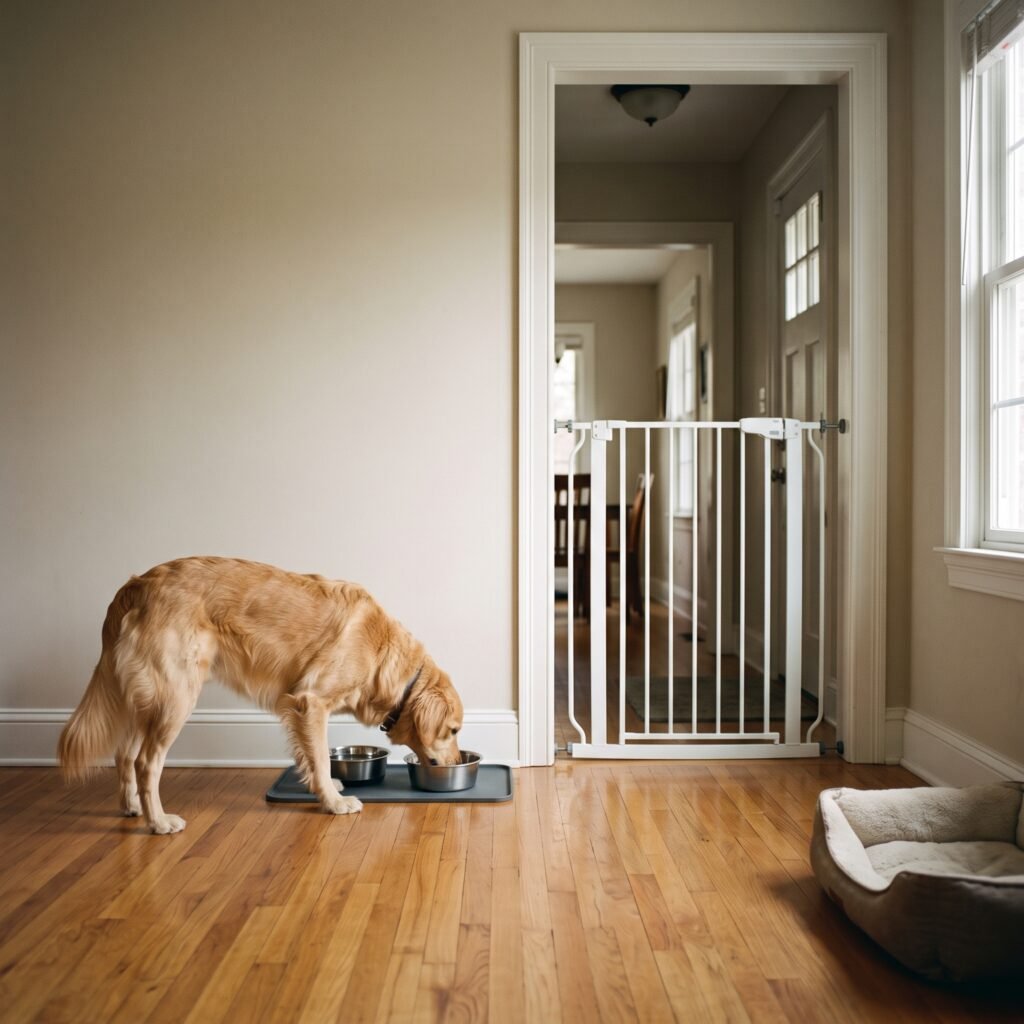
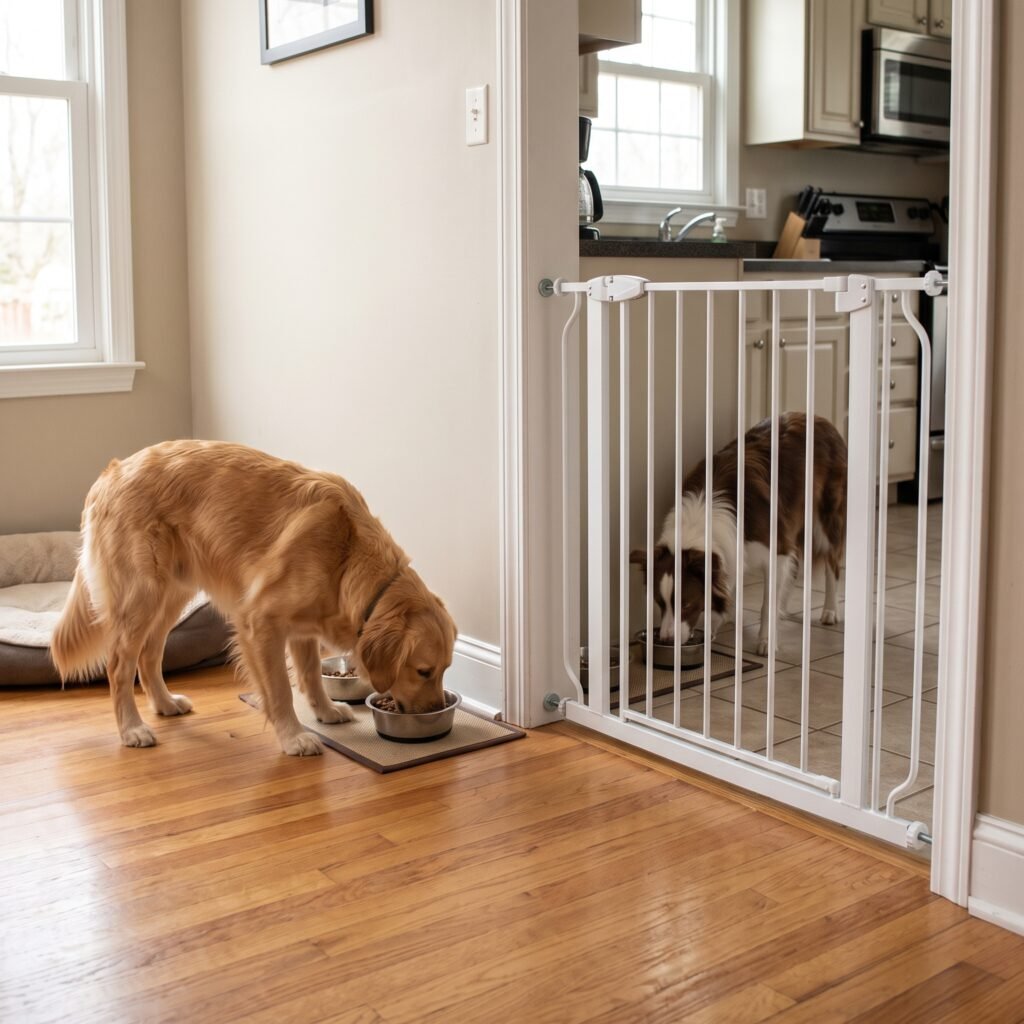
- Feed in a closed room or crate. The dog eats alone, with a closed door, a baby gate that the child can’t open, or a crate.
- Pick up the bowl only after the dog leaves. Don’t reach in. Wait until the dog has walked away, or lure them off with a treat tossed a few feet back.
- Pull high-value chews (bones, bully sticks, pig ears) from the house for now. These are the biggest triggers.
- Never leave a child alone with a dog who is eating, even if the dog “has never bitten before.”
This part of how to stop food aggression in dogs isn’t glamorous. It’s door latches and routines. But it protects everyone while the training does its slow work.
Is crating a dog for meals a good idea for guarders?
For many dogs, yes. A crate gives the dog a defined, safe space and removes the audience. I’ve used it with a number of guarders, and several relaxed visibly once nobody was walking past.
There’s a limit. A dog who guards the crate itself, or who is stressed in confinement, may need a different setup. In that case a closed room works better than forcing the crate.
What are the training options for how to stop food aggression in dogs?
Once management is in place, you can pick a training route for how to stop food aggression in dogs. Each has trade-offs, and the right one depends on how severe the guarding is and how comfortable you are near your dog while they eat.
| Approach | How it works | Best for | Main risk | Rough cost of professional help |
|---|---|---|---|---|
| Trade up | Approach, toss something better, leave | Mild guarding | Rushing causes setbacks | Low if self-guided |
| Hand-feeding | Dog eats from your hand, building trust | Mild to moderate, dogs comfortable with touch | Not safe if the dog bites at hands | Low to moderate |
| Bowl approach desensitization | Add food from a distance in tiny steps | Mild to moderate | Moving too close too soon | Moderate |
| Counterconditioning with a pro | Structured program with a trainer | Moderate to severe | Wrong trainer, outdated methods | Moderate to high |
| Veterinary behaviorist | Behavior plus medical evaluation | Severe or sudden onset | Cost and waiting lists | High |
I list the cost honestly because it shapes decisions about how to stop food aggression in dogs. If you’re on a tight budget, the first two options are accessible. If your dog has bitten, skip straight to professional help, because the cost of a bad bite is higher than the cost of a consult.
How do I use the “trade up” method for how to stop food aggression in dogs?
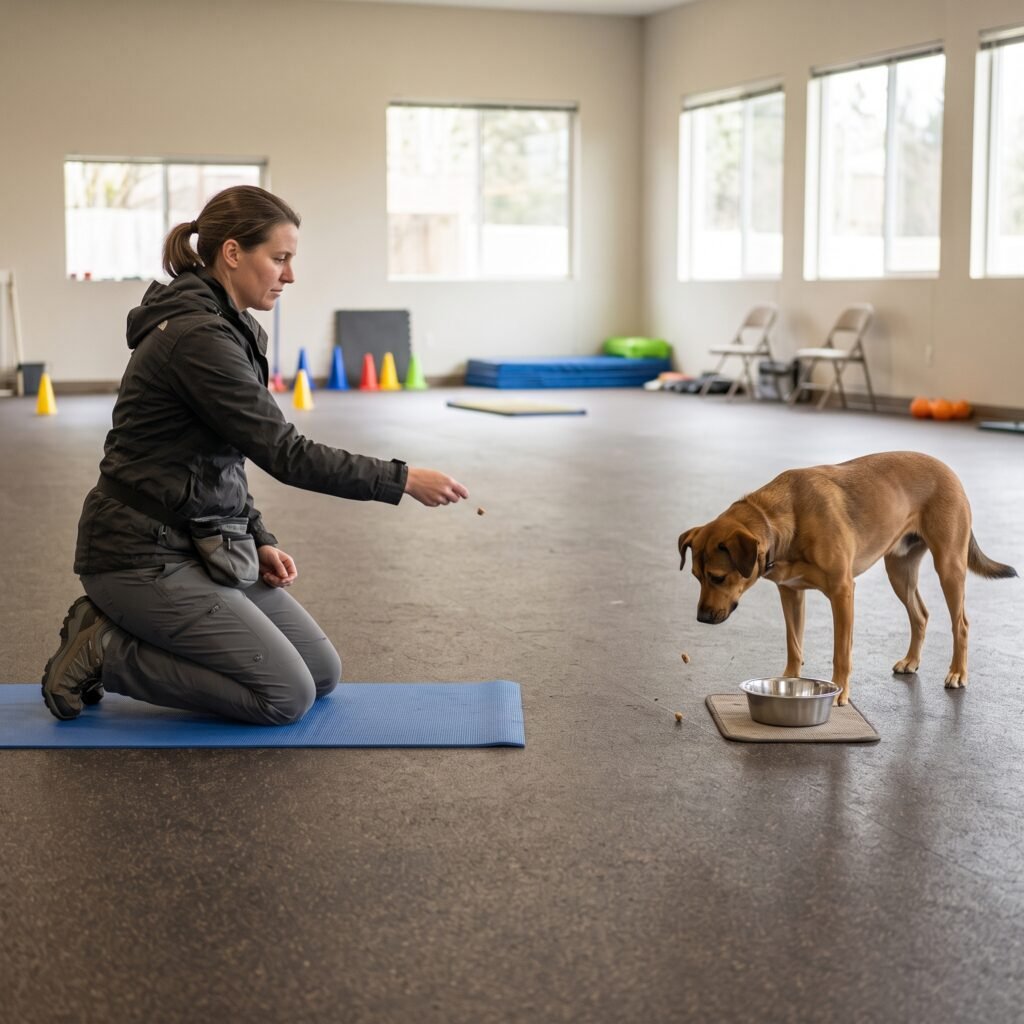
This is the one I use most with mild cases of dog food aggression. The idea is to change what your approach means. Instead of “someone is coming to take it,” it becomes “someone is coming with something better.”
- Start when your dog is eating something low in value, like plain kibble.
- Stand at a distance where your dog stays loose and relaxed. Don’t test the edge.
- Toss a small, high-value treat (a pea-sized piece of cooked chicken works well) toward the dog’s side, not into the bowl.
- Walk away while they eat it. Do not take the bowl.
- Repeat over several days, moving a step closer only when the dog stays relaxed.
When I tested this with a 40-pound beagle mix who guarded his bowl, the first few sessions felt boring. His tail loosened, his chewing slowed, and by day six he looked up expectantly when I walked in. That shift in his eyes, from stiff to hopeful, was the sign the method was working. It’s the clearest early marker I know for how to stop food aggression in dogs.
That change is the entire point of how to stop food aggression in dogs: the dog starts to want your approach.
What is the “hand-feeding” method, and who should avoid it?
Hand-feeding builds the idea that food comes from you. You portion the meal, then feed it a few pieces at a time from your hand. For many dogs this lowers tension at mealtimes.
It’s not for every dog, and it’s one tool among many in how to stop food aggression in dogs. If your dog snaps at hands or tends to grab food roughly, hand-feeding can raise the risk of a bite. I would not use it on a dog with moderate to severe guarding without a professional watching.
For the right dog, it’s a gentle way to reinforce how to stop food aggression in dogs through trust instead of confrontation.
What went wrong when I tried to fix a guarder too fast?
Here is my own failed attempt. A few years ago I worked with a 55-pound shepherd mix who growled over his bowl. He had improved over two weeks, so I got confident and moved my starting distance from six feet to three in a single session.
He didn’t growl. He stiffened, stopped chewing, and stared at the bowl for nearly ten seconds. I recognized the shift too late and stepped back. He relaxed, but the next day he wouldn’t eat when I was in the room.
I’d lost about a week of progress. The mistake was mine: I read “no growl” as “comfortable.” Quiet stiffness is a signal too.
That experience changed how I teach how to stop food aggression in dogs. Progress is measured by the dog’s body, not by the absence of noise. If the jaw is tight and the eyes are hard, you’ve gone too far.
This approach has a real limit. It works best when the dog is mildly to moderately worried. It does not fix a dog who bites quickly, and trying to shortcut it can make that dog more dangerous, not less.
How to stop food aggression in dogs in puppies
Puppies are a special case, and food aggression in puppies is also a chance to prevent a bigger problem. Many owners are told to take food away “so the puppy knows who’s boss.” I don’t recommend that. It teaches a puppy that hands near the bowl mean loss.
Here’s what I do instead when puppy owners ask how to stop food aggression in dogs before it starts. I add something good to the bowl while the puppy eats. A bit of cooked chicken or a few extra kibbles dropped in works. The puppy learns that hands near food bring more food.
Practicing how to stop food aggression in dogs while they’re young is far easier than waiting. A puppy who learns early that people are a source of good things tends to carry that lesson forward.
Some puppies still guard, and food aggression in puppies is common enough that it’s not a reason to panic. If your puppy is growling, stiffening, or biting at the bowl, bring it up with your vet or a qualified trainer. Early help beats a long fight later.
How to stop food aggression in dogs who guard high-value items, not just meals
Many dogs relax over their regular kibble and then lose it over a bone or a chew, which complicates how to stop food aggression in dogs. The stakes differ because the item is worth more to them.
This matters for the plan. If your dog is calm over dry food but guards a bully stick, don’t test the stick to “prove” the progress. Instead, treat high-value items as a separate training level with their own steps.
In practice, I do three things when planning how to stop food aggression in dogs around chews. I keep those items out of the house during the early weeks, I give them only in a closed room later, and I train the trade-up game separately with a lower-value chew first. Doing it in layers is how to stop food aggression in dogs without setting off the biggest triggers.
Keep in mind that guarding can show up around people, not just food. A dog who guards a spot on the couch may be dealing with the same underlying worry. The skills transfer, but each situation needs its own patient practice.
Can the food itself help with food aggression?
This is where a nutrition site has something specific to say about how to stop food aggression in dogs. Food won’t fix guarding, but it can make training easier or harder.
Meal timing. A dog who is ravenous is more likely to rush and guard, so feeding schedule is part of how to stop food aggression in dogs. Splitting the daily amount into two or three meals can lower the intensity at each one. Check with your vet before changing amounts, especially for puppies and seniors.
Kibble versus toppers. A dog who loves a topper may guard it more fiercely. In training I keep the bowl contents plain and use the better stuff as the thing I toss. That keeps the “trade” meaningful.
Puzzle feeders and slow bowls. These can slow eating and give a nervous dog something to do. I’ve seen them help with fast eaters. They can also raise frustration in a dog who guards the toy itself, so watch the body language.
Medical diets. Dogs on prescription diets may be more motivated by food, or may feel unwell. Talk to your vet if the guarding started after a diet change.
Here is a quick look at some common feeding setups and how they interact with guarding. These are general patterns from what I’ve seen, not guarantees.
| Setup | Upside for guarders | Downside for guarders |
|---|---|---|
| One large meal a day | Simple routine | Hungrier dog, higher intensity |
| Two to three small meals | Lower hunger at each meal | More mealtimes to manage |
| Free feeding | No meal pressure | Defending the bowl all day, hard in multi-pet homes |
| Puzzle feeder | Slows eating, adds focus | Can become a guarded item |
| Hand-feeding | Builds trust | Unsafe if the dog snaps at hands |
Any change in portions should keep total daily calories steady. Dog growls when eating less often once hunger drops, but that is a supporting factor, not the fix. Matching how to stop food aggression in dogs with the right feeding setup is a quiet lever most owners overlook.
Which mistakes make food aggression in dogs worse?
Most setbacks come from a short list of habits. I see the same ones again and again when owners ask me how to stop food aggression in dogs after a rough few weeks.
Reaching into the bowl to “prove” you can. The dog learns that hands mean loss. It’s the quickest way to turn mild guarding into a growl.
Moving closer too fast. Dogs often go quiet and stiff before they react. If you move in at that moment, you’ve pushed past what the dog can handle.
Skipping management because the dog “seems fine.” Resource guarding in dogs can look absent for weeks, then return under stress. Visitors, a new pet, or a change in routine can bring it back.
Mixing training with punishment. Any scolding at the bowl weakens the trust you’re building. It also makes a dog growls when eating less visibly, not less often.
Expecting one method to fit every dog. The best answer to how to stop food aggression in dogs is the one that matches your dog’s level, your home, and your comfort with risk.
When should I stop trying on my own and call a professional?
Some signs mean your plan for how to stop food aggression in dogs needs outside help. Here is how I draw the line:
- Your dog has bitten a person or another dog over food.
- The guarding has gotten worse over several weeks, even with management.
- You’re afraid of your dog at mealtimes.
- Your dog guards in multiple situations, not just food.
- The guarding began suddenly in an adult dog, which may point to a medical cause.
If any of these fit, call your vet first to rule out pain. Then look for a qualified professional. Ask what methods they use. Avoid anyone who recommends dominance, alpha rolls, or physical corrections, because those approaches tend to raise fear and can make guarding worse.
A veterinary behaviorist is a veterinarian with extra training in behavior. For severe cases, they can combine training plans with medical evaluation. In my experience, this is the right call when a child’s safety is on the line.
Knowing when to stop is part of how to stop food aggression in dogs responsibly. Handing the case to an expert is not failure. It’s often the fastest route to a safe home.
How do I find a trainer who won’t make things worse?
Ask direct questions about how to stop food aggression in dogs before you hire anyone. Which methods do you use for resource guarding? How do you keep the dog under the threshold? What happens if the dog growls? A good answer will talk about distance, trade-ups, and reading body language, not “showing the dog who’s in charge.”
Look for credentials from recognized behavior or training organizations, and for experience with guarding specifically. Your vet can often refer you to someone they trust.
How I evaluated the information in this article
Methodology note. For this guide on how to stop food aggression in dogs, I drew on my own hands-on work with guarding dogs, including mild and moderate cases, and checked the approach against current guidance from veterinary and behavior organizations that favor reward-based counterconditioning over punishment. I did not invent statistics or cite studies I couldn’t verify. Where I describe a general pattern, I’ve framed it as general. This article isn’t a substitute for an in-person evaluation by your vet or a qualified behavior professional, especially if your dog has bitten.
What does progress look like, and how long does it take?
Owners always ask how long how to stop food aggression in dogs takes, and I don’t give a fixed timeline. It depends on the dog’s history, how often you practice, and how well management holds. Some mild cases soften within a few weeks. Others take months and never become fully reliable.
Here are the milestones I look for, in order:
- The dog stays loose when you walk by at a distance.
- The dog looks up with interest when you approach, rather than stiffening.
- You can drop a treat near the bowl without any tension.
- The dog eats comfortably while you stand nearby.
Even when all four are in place, I keep management for children and visitors. How to stop food aggression in dogs well means accepting that some dogs stay careful around food for life. That’s okay, as long as the house is set up safely.
Keep a short log of how to stop food aggression in dogs progress. Note the date, distance, and the dog’s body language. A pattern of small wins helps when you feel stuck.
Frequently asked questions
How to stop food aggression in dogs toward other dogs?
Feed the dogs in separate rooms or behind a closed door, and pick up bowls when each dog finishes. Training can follow, but management comes first. If a fight has already happened, ask a professional for help before reintroducing shared mealtimes.
Can food aggression in dogs be cured?
Many dogs improve a great deal with the right plan, but “cured” is a risky word. Guarding is a behavior that can resurface under stress, so I treat it as managed rather than gone. Keep the safety habits in place for children and guests even after progress.
Why does my dog growl when eating, and should I worry?
A growl at the bowl is a request for space. It may come from fear, past scarcity, or pain. Don’t punish it. Back off, then plan a safe approach with your vet or a trainer, and rule out medical issues.
Is food aggression more common in puppies or adult dogs?
Both can guard. Food aggression in puppies can show early signs that are easier to change, and adults may have a longer history that takes more work. In either case, begin with management and gentle trade-ups.
Does neutering or changing food stop food aggression in dogs?
Neither is a reliable fix on its own. A diet change may affect hunger or comfort, and your vet can advise on medical factors. Behavior training and management do the real work.
Final thoughts: pick the plan that fits your house
So how to stop food aggression in dogs? Start by keeping everyone safe. Read your dog’s body language, rule out pain, and choose a path that matches the risk: manage, train, or call in a professional.
If you only remember one thing, remember this: you are changing what your approach predicts. When a hand or a footstep near the bowl starts to mean something good arrives, the guarding loosens. That takes patience, small steps, and honesty about when to get help.
Your dog isn’t being “bad.” They’re worried about losing something important. Meet that worry with calm, consistent practice, and you’ll usually see a better meal, and a better relationship, on the other side of how to stop food aggression in dogs.