Fat Dog Food: Are You Looking for Low-Fat or High-Fat?

Quick answer: “Fat dog food” usually means one of two opposite things: a low-fat formula for an overweight dog or one prone to pancreatitis, or a high-fat formula for a lean, underweight, or working dog that needs more calories. Check your dog’s body condition and vet history first, because the wrong direction can cause real harm.
A reader messaged me last month genuinely confused. Her vet had mentioned her Beagle needed to watch his fat intake after a pancreatitis scare, so she searched “fat dog food” expecting diet options and found bags marketed as high-fat for working dogs instead. She almost bought the wrong one.
That mix-up happens more than you’d think, and no generic search result sorts it out for you. This guide splits fat dog food into the two real categories people are actually searching for, and walks through how to tell which one your dog needs, because getting it backward isn’t a minor mistake with this particular nutrient.
Recommended Products
Best Dog Food in 2026
Does “Fat Dog Food” Mean Food That Makes Dogs Fat, or Food for Fat Dogs?
Neither, exactly, and that’s the confusion. Most people typing “fat dog food” into a search bar fall into one of two groups: owners of an overweight dog looking for a lower-fat formula to help with weight loss, and owners of a thin, high-energy, or working dog looking for a higher-fat formula to add calories and condition. The phrase itself doesn’t tell you which one you need.
I’d start by figuring out which question you’re actually asking before you look at any specific fat dog food. If your dog’s ribs are hard to feel under a layer of padding and your vet has mentioned weight, you’re in the low-fat camp. If your dog’s ribs, spine, or hip bones are visibly prominent, or they’re working long hours in the field or on the trail and losing condition, you’re in the high-fat camp.
Here’s the quick gut check I use with every dog before recommending a direction:
- Can you feel ribs with light pressure, with a thin fat layer over them? That’s a normal, healthy body condition, and most fat dog food questions don’t apply to this dog at all.
- Do you have to press hard to find ribs, with no visible waist from above? This dog likely needs a lower-fat, lower-calorie formula.
- Are ribs, spine, or hip bones visible or easily felt with no padding? This dog likely needs a higher-fat, calorie-dense formula, assuming parasites and illness have been ruled out first.
Get this categorization wrong and the rest of your decision goes sideways. Feeding a high-fat dog food to an already-overweight dog can accelerate weight gain and raise pancreatitis risk. Feeding a low-fat dog food to a working dog that needs more calories can leave them underweight and low on energy for the job they’re doing.
I’d also flag a middle group that doesn’t fit neatly into either camp: the healthy-weight, moderately active family dog whose owner just saw “fat dog food” trending in a search and wondered if they were missing something. If your dog maintains a stable weight, has normal energy, and your vet hasn’t raised any concerns, you likely don’t need to change anything at all. Not every dog needs a specialized fat dog food, and chasing a trend for a dog that’s already doing fine can introduce problems where none existed.
What Fat Content Should Low-Fat Dog Food Actually Have?
AAFCO’s minimum for adult dog maintenance is 5.5% crude fat on a dry matter basis, with no official maximum, so “low-fat” is a relative label rather than a regulated one. In practice, dog foods marketed as weight management or low-fat generally land between 7% and 10% crude fat on a dry matter basis, compared to 14% to 18% in a typical adult maintenance formula.
If your vet has flagged a pancreatitis history specifically, the bar is often lower still. Therapeutic low-fat diets used for dogs with recurring pancreatitis can run under 10% fat on a dry matter basis and sometimes closer to 7%, though these formulas usually require a prescription and veterinary guidance rather than an over-the-counter pick. I’d never choose a post-pancreatitis diet without the vet who treated the episode weighing in, since the stakes of getting this specific nutrient wrong are higher than with most dietary choices.
Here’s how typical fat dog food options compare across the weight-management spectrum, using representative label ranges:
| Category | Crude fat (dry matter) | Typical use case | Calories per cup (approx.) |
|---|---|---|---|
| Standard adult maintenance | 14-18% | Healthy, active adult dogs | 350-400 |
| Weight management / “lite” | 7-10% | Overweight dogs, less active dogs | 280-330 |
| Therapeutic low-fat (vet-guided) | Under 10%, often 6-9% | Pancreatitis history, fat intolerance | 260-310 |
| High-fat / performance | 18-24%+ | Working, sporting, or underweight dogs | 420-500+ |
These are representative label ranges across common products in each category, not one brand’s exact numbers. Always convert the guaranteed analysis on your bag to dry matter before comparing one fat dog food option to another.
A dog food marketed loosely as “fat dog food” for weight loss without a clear percentage on the label isn’t trustworthy on its own. Always check the actual guaranteed analysis rather than trusting a bag’s front-of-package claims, since “light” and “weight management” aren’t legally defined terms the way AAFCO’s growth and maintenance profiles are.
Fiber content is worth checking alongside fat when you’re looking at a weight-management fat dog food specifically. Higher fiber can help a dog feel fuller on fewer calories, but too much fiber too quickly can cause loose stool or excessive gas, which is its own reason to transition slowly rather than switching cold. A fiber range around 5% to 10% on a dry matter basis is typical for weight-management formulas, compared to roughly 2% to 4% in standard maintenance food.
When Does a Dog Actually Need a Low-Fat Dog Food?
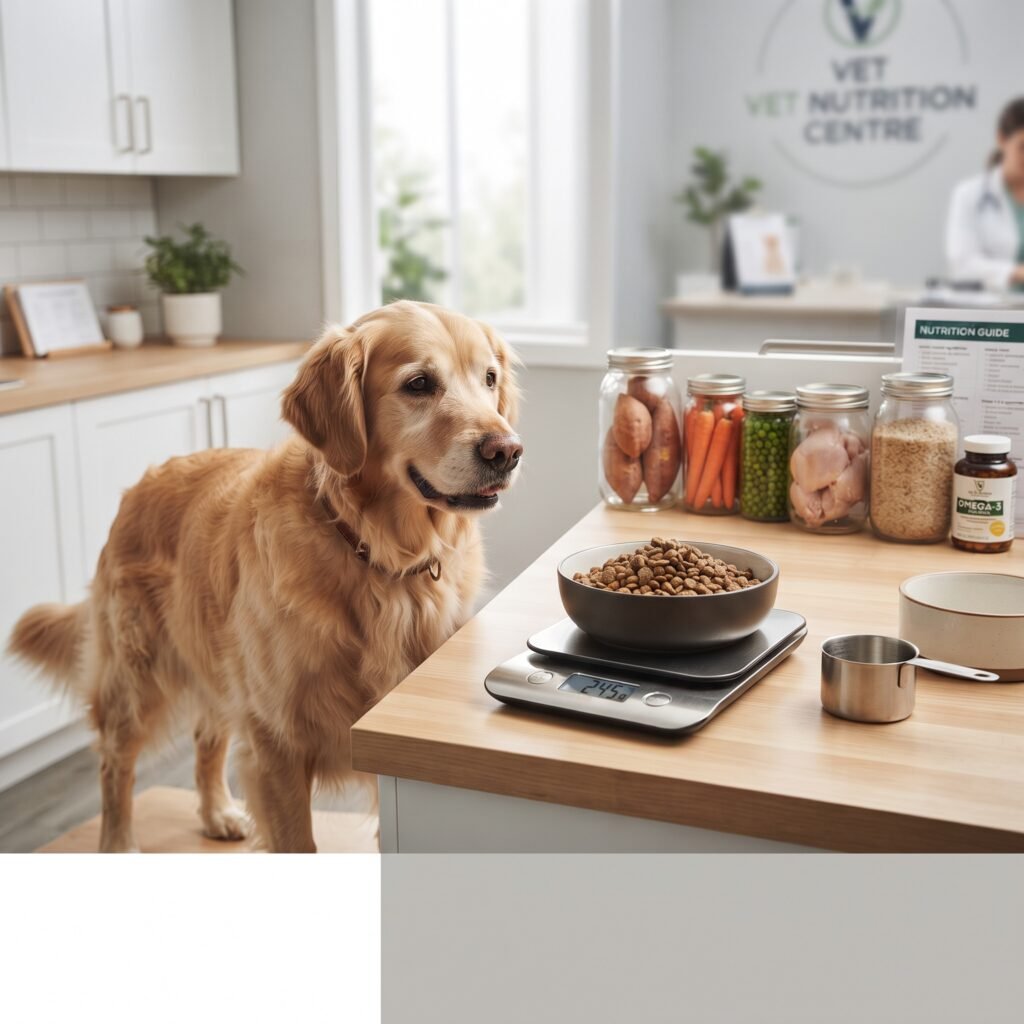
Pancreatitis is the clearest medical reason to switch to a low-fat dog food, since high dietary fat is a known trigger for flare-ups in dogs who’ve had an episode. If your dog has had even one diagnosed bout, ask your vet directly about a target fat percentage rather than guessing, because the right number varies by how severe the episode was and whether it’s recurring.
Obesity is the more common reason people search for fat dog food in the low-fat direction. A visibly overweight dog benefits from both reduced calories overall and a lower proportion of those calories coming from fat, since fat is more calorie-dense gram for gram than protein or carbohydrate. Cutting fat without cutting total calories doesn’t accomplish much, so check the calories per cup, not just the fat percentage, when comparing options.
Breeds prone to hyperlipidemia, like Miniature Schnauzers, are a specific edge case worth naming. These dogs can run persistently high blood fat levels regardless of body weight, and a low-fat dog food is sometimes recommended by a vet as a management strategy even for a schnauzer that isn’t overweight. This is exactly the kind of situation where a blanket “all dogs need moderate fat” answer falls short, because the right call depends on bloodwork, not appearance.
Here’s an honest limitation from my own experience. I once moved a overweight 55-pound mixed breed onto a low-fat, high-fiber weight management formula at about 8% fat, expecting steady loss. Instead, she started begging constantly and counter-surfing for the first time in her life, because the high-fiber bulk filled her stomach without satisfying her the way the richer food had. We ended up using a moderate-fat formula around 11% instead, with a smaller measured portion, and that worked better for her temperament even though it wasn’t the lowest-fat option on the shelf. The lesson: the fat dog food with the lowest number on the label isn’t automatically the right choice if your dog can’t sustain it behaviorally.
When Does a Dog Need a High-Fat Dog Food Instead?
Working and sporting dogs burn through calories fast, and a high-fat dog food is often the most efficient way to meet that demand without forcing the dog to eat an unreasonably large volume of food. Fat delivers more than double the calories per gram of protein or carbohydrate, so a dense, high-fat formula lets a hard-working dog get enough energy from a manageable portion size.
Underweight dogs recovering from illness, surgery, or a rough start in life are the other common case. A dog that’s lost significant muscle and fat needs calorie-dense food to rebuild condition, and a high-fat dog food in the 20% to 24% range can help close that gap faster than a standard maintenance formula, assuming your vet has ruled out an underlying medical cause for the weight loss first.
Puppies are a special exception worth flagging clearly: a high-fat adult performance formula is not an appropriate substitute for a proper growth formula, even for an underweight puppy. Growth-stage nutrition needs calcium and phosphorus ratios that adult performance foods aren’t formulated to provide, so don’t reach for “fat dog food” marketed to working adults as a shortcut for a skinny puppy.
One honest caveat on the high-fat side: not every dog tolerates a sudden jump in dietary fat well, even when they need the calories. I’ve seen a working line German Shepherd develop loose stool and gas within days of a fast switch to a 22% fat performance formula, simply because the transition was too quick for his gut to adjust. Slow transitions matter just as much on the high-fat end as the low-fat end, maybe more, since a rich formula gives digestion less room for error.
How Do I Read a Label to Find the Right Fat Dog Food?
Every dog food label lists crude fat as a minimum percentage, not an exact figure, which means two bags both listing “12% minimum” could have meaningfully different actual fat content. This matters less for everyday maintenance but matters more for a dog with a specific medical restriction, where you want to call the manufacturer and ask for the actual average fat content rather than relying on the label minimum alone.
Convert every guaranteed analysis to dry matter before comparing one fat dog food to another, especially if you’re comparing a dry kibble to a canned or fresh food with very different moisture content. Take the fat percentage, divide by one minus the moisture percentage, and you get the dry matter figure. A canned food listing 6% fat and 78% moisture actually works out to about 27% fat on a dry matter basis, which is a very different number than it looks like on the can.
Calories per cup or per can matter as much as the fat percentage itself, since two low-fat options can still differ substantially in total calorie density depending on protein and carbohydrate content. If your goal is weight loss, check both numbers together rather than assuming a lower fat percentage automatically means fewer calories.
Protein percentage deserves a glance too, even though this guide is centered on fat. A low-fat dog food that’s also low in protein can leave a dieting dog losing muscle along with fat, which isn’t the outcome you want. Look for a weight-management fat dog food that keeps protein relatively steady compared to standard maintenance while bringing fat and total calories down, rather than one that cuts all three nutrients proportionally.
Here’s a practical checklist I walk through with any fat dog food label:
- Find the crude fat minimum and convert it to dry matter if comparing across product types.
- Check calories per cup or per can, not just the fat percentage, especially for weight management.
- Call the manufacturer for the actual average fat content if your dog has a medical restriction requiring precision.
- Compare against your dog’s current food rather than in isolation, since the goal is usually a meaningful change from baseline, not an arbitrary target number.
How Do I Transition My Dog to a New Fat Dog Food Safely?
Changing the fat content of your dog’s diet, in either direction, deserves a slower transition than a routine flavor or brand switch. I’d stretch this to ten to fourteen days rather than the standard seven, swapping roughly a fifth of the portion every two to three days, because a dog’s digestive system needs time to adjust enzyme production to a meaningfully different fat load.
Watch stool consistency closely during the switch. Loose stool, excess gas, or visible fat in the stool during a transition to a higher-fat dog food are signs to slow down further or pause the switch entirely and call your vet, especially if your dog has any pancreatitis history. Going backward a step in the transition is not a failure; it’s the transition working as intended.
For a dog moving toward a lower-fat formula for weight loss, expect some initial hunger behavior as the calorie density drops, even if the volume of food looks similar or larger. This is normal and usually settles within one to two weeks, but if your dog seems distressed or is losing weight too quickly, recheck the portion math with your vet rather than assuming it will resolve on its own.
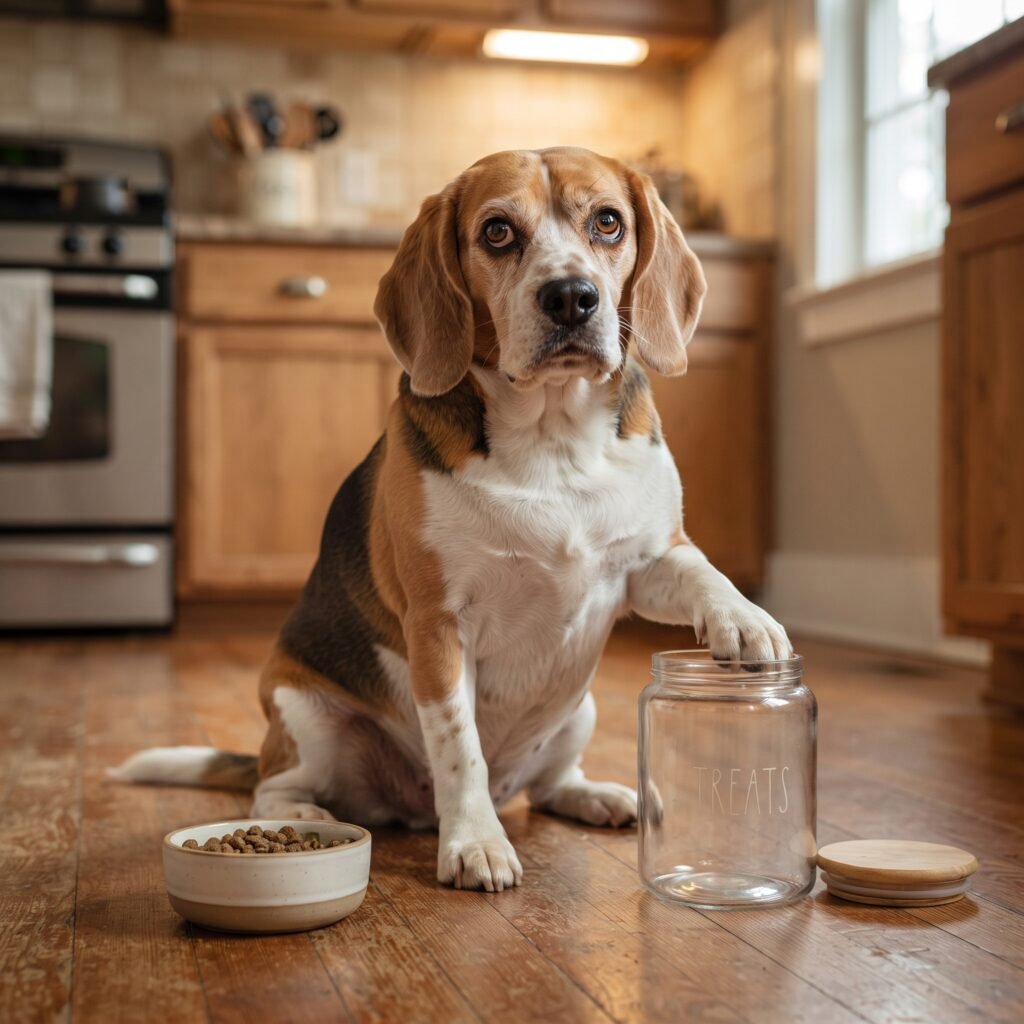
Keep treats in the equation throughout any fat dog food transition. A low-fat kibble paired with high-fat training treats defeats much of the purpose, and a high-fat performance food paired with low-calorie treats can undercut the calorie goal you’re trying to hit. Match your treat choices to whichever direction you’re adjusting.
Track the transition on paper or in a notes app rather than relying on memory, especially if more than one person in the household feeds the dog. I’ve seen a transition stall because one family member kept topping up the old food “just to help him adjust,” which meant the dog never actually got a full week on the new ratio. A shared feeding log solves this faster than any amount of reminding.
Does a Senior Dog Need a Different Fat Dog Food Than an Adult?
Senior dogs often need less total fat not because age itself changes fat tolerance dramatically, but because activity typically drops as dogs get older, and the calorie math shifts even if the dog’s build hasn’t changed yet. A senior formula in the 10% to 13% fat range, paired with a measured portion, is a reasonable default for an older, less active dog that isn’t yet showing a weight problem.
Where this gets more specific is with senior dogs who’ve developed arthritis or reduced mobility. Extra weight puts more load on joints that are already compromised, so a lower-fat, lower-calorie fat dog food paired with a joint-support ingredient like glucosamine can serve two goals at once. I’d rather see a senior dog carry slightly less weight than the breed standard suggests than see them carry extra pounds on joints that are already struggling.
The flip side applies too. A senior dog losing muscle mass and appetite, sometimes called senior muscle wasting or sarcopenia, may actually need a more calorie-dense, moderate-to-higher-fat food rather than a lower-fat senior formula, assuming your vet has ruled out an underlying illness causing the weight loss first. This is another case where the generic “seniors need low-fat food” advice doesn’t hold up once you look at the specific dog in front of you.
How I Evaluated This Information (Reviewed-By Note)
Reviewed by: SmartPupFood editorial team. This article is educational and doesn’t replace advice from your veterinarian, especially for any dog with a diagnosed pancreatitis history or hyperlipidemia.
Here’s what went into this guide:
- Nutrient range comparison: Fat percentages and calorie ranges were compared against AAFCO’s established dog food nutrient profiles and dry matter conversion standards.
- Label verification: Representative fat dog food ranges reflect commonly published guaranteed analyses across weight-management, standard maintenance, and performance product categories.
- Medical context check: Statements about pancreatitis and hyperlipidemia reflect general veterinary consensus on dietary fat management rather than brand-specific marketing claims.
- Hands-on notes: Transition observations and behavioral notes come from real feeding experience across dogs of different sizes and activity levels, not a single case presented as universal.
A limitation worth naming: individual dogs vary enough in metabolism and tolerance that no general fat percentage range replaces a conversation with your vet, particularly for any dog with a diagnosed pancreatic or lipid condition. Treat the ranges here as a starting framework for that conversation, not a replacement for it.
What If I’m on a Tight Budget and Still Need a Specific Fat Dog Food?
Prescription low-fat diets from a vet’s office tend to run noticeably more expensive than over-the-counter options, and that cost can feel like a barrier right when your dog needs the change most. Before assuming you need the prescription version, ask your vet directly whether an over-the-counter weight-management formula with a verified fat percentage in the right range could work for your dog’s specific situation, since not every case requires the therapeutic tier.
For dogs with a confirmed pancreatitis history, I wouldn’t cut corners here, since the medical stakes of a relapse are high and the prescription formulas are formulated and tested specifically for that purpose. For a simply overweight dog without a pancreatic diagnosis, a well-chosen over-the-counter fat dog food in the 8% to 10% range, combined with accurate portioning, often gets you most of the way there at a fraction of the cost.
Portion control itself is free and arguably does more work than the specific formula you choose. A kitchen scale costs a few dollars and removes the guesswork that measuring cups introduce, since cup measurements vary by how tightly kibble is packed. I’ve watched well-intentioned owners undermine a perfectly good low-fat dog food simply because their “cup” was actually a cup and a half by volume.
If budget is the deciding factor, I’d put the money toward getting the fat percentage and portion size right on a mid-tier fat dog food rather than stretching for a premium or prescription option you can’t sustain long-term. A consistent, moderately-priced plan you can afford for a year beats an ideal plan you can only afford for six weeks.
So, Which Fat Dog Food Direction Is Right for Your Dog?
Figure out which question you’re actually asking before you look at a single bag. An overweight or pancreatitis-prone dog needs a genuinely low-fat dog food, checked by dry matter percentage and calories per cup, not just a “lite” label on the front. An underweight or hard-working dog needs the opposite: a calorie-dense, higher-fat formula introduced slowly enough for their gut to keep up.
Whichever direction you’re headed, transition slowly, watch stool and body condition rather than the calendar, and loop your vet in early if your dog has any history that makes dietary fat medically significant. The right fat dog food isn’t the one with the most dramatic number on the label. It’s the one that matches your specific dog’s body condition, health history, and how their gut actually responds to it.
Getting this one nutrient right does more for your dog’s health than almost any other single decision on the bag.
Frequently Asked Questions
What percentage of fat should dog food have?
Standard adult maintenance dog food typically runs 14% to 18% crude fat on a dry matter basis, while weight-management or low-fat options usually fall between 7% and 10%. The right number for your dog depends on body condition, activity level, and any diagnosed medical conditions, so check with your vet if you’re unsure which range of fat dog food applies to your situation.
Is high-fat dog food bad for dogs?
High-fat dog food isn’t inherently bad, and it’s appropriate for working, sporting, or underweight dogs who need concentrated calories. It becomes a problem for dogs with pancreatitis history, hyperlipidemia, or existing obesity, where a lower-fat formula is usually the safer direction.
What dog food is best for an overweight dog?
Look for a weight-management formula with reduced calories per cup and a lower fat percentage than standard maintenance food, typically in the 7% to 10% dry matter range. Pair the food change with a measured portion and increased activity rather than expecting the food switch alone to produce weight loss.
Can low-fat dog food cause weight gain?
Low-fat dog food itself won’t cause weight gain, but overfeeding any food, including a low-fat one, can. Some low-fat formulas are also higher in carbohydrates to maintain palatability, so check total calories per cup rather than assuming “low-fat” automatically means “low-calorie.”
How do I switch my dog to a different fat dog food safely?
Transition over ten to fourteen days, swapping about a fifth of the portion every two to three days rather than switching all at once. Watch for loose stool or excess gas, which are signs to slow the transition further, especially when moving toward a higher-fat formula.