
English Springer Spaniel Food: How Field Lines and Show Lines Change Everything
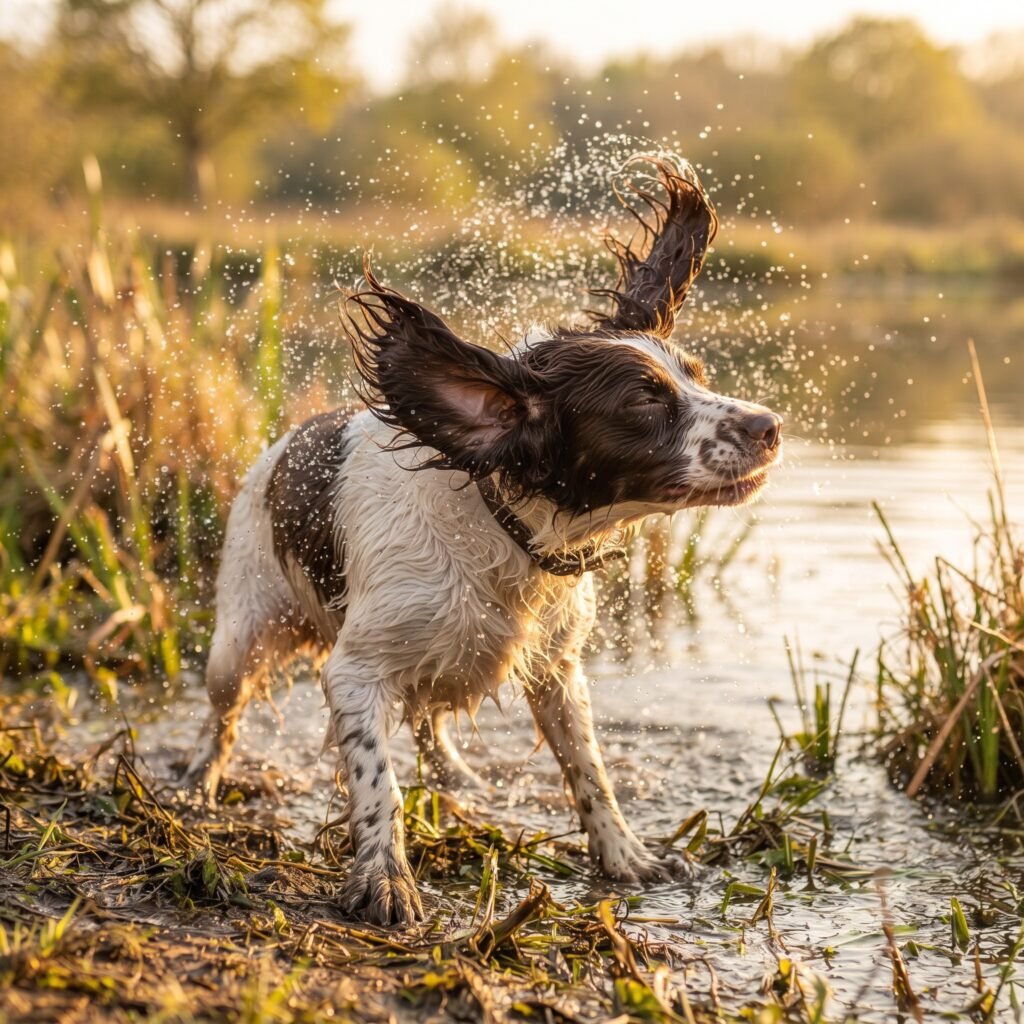
Short answer: The right English Springer Spaniel food depends on which line your dog came from. Field-bred Springers burn 1,800–2,400 kcal daily in season and need fat above 16%. Show-bred Springers often need under 1,100 kcal and gain weight fast on the same bag. Same breed, different math entirely.
Recommended Products
Best Dog Food in 2026
Why does my Springer gain weight on the exact food my friend’s Springer thrives on?
Because you almost certainly own dogs from two different populations.
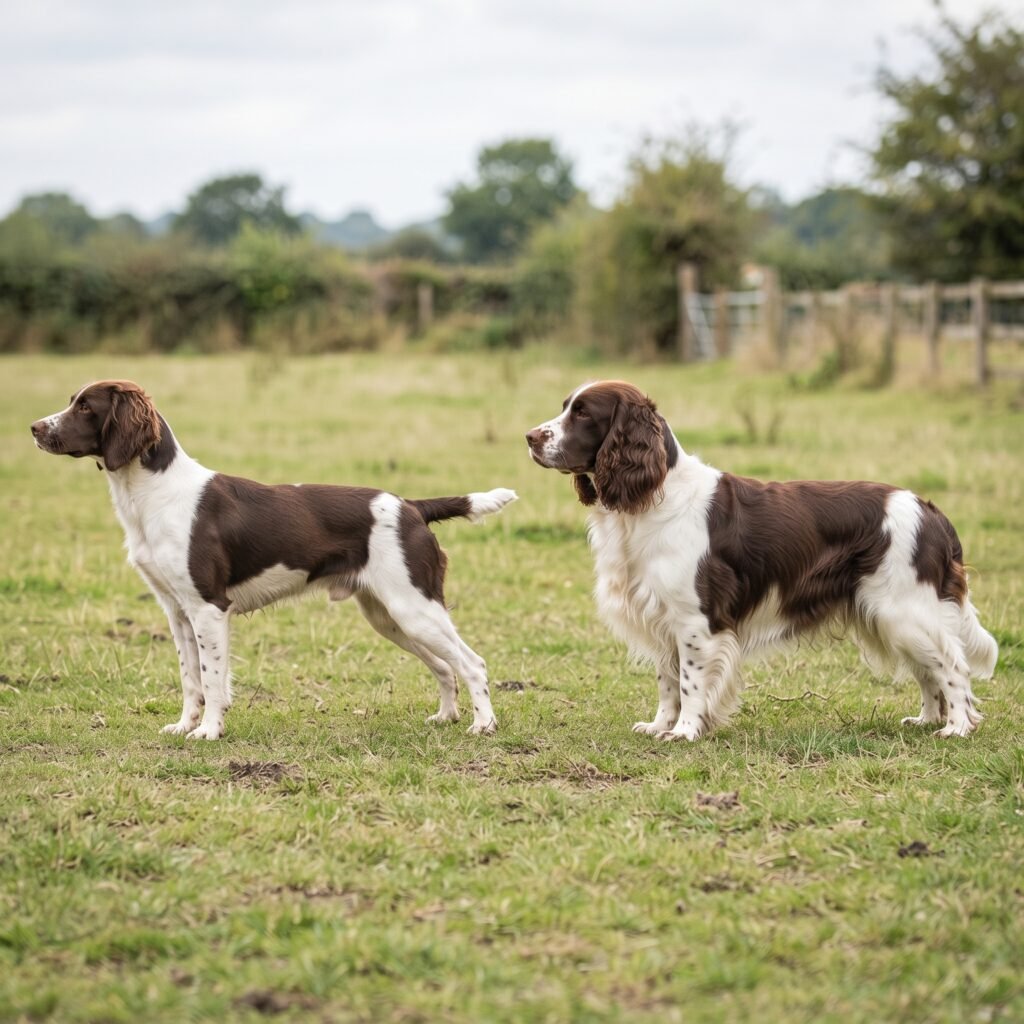
The English Springer Spaniel split into two functional types decades ago. Field lines were bred to quarter cover for hours. Bench (show) lines were bred for coat, bone, and a heavier, softer frame.
They share a name and a stud book. They do not share a metabolism.
A field-bred Springer is typically 35–45 lbs, tight-coupled, and almost impossible to keep weight on during hunting season. A bench-bred Springer is often 48–55 lbs with more coat, less drive, and a strong tendency to round out by age three.
Feed both the same English Springer Spaniel food at the same cup count and one dog gets ribby while the other gets a waistline you can’t find.
This is the single most common mistake I see with English Springer Spaniel food. Owners buy for the breed name on the bag rather than the dog in front of them.
The label makes it worse. “Active breed” and “sporting dog” formulas are calorie-dense by design — often 420–480 kcal per cup. That’s correct for a dog working four hours in November. It’s a problem for a Springer whose biggest daily effort is the walk to the mailbox.
Neutering compounds it. Energy requirements drop meaningfully after spay or neuter, and most owners never adjust the scoop.
So the first decision in choosing English Springer Spaniel food isn’t protein percentage or grain-free. It’s honest classification of your own dog.
How do I tell whether I have a field-line or show-line Springer?
Pedigree is the clean answer. If you have papers, look for field trial or hunt test titles (FC, AFC, MH, SH, JH) versus conformation titles (CH, GCH). That tells you most of what you need.
No papers? Use the physical tells.
Field lines usually carry a shorter, flatter coat with less feathering, a higher-set docked tail with constant motion, a narrower skull, and more white in the pattern. They tend to look “leggy.”
Bench lines carry heavy feathering on the legs, chest, and belly, a broader skull with more pronounced stop, deeper flews, and a squarer, heavier body.
The behavior tell is faster, and it predicts English Springer Spaniel food needs better than any physical marker: put the dog in a field for twenty minutes. A field-bred Springer quarters at speed, self-directs, and doesn’t stop. A bench-bred Springer explores, then checks in, then lies down.
There’s a third category most owners actually have: a field-line dog living a pet life. This dog has the metabolism of a worker and the schedule of a couch dog, and it’s the hardest one to feed correctly.
That mismatch is where English Springer Spaniel food decisions get genuinely difficult, because the dog acts hungry and stays hungry regardless of what the bowl holds.
The calorie math that actually applies
Skip the feeding chart on the bag for a moment. Use resting energy requirement (RER), the standard veterinary starting formula: RER = 70 × (body weight in kg)^0.75. Multiply by an activity factor.
| Springer profile | Weight | RER | Activity factor | Daily kcal target |
|---|---|---|---|---|
| Bench line, neutered, pet home | 23 kg (50 lb) | 735 | 1.6 | ~1,175 |
| Bench line, overweight, weight loss | 23 kg (50 lb) | 735 | 1.0 | ~735 |
| Field line, neutered, pet home | 18 kg (40 lb) | 612 | 1.8 | ~1,100 |
| Field line, weekend hunting | 18 kg (40 lb) | 612 | 2.5 | ~1,530 |
| Field line, in-season, full days | 18 kg (40 lb) | 612 | 3.0–4.0 | ~1,835–2,450 |
| Intact adolescent, 10–14 months | 16 kg (35 lb) | 566 | 2.0 | ~1,130 |
Look at rows one and three. A heavier bench dog and a lighter field dog land in nearly the same place — but the field dog in season more than doubles. That’s why one bag of English Springer Spaniel food cannot serve both states.
These are starting points, not prescriptions. Individual variation runs roughly ±20%, so weigh the dog every two weeks and adjust from what you observe.
What happened when I fed a working formula to a 47 lb bench-line Springer
I’ll give you the failure first, because it taught me more than the successes.
A friend’s four-year-old bench-bred male, Gus, came to me at 47 lbs with a body condition score of about 6/9 — ribs findable but padded, no visible waist from above. He was on a “sporting dog” formula at 30% protein and 20% fat, roughly 460 kcal per cup, three cups a day.
That’s about 1,380 kcal for a dog whose real requirement sat near 1,100. He was 25% over, every day, for months.
The switch I made was not to a diet food. I moved him to a standard adult maintenance English Springer Spaniel food at roughly 355 kcal per cup, 26% protein, 13% fat, and dropped him to 2.5 cups — about 890 kcal, plus 100 kcal of training treats.
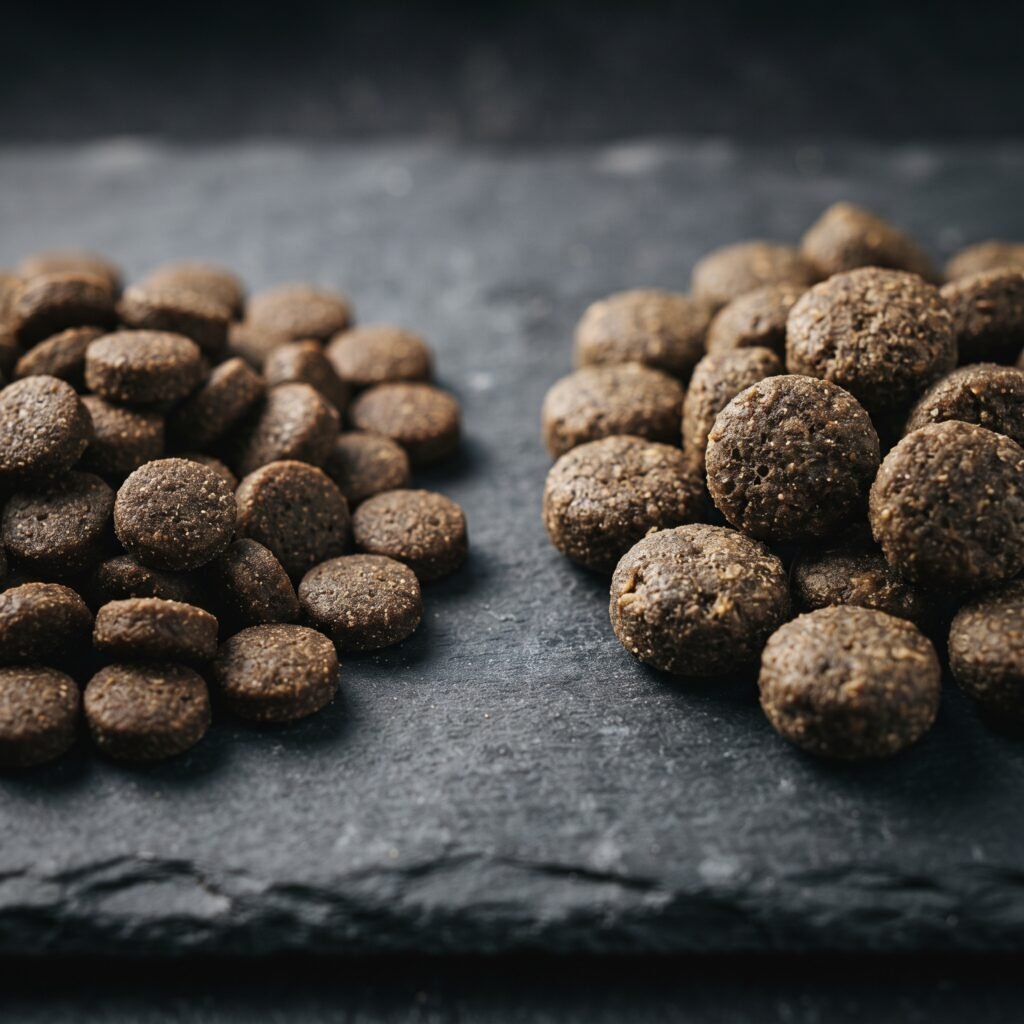
Specifics, because they matter: the kibble was a small, flattened disc about 9 mm across, which mattered because Gus inhaled larger rounds without chewing. The bag had a faint fishy note from the salmon meal — not rancid, just present — and he’d nose the bowl for a second before committing, which he never did with the old food.
Week one, his stools softened. That’s normal in transition and it resolved by day nine.
Week three, he started finishing meals faster and looking for more. This is the part nobody warns you about: a dog moving to lower-calorie English Springer Spaniel food gets a smaller volume of food, and volume is what registers as fullness.
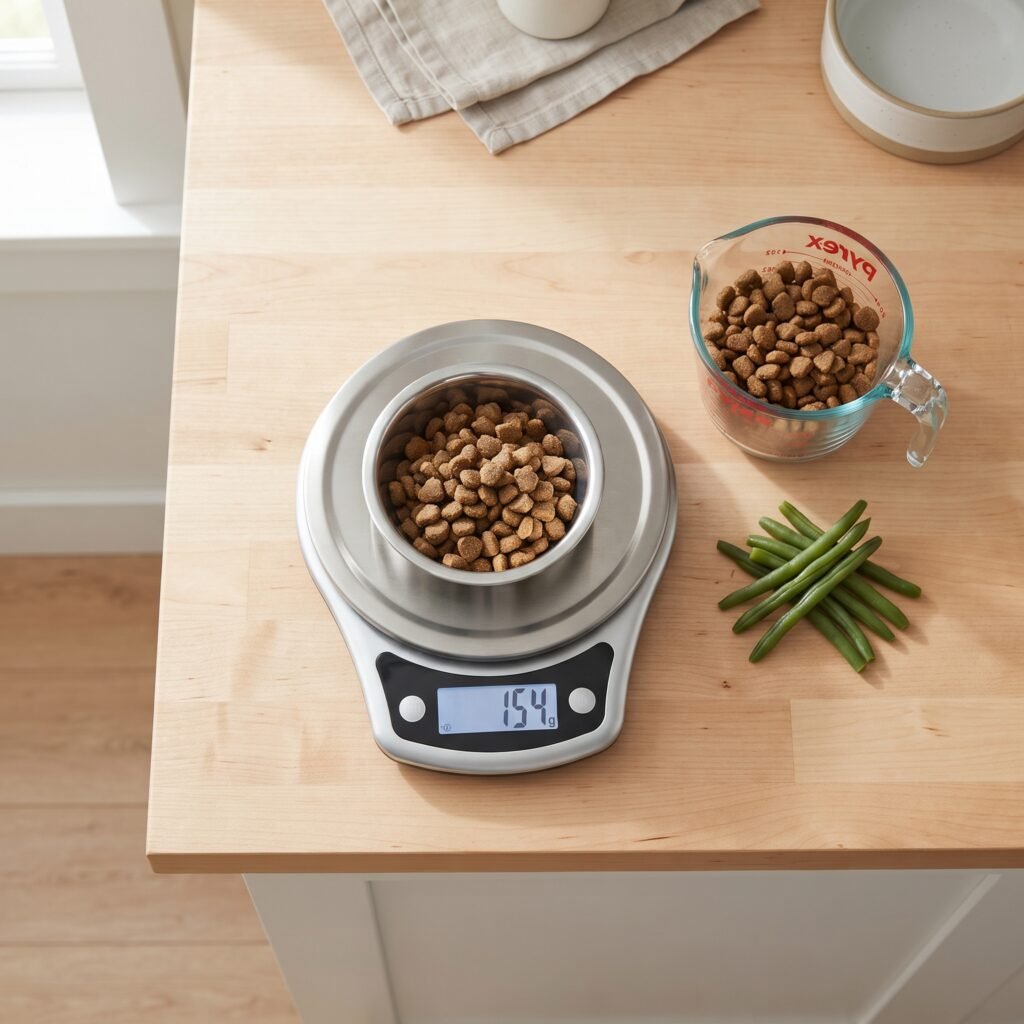
I fixed that with green beans. Two tablespoons of plain frozen green beans per meal, thawed, adds bulk at roughly 8 kcal per tablespoon. Cheap, boring, effective.
By week ten he was 43 lbs with a visible waist and a tuck. His energy went up, which surprised his owner and shouldn’t have — carrying four extra pounds on a 43 lb frame is like a 180 lb person carrying 17.
The measurable detail I trust most: he stopped grunting when he lay down on tile. That sound disappeared around week seven.
What nutrient numbers should I actually check on the bag?
Start with the AAFCO statement, not the marketing panel. You want a food labeled as meeting AAFCO nutrient profiles for the relevant life stage, or one substantiated through a feeding trial.
AAFCO’s adult maintenance minimums sit at 18% crude protein and 5.5% crude fat on a dry matter basis. Growth and reproduction minimums are higher — 22.5% protein and 8.5% fat. Those are floors, not targets.
Good English Springer Spaniel food for an adult typically lands well above the floor. Here’s the practical comparison across the four category types you’ll actually be choosing between.
| Category | kcal/cup | Protein (as fed) | Fat | Fiber | Omega-3 (EPA+DHA) | Best fit |
|---|---|---|---|---|---|---|
| Working / sporting formula | 420–480 | 28–32% | 18–22% | 3–4% | 0.3–0.5% | Field line, in season |
| Standard adult maintenance | 340–380 | 24–27% | 12–15% | 3–5% | 0.2–0.4% | Field line, off season; active bench line |
| Weight management | 280–330 | 25–30% | 8–11% | 6–10% | 0.2–0.3% | Bench line over BCS 6 |
| Limited ingredient (LID) | 350–390 | 22–26% | 12–16% | 3–5% | 0.15–0.3% | Diagnosed food sensitivity only |
Note the fiber column. Weight-management English Springer Spaniel food gets most of its effect from fiber displacing calories, which is why stool volume goes up noticeably. Warn yourself in advance before you commit to a weight-management English Springer Spaniel food.
Three things I check beyond the panel:
Calcium in puppy food. Springers aren’t giant breed, so the risk is lower, but excess calcium during growth is still worth avoiding. Look for growth formulas in the 1.0–1.5% dry matter range rather than the top of the allowed band.
Named fat source. “Chicken fat” tells you something. “Animal fat” doesn’t.
EPA and DHA listed by number. Springers with coat and ear issues benefit from omega-3s, and a food that says “contains omega fatty acids” without a guaranteed analysis figure is telling you the amount is small.
One thing I no longer treat as a decision point: grain-free as a category. The FDA has publicly investigated reports linking certain diets — many grain-free, many using peas, lentils, or potatoes as main ingredients — to canine dilated cardiomyopathy, and the agency has not established a causal mechanism. That’s the honest state of it. I don’t choose grain-free English Springer Spaniel food without a specific reason, and I don’t panic about grains either.
My Springer’s ears are always gunky — is that the food?
Usually not. And this is where a lot of money gets spent on the wrong English Springer Spaniel food.
Before you change English Springer Spaniel food, look at the anatomy. Springers have long, heavy, pendulous ears that seal the canal. That anatomy traps moisture and warmth and creates the conditions for yeast and bacteria regardless of diet.
Add water. Springers swim, and field-line Springers swim in things you’d rather not think about. Moisture in a sealed canal is the primary driver in most cases I’ve seen.
True adverse food reactions in dogs most commonly present as year-round itching, especially feet, face, groin, and armpits — often with recurrent ear trouble, not ear trouble alone.
So the diagnostic question is: are the ears the only symptom?
If yes, look at ear-drying protocol after swimming, humidity, allergen season, and whether anyone’s actually cultured the discharge. Switching English Springer Spaniel food will not fix a mechanical moisture problem.
If the ears come with itchy feet, recurrent skin infections, and it runs through winter with no seasonal break, then a food trial is reasonable.
How a real elimination trial works
An elimination trial means a single novel protein and a single novel carbohydrate, or a hydrolyzed diet, fed exclusively for 8–12 weeks. Nothing else. No flavored heartworm preventive, no dental chews, no crumbs from the toddler.
Most owners fail here, and I’ve failed here. Eight weeks is long, and one dropped chicken nugget resets the clock.
If the symptoms clear, you challenge by reintroducing the original food. If they come back, you have your answer. Skipping the challenge step is the most common reason people spend years on expensive limited-ingredient English Springer Spaniel food they never needed.
Work this with your vet. The point isn’t to buy a hypoallergenic bag — it’s to know whether you need one.
Where this whole approach didn’t work
I’ve made the line-based framework sound cleaner than it is. Here’s the case that broke it.
A six-year-old field-bred female, spayed, roughly 41 lbs, hunted hard three months a year and did nothing the other nine. Textbook candidate for seasonal switching: working formula October through December, maintenance formula the rest of the year.
It went badly. She had a sensitive gut, and two full diet transitions a year meant two multi-week stretches of loose stool — one of them landing right at the start of hunting season, which is the worst possible timing.
The lesson: transition tolerance is a real constraint that overrides the calorie logic. For her, the answer was one consistent maintenance English Springer Spaniel food year-round, with in-season calories added through toppers she already tolerated — a spoon of the same brand’s canned food, plus a measured amount of the maintenance kibble itself.
Same calories delivered. No gut disruption. Slightly less optimal fat ratio during work, and she was fine.
I’d also flag the field-line-in-a-pet-home problem honestly: sometimes there is no food solution. A dog bred to run six hours who gets forty minutes a day is under-exercised, not under-fed, and no adjustment to English Springer Spaniel food fixes that. Scent work, retrieving drills, and structured training burn more mental fuel than another lap around the block.
What about puppies, seniors, and Springers with breed-specific conditions?
Puppy feeding: how much to feed an English Springer Spaniel under a year
Springer puppies grow fast between 3 and 7 months, then fill out slowly through 18 months. Feed a growth-labeled English Springer Spaniel puppy food, split across three meals until about 6 months, then two.
How much to feed an English Springer Spaniel puppy is a moving target, so recalculate monthly. Use the RER formula with a growth factor of 3.0 up to four months and 2.0 from four months to maturity. A 12 kg (26 lb) five-month-old lands near 900 kcal per day at a factor of 2.0.
Keep them lean. Puppies that grow slightly slower have better joint outcomes, and you should be able to feel ribs easily through the whole growth period.
Do not free-feed English Springer Spaniel puppy food. It’s the fastest route to an overweight adult and it removes your ability to notice appetite changes, which are often the first sign something’s wrong.
Senior Springers
Around 8 or 9, most Springers lose muscle before they lose fat. The instinct is to cut calories. Often the better move is to keep protein high — 28%+ as fed is reasonable for a healthy senior — and reduce total volume slightly.
Kidney values change the calculus, so this is a bloodwork conversation, not a bag-label conversation.
Joint support matters here, and senior English Springer Spaniel food varies widely on it. Look for guaranteed levels of glucosamine and chondroitin rather than a mention on the front of the bag.
PFK deficiency and other breed-specific issues
Phosphofructokinase (PFK) deficiency is an inherited condition documented in English Springer Spaniels, causing exercise-induced episodes. It’s a DNA-testable condition, and it’s a management-and-exercise issue rather than something you solve with English Springer Spaniel food — but it changes how hard you should be pushing a dog whose calories you’re calculating around work.
Springers can also be prone to weight-related complications and to skin conditions, both of which food genuinely influences. Ask your vet about testing status when you’re building a long-term feeding plan.
Does wet, fresh, or raw English Springer Spaniel food make sense for this breed?
Format matters less than most marketing suggests, but it does interact with the field/bench split in one useful way.
Wet food runs 70–78% moisture, which means a 13 oz can typically delivers 350–475 kcal — roughly one cup of kibble in about four times the volume. That’s genuinely useful for a bench-line Springer who feels cheated by a reduced portion.
For a field-line dog in season, it’s the opposite problem. Filling a working Springer on canned English Springer Spaniel food means moving a lot of water, and dogs working hard in cold weather do better on calorie-dense kibble with a wet topper than on wet food alone.
Fresh and gently cooked English Springer Spaniel food is the fastest-growing category and the easiest to overpay for. Check the same three things you’d check on a bag: an AAFCO adequacy statement for the life stage, a calorie figure per gram or per pack, and whether a qualified nutritionist formulated it.
The practical objection to fresh food for Springers is portion drift. Pre-portioned packs are sized by the manufacturer’s weight estimate, and a 43 lb field-line Springer and a 52 lb bench-line Springer both get labeled “medium dog.”
On raw, I’ll be direct rather than diplomatic. Nutritionally balanced raw diets exist, but handling risk is real, most home-assembled versions I’ve reviewed are calcium-phosphorus imbalanced, and I don’t recommend raw English Springer Spaniel food in homes with infants, elderly residents, or anyone immunocompromised.
The hybrid most owners land on works fine: a complete dry food as the base, plus a measured topper for palatability. Keep the topper inside the same 10% allowance you’d give treats, and subtract those calories from the kibble rather than adding them on top.
That last sentence is where most well-intentioned English Springer Spaniel food plans quietly fall apart.
Can I feed a good Springer diet on a tight budget?
Yes, and the leverage isn’t where most people look.
The biggest budget win is portion accuracy, not brand selection. A household overfeeding by 20% is throwing away a fifth of every bag while creating a weight problem they’ll pay a vet to address later.
Weigh food in grams. A kitchen scale costs less than one bag of premium English Springer Spaniel food and pays for itself within two months.
Second win: buy the largest bag you’ll finish within six weeks of opening. Fat oxidizes after opening, and a 40 lb bag going stale is worse value than a 24 lb bag eaten fresh.
Third: for most households the best English Springer Spaniel food on a budget is unglamorous. Mid-tier maintenance formulas from established manufacturers with in-house nutritionists and their own plants are, in my experience, a better buy than boutique premium bags with better packaging and outsourced production.
Where I don’t cut: I check recall history before committing to any brand. The FDA maintains a public database of pet food recalls and withdrawals, and it takes three minutes to search a brand name.
Treats are the invisible budget and calorie line. Treats should stay under 10% of daily intake. For a 1,100 kcal Springer that’s 110 kcal — about four medium biscuits, or a lot more if you break them into pieces, which dogs cannot distinguish from whole ones.
How should I transition to a new food?
Slowly, and slower than the bag says for a Springer with a sensitive gut.
For an English Springer Spaniel with a sensitive stomach, add a week. Standard protocol runs 7 days: 25% new for two days, 50% for two days, 75% for two days, 100% on day seven.
For dogs with any history of digestive upset, run it over 14 days with smaller increments. The extra week costs nothing and prevents the loose-stool stretch that makes owners abandon a perfectly good English Springer Spaniel food on day four.
Watch stool quality, not enthusiasm, when judging whether a new English Springer Spaniel food is working. Dogs are enthusiastic about most things.
If stools stay loose past day ten of a completed transition, the food isn’t agreeing with the dog. If they firm up by day nine, it was transition, not intolerance.
Methodology and review note
How I evaluated this. Nutrient ranges in the comparison table reflect published guaranteed analyses across the four product categories as of publication, expressed as ranges rather than single-brand figures, because formulas change without notice. Calorie targets use the standard RER formula (70 × kg^0.75) with veterinary activity multipliers, not manufacturer feeding charts, which are generally calibrated to intact, active adults and overfeed neutered pets.
Ingredient and safety checks. Any brand I recommend gets a recall-history search against the FDA’s pet food recall database, a check for whether the manufacturer employs a qualified nutritionist and owns its production facilities, and confirmation of an AAFCO nutritional adequacy statement for the correct life stage.
Hands-on basis. Feeding observations described here come from direct work with individual Springers over multi-month periods, including body weight tracking on the same scale at two-week intervals and body condition scoring on the 9-point scale.
Limits. I’m a nutrition writer, not a veterinarian. Nothing here diagnoses a specific dog. Suspected food allergy, weight loss with normal appetite, kidney or liver values, and PFK screening all belong with your vet.
Frequently asked questions about English Springer Spaniel food
How much should I feed an English Springer Spaniel each day? Most adult Springers need 1,000–1,300 kcal daily, which is roughly 2.5–3.5 cups of standard maintenance kibble at 350 kcal per cup. Working field-line dogs in season can need 1,800–2,400 kcal. Calculate from body weight and activity rather than the bag chart, then adjust based on body condition every two weeks.
Is grain-free food better for English Springer Spaniels? There’s no breed-specific reason to choose grain-free English Springer Spaniel food. The FDA has investigated reports associating some grain-free diets with dilated cardiomyopathy without establishing causation, so it’s not a default I’d pick. Choose grain-free English Springer Spaniel food only if a vet has identified a specific grain sensitivity.
What is the best food for an English Springer Spaniel with a sensitive stomach? The best food for an English Springer Spaniel with a sensitive stomach has a limited number of protein sources, moderate fat under 15%, and a named single animal protein first on the panel. Fat load matters more than ingredient exoticism — many “sensitive stomach” cases are really fat intolerance. Transition over 14 days rather than 7.
When should I switch my Springer from puppy food to adult food? Most English Springer Spaniels move to adult English Springer Spaniel food around 12 months. Field-line dogs that mature leaner sometimes benefit from staying on English Springer Spaniel puppy food until 14 months if they’re still filling out. Switch earlier if the puppy is trending overweight rather than lean.
Do English Springer Spaniels need special food for their ears and coat? Not special food, but omega-3 content in your English Springer Spaniel food is worth checking. Look for guaranteed EPA and DHA figures rather than a general “omega fatty acids” claim. Ear problems in this breed are usually anatomical and moisture-driven, so drying ears after swimming does more than any diet change.
The decision, restated
The best English Springer Spaniel food is not a product. Stop shopping for English Springer Spaniel food by breed name. Shop for the dog you actually have.
Classify the line. Run the calorie math. Weigh the portions. Score the body condition every two weeks and let the dog’s ribs, waist, and tuck overrule any feeding chart.
A field-line Springer working in November and a bench-line Springer napping in a living room are different nutritional animals wearing the same coat pattern. Feed them that way and most of the problems people blame on English Springer Spaniel food quietly resolve.