Why Is My Dog Always Hungry? The 14-Day Bowl Audit That Answers It
Short answer: Why is my dog always hungry usually comes down to one of three things: you’re feeding fewer calories than the label implies, the food empties the stomach too fast to signal fullness, or a medical condition is driving true hunger. A 14-day bowl audit separates the three before you spend money guessing.
Here’s the situation almost every owner is actually in when they search why is my dog always hungry. The dog looks fine. Coat’s decent, energy’s normal, stool’s normal. But he finishes dinner in ninety seconds, then stands at the bowl staring at it like it betrayed him.
You’ve got three options in front of you and no clean way to choose. Feed more. Switch food. Or spend $200-$300 on bloodwork for a dog who, honestly, seems healthy.
Most articles about why is my dog always hungry hand you a list of diseases and let you sort it out. That’s not a decision. This is the sequence I use, and the order matters more than any single item on it.
Recommended Products

Best Dog Food in 2026
Why is my dog always hungry when the bag says I’m feeding enough?
Start here, because this is where I find the answer to why is my dog always hungry maybe six times out of ten. The feeding chart on the bag is not a measurement of your dog. It’s a range built for a population.
Three things go wrong at once, and they compound.
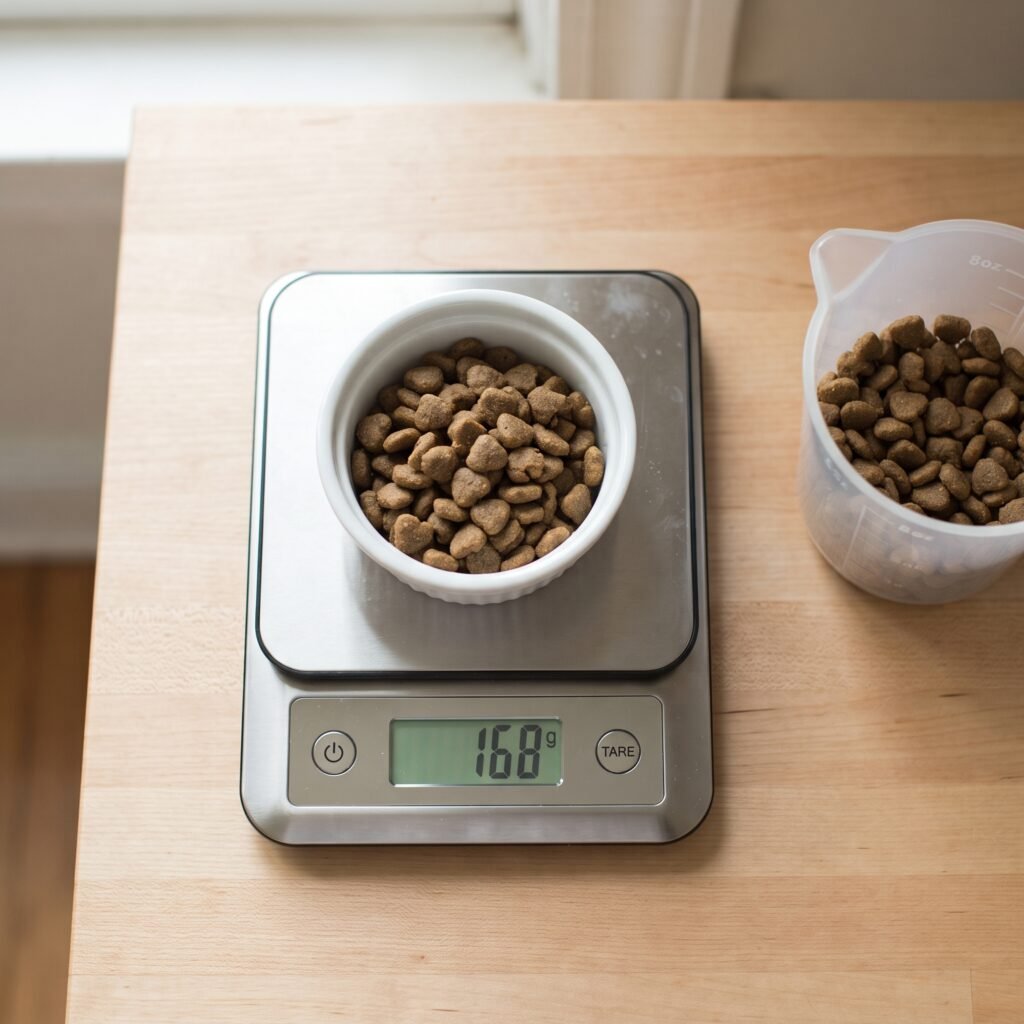
The cup isn’t a cup. An 8-oz measuring cup of kibble holds a different mass depending on kibble density and how you scoop. I’ve weighed the same “one cup” scoop of the same food three times and gotten 92g, 104g, and 118g. That spread is roughly 90 kcal a day on a two-cup feeding — about 10% of a small dog’s entire daily intake.
The chart assumes an intact, active adult. Most feeding guides are built around a dog with a normal-to-high activity level. A neutered, moderately active dog often needs meaningfully fewer calories than the chart’s midpoint, and an unneutered working dog needs more. If you’re asking why is my dog always hungry and you have a high-drive dog on a chart-average portion, the chart may simply be under-serving him.
Treats are counted by count, not by calories. Owners tell me they give “a few treats.” When we actually log them, it’s 15-20% of daily calories in dental chews and training bits — which sounds like more food, not less. But here’s the part that matters: those calories displace bowl food if you’ve cut the bowl to compensate, and treat calories don’t produce the same satiety a full meal does.
Pull the calorie content statement off your bag. AAFCO requires it — it’ll read something like “3,650 kcal/kg, 385 kcal/cup.” Then estimate your dog’s actual daily need, weigh the food in grams, and compare. That single step resolves the why is my dog always hungry question for a lot of households.
What should I actually be feeding, in grams?
Rough working numbers for a neutered, moderately active adult dog:
| Dog weight | Est. daily calories | At 385 kcal/cup (typical adult kibble) | At 300 kcal/cup (weight-management) |
|---|---|---|---|
| 15 lb | ~450-500 kcal | ~1¼ cups | ~1⅔ cups |
| 30 lb | ~750-820 kcal | ~2 cups | ~2¾ cups |
| 40 lb | ~950-1,000 kcal | ~2½ cups | ~3¼ cups |
| 65 lb | ~1,350-1,450 kcal | ~3¾ cups | ~4¾ cups |
| 90 lb | ~1,750-1,850 kcal | ~4¾ cups | ~6 cups |
These are starting estimates, not prescriptions — individual metabolism varies by 20% in either direction, which is exactly why the audit exists.
How do I run the 14-day bowl audit?
Fourteen days, because seven isn’t enough to see a weight trend and thirty is long enough that people quit. You need a kitchen scale, a bathroom scale, and a notes app.
Days 1-3: measure without changing anything. Weigh every portion in grams. Log every treat, every chew, every crust of toast. Don’t correct anything yet — you’re establishing what’s actually happening, not what you think is happening.
Day 1: weigh the dog. Small dogs, use a kitchen scale. Big dogs, weigh yourself, then weigh yourself holding the dog. Vet office scales are free and more accurate if your dog tolerates the trip.
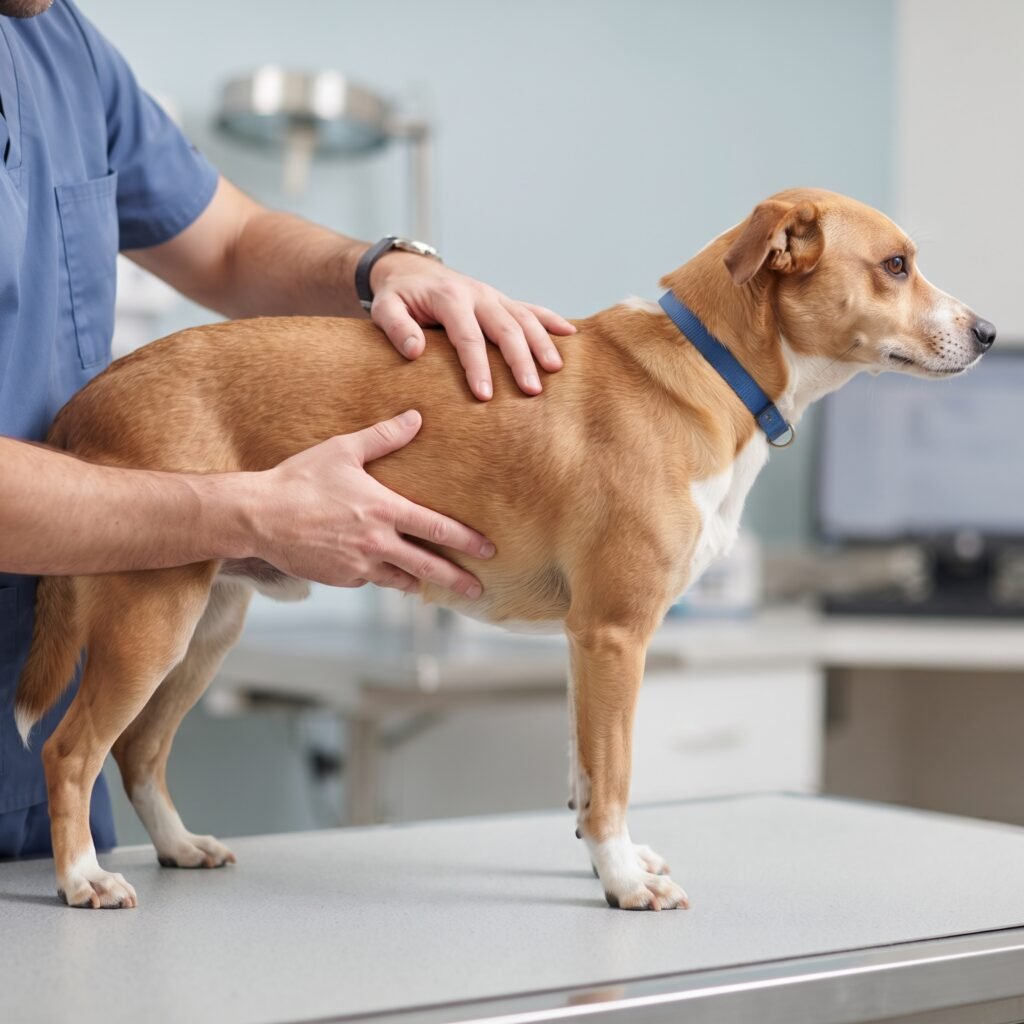
Day 1: body condition score. Ribs should be easily felt under a thin fat layer, with a visible waist from above and a tuck from the side. Write down what you find. This is the single most useful data point in the whole audit, and it’s free.
Days 4-14: correct the math and hold it steady. Feed the calculated gram amount. Cap treats at 10% of daily calories. Change nothing else — not the food, not the schedule, not the bowl.
Day 14: reweigh and re-score. Two weeks in, why is my dog always hungry stops being a guess. Now you have something a generic answer to why is my dog always hungry can never give you: a result that points at a specific next step.
What do the results actually mean?
Lost weight or held steady while underweight, still begging → he was genuinely under-fed. Increase by 10% and hold two more weeks. This is the happy ending, and it’s more common than people expect.
Gained weight and still begging → not a calorie shortage, so why is my dog always hungry isn’t a portion question here. This is a satiety problem or a behavior problem, and adding food will make it worse.
Held weight, body condition normal, still begging → food motivation, most likely. Move to the satiety levers below.
Lost weight on a correct, verified portion → stop the audit. Call your vet. A dog eating enough calories and still losing weight is a medical question, not a nutrition one.
Is my dog always hungry, or just extremely food-motivated?
This distinction decides everything downstream, and it’s the part owners get wrong most often when they research why is my dog always hungry. True hunger is a physiological signal. Food motivation is a learned behavior that looks identical from across the kitchen.
Two tests I use, both free.
The empty bowl test. Ten minutes after a full meal, set the empty bowl down. A food-motivated dog will still investigate it, lick it, and look at you expectantly — the behavior is triggered by the ritual, not the stomach. A dog in real caloric deficit shows more urgency around actual food and less interest in the empty container.
The 20-minute recheck. Offer a small portion of his normal kibble — no toppers, no novelty — twenty minutes after dinner. If he eats plain kibble with real enthusiasm on a full stomach, that’s worth noting. If he sniffs it and walks off but would have inhaled a piece of cheese, you’re looking at motivation, not hunger.
Neither test is diagnostic on its own. Run them three or four times across the two weeks, because a single data point on a dog who happened to be bored proves nothing.
I’ll be honest about the limitation here: a Beagle will fail both tests in a way that looks like starvation and means nothing. Breed baseline matters, which is why the audit measures change over time in your specific dog rather than comparing him to some imaginary average.
Why is my dog always hungry after being spayed or neutered?
This one has a real physiological basis and it catches people off guard. Energy requirements drop measurably after the procedure, often within weeks, while appetite doesn’t drop with it.
So the dog is genuinely eating a portion that used to be correct and is now surplus — and still acting hungry, because the appetite signal hasn’t recalibrated. If you’re asking why is my dog always hungry in the two or three months after surgery, this is the most likely explanation.
The fix isn’t dramatic. Recalculate the portion for the new baseline, then watch body condition monthly for six months.
Why is my dog always hungry all of a sudden?
Sudden onset changes the whole calculation, and it’s the one variable that can pull a dog out of the audit queue on day one. A dog who has begged since puppyhood is a different animal from a dog who started three weeks ago.
Write down, as precisely as you can, when it changed. Owners are better at this than they think — there’s usually an anchor event nearby.
A diet or bag change in the last month. Calorie density varies 20-30% between formulas. Swap brands, keep the same scoop, and you’ve quietly cut intake — the most common harmless reason why is my dog always hungry out of nowhere.
A new medication. Steroids and anticonvulsants drive appetite hard, and the effect can show up within days of starting.
A season or activity change. A dog who lost his daily hike in November is burning less, not more. That usually shows as weight gain rather than hunger, but the begging often arrives first because he’s bored.
A household change. New baby, new schedule, someone working from home. More kitchen traffic means more reinforcement, and reinforcement looks exactly like hunger.
If none of those line up and the shift arrived over days rather than months, treat it as medical until proven otherwise. Abrupt increased appetite in dogs — particularly alongside changes in drinking, urination, or weight — is a recognised warning pattern, and that version of why is my dog always hungry doesn’t belong in a 14-day audit at all.
Lifelong beggars are the opposite case. If he’s done this since he was four months old, increased appetite in dogs of that type is a structure problem, and the audit is exactly the right tool.
My dog is constantly hungry but not gaining weight — what does that mean?
This is the pattern that should move you out of the audit and into the exam room. A dog constantly hungry but not gaining weight on verified adequate calories has a problem the bowl can’t fix.
Established veterinary causes of true increased appetite in dogs include diabetes mellitus, hyperadrenocorticism (Cushing’s disease), exocrine pancreatic insufficiency, inflammatory bowel disease and other malabsorptive conditions, and intestinal parasites. Certain medications also drive increased appetite in dogs hard — corticosteroids like prednisone and anticonvulsants like phenobarbital are the two I see most often.
I’m not going to give you a diagnostic flowchart. That’s your vet’s job, and dogs are genuinely bad at telling us which of these it is.
What I will give you is the list of findings that mean stop auditing and call today rather than next week:
- Weight loss on a verified, adequate calorie intake
- Dramatically increased drinking and urination alongside the appetite change
- Large-volume, greasy, pale, or foul-smelling stool
- A pot-bellied appearance with thinning hair along the flanks
- Sudden appetite change in a dog over seven with no diet change
- Vomiting, lethargy, or a distended abdomen — same day, not tomorrow
The reason the audit comes first for healthy-looking dogs is triage, not cost-cutting. If your dog has any of the above, the answer to why is my dog always hungry isn’t in the bag of food and no amount of measuring will find it.
What if my dog is on prednisone?
Steroid-driven appetite is real, dose-dependent, and not a training failure. Owners on this path ask why is my dog always hungry and blame themselves; they shouldn’t.
Manage it with volume rather than calories — bulk the meal with green beans or plain canned pumpkin, split the daily ration into three or four meals, and use puzzle feeders to stretch eating time. And talk to your vet about the dose, because they may have room to taper. Never adjust a steroid dose yourself.
Which food actually keeps a dog full longer?
Once the math checks out and medical causes are ruled out, you’re choosing a satiety strategy. Here’s the honest comparison, with the trade-offs nobody puts on the bag.
| Approach | Typical kcal/cup | Crude protein | Crude fiber | Best for | Real trade-off |
|---|---|---|---|---|---|
| Standard adult kibble | 360-400 | 24-26% | 3-4% | Baseline; dogs at correct weight | Empties fast; little satiety help |
| Weight-management kibble | 280-320 | 26-30% | 6-10% | Overweight dogs needing volume | Stool volume and gas increase noticeably |
| High-protein formula | 400-450 | 30-34% | 3-5% | Active dogs, lean-mass preservation | Calorie-dense — easy to overfeed by cup |
| Canned/wet added to kibble | 230-260 | 8-10% (as-fed) | 1-2% | Fast eaters; hydration | Cost, dental considerations, portion creep |
| Fresh/gently cooked | 250-300 | 10-12% (as-fed) | 1-3% | Picky or sensitive-stomach dogs | Expensive; must be complete-and-balanced |
Note the moisture problem in that table. Wet and fresh foods look wildly lower in protein because they’re 70-75% water — you can’t compare as-fed numbers across moisture levels without converting to dry matter first.
For context, AAFCO adult maintenance profiles set a minimum of 18% crude protein and 5.5% crude fat on a dry matter basis, with higher minimums for growth. Nearly every commercial food clears those minimums, so “meets AAFCO” tells you the food is adequate — not that it’s the right satiety tool for your particular begging dog.
Why is my dog always hungry an hour after eating?
Because the meal has largely left his stomach by then. Dry kibble sits around 8-10% moisture and clears fairly quickly, and a dog who empties the bowl in ninety seconds gets almost no benefit from the stretch signals that produce fullness in the first place.
That’s the mechanical version of why is my dog always hungry, and it’s fixable without touching calories. Adding water or a few spoonfuls of wet food to kibble increases meal volume at low calorie cost, which is the cheapest way to keep a dog full longer.
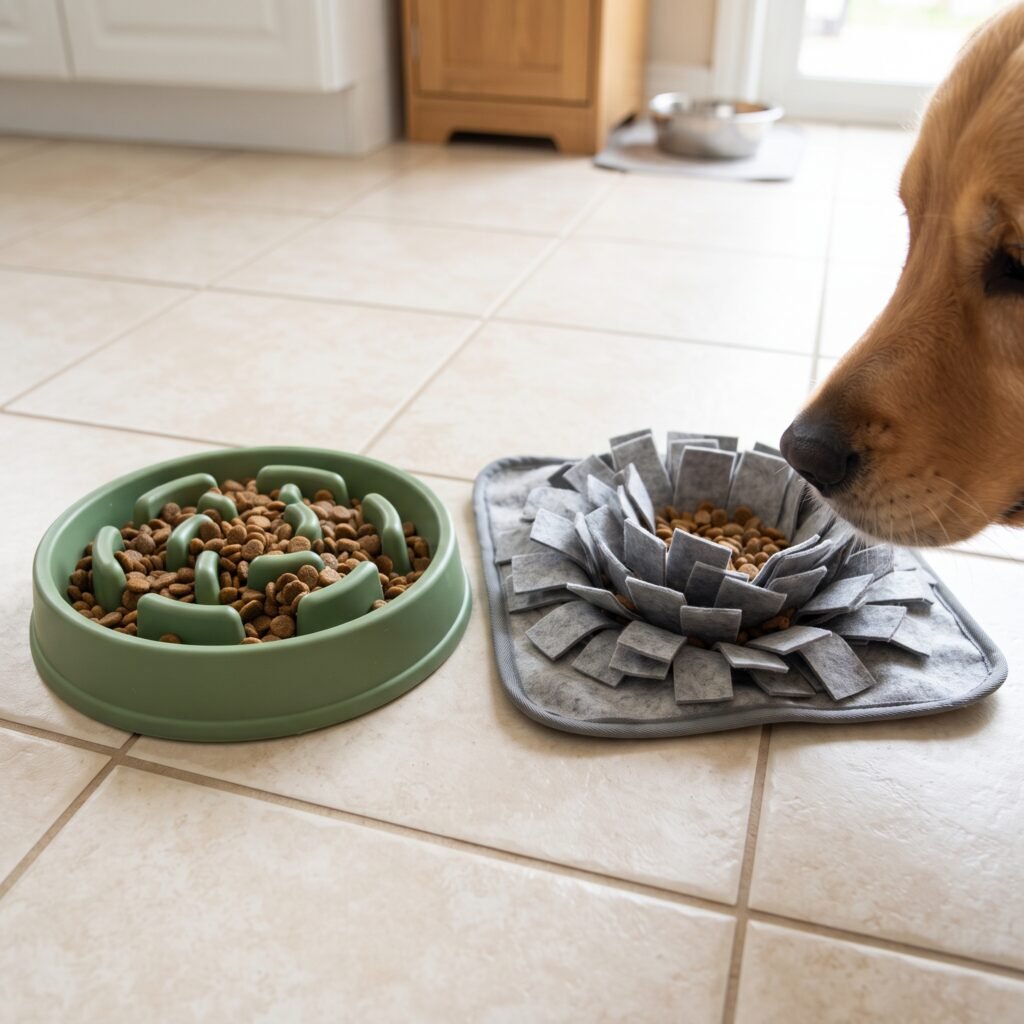
Eating speed matters just as much as content. I’ve watched the same dog, on the same food and same grams, go from immediate post-meal begging to settling on his bed — the only change was moving dinner from a bowl to a snuffle mat and stretching it to nine minutes.
If you want a food that keeps a dog full longer without a formula change, that’s the order to try: water, then wet topper, then feeder design. All three are reversible in a day, which matters when you’re testing.
Which satiety lever should I pull first?
In order, based on what actually works and what it costs you:
1. Split the meals. Free, immediate, no product change. Same daily grams across three meals instead of two. For dogs whose begging clusters at specific times, this alone often settles it.
2. Slow the eating. A slow-feeder bowl or a snuffle mat stretches a 90-second meal to 8-10 minutes, which keeps a dog full longer without adding a calorie. Satiety signaling isn’t instant, and a dog who inhales food never gives it a chance to arrive.
3. Add volume without calories. Plain canned pumpkin or steamed green beans, roughly ¼ cup per 25 lb of dog. Cheap, and you’ll know within a week whether it helps.
4. Change the food. Last, not first, because it’s the most expensive move and the hardest to interpret. If you’ve already changed three variables, a food switch tells you nothing.
That order matters. The most common mistake I see in owners researching why is my dog always hungry is jumping straight to step four and then having no idea what worked.
When the bowl audit didn’t work: an honest account
I want to be straight about a case where my recommended approach failed, because these get left out of most articles about why is my dog always hungry.
A 40 lb mixed-breed, seven years old, sensitive stomach, relentless begging — a textbook why is my dog always hungry case on paper. Body condition was fine. The math checked out — portions were correct within about 4%. So I moved to satiety levers and recommended a switch to a higher-fiber weight-management formula.
Three weeks in, the results were bad. Stool volume roughly doubled and softened. Gas got noticeably worse — the kind you notice from across a room. The kibble itself was smaller and denser than his old food, which made him eat faster, not slower.
And the begging didn’t change at all.
What I got wrong: I treated fiber as a satiety lever without accounting for a gut that had a documented history of not tolerating fiber increases. For that dog, the higher-fiber approach traded a behavior problem for a digestive one.
What actually worked was unglamorous. We went back to his original food, split it into three meals, moved it into a snuffle mat, and added a short walk between dinner and bedtime. Six weeks later the begging was down substantially. Not gone — down.
The lesson I took from it: when someone asks why is my dog always hungry and the medical picture is clean, the fix is more often a change in structure than a change in formula. Food companies would prefer I said the opposite.
Does breed or age change why my dog is always hungry?
Yes, and in a couple of cases it changes the whole interpretation.
Labradors and flat-coated retrievers. Research from the University of Cambridge identified a deletion in the POMC gene, common in these breeds, associated with greater food motivation and higher body weight. If you own a Lab and you’re asking why is my dog always hungry, part of the answer may be genuinely genetic. It doesn’t mean you feed more — it means you build structure and stop expecting the begging to fully disappear.
Beagles, Pugs, and Cocker Spaniels. No single gene story, but consistently high food drive as a breed characteristic. Same conclusion: manage the environment, don’t chase satiety with calories.
Large-breed puppies. Different situation entirely. A growing Great Dane or Shepherd genuinely needs more calories per pound than an adult, and growth-formula requirements are higher than adult maintenance. But large-breed puppies also need controlled calcium and controlled growth rate — overfeeding a big puppy to stop the begging is one of the few “solutions” that can cause orthopedic problems later.
Seniors. A new, sudden appetite increase in a dog over seven is a medical flag, not a behavior stage, and it’s the one version of why is my dog always hungry I never treat as behavioral first. Age normally trends appetite down, not up.
On a tight budget. Every step in the audit is free or nearly free — a kitchen scale runs about $12 and pays for itself in the first month of not overfeeding. If money is the constraint, do the audit first and be precise about it. Half the households I work with never need to change food at all.
Methodology and review note
How this was put together. Nutrient ranges in the comparison table were checked against guaranteed analysis panels on current retail packaging across the named categories, then cross-referenced with AAFCO’s published nutrient profiles for adult maintenance and growth. Calorie figures come from the calorie content statements manufacturers are required to print, not from estimates.
Recall history. Before I recommend any food to a reader, I check the FDA’s animal food recall and withdrawal listings for the brand and its manufacturing facility. That check should be repeated at purchase time — recall status changes and this article won’t update itself.
Why this matters for the advice. Every recommendation here about why is my dog always hungry is built on measured intake rather than label estimates, because the two disagree more often than they agree.
Where the numbers stop. Calorie estimates in the table above are population averages. Individual metabolic rates vary enough that the 14-day measured result on your dog should override any chart here, including mine.
Scope. This is nutrition and behavior guidance. It doesn’t diagnose. Any dog matching the red-flag list above needs an actual veterinary exam, and no article about why is my dog always hungry is a substitute for one.
FAQ
Why is my dog always hungry but not gaining weight? A dog constantly hungry but not gaining weight suggests calories aren’t being absorbed or are being burned abnormally — patterns seen with malabsorptive conditions, parasites, diabetes, and EPI. Verify the portion in grams first, then book a vet visit if the numbers are genuinely correct. This combination is one of the clearest reasons to stop self-managing.
Why is my dog always hungry at night specifically? Why is my dog always hungry at night usually reflects meal timing more than true hunger — a dog fed at 5 p.m. has a long gap before morning. Shifting a portion of the daily ration to a later meal fixes it more often than increasing the total does. Habit plays a big role too, since evening begging tends to be the most heavily reinforced.
Is it bad to feed my dog more if he acts hungry all the time? It depends entirely on body condition, which is why the audit measures it before answering why is my dog always hungry with more food. If ribs are easily felt with a visible waist and he’s underweight, more food is correct. If he’s at or above ideal weight, adding calories converts a behavior problem into a weight problem you’ll spend a year undoing.
Why is my dog always hungry after switching to a new food? Why is my dog always hungry after a switch usually comes down to calorie density, which varies a lot between foods — swapping cup-for-cup can quietly cut daily intake by 20% or more. Check the kcal/cup on both bags and match by calories rather than volume. New-food appetite changes can also just be palatability, which usually settles within two weeks.
Can worms cause my dog to always be hungry? Yes — parasites are a classic cause of increased appetite in dogs alongside weight loss or poor coat condition, and they’re common enough to be worth ruling out early. A fecal test is inexpensive and fast. It’s a sensible first step before more expensive diagnostics, especially in younger dogs or dogs with outdoor exposure.
The bottom line
Why is my dog always hungry is answerable, but not by a list of possible causes. It’s answerable by sequence: verify the calories, hold them steady for fourteen days, watch what the body does, then decide.
Most owners asking why is my dog always hungry find their answer in the first step. The bag was lying, or the scoop was, or the treats were. Fix that and the begging quiets down without you spending a dollar on new food.
For the dogs where it doesn’t, you now have something better than a guess — a documented, measured two weeks that makes your vet visit ten times more productive. That’s the real payoff of asking why is my dog always hungry and then actually measuring the answer.