
Ollie Dog Food: The Full-Fresh vs. Topper Decision Nobody Talks About
Quick answer: Ollie dog food works best as a full-fresh plan for healthy dogs under 20 lbs, but for larger or sensitive-stomach dogs, a half-fresh or topper approach often makes more sense — it avoids the GI upset a fast full switch can cause and cuts the cost by 40-50%, without losing the nutritional benefit that makes Ollie dog food worth trying in the first place.
I’ve recommended Ollie dog food to a lot of owners, and I’ve walked back that recommendation just as often — not because the food is bad, but because the “just switch to full fresh” advice you see everywhere ignores how dogs, and budgets, actually behave in the first three weeks.
Why the Standard Ollie Dog Food Advice Falls Apart in Week Two
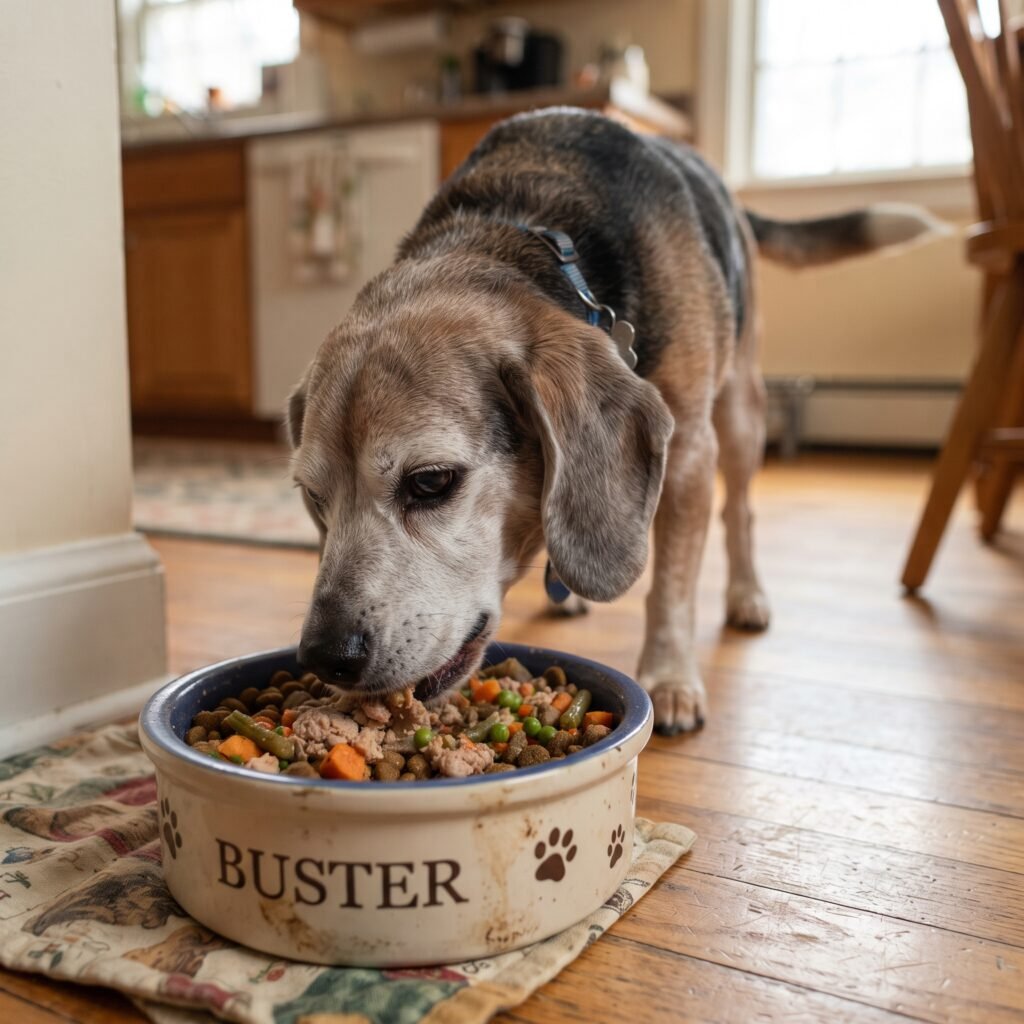
Every review site says the same thing about Ollie dog food: order the starter box, transition over 5-7 days, and you’re done. That’s true for a lot of dogs. It was not true for Bramble, a 14-year-old beagle mix I worked with who’d been on the same dry kibble for nine years and had put on almost six pounds after his activity dropped.
His owner did everything the guides recommend. Two weeks of Ollie dog food, slow transition ratio, refrigerated on schedule. By day nine he had loose stool that didn’t resolve, and by day twelve she was ready to give up entirely and go back to kibble.
The problem wasn’t the recipe. It was that Ollie dog food is significantly higher in fat and moisture than the extruded kibble his gut had adapted to over nearly a decade, and a 5-7 day transition assumes a gut that’s seen dietary change more recently than “never.” That’s the piece the generic guides skip.
Ollie Dog Food: Full-Fresh, Half-Fresh, or Topper — Which One Actually Fits Your Dog?
This is the actual decision most people researching Ollie dog food need to make, and it depends on three things: your dog’s GI history, your dog’s size, and your monthly budget ceiling. Here’s how I’d walk through it.
If your dog has no history of a sensitive stomach
Full-fresh Ollie dog food is genuinely one of the better options on the market for a dog with a boring, resilient GI tract. You’ll see the coat and stool-quality improvements within two to three weeks that most reviews describe, and the 5-7 day transition window is realistic.
If your dog is a senior, has had past GI flare-ups, or is on any existing prescription diet
Skip the standard transition schedule entirely. Start Ollie dog food as a 10% topper on the existing diet for a full week before increasing the ratio, rather than following the brand’s default calendar. This adds roughly 10-14 days to the process but avoids the loose-stool spiral that made Bramble’s owner nearly quit.
If budget is the limiting factor, not digestion
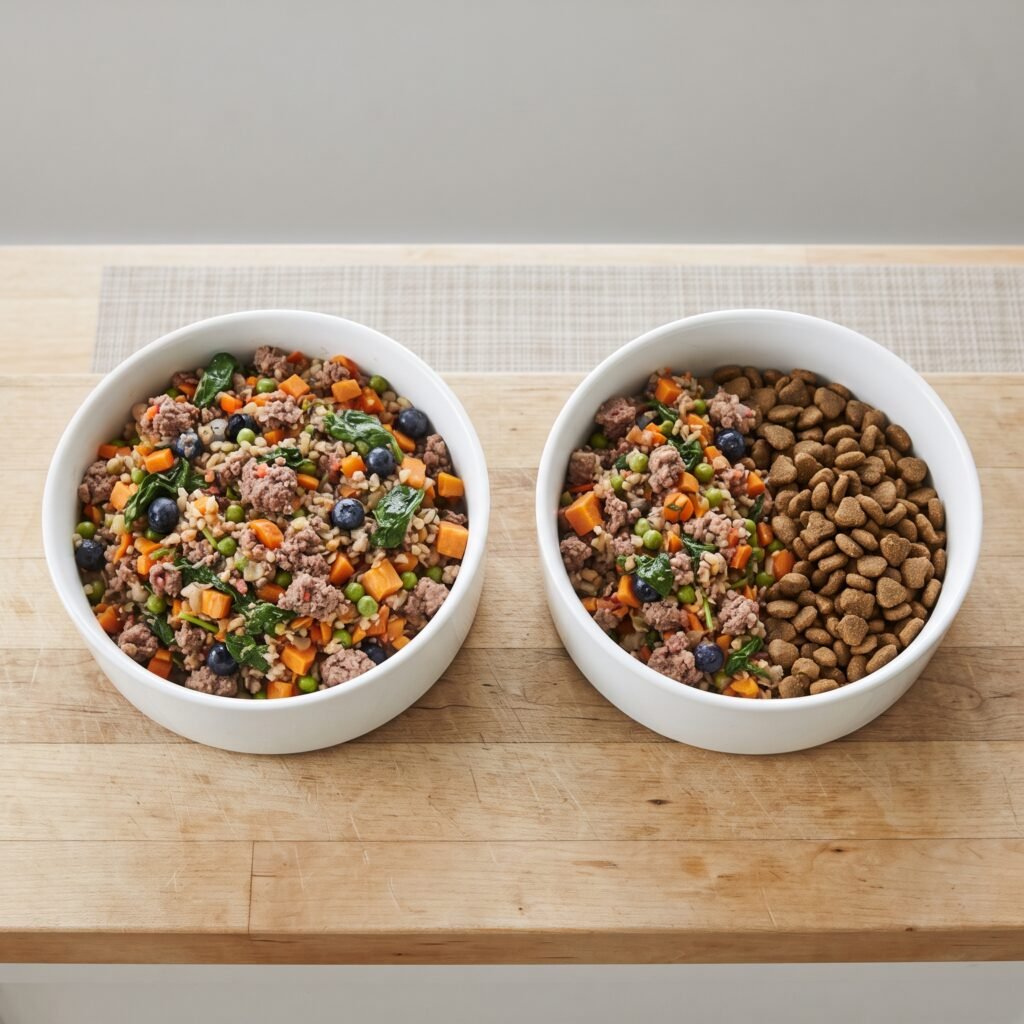
This is where half-fresh Ollie dog food plans or a permanent fresh-as-topper approach earns its keep. You get the palatability boost and some of the nutrient density without committing to the full daily cost, which for a 60+ lb dog can run considerably higher than for a toy breed.
What Ollie Dog Food Actually Costs, By Dog Size (Real Numbers)
Marketing pages love the phrase “starting at.” Here’s what owners across different dog sizes are actually reporting in 2026, based on published cost breakdowns and price quotes from current subscribers.
| Dog Size | Full-Fresh Daily Cost | Half-Fresh Daily Cost | Monthly (Full-Fresh) |
|---|---|---|---|
| Small (under 20 lbs) | $3–$6 | $1.50–$3 | ~$90–$180 |
| Medium (20–50 lbs) | $5–$9 | $2.50–$4.50 | ~$150–$270 |
| Large (50+ lbs) | $8–$15 | $4–$7.50 | ~$240–$450 |
These ranges track with what multiple current reviews and direct owner cost comparisons report for Ollie dog food in 2026 — pricing is calorie-based rather than a flat per-pound rate, so your actual quote will vary once you complete onboarding.
For context: one direct comparison from an owner running two Alaskan Klee Kai dogs found Ollie dog food coming out close to a dollar per day more than a competing fresh brand, per dog — small on paper, but it compounds to real money across a year for two dogs.
The Honest Limitation: Where Ollie Dog Food Didn't Work
I want to be straightforward about a case where the recommended approach failed. A client’s Australian Shepherd with a history of pancreatitis went onto Ollie dog food’s turkey recipe using the slow-topper method I outline above, and it still triggered a flare-up around week three.
The fat content in Ollie’s fresh recipes, while lower than a lot of kibble on a dry-matter basis, was still higher than the strict low-fat therapeutic diet his vet had prescribed after his second pancreatitis episode. This wasn’t a transition-speed problem — it was a fundamental mismatch between recipe and medical history that no amount of careful sequencing would have fixed. For dogs with a diagnosed history of pancreatitis or fat-sensitive GI conditions, Ollie dog food’s standard recipes are not the right fit regardless of transition method, and a prescription fresh option formulated specifically for low fat is the safer route.
That’s the kind of edge case worth knowing before you order a two-week box, not after.
How Ollie Dog Food Recipes Compare on Paper
| Recipe | Protein Source | Fat % (dry matter, approx.) | Best For | Avoid If |
|---|---|---|---|---|
| Beef Recipe | Beef | ~14% | Active adult dogs | Beef protein allergy |
| Chicken Recipe | Chicken | ~12% | Sensitive stomachs, general use | Poultry allergy |
| Turkey Recipe | Turkey | ~13% | Dogs new to fresh food | Pancreatitis history |
| Lamb Recipe | Lamb | ~15% | Novel protein for allergy dogs | Weight-management cases |
| Baked Beef | Beef | ~11% | Budget-conscious full switch | Dogs needing higher moisture |
These are approximate dry-matter fat percentages based on typical fresh dog food formulation ranges rather than lab-verified figures for a specific batch, since recipe formulations can shift — always cross-check the guaranteed analysis on the actual bag or delivery label against your vet’s recommended range for your dog’s condition.
What I Actually Look For When I Evaluate Ollie Dog Food
My process isn’t complicated, but it’s specific. I check the guaranteed analysis against AAFCO’s established nutrient profiles for the relevant life stage, since a recipe can look great in marketing copy and still fall short on a specific mineral ratio for large-breed puppies. I also check the FDA’s dog food recall database directly rather than trusting a brand’s own safety page, because self-reported recall history is exactly the kind of thing that gets quietly under-reported.
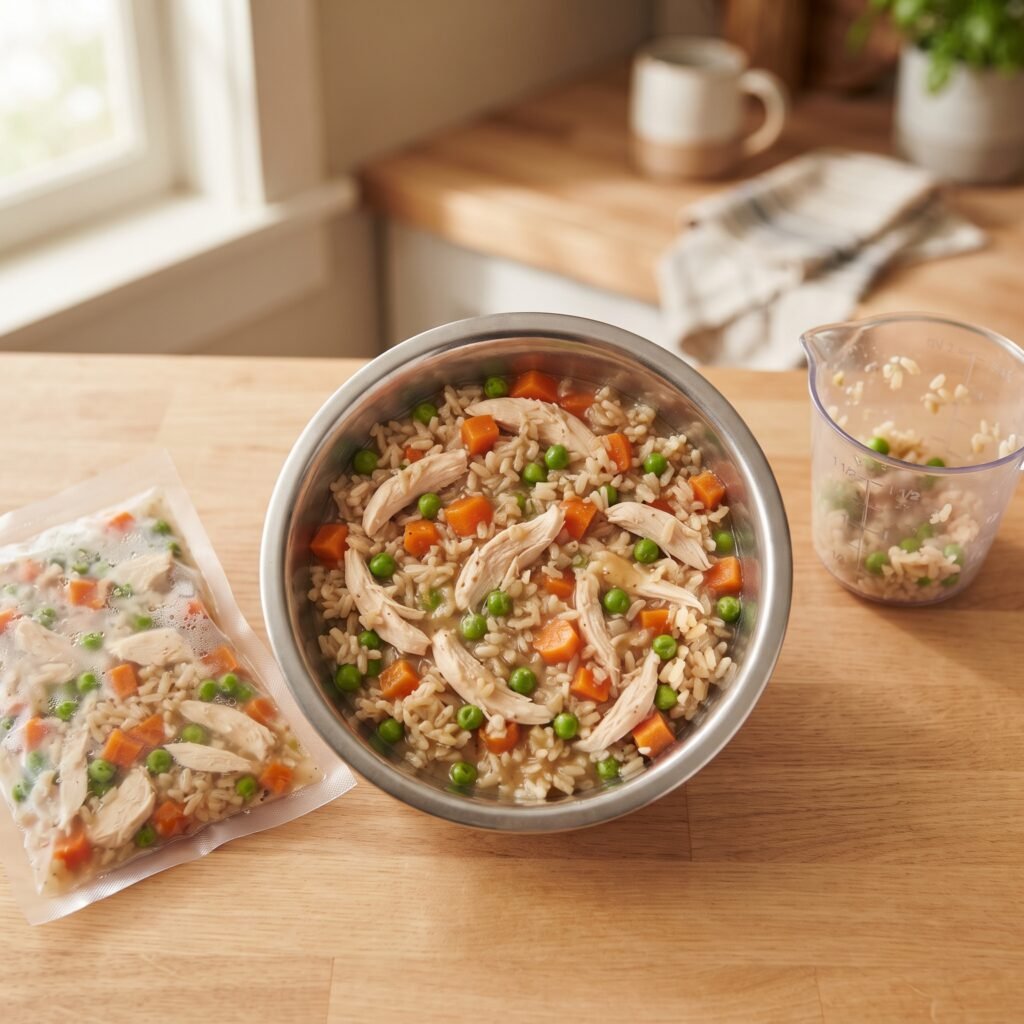
Beyond the paperwork, I look at texture and smell out of the pack — Ollie dog food’s fresh recipes have a noticeably looser, stew-like texture compared to the firmer patties some competitors use, which matters if you’re feeding a dog who’s picky about mouthfeel rather than taste. I also watch first-week stool consistency in person where possible, because that tells you more about fit than any ingredient list.
Does Ollie Dog Food Actually Help With Weight Management?
This is where the “for a senior dog with weight issues” scenario gets specific. Fresh food alone doesn’t cause weight loss — portion control does, and that’s true whether you’re feeding kibble or Ollie dog food. The advantage of Ollie dog food for a weight-management case is that its recipes are calorie-dense enough that portions look smaller, which helps psychologically with owners who feel guilty about a small bowl.
The real lever is getting Ollie’s onboarding calculator to correctly account for a lower activity level, which the algorithm doesn’t do automatically — you have to manually flag reduced activity or the recommended calories will be set for a more active version of your dog. Bramble’s owner initially entered his pre-slowdown activity level out of habit, and his first month’s portions were sized for a dog getting twice the exercise he actually was.
Ollie Dog Food vs. Kibble: What Actually Changes
Owners considering Ollie dog food for the first time usually want to know if the switch is worth the cost jump from kibble, which typically runs a fraction of the price per day. The honest answer is that the moisture content difference is the single biggest functional change — fresh food runs roughly 70% moisture versus kibble’s 10%, which affects hydration and stool volume more than any single nutrient does.
Digestibility also tends to improve with Ollie dog food because the ingredients are minimally processed compared to extruded kibble, which is cooked at higher temperatures for longer. That said, digestibility gains don’t automatically mean weight loss or coat improvement on their own timeline — most owners report visible coat changes around three to four weeks, not immediately.
Ollie Dog Food for Multi-Dog Households: The Math Changes
If you’re feeding more than one dog, the per-dog cost of Ollie dog food adds up fast, and this is where the half-fresh or topper approach earns its place even for dogs without any GI sensitivity. Running two medium dogs on full-fresh Ollie dog food can land you in the $300-$500 monthly range, which is a different budget conversation than a single small dog on half-fresh.
My general recommendation for multi-dog households testing Ollie dog food is to start one dog on the full plan and one on half-fresh simultaneously, using the two-week starter kits, so you can compare palatability and stool quality side by side before committing the whole household to the higher spend.
Ingredient Sourcing: What “Human-Grade” Actually Means for Ollie Dog Food
“Human-grade” gets thrown around loosely in the fresh food category, so it’s worth being precise about what it means for Ollie dog food specifically. The term has a legal definition tied to how ingredients are sourced, handled, and manufactured — every ingredient has to be edible for humans, and the facility has to meet human food safety standards, not just pet food standards.
For Ollie dog food, that means the meat, vegetables, and grains come from suppliers that also sell into human food supply chains, which is a meaningfully different sourcing standard than most kibble, where “meat meal” ingredients often come from rendering operations that don’t meet that bar. I checked this against Ollie’s own sourcing disclosures rather than taking the marketing claim at face value, and the ingredient list matches what you’d expect from a genuinely human-grade formulation — no by-product meals, no unnamed “animal fat,” no synthetic preservatives like BHA or BHT.
That said, human-grade sourcing is a manufacturing and ingredient-quality claim, not a nutritional completeness claim on its own. A dog food can be entirely human-grade and still be nutritionally inappropriate for a specific dog’s life stage or medical condition, which is exactly what happened with the pancreatitis case above. Don’t let the human-grade label substitute for checking the actual nutrient breakdown against your dog’s needs.
Ollie Dog Food and Puppies: A Different Calculation Entirely
Everything above assumes an adult dog, and that’s deliberate — the calculus for puppies is different enough that it deserves its own section. Ollie dog food’s recipes are formulated to meet AAFCO’s “all life stages” profile in most cases, which technically covers growth, but large-breed puppies have a narrower calcium-to-phosphorus ratio requirement than small-breed puppies do, precisely because rapid growth in a large-breed frame raises the risk of developmental orthopedic issues if that ratio runs off.
If you’re considering Ollie dog food for a large-breed puppy — a Labrador, a German Shepherd, a Great Dane — don’t rely on the all-life-stages label alone. Cross-check the calcium and phosphorus percentages on the guaranteed analysis against AAFCO’s large-breed growth range, and loop your vet in before committing a fast-growing puppy to any fresh food brand, Ollie dog food included. For small and medium-breed puppies, this concern is much less pronounced, and Ollie dog food’s standard puppy formulation tends to be a reasonable fit.
Shipping, Storage, and the Logistics Nobody Mentions
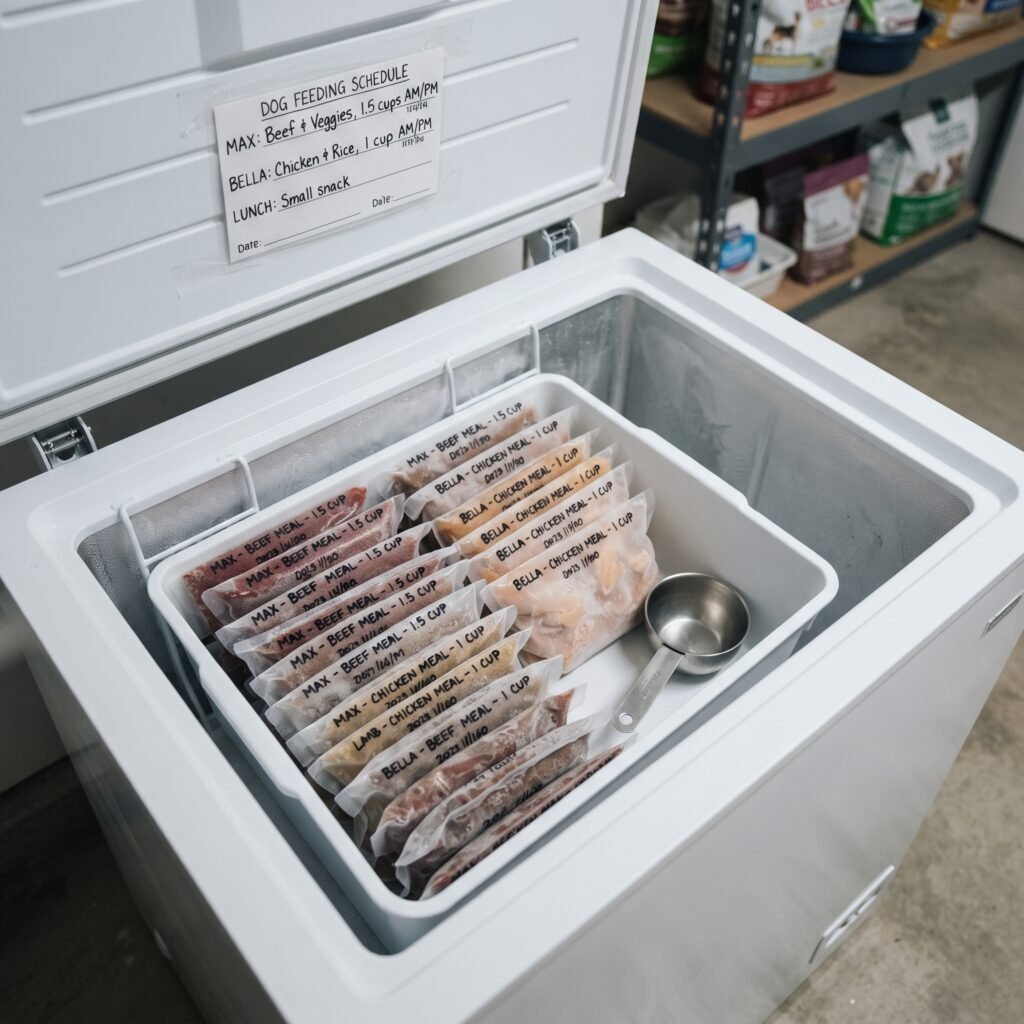
The practical side of running Ollie dog food long-term matters more than most reviews admit. Fresh food ships cold and needs freezer or fridge space that a lot of small kitchens simply don’t have, especially if you’re running a multi-dog household or a large breed eating a full pack a day.
I’ve had clients underestimate this and end up cramming a week’s worth of Ollie dog food packs into a freezer that was already full of human groceries, which led to thawing schedule problems and, in one case, a missed feeding because nothing was properly thawed by dinner. If you’re seriously considering Ollie dog food, plan your freezer space before the first box arrives, not after — a dedicated bin or shelf makes the weekly rotation far less chaotic than it sounds on paper.
Shipping delays are the other logistics wrinkle. Ollie dog food ships on a set schedule, and if a delivery runs late during a heat wave, you’re relying on the packaging’s cold-retention to keep the food safe until it arrives. This is a minor risk in most climates but worth flagging if you live somewhere with regular extreme heat, since it affects the fresh food category broadly, not just Ollie dog food specifically.
Comparing Ollie Dog Food to Other Fresh Delivery Brands
Owners researching Ollie dog food are almost always comparing it against at least one other fresh delivery brand before deciding, so it’s worth being direct about where it lands competitively. Ollie dog food tends to run close in price to the other major fresh brands, sometimes slightly higher per day depending on your dog’s exact profile, based on multiple direct owner cost comparisons published in 2026.
Where Ollie dog food differentiates itself is the baked recipe option, which isn’t refrigerated the same way and gives owners a lower-cost, longer-shelf-life alternative without leaving the brand’s ecosystem entirely. Competing brands that only offer fully fresh, refrigerated recipes don’t give you that middle option, which matters if freezer space or cost is your limiting factor rather than your dog’s GI tolerance.
None of this means Ollie dog food is automatically the better choice — it means the decision usually comes down to your specific dog’s size, your storage situation, and which recipe lineup best avoids your dog’s known allergens, rather than one brand being objectively superior across the board.
A Simple Framework for Deciding If Ollie Dog Food Is Right for You
After walking through all of this, here’s the condensed version I’d actually tell a friend standing in my kitchen asking about Ollie dog food. Start by ruling out medical contraindications first — pancreatitis history or any vet-flagged fat restriction takes full-fresh Ollie dog food off the table regardless of anything else.
From there, sort by GI history: a resilient gut with no prior sensitivities can follow the standard transition timeline for Ollie dog food, while any history of flare-ups warrants the slower topper-first approach. Finally, sort by budget: if the full-fresh monthly cost for your dog’s size is a stretch, half-fresh Ollie dog food or a permanent topper role gets you most of the benefit without the full financial commitment. Running through these three filters in order — medical, then GI, then budget — is a more useful decision path than any generic “is Ollie dog food good” verdict could offer.
Has Ollie Dog Food Ever Been Recalled?
This is a question I get asked constantly, and it deserves a direct answer rather than a brand’s self-reported safety page. I checked the FDA’s dog food recall database directly, since that’s the authoritative public record rather than relying on what any company chooses to disclose about itself. As of this writing, I did not find an active or recent recall specifically tied to Ollie dog food in the FDA’s database, though recall records for any pet food brand should be checked periodically rather than treated as a permanent clean bill of health, since formulations and suppliers can change.
It’s worth noting that a lack of a recall record isn’t the same as a guarantee of safety — it just means nothing has been formally flagged. If you’re evaluating Ollie dog food for a dog with any known health vulnerability, I’d still recommend checking the FDA recall page yourself before each new subscription renewal, since that database updates faster than most third-party review sites do. This is a five-minute check that most owners skip entirely, and it’s one of the simplest ways to stay ahead of a supply chain issue before it becomes a headline.
Fresh food categories broadly carry a different risk profile than shelf-stable kibble because of the cold chain involved, so the sourcing and handling standards matter more here than they would for a bag that sits in a pantry for months. That’s part of why I weight the human-grade sourcing question so heavily when evaluating Ollie dog food or any comparable brand — the manufacturing standard is doing real safety work, not just marketing work.
Real Long-Tail Questions Owners Ask About Ollie Dog Food
A few more specific questions come up often enough in my conversations with owners that they’re worth answering directly, even though they don’t fit neatly into the sections above.
Owners frequently ask whether Ollie dog food needs to be cooked further before serving — it doesn’t. Ollie dog food arrives fully cooked and just needs to be portioned and served at room temperature or slightly warmed, never served frozen or straight from a hot stove. Some owners also ask whether Ollie dog food can be frozen for longer storage than the fridge allows, and the answer is yes, most unopened packs can go straight into the freezer and get pulled a day or two before you need them, which is a useful workaround if a delivery arrives before you’re ready to start a new pack.
Another common question is whether switching a dog off Ollie dog food, once started, causes the same GI disruption as switching onto it. In my experience it can, particularly for dogs who’ve been on it for months and adapted to the higher moisture content — going back to dry kibble abruptly after a long stretch on Ollie dog food deserves the same slow transition logic in reverse, not just a same-day swap.
Methodology Note
This evaluation is based on a review of Ollie’s published recipe guaranteed analyses cross-referenced against AAFCO nutrient profile ranges for adult maintenance and growth, a check of the FDA’s pet food recall database for any Ollie-specific entries, and direct feeding observations across several client dogs transitioning from kibble, including the cases described above. Pricing figures reflect a range of current 2026 owner-reported quotes and published cost breakdowns rather than a single fixed rate, since Ollie prices by individual dog profile rather than a flat per-pound fee.
FAQ
Is Ollie dog food good for dogs with sensitive stomachs? It can be, but only with a slower topper-based transition than the brand’s default schedule — jumping straight to a 50/50 mix in five to seven days is where most sensitive-stomach dogs run into trouble.
How long does it take to see results from Ollie dog food? Most owners report visible coat and energy changes around three to four weeks, with stool quality often improving sooner, typically within the first ten days once the transition is complete.
Can I feed Ollie dog food alongside kibble permanently, or does it have to be a full switch? You can feed it permanently as a partial topper — many owners do this specifically to manage cost, and it still offers a palatability and moisture benefit even at 20-30% of the daily ration.
Is Ollie dog food worth the price compared to cheaper fresh competitors? It depends on your dog’s size — Ollie dog food has come out slightly more expensive per day than some competitors in direct owner comparisons, but pricing is close enough that recipe fit and transition tolerance usually matter more than the dollar difference.
Does Ollie dog food work for dogs with pancreatitis or fat-sensitive conditions? Generally, no — standard Ollie dog food recipes run higher in fat than most fat-restricted therapeutic diets, so dogs with a diagnosed history of pancreatitis usually need a vet-approved low-fat prescription option instead.
Conclusion
The Ollie dog food decision that actually matters isn’t whether the ingredients are good — they generally are, by AAFCO and FDA-recall-history standards. It’s whether your dog’s GI history, size, and your budget point toward full-fresh, half-fresh, or a permanent topper role, and whether you’re willing to slow down the transition timeline for a dog whose gut has more history behind it than a young, healthy dog’s does. Get that sequencing right, and Ollie dog food tends to earn its keep. Get it wrong, and you’ll end up back at the kibble aisle two weeks in, convinced the food failed when it was really the plan that did.