Wildology Dog Food: Should the Diamond Pet Foods Connection Change Your Decision?
Quick answer: Wildology dog food itself has no recall history, but it’s manufactured by Diamond Pet Foods, which has had recalls in the past (most recently 2013). Whether that matters depends on which Wildology recipe you’re considering, your dog’s size and sensitivities, and how you weigh manufacturer track record against current formulation quality.
The question nobody frames correctly
Most searches about Wildology dog food start from the wrong premise. People want to know “is it safe,” as if safety were a single yes-or-no fact sitting somewhere on a label. It isn’t. Wildology dog food is a relatively young brand, and young brands are recall-free for a boring reason: they haven’t been around long enough, at high enough volume, for a contamination event to statistically show up yet.
That’s not a knock on Wildology dog food specifically. It’s just math. A brand that’s sold a few million bags over three or four years carries a different risk profile than one that’s sold hundreds of millions of bags over three decades, purely on exposure. So the real question an owner needs answered isn’t “has Wildology dog food ever been recalled.” It’s “what do I actually know about how this food is made, and does that outweigh the fact that its parent manufacturer has a recall history of its own.”
That parent manufacturer is Diamond Pet Foods. Diamond makes Wildology dog food alongside several other lines, and Diamond has had real recalls — a 2012 recall tied to potential salmonella contamination, and a narrower 2013 recall over low thiamine levels in a different product line. Neither of those recalls touched Wildology by name, because Wildology didn’t exist yet or wasn’t affected. But they happened under the same manufacturing umbrella that produces Wildology dog food today, and that context is worth more than a checkbox.
Is Wildology dog food actually good, or just untested?
Here’s where I’ll be blunt: the ingredient panels for Wildology dog food are genuinely solid on paper. The flagship Wildology Hike recipe lists chicken and chicken meal as its first two ingredients, followed by brown rice, barley, and white rice, and comes in around 26% protein and 15% fat. That’s a respectable, active-dog-appropriate macro split, not a bargain-bin filler formula.
Where it gets more nuanced is the grain mix. Brown rice and barley are genuinely useful, digestible whole grains. White rice, further down the list, is there mostly for easy digestibility rather than nutrient density — it’s not a red flag, but it’s also not doing much heavy lifting nutritionally. If you’re comparing Wildology dog food against a grain-free competitor purely on ingredient sophistication, this is the kind of detail that separates a careful comparison from a surface-level one.
Wildology dog food also adds omega fatty acids, glucosamine, and a probiotic blend across most of its recipes — extras that go beyond AAFCO’s baseline nutrient minimums and are aimed at joint and coat support. Those additions are a genuine plus, especially for active or aging dogs, and they’re one of the reasons Wildology dog food tends to score well in independent reviews despite being a newer name.
Owners often assume all bags under one brand name are roughly interchangeable. With Wildology dog food, they’re not. The recipes are built for different dogs, and the differences matter more than the shared brand name suggests.
| Recipe | Best for | Protein (min) | Fat (min) | Primary protein source | Notable extras |
|---|---|---|---|---|---|
| Wildology Hike | Adult, active dogs | 26% | 15% | Chicken, chicken meal | Omega fatty acids, glucosamine, probiotics |
| Wildology Wiggle | Small breeds | 29% | 17% | Chicken | Smaller kibble size, higher calorie density |
| Wildology Chase | Very active / working dogs | Higher than Hike | Higher than Hike | Chicken, chicken meal, turkey meal | Extra poultry protein sources |
| Wildology Swim | Dogs sensitive to poultry | Comparable to Hike | Comparable to Hike | Fish-based | Alternative protein for chicken-sensitive dogs |
| Wildology Sprint | Large-breed puppies | Formulated for growth | Formulated for growth | Chicken, chicken meal | AAFCO growth (large breed) statement |
The practical takeaway: if you’ve decided Wildology dog food is the right brand but picked the wrong recipe for your dog’s life stage or size, you can end up disappointed with “Wildology” as a brand when the actual mismatch was recipe selection. A 12-pound terrier on the standard Hike formula and a 12-pound terrier on Wiggle are eating meaningfully different calorie densities and kibble sizes.
Does Wildology dog food work for dogs with sensitive stomachs?
This is where I want to be honest about a limitation rather than sell you on a universal fit. Wildology dog food is not consistently recommended for dogs with sensitive stomachs or diagnosed food sensitivities. Several independent reviewers who otherwise rate the brand favorably flag this specifically: the recipes are solid for the average, healthy adult dog, but they’re not formulated as limited-ingredient or novel-protein diets, and the grain blend (particularly the inclusion of white rice alongside barley) can be more than some sensitive digestive systems handle well.
If your dog has a diagnosed sensitivity, a history of soft stool on multi-grain diets, or a vet-recommended elimination diet, Wildology dog food’s standard lineup is probably not the first thing to reach for — the Swim recipe’s fish-based protein is worth a look if the sensitivity is specifically poultry-related, but it won’t help with a broader grain sensitivity. This is the kind of situation where a limited-ingredient or prescription diet, chosen with your vet, is going to outperform Wildology dog food regardless of how good its general nutrient profile looks on paper.
Since both brands come from the same manufacturer, this comparison comes up constantly, and it deserves a real answer instead of a hand-wave. Diamond Naturals has a longer market history and more third-party feeding-trial data behind it, simply because it’s been around longer. Wildology dog food tends to position itself with a slightly more “outdoor, active-lifestyle” branding and a marginally richer supplement package (probiotics and joint support show up more consistently across the Wildology line).
Neither brand is formulated by an in-house veterinary nutritionist team according to reporting from multiple independent pet food review sites — a detail that’s easy to miss if you only read the marketing copy, and one worth confirming directly with the company if it matters to your decision. If a brand having a dedicated staff nutritionist or AAFCO feeding trials (rather than the minimum “formulated to meet AAFCO nutrient profiles” lab-analysis standard) is a hard requirement for you, that’s a fair reason to look elsewhere entirely, regardless of how Wildology dog food’s ingredient panel reads.
What I’d actually do with a new dog on Wildology dog food
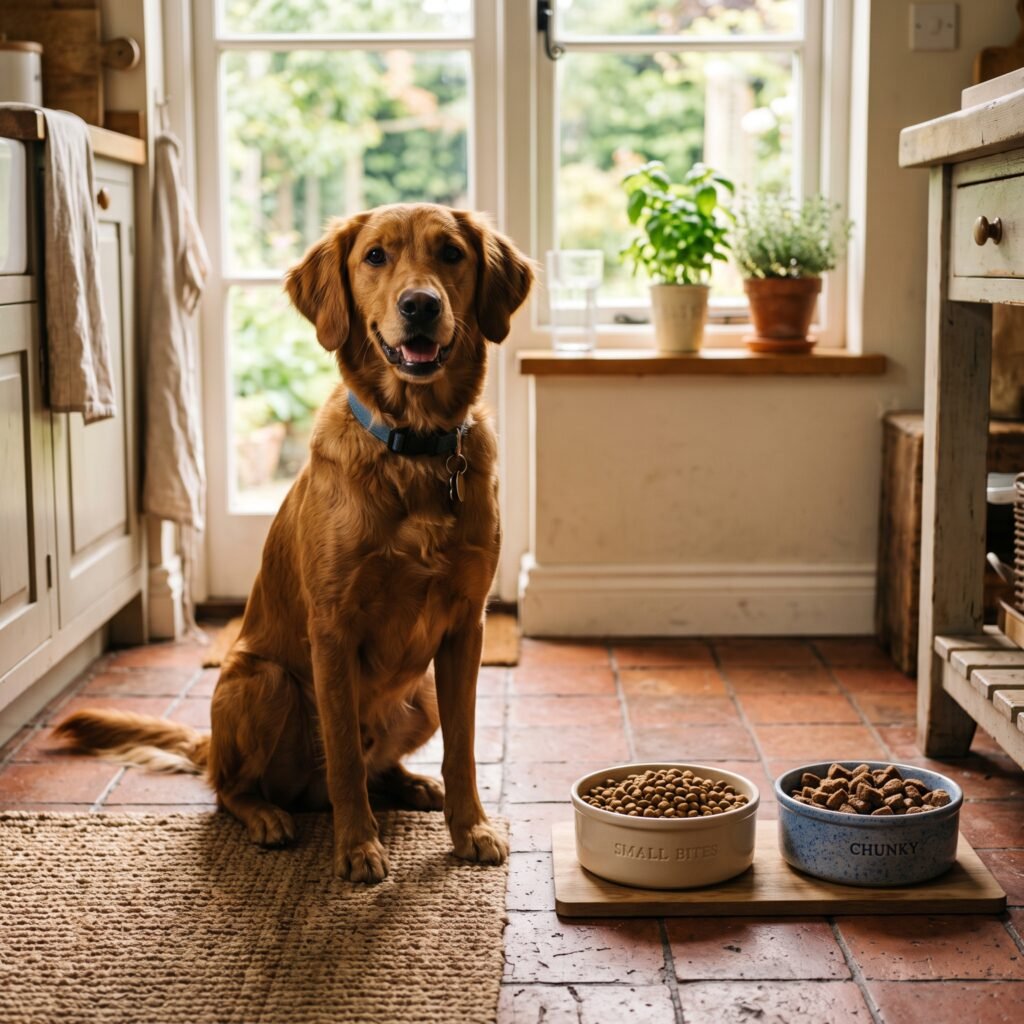
If I were switching a healthy adult dog with no known sensitivities onto Wildology dog food, I’d do it the same way I’d introduce any new kibble: a 7-to-10-day gradual mix-in, watching stool consistency and energy level rather than assuming day-one results mean anything. Kibble size matters more than people expect — the standard Hike kibble runs on the larger side, and I’ve seen small dogs pick around bigger pieces or eat unusually fast trying to crunch them, which is exactly why the separate Wiggle formula with a smaller kibble exists.
Where this approach fails: if your dog already has a flagged sensitivity or a vet has specifically recommended a limited-ingredient diet, don’t use Wildology dog food as a trial-and-error test subject. The gradual-introduction method above assumes a baseline-healthy dog. Trying it on a dog with a known digestive issue just delays getting to a food that’s actually appropriate, and I’d consider that a genuine misstep rather than a minor inconvenience.
Does Wildology dog food justify its price?
Wildology dog food sits in the mid-range of the pet food market — noticeably pricier than a grocery-store bag, but below the premium fresh-food or prescription-diet tier. That positioning matters when you’re deciding whether the brand is worth it, because “worth it” depends entirely on what you’re comparing it against.
Against a basic grocery kibble, Wildology dog food is an easy upgrade: named animal proteins in the first two ingredient slots, added probiotics, and joint-support nutrients that most bargain formulas skip entirely. Against a boutique or fresh-food brand at double the price, Wildology dog food won’t out-perform on ingredient sourcing transparency, and it won’t match a limited-ingredient diet for a dog with sensitivities. The value case for Wildology dog food is strongest for an owner who wants meaningfully better-than-average nutrition without stepping into premium pricing — not for an owner chasing the most exclusive formula available.
Where is Wildology dog food sold, and does that matter?
Wildology dog food isn’t a major grocery-shelf brand. It mostly moves through farm-supply retailers and regional feed stores rather than big-box pet chains, which is part of why so many owners hadn’t heard of it before researching it directly. That distribution pattern isn’t a quality signal either way, but it does mean availability can vary a lot by region, and it’s worth checking stock locally or through the brand’s own site before committing to a bag size you can’t easily replace.

Wildology dog food’s marketing describes its chicken as farm-raised, and the company has stated in response to customer inquiries that its core ingredients are sourced domestically, with a small number of specific nutrient additives (methionine and taurine, in particular) sourced internationally. That’s a common practice across the pet food industry — these are typically synthesized amino acid and nutrient additives rather than bulk protein sources — but it’s worth knowing if country-of-origin sourcing for every single ingredient is something you care about, since Wildology dog food isn’t a 100%-domestic-sourced formula by that stricter standard.
Life stage and breed-size formulas at a glance
Beyond the core Hike, Wiggle, Chase, and Swim recipes, Wildology dog food also offers large-breed puppy formulas like Sprint, built to meet AAFCO’s growth nutrient profile for large-size dogs (generally defined as an expected adult weight over 70 lbs). Feeding a large-breed puppy a standard all-life-stages formula instead of a growth formula calibrated for large breeds is a common, avoidable mistake — growth-rate control matters more for joint development in big dogs than it does for small ones, and it’s a detail that’s easy to miss if you’re picking Wildology dog food recipes by protein percentage alone rather than by life-stage formulation.
Common mistakes owners make when switching to Wildology dog food
The most frequent misstep isn’t about the food itself — it’s about the transition. Switching abruptly from a previous brand to Wildology dog food, rather than mixing gradually, is the single biggest driver of the “my dog had loose stool on this food” complaints that show up in online reviews. Most digestive upset attributed to a specific brand is really a transition-speed problem, not a formula problem, and that’s true of Wildology dog food as much as any other kibble switch.
The second most common mistake is recipe mismatch, covered above — buying whichever bag is in stock rather than the one built for your dog’s size and activity level. A sedentary senior dog on the higher-calorie Chase formula, or a working dog on a lower-calorie senior formula, will both show weight and energy problems that have nothing to do with Wildology dog food’s underlying quality and everything to do with recipe selection.
Methodology note
This article was put together by cross-referencing Wildology’s published recipe labels and guaranteed analysis panels against AAFCO’s dog food nutrient profiles, checking Diamond Pet Foods’ recall history through the FDA’s recall database and pet food safety trackers, and comparing findings across several independent pet food review sites to avoid relying on a single source’s take. Where a claim (like staffing or formulation practices) wasn’t independently verifiable beyond secondhand reporting, it’s flagged as such above rather than stated as settled fact.
FAQ
Has Wildology dog food ever been recalled? No, Wildology dog food itself has no recall history as of the most recent checks against FDA and industry recall databases. Its manufacturer, Diamond Pet Foods, does have a recall history from past years, though those recalls didn’t involve Wildology-branded products.
Is Wildology dog food good for small breeds? Wildology makes a dedicated small-breed formula, Wiggle, with a smaller kibble size and higher calorie density than the standard Hike recipe. Using the standard adult formula for a small dog isn’t dangerous, but it’s not optimized the way Wiggle is.
Is Wildology dog food grain-free? No, most Wildology dog food recipes include grains like brown rice, barley, and white rice rather than being grain-free. If you’re specifically looking for a grain-free formula, Wildology’s mainline recipes aren’t built for that.
Who makes Wildology dog food? Wildology dog food is manufactured by Diamond Pet Foods, the same company behind several other pet food brands. This is worth knowing because it means Wildology dog food shares manufacturing facilities and practices with those other lines.
Is Wildology dog food good for dogs with sensitive stomachs? Not consistently. Several independent reviews note that Wildology dog food’s standard recipes aren’t formulated as limited-ingredient or novel-protein diets, so dogs with diagnosed sensitivities are often better served by a food chosen specifically for that need.