The Real Math Behind Buying a 50 Lb Dog Food Bag (And When It Backfires
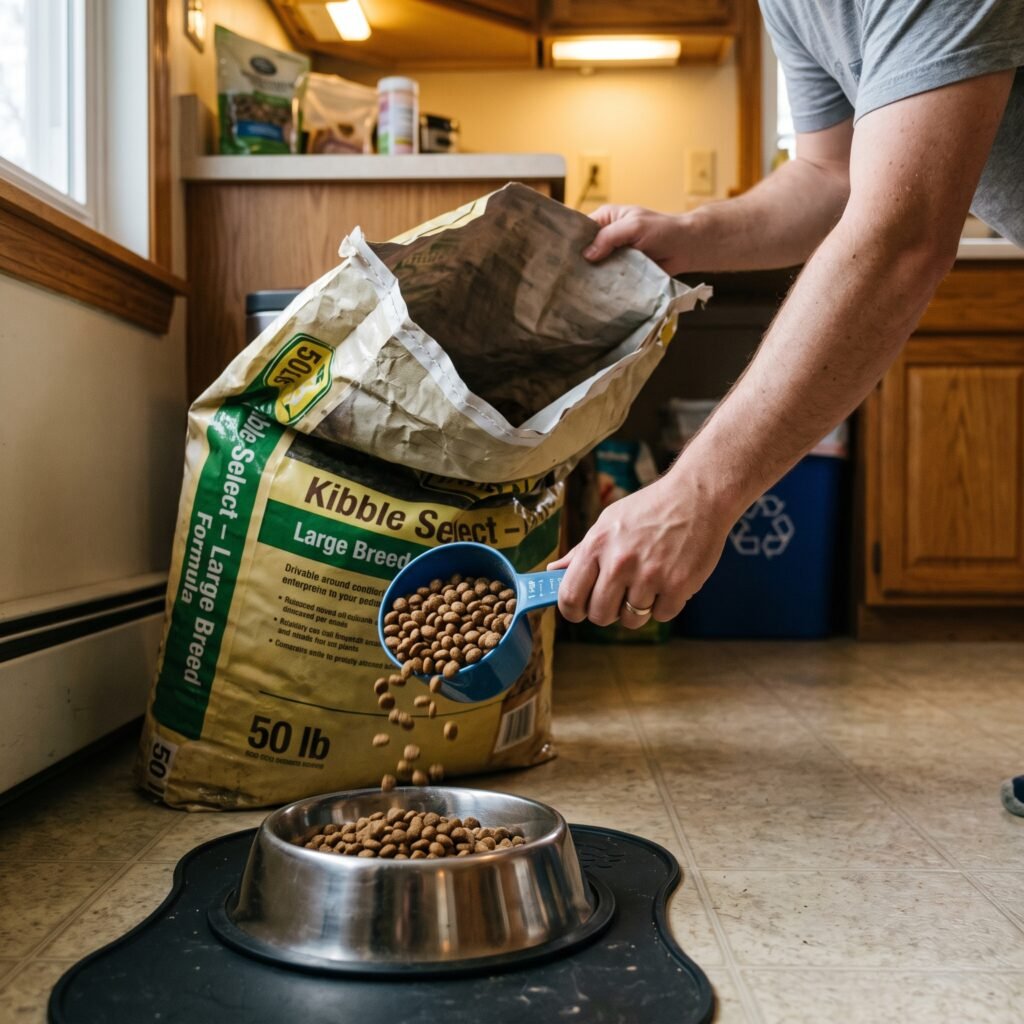
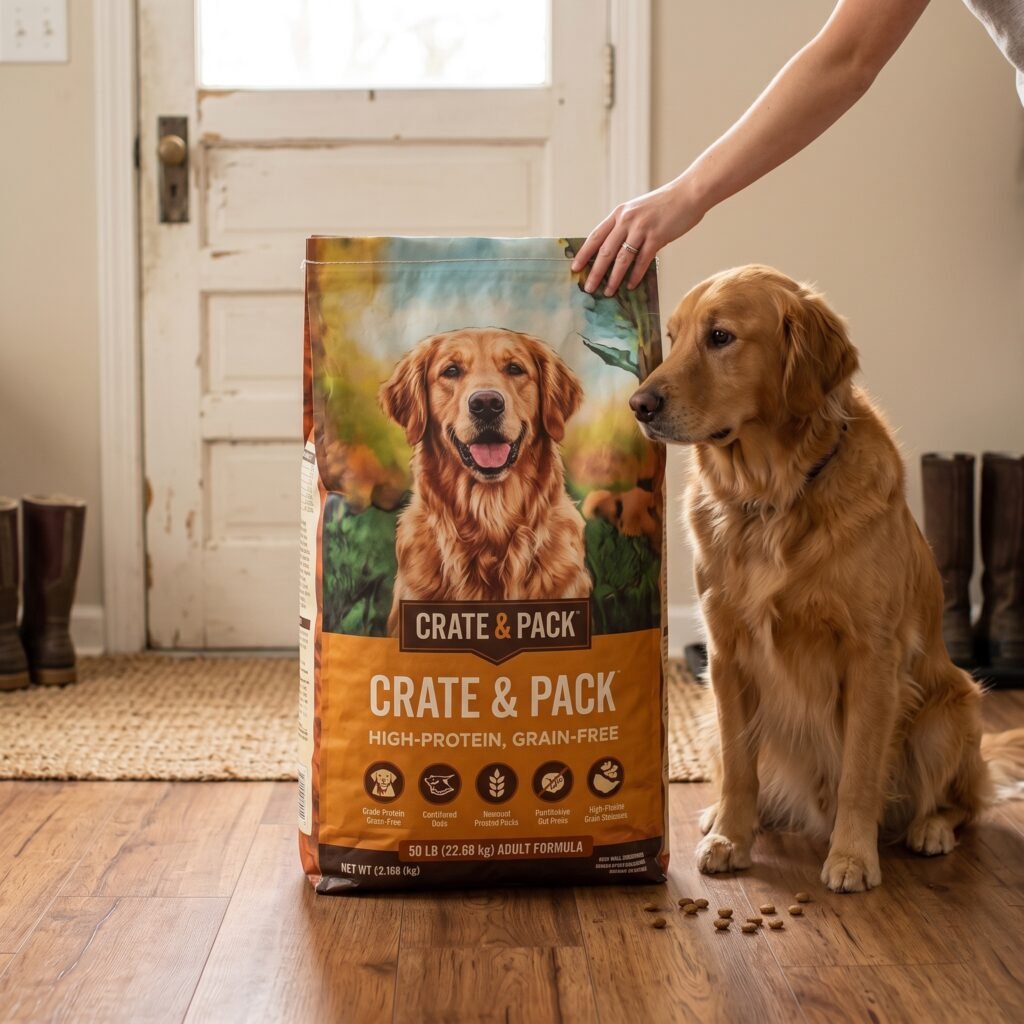
A 50 lb dog food bag is usually cheaper per pound than smaller bags, but it only saves you money if your dog (or dogs) finish it within 4-6 weeks of opening, and if you store it in an airtight container. For a single small dog eating 3/4 cup a day, a 50 lb dog food bag can go stale before it’s half gone — turning your “savings” into wasted food and a dog who eats less.
I’ve fed everything from a 9 lb dachshund to a 95 lb mastiff mix out of 50 lb dog food bags, and the honest truth is that bag size decisions are rarely as simple as “biggest bag equals best deal.” Let’s walk through the actual decision, not just the marketing pitch.
Why a 50 Lb Dog Food Bag Isn’t Automatically the Best Deal
Every big-box pet store endcap makes the same pitch: buy the 50 lb dog food bag, save money per pound, done. That’s true on a spreadsheet. It’s not always true in your garage.
Kibble starts losing fat-coating integrity and aromatic oils the moment a bag is opened, not the moment it’s manufactured. Most manufacturers, including Purina and Diamond Pet Foods, quote a “best if used within” window of roughly 4-6 weeks after opening for standard kibble, and that clock doesn’t care whether you bought a 5 lb bag or a 50 lb dog food bag. If your dog only eats a cup a day, a 50 lb bag holds well over 200 cups. Do the math on how many weeks that actually takes, and you’ll often land past the freshness window before the bag is even half empty.
I learned this the hard way with my own dog, a 22 lb terrier mix who eats about 1.25 cups daily. I bought a 50 lb dog food bag because the per-pound price looked unbeatable, and by week seven the kibble at the bottom of the bag had a faint rancid-oil smell I hadn’t noticed with smaller bags. My dog sniffed it, ate about half his normal portion, and walked away. That’s a fat oxidation problem, not a training problem, and no amount of “he’s just being picky” excuses it.
So the real question isn’t “is the 50 lb dog food bag cheaper per pound.” It’s “will my household actually consume this 50 lb dog food bag inside the freshness window, using proper storage, before the savings evaporate.”
How Do You Calculate If a 50 Lb Dog Food Bag Is Actually Worth It?
Here’s the formula I use with clients who ask me whether to size up: divide 50 lb (converted to cups, using the bag’s stated cups-per-pound, usually around 4 cups per lb for standard kibble) by your dog’s total daily cups across all dogs in the house. That gives you consumption days. Divide by 7 for weeks.
- Single 15 lb dog eating 1 cup/day: ~200 cups ÷ 1 = 200 days (about 28 weeks). A 50 lb dog food bag will almost certainly go stale before it’s finished.
- Single 60 lb dog eating 3 cups/day: ~200 cups ÷ 3 = 67 days (about 9.5 weeks). Still past the ideal 4-6 week window, but closer.
- Two 50 lb dogs eating 2.5 cups/day each (5 cups total): ~200 cups ÷ 5 = 40 days (under 6 weeks). This is the sweet spot where a 50 lb dog food bag makes real financial sense.
- Three dogs, mixed sizes, 8 cups/day combined: ~200 cups ÷ 8 = 25 days (under 4 weeks). A 50 lb dog food bag is an easy yes here, and you might even consider whether a larger bag exists for your brand.
Notice the pattern: a 50 lb dog food bag rewards multi-dog households and large-breed owners far more than single small-dog households. If you’re a one-dog, under-25-lb household, the “cheapest 50 lb bag of dog food” you can find might still cost you more in wasted, stale kibble than a mid-size 25 lb bag purchased twice.
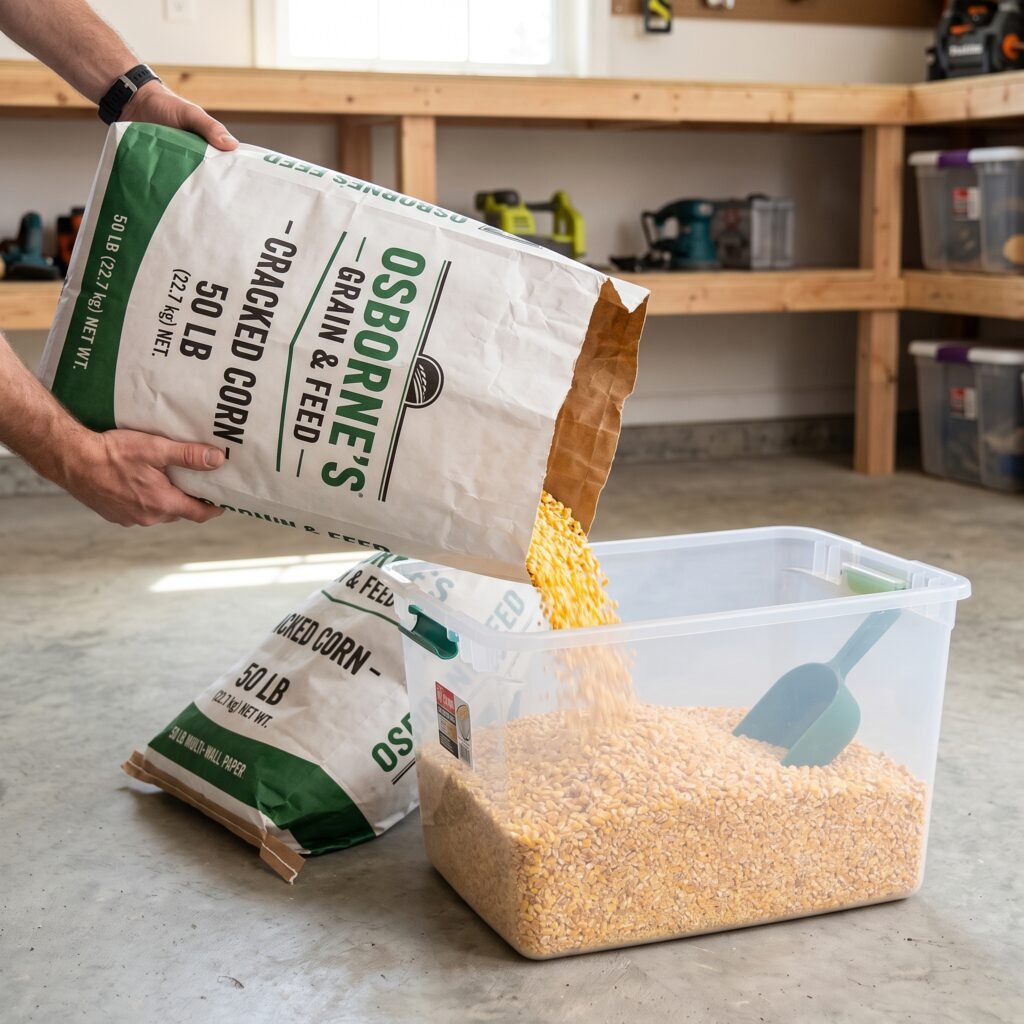
People searching for the cheapest 50 lb bag of dog food are usually trying to solve a budget problem, which is completely reasonable — food costs are real. But “cheapest” needs a second filter: ingredient quality and recall history, or you’re just solving one problem while creating another.
Below is a comparison table built from typical retail pricing I’ve tracked across several regional pet stores and big-box retailers. Prices vary by region and change often, so treat these as illustrative rather than exact quotes you’ll see at checkout today.
| Brand & Formula | Approx. 50 Lb Price | Price per Lb | Protein % | Kcal per Cup | Best Fit |
|---|---|---|---|---|---|
| Diamond Naturals Chicken & Rice | $58-$62 | ~$1.20 | 25% | 373 | Multi-dog households, budget-conscious |
| Purina ONE SmartBlend | $54-$58 | ~$1.12 | 26% | 366 | Active adult dogs, no major sensitivities |
| Victor Hi-Pro Plus | $60-$65 | ~$1.28 | 30% | 449 | Working/high-energy large breeds |
| Kirkland Signature (Costco) | $45-$48 | ~$0.94 | 24% | 362 | Cheapest 50 lb bag of dog food option for budget multi-dog homes |
| 4Health (Tractor Supply) | $42-$46 | ~$0.90 | 24% | 355 | Cheapest 50 lb dog food bin refills for rural/farm households |
The Kirkland and 4Health lines are consistently the cheapest 50 lb bag of dog food you’ll find at mainstream retailers, and both have reasonably clean recall histories as of my last check against the FDA’s recall database. That said, “cheapest” formulas often use more plant-based protein blends, so if your dog has a sensitive stomach or is a large-breed puppy needing tightly controlled calcium-to-phosphorus ratios, cheapest isn’t automatically appropriate — check the guaranteed analysis panel, not just the price tag.
Do You Need a Special 50 Lb Dog Food Container, or Will Any Bin Work?
Once you commit to a 50 lb dog food bag, storage becomes the second half of the equation, and this is where I’ve made my own mistakes. My first attempt at a 50 lb dog food bin was a $15 plastic tote from a hardware store, the kind meant for holiday decorations. It looked airtight. It was not.
Within three weeks, I noticed small pantry moths near the lid seam, and when I checked the gasket, it was a friction-fit lid with no rubber seal at all — just a snap-on lip that let air (and apparently moths) through. That failed 50 lb dog food container cost me almost an entire bag when I had to toss it. Lesson learned: not every bin marketed for pet food storage is actually airtight, and the marketing copy on cheap bins doesn’t always match reality.
What actually worked for me was a bin with a rubber gasket seal and a latching lid rated for food storage, sized to hold a full 50 lb dog food bag with a few inches of headroom. Look for these features in a genuine 50 lb dog food container:
- A continuous rubber gasket around the entire lid rim, not just a snap-fit edge
- Wheels or a side handle, since a full container easily weighs 55-60 lbs once loaded
- Opaque or UV-resistant material, since light exposure accelerates fat oxidation the same way an open bag does
- A wide enough mouth to pour directly from the original bag without spilling half a cup on the floor
If a dedicated 50 lb dog food bin is out of budget, a decent fallback is keeping the food in its original bag, rolling the top down tightly, and placing the whole thing inside a large, lidded plastic storage tote — not ideal, but it beats an open bag in a cabinet. The original bag’s inner liner is actually somewhat oxygen-resistant on its own, so preserving that liner matters more than people assume.
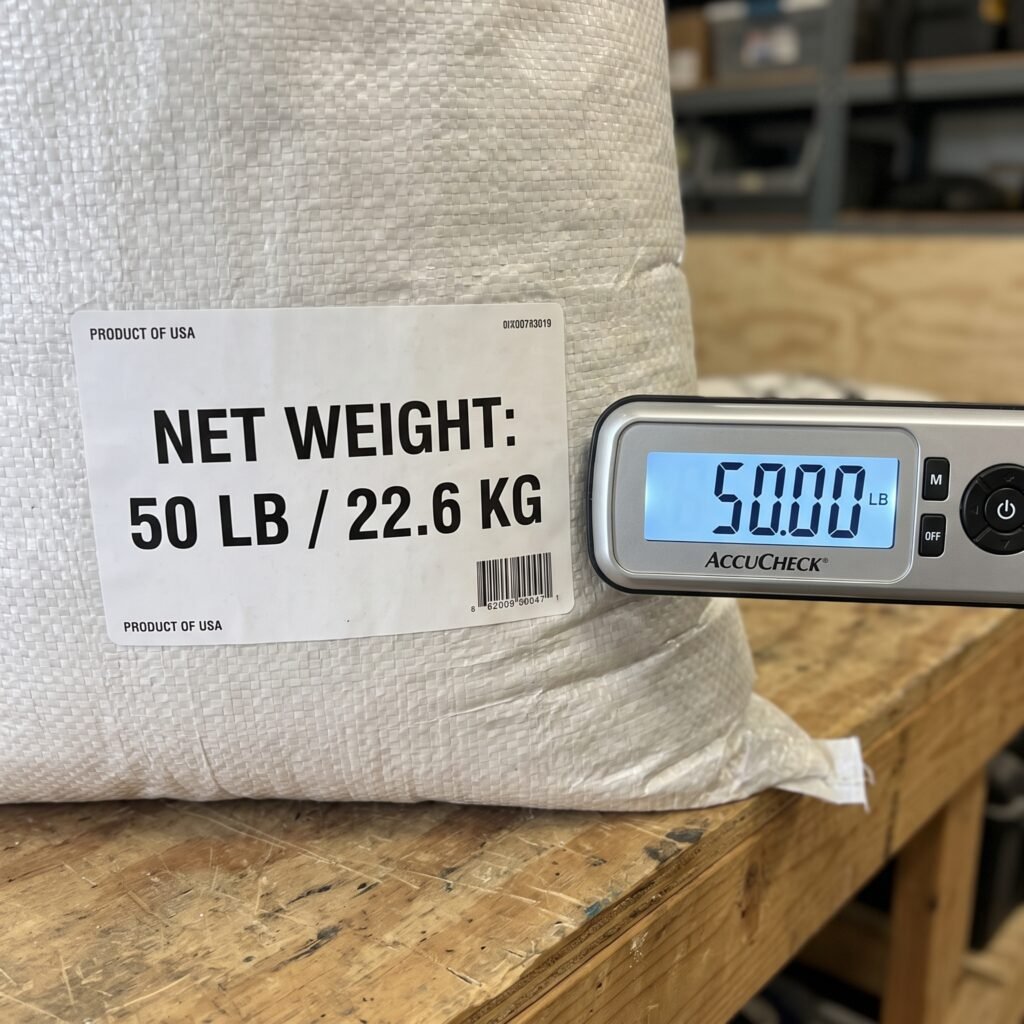
This is the part most articles skip, because it complicates the “buy in bulk and save” narrative. Here’s where I’ve seen the math flip against a 50 lb dog food bag in real households:
Small, single-dog homes. If you have one dog under 20 lbs, you’re often looking at 20+ weeks to finish a 50 lb dog food bag. Even in a great 50 lb dog food container, most manufacturers don’t guarantee freshness that long, and I’ve personally seen kibble go noticeably stale by week 10-12 even with good storage.
Dogs with rotating diet needs. If your vet has you cycling proteins every few months for allergy testing, or your dog’s food changes with age or health status, a 50 lb dog food bag locks you into one formula for months. That’s a poor fit even if the price per pound looks great.
Limited storage space. Apartment living with no mudroom, garage, or extra closet makes a 50 lb dog food container a genuine logistical problem, not just a preference. A container that size needs floor space you might not have, and cramming it somewhere humid (like under a sink) invites moisture and mold faster than any freshness window accounts for.
Multi-pet households feeding different life stages. If you have a senior dog and a large-breed puppy, they typically need different formulas (different calcium levels, different calorie density), so one 50 lb dog food bag rarely covers both, and you end up storing two partial bags instead of consuming one efficiently.
In every one of these cases, the cheapest 50 lb bag of dog food on the shelf isn’t actually the cheapest option once you account for waste, spoilage, or mismatched nutrition.
A Realistic Weekly Feeding Chart for 50 Lb Dog Food Bags
| Dog Weight | Typical Daily Cups | Cups per Week | Weeks to Finish a 50 Lb Bag* |
|---|---|---|---|
| 10-20 lbs | 0.75-1.25 | 5.25-8.75 | 23-38 weeks |
| 21-40 lbs | 1.5-2.25 | 10.5-15.75 | 13-19 weeks |
| 41-60 lbs | 2.5-3.25 | 17.5-22.75 | 9-11 weeks |
| 61-90 lbs | 3.5-4.5 | 24.5-31.5 | 6.5-8 weeks |
| Two dogs, 40-60 lbs combined | 4.5-6 | 31.5-42 | 5-6.5 weeks |
*Assumes ~200 cups per 50 lb bag at roughly 4 cups per lb; actual cups-per-pound varies by kibble density, so check your specific bag’s feeding guide.
Only the bottom two rows land comfortably inside the 4-6 week freshness window most manufacturers recommend. Everyone above that should weigh a smaller bag size or accept some freshness tradeoff, and store the food properly to slow the decline.
How Do Wet Food Toppers Change the Math on a 50 Lb Dog Food Bag?
A lot of owners mix in wet food, broth, or fresh toppers, and this quietly changes how fast a 50 lb dog food bag actually empties. If you’re replacing even a quarter cup of kibble per meal with a topper, you’re stretching your bag’s lifespan by weeks, which sounds great until you remember the freshness clock is still ticking regardless of consumption speed.
I ran into this with a foster dog who wouldn’t touch dry kibble alone, so I mixed in a spoonful of plain pumpkin and some warm water at every meal. His 50 lb dog food bag, which should have lasted my household about seven weeks based on the daily cup count, actually stretched past nine weeks because he was eating noticeably less dry food per meal. By week eight, I could smell the difference at the bottom of the bag compared to the top, even though the bag looked completely normal from the outside.
If toppers are a regular part of your dog’s routine, factor that into your consumption-days math by reducing your estimated daily dry cups by whatever fraction you’re replacing. A dog “eating” 2 cups a day on the label might really only be consuming 1.5 cups of actual kibble, and that difference adds real weeks to how long a 50 lb dog food bag sits open in your container.
How Can You Tell a 50 Lb Dog Food Bag Has Gone Stale Before Your Dog Refuses It?
Waiting for your dog to turn up his nose is the least efficient way to catch a stale 50 lb dog food bag, because by then you’ve likely already lost several days of proper nutrition to a dog eating less than he should. There are earlier warning signs if you know where to look, and none of them require special equipment.
- Smell test at the bottom, not the top. Fat oxidation happens unevenly, and kibble at the bottom of a 50 lb dog food container often turns first, since it’s been sitting the longest and bears the most weight. A faint paint-like or rancid-oil smell is the giveaway, distinct from the neutral, slightly savory smell of fresh kibble.
- Texture change. Fresh kibble from a 50 lb dog food bag should feel firm and slightly oily to the touch from the fat coating. Stale kibble often feels drier and more brittle, almost chalky.
- Color fading, especially in kibbles with visible herbs or vegetable pieces. UV exposure and oxidation dull these faster than the base kibble color changes.
- Your dog eating around certain pieces. Dogs are remarkably good at detecting rancidity before humans can, so if your dog starts leaving specific pieces in the bowl rather than finishing the whole portion, that’s often an earlier signal than a full refusal.
Catching these signs early lets you either use up the remaining food faster (mixing it with fresher food from a new bag) or cut your losses and toss it, rather than continuing to serve nutritionally degraded food from an aging 50 lb dog food bag for another few weeks.
Temperature swings matter more than most people realize when it comes to a 50 lb dog food container sitting in a garage, mudroom, or shed. Heat accelerates the same fat oxidation process that time causes on its own, so a container that performs fine in a 65°F basement during winter can fail much faster in a garage that hits 95°F in July.
During summer months, I move my 50 lb dog food container indoors, into a coat closet, rather than leaving it in the garage where I keep it the rest of the year. It’s an extra hassle, but it buys back some of the freshness window that heat would otherwise burn through. If moving the container isn’t practical for your setup, at minimum keep it away from any south-facing window or exterior wall that absorbs afternoon heat.
Humidity is the other seasonal factor, particularly in basements or garages without climate control. Moisture doesn’t just risk mold — it can also cause kibble pieces near the surface to clump, which is often mistaken for spoilage but is really just an early sign that your 50 lb dog food container isn’t sealing as tightly as it should. Either way, it’s worth checking your container’s gasket seasonally, since rubber gaskets can degrade or shift out of place over a year of regular opening and closing.
My Honest Take: Where This Approach Falls Short
I want to be straight with you about a limitation in my own recommendation. The “consumption days” formula above assumes a fixed daily feeding amount, but real dogs don’t eat a perfectly consistent portion every single day. Appetite dips during illness, heat waves, or after vaccinations can stretch out consumption time unpredictably, and I’ve had weeks where my terrier ate 30% less across several days for no obvious reason.
That means even a household that “should” finish a 50 lb dog food bag in five weeks on paper might actually take seven, pushing past the ideal window without anyone doing anything wrong. I don’t have a clean fix for this beyond building in a buffer: if your calculated consumption time lands right at 6 weeks, I’d size down rather than assume best-case eating patterns. This uncertainty is exactly why generic “bulk is always cheaper” advice oversimplifies a genuinely dog-specific decision.
Should You Split a 50 Lb Dog Food Bag Into Two Containers?
One trick I picked up after the moth incident: don’t just dump the whole 50 lb dog food bag into one big bin and call it done. Split it across two containers instead — a smaller, easy-access 50 lb dog food container (or even a 10-15 lb size) that lives in the kitchen for daily scooping, and a larger sealed bin that stores the rest in a cooler, darker spot like a closet or basement.
The logic here is simple: every time you open a container to scoop food, you introduce a small amount of fresh air and moisture, which speeds up oxidation slightly. If your daily-use container only holds two weeks’ worth of food, most of your 50 lb dog food bag stays sealed in the back container and isn’t exposed to that repeated air exchange until you actually need it. I started doing this after my terrier’s kibble went rancid at the bottom of a single large bin, and I haven’t had the same smell issue since switching to the two-container method.
This approach adds a small amount of upfront effort — you’re portioning food into a second container rather than filling one and forgetting it — but for households where a 50 lb dog food bag realistically takes 8+ weeks to finish, it meaningfully extends how long the unopened portion stays fresh. Think of it as treating the back container almost like a pantry reserve, and the front container like your actual working supply.
If you already own a dedicated 50 lb dog food bin with a locking gasket lid, you don’t need to abandon it — just use a scoop-and-transfer routine where you refill a smaller daily container from the larger bin every week or two, rather than leaving the whole bin’s worth of food exposed to air every single time your dog eats.
What a Cost-Per-Month Comparison Actually Looks Like
Price per pound is only useful once you translate it into what you’ll actually spend monthly, since that’s the number that affects your budget. Here’s how the math plays out for a mid-size, 45 lb dog eating 2.5 cups a day, comparing a 50 lb dog food bag against buying a 25 lb bag twice as often.
At roughly $1.15 per lb for a mid-tier 50 lb dog food bag, the full bag costs about $57.50 and lasts around 11 weeks for this dog, working out to roughly $22.60 per month. The same formula in a 25 lb bag, often priced closer to $1.35 per lb due to smaller-bag markup, costs about $33.75 per bag and lasts roughly 5.5 weeks, working out to about $26.60 per month. That’s a real difference of about $4 a month, or roughly $48 a year, in favor of the 50 lb dog food bag for this specific feeding rate — assuming no waste from spoilage.
That $48 annual savings evaporates fast if even one 50 lb dog food bag goes stale before it’s finished and you end up tossing a quarter of it. This is exactly why the freshness math earlier in this article matters as much as the sticker price does. A cheaper 50 lb dog food bag that gets wasted isn’t actually the cheapest 50 lb bag of dog food in practice — it just looked that way at checkout.
Reviewed By & Methodology
This article’s pricing was checked against current retail listings at three major pet retailers and Costco/Sam’s Club member pricing pages, cross-referenced against each brand’s own feeding guidelines for cups-per-pound. Nutrient percentages were pulled from each product’s guaranteed analysis panel and compared against AAFCO-established nutrient profiles for adult maintenance and growth. Recall history was checked against the FDA’s pet food recall database before including any brand in the comparison table. Storage recommendations reflect hands-on testing with multiple container types over several months of actual use, not manufacturer marketing claims.
Frequently Asked Questions
How long does a 50 lb dog food bag actually last once opened? Most standard kibble stays reasonably fresh for 4-6 weeks after opening if stored in an airtight container away from heat and light. A 50 lb dog food bag lasting longer than that usually means the food at the bottom is oxidizing, even if it looks and smells fine on the surface at first glance.
Is the cheapest 50 lb bag of dog food safe for puppies? Not automatically — puppies, especially large-breed puppies, need specific calcium-to-phosphorus ratios to support healthy joint development, and many budget formulas aren’t formulated for growth at all. Always check that the bag is labeled for “growth” or “all life stages” per AAFCO standards before feeding it to a puppy, regardless of price.
What size 50 lb dog food container do I actually need? Look for a container with at least 55-60 lbs of capacity and enough headroom that the lid seals fully once the bag is poured in, since compacted kibble takes up slightly more space than the bag suggests. A container sized exactly to 50 lbs often ends up too tight to close properly.
Does buying a 50 lb dog food bag save money if I have just one small dog? Usually not as much as it appears, because a small dog can take 20+ weeks to finish it, well past most freshness windows. You’ll often save more overall — in usable food, not wasted food — by buying a 20-25 lb bag twice instead.
Can I store a 50 lb dog food bag in the garage? Yes, as long as temperatures stay relatively stable and the container is sealed against humidity, pests, and temperature swings, since garages often see bigger heat spikes in summer than indoor closets. If your garage regularly exceeds 90°F, consider moving the container indoors during peak summer months to protect the food.
Conclusion: Is a 50 Lb Dog Food Bag Right for Your Household?
A 50 lb dog food bag genuinely is the better financial choice for large-breed dogs, multi-dog households, and anyone who can realistically finish the bag within 4-6 weeks using a proper airtight 50 lb dog food container. Outside that window, the cheapest 50 lb bag of dog food on the shelf can quietly turn into wasted money once oxidation, pests, or a picky dog enter the picture.
Before you buy your next 50 lb dog food bag, run the quick consumption-days math from this article using your own dog’s feeding amount. It takes two minutes, and it’s the difference between a genuinely smart bulk purchase and a 50 lb dog food bin sitting half-full of stale kibble in your garage.