Protein in Dog Food: The Complete 2026 Guide Every Dog Owner Needs
Protein in Dog Food: How Much, What Kind & Why It Matters in 2026 Meta Description: Everything about protein in dog food in 2026 — what crude protein means, how much protein your dog needs, the best high-protein brands, and what the label really tells you.
Protein in Dog Food: Why It Matters More Than Any Other Nutrient
Protein in dog food is the single most important macronutrient in your dog’s diet — and the one most frequently misunderstood, misread on labels, and either over- or under-supplied in commercial formulas. Every structural component of your dog’s body, every enzyme driving their metabolism, every antibody defending their immune system, and every hormone regulating their organ function is built from or dependent on dietary protein. Get protein in dog food right, and you are building the foundation for a healthy, energetic, long-lived dog. Get it wrong — in either direction — and the consequences range from poor coat quality and slow recovery from exercise to muscle wasting, immune failure, and organ damage.
In 2026, the market for dog food high in protein has never been larger or more confusing. Marketing claims ranging from “protein-packed” to “ancestral high-meat formula” to “75% animal ingredients” crowd every shelf and website, while the actual protein content — and more importantly, the protein quality — varies enormously between products making similar-sounding claims.
This guide cuts through the noise with scientific clarity: what crude protein in dog food actually means, how to calculate what is genuinely in the bag, how much protein in dog food your specific dog actually needs, which protein sources deliver superior nutrition, and which brands deliver the best dog food high in protein available in 2026. Whether you are feeding a hyperactive working dog, a sedentary senior, a growing puppy, or a dog with kidney disease, this guide gives you the tools to make an informed, evidence-based decision about protein in dog food.
Table of Contents
- Protein in Dog Food: Why It Matters More Than Any Other Nutrient
- What Is Crude Protein in Dog Food?
- How Protein Works in Your Dog’s Body
- How Much Protein Is in Dog Food? AAFCO Minimums Explained
- How Much Protein in Dog Food Does Your Dog Actually Need?
- Protein in Dog Food by Life Stage
- Dog Food High in Protein: Who Needs It and Who Doesn’t
- Animal vs. Plant Protein in Dog Food: What’s the Difference?
- Best Protein Sources in Dog Food Ranked
- How to Read a Dog Food Label for Protein Content
- Dry Matter Basis: The Only Fair Way to Compare Protein in Dog Food
- Best Dog Food High in Protein: Top Picks for 2026
- Can Too Much Protein in Dog Food Harm Your Dog?
- Protein in Dog Food for Special Health Conditions
- Frequently Asked Questions
What Is Crude Protein in Dog Food?
What is crude protein in dog food? This is one of the most searched questions among new dog owners — and the answer explains why you cannot simply compare two dog foods by their protein percentage alone.
The Kjeldahl Method
Crude protein is not a direct measurement of the actual protein molecules in dog food. Instead, it is a chemical estimate calculated using the Kjeldahl nitrogen method — a laboratory procedure that measures the total nitrogen content of a food sample and converts it to an estimated protein figure using the formula: Protein = Nitrogen × 6.25.
The calculation works because protein molecules average approximately 16% nitrogen by molecular weight, meaning dividing nitrogen content by 0.16 (or multiplying by 6.25) gives an approximation of total protein mass.
Why “Crude” Is the Key Word
What is crude protein in dog food really measuring? All nitrogen — not just nitrogen from intact, digestible protein chains that dogs can absorb and use. The “crude” designation means the measurement captures:
- High-quality, complete protein from muscle meat (what you want)
- Lower-quality protein from connective tissue, feathers, and hides
- Non-protein nitrogen compounds like uric acid, urea, and certain preservatives
This is why crude protein in food can be inflated by low-quality ingredients that technically contain nitrogen but provide poor nutritional value. A food listing 32% crude protein from chicken feather meal technically hits that number but delivers far less usable protein than a food with 28% crude protein from named muscle meat.
What Crude Protein Tells You — and What It Doesn’t
Crude protein in dog food tells you the maximum possible protein content of the food. It does not tell you:
- How digestible that protein is
- How much of the protein comes from animal vs. plant sources
- How complete the amino acid profile is
- How much of the stated protein your dog will actually absorb and use
This is why evaluating protein in food requires looking beyond the percentage on the guaranteed analysis and examining the actual ingredient list to identify protein sources.
How Protein Works in Your Dog’s Body
Before evaluating how much protein in dog food your dog needs, understanding what protein actually does in the canine body clarifies why it is so foundational.
Building and Maintaining Muscle
Skeletal muscle is approximately 70–75% protein by dry weight. Every kilogram of lean muscle your dog carries requires continuous dietary protein input to maintain — muscle protein breaks down and is rebuilt constantly, and dietary protein provides the raw amino acid material for that ongoing reconstruction. A dog receiving insufficient protein in food cannot maintain muscle mass, leading to the progressive muscle wasting (sarcopenia) seen in chronically underfed animals and aging dogs on low-protein diets.
Enzyme and Hormone Production
Virtually every enzyme in your dog’s body is a protein molecule, and hormones including insulin, growth hormone, and thyroid hormone are protein-derived. Inadequate protein in dog food compromises enzymatic and hormonal function at a cellular level long before visible symptoms appear.
Immune System Function
Antibodies are immunoglobulins — proteins synthesized from dietary amino acids. A dog on chronically low protein in dog food produces fewer effective antibodies, making them more susceptible to infection and less responsive to vaccination.
Skin, Coat, and Nail Health
Keratin — the structural protein forming hair, nails, and outer skin — requires sulfur-containing amino acids from dietary protein. Dull, brittle hair, increased shedding, and skin flaking are among the earliest visible signs of insufficient protein in food.
Energy Production
Protein can be catabolized for energy when other sources are insufficient. In dog food high in protein diets, excess amino acids are deaminated and the nitrogen excreted as urea — which is why high-protein diets increase water intake and urine output in healthy dogs.
How Much Protein Is in Dog Food? AAFCO Minimums Explained
How much protein is in dog food legally required? The answer comes from AAFCO — the Association of American Feed Control Officials — which establishes the minimum nutritional standards that all commercially sold dog foods in the United States must meet.
AAFCO Protein Minimums
The AAFCO Dog Food Nutrient Profiles establish the following crude protein minimums:
| Life Stage | Minimum Crude Protein (Dry Matter Basis) |
|---|---|
| Adult Maintenance | 18% |
| Growth and Reproduction (Puppies, Pregnant/Nursing Dogs) | 22.5% |
These are absolute minimums — the floor below which a food cannot fall and still claim to be nutritionally complete. Most quality commercial dog foods exceed these minimums by a meaningful margin. When asking how much protein is in food across the commercial market:
- Budget grocery store brands: typically 18–22% crude protein
- Mid-tier mainstream brands: typically 22–26% crude protein
- Premium brands (Purina Pro Plan, Hill’s, Royal Canin): typically 26–30% crude protein
- High-protein premium brands (Orijen, Acana, Merrick): typically 32–40%+ crude protein
The Problem With Comparing Raw Percentages
How much protein is in dog food at face value is not a fair comparison between wet and dry foods. A canned food showing 8% crude protein and a dry kibble showing 28% crude protein might deliver nearly identical protein when moisture is removed from the equation. This is why dry matter basis comparison is essential — covered in detail in a dedicated section below.
How Much Protein in Dog Food Does Your Dog Actually Need?
How much protein in dog food is genuinely optimal for your specific dog depends on five variables: life stage, body weight, activity level, health status, and the digestibility of the protein being consumed.
The NRC Recommendations
The National Research Council provides minimum protein requirements in grams of digestible protein per kg of body weight daily: 2.62g for adult dogs, 9.69g for puppies, 4.77g for pregnant dogs, and 8.77g for nursing dogs. Practically, this means most healthy adult dogs are well served by how much protein in food provides 22–28% crude protein from quality named animal sources at appropriate portions.
Activity Level Adjustment
A 25 kg working dog covering terrain all day may require 40–60% more dietary protein than the AAFCO minimum to sustain muscle repair, energy metabolism, and immune function under physical stress. Dog food high in protein — formulas providing 30%+ crude protein from animal sources — is genuinely appropriate and beneficial for working, sporting, and highly active dogs.
A sedentary 25 kg dog of the same breed and weight needs significantly less protein in absolute terms — though meeting NRC minimums with quality sources remains important for immune function and muscle maintenance regardless of activity level.
Protein in Dog Food by Life Stage
The protein in food requirement is not static — it shifts substantially at every life stage transition.
Protein in Dog Food for Puppies
Puppies have the highest protein requirements of any life stage, both in absolute terms and per kilogram of body weight. Rapid muscle development, organ growth, immune system maturation, and the demands of skeletal development all drive protein need.
How much protein in dog food for puppies? AAFCO requires a minimum of 22.5%, but most quality puppy foods provide 27–30% crude protein. For large-breed puppies, the protein source matters enormously — high biological value animal protein supports muscle growth without the excessive caloric load that drives dangerous rapid bone growth. Never feed a large-breed puppy adult food or a “puppy” food without the large-breed specification, as calcium-phosphorus ratios differ critically.
Protein in Dog Food for Active Adult Dogs
Moderately active adult dogs thrive on protein in dog food at 22–28% from quality named animal sources. Highly active adults — those exercising vigorously for more than one hour daily — benefit from 28–34% protein. Working and sporting dogs in intensive training may require dog food high in protein at 34%+ to sustain muscle repair and energy metabolism.
Protein in Dog Food for Senior Dogs
Many owners believe seniors need less protein in dog food — the opposite is true. Aging reduces protein utilization efficiency (anabolic resistance), meaning older dogs need equal or greater protein intake than younger adults to maintain muscle mass. The myth that high protein in dog food harms healthy aging kidneys has been thoroughly debunked. Protein restriction in seniors with normal kidney function accelerates muscle loss without any renal benefit. Only dogs with diagnosed CKD require restriction — under veterinary supervision.
Dog Food High in Protein: Who Needs It and Who Doesn’t
Dog food high in protein — defined here as formulas providing 30%+ crude protein on a dry matter basis — is appropriate for specific dogs in specific situations. It is not universally necessary and carries specific contraindications.
Who Genuinely Benefits From Dog Food High in Protein
Working and sporting dogs engaged in daily intensive physical activity are the clearest beneficiaries of dog food high in protein. The muscle breakdown and repair cycle of a working dog in heavy training demands dietary protein supply that standard maintenance formulas simply cannot match at appropriate caloric intake.
Dogs recovering from surgery, illness, or injury have dramatically elevated protein needs for tissue repair, immune function, and rebuilding depleted protein stores. Dog food high in protein — or protein supplementation under veterinary guidance — accelerates recovery in these cases.
Lean, muscular breeds prone to muscle loss — Greyhounds, Whippets, Vizslas, Weimaraners, and similar athletic breeds — often maintain better body condition and coat quality on dog food high in protein than on standard maintenance formulas, even at moderate activity levels.
Senior dogs experiencing muscle loss (sarcopenia) benefit from increased protein from highly digestible sources, as discussed above.
Who Does NOT Need Dog Food High in Protein
Sedentary adult dogs with no special health needs do not require dog food high in protein. Adequate quality protein from a 22–26% formula meets their needs without excess nitrogen load on the kidneys.
Overweight dogs are often better served by a higher-protein, lower-fat formula for weight management — but “high protein” must be paired with appropriate caloric restriction. Feeding dog food high in protein without adjusting total caloric intake does not automatically produce weight loss.
Dogs with confirmed chronic kidney disease should never be placed on dog food high in protein without veterinary guidance. CKD compromises the kidneys’ ability to process protein metabolites, and protein restriction is one of the most important dietary interventions for slowing CKD progression.
Animal vs. Plant Protein in Dog Food: What’s the Difference?
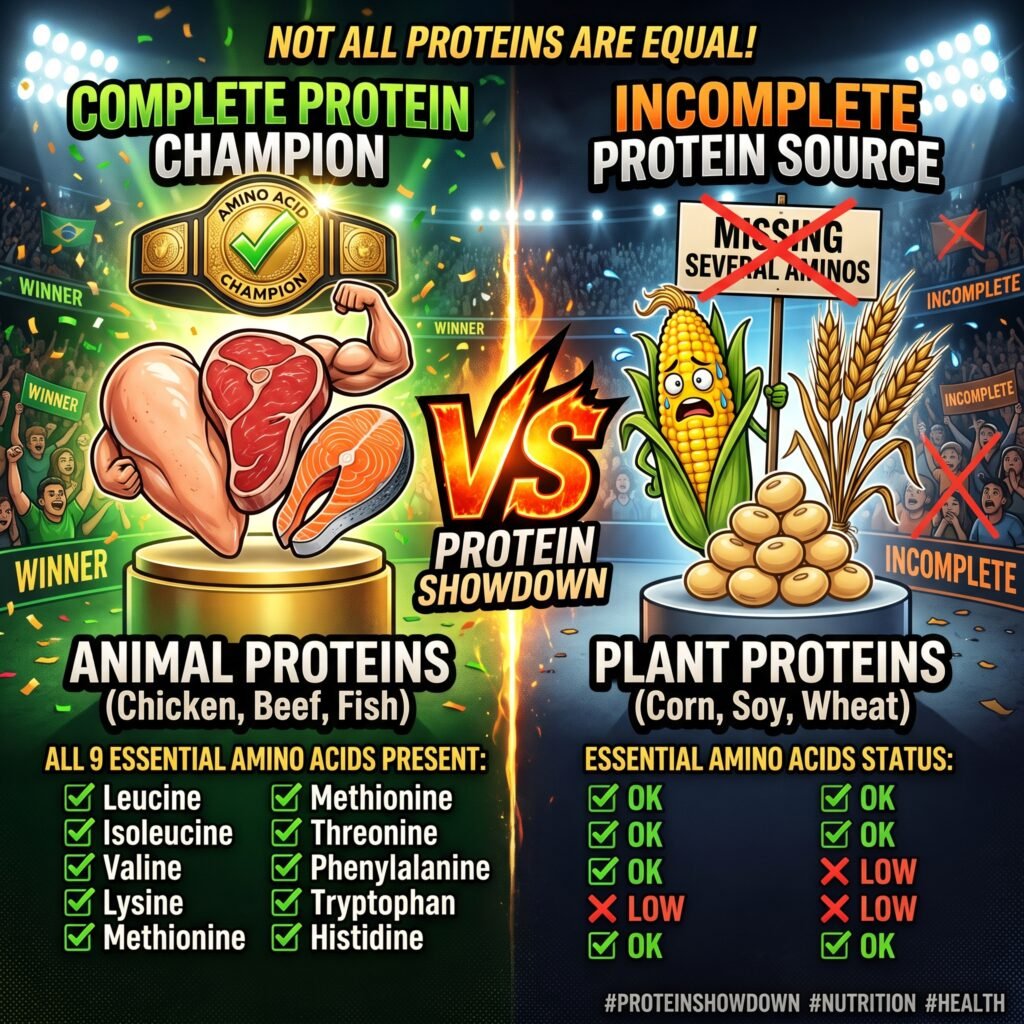
Not all protein in dog food is created equal. The source of protein determines its biological value — how efficiently dogs can convert it into body protein.
Biological Value and Amino Acid Completeness
Protein quality is determined by biological value (BV) — the proportion of absorbed protein retained for growth and maintenance — and amino acid completeness. Dogs require 10 essential amino acids they cannot synthesize, all of which animal proteins provide in full. Animal sources (chicken, beef, fish, eggs, turkey, lamb) deliver complete profiles with high BV. Eggs have the highest BV of any single food, followed by fish and fresh chicken.
Plant proteins (soy, peas, lentils, corn gluten meal) are incomplete individually and less digestible than animal proteins, with lower BV across the board.
Why First Ingredients Matter for Protein Quality
When evaluating protein in dog food, the first five ingredients reveal whether the protein comes from quality animal sources or is padded with plant-based protein. A food listing “pea protein” or “soy protein isolate” in the top five ingredients is inflating its crude protein percentage with plant protein that delivers lower biological value and digestibility than animal protein at the same crude percentage.
Dog food high in protein from animal sources genuinely outperforms equivalently numbered formulas relying heavily on plant protein for their crude protein figure.
Best Protein Sources in Dog Food Ranked
The following ranking of protein in dog food sources is based on biological value, digestibility, amino acid completeness, and evidence of long-term safety in canine nutrition.
Tier 1: Highest Quality Protein Sources
Eggs (whole or dried) — Highest biological value of any food protein, complete amino acid profile, excellent digestibility. The gold standard for protein quality in dog food.
Fresh salmon and fish — High biological value, complete amino acid profile, naturally rich in omega-3 EPA and DHA. One of the best protein sources in dog food high in protein formulas.
Fresh chicken breast (named, skinless) — Highly digestible, complete amino acid profile, lean protein from a named source. The most common first ingredient in quality dog food.
Chicken meal (named) — Concentrated protein source approximately 65% protein by weight. Superior to unnamed “poultry meal” — a significant upgrade in protein in dog food quality.
Fresh turkey (white meat) — Lean, highly digestible, complete amino acid profile similar to chicken with potentially lower allergenicity.
Tier 2: Good Quality Protein Sources
Named beef, lamb, pork, venison, and bison all deliver complete amino acid profiles. Higher fat content in red meats makes them particularly useful for active dogs. Venison and bison serve as novel proteins for elimination diets in dogs with sensitivities.
Tier 3: Lower Quality but Acceptable
Unnamed meat meals, corn gluten meal, and soy protein isolate are acceptable supplementary sources but should not be the primary protein in dog food. They inflate crude protein numbers without delivering the biological value or digestibility of named animal proteins.
How to Read a Dog Food Label for Protein Content
Understanding what labels tell you about protein in dog food requires knowing exactly where to look and what each element means.
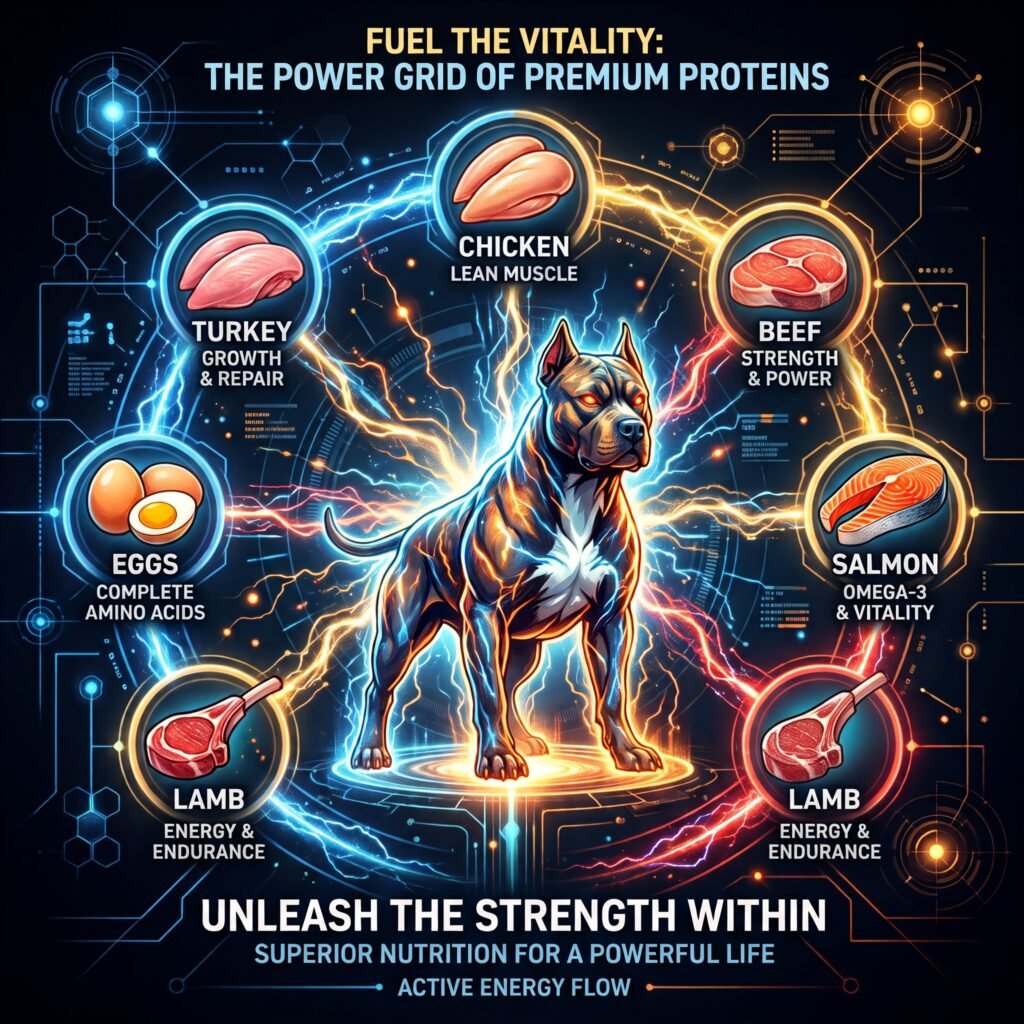
Step 1: Check the Guaranteed Analysis
Every commercial dog food sold in the United States must include a Guaranteed Analysis panel listing crude protein as a minimum percentage. This is the starting point for evaluating how much protein is in dog food — but not the ending point.
Step 2: Identify Protein Sources in the Ingredient List
Ingredients are listed by weight before processing. Look for:
- Named animal proteins in the top 3 ingredients: “chicken,” “beef,” “salmon,” “turkey” — these should lead the list in any quality dog food high in protein
- Named meat meals: “chicken meal,” “turkey meal” — concentrated and acceptable
- Warning signs: “meat by-products,” “poultry meal” (unnamed species), “animal digest,” “corn gluten meal” in the top 5 — these inflate the protein number without delivering proportional quality
Step 3: Calculate Dry Matter Protein
The crude protein percentage on the label is listed “as fed” — meaning it includes moisture content. To compare protein in dog food fairly across wet and dry formats, you must convert to dry matter basis.
Formula: (Crude Protein % ÷ (100% − Moisture %)) × 100 = Dry Matter Protein %
Example: A canned food showing 9% crude protein and 78% moisture:
- 100 − 78 = 22% dry matter
- 9 ÷ 22 × 100 = 40.9% protein on a dry matter basis
This canned food with apparent 9% protein actually delivers more protein per calorie than a dry food showing 28% — a fact invisible without the conversion.
Dry Matter Basis: The Only Fair Way to Compare Protein in Dog Food
The dry matter basis (DMB) conversion is not just a technical detail — it is the only scientifically valid way to compare protein in dog food across different food types and even between different dry foods with different moisture contents.
Why Moisture Distorts Protein Comparisons
Dry kibble typically contains 8–12% moisture. Wet canned food contains 70–80% moisture. Semi-moist food sits in between at 25–35%. The water in these foods contains no protein — it simply dilutes the protein figure when expressed “as fed.” Without converting to dry matter, you are comparing protein concentrations in different amounts of water, not actual protein quantities.
Dry Matter Comparison Example
| Food Type | As-Fed Protein | Moisture | Dry Matter Protein |
|---|---|---|---|
| Dry kibble A | 26% | 10% | 28.9% |
| Dry kibble B | 30% | 10% | 33.3% |
| Wet food | 9% | 78% | 40.9% |
| Semi-moist | 18% | 30% | 25.7% |
This table illustrates why how much protein is in dog food cannot be evaluated from the as-fed percentage alone. The wet food at “only” 9% as-fed protein actually delivers the highest protein concentration per gram of dry food — a fact completely hidden without the conversion.
When shopping for dog food high in protein, always run this conversion for every product you are comparing. The formula is simple and takes 30 seconds with a calculator.
Best Dog Food High in Protein: Top Picks for 2026
Based on verified protein content (dry matter basis), protein source quality, ingredient transparency, and AAFCO compliance, here are the leading dog food high in protein formulas available in 2026.
Orijen Original (Dry)
The gold standard for dog food high in protein in the kibble category. Orijen Original delivers approximately 40% crude protein on a dry matter basis from a 85% animal ingredient formula including fresh chicken, turkey, salmon, herring, and eggs. Naturally occurring glucosamine, chondroitin, and omega-3 fatty acids from WholePrey ingredients make this the most complete dog food high in protein in the premium dry market. Grain-free with legumes — discuss DCM context with your vet.
Purina Pro Plan Sport 30/20
The most veterinarian-recommended dog food high in protein for active and working dogs. Purina Pro Plan Sport provides 30% crude protein and 20% fat from chicken or salmon as the first ingredient, backed by rigorous feeding trial data. It is grain-inclusive, widely available, and supported by decades of clinical research. The 30/20 formula is the benchmark for dog food high in protein in the mainstream premium market.
Merrick Grain-Free Real Chicken + Sweet Potato
A strong OTC option delivering approximately 38% crude protein on a dry matter basis from deboned chicken as the first ingredient. No corn, wheat, soy, or artificial additives. Higher protein than most mainstream brands at a competitive price point for the quality delivered.
Acana Protein-Rich Formulas
Made by the same company as Orijen (Champion Petfoods), Acana delivers 29–35% crude protein from 60–75% animal ingredients across its various recipes — a step down from Orijen in protein density but a step up in accessibility and price. An excellent middle ground for owners seeking dog food high in protein without Orijen’s premium price.
The Farmer’s Dog (Fresh Food)
Fresh-food subscription delivery at its best. The Farmer’s Dog formulas provide 25–35% dry matter protein from USDA-kitchen-prepared human-grade ingredients including beef, turkey, pork, and chicken. Superior digestibility compared to any kibble — meaning more of the stated protein in dog food is actually absorbed and used by the dog. Premium price but genuinely premium nutrition.
Hill’s Science Diet High Protein
For owners who want the reassurance of a veterinary-trusted brand with elevated protein, Hill’s Science Diet offers high-protein formulas built on the same clinical research foundation as their prescription lines. Provides 30%+ protein from named chicken or salmon with the quality control that has made Hill’s the most prescribed food in veterinary medicine.
Can Too Much Protein in Dog Food Harm Your Dog?
This is one of the most common concerns raised by owners reading about protein in dog food — and the answer is more nuanced than most internet sources suggest.
For Healthy Dogs: High Protein Is Safe
In healthy dogs with normal kidney function, protein in dog food at even very high levels (40%+) has not been shown to cause kidney damage in research studies. The healthy kidney efficiently processes and excretes excess protein nitrogen as urea. The concern that high protein in dog food damages healthy kidneys is not supported by current veterinary evidence.
High protein intake in healthy dogs does increase thirst and urination as extra nitrogen is excreted. This is normal physiology, not a sign of harm.
For Dogs With Kidney Disease: Protein Restriction Is Critical
Dogs with confirmed chronic kidney disease (CKD) cannot efficiently excrete protein metabolites. In these dogs, high protein in dog food does cause harm — metabolite accumulation damages remaining kidney function and contributes to uremia. Dogs with CKD require veterinary-prescribed protein-restricted diets. Never put a dog with CKD on dog food high in protein without explicit veterinary guidance.
Protein and Weight: The Calorie Factor
The most realistic risk of dog food high in protein for healthy dogs is indirect: high-protein foods are often also high in fat and caloric density. Feeding large portions of dog food high in protein without adjusting daily caloric intake is a common path to weight gain. Always calculate caloric needs alongside protein needs when selecting food.
Protein in Dog Food for Special Health Conditions
Protein in Dog Food for Kidney Disease
As discussed, CKD requires protein restriction — typically targeting 14–18% dry matter protein from highly digestible sources. Hill’s Prescription Diet k/d and Royal Canin Renal are the benchmark formulas, designed to limit protein intake while maintaining quality of life and palatability. Never restrict protein in dog food for kidney disease without a confirmed diagnosis and veterinary supervision — protein restriction in healthy dogs causes harm.
Protein in Dog Food for Liver Disease
Liver disease (hepatic insufficiency) also affects protein metabolism. However, the appropriate response is different from kidney disease: rather than reducing total protein, the goal is to use highly digestible, branched-chain amino acid-rich protein sources that the compromised liver can process more efficiently. Hill’s l/d and Royal Canin Hepatic are the standard formulas. Dog food high in protein from poor-quality sources is more problematic for liver disease than high-quality protein at appropriate levels.
Protein in Dog Food for Muscle Wasting
Dogs with sarcopenia from aging or illness need increased protein in dog food from highly digestible animal sources — fresh food, hydrolyzed protein formulas, or high-quality kibble at 28%+ dry matter protein. Fish-based protein adds omega-3 anti-inflammatory support alongside the muscle-building amino acid supply.
Protein in Dog Food for Allergies
Food allergies in dogs are triggered by specific proteins — most commonly chicken, beef, dairy, wheat, egg, soy, and lamb. For allergic dogs, protein source selection matters more than quantity. A limited-ingredient novel protein diet (venison, rabbit, kangaroo, duck) or hydrolyzed protein formula is appropriate. Dog food high in protein is compatible with allergy management when the protein sources avoid the confirmed allergen.
Frequently Asked Questions
What is crude protein in dog food and why does it matter?
What is crude protein in dog food? It is a laboratory estimate of total nitrogen content converted to protein equivalent — not a direct measurement of usable protein. It matters because it is the standard reporting format on all commercial dog food labels, but it must be interpreted alongside the ingredient list (to assess protein quality) and converted to dry matter basis (to enable fair comparison). Crude protein percentage alone does not tell you whether the protein in dog food comes from high-quality animal sources or lower-quality plant fillers.
How much protein is in dog food that is considered high protein?
Generally, dog food high in protein is considered to be any formula providing 30% or more crude protein on a dry matter basis. Premium high-protein brands like Orijen provide 38–40% dry matter protein. Mainstream premium brands typically provide 26–30%. AAFCO minimum for adult maintenance is 18% — the floor, not the target.
How much protein in dog food does a senior dog need?
Senior dogs need equal or greater protein in dog food compared to younger adults — not less. Aging reduces protein utilization efficiency, meaning seniors need more dietary protein to achieve the same muscle-maintenance outcome. A minimum of 25–28% dry matter protein from highly digestible animal sources is recommended for healthy senior dogs. Only dogs with diagnosed kidney disease require protein restriction.
Is plant protein as good as animal protein in dog food?
No. Animal-source protein in dog food provides higher biological value, more complete amino acid profiles, and better digestibility than plant-source proteins. Plant proteins can supplement animal proteins in a balanced formula, but they should not be the primary protein sources in quality dog food.
Can too much protein in dog food cause kidney damage in healthy dogs?
Current veterinary research does not support the claim that high protein in dog food damages healthy kidneys. This concern is specifically relevant to dogs with existing kidney disease, where protein restriction is medically appropriate. Healthy dogs process and excrete excess dietary protein efficiently without kidney harm.
What protein percentage should I look for in dog food?
For active adult dogs, look for protein in dog food at 26–30% crude protein on a dry matter basis from named animal sources. For highly active or working dogs, 30–38% is appropriate. For puppies, 27–30% with AAFCO growth compliance. For senior healthy dogs, 25–30% from highly digestible sources. For dogs with kidney disease, follow your veterinarian’s specific prescription.
Conclusion: Getting Protein in Dog Food Right in 2026
Protein in dog food is not a simple number on a label — it is a multidimensional nutritional consideration involving quantity, quality, source, digestibility, life stage, and individual health status. The crude protein percentage is where to start, not where to stop.
The key principles to carry forward from this guide: always convert to dry matter basis before comparing products; look at the ingredient list to confirm the protein in dog food comes from named animal sources; adjust protein targets to your dog’s life stage and activity level; choose dog food high in protein for working, sporting, or recovering dogs and ensure adequate — not just minimum — protein for senior dogs; and always involve your veterinarian for dogs with kidney disease, liver disease, or confirmed food allergies before making protein-related dietary changes.
What is crude protein in dog food on its own is a starting point. What it represents — the quality of life support, immune defense, muscle vitality, and metabolic function your dog carries into every day — is everything.
Last updated: July 2026. Always consult a licensed veterinarian or board-certified veterinary nutritionist for personalized protein recommendations for your dog’s specific health needs.