
Canine Diabetic Treats: What's Safe, What to Avoid, and How to Feed Them Right
Finding out your dog has diabetes changes a lot of things — including how you think about something as simple as a treat.

Most dog owners know that treats are tied up in love, training, and routine, and the last thing you want is to take that away from a dog that’s already dealing with daily insulin injections. The good news is that canine diabetic treats don’t have to disappear from your dog’s life. With the right knowledge and some careful label-reading, your diabetic dog can still enjoy treats safely.
The key word, as veterinary sources consistently point out, is “the right kind.” Not all treats are created equal for diabetic dogs, and some widely popular options — even ones marketed as “healthy” or “natural” — can cause dangerous blood sugar spikes in a dog whose body is already struggling to regulate glucose. Understanding what makes canine diabetic treats work, and what makes them harmful, puts you firmly in control of your dog’s day-to-day wellbeing.
In this guide we’ll cover exactly what qualifies as a safe canine diabetic treat, the ingredients to prioritize and avoid, the best homemade options, how to read commercial labels, timing and portion guidance, and practical shopping advice for finding the best canine diabetic treats available today.
Table of Contents
- Can Diabetic Dogs Have Treats at All?
- Why the Right Canine Diabetic Treats Matter So Much
- The Science: How Food Affects Blood Sugar in Diabetic Dogs
- What Makes a Good Canine Diabetic Treat?
- Best Ingredients to Look for in Canine Diabetic Treats
- Ingredients to Always Avoid in Canine Diabetic Treats
- Best Whole-Food Canine Diabetic Treats
- Safe Vegetables as Canine Diabetic Treats
- Safe Proteins as Canine Diabetic Treats
- Fruits That Work as Canine Diabetic Treats
- Homemade Canine Diabetic Treat Recipes
- How to Read Commercial Canine Diabetic Treat Labels
- How Many Treats Can a Diabetic Dog Have?
- Timing Canine Diabetic Treats Around Insulin
- FAQ: Canine Diabetic Treats
- Conclusion
Can Diabetic Dogs Have Treats at All?
This is the first question most owners ask after a diabetes diagnosis, and the answer from veterinary sources including the American Kennel Club and VCA Hospitals is encouraging: yes, canine diabetic treats are absolutely possible — but only the right type, in the right amount, at the right time.
The nuance matters here. It’s not a blanket green light on any treat your dog enjoys. A standard commercial biscuit loaded with corn syrup, white flour, and molasses is genuinely dangerous for a diabetic dog. But a small piece of plain cooked chicken, a carrot stick, or a purpose-formulated canine diabetic treat with low glycemic ingredients? Those can be safely incorporated into a managed diabetic dog’s daily routine without derailing blood sugar control.
The foundational principle behind safe canine diabetic treats is glycemic impact — how quickly and dramatically a treat raises blood glucose after consumption. Every treat choice you make should be evaluated through that lens first.
Why the Right Canine Diabetic Treats Matter So Much
To understand why treat selection is so critical, it helps to understand what’s actually at stake. Canine diabetes is managed through a combination of insulin therapy, timed meals, controlled carbohydrate intake, and consistent routine. Any disruption to that system — including a high-sugar treat given at the wrong time — can throw blood glucose levels out of the carefully maintained balance insulin therapy is designed to create.
An inappropriate treat can cause:
- A rapid blood sugar spike that outpaces the insulin dose your dog has already received
- Dangerous glucose fluctuations that lead to symptoms like lethargy, excessive thirst, or disorientation
- Weight gain, which directly complicates diabetes management since obesity reduces insulin sensitivity
- Over time, consistently poor treat choices can actually make a dog’s diabetes harder to control medically
This is why canine diabetic treats deserve the same careful thought you give to your dog’s main meals — not as an afterthought, but as an integrated part of the overall management plan.
The Science: How Food Affects Blood Sugar in Diabetic Dogs
The concept that drives every decision about canine diabetic treats is the glycemic index — a measure of how quickly a particular food raises blood glucose levels after consumption.
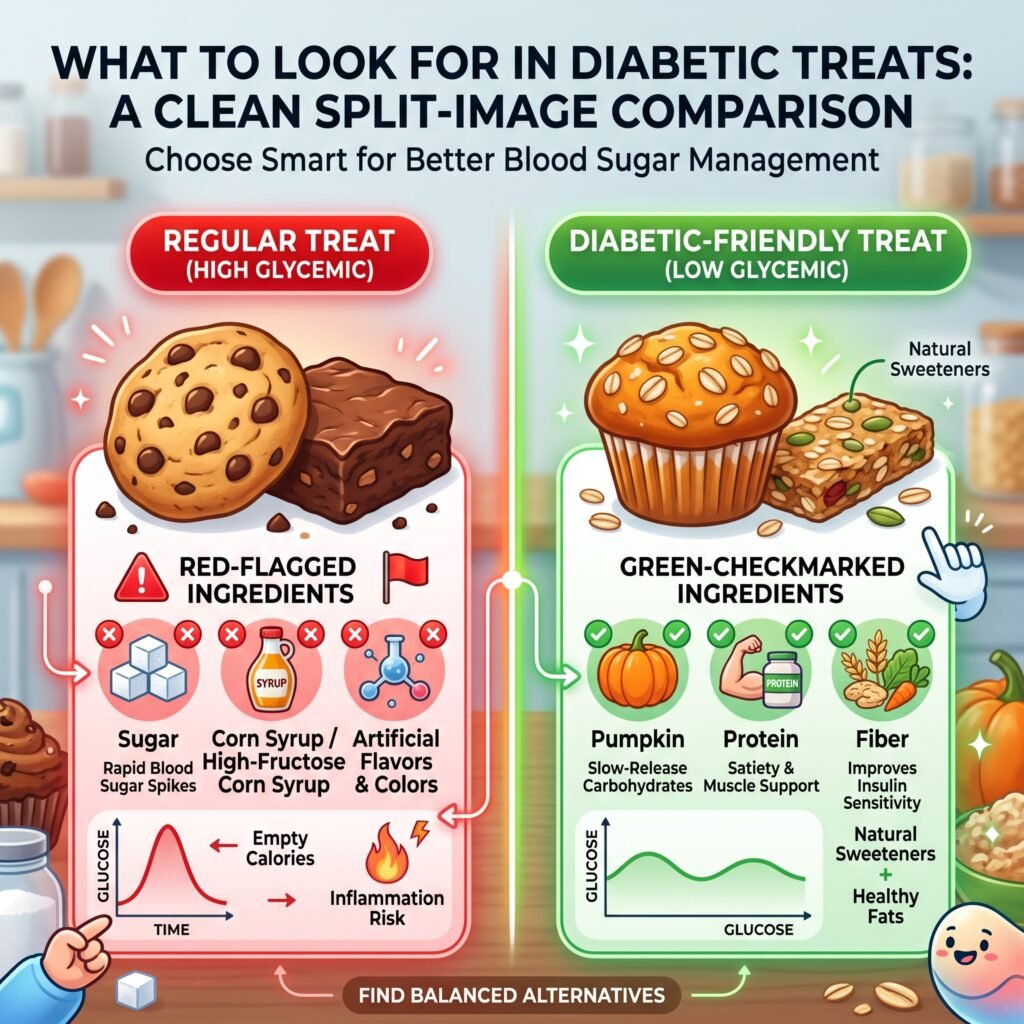
- High-glycemic foods (simple sugars, refined starches) digest quickly and cause rapid glucose spikes — exactly what a diabetic dog’s compromised insulin system cannot handle
- Low-glycemic foods (fiber-rich vegetables, lean proteins, complex carbohydrates) digest slowly, releasing glucose gradually and steadily — far easier for the body to manage with existing insulin
Fiber plays a particularly important role in canine diabetic treats: it slows the digestion and absorption of glucose, essentially acting as a natural buffer against blood sugar spikes. This is why high-fiber vegetables are so frequently recommended as canine diabetic treats by veterinary sources — they literally slow the glucose delivery to the bloodstream.
Protein, on the other hand, has minimal direct impact on blood glucose levels, which is why lean protein sources make excellent canine diabetic treats from a glycemic control standpoint.
What Makes a Good Canine Diabetic Treat?
Veterinary sources consistently point to the same core criteria when evaluating canine diabetic treats. A good choice meets as many of these as possible:
Core Criteria for Safe Canine Diabetic Treats
- Low or zero sugar content — no added sugars, syrups, honey, or molasses of any kind
- High fiber content — slows glucose absorption and supports digestive regularity
- High protein content — lean protein has minimal glycemic impact and supports muscle maintenance
- Low fat content — important specifically because excessive dietary fat increases the risk of pancreatitis, a serious and disproportionately dangerous complication for diabetic dogs
- Low-glycemic carbohydrates only, if carbohydrates are present at all — complex carbs from whole vegetables or legumes rather than refined starches
- Single or minimal ingredients — shorter ingredient lists mean fewer hidden sugars and fillers
- No artificial sweeteners — xylitol in particular is extremely toxic to dogs and sometimes found in “sugar-free” products
When evaluating any potential canine diabetic treat, run through this checklist before offering it to your dog.
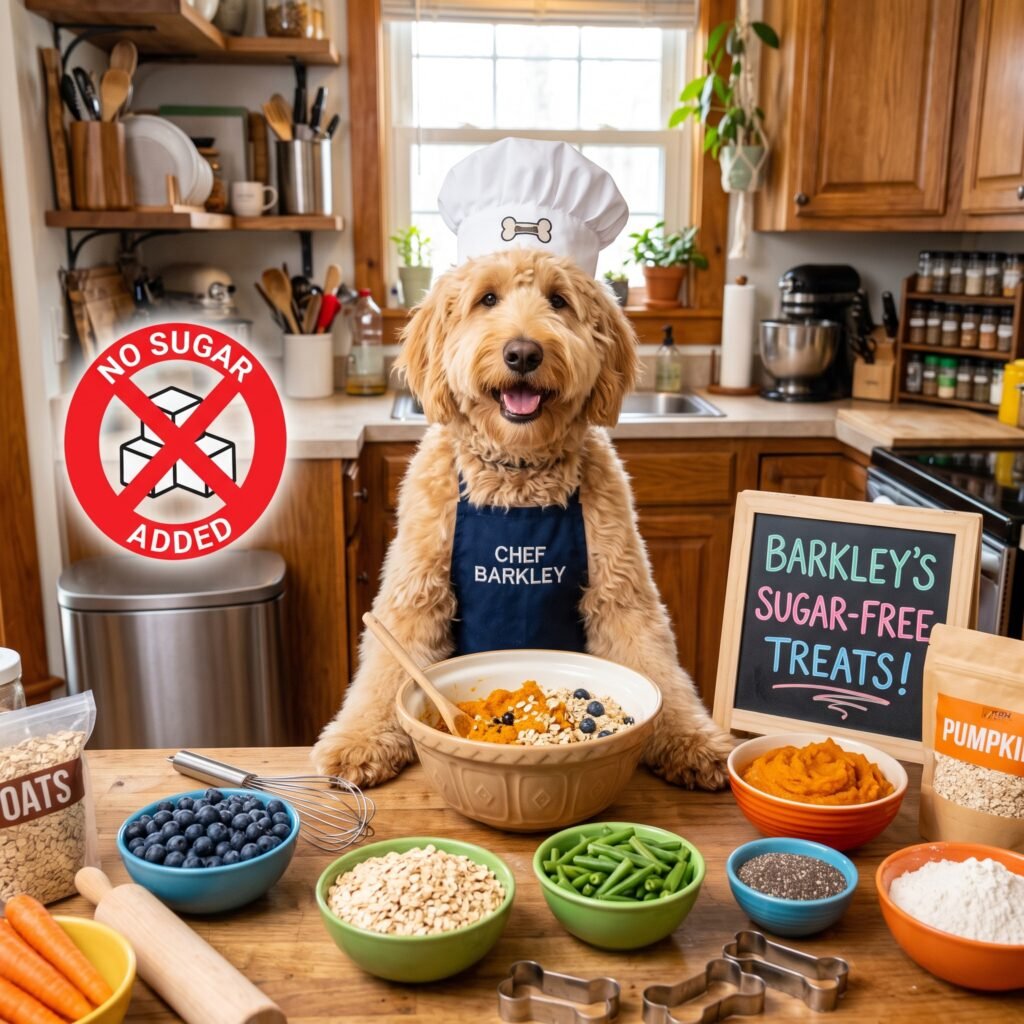
Best Ingredients to Look for in Canine Diabetic Treats
Knowing what to look for on a label is just as important as knowing what to avoid. These are the ingredients veterinary sources specifically highlight as appropriate for canine diabetic treats:
- Lean named proteins — chicken, turkey, fish, venison, or rabbit listed as primary ingredients
- Kale — low glycemic index, rich in antioxidants, fiber, and beta-carotene
- Pumpkin — gentle on digestion, high in fiber, low in sugar, supports blood sugar regulation
- Blueberries — low in sugar, high in antioxidants that help combat oxidative stress (often elevated in diabetic dogs)
- Green beans — extremely low glycemic, high fiber, excellent as a treat addition
- Chia seeds — high in fiber and omega-3 fatty acids, help slow glucose digestion
- Sweet potato — in small amounts only, as a complex carbohydrate source; should be used sparingly given higher natural sugar content
- Coconut flour — low glycemic alternative to wheat flour in baked treat recipes
- Eggs — low glycemic, high protein, broadly accepted as a diabetes-friendly ingredient across veterinary sources
Ingredients to Always Avoid in Canine Diabetic Treats
This section may be even more important than the list of safe ingredients. These are the specific ingredients that disqualify any product from consideration as a canine diabetic treat:
Absolute Avoids
- Sugar, corn syrup, honey, molasses, maple syrup — any form of added sugar causes rapid blood glucose spikes
- White flour — a refined, high-glycemic carbohydrate that digests quickly into glucose
- White rice — similar glycemic profile to white flour; breaks down rapidly to glucose
- White potatoes and corn — starchy, high-glycemic, associated with rapid blood sugar elevation
- Artificial sweeteners, particularly xylitol — xylitol is acutely toxic to dogs at any dose
- High-fat ingredients — bacon, sausage, fatty meat cuts, excessive cheese — increase pancreatitis risk in diabetic dogs
- Fruit in large quantities — even natural sugars from excessive fruit can destabilize blood glucose in diabetic dogs; small amounts of low-sugar fruits may be acceptable with veterinary guidance
- Sugar synonyms hidden in labels — sucrose, fructose, glucose, maltose, dextrose, any syrup — these appear under many different names on ingredient panels
The Park Grove Pet Hospital specifically notes that reading labels becomes essential for diabetic dog owners, since sugar synonyms often appear multiple times under different names in a single ingredient list, effectively hiding the true total sugar content.
Best Whole-Food Canine Diabetic Treats
The simplest, most reliably safe approach to canine diabetic treats doesn’t always require a store-bought product at all. Whole foods, prepared plainly, are often the most transparent and controllable option.
Why Whole Foods Work Well
- You know exactly what’s in them — no hidden ingredients, no label confusion
- Most are naturally low glycemic without any formulation required
- They’re typically affordable and accessible
- They can be portioned precisely, giving you complete control over treat size and caloric contribution
The sections below break down the best whole-food categories in more detail.
Safe Vegetables as Canine Diabetic Treats
Vegetables are widely cited as the most consistently safe canine diabetic treats category, and for good reason — most are naturally low in sugar, high in fiber, and have minimal glycemic impact.
Top Vegetable Options for Canine Diabetic Treats
- Green beans — one of the most frequently recommended options across veterinary sources; extremely low calorie, high fiber, minimal glycemic impact, crunchy texture most dogs enjoy
- Carrot sticks — low calorie, moderate fiber, naturally sweet enough to feel like a treat without meaningfully impacting blood glucose in normal treat-sized amounts
- Cucumber slices — very low calorie, high water content, virtually zero glycemic impact
- Broccoli florets — rich in fiber and antioxidants, low in sugar; offer in small amounts due to potential gas in larger quantities
- Zucchini — low calorie, low glycemic, highly digestible
- Celery sticks — crunchy, hydrating, minimal sugar content
All vegetables should be offered plain — no added salt, butter, oil, or seasoning of any kind.
Safe Proteins as Canine Diabetic Treats
Lean protein is among the best categories for canine diabetic treats from a blood sugar standpoint, since protein has essentially no direct glycemic impact on blood glucose levels.
Best Protein-Based Canine Diabetic Treats
- Plain cooked chicken — small pieces of skinless, boneless, plain-cooked chicken breast are widely recommended as safe canine diabetic treats by veterinary sources including the AKC
- Plain cooked turkey — similar profile to chicken, equally safe in small amounts
- Plain cooked fish — particularly salmon or whitefish; adds omega-3 benefits alongside negligible glycemic impact
- Hard-boiled or scrambled eggs (plain, no butter or seasoning) — confirmed as diabetes-friendly across multiple veterinary sources
- Freeze-dried or dehydrated single-ingredient meat treats — look for products listing only the named protein, with no added ingredients
The key across all protein canine diabetic treats is “plain” — cooked without salt, oil, seasoning, or sauce, since these additions can introduce sodium, fat, or hidden sugars that undermine the otherwise safe protein base.
Fruits That Work as Canine Diabetic Treats
Fruit requires more caution than vegetables and protein for diabetic dogs, since even natural fruit sugars can impact blood glucose. That said, a small selection of low-sugar fruits can serve as occasional canine diabetic treats when offered in appropriately tiny portions.
Lower-Risk Fruit Options
- Blueberries — among the lowest-sugar fruits, rich in antioxidants that specifically help combat oxidative stress (often elevated in diabetic dogs); small amounts are broadly considered acceptable
- Apple slices (seeds removed) — moderate glycemic impact; a thin slice rather than a generous portion is more appropriate
- Strawberries — slightly higher in natural sugar than blueberries; occasional small amounts may be acceptable but should be discussed with your vet
What to Avoid in the Fruit Category
- Grapes and raisins — toxic to dogs regardless of diabetes status
- Bananas — too high in natural sugar for routine diabetic treat use
- Mangoes, pineapple, cherries — similarly high glycemic index for diabetic dogs
- Any dried or processed fruit — concentrated sugar content makes these inappropriate canine diabetic treats
The consistent veterinary guidance is to keep fruit portions very small, offer them only occasionally, and monitor your dog’s response each time.
Homemade Canine Diabetic Treat Recipes
For owners who prefer to know exactly what’s in every treat, homemade canine diabetic treats offer the highest level of ingredient control. These simple recipes use veterinary-approved low-glycemic ingredients.
Recipe 1: Baked Pumpkin and Egg Bites
Ingredients:
- 1 cup canned plain pumpkin (not pie filling)
- 2 eggs
- 1 cup coconut flour
- Optional: a pinch of cinnamon (cinnamon has been noted to support insulin sensitivity in some studies)
Method: Mix all ingredients, roll into small balls or press into a silicone mold, bake at 350°F for 20 minutes until firm. Cool completely before offering.
Recipe 2: Frozen Bone Broth Cubes
Ingredients:
- Unsalted, low-sodium bone broth (check label — no onion, garlic, or added seasonings)
- Optional additions: small pieces of plain cooked chicken, a spoonful of plain pumpkin
Method: Pour into ice cube trays, freeze until solid. Offer one cube as a long-lasting treat, especially useful for warmer days.
Recipe 3: Green Bean and Chicken Crumbles
Ingredients:
- Plain cooked chicken breast, finely chopped
- Steamed green beans, finely chopped
- 1 egg to bind
Method: Combine, press into a thin layer on a baking sheet lined with parchment, bake at 325°F for 25 minutes. Break into small pieces once cooled.
These homemade canine diabetic treats eliminate the label-reading uncertainty entirely and allow you to portion with complete precision.
How to Read Commercial Canine Diabetic Treat Labels
If you’re buying commercial canine diabetic treats, knowing how to evaluate the label protects your dog from hidden ingredients that could cause problems.
Step-by-Step Label Evaluation
- Check the first three ingredients — these make up the largest proportion of the product. A named protein or fiber-rich vegetable should appear here, not corn syrup, sugar, or refined flour
- Scan for sugar synonyms — sucrose, fructose, glucose, maltose, dextrose, honey, molasses, syrup in any form
- Look at the fiber percentage — higher is generally better for diabetic dogs; look for treats showing at least 3–5% crude fiber
- Check fat content — keep in mind the pancreatitis risk; moderate fat content (under 15%) is generally preferable
- Look for “low glycemic” labeling — while not regulated with the precision of pharmaceutical labeling, this claim on a canine diabetic treat product usually reflects at least some intentional formulation toward lower blood sugar impact
- Avoid artificial sweeteners — scan specifically for xylitol, which can appear in “sugar-free” products and is acutely toxic to dogs

How Many Treats Can a Diabetic Dog Have?
Across multiple veterinary sources including the AKC and VCA Hospitals, the consistent recommendation is that treats should account for no more than 10% of a diabetic dog’s total daily caloric intake.
This matters for two reasons:
- Caloric balance — even low-glycemic canine diabetic treats contribute calories, and weight management is a critical component of diabetes control
- Nutritional balance — treats that exceed 10% of daily intake can displace the nutritionally complete meals your dog’s diabetes management depends on
In practical terms, this means most diabetic dogs should receive only a few small treats per day, not a handful throughout the day as snacking. Keeping portions small — think the size of your thumbnail for each individual piece — helps stay within the safe range while still allowing the emotional and behavioral value of treating.
Timing Canine Diabetic Treats Around Insulin
Timing is one of the most underappreciated aspects of feeding canine diabetic treats safely. According to VCA Hospitals and the AKC, offering treats to diabetic dogs works best when it follows a clear pattern:
Key Timing Guidelines
- Always after a meal, never on an empty stomach — offering treats when your dog’s stomach is empty can cause uneven glucose absorption, potentially leading to a spike before the next insulin dose takes effect
- Offer once or twice per day maximum, aligned with your dog’s insulin schedule and main meal times
- Avoid giving treats in between meals — this can interfere with the carefully timed blood sugar regulation that insulin therapy depends on
- Treats after insulin, not before — in most diabetic management schedules, treats offered as a small reward or enrichment shortly after a post-insulin meal fit most safely into the glucose management timeline
These timing guidelines turn canine diabetic treats from a potential risk into a manageable, safe component of your dog’s daily routine.
FAQ: Canine Diabetic Treats
1. What are the safest canine diabetic treats overall?
The safest canine diabetic treats are plain lean proteins (small pieces of cooked chicken, turkey, or fish), low-glycemic vegetables (green beans, carrot sticks, cucumber), and purpose-formulated commercial treats with no added sugar, low fat, and high fiber content.
2. Can diabetic dogs have commercial dog treats at all?
Most standard commercial treats are not appropriate as canine diabetic treats because they contain sugar, molasses, white flour, or corn syrup. Some specialist brands formulate specifically low-glycemic, diabetic-appropriate treats — always verify by reading the full ingredient list rather than relying on marketing claims alone.
3. Are carrots good canine diabetic treats?
Yes. Carrots are widely recommended as safe canine diabetic treats — they’re low in calories, moderate in fiber, and have a naturally low glycemic impact in the small portion sizes appropriate for treats.
4. Can I give my diabetic dog peanut butter as a treat?
Only with significant caution. Plain, xylitol-free peanut butter in very small amounts (a thin scrape) is generally considered acceptable, but its fat content is worth monitoring given the pancreatitis risk for diabetic dogs. Always check the label for xylitol, which appears in some peanut butter products and is acutely toxic to dogs. This is not a routine canine diabetic treat choice for most dogs.
5. How often can diabetic dogs have treats?
Once or twice daily in small portions, aligned with meal and insulin timing, is the most commonly recommended frequency for canine diabetic treats according to veterinary sources including VCA Hospitals and the AKC.
6. Are sweet potatoes good canine diabetic treats?
In very small amounts only, and with veterinary guidance. Sweet potato’s complex carbohydrate profile is more appropriate than refined starches, but its natural sugar content means it should be used sparingly rather than as a regular canine diabetic treat choice.
7. What should I do before introducing any new canine diabetic treat?
Always consult your veterinarian before introducing any new food or treat into a diabetic dog’s diet. Blood sugar responses vary between individual dogs, and what’s safe in general may need to be adjusted for your specific dog’s insulin dosing, weight, and overall health status.
Conclusion
Managing a diabetic dog doesn’t mean a treat-free life — it means becoming more intentional about the canine diabetic treats you choose. With the right ingredients, appropriate portions, and careful timing, treats can remain a safe and meaningful part of your dog’s daily routine even throughout diabetes management.
Here’s what to remember:
- Safe canine diabetic treats prioritize low glycemic impact, high fiber, lean protein, and zero added sugar
- The best everyday canine diabetic treat options are whole foods: plain cooked chicken or turkey, green beans, carrot sticks, cucumber slices, and blueberries in small amounts
- Ingredients to always avoid in any canine diabetic treat: sugar, corn syrup, molasses, honey, white flour, white rice, xylitol, and high-fat meats
- Homemade canine diabetic treats using pumpkin, eggs, coconut flour, and lean protein give you complete ingredient control
- Timing matters — offer canine diabetic treats after meals, aligned with insulin schedules, and never on an empty stomach
- Treats should account for no more than 10% of total daily caloric intake, regardless of how diabetes-friendly the individual treat is
- Always consult your veterinarian before introducing any new canine diabetic treat, since individual dogs can respond differently even to generally safe foods
The goal is a diabetic dog that feels cared for, rewarded, and loved — because a treat, chosen wisely, can be all of those things even with diabetes in the picture. With this guide as your foundation, you have everything you need to make confident, safe choices every time you reach for the treat jar.
For more guidance, check out our companion article on managing canine diabetes through diet and meal timing, or our deeper breakdown of low-glycemic ingredients in commercial dog food formulas.