
Can Dogs Get Salmonella? Symptoms, Causes & Prevention Explained
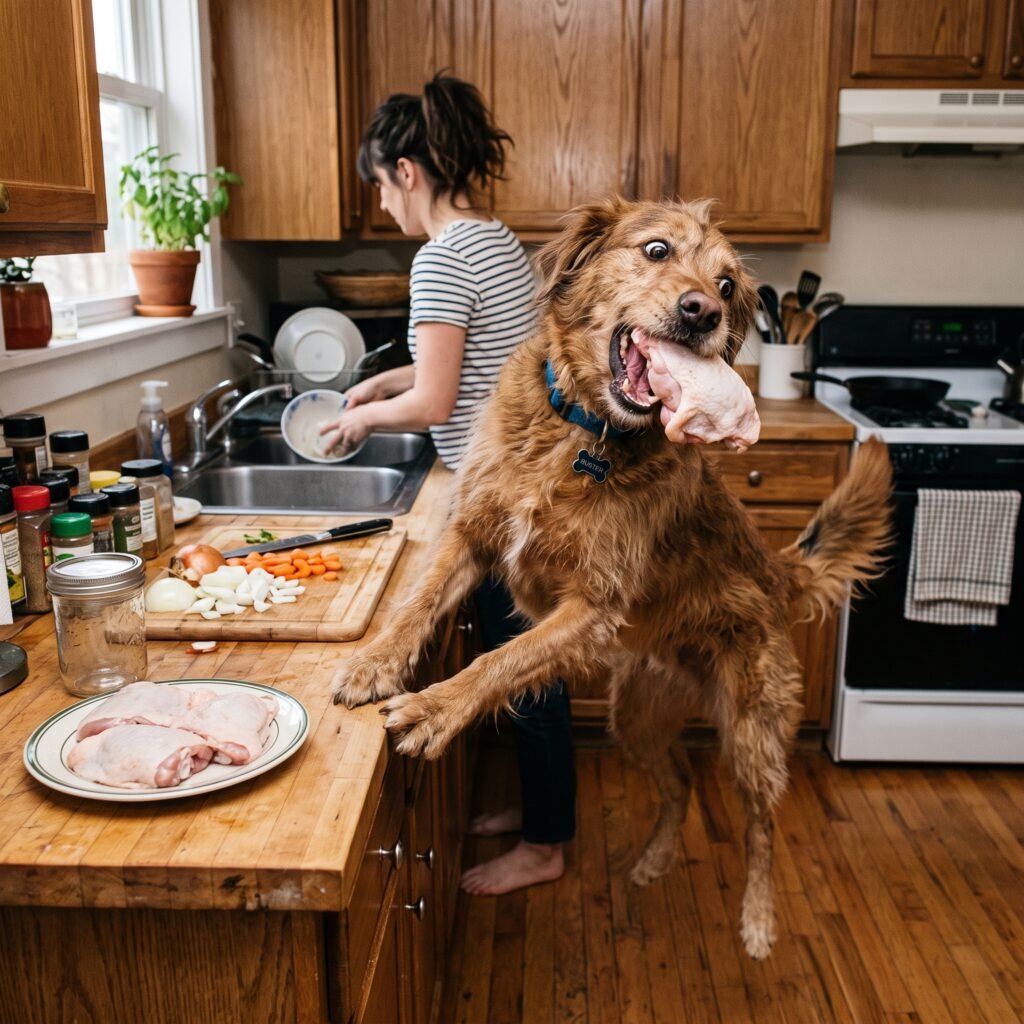
If you've ever caught your dog sneaking a piece of raw chicken off the counter
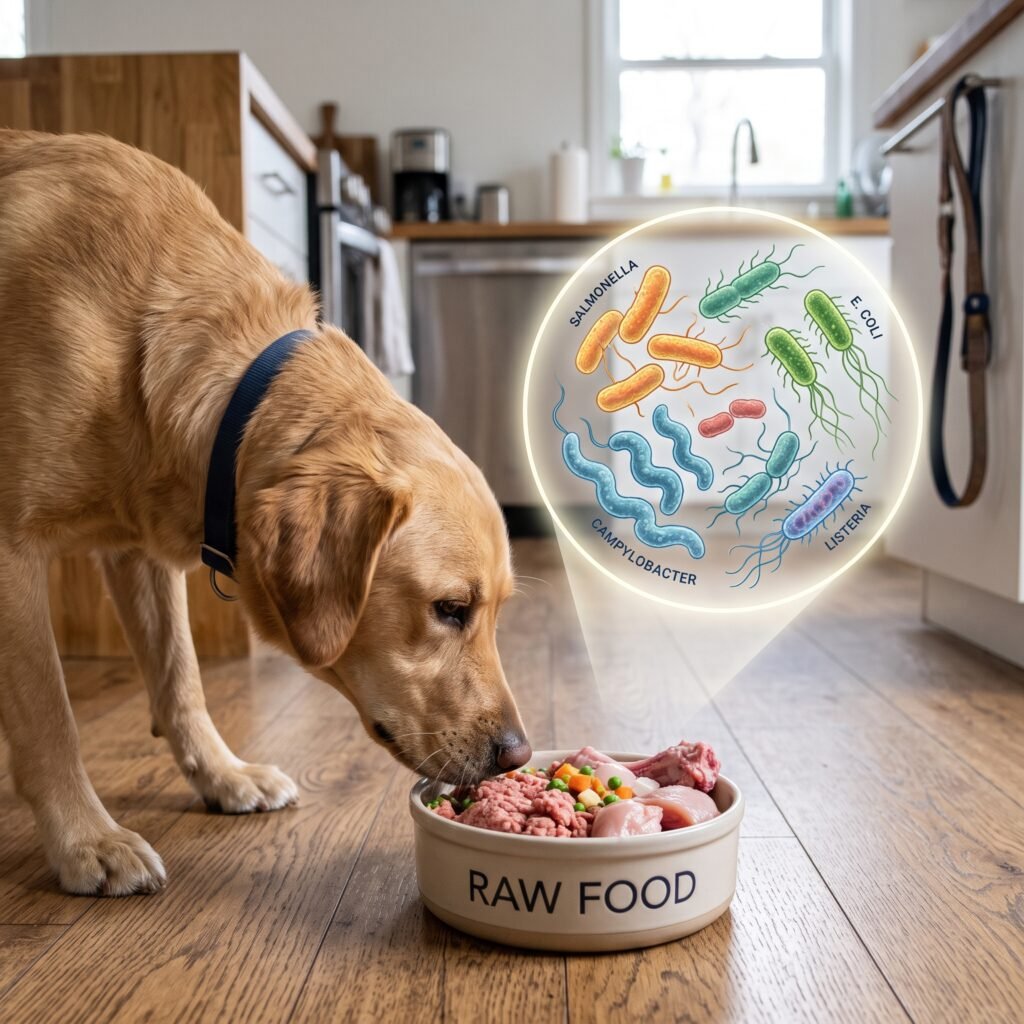
or wondered whether scrambling them an egg (shell and all) is really a good idea, you’ve probably asked yourself: can dogs get salmonella? It’s a genuinely important question, and the answer is more nuanced than a simple yes or no.
The short version: yes, can dogs get salmonella is answered with a confirmed “yes” by veterinarians, but dogs are considerably more resistant to it than humans are, thanks to a shorter, more acidic digestive tract built for processing raw meat. That doesn’t mean the risk is zero, though — and it definitely doesn’t mean you, your kids, or other household members are automatically safe just because your dog seems fine.
In this guide, we’ll cover exactly can dogs get salmonella poisoning, how can dogs get salmonella from raw chicken specifically, whether can a dog get salmonella from raw chicken changes depending on freshness or sourcing, and whether can dogs get salmonella from raw eggs the same way they can from meat. We’ll also walk through symptoms, treatment, and the genuinely important human health angle that too many raw-feeding guides skip over entirely.
Table of Contents
- Can Dogs Get Salmonella? The Direct Answer
- Why Dogs Are More Resistant Than Humans
- Can Dogs Get Salmonella Poisoning? Understanding Severity
- Can Dogs Get Salmonella From Raw Chicken?
- Can a Dog Get Salmonella From Raw Chicken That’s Fresh vs. Older?
- Can Dogs Get Salmonella From Raw Eggs?
- Other Common Sources of Salmonella Exposure
- Symptoms of Salmonella in Dogs
- Which Dogs Are Most at Risk?
- How Veterinarians Diagnose Salmonella in Dogs
- Treatment Options for Salmonella in Dogs
- The Human Health Risk Nobody Talks About Enough
- Raw Feeding and Salmonella: What You Need to Know
- How to Reduce Salmonella Risk in Your Home
- FAQ: Can Dogs Get Salmonella
- Conclusion
Can Dogs Get Salmonella? The Direct Answer
Yes. Can dogs get salmonella is a question with a clear, confirmed answer from veterinary medicine: dogs absolutely can contract salmonella infection, also called salmonellosis. The bacteria is most commonly associated with raw or undercooked meat and eggs, but it can also spread through contaminated feces, saliva, and even certain commercial pet food products that have been affected by recalls.
That said, the full picture is more reassuring than the question alone might suggest. Veterinary sources consistently note that while can dogs get salmonella is true, clinical illness from it is actually fairly uncommon in healthy adult dogs, even when exposure occurs. Many dogs encounter the bacteria, carry it briefly, and never show a single symptom.
Why Dogs Are More Resistant Than Humans
One of the most important nuances in this topic is understanding why dogs handle salmonella so differently than people do.
Key Biological Differences
- Highly acidic stomach environment — dogs have notably more acidic digestive systems than humans, which helps neutralize a significant portion of bacteria before it can cause illness
- Shorter digestive tract — food and any associated bacteria move through a dog’s system more quickly, reducing the window for infection to take hold
- Evolutionary adaptation — dogs and their wild ancestors have consumed raw meat for thousands of years, and their digestive systems evolved accordingly
This is precisely why veterinarians explain that can a dog get salmonella from raw chicken technically yes, but the odds are meaningfully lower compared to a human eating the same contaminated piece of meat. It’s a difference in degree, not a guarantee of safety.
Can Dogs Get Salmonella Poisoning? Understanding Severity
People often use “salmonella poisoning” and “salmonella infection” interchangeably, so let’s clarify what’s actually happening when can dogs get salmonella poisoning comes up as a search term.
What “Salmonella Poisoning” Actually Means
Despite the word “poisoning,” this isn’t a toxin in the traditional sense — it’s a bacterial infection of the gastrointestinal tract. The bacteria multiply in the gut, triggering an immune and inflammatory response that produces the classic symptoms: vomiting, diarrhea, fever, and lethargy.
How Severe Can It Get?
- Mild cases typically resolve within a few days, sometimes without any specific treatment beyond supportive care at home
- Moderate cases may require veterinary intervention, including fluids and medication
- Severe cases can progress to sepsis (bacteria entering the bloodstream), organ stress, and in rare situations, can be fatal if left untreated
So while can dogs get salmonella poisoning is confirmed as a real risk, severity exists on a spectrum, and most cases — especially in otherwise healthy adult dogs — fall on the milder end.
Can Dogs Get Salmonella From Raw Chicken?
This is one of the most frequently asked versions of this question, largely because raw chicken has become a popular component of homemade and commercial raw-feeding diets.
The Straightforward Answer
Yes, can dogs get salmonella from raw chicken is confirmed by veterinary sources as a genuine transmission route. Raw chicken is widely recognized as one of the most common sources of salmonella exposure for dogs, right alongside raw eggs and contaminated treats like certain pig ear products that have been linked to past recalls.
Why Raw Chicken Specifically Carries Risk
- Poultry is a natural reservoir for salmonella bacteria
- Bacteria can be present on the surface and within the meat itself, not just from external contamination
- Improper storage, handling, or thawing can increase bacterial load before the chicken ever reaches your dog’s bowl
- Even dogs that show no symptoms can still shed the bacteria in their stool and saliva, creating a risk for other pets and people in the household
Can a Dog Get Salmonella From Raw Chicken That’s Fresh vs. Older?
A common follow-up question is whether can a dog get salmonella from raw chicken depends significantly on how fresh that chicken is.
Freshness Matters, But It’s Not a Guarantee
- Freshly purchased, properly refrigerated raw chicken generally carries a lower bacterial load than chicken that’s been sitting out or improperly stored
- Bacterial growth accelerates at room temperature, meaning chicken left out for extended periods becomes progressively riskier
- Freezing does not reliably kill salmonella, though it can slow bacterial growth — many raw-feeding sources mistakenly assume freezing “sterilizes” raw meat, which isn’t accurate
- Even fresh, high-quality raw chicken can carry salmonella, since contamination often occurs upstream during processing, not solely as a result of poor home storage
This is why the honest answer to can a dog get salmonella from raw chicken isn’t simply “only if it’s old or spoiled” — fresh raw chicken from a reputable source can still carry the bacteria, even if the overall risk is somewhat lower than with mishandled or expired product.
Can Dogs Get Salmonella From Raw Eggs?
Raw eggs are another common feeding practice, particularly among owners following raw or “ancestral” diet philosophies, so this deserves its own focused answer.
Yes, Raw Eggs Carry Real Risk
Can dogs get salmonella from raw eggs is confirmed as a legitimate concern by veterinary sources. Both the egg contents and, in some cases, the eggshell itself can harbor salmonella bacteria, particularly if the eggs come from backyard flocks without consistent health screening or commercial quality control.
Additional Consideration: Biotin and Raw Egg Whites
Beyond the salmonella risk, raw egg whites contain a protein called avidin, which can bind to biotin and interfere with its absorption over time if raw eggs are fed regularly. This isn’t related to salmonella directly, but it’s worth knowing if raw eggs are a routine part of your dog’s diet, since cooking deactivates avidin entirely.
Reducing Risk While Still Feeding Eggs
- Cooking eggs thoroughly essentially eliminates the salmonella concern, since heat destroys the bacteria
- If choosing to feed raw eggs intentionally, sourcing from a trusted, well-managed flock or reputable supplier reduces (but doesn’t eliminate) risk
- Puppies, senior dogs, and immunocompromised dogs should generally avoid raw eggs altogether given their increased vulnerability
Other Common Sources of Salmonella Exposure
While raw chicken and raw eggs get most of the attention, they aren’t the only ways dogs can be exposed.
Additional Salmonella Sources
- Contaminated commercial pet food or treats — periodic recalls have affected dry kibble, freeze-dried raw products, and dehydrated pig ear treats
- Reptiles and amphibians — turtles, lizards, snakes, and similar pets are natural salmonella carriers, and dogs can become infected through contact with them or their habitats
- Contaminated feces — from wildlife, livestock, or other infected animals, particularly relevant for dogs that roam farms or rural areas
- Contaminated water or soil — especially in agricultural settings or areas with significant wildlife activity
Understanding this broader picture matters because it shows that can dogs get salmonella isn’t a question limited only to raw-fed dogs — it’s relevant to any dog with outdoor access, exposure to other animals, or a household that includes reptile pets.
Symptoms of Salmonella in Dogs
Knowing what to watch for helps you respond quickly if your dog has been exposed to a potential source.
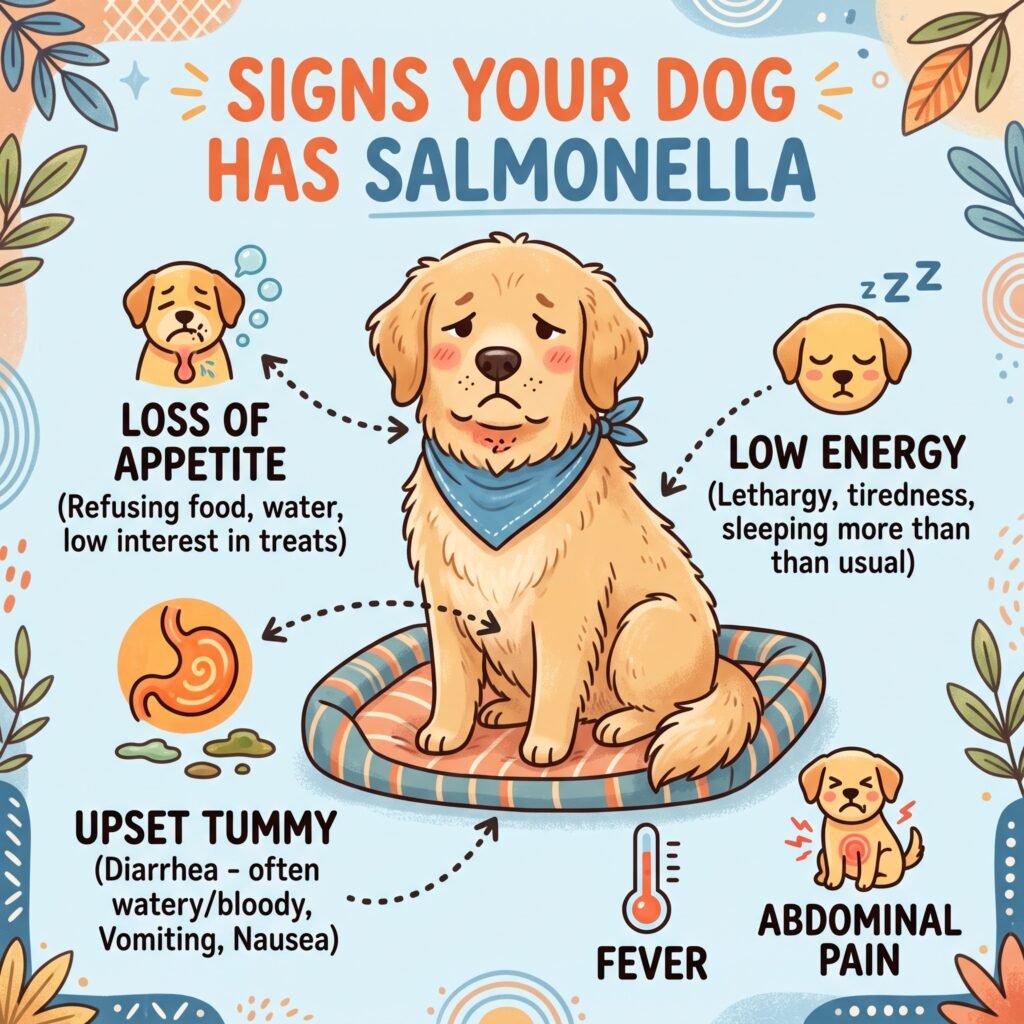
Common Symptoms
- Vomiting
- Diarrhea, sometimes containing blood or mucus
- Fever
- Lethargy or reduced activity
- Loss of appetite
- Abdominal pain or discomfort
- Dehydration
More Severe Warning Signs
- Persistent or worsening vomiting and diarrhea over several days
- Visible blood in stool or vomit
- Significant weakness or collapse
- Signs of dehydration, including dry gums, lethargy, and reduced urination
If your dog has known exposure to a likely source — recently eaten raw chicken, raw eggs, or come into contact with reptiles or contaminated feces — and begins showing any of these symptoms, contacting your veterinarian promptly is the safest course of action.
Which Dogs Are Most at Risk?
Not every dog faces equal risk when exposed to salmonella. Certain groups are considerably more vulnerable to developing actual illness.
Higher-Risk Groups
- Puppies, whose immune systems are still developing
- Senior dogs, who often have naturally weaker immune defenses
- Dogs with existing health conditions that compromise immune function
- Dogs currently on antibiotics, since these medications can disrupt the natural balance of healthy gut bacteria that normally helps resist infection
- Dogs in agricultural or farm settings, due to more frequent exposure to livestock and contaminated environments
If your dog falls into one of these categories, it’s worth being especially cautious about raw chicken, raw eggs, and other known exposure sources, since the answer to can dogs get salmonella carries more practical weight for these higher-risk individuals.
How Veterinarians Diagnose Salmonella in Dogs
If salmonella is suspected, your veterinarian will typically follow a structured diagnostic process rather than guessing based on symptoms alone.
Typical Diagnostic Steps
- Reviewing your dog’s medical history, including any known or suspected exposure to raw meat, eggs, or other risk factors
- Physical examination, checking for signs of dehydration, fever, and abdominal discomfort
- Fecal testing, to identify the presence of salmonella bacteria directly
- Bloodwork, particularly in more severe cases, to assess for systemic infection or organ involvement
- Urinalysis, in some cases, to rule out other contributing factors
This structured approach helps confirm whether salmonella, rather than another cause entirely, is responsible for your dog’s symptoms.
Treatment Options for Salmonella in Dogs
Treatment generally depends on how severe the infection is, ranging from simple supportive care to more intensive intervention.
Common Treatment Approaches
- Fluid therapy, to address dehydration caused by vomiting and diarrhea
- Anti-nausea medication, to help manage vomiting and improve comfort
- A bland, easily digestible diet temporarily, to ease the gastrointestinal tract back toward normal function
- Antibiotics, though these are not always automatically prescribed, since some cases resolve with supportive care alone and unnecessary antibiotic use can contribute to broader resistance concerns
- Hospitalization, in more severe cases involving significant dehydration, sepsis risk, or an inability to keep fluids down
The good news is that, with appropriate veterinary care, the overwhelming majority of dogs diagnosed with salmonella recover fully.
The Human Health Risk Nobody Talks About Enough
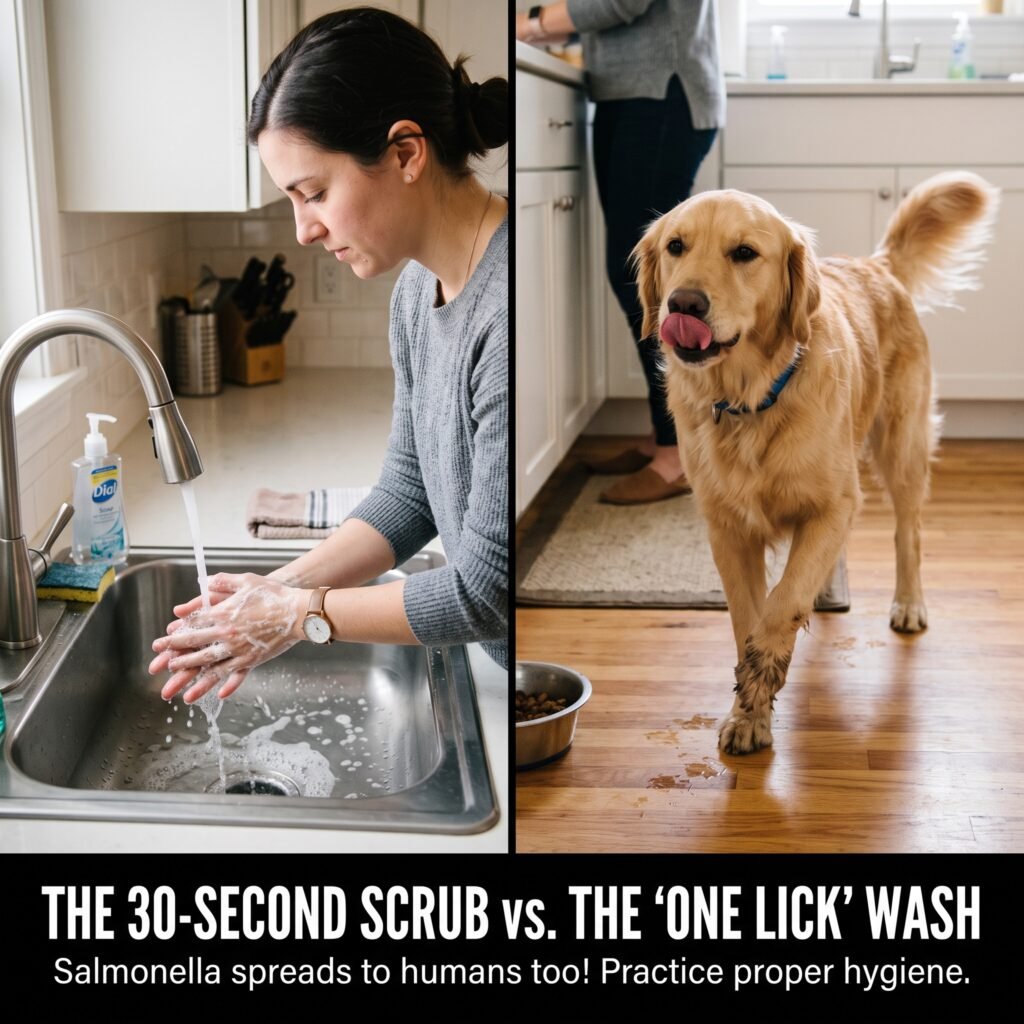
This is genuinely one of the most overlooked aspects of this entire topic, and it deserves real attention: even when dogs themselves show no symptoms at all, they can still carry and shed salmonella bacteria, posing a real risk to the humans in the household.
Why This Matters So Much
- Dogs can shed salmonella in feces and saliva even while appearing completely healthy
- Young children, elderly adults, pregnant women, and immunocompromised individuals face significantly higher risk if exposed
- Simple actions like petting a dog, cleaning up after them, or being licked can potentially transmit bacteria if proper hygiene isn’t maintained
- Cases of children contracting salmonella through contact with dogs or contaminated environments have been documented
This human health angle is exactly why veterinary sources emphasize that the question can dogs get salmonella isn’t just about your dog’s wellbeing — it’s a genuine household and public health consideration, especially in homes with young children or vulnerable family members.
Raw Feeding and Salmonella: What You Need to Know
Given how often this topic intersects with raw feeding philosophies, it’s worth addressing directly and fairly.
The Raw Feeding Reality
Raw diets (sometimes called BARF diets, for “biologically appropriate raw food”) intentionally include raw meat and sometimes raw eggs, which inherently increases exposure to bacteria like salmonella compared to fully cooked commercial diets. This doesn’t mean raw feeding is automatically reckless, but it does mean the responsibility for careful sourcing, handling, and hygiene increases substantially.
If You Choose to Raw Feed Anyway
- Source meat and eggs from reputable suppliers with established food-safety practices
- Practice strict kitchen hygiene, treating raw pet food prep the same way you would raw food prep for your own meals
- Avoid raw feeding for high-risk dogs (puppies, seniors, immunocompromised) without direct veterinary guidance
- Be aware that even with careful practices, can dogs get salmonella from raw chicken and can dogs get salmonella from raw eggs both remain true risks that proper handling reduces but never fully eliminates
How to Reduce Salmonella Risk in Your Home
Whether or not you choose to feed raw, several practical steps meaningfully reduce overall salmonella risk for both your dog and your household.
Practical Prevention Steps
- Cook meat and eggs thoroughly before feeding, which is the single most effective way to eliminate salmonella risk from food sources
- Wash hands thoroughly after handling raw meat, eggs, or cleaning up after your dog
- Clean food prep surfaces and bowls regularly with hot, soapy water
- Store raw ingredients properly, keeping them refrigerated and using them promptly rather than letting them sit out
- Monitor pet food recall lists periodically, since commercial products have occasionally been affected by contamination
- Keep dogs away from reptile habitats and wildlife feces when possible, particularly in homes with reptile pets
- Supervise children closely around pets, reinforcing handwashing after contact with animals
FAQ: Can Dogs Get Salmonella
1. Can dogs get salmonella from eating raw chicken or eggs?
Yes. Can dogs get salmonella from raw chicken and can dogs get salmonella from raw eggs are both confirmed as legitimate transmission routes by veterinary sources, though dogs are generally more resistant to developing illness than humans are.
2. Can dogs get salmonella poisoning and actually get seriously sick?
Yes, though it’s relatively uncommon in healthy adult dogs. Most cases are mild and resolve with supportive care, but severe cases can lead to dehydration, sepsis, and in rare situations, can be fatal without treatment.
3. Can a dog get salmonella from raw chicken that’s been frozen first?
Yes. Freezing slows bacterial growth but does not reliably kill salmonella, so frozen raw chicken can still carry the bacteria even after thawing.
4. If my dog has salmonella but shows no symptoms, can it still spread to people?
Yes, and this is an important point many owners overlook. Dogs can shed salmonella in their feces and saliva even while appearing completely healthy, creating a real transmission risk to household members.
5. How can I tell if my dog has salmonella versus a regular upset stomach?
Symptoms overlap significantly with general gastrointestinal upset, including vomiting, diarrhea, and lethargy. The biggest distinguishing clue is often known or suspected exposure (raw chicken, raw eggs, contaminated treats, or contact with reptiles), which should prompt a veterinary visit and possible fecal testing for confirmation.
6. Are certain dogs more likely to get salmonella poisoning than others?
Yes. Puppies, senior dogs, dogs on antibiotics, and dogs with weakened immune systems are all considered higher risk for developing clinical illness if exposed.
7. Does cooking food completely eliminate the salmonella risk for dogs?
Yes. Thoroughly cooking meat and eggs effectively destroys salmonella bacteria, making this the most reliable way to eliminate this specific risk if you’d rather avoid raw feeding altogether.
Conclusion
So, can dogs get salmonella? Without question, yes — but understanding the full picture matters more than the simple yes-or-no answer alone. Dogs are biologically more resistant to salmonella than humans, thanks to their more acidic digestive systems and shorter digestive tracts, which is why can dogs get salmonella poisoning in a serious, symptomatic sense is relatively uncommon, even though exposure itself happens fairly often.
Here’s what to remember:
- Can dogs get salmonella from raw chicken? Yes, raw chicken is one of the most common exposure sources for dogs.
- Can a dog get salmonella from raw chicken regardless of freshness? Largely yes — freshness reduces but doesn’t eliminate risk, and freezing doesn’t reliably kill the bacteria either.
- Can dogs get salmonella from raw eggs? Yes, both the egg contents and shell can carry the bacteria, particularly from non-commercial sources.
- Even symptom-free dogs can shed salmonella, posing a genuine risk to people in the household, especially children, elderly family members, and anyone immunocompromised.
- Thorough cooking and proper hygiene remain the most reliable ways to reduce risk, whether or not you choose to incorporate raw feeding into your dog’s diet.
If you’re considering raw feeding, or simply want to handle everyday foods like chicken and eggs more safely, the smartest approach is pairing good kitchen hygiene with awareness of your dog’s individual risk factors — and reaching out to your veterinarian promptly if symptoms ever appear after a known exposure.
If this guide was helpful, check out our companion article on the safest ways to introduce raw food into your dog’s diet, or our deeper breakdown of common foodborne illnesses that affect both pets and people in the same household.