
Dog With Happy Tail: Causes, Treatment, and How to Wrap It Properly
A wagging tail usually means one thing: your dog is thrilled to see you. But for some dogs, that same burst of joy can turn into a real injury.
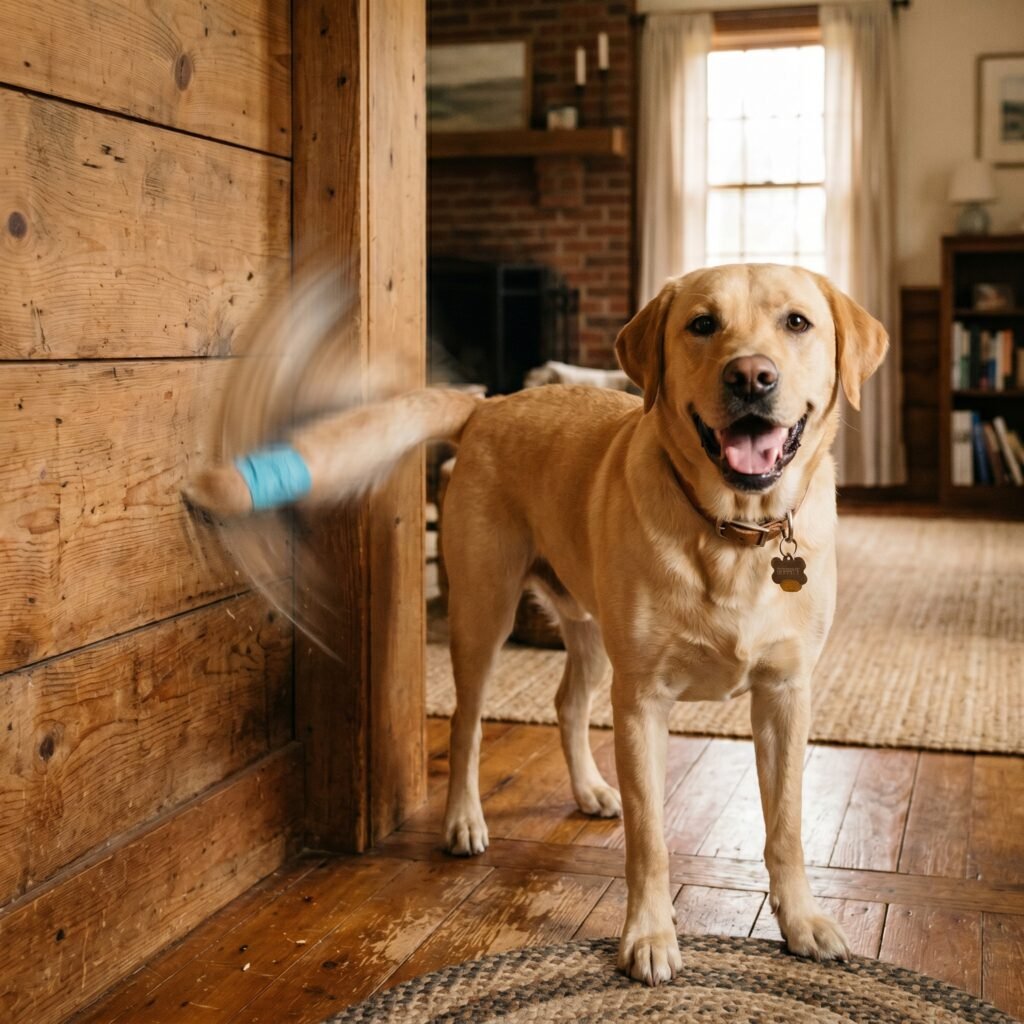
If you’ve noticed small drops of blood on your walls, furniture, or floor right around the time your dog gets excited, you may be dealing with a dog with happy tail — a surprisingly common but often misunderstood condition that affects dogs with strong, powerful tails.
Despite the cheerful-sounding name, happy tail syndrome is a genuine medical issue, not just a quirky behavior. It happens when a dog wags its tail so forcefully and repeatedly against hard surfaces — walls, furniture, crate bars, doorframes — that the skin at the tip splits open. And because the very thing causing the injury (excited wagging) tends to continue even after the wound appears, this condition has a frustrating habit of getting worse before it gets better.
In this guide, we’ll explain exactly what causes happy tail syndrome in happy tail dogs, which breeds are most at risk, how to treat and wrap an injured tail properly, and how to prevent it from becoming a recurring problem. We’ll also clear up a common point of confusion: the popular idiom “as happy as a dog with two tails,” which describes pure joy and has nothing to do with this medical condition — but shows up in searches alongside it often enough to be worth addressing directly.
Table of Contents
- What Is Happy Tail Syndrome?
- Why Does This Happen to Some Dogs and Not Others?
- Breeds Most Prone to Happy Tail Injuries
- Signs Your Dog Has Happy Tail
- Why Happy Tail Is So Hard to Heal
- How to Wrap a Dog With Happy Tail
- Veterinary Treatment Options
- When Tail Amputation Becomes Necessary
- At-Home Care and First Aid Steps
- How to Prevent Happy Tail From Happening Again
- Environmental Changes That Actually Help
- Recovery Timeline: What to Expect
- “As Happy as a Dog With Two Tails”: The Idiom Explained
- FAQ: Dog With Happy Tail
- Conclusion
What Is Happy Tail Syndrome?
Happy tail syndrome — sometimes called “kennel tail,” “bleeding tail syndrome,” or simply “happy tail” — occurs when a dog wags its tail with enough force and frequency to repeatedly strike a hard surface, eventually splitting the thin skin at the tip of the tail. The thin skin at the tail tip is particularly vulnerable, and repeated impact against hard surfaces can cause the skin to split open, resulting in cuts or hematomas.
The injury itself isn’t caused by a single hard hit. It’s almost always the result of repetitive trauma — the same small area being struck over and over during enthusiastic wagging sessions, gradually wearing down the skin until it breaks open.
This is exactly why a dog with happy tail often seems to get hurt “for no reason.” There’s no single dramatic accident to point to. Instead, the dog has simply been wagging joyfully against a wall, crate, or piece of furniture dozens of times a day, and the cumulative impact finally caused a wound.
Why the Name Sounds So Misleading
The condition is named after its trigger — happiness and excitement — not its severity. Many new dog owners are caught off guard the first time they see blood without realizing their dog is actually in a good mood, not distress, when the injury occurs. The wagging itself isn’t the problem; it’s the surface the tail keeps hitting.
Why Does This Happen to Some Dogs and Not Others?
Not every dog develops happy tail, even among breeds with long, strong tails. A few physical factors make some dogs significantly more prone to this injury than others:
- Tail length and stiffness — longer, straighter tails generate more force and cover more swing radius
- Thin fur coverage on the tail — less natural padding means less protection for the skin underneath
- High energy or excitable temperament — dogs that wag vigorously and frequently are at greater risk simply due to repetition
- Living environment — dogs in smaller spaces, crates, or kennels are more likely to repeatedly strike hard surfaces
- Muscle strength in the tail — some breeds have powerful tail muscles capable of generating substantial impact force
Smaller dogs are less commonly affected, since they typically can’t generate enough force with their tails to cause this type of injury, while dogs with thicker fur and more muscular tails sometimes have a bit of natural protection from the padding effect.
Breeds Most Prone to Happy Tail Injuries
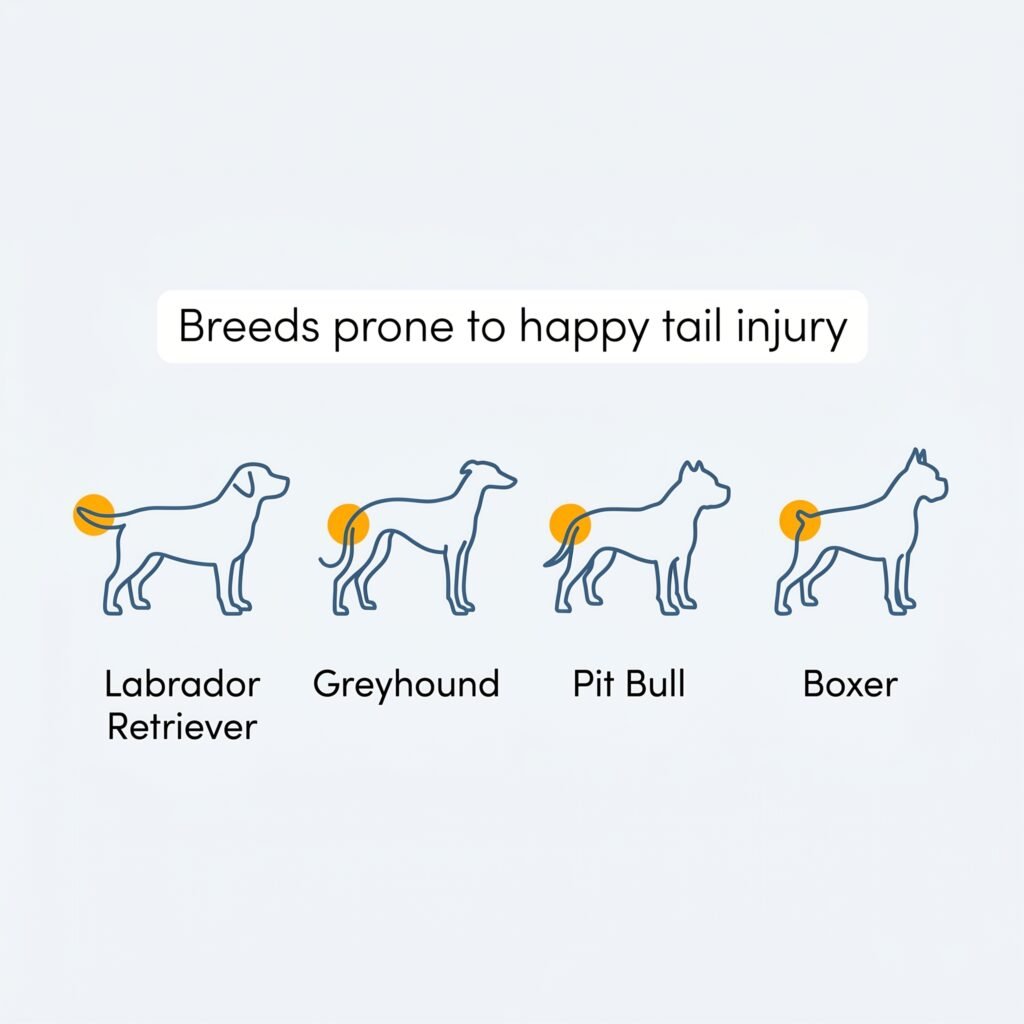
While any dog with a tail can technically develop happy tail syndrome, certain breeds show up far more often in veterinary case reports and clinical experience. Among happy tail dogs, this condition tends to occur most frequently in larger breeds with strong, muscular tails, with Labradors and Great Danes commonly cited as examples.
Breeds Commonly Affected
- Labrador Retrievers
- Great Danes
- Greyhounds
- Boxers
- Pit Bulls and Pit Bull mixes
- American Bulldogs
- Doberman Pinschers
These breeds tend to combine the exact risk factors mentioned earlier: long or thin-coated tails, strong muscle tone, and often high-energy, exuberant temperaments that translate into frequent, forceful wagging.
If you own one of these breeds, it’s worth being proactive about prevention rather than waiting for an injury to occur, especially if your dog already wags enthusiastically in tight spaces like hallways, crates, or near furniture corners.
Signs Your Dog Has Happy Tail
Happy tail injuries can sometimes go unnoticed for a while, especially in dogs with thicker fur covering the tail tip. Here’s what to watch for.
Early Warning Signs
- Small spots of blood on walls, floors, or furniture near where your dog frequently wags
- Hair loss or thinning specifically at the tip of the tail
- A cracked, scabbed, or rough texture at the very end of the tail
More Advanced Signs
- Active bleeding from the tail tip, often appearing in small drops or smears rather than a steady flow
- Visible open wounds or sores at the tip
- Swelling or sensitivity when the tail is touched
- Your dog continuing to wag normally despite the injury, since most dogs continue behaving completely normally otherwise — eating, drinking, and going about their usual routine, which is part of why owners often don’t notice the wound right away
Why Owners Often Miss It Initially
Because the dog typically isn’t limping, whimpering, or showing obvious signs of pain, many owners only discover the injury after spotting blood and then searching their dog for the source. The combination of normal behavior and a hidden, easy-to-miss wound location makes this one of the more commonly overlooked tail-related injuries in dogs.
Why Happy Tail Is So Hard to Heal
If you’ve already dealt with a happy tail injury, you already know this part: it’s genuinely one of the more frustrating wounds to treat, and there’s a clear biological reason why.
The core problem is motion. Most wounds heal faster when kept still and protected, but a dog’s tail is in near-constant motion, especially in dogs prone to this condition in the first place — the same enthusiastic wagging that caused the injury keeps disrupting the healing process.
Why Bandages Struggle to Stay On
Tail bandages face a uniquely difficult job. The tail’s shape (narrow, tapering, and constantly moving) combined with a dog’s instinct to wag when happy means that even a well-applied bandage often doesn’t last. Veterinary professionals widely acknowledge this challenge, since the wagging motion alone is frequently enough to dislodge dressings that would otherwise stay secure on a more stationary part of the body.
This creates a frustrating cycle: the wound needs to be protected to heal, but the protection keeps falling off, exposing the wound to further trauma, dirt, and bacteria — which is exactly why recurring happy tail injuries are so common without proper intervention.
How to Wrap a Dog With Happy Tail
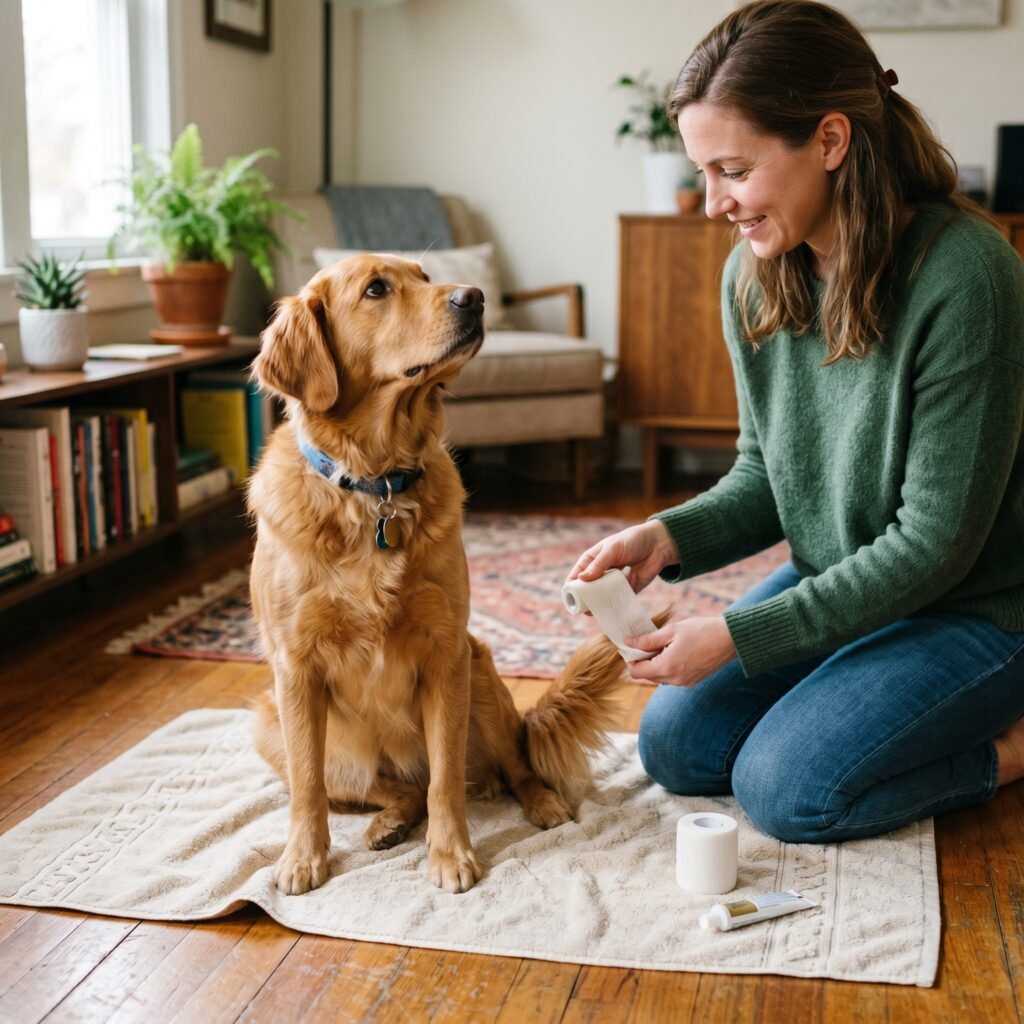
If you’re trying to figure out how to wrap a dog with happy tail at home — whether as a temporary first-aid measure before a vet visit, or as part of an ongoing care routine your vet has guided you through — here’s a general step-by-step approach. Always treat this as general guidance, not a replacement for professional veterinary care, especially for deeper or actively bleeding wounds.
Step-by-Step Wrapping Process
- Clean the wound first. Gently rinse the area with saline solution or a vet-approved wound cleanser to remove dirt and debris before covering it.
- Apply a thin layer of pet-safe antiseptic ointment, if recommended by your veterinarian, to reduce infection risk.
- Use a non-stick wound pad directly over the injury to prevent the bandage from sticking to the wound itself.
- Wrap gently but securely with self-adhesive vet wrap, working from the tip of the tail upward, overlapping each layer slightly.
- Avoid wrapping too tightly — you should be able to fit a finger comfortably under the bandage to ensure healthy circulation.
- Reinforce the end of the wrap with soft tape, checking that it isn’t restricting blood flow to the tail tip.
Creative Wrapping Alternatives
Because traditional bandages fall off so easily, several alternative methods have become popular among long-term happy tail sufferers and their owners:
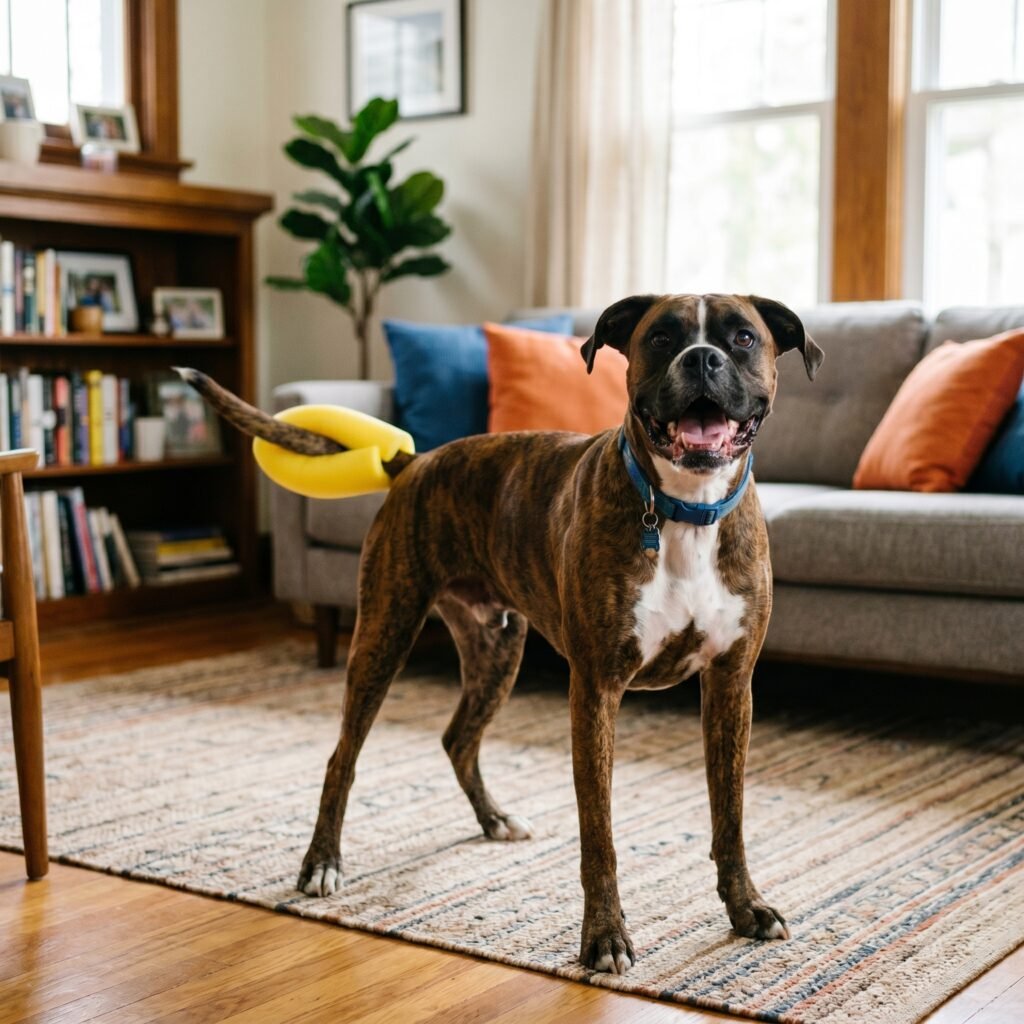
- A padded foam tube or pipe insulation sleeve slipped over the tail and secured gently
- A sling-style tail support that holds the tail in a more stable position
- Soft, padded fabric sleeves designed specifically for tail protection, available through pet supply retailers
One inventive approach some veterinarians have shared involves repurposing children’s pajama bottoms, threading the tail down one leg of the fabric and securing it gently at the body with soft fastenings — a low-cost, breathable alternative to traditional bandaging for dogs who struggle to keep standard wraps in place.
Important Safety Notes
- Check the wrap multiple times daily for swelling, discoloration, or signs the bandage has slipped
- Never use tight tape or rubber bands directly on the tail, as this can cut off circulation
- If the wrap repeatedly falls off or the wound isn’t improving within a few days, schedule a veterinary appointment rather than continuing to manage it alone
Veterinary Treatment Options
When a happy tail injury doesn’t resolve with simple at-home wrapping, or when it’s moderate to severe from the start, veterinary treatment becomes the appropriate next step.
Common Veterinary Treatments
- Wound cleaning and assessment — a thorough cleaning to check for infection and tissue damage
- Professional bandaging — applied with techniques designed to better withstand tail movement
- Pain relief and anti-inflammatory medication — to keep your dog comfortable and reduce swelling
- Antibiotics — prescribed if infection is present or at high risk
- Sedatives — sometimes used short-term to reduce wagging intensity while the wound heals
- Sutures — used for deeper wounds, though stitching tail tissue can be technically difficult
- Laser therapy — offered by some veterinary clinics to promote blood flow and accelerate healing
Veterinarians may also run routine bloodwork to rule out underlying issues like anemia or clotting problems if the bleeding seems unusually persistent or severe.
Why Sedation Is Sometimes Recommended
It might sound surprising, but mild sedation is a legitimate and fairly common treatment approach for recurring happy tail cases. By calming a dog’s overall energy and excitement level temporarily, sedation reduces the intensity of wagging long enough for the wound to begin healing — directly addressing the underlying cause of re-injury rather than just treating the symptom.
When Tail Amputation Becomes Necessary
In persistent or severe cases, partial tail amputation may be recommended as a long-term solution. This isn’t typically a first-line treatment, but rather an option considered after more conservative approaches haven’t resolved a chronic, recurring injury.
When Amputation Is Typically Considered
- The injury keeps recurring despite multiple rounds of bandaging and care
- The wound has caused significant tissue damage over time
- The location and motion of the tail make healing virtually impossible without removing the affected portion
- Chronic infection risk has become a recurring concern
While the idea of amputation can sound alarming to pet owners, most dogs adapt extremely well afterward. The procedure typically removes only the affected portion of the tail, and dogs generally resume normal behavior, including wagging, with minimal long-term impact on quality of life.
At-Home Care and First Aid Steps
If you notice fresh bleeding from your dog’s tail and can’t get to a vet immediately, here’s how to manage the situation safely in the short term.
Immediate First Aid Steps
- Stay calm — your dog will pick up on your energy, and a calm approach makes wrapping and handling easier
- Gently clean the wound with saline solution, removing visible dirt or debris
- Apply light pressure with a clean cloth if actively bleeding, to help slow blood flow
- Apply a temporary protective wrap, following the wrapping steps outlined earlier
- Restrict your dog’s movement and excitement level as much as possible until you can see a veterinarian
- Monitor closely for any signs the wrap is too tight, slipping, or the wound is worsening
When to Seek Emergency Veterinary Care
- Bleeding that won’t stop after several minutes of gentle pressure
- Visible signs of significant tissue damage
- Excessive pain or distress in your dog
- Signs of infection, including swelling, discharge, or a foul odor from the wound
How to Prevent Happy Tail From Happening Again
Once a dog has experienced happy tail syndrome, they’re often prone to recurrence — which makes prevention an essential, ongoing part of life for happy tail dogs and their owners.
Practical Prevention Strategies
- Add soft padding to crate walls, kennel bars, and tight hallway corners
- Rearrange furniture to create more open space in areas where your dog frequently gets excited
- Use furniture corner guards in high-traffic greeting areas, like near the front door
- Encourage calmer greetings through gradual training, reducing excessive excitement-driven movement
- Keep your dog’s nails and tail fur trimmed, which can sometimes reduce friction-related irritation
- Provide more open exercise space for dogs with consistently high energy levels, reducing pent-up excitement that often translates into more intense wagging indoors
Environmental Changes That Actually Help
Beyond general prevention tips, a few specific environmental adjustments tend to make a meaningful, measurable difference for dogs prone to repeated happy tail injuries.
High-Impact Environmental Fixes
- Padded crate liners specifically along the back and side walls
- Wider walking paths through narrow hallways, removing obstacles your dog’s tail might repeatedly strike
- Soft-sided furniture placement, positioning couches and chairs away from your dog’s typical greeting and excitement zones
- Designated “calm down” spaces where your dog can settle after high-excitement moments, like guests arriving
These changes won’t eliminate excitement-driven wagging altogether — and you wouldn’t want to, since a wagging tail is simply a sign of a happy dog — but they significantly reduce the chances of that wagging translating into repeated physical trauma.
Recovery Timeline: What to Expect
Recovery time varies significantly based on injury severity, how well the wound is protected during healing, and whether the dog continues to re-injure the area.
General Recovery Expectations
- Mild cases: A few weeks of consistent wrapping and wound care, assuming the dog avoids further trauma
- Moderate cases: Several weeks to a couple of months, especially if sedation or repeated bandage changes are needed
- Chronic or severe cases: Ongoing management or eventual partial amputation if the injury repeatedly fails to heal
Healing typically takes a few weeks to a few months, and recovery time extends significantly if the dog continues to re-injure the tail during the healing process. This is precisely why limiting tail movement and protecting the wound consistently — even when it feels inconvenient — makes such a meaningful difference in overall recovery speed.
“As Happy as a Dog With Two Tails”: The Idiom Explained
If you’ve landed here while searching the phrase “as happy as a dog with two tails,” it’s worth clarifying that this expression has nothing to do with the medical condition discussed throughout this guide.
This idiom is simply a colorful, exaggerated way of describing someone who is extremely happy or excited — imagining a dog so overjoyed that one wagging tail wouldn’t be enough to express it, so it would need two. It’s commonly used in casual conversation, particularly in British and Irish English, to describe enthusiastic happiness in a person or situation, completely unrelated to any tail injury or veterinary condition.
So if you came here wondering whether “two tails” relates to happy tail syndrome, rest assured — it doesn’t. One is a lighthearted expression about joy; the other is a real, sometimes painful condition that benefits from proper understanding, prevention, and care, as outlined throughout this guide.
FAQ: Dog With Happy Tail
1. What exactly is happy tail syndrome in dogs?
Happy tail syndrome occurs when a dog wags its tail forcefully and repeatedly against hard surfaces, eventually causing the thin skin at the tail tip to split open. It’s most common in larger breeds with long, strong, thin-coated tails.
2. How do I wrap a dog with happy tail at home?
Clean the wound gently with saline, apply a non-stick pad directly over the injury, then wrap snugly but not tightly with self-adhesive vet wrap, working from the tip upward. Always have a veterinarian assess the wound first if it’s bleeding significantly or hasn’t improved within a few days.
3. Why does my dog’s happy tail keep reopening?
Happy tail injuries reopen because the tail rarely stays still, especially in dogs with energetic, wag-prone temperaments. The same enthusiastic wagging that caused the original injury tends to continue, repeatedly disrupting the healing process unless movement is actively limited.
4. Which dog breeds are most likely to develop happy tail?
Breeds with long, strong, thin-furred tails — including Labrador Retrievers, Great Danes, Greyhounds, Boxers, Pit Bulls, and Doberman Pinschers — are most commonly affected, largely due to tail strength and frequent, vigorous wagging.
5. Does a dog with happy tail need to see a vet?
In mild cases, careful at-home wound care may be sufficient, but veterinary evaluation is strongly recommended, especially for active bleeding, signs of infection, or injuries that keep recurring despite home treatment.
6. Can happy tail syndrome be prevented?
Yes, to a significant degree. Padding crate walls, rearranging furniture in high-traffic excitement zones, and giving your dog more open space to express energy can all reduce the frequency and severity of happy tail injuries.
7. Does “as happy as a dog with two tails” relate to happy tail syndrome?
No. This is simply a popular idiom describing extreme happiness or excitement and has no connection to the actual medical condition affecting a dog’s tail.
Conclusion
A dog with happy tail is dealing with more than just a minor scrape — it’s a genuinely tricky injury caused by the very thing that makes dogs so lovable: their enthusiastic, joyful wagging. Understanding why this condition happens, recognizing the early signs, and knowing how to wrap and care for the injury properly can make a real difference in how quickly and completely your dog recovers.
Key takeaways to remember:
- Happy tail syndrome results from repeated trauma to the tail tip against hard surfaces, not a single dramatic injury
- Larger, strong-tailed breeds like Labradors, Great Danes, and Greyhounds are most commonly affected
- Healing is uniquely difficult because the tail rarely stays still long enough to recover naturally
- Proper wrapping technique, combined with environmental prevention strategies, offers the best chance at full recovery without recurrence
- Severe or chronic cases may eventually require veterinary intervention up to and including partial tail amputation
- “As happy as a dog with two tails” is an unrelated idiom about joy, not a reference to this medical condition
If your dog has experienced happy tail before, staying proactive with padding, environmental adjustments, and early wound care is your best defense against it happening again. And if you’re navigating this for the first time, don’t panic — with the right care and a little patience, most dogs recover fully and go right back to wagging just as happily as before.
If you found this guide helpful, check out our companion article on first-aid essentials every dog owner should have at home, or our deeper breakdown of common skin and wound issues in active, high-energy dog breeds.