
Do Labs Shed? The Complete Guide to Labrador Shedding
If you've ever owned a Labrador or spent time around one, you already know the truth before you even ask: do Labs shed? Yes, and often more than people expect.

That said, the real answer is more nuanced than a simple yes or no, and understanding exactly how, when, and why Labradors shed can make a huge difference in how prepared you feel before bringing one home — or how much easier daily life becomes if you already have one.
Labradors are consistently one of the most popular dog breeds in the world, prized for their friendly temperament, intelligence, and versatility as family pets, service dogs, and hunting companions. But that popularity comes with a tradeoff that every prospective owner deserves to know upfront: Labs are heavy, consistent shedders with a coat built for function, not low maintenance.
In this guide, we’ll break down exactly how much Labs shed, whether coat color makes a difference, what causes shedding to spike, and — most importantly — practical strategies to manage it so your home, car, and wardrobe survive the experience. Whether you’re researching before adoption or already living with a fur-covered couch, this guide has you covered.
Table of Contents
- Do Labs Shed? The Short Answer
- Why Labradors Shed So Much
- Do Labs Shed a Lot Compared to Other Breeds?
- Understanding the Double Coat
- Seasonal Shedding: What to Expect Throughout the Year
- Do Black Labs Shed Differently Than Other Colors?
- Do Chocolate Labs Shed More or Less?
- Do Lab Dogs Shed at Every Life Stage?
- Health-Related Causes of Excessive Shedding
- How to Manage Labrador Shedding at Home
- Best Grooming Tools for Lab Owners
- Diet and Its Role in Coat Health
- Living With a Shedding Lab: Realistic Expectations
- Are Labradors a Good Fit for Allergy Sufferers?
- FAQ: Do Labs Shed?
- Conclusion
Do Labs Shed? The Short Answer
Yes — Labradors shed consistently throughout the year, with two heavier seasonal shedding periods in spring and fall. This isn’t a defect or a sign of poor health; it’s simply how their coat is biologically designed to function.
If you’re specifically wondering, “do Labs shed a lot,” the honest answer is yes, relative to many other popular breeds. Labs are considered moderate-to-heavy shedders, and most owners describe finding loose hair on furniture, clothing, and floors as a near-daily reality rather than an occasional inconvenience.
This doesn’t mean Labradors are a poor choice as pets — far from it. It simply means shedding should be factored into your decision the same way you’d factor in exercise needs or training requirements.
Why Labradors Shed So Much
To understand Labrador shedding, it helps to understand what the breed was originally built for. Labradors were developed as working retrievers, originally used to retrieve waterfowl in cold conditions, often swimming through frigid water for extended periods.
This working history directly explains their shedding tendency:
- Double coat structure — designed for insulation and water resistance
- Dense undercoat — traps warm air close to the skin
- Coarser outer coat — repels water and protects against cold temperatures
Dogs bred for outdoor, weather-exposed work almost universally have coats designed to regulate temperature efficiently — and that biological efficiency comes with a shedding tradeoff. The coat is constantly cycling through growth and shedding phases to adjust to seasonal temperature changes, which is exactly why do lab dogs shed is one of the most searched questions among prospective owners.
Do Labs Shed a Lot Compared to Other Breeds?
Context matters here. Compared to low-shedding or hypoallergenic-style breeds like Poodles or Bichon Frises, Labradors shed significantly more. Compared to extremely heavy-shedding breeds like Huskies or Saint Bernards, Labs are somewhere in the middle — heavy, but not the absolute top of the shedding spectrum.
Shedding Level Comparison
| Breed Category | Shedding Level | Example Breeds |
|---|---|---|
| Minimal shedding | Low | Poodle, Bichon Frise |
| Moderate shedding | Medium | Beagle, Cocker Spaniel |
| Heavy shedding | High | Labrador Retriever, Golden Retriever |
| Extreme shedding | Very High | Siberian Husky, Saint Bernard |
So while do Labs shed a lot is a fair concern, it’s also worth knowing that several other extremely popular family breeds shed just as much or more. Labradors aren’t unusually high-maintenance in this category — they’re simply firmly within the “heavy shedder” bracket rather than the low-shedding one some buyers mistakenly expect from a short-haired breed.
Understanding the Double Coat
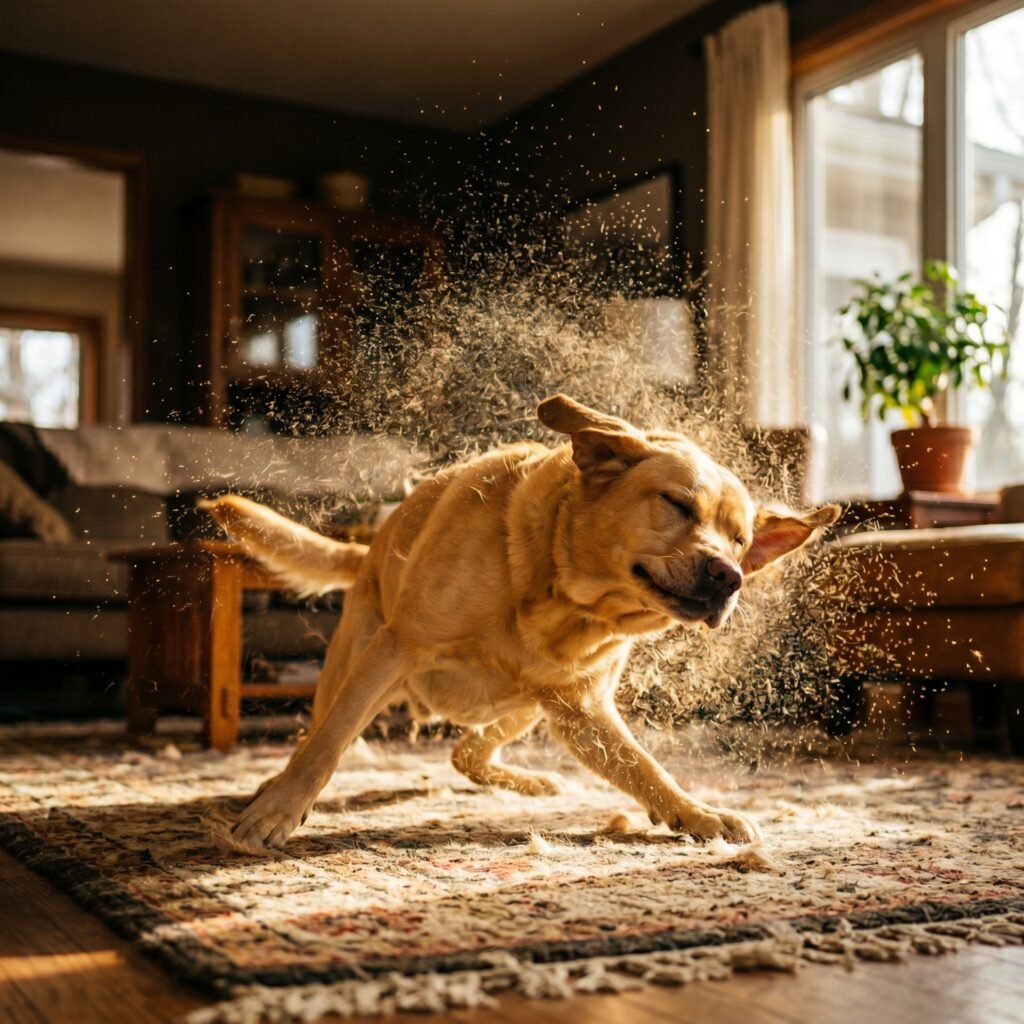
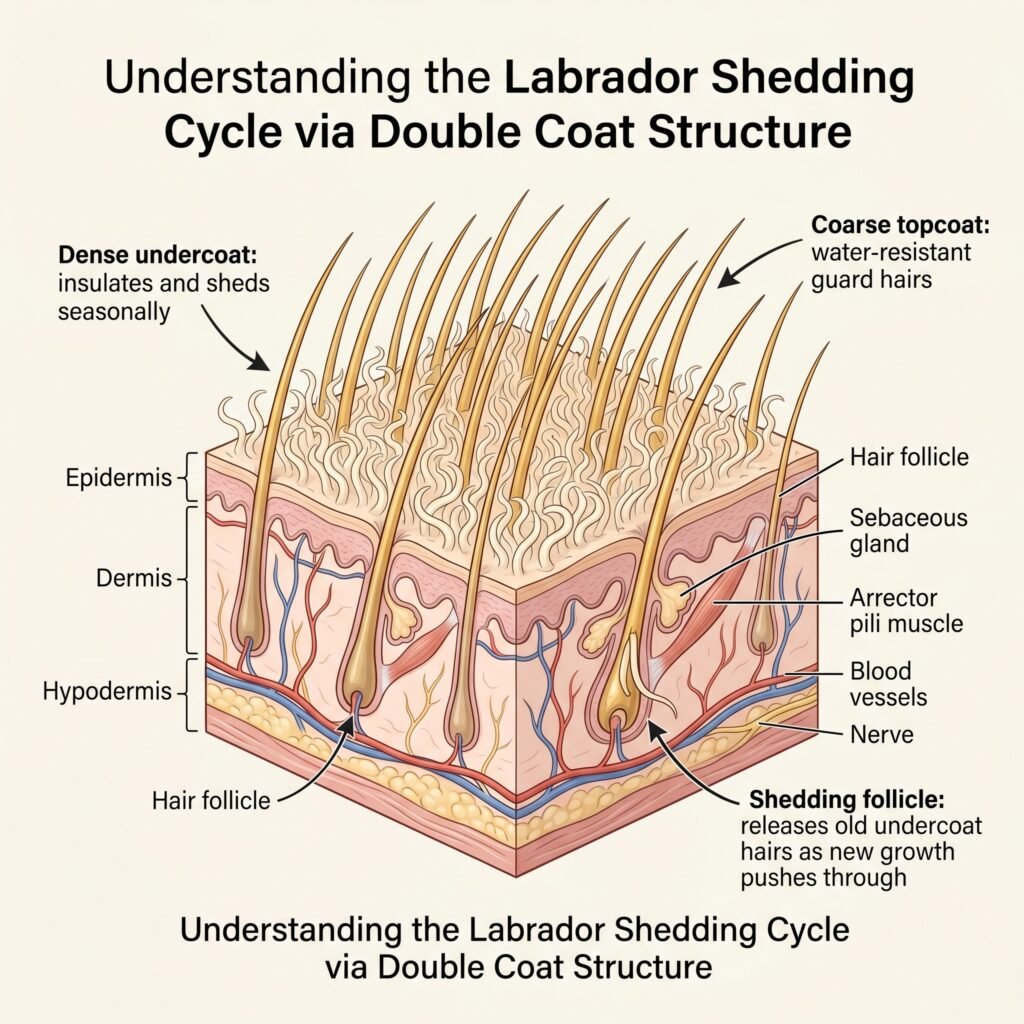
One of the most common misconceptions is that short hair automatically means less shedding. Labradors have short hair, but it’s deceiving — they carry a true double coat, and that structure is the real driver behind their shedding volume.
The Two Coat Layers
- Outer coat (guard hairs): Short, straight, coarse, and water-resistant
- Undercoat: Soft, dense, and insulating, shed more heavily during seasonal transitions
The undercoat is doing most of the shedding work. It grows in thickly during cooler months for insulation, then sheds out heavily as temperatures rise, replaced by a lighter summer coat. This cycle repeats every year, which is why shedding noticeably spikes during specific seasons rather than staying perfectly consistent year-round.
Seasonal Shedding: What to Expect Throughout the Year
If you’re trying to plan around shedding rather than be surprised by it, understanding the seasonal pattern helps enormously.
Spring Shedding (“Blowing the Coat”)
As temperatures rise, Labs shed out their thick winter undercoat to prepare for warmer weather. This is typically the heaviest shedding period of the year, and many owners describe it as feeling like the dog is “exploding” with fur for several weeks.
Summer
Shedding generally settles into a lighter, steadier baseline once the seasonal coat blow is complete.
Fall Shedding
As temperatures drop again, Labs shed their lighter summer coat to grow in a denser winter undercoat — creating a second, though often slightly less dramatic, shedding spike.
Winter
Shedding typically reaches its lowest point, though it never fully stops, even in colder months.
Indoor Dogs and Shedding Patterns
It’s worth noting that Labradors living primarily indoors with consistent climate control sometimes shed more evenly year-round rather than showing dramatic seasonal spikes, since their bodies don’t experience the same outdoor temperature shifts that trigger sharp seasonal coat changes.
Do Black Labs Shed Differently Than Other Colors?
This is a common question, and the answer is refreshingly simple: do black Labs shed the same way as other Labrador colors? Yes — coat color has no meaningful effect on shedding volume, frequency, or coat structure.
Black, yellow, and chocolate Labradors all share the same genetic coat type: a double coat with identical structure and shedding cycles. The only real difference color makes is visibility — black hair tends to show up more obviously on light-colored furniture, clothing, and carpets, which can make shedding feel more noticeable even though the actual volume is comparable across colors.
Why Black Lab Shedding Feels More Noticeable
- High contrast against light surfaces (couches, light clothing, car interiors)
- Often more visible on light flooring or carpets
- Can appear more “dramatic” in good lighting due to color contrast
So if you’re comparing notes with a friend who owns a yellow Lab and feels like your black Lab sheds more, it’s very likely a visibility effect rather than an actual biological difference.
Do Chocolate Labs Shed More or Less?
Just like their black and yellow counterparts, the answer to “do chocolate Labs shed” follows the same pattern: no significant difference in shedding volume based on coat color alone.
Chocolate Labradors share the identical double-coat genetics as black and yellow Labs. Coat color in Labradors is determined by separate genes that affect pigment, not coat density, texture, or shedding cycle.
What Might Feel Different With Chocolate Labs
- Some owners report chocolate-coated hair blends in more easily with certain furniture or flooring tones, making it slightly less visually obvious
- Coat color can sometimes correlate (anecdotally, not definitively) with certain skin and coat sensitivities in specific Labrador lines, though this varies by individual dog and breeding line rather than color itself
The bottom line: whether you have a black, yellow, or chocolate Lab, you should expect essentially the same shedding experience. Color is a cosmetic trait, not a coat-performance trait.
Do Lab Dogs Shed at Every Life Stage?
Shedding patterns shift somewhat as a Labrador ages, and understanding these stages helps set realistic expectations.
Puppies (0–6 months)
Puppy coats are softer and shed less dramatically than adult coats, though some light shedding does occur.
Adolescents (6–12 months)
This is when puppies typically go through their first major coat transition, shedding out the soft puppy coat in favor of the denser adult double coat. This phase can feel surprisingly heavy compared to the relatively low-shedding puppy months.
Adults (1–7 years)
This is when the classic seasonal shedding pattern fully establishes itself, with the heaviest shedding occurring during spring and fall transitions.
Senior Labs (8+ years)
Coat texture often becomes slightly coarser or thinner with age, and shedding patterns can become less predictable, sometimes accompanied by reduced coat shine — a normal part of aging, though significant changes are worth mentioning to your veterinarian.

Health-Related Causes of Excessive Shedding
While shedding itself is completely normal for Labradors, a sudden or dramatic increase outside of normal seasonal patterns can sometimes signal an underlying issue worth investigating.
Potential Causes of Abnormal Shedding
- Poor nutrition — inadequate protein or essential fatty acids can affect coat health
- Allergies — environmental or food-related allergies can trigger excessive shedding and skin irritation
- Parasites — fleas, mites, or other external parasites can cause hair loss and shedding
- Stress or anxiety — significant life changes or stress can sometimes trigger temporary excessive shedding
- Hormonal imbalances — thyroid issues, in particular, are known to affect coat condition in dogs
- Skin infections — bacterial or fungal infections can cause patchy hair loss alongside shedding
If you notice bald patches, excessive scratching, redness, or shedding that seems disproportionate to the season, it’s worth scheduling a veterinary visit rather than assuming it’s “just normal Lab shedding.” A vet can rule out underlying medical causes and recommend appropriate treatment if needed.
How to Manage Labrador Shedding at Home
While you can’t stop shedding entirely, you absolutely can manage it effectively with the right routine. Most experienced Lab owners build shedding management into their regular household rhythm rather than treating it as a constant battle.
Practical Shedding Management Strategies
- Brush several times per week — more frequently during seasonal coat blows
- Use a deshedding tool, not just a standard brush, to reach the dense undercoat
- Bathe regularly (every 4–6 weeks) to help loosen and remove dead undercoat hair
- Vacuum frequently with a pet-specific vacuum designed to handle embedded pet hair
- Use washable furniture covers in heavily used areas like couches and car seats
- Keep a lint roller or pet hair remover easily accessible near doors and in vehicles
Brushing Frequency by Season
- Spring/Fall (heavy shedding): 4–5 times per week
- Summer/Winter (lighter shedding): 2–3 times per week
Consistent brushing is genuinely one of the most effective tools available — it physically removes loose undercoat hair before it ends up on your floors and furniture, rather than letting it shed out naturally throughout the house.
Best Grooming Tools for Lab Owners
Not all brushes are created equal when it comes to managing a double coat. Here are the tool categories that tend to work best:
- Undercoat rake — designed specifically to reach through the topcoat and remove loose undercoat hair
- Slicker brush — useful for general maintenance and smoothing the topcoat
- Deshedding tool (e.g., grooming blade-style tools) — designed to remove loose undercoat without damaging the topcoat
- Rubber curry brush — great for bath time, helping loosen dead hair while massaging the skin
- High-velocity dryer — used by many groomers to blow out loose undercoat hair after bathing
Investing in one or two quality tools designed specifically for double-coated breeds will outperform a generic brush every time, especially during peak seasonal shedding periods.
Diet and Its Role in Coat Health
Nutrition plays a meaningful role in how healthy — and how manageable — your Lab’s coat is. A poor diet won’t stop normal shedding, but it can contribute to a duller coat, increased breakage, and in some cases, excessive or abnormal hair loss.
Coat-Supporting Nutrients to Look For
- High-quality animal protein as a primary ingredient
- Omega-3 and Omega-6 fatty acids, often from fish oil or flaxseed, to support skin and coat health
- Zinc and biotin, which contribute to healthy skin and hair follicle function
- Balanced overall nutrition, since deficiencies anywhere in the diet can eventually show up in coat quality
If you’re noticing an unusually dull or brittle coat alongside heavy shedding, it may be worth reviewing your current food’s ingredient quality or discussing a coat-support supplement with your veterinarian.
Living With a Shedding Lab: Realistic Expectations
Choosing to bring a Labrador into your home means accepting shedding as part of the package — but most long-term Lab owners will tell you the tradeoff is well worth it. Here’s a realistic picture of day-to-day life:
- Dark clothing becomes less practical for daily wear around the house
- A good vacuum becomes a non-negotiable household tool
- Car interiors accumulate hair quickly, especially with frequent trips
- Furniture covers or designated “dog zones” on couches become common household adaptations
- Shedding becomes background noise — most owners stop noticing it as a daily annoyance after the first several months
The dogs’ loyal, affectionate, easygoing temperament is precisely why so many owners happily accept the shedding tradeoff. For most families, a slightly hairier home is a small price for one of the most reliably good-natured breeds available.
Are Labradors a Good Fit for Allergy Sufferers?
This is an important consideration for many prospective owners. Labradors are not considered a hypoallergenic breed, and their heavy shedding can be a genuine concern for people with dog allergies.
What to Know If You Have Allergies
- Pet allergies are typically triggered by dander (skin flakes) and saliva proteins, not hair itself — but shed hair carries dander with it, spreading allergens throughout the home
- Heavier shedding generally means more allergen distribution compared to low-shedding breeds
- Regular grooming, frequent vacuuming with HEPA filtration, and designated pet-free zones (like bedrooms) can help manage allergy symptoms for mildly sensitive individuals
- Severe allergy sufferers should consult an allergist before committing to a heavy-shedding breed like a Labrador
If allergies are a significant household concern, it’s worth spending extended time around a Labrador before committing, rather than assuming you’ll adjust over time.
FAQ: Do Labs Shed?
1. Do Labs shed a lot?
Yes. Labradors are considered heavy, consistent shedders due to their double-coat structure, with particularly noticeable shedding spikes during spring and fall seasonal coat transitions.
2. Do Lab dogs shed year-round or just seasonally?
Both. Labs shed lightly throughout the year, with two heavier seasonal shedding periods — typically spring and fall — when the undercoat fully transitions for the changing weather.
3. Do black Labs shed more than yellow or chocolate Labs?
No. Coat color has no meaningful effect on shedding volume. Black Labs may simply appear to shed more because their dark hair is more visible against light-colored furniture, clothing, and flooring.
4. Do chocolate Labs shed differently than other Lab colors?
No. Chocolate Labradors share the same double-coat genetics as black and yellow Labs, resulting in essentially identical shedding patterns. Coat color is a separate genetic trait from coat density or shedding cycle.
5. How can I reduce how much my Lab sheds around the house?
Regular brushing (several times weekly, more during seasonal coat blows), routine bathing, using a proper deshedding tool, and frequent vacuuming are the most effective ways to manage shedding. You can’t eliminate shedding entirely, but a consistent routine dramatically reduces its impact on your home.
6. Are Labradors hypoallergenic?
No. Labradors are not considered a hypoallergenic breed. Their heavy double coat sheds regularly, distributing dander and allergens throughout the home, which can be a significant consideration for allergy-sensitive individuals.
7. Is excessive shedding in Labs ever a sign of a health problem?
It can be. While regular seasonal shedding is completely normal, sudden, dramatic, or disproportionate shedding accompanied by bald patches, skin irritation, or excessive scratching may indicate allergies, parasites, hormonal imbalances, or other underlying health issues worth discussing with your veterinarian.
Conclusion
So, do Labs shed? Without question, yes — and often more than first-time owners expect. Their double coat, originally developed for cold-water retrieving work, sheds consistently year-round with two notably heavier seasonal transitions in spring and fall.
Here’s what to remember:
- Do Labs shed a lot compared to many other popular breeds? Yes, they fall solidly in the heavy-shedding category.
- Coat color makes no real difference — black Labs, chocolate Labs, and yellow Labs all shed at essentially the same rate.
- Seasonal coat blows in spring and fall represent the heaviest shedding periods of the year.
- Consistent grooming with the right tools dramatically reduces shedding’s impact on your home.
- Sudden, abnormal shedding outside of normal patterns is worth a veterinary check rather than dismissing it as “just a Lab thing.”
Shedding is simply part of the Labrador package — but for the millions of families who choose this breed every year, the tradeoff of a little extra vacuuming for one of the most loving, loyal, and trainable companion breeds available is, for most owners, an easy decision to make.
If you’re still deciding whether a Labrador fits your lifestyle, check out our companion guide on the best low-shedding dog breeds for allergy-prone households, or our in-depth article on Labrador exercise and training needs, to round out your research before bringing one home.