
Active Dog Food: The Complete Guide to Fueling High-Energy Dogs
If your dog sprints laps around the backyard, hikes for hours without slowing down, or treats every walk like a marathon warm-up,

regular dog food might not be cutting it. Choosing the right active dog food isn’t just about keeping your pup full — it’s about giving their body the fuel it actually needs to perform, recover, and stay healthy for years to come.
A lot of owners don’t realize how big a difference nutrition makes until they switch foods and watch their dog’s energy, coat, and recovery time noticeably improve. Whether you’ve got a working breed, a trail-running companion, or a dog that simply never seems to run out of energy, this guide will walk you through everything you need to know about feeding active dogs properly — from calorie needs and protein ratios to ingredient red flags and feeding schedules.
By the end, you’ll know exactly what to look for on a label, how to choose between high protein dog food for active dogs, and how to avoid the common feeding mistakes that leave high-energy dogs underfueled or, just as often, overfed.
Table of Contents
- What Makes a Dog “Active”?
- Why Regular Dog Food Often Falls Short for Active Dogs
- Key Nutritional Needs of Active Dog Food
- Protein: The Foundation of Active Dog Food
- Fat and Calorie Density Explained
- Carbohydrates and Energy Sources
- How to Read a Dog Food Label Like a Pro
- High Protein Dog Food for Active Dogs: What to Look For
- Best Feeding Schedules for Active Dogs
- Wet vs. Dry vs. Raw: Which Works Best for Active Dogs
- Common Mistakes When Feeding Active Dogs
- Active Dog Food by Life Stage and Breed Size
- Signs Your Dog’s Food Isn’t Working
- How to Transition to a New Active Dog Food
- FAQ: Active Dog Food Questions Answered
- Conclusion
What Makes a Dog “Active”?
Before picking out active food for dogs, it helps to actually define what “active” means, because it’s not the same for every dog. Veterinarians generally classify activity level into three rough categories:
- Low activity: Short walks, mostly indoor lounging, minimal play (senior dogs, small companion breeds)
- Moderate activity: Daily walks, regular play sessions, occasional runs (most family pets)
- High activity: Working dogs, sporting breeds, dogs that run, hike, swim, or train for an hour or more daily
If your dog falls into that high-activity bracket — think Border Collies, Huskies, Labrador Retrievers, working breeds, agility competitors, or hunting dogs — their caloric and nutritional needs can be 20–40% higher than a sedentary dog of the same size. That gap is exactly why a food formulated specifically as dog food for active dogs matters so much.
Quick Self-Check: Is Your Dog Truly “Active”?
Ask yourself:
- Does your dog get more than 60 minutes of vigorous exercise daily?
- Does your dog work (herding, hunting, service, search and rescue)?
- Does your dog compete in agility, flyball, or similar sports?
- Does your dog struggle to maintain weight despite eating regular portions?
If you answered yes to two or more, your dog likely needs a nutrition plan built around higher energy output — not just “whatever’s on sale” kibble.
Why Regular Dog Food Often Falls Short for Active Dogs
Standard maintenance dog foods are formulated for the average dog living an average lifestyle — moderate walks, normal play, nothing extreme. That’s fine for most pets, but it creates a real problem for high-output dogs.
Here’s what typically happens when an active dog eats a standard maintenance formula:
- Energy crashes mid-exercise due to insufficient calorie density
- Slow recovery after exertion from inadequate protein for muscle repair
- Unintentional weight loss because the dog burns more calories than the food supplies
- Dull coat and reduced stamina from missing fatty acids needed for sustained energy
This is the gap that activa dog food and other performance-focused formulas are designed to close — by packing more usable energy and muscle-supporting nutrients into every bite, rather than just increasing portion size (which can cause digestive upset in dogs that aren’t built to process huge meal volumes).
Key Nutritional Needs of Active Dog Food
Good active dog food isn’t just “more of everything.” It’s a specific balance designed around how a working or high-energy body actually uses fuel. The core nutritional pillars include:
- Higher protein percentage – typically 28–32%+ for dry kibble, to support muscle maintenance and repair
- Higher fat content – usually 15–20%, since fat is the most calorie-dense, slow-burning energy source
- Moderate, quality carbohydrates – for quick-access glycogen replenishment during and after exercise
- Increased calorie density – often 400+ kcal per cup, compared to 300–350 kcal in standard adult formulas
- Joint-support nutrients – glucosamine and chondroitin to protect joints under repeated physical stress
- Omega-3 and Omega-6 fatty acids – for inflammation control, coat health, and cognitive function
According to general veterinary nutrition guidance from organizations like the National Research Council (NRC) and AAFCO (Association of American Feed Control Officials), working and highly active dogs can require significantly more daily energy intake than sedentary dogs of identical weight — sometimes nearly double, depending on workload intensity.
Protein: The Foundation of Active Dog Food
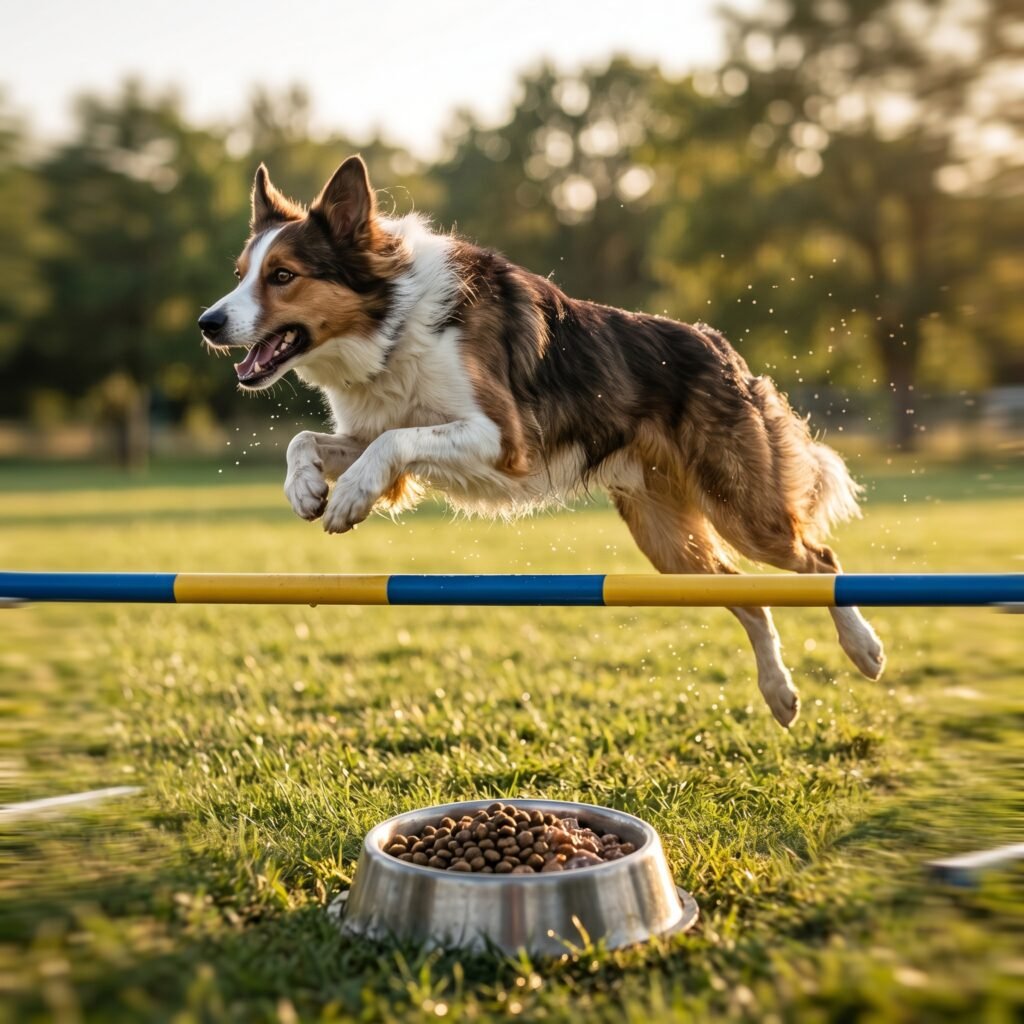
Protein deserves its own spotlight because it’s the single most important macronutrient for any dog with a demanding activity level. Muscles break down during exercise and need quality amino acids to rebuild stronger — and that rebuilding process is entirely dependent on protein intake.
What to Look For in Protein Sources
- Named animal proteins first – chicken, beef, lamb, salmon, or turkey listed as the first ingredient (not generic “meat meal” or “animal by-product”)
- Multiple protein sources – often combined for a fuller amino acid profile
- Minimum 28% protein for dry kibble formulas targeting active dogs; many premium performance formulas push toward 32–38%
Why High Protein Dog Food for Active Dogs Matters So Much
High protein dog food for active dogs isn’t a marketing gimmick — it directly supports:
- Faster muscle recovery between exercise sessions
- Maintenance of lean muscle mass, even during high-calorie-burn periods
- Steady energy supply that doesn’t spike and crash like simple carbohydrates can
- Healthy coat and skin, since protein also feeds keratin production
That said, more protein isn’t automatically better for every dog. Senior dogs, dogs with kidney conditions, or breeds prone to certain sensitivities should only switch to a high-protein formula after a conversation with a veterinarian, since individual health history matters more than general guidelines.
Fat and Calorie Density Explained
Fat often gets an unfair reputation in human diets, but for active dogs, it’s one of the most valuable nutrients available. Fat provides more than double the calories per gram compared to protein or carbohydrates, making it an efficient, slow-burning fuel source for sustained activity like long hikes, herding work, or extended play sessions.
Benefits of Higher Fat Content in Active Dog Food
- Sustained energy release during long-duration activity
- Supports healthy skin and a glossy coat
- Aids in absorption of fat-soluble vitamins (A, D, E, K)
- Provides essential fatty acids the body can’t produce on its own
Look for fat sources like chicken fat, fish oil, or flaxseed rather than vague “animal fat” listings. Quality fat sources also tend to correlate with better Omega-3 to Omega-6 ratios, which matters for joint and skin health over the long run.
Carbohydrates and Energy Sources
While protein and fat take center stage, carbohydrates still play a supporting role in dog food for active dogs — particularly for quick energy availability during and immediately after exercise.
Good Carbohydrate Sources
- Sweet potatoes
- Brown rice
- Oats
- Barley
- Peas and lentils (in moderation, as part of a balanced formula)
These complex carbs digest more slowly than simple sugars, providing steadier blood glucose levels rather than sharp spikes and crashes — which matters if your dog needs reliable energy throughout a long hike or training session rather than a quick burst followed by fatigue.
How to Read a Dog Food Label Like a Pro
Marketing language on dog food bags can be misleading, so knowing how to actually read the label is a skill worth developing.
Steps to Evaluate Any Active Dog Food
- Check the first five ingredients. These make up the bulk of the formula. Look for named proteins near the top.
- Look at the guaranteed analysis. This shows minimum protein and fat percentages, plus maximum fiber and moisture.
- Calculate calorie density. Compare kcal per cup, not just per bag — bag sizes vary widely.
- Check for AAFCO statement. Confirms the food meets nutritional adequacy standards for the dog’s life stage.
- Avoid vague fillers. Terms like “meat by-product” or “animal fat” without a named source can indicate lower-quality sourcing.
Red Flags to Avoid
- Corn, wheat, or soy listed as a primary ingredient
- Artificial colors or preservatives (BHA, BHT, ethoxyquin)
- Vague protein sourcing
- Excessive filler carbohydrates with little nutritional value
High Protein Dog Food for Active Dogs: What to Look For
Since this is one of the most searched terms among owners of working and sporting breeds, it deserves a dedicated breakdown.
When evaluating high protein dog food for active dogs, prioritize formulas that include:
- 30%+ crude protein on the guaranteed analysis panel
- Multiple animal-based protein sources, ideally including at least one novel or less common protein for variety
- Balanced fat content (15–20%) to complement the protein rather than overload the digestive system
- Limited or no grain fillers, depending on your dog’s individual tolerance
- Third-party testing or quality certifications, when available, for added assurance of consistency
It’s worth noting that grain-free isn’t automatically healthier — some active dogs actually do better with moderate whole grains for steady energy, while others thrive grain-free. This is highly individual, and monitoring your dog’s energy, stool quality, and coat condition after a transition is the most reliable way to know if a formula is genuinely working.
Best Feeding Schedules for Active Dogs
How you feed matters almost as much as what you feed. Active dogs benefit from feeding schedules built around their exercise routine, not just convenience.
General Feeding Guidelines
- Two meals per day is standard for most adult active dogs, spaced roughly 8–12 hours apart
- Avoid feeding within 1 hour before intense exercise, to reduce bloat risk, especially in deep-chested breeds
- Allow a recovery window after exercise (30–60 minutes) before a full meal, particularly after strenuous activity
- Working or competition dogs may benefit from a small pre-activity snack and a larger post-activity meal for recovery
Sample Feeding Timeline for a Highly Active Dog
- 6:30 AM – Light breakfast or partial portion
- 7:00–8:00 AM – Morning exercise/training session
- 8:30 AM – Remainder of breakfast portion or recovery meal
- 5:30 PM – Evening walk or play session
- 6:30 PM – Dinner
This kind of split-feeding approach helps avoid digestive discomfort during exercise while still meeting total daily caloric needs.
Wet vs. Dry vs. Raw: Which Works Best for Active Dogs
There’s no single “correct” format — each has trade-offs worth understanding.
| Food Type | Pros | Cons |
|---|---|---|
| Dry (Kibble) | Convenient, calorie-dense, good shelf life | Lower moisture content; quality varies widely by brand |
| Wet (Canned) | High palatability, good hydration | Less calorie-dense per serving; more expensive long-term |
| Raw/Fresh | Often high protein, minimally processed | Requires careful handling, higher cost, needs vet guidance |
Many owners of high-energy dogs use a hybrid approach — a high-quality dry active dog food as the base, occasionally topped with wet food or fresh additions for palatability and hydration, especially after intense exercise sessions.
Common Mistakes When Feeding Active Dogs
Even well-meaning owners make feeding mistakes that limit their dog’s performance and recovery. Watch out for these common pitfalls:
- Overfeeding “just because the dog is active.” More exercise doesn’t always mean dramatically more food — overfeeding leads to unnecessary weight gain.
- Underfeeding calorie-dense food. Some owners switch to a richer formula but keep the same portion size, accidentally underfueling their dog.
- Ignoring body condition score. Weight on a scale matters less than visible/palpable body condition — ribs should be felt easily but not visibly protruding.
- Skipping the transition period. Abruptly switching foods can cause digestive upset, masking whether the new formula is actually a good fit.
- Relying only on treats for energy boosts. Treats should stay under 10% of daily calories; excessive treating throws off the nutritional balance of a carefully formulated diet.
Active Dog Food by Life Stage and Breed Size
Activity-focused nutrition isn’t one-size-fits-all across a dog’s lifetime.
Puppies
High-energy puppies need controlled calcium and phosphorus ratios for proper bone growth — even active puppy breeds shouldn’t be fed adult-level performance formulas too early, as overfeeding calories during rapid growth phases can contribute to joint problems later in life.
Adult Dogs
This is where most active dog food formulas are targeted — balancing protein, fat, and calorie density for sustained daily performance.
Senior Active Dogs
Older dogs that remain active still need protein to maintain muscle mass, but often benefit from added joint support (glucosamine, chondroitin, omega-3s) and slightly adjusted calorie levels to match naturally slowing metabolism.
Breed Size Considerations
- Small active breeds (Jack Russell Terriers, Border Terriers) often need higher calorie density per cup due to faster metabolisms
- Large active breeds (Labradors, German Shepherds, working breeds) need controlled calcium levels alongside high protein to support joint health under heavier body weight
Signs Your Dog’s Food Isn’t Working
Sometimes the clearest sign a formula isn’t right comes from simply observing your dog over a few weeks. Watch for:
- Persistent low energy despite adequate sleep and rest
- Dull, dry, or flaky coat
- Excessive weight loss or inability to maintain healthy weight
- Frequent loose stools or digestive upset
- Slow recovery after exercise (excessive panting, stiffness, reluctance to move)
If you notice several of these signs, it may be time to reassess the formula — ideally with input from your veterinarian, who can also rule out underlying health issues unrelated to diet.
How to Transition to a New Active Dog Food
Switching to a new active food for dogs formula should always be gradual to avoid digestive upset.
Recommended Transition Schedule
- Days 1–3: 75% old food, 25% new food
- Days 4–6: 50% old food, 50% new food
- Days 7–9: 25% old food, 75% new food
- Day 10 onward: 100% new food
Monitor stool quality, energy levels, and appetite throughout the transition. If digestive upset occurs, slow the transition down rather than abandoning the new food entirely after just a few days — some dogs simply need more time to adjust.
If you’re also researching joint-support supplements for aging working dogs, or comparing grain-free versus grain-inclusive formulas in more depth, those make excellent companion topics to explore alongside this guide as part of a broader active-dog nutrition strategy.
FAQ: Active Dog Food Questions Answered
1. What is considered the best active dog food?
The best active dog food depends on your specific dog’s breed, size, and workload, but generally features 28%+ protein, 15–20% fat, named animal protein sources, and calorie density above 400 kcal per cup. Always match the formula to your dog’s actual activity level rather than choosing based on marketing alone.
2. How much protein should be in dog food for active dogs?
Most dog food for active dogs should contain at least 28% crude protein, with many performance and working-dog formulas ranging between 30–38%, depending on workload intensity and the dog’s individual health profile.
3. Is high protein dog food for active dogs safe for all breeds?
Generally yes, but dogs with certain kidney conditions or specific health sensitivities should only switch to high-protein formulas under veterinary guidance. For healthy, genuinely active dogs, higher protein levels typically support better recovery and muscle maintenance.
4. How many calories does an active dog need per day?
This varies significantly by size and workload, but highly active dogs can require 20–40% more daily calories than a sedentary dog of the same weight. A veterinarian or canine nutritionist can help calculate a more precise number based on your dog’s specific activity level.
5. Can I make active dog food at home instead of buying commercial formulas?
It’s possible, but homemade diets for active dogs require careful balancing of protein, fat, vitamins, and minerals to avoid deficiencies. Working with a veterinary nutritionist is strongly recommended before fully replacing commercial active food for dogs with a homemade plan.
6. How do I know if my dog needs active dog food versus regular maintenance food?
If your dog gets more than an hour of vigorous daily exercise, works in a physically demanding role, or struggles to maintain healthy weight on standard food, a formula built specifically for active dogs is likely a better fit than a general maintenance diet.
7. Does activa dog food differ much from other premium active formulas?
Formulas marketed under names like activa dog food generally follow the same core principles as other performance-focused brands — higher protein, increased fat for energy density, and added joint-support nutrients. Always compare the guaranteed analysis panel directly rather than relying on branding alone, since formulation quality can vary even within similarly marketed products.
Conclusion
Feeding a high-energy dog isn’t about guesswork — it’s about matching nutrition to actual physical demand. The right active dog food supports muscle recovery, sustains energy through long activity sessions, and helps maintain a healthy weight even when your dog is burning serious calories every single day.
To recap the essentials:
- Protein (28%+) supports muscle repair and lean mass maintenance
- Fat (15–20%) provides dense, slow-burning energy for sustained activity
- Calorie density should scale with your dog’s actual workload, not just their size
- High protein dog food for active dogs offers real performance benefits, but should be matched to individual health needs
- Feeding schedule and transition method matter just as much as ingredient quality
Whether you’re comparing activa dog food against other performance brands, searching for the right active food for dogs to support a working breed, or simply trying to keep up with a dog that never seems to tire, the right nutritional foundation makes a measurable difference in energy, recovery, and long-term health.
If this guide helped clarify your next steps, consider checking out our companion article on joint-support supplements for working and sporting dogs, or our in-depth breakdown of grain-free versus grain-inclusive diets, to keep building out a complete nutrition plan for your active companion.