
Best Limited Ingredient Dog Food for Dogs With Allergies & Sensitive Skin
The best limited ingredient dog food cuts allergens at the source — fewer ingredients, one protein, zero guesswork. We ranked the top LID brands by skin results, ingredient quality, and vet confidence.
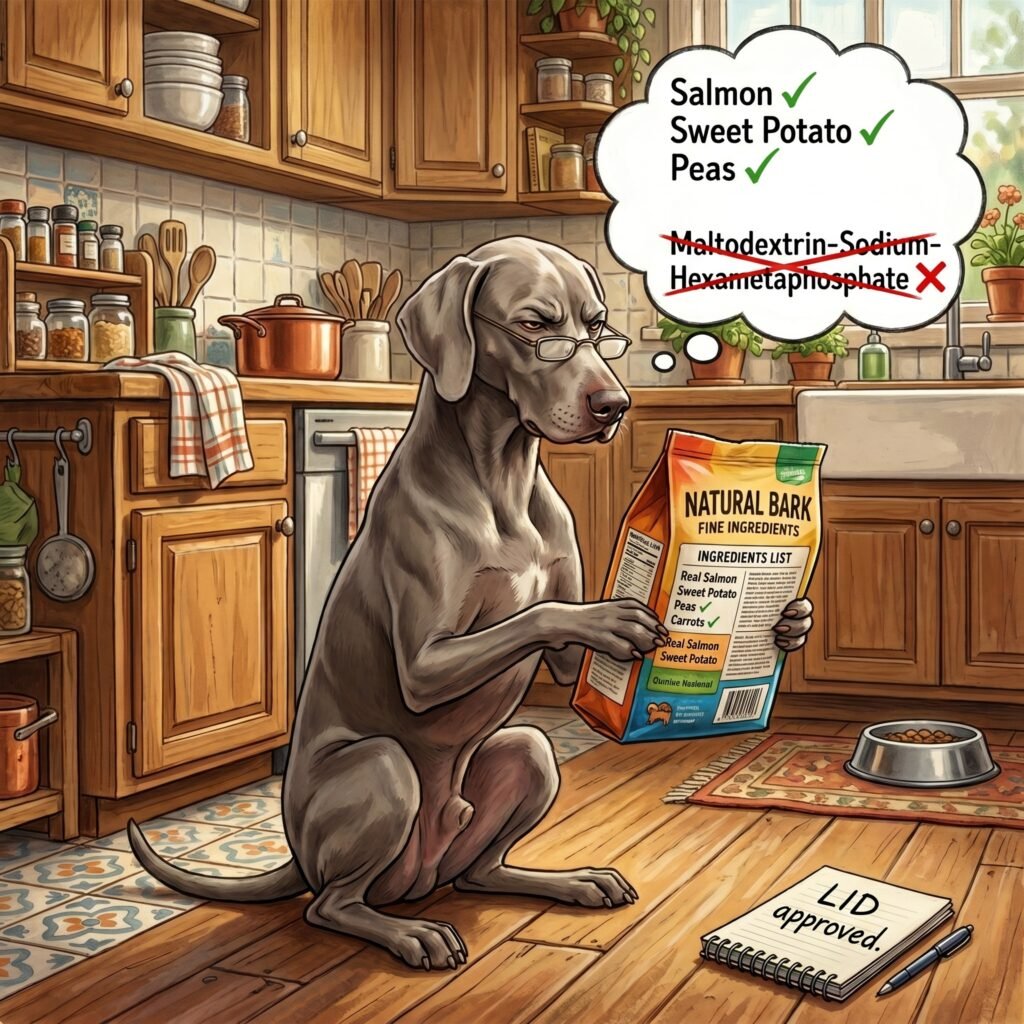
If your dog scratches constantly, has recurring ear infections, deals with unpredictable digestion, or produces loose stools that don’t respond to basic dietary adjustments, the answer may not be a more expensive food — it may be a simpler one. Limited ingredient dog food is one of the most effective dietary tools available for dogs with food sensitivities and allergies, and it’s been growing in popularity for good reason.
But “limited ingredient” is not a regulated term. Any brand can put it on a bag, whether they mean five ingredients or twenty-five. Finding the best limited ingredient dog food for your specific dog — whether they need allergy relief, skin support, digestive calm, or just cleaner nutrition — requires understanding what the term actually means, what to look for on the label, and which brands genuinely deliver on the promise.
This guide covers all of it. What limited ingredient diets are and how they work, the science behind food allergies in dogs, how to evaluate any LID formula independently, the best limited ingredient dry dog food and wet options across every budget, the best formulas specifically for skin problems, and a comprehensive FAQ to cover every common question. By the end, you’ll know exactly what the best limited ingredient dog food is for your dog’s specific situation.
What Is Limited Ingredient Dog Food — and Why Does It Matter?
A limited ingredient diet (LID) is a dog food formulated with a reduced number of ingredients — typically featuring one named animal protein, one carbohydrate source, and a minimal supporting cast of vitamins, minerals, and fats. The core principle is dietary simplicity: fewer ingredients mean fewer potential allergens, and fewer allergens mean a lower chance of triggering an immune response.
Standard commercial dog food can contain dozens of ingredients — multiple protein sources, grains, legumes, fruits, vegetables, synthetic additives, flavoring agents, and preservatives. For most healthy dogs, this complexity is nutritionally beneficial. For dogs with food sensitivities or allergies, however, it creates an identification problem: when a dog reacts to something in their food, a complex formula makes it nearly impossible to determine what caused the reaction.
Limited ingredient dog food solves this problem by simplifying the equation. With fewer variables, it becomes far easier to isolate what your dog tolerates and what triggers a reaction — the clinical foundation of the elimination diet, which is the gold standard diagnostic tool for canine food allergies.
It’s important to understand that “limited ingredient” refers to the ingredient count, not the nutritional completeness. The best limited ingredient dog food for allergies must still meet AAFCO nutritional adequacy standards — complete and balanced for the relevant life stage. Simplicity does not mean nutritional compromise.
How Food Allergies Work in Dogs: The Science Behind LID
Before selecting the best formula, it helps to understand what you’re actually managing. True food allergies in dogs are immune-mediated responses — the body’s immune system incorrectly identifies a specific protein as a threat and mounts an inflammatory response. This is distinct from food intolerance, which is a digestive sensitivity without immune involvement, though both can benefit from limited ingredient feeding.
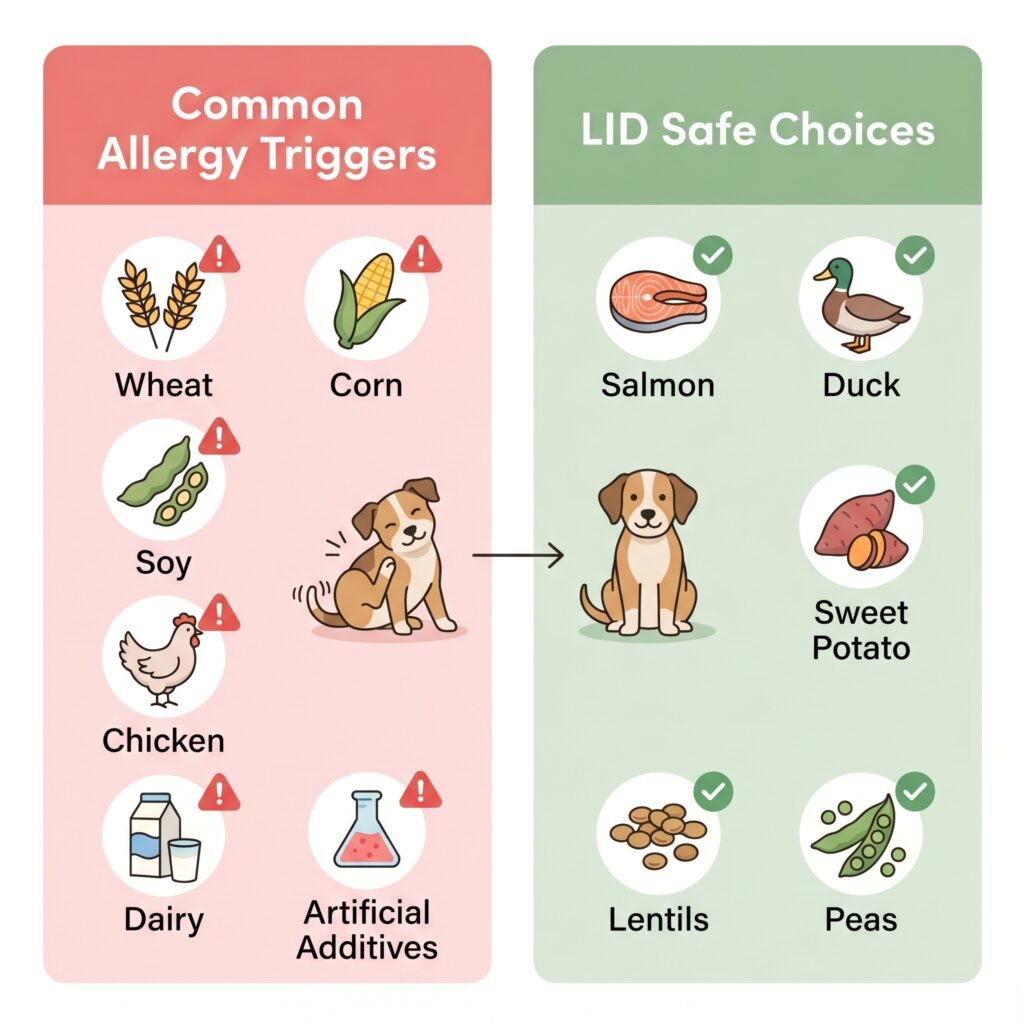
The proteins most commonly associated with canine food allergies — confirmed across multiple clinical studies — are beef, dairy, chicken, wheat, egg, lamb, soy, and corn. This list is notable: beef and chicken are the two most used proteins in commercial dog food, which is why so many dogs develop sensitivities to them. Repeated lifelong exposure to the same protein increases the chance that the immune system will eventually sensitize to it.
This is precisely why limited ingredient dog food for allergies almost always features a novel protein — an animal protein the dog has theoretically never encountered. Venison, duck, salmon, whitefish, rabbit, kangaroo, and bison are all common novel protein choices in LID formulas, because a dog that has never eaten venison has no pre-existing immune response to it.
The inflammatory response to food allergens in dogs typically manifests in two primary ways:
Dermatological symptoms: Itchy skin (particularly around the paws, ears, belly, and face), recurring ear infections, hot spots, hair loss, redness, and skin thickening. The best limited ingredient dog food for skin allergies specifically targets this pathway — reducing the immune trigger to allow the skin barrier to heal.
Gastrointestinal symptoms: Chronic diarrhea, loose stools, vomiting after meals, excessive gas, and abdominal discomfort. Many dogs present with both skin and digestive symptoms simultaneously, which is a strong indicator of dietary rather than environmental origin.

What Makes a Truly “Limited” Ingredient Dog Food: Label Reading Guide
Because the term is unregulated, learning to evaluate an LID label independently is essential. Here’s what to look for:
Single-Source Animal Protein
The most critical characteristic. The ingredient list should contain exactly one type of animal protein — and every ingredient derived from that animal should come from the same source. If the label lists “salmon” and “salmon meal,” those are both salmon — acceptable. If it lists “salmon” and “chicken fat,” there’s a second animal protein in the formula, which may be problematic for dogs with chicken sensitivity.
Watch for hidden protein sources: “natural flavors” can contain animal-derived flavor compounds from species not otherwise listed. “Hydrolyzed animal protein” without species specification is a red flag. Reputable LID brands will explicitly confirm all protein sources and avoid vague ingredient names.
One Primary Carbohydrate Source
The best limited ingredient dry dog food uses a single, identifiable carbohydrate — sweet potato, brown rice, peas, lentils, or chickpeas. Multiple carbohydrates in a formula aren’t inherently problematic, but the simpler the carbohydrate profile, the cleaner the elimination baseline.
Short, Readable Ingredient List
A genuine LID formula typically has between 8 and 15 ingredients in the main ingredient list (before the vitamin and mineral pack). Formulas with 20+ ingredients before the vitamin pack are marketing “limited ingredient” loosely — they may have fewer ingredients than a standard formula but are not truly simplified to the clinical standard.
AAFCO Nutritional Adequacy Statement
Any LID formula you feed as a primary diet must carry this statement. Look for “formulated to meet the nutritional levels established by AAFCO Dog Food Nutrient Profiles for [life stage]” or “animal feeding tests using AAFCO procedures.” Without this statement, the food may not provide complete nutrition.
No Cross-Contamination Risk
For dogs with severe allergies, manufacturing environment matters. Some LID brands manufacture in shared facilities where the equipment handles multiple proteins. Look for brands that specifically state their LID formulas are manufactured in dedicated facilities or with rigorous cleaning protocols between production runs.
The Best Limited Ingredient Dog Food in 2026: Comprehensive Brand Rankings
If you’re wondering what is the best limited ingredient dog food for your specific situation, the following rankings evaluate formulas on ingredient quality, protein sourcing, true LID compliance, nutritional completeness, real owner outcomes, and value. They are organized by category to match your dog’s specific need.
Best Overall: Zignature — The Best Limited Ingredient Dog Food for Allergies
When it comes to the best limited ingredient dog food for allergies, Zignature is one of the most clinically rigorous brands on the market. Every Zignature formula is built around a single novel protein — choices include trout, salmon, turkey, kangaroo, guinea fowl, catfish, pork, duck, lamb, and whitefish — making the range one of the broadest single-protein selections available.
Crucially, Zignature formulas contain no chicken, chicken by-products, corn, wheat, soy, dairy, or eggs — the most common allergen triggers. The brand has been consistently recommended by veterinary dermatologists performing elimination diet protocols because the ingredient control is strict enough to produce reliable diagnostic results. For owners searching for the best limited ingredient dog food with genuine single-source protein confidence, Zignature is the benchmark every other brand is measured against.
The Turkey and Chickpea formula averages 29% protein, 16% fat, and 47% estimated carbohydrates on a dry matter basis — a solid macronutrient profile. All formulas include added taurine, addressing the DCM concern associated with legume-heavy, grain-free diets. Dog Food Advisor rates multiple Zignature formulas at 4.5 stars.
Best for: Dogs undergoing elimination diet protocols, dogs with confirmed chicken or beef allergies, owners who need the best limited ingredient dog food for allergies backed by genuine single-source protein control.
Best for Skin Allergies: Wellness Simple Limited Ingredient Diet
For the best limited ingredient dog food for skin allergies, Wellness Simple is the most consistently recommended formula across veterinary dermatology practices and independent review platforms. The Turkey and Potato formula — the flagship for skin support — derives its animal protein exclusively from fresh turkey and turkey meal, uses potatoes as the sole carbohydrate source, and adds flaxseed and salmon oil for omega-3 fatty acid support.
That omega-3 inclusion is not incidental. Omega-3 fatty acids — particularly EPA and DHA from fish oil — are among the most clinically validated dietary interventions for canine skin inflammation. They reduce the production of inflammatory cytokines, strengthen the skin barrier, and support a healthy coat. For dogs with allergic skin disease, the best limited ingredient dog food for skin allergies is one that specifically supports the skin barrier through fatty acid supplementation — not just reduces allergen exposure.
Dog Food Advisor’s dry matter analysis of the Wellness Simple Turkey formula reveals 31.2% protein, 14.8% fat, and 41.8% estimated carbohydrates — with a fat-to-protein ratio of about 48%. This is a well-balanced profile that supports skin health without excessive caloric density.
The Wellness Simple range is manufactured in the USA by Wellness Pet Company — a brand with a strong transparency record — and the Turkey formula specifically excludes all common allergens including corn, wheat, soy, artificial colors, flavors, and preservatives.
Best for: Dogs with skin allergies, chronic itching, recurrent ear infections, or coat quality issues. If your vet has pointed you toward the best limited ingredient dog food for skin allergies, this is the formula to start with.
Best Dry Kibble: CANIDAE PURE — The Best Limited Ingredient Dry Dog Food
CANIDAE PURE is the gold standard for the best limited ingredient dry dog food — a true 7–10 ingredient formula with one named protein source and rigorous allergen exclusion. The range includes Salmon & Sweet Potato, Real Bison, Lentil & Carrot, Venison & Pea, and Duck options, giving meaningful protein rotation for owners managing long-term elimination protocols.
What distinguishes CANIDAE PURE as the best limited ingredient dry dog food from less rigorous alternatives is the company’s explicit commitment: each PURE recipe contains 7–10 key ingredients, is free from corn, wheat, soy, and artificial additives, and is manufactured with strict allergen protocols. The brand also includes probiotics in each formula, which support gut microbiome health — particularly valuable for dogs recovering from chronic digestive inflammation caused by food sensitivity.
Protein content averages 27–30% across the PURE line on a dry matter basis, with fat ranging from 15–18%. These are appropriate values for most adult dogs — adequate for muscle maintenance and energy without excessive caloric density.
CANIDAE offers a “Try Risk-Free” program for new buyers — a brand willing to offer returns on opened bags typically has high owner satisfaction rates. Dog Food Advisor rates CANIDAE PURE consistently at 4–4.5 stars, confirming its status as the best limited ingredient dry dog food for dogs with diagnosed sensitivities.
Best for: Dogs with diagnosed food sensitivities, multi-dog households needing a rotating single-protein LID, and owners who want the best limited ingredient dry dog food with true ingredient count certainty.
Best for Allergies: Natural Balance L.I.D.
Natural Balance pioneered the limited ingredient diet category in pet food and remains one of the most recognizable answers to the question of what is the best limited ingredient dog food for dogs with allergies. After trying several brands of kibble in addition to many brands of human-grade food, owners managing dogs with IBD consistently report that the Natural Balance Lamb & Brown Rice recipe is the best limited ingredient dog food for allergies their dog has ever tolerated.
The L.I.D. range offers both grain-inclusive (Lamb & Brown Rice, Duck & Potato, Salmon & Brown Rice) and grain-free options, giving dog owners the flexibility to choose based on their dog’s specific sensitivities. The grain-inclusive formulas are particularly valuable for owners concerned about the FDA’s DCM investigation into legume-heavy, grain-free diets.
Natural Balance was acquired by Smucker’s in 2021, moving from an independent to corporate ownership structure — a fact that occasionally draws comment from long-term users. The formulas themselves have remained consistent, but owners who prioritize independent, family-owned manufacturing should factor this in.
Best for: Dogs that need the best limited ingredient dog food for allergies and tolerate grains — the grain-inclusive line provides more dietary flexibility and reduces DCM-associated concerns.
Best Fresh/Human-Grade: The Farmer’s Dog
For owners seeking the absolute cleanest possible ingredient list without the compromise of high-heat kibble processing, The Farmer’s Dog offers limited ingredient fresh food formulas that represent the premium tier of the best limited ingredient dog food market.
When evaluating what is the best limited ingredient dog food with maximum ingredient transparency, The Farmer’s Dog is in a category of its own. Their Turkey recipe, for example, contains turkey, sweet potato, green beans, broccoli, spinach, and a vitamin supplement pack — the entire ingredient list fits in one sentence. This level of simplicity is something no kibble, regardless of how carefully formulated, can match.
Fresh food processing preserves a significantly higher nutrient bioavailability than kibble manufacturing. High-heat extrusion — the process used to make all dry dog food — denatures proteins, destroys heat-sensitive vitamins, and reduces the bioavailability of certain minerals. Fresh food avoids this entirely.
The trade-off is cost. For a 50-pound dog, expect to spend $8–12 per day versus $2–4 for a premium kibble. For owners who cannot sustain that cost long-term, using The Farmer’s Dog as a topper over the best limited ingredient dry dog food — such as CANIDAE PURE — provides meaningful benefits at a fraction of the full price.
Best for: Owners prioritizing maximum ingredient transparency, dogs with severe allergies where even kibble processing residues cause issues, or as a diagnostic tool during elimination trials when only the best limited ingredient dog food will do.
Best Budget Option: Purina Pro Plan Sensitive Skin & Stomach
For owners who need the benefits of the best limited ingredient dog food without the premium price tag, Purina Pro Plan’s Sensitive Skin & Stomach line offers a compelling option. Available with salmon or lamb as the primary protein, the formula is designed specifically for dogs with both skin and digestive sensitivities.
While not a true limited-ingredient formula by the strictest clinical definition — it contains more ingredients than Zignature or CANIDAE PURE — the Sensitive Skin & Stomach line excludes the most common allergen triggers and includes highly digestible rice as the primary carbohydrate. For owners asking what is the best limited ingredient dog food on a budget, this is the most honest answer: it delivers meaningful allergen reduction and is backed by Purina’s manufacturing rigor and veterinary research without requiring a premium spend.
At roughly $70 for a 30-pound bag, it significantly undercuts the best limited ingredient dog food for allergies options at the premium tier while maintaining full AAFCO compliance and real meat protein as the first ingredient.
Best for: Dogs with mild to moderate sensitivities, budget-conscious owners, or dogs transitioning off prescription diets under veterinary guidance who need the best limited ingredient dog food their household can sustainably afford.
Best Limited Ingredient Dog Food for Skin Allergies: What the Science Actually Says
Skin allergies — known clinically as canine atopic dermatitis when environmentally triggered, or food-induced atopic-like dermatitis when diet is the cause — are among the most common presentations in veterinary dermatology practice. Up to 30% of dogs with atopic dermatitis have a food component contributing to their symptoms.
For the best limited ingredient dog food for skin allergies, three nutritional characteristics matter most beyond the obvious allergen exclusion:
Omega-3 fatty acid content. EPA and DHA reduce skin inflammation at the cellular level by competing with inflammatory omega-6 fatty acids for enzyme sites in the arachidonic acid pathway. Formulas that include fish oil, flaxseed, or salmon as an ingredient provide these fatty acids. Look for at least 0.5% DHA and EPA combined on a dry matter basis for meaningful skin support.
Zinc content and bioavailability. Zinc deficiency is directly linked to impaired skin barrier function, increased transepidermal water loss, and heightened allergenic sensitization. The best LID formulas for skin health use chelated zinc (zinc proteinate) rather than inorganic zinc sulfate, which is significantly more bioavailable.
Biotin and vitamin E. Both support keratinocyte (skin cell) health and the integrity of the skin barrier. Biotin in particular is frequently below optimal levels in standard kibble — formulas that explicitly include biotin at meaningful levels provide a genuine skin-health advantage.
The eight to twelve week timeline for improvement is frequently cited and is genuinely important: the skin’s renewal cycle (how long it takes for all surface skin cells to be replaced) is approximately four to six weeks in dogs. This means even a perfect dietary intervention will not produce visible skin improvement in the first two to four weeks. Owners who abandon a new LID formula after three or four weeks without visible improvement are often giving up before the biology has had time to respond.
How to Run an Elimination Diet with Limited Ingredient Dog Food
The elimination diet is the only definitive method for identifying food allergies in dogs. Blood tests and skin tests for food allergies in dogs have poor sensitivity and specificity — they generate false positives and false negatives at rates that make them unreliable for clinical decision-making. The elimination diet, though slower, is the method veterinary dermatologists trust.
The process works as follows:
Step 1 — Choose a formula with a novel protein. Select a limited ingredient dog food for allergies featuring a protein your dog has definitively never eaten. If your dog has eaten chicken, beef, lamb, and salmon — choose duck, venison, rabbit, or kangaroo. If your dog has a broad protein history, a hydrolyzed protein prescription diet may be necessary.
Step 2 — Eliminate all other food sources for 8-12 weeks. This is the most challenging part. No treats, chews, flavored toothpaste, flavored medications, supplements in non-neutral bases, or table scraps. Every item that enters your dog’s mouth must be evaluated for hidden protein content. A single exposure to the sensitizing protein can restart the immune response and invalidate weeks of progress.
Step 3 — Document symptoms weekly. Keep a simple log tracking skin condition, stool consistency, ear infection frequency, and energy level. This documentation is invaluable for your veterinarian and helps you objectively assess improvement rather than relying on memory.
Step 4 — Reintroduce proteins one at a time. After the initial trial period, if symptoms have resolved, reintroduce single proteins one at a time (one new protein every two weeks) to identify specific triggers. This provocation phase is what generates the definitive diagnosis.
Step 5 — Build a long-term diet. Once you know which proteins your dog tolerates and which trigger reactions, you can select a permanent limited ingredient formula — or rotate between LID formulas with confirmed safe proteins — with confidence.
Limited Ingredient Wet Dog Food: When It Matters and What to Choose
Most discussion of limited ingredient diets focuses on dry kibble, but wet food plays an important role for several groups of dogs:
Dogs with dental disease or missing teeth who struggle to chew kibble. Senior dogs with reduced kidney function who benefit from the higher moisture content of wet food. Dogs who refuse dry kibble during the early transition to a novel protein. Dogs with severe food allergies who need the cleanest possible ingredient control.
For wet limited ingredient formulas, Zignature, CANIDAE PURE, and Natural Balance all offer wet counterparts to their dry lines — using the same single-protein architecture in a pâté or stew format. The ingredient count in wet LID formulas is typically even lower than dry equivalents, making them excellent for strict elimination diet use.
Merrick’s Limited Ingredient Diet wet range deserves specific mention. Each Merrick Limited Ingredient Diet formulation contains less than ten ingredients. Among the seven offerings in the range, some are grain-free formulations and some recipes include grains. However, all recipes are free from chickpeas and lentils and contain added supplements. For owners concerned about legume content in grain-free food, Merrick’s legume-free LID wet formulas offer a genuinely differentiated option.
What Is the Best Limited Ingredient Dog Food: A Decision Framework
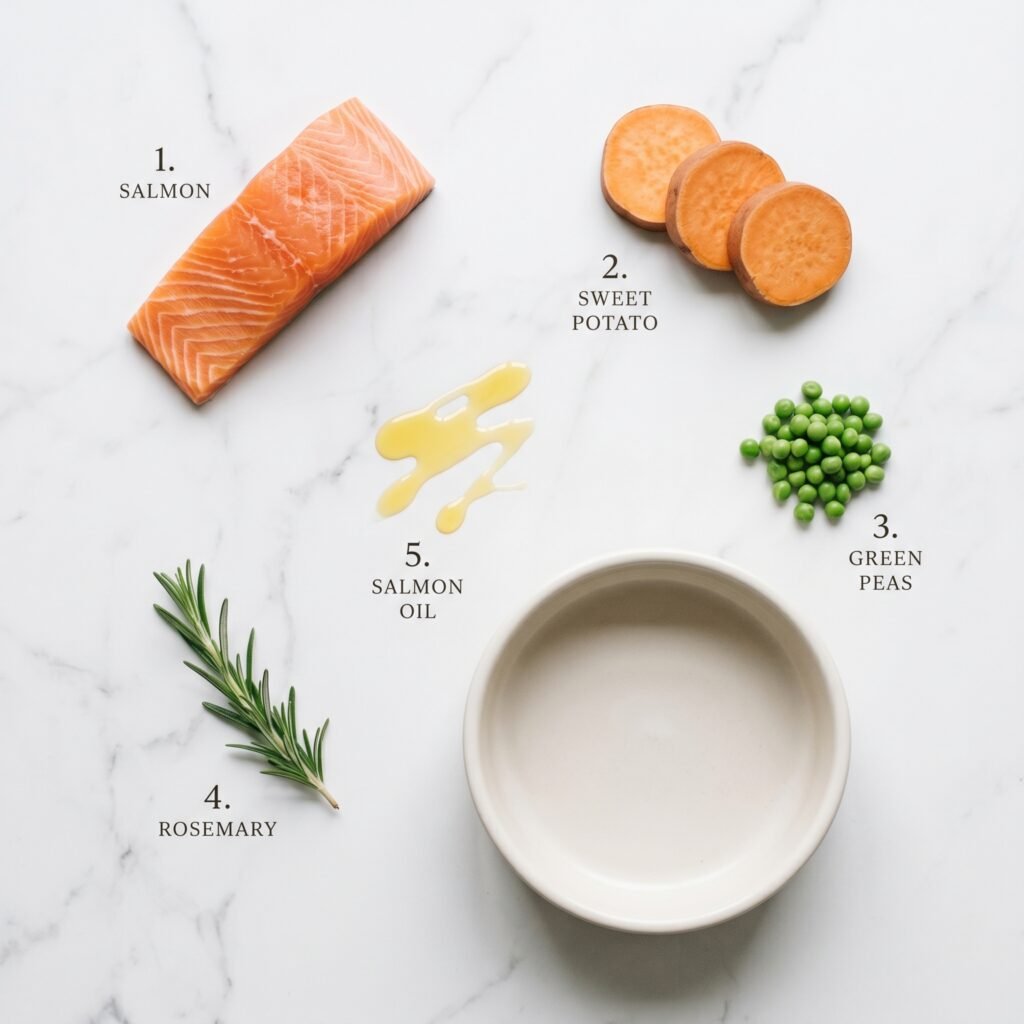
What is the best limited ingredient dog food isn’t a single answer — it depends entirely on your dog’s specific situation. Here’s a quick decision guide:
For a dog undergoing an elimination diet to diagnose allergies: Zignature or CANIDAE PURE, with whichever protein is genuinely novel for your dog. Prioritize strict single-source protein control over all other factors.
For a dog with confirmed skin allergies maintaining a long-term diet: Wellness Simple Limited Ingredient Diet Turkey & Potato, for the combination of novel protein, skin-supportive fatty acids, and manufacturing reliability.
For a dog with digestive sensitivity but no confirmed allergen: Natural Balance L.I.D. Lamb & Brown Rice or Purina Pro Plan Sensitive Skin & Stomach — both offer digestive support without requiring clinical-grade allergen exclusion.
For a dog with the most severe allergies or multiple protein sensitivities: The Farmer’s Dog fresh food for maximum ingredient transparency, or a veterinary prescription hydrolyzed protein diet (Hill’s z/d or Royal Canin Hydrolyzed Protein) for the highest clinical certainty.
For a budget-conscious owner with a mildly sensitive dog: Purina Pro Plan Sensitive Skin & Stomach delivers meaningful allergen reduction at the most accessible price point in this category.
For a multi-dog household needing one food that works for dogs with different needs: CANIDAE PURE All Life Stages formulas meet AAFCO standards for puppies and adults, allowing one bag to serve dogs of different ages and activity levels — a practical advantage for busy households.
Frequently Asked Questions
What does “limited ingredient” mean on dog food labels? It means the formula contains fewer ingredients than standard dog food — typically one animal protein source, one or two carbohydrates, and minimal additional ingredients before the vitamin and mineral pack. Because the term is unregulated, always count the ingredients yourself rather than trusting the marketing claim.
Is limited ingredient dog food better for all dogs? No. For healthy dogs with no sensitivities, a more nutritionally diverse formula may actually provide a broader micronutrient spectrum. LID is a targeted tool for dogs with confirmed or suspected food sensitivities — not a universal upgrade.
How long does it take to see results on a limited ingredient diet? Digestive improvements often appear within two to four weeks. Skin improvements typically take eight to twelve weeks, reflecting the skin’s renewal cycle. Give any new LID formula at least 8-12 weeks before evaluating results.
Is limited ingredient the same as grain-free? No. These are independent characteristics. A formula can be limited ingredient and grain-inclusive (Natural Balance Lamb & Brown Rice) or grain-free without being limited ingredient (many grain-free formulas contain 20+ ingredients). Always read the full list.
What proteins are best for limited ingredient dog food for skin allergies? Novel proteins the dog has never previously eaten are most effective — venison, duck, salmon, whitefish, rabbit, kangaroo, and bison are the most commonly recommended. If your dog has extensive protein history, consult your veterinarian about hydrolyzed protein diets.
Can puppies eat limited ingredient dog food? Yes, provided the formula carries an AAFCO statement for puppy growth or all life stages. Not all LID formulas are formulated for growth — confirm the AAFCO statement before feeding to a puppy under 12 months.
Do I need a vet’s recommendation to switch to limited ingredient dog food? Not necessarily for dogs with mild sensitivities. For dogs with severe, persistent, or worsening symptoms — particularly chronic skin disease or significant gastrointestinal problems — working with a veterinarian or board-certified veterinary dermatologist will produce far more reliable results than trial-and-error at home.
Final Verdict
The best limited ingredient dog food is not one brand or one formula — it’s the formula that most precisely matches your dog’s protein history, allergen profile, life stage, and the severity of their sensitivity.
For most dogs with food-triggered skin allergies, Wellness Simple Limited Ingredient Diet Turkey & Potato offers the most complete combination of allergen exclusion and active skin support. For dogs undergoing elimination diet protocols, Zignature or CANIDAE PURE provide the strictest single-source protein control available in the dry food category. For the cleanest possible ingredients without compromise, The Farmer’s Dog represents the premium option. And for budget-conscious owners managing mild sensitivities, Purina Pro Plan Sensitive Skin & Stomach delivers meaningful benefits at an accessible price.
What all of these formulas share is the core LID principle: fewer ingredients, more control, and a cleaner foundation for your dog’s long-term health. For a dog that has been struggling on a complex formula, that simplicity can be genuinely transformative — a shinier coat, a calmer stomach, and a dog that finally seems comfortable in their own skin.
This article is for informational purposes only. Always consult a licensed veterinarian or board-certified veterinary dermatologist before beginning an elimination diet or making significant dietary changes for a dog with existing health conditions or confirmed allergies.