Pure Harmony Dog Food – Real Meat First, No Artificial Additives
Pure harmony dog food delivers real meat as the first ingredient, zero artificial preservatives, and AAFCO-approved nutrition — all at grocery store prices. See all recipes and reviews here.
Pure Harmony Dog Food Review: Is It Really Worth Buying in 2025?
If you’ve been wandering the pet food aisle at your local grocery store and found yourself staring at bags of Pure Harmony dog food, you’re in good company. The brand has carved out a quiet but growing presence in the mid-tier pet food market, and with more dog owners questioning what’s actually in their pet’s bowl, the search for an honest, comprehensive Pure Harmony dog food review has never been more common.
This article covers everything — who makes Pure Harmony, what’s in the formulas, how the nutritional profile stacks up against competitors, what real owners are saying, and ultimately: is Pure Harmony a good dog food for your specific dog? By the end, you’ll have a clear picture of exactly where this brand fits, who it’s best for, and what to watch out for.
What Is Pure Harmony Dog Food?
Pure Harmony is a private-label pet food brand owned by Topco Associates LLC, one of the largest retail group purchasing cooperatives in the United States. Topco has been in operation since the 1940s and produces store-brand products across dozens of consumer categories for major grocery retailers across the country.
Because it’s a private-label brand, Pure Harmony dog food is manufactured by third-party co-packers rather than in Topco’s own facilities. This is standard practice in the private-label industry, but it does mean the brand offers limited transparency about which specific facilities produce the food, where ingredients are sourced from on a batch-by-batch basis, or what third-party auditing looks like. For most dog owners, this won’t be a dealbreaker. For those who prioritize full supply-chain visibility, it’s worth knowing upfront.
What Pure Harmony does offer is a clear value proposition: real meat as the first ingredient, no artificial preservatives or flavors, no corn or soy, and AAFCO-compliant nutrition — all at a price point that significantly undercuts premium brands. Available in both grain and grain-free varieties, the brand produces dry kibble, wet food, and treats across multiple life stages.
Pure Harmony Dog Food Ingredient Analysis
The most important thing you can do before choosing any dog food is read the ingredient list. Marketing language on the front of the bag — “wholesome,” “natural,” “balanced” — is largely unregulated. The ingredient list is where the truth lives. Here’s a breakdown of what you’ll actually find in Pure Harmony’s formulas:
Protein Sources
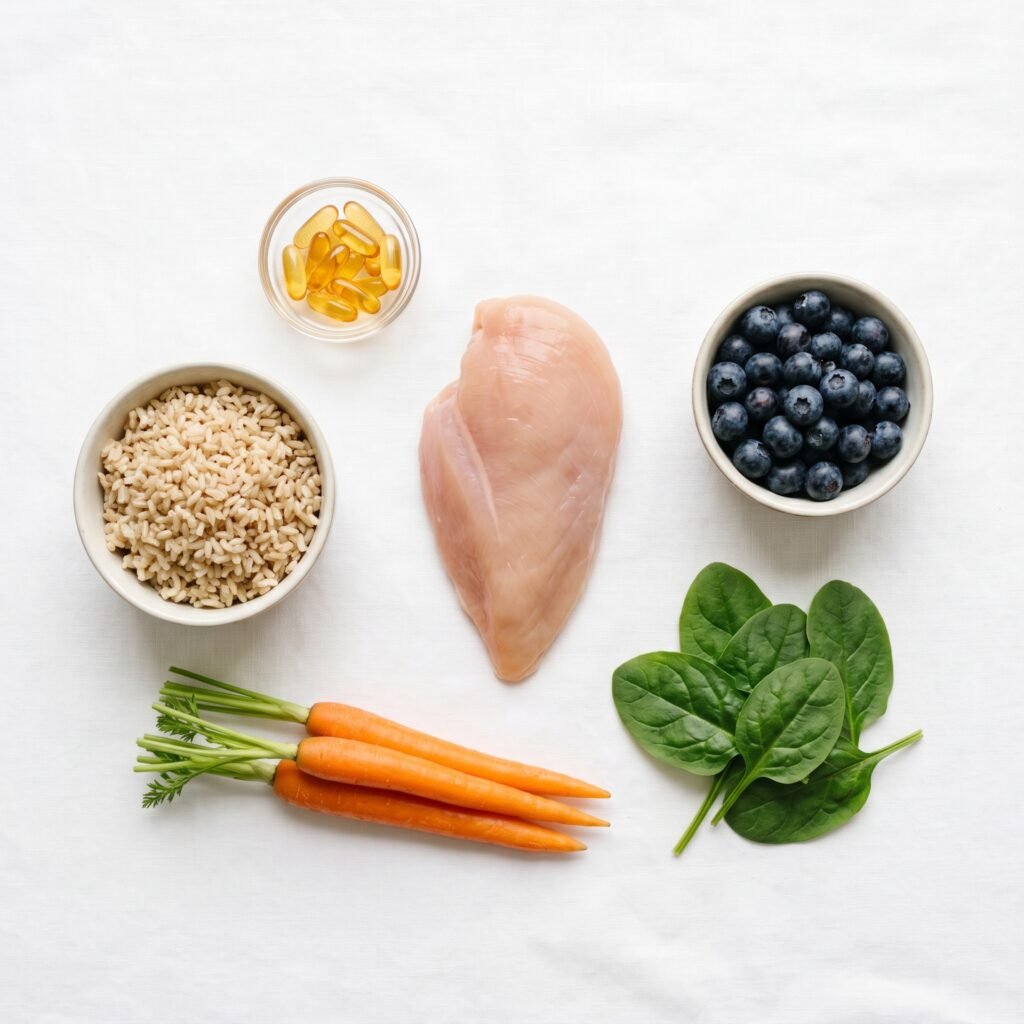
Across the product line, Pure Harmony leads with named animal proteins. Depending on the specific recipe, you’ll find deboned chicken, deboned beef, deboned salmon, or turkey as the primary ingredient. Named protein sources are a positive indicator — they’re more traceable and typically higher quality than vague terms like “meat” or “poultry.”
The second protein-related ingredient in many formulas is chicken meal, which is a concentrated protein source. Chicken meal contains roughly three times more protein per pound than fresh chicken, since the moisture has been removed. While fresh chicken sounds more appealing, chicken meal as a second ingredient is actually nutritionally solid and helps ensure a meaningful protein contribution to the finished product.
Some formulas also include dried egg product, which is a highly bioavailable, complete protein source. Fish meal appears in select recipes and contributes both protein and beneficial omega-3 fatty acids.
Carbohydrate Sources
Pure Harmony’s grain-inclusive formulas use a combination of oats, barley, ground brown rice, and peas. These are all reasonable carbohydrate sources — oats in particular are nutrient-dense, high in soluble fiber, and gentle on digestion. Barley is a starchy carbohydrate with modest nutritional value beyond energy.
Grain-free options replace these with peas, chickpeas, lentils, and tapioca — which is consistent with most grain-free kibble on the market. Dog owners should note that the FDA has been investigating a potential link between legume-heavy, grain-free diets and dilated cardiomyopathy (DCM) in dogs since 2018. While no definitive causal link has been established, if your dog doesn’t have a diagnosed grain intolerance, the grain-inclusive formulas may be the safer long-term choice. Discuss this with your veterinarian.
Fat Sources
Chicken fat is the primary fat source in most Pure Harmony recipes, preserved naturally with mixed tocopherols (a form of vitamin E). Flaxseed and fish oil appear in select formulas, providing omega-3 fatty acids for skin and coat support. The absence of artificial preservatives like BHA, BHT, or ethoxyquin is a genuine positive.
Vitamins and Minerals
Pure Harmony formulas include a standard vitamin and mineral pack, with chelated minerals in some recipes. Chelated minerals — those bound to amino acids for better absorption — are a sign of a slightly more thoughtful formulation. You’ll also find zinc proteinate and iron proteinate listed, which are more bioavailable forms than inorganic mineral salts.
What’s Absent
Pure Harmony formulas do not contain corn, wheat, soy, artificial colors, artificial flavors, or artificial preservatives. For a grocery-store brand at this price point, that’s a genuinely clean ingredient profile.

Nutritional Profile: By the Numbers
Looking at the flagship Pure Harmony Chicken, Barley and Pea dry formula, the dry matter nutritional breakdown is:
- Protein: approximately 27%
- Fat: approximately 13%
- Estimated carbohydrates: approximately 52%
- Moisture: 10% (as-fed basis)
Across the full product line, the brand averages around 29% protein and 16% fat on a dry matter basis — placing it in the moderate range for both macronutrients compared to the wider dry dog food market. This is neither impressive nor poor; it’s solidly adequate for most adult dogs with average activity levels.
It’s worth noting that peas, flaxseed, and alfalfa meal — all plant-based ingredients present in several recipes — contribute to the protein count. This is a common industry practice: since protein is measured chemically (by nitrogen content) rather than by source, plant proteins can inflate the apparent protein percentage. The actual animal-derived protein contribution may be slightly lower than the label suggests. This is a characteristic of moderate-meat kibble generally, not a flaw unique to Pure Harmony.
The fat-to-protein ratio sits around 56%, which is typical for this segment of the market.
Pure Harmony Dog Food Product Line Overview
The brand offers both dry and wet formulas across multiple life stages. Here’s a summary of what the lineup looks like:
Dry Kibble
- Chicken, Barley and Pea — the flagship formula; grain-inclusive, AAFCO adult maintenance
- Deboned Beef, Ground Barley, and Brown Rice — 22% protein; features dried egg product and fish meal for supplemental nutrients
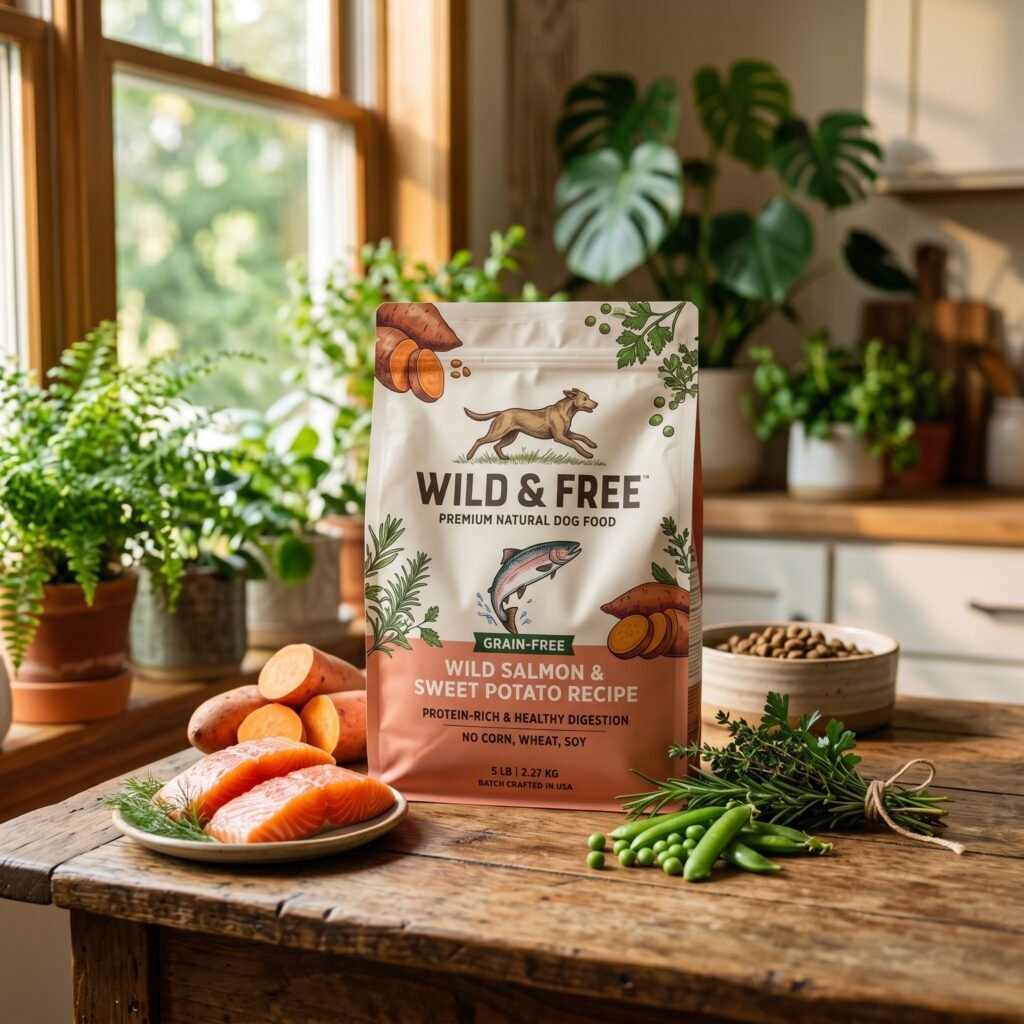
- Salmon and Sweet Potato (Grain-Free) — a popular option for dogs with grain sensitivities; deboned salmon leads the ingredient list
- Turkey and Brown Rice — a commonly rotated formula among owners looking for variety
Wet Food
Pure Harmony’s wet food lineup uses broth as the primary ingredient in most recipes (common in pâté and stew formats), with named meat protein following. These formulas work well as a topper to dry kibble or as a standalone option for dogs who struggle with hydration or have dental issues that make kibble difficult to chew.
Treats
The brand offers a small selection of dog treats, also free of artificial additives and focused on named protein sources.
Pure Harmony Dog Food Reviews: What Real Owners Are Saying
A comprehensive Pure Harmony dog food review would be incomplete without taking a hard look at what actual dog owners report. Across platforms like Amazon, Chewy, and pet community forums, here’s the overall picture:
The Positives
The most frequently mentioned benefits in reviews on Pure Harmony dog food are palatability and visible health improvements. Many owners report that dogs who were previously picky or had digestive issues adjusted well to Pure Harmony, particularly after a proper transition period. Improvements in coat shine, energy levels, and stool consistency are the most commonly cited outcomes.
The pricing is consistently praised. For a food that leads with named meat proteins and avoids artificial additives, the value-per-pound is genuinely competitive — and often significantly cheaper than brands making similar promises with heavier marketing budgets.
Dog owners in multi-dog households especially appreciate the variety across the product line, noting that having both grain and grain-free options within a single brand makes it easier to manage dogs with different dietary needs.
The Concerns
Transparency is the most common criticism. Because Pure Harmony is a private-label brand, there’s no published information about specific manufacturing facilities, ingredient country-of-origin, or third-party quality audits. For dog owners who prioritize supply chain accountability, this is a genuine gap.
A recurring theme in more recent pure harmony dog food reviews — particularly from 2024 into 2025 — involves reported formula inconsistencies. Approximately 13% of recent negative reviews mention that the food seemed to “change,” with some dogs no longer tolerating it as well or refusing it after previously enjoying it. This is a known risk with private-label brands: ingredient sourcing contracts can shift, and while the nutritional profile may remain AAFCO-compliant, subtle differences in formulation or ingredient suppliers can affect taste and digestibility.
A minority of owners also report that the protein percentage feels lower than comparable brands in the same price range, which aligns with the moderate-meat profile the data supports.
Overall Rating Consensus
Independent review platforms rate Pure Harmony between 3.5 and 4.5 stars across its product line. Dog Food Advisor gives most formulas 4 out of 5 stars — their second-highest tier — noting the use of named meat meals as the primary protein source as the key positive factor. Customer ratings on retailer platforms average around 4.2 out of 5 stars, which reflects a generally satisfied customer base with a meaningful but not dominant minority of critical voices.
Is Pure Harmony a Good Dog Food? An Honest Assessment
So — is Pure Harmony a good dog food? The honest answer is: it depends on what you’re looking for, and it depends on your dog.
It’s a strong choice if:
You’re on a budget but unwilling to compromise on the basics. Pure Harmony consistently delivers named meat protein as the first ingredient, avoids artificial additives, and meets AAFCO nutritional standards — all at a price that’s meaningfully lower than premium brands making similar claims. If your main alternative is a mainstream budget brand loaded with corn syrup and anonymous by-products, Pure Harmony is a clear step up.
Your dog is a healthy adult with no diagnosed sensitivities. For dogs without specific dietary needs, Pure Harmony’s moderate-protein, complete-nutrition profile is fully adequate. It’s not exceptional, but it’s genuinely good — and for many dogs, “genuinely good” is all that’s needed.
You want both grain and grain-free options under one brand. The flexibility of Pure Harmony’s product line makes it easy to rotate proteins or accommodate dogs with different needs in the same household.
You value accessibility. Unlike many premium brands that require online ordering or visits to specialty pet stores, Pure Harmony is available at major grocery retailers. For dog owners in areas without convenient access to large pet stores, this is a meaningful practical advantage.
It may not be the best choice if:
Your dog has a confirmed food sensitivity or complex dietary needs. While Pure Harmony offers grain-free options, the brand doesn’t publish detailed information about manufacturing practices, cross-contamination protocols, or ingredient traceability. Dogs with serious allergies or sensitivities may need a brand with greater transparency and dedicated allergen-free manufacturing.
You prioritize supply-chain transparency. If knowing exactly where your dog’s food is made and where ingredients come from is a non-negotiable for you, Pure Harmony’s private-label model won’t satisfy that requirement. Brands like Open Farm, Orijen, or The Farmer’s Dog publish significantly more information about sourcing and production.
You have a high-performance or working dog. Dogs with very high caloric and protein needs — working breeds, sporting dogs, or heavily active dogs — may benefit from formulas with higher protein and fat densities than Pure Harmony typically offers.
Batch-to-batch consistency is critical. The private-label model introduces more variability than a brand that manufactures its own food in dedicated facilities. If your dog has a particularly sensitive stomach, that variability is a real consideration.
How Does Pure Harmony Compare to Competitors?
To contextualize the pure harmony dog food review fairly, it helps to place the brand alongside similar options.
vs. Blue Buffalo: Blue Buffalo operates in a similar mid-premium space with heavier marketing and slightly higher price points. Ingredient quality is comparable in many formulas, but Blue Buffalo offers more specialized therapeutic and life-stage options. Pure Harmony typically wins on value per pound.
vs. Purina One: Purina One is a mass-market brand with strong research backing (Purina invests heavily in veterinary nutrition science). Pure Harmony has a cleaner-looking ingredient list (no corn, soy, or wheat), but Purina’s manufacturing rigor and transparency are harder to match at the private-label level.
vs. Taste of the Wild: Taste of the Wild is a grain-free brand at a similar or slightly higher price point with a strong reputation for novel proteins. Dogs that do well on grain-free diets may find Taste of the Wild comparable or preferable, but the DCM discussion applies equally here.
vs. Orijen/Acana: These are biologically appropriate, high-protein, highly transparent brands with significantly higher price tags. Orijen’s protein percentages (38–40%) far exceed Pure Harmony’s moderate profile. If budget allows and your dog thrives on high-meat diets, Orijen is in a different category entirely.
Pure Harmony holds its own as a mid-tier option — clearly above budget brands, honestly positioned below the super-premium tier, and appropriately priced for what it delivers.
Recall History
Pure Harmony has a largely clean safety record. The brand was involved in one recall in 2019, when Pure Harmony Chicken, Barley and Pea Dog Food in 14lb bags was removed from select grocery store shelves (Save Mart, Lucky, Food Maxx, and affiliated banners) due to an off odor. Importantly, this was not connected to a food safety issue — no contamination, toxin, or nutritional deficiency was identified. No recalls have been documented since, including through early 2026.
A clean recall record is a meaningful positive indicator, though it should be viewed as a baseline expectation rather than a distinguishing achievement.
Transitioning to Pure Harmony: Practical Tips
If you’ve decided to try Pure Harmony for your dog, a gradual transition is essential — especially if your dog is moving from a significantly different formula. Follow this schedule:
- Days 1–3: 75% current food, 25% Pure Harmony
- Days 4–6: 50% current food, 50% Pure Harmony
- Days 7–9: 25% current food, 75% Pure Harmony
- Days 10–14: 100% Pure Harmony
Some loose stools or mild gas during the transition period is normal. If digestive upset persists beyond two weeks or worsens significantly, consult your veterinarian before continuing.
When feeding Pure Harmony or any dry kibble, always ensure fresh water is available at all times. Follow the feeding guidelines on the packaging as a starting point, adjusting based on your dog’s actual weight, activity level, and body condition.
Frequently Asked Questions
Where can I buy Pure Harmony dog food? Pure Harmony is primarily sold through grocery retailers rather than specialty pet stores. It’s available in-store at many major supermarket chains. Online availability through Amazon is more limited and stock can be inconsistent. It is generally not stocked at Chewy or Petco.
Is Pure Harmony grain-free? Pure Harmony offers both grain-inclusive and grain-free formulas. The grain-inclusive options use oats, barley, and brown rice. Grain-free options use peas, chickpeas, lentils, and sweet potato as carbohydrate sources.
Does Pure Harmony use artificial preservatives? No. Pure Harmony formulas use natural preservation (mixed tocopherols / vitamin E) and do not contain BHA, BHT, or ethoxyquin.
Is Pure Harmony made in the USA? Pure Harmony is produced in the United States, manufactured by third-party co-packers on behalf of Topco Associates LLC. Specific facility information is not publicly disclosed.
Has Pure Harmony been recalled? One limited, non-safety-related recall occurred in 2019 (off odor; no contamination). No recalls have been issued since, through early 2026.
Is Pure Harmony suitable for puppies? Yes, provided you select a formula specifically labeled for puppies or “all life stages.” Not all Pure Harmony recipes are appropriate for growing puppies — check the AAFCO nutritional adequacy statement on the specific product.
Final Verdict
Pure Harmony dog food occupies a legitimate and useful space in the market. It’s not trying to compete with Orijen or The Farmer’s Dog, and it doesn’t need to. What it delivers — real meat first, no artificial additives, AAFCO-compliant nutrition, and genuine affordability — is exactly what a large segment of dog owners needs.
For healthy adult dogs without specific medical or dietary requirements, Pure Harmony is a good dog food that represents meaningful value and a clean-enough ingredient profile to feel confident feeding it daily. For dogs with complex sensitivities, performance demands, or owners who require high transparency from a brand, the private-label model will present limitations that point toward other options.
If you’re on the fence, the simplest approach is to try one bag using the gradual transition guide above, monitor your dog’s digestion, coat, and energy over four to six weeks, and let the results speak for themselves. Your dog’s response is ultimately the most reliable review on Pure Harmony dog food you’ll get.