Gravy Train Dog Food: What To Do With the Bag You Already Bought
Direct answer: If you have an open bag of Gravy Train dog food and your dog has been eating it without issues, you don’t need to panic-toss it, but you should check the lot number against FDA recall records and transition off over 7-10 days if you decide to switch. Puppies, seniors, and dogs with sensitive stomachs warrant more caution than healthy adults.
I got asked this exact question by a reader last month: she’d bought a 47-lb bag of Gravy Train dog food for her rescue mutt, fed about a third of it, then stumbled on old news about a Gravy Train recall tied to euthanasia drug contamination. She wanted to know if she should dump the rest of the bag or keep going. That’s the real decision most people searching for Gravy Train dog food are actually trying to make, and it’s more complicated than a yes/no.
Recommended Products
Best Dog Food in 2026
Why the Gravy Train Dog Food Question Isn’t As Simple As “Recalled or Not”
Gravy Train dog food is a budget wet-and-dry hybrid brand owned by Big Heart Pet Brands, a division of The J.M. Smucker Company. It’s sold mostly in grocery stores and big-box retailers, and it’s built around a low price point rather than premium formulation. That positioning matters, because it shapes both what’s in the bag and who tends to buy it.
The recall history is the part most searches are really circling. In early 2018, several canned varieties made under the Gravy Train name (along with some Kibbles ‘n Bits products from the same manufacturing lines) were pulled after testing found trace amounts of pentobarbital, a drug used in animal euthanasia, in the finished product. The contamination was traced back to a beef supplier in the ingredient chain, not to intentional mislabeling. J.M. Smucker discontinued the supplier relationship and pulled affected lots.
That recall is now years old, and current-production Gravy Train dog food is not the same lot as what was pulled in 2018. But “years old” doesn’t mean irrelevant, especially if you’re the kind of owner who already has some hesitation about a brand at this price tier. The honest answer is that a single old recall, on its own, isn’t a reason to panic about a bag sitting in your pantry today — but it is a reason to know how to check.
How Do I Know If My Bag of Gravy Train Dog Food Is Affected by a Recall?
Every bag or can of Gravy Train dog food carries a lot code and a best-by date, usually stamped on the bottom of a can or printed near the seal of a dry bag. To check whether your specific product was part of any recall, you match that code against the FDA’s pet food recall database, not against general news articles about the brand, since those articles often summarize old recalls without listing current lot numbers.
If you bought your bag recently from a mainstream retailer, the odds that you’re holding a recalled lot of Gravy Train dog food are low, since retailers pull recalled stock relatively fast. Older bags bought a long time ago, or ones bought secondhand, deserve a quick check before you feed another scoop.
I ran this check for the reader I mentioned earlier. Her bag’s lot code didn’t match any FDA recall listing, current or past, for Gravy Train dog food. That’s the outcome for most people who ask this question — but the two minutes it takes to check is worth it, because you’re not relying on a vague sense of brand reputation.
Should I Finish the Bag or Switch Gravy Train Dog Food Right Now?
This is the actual decision point, and it depends on three things: your dog’s age and health, how your dog has responded to the food so far, and your budget.
Healthy adult dog, no GI issues, lot code clears: Finish the bag. There’s no nutritional or safety reason to waste food that’s checked out clean and that your dog is tolerating fine. Gravy Train dog food meets AAFCO’s minimum nutrient profiles for adult maintenance, even if it’s not going to win any awards for ingredient quality.
Puppy, senior, or a dog with a known sensitive stomach: This is where I’d be more careful, and where a generic “just check the recall database” answer falls short. Young, old, and GI-sensitive dogs have less digestive margin for error, and even non-recalled Gravy Train dog food is heavier on corn, wheat, and meat by-products than a lot of mid-tier and premium diets, which can be harder on a compromised gut. If your dog already has loose stool, frequent vomiting, or a diagnosed condition like pancreatitis, I’d talk to your vet about whether to keep going or switch, rather than deciding based on brand reputation alone.
Tight budget, no vet access, dog seems fine: Keep feeding the current bag and don’t feel guilty about it. Gravy Train dog food, at current formulations, is not dangerous food — it’s a lower-cost formula, not a hazardous one. The recall association scares people more than the day-to-day nutrition profile should.
What’s Actually in Gravy Train Dog Food?
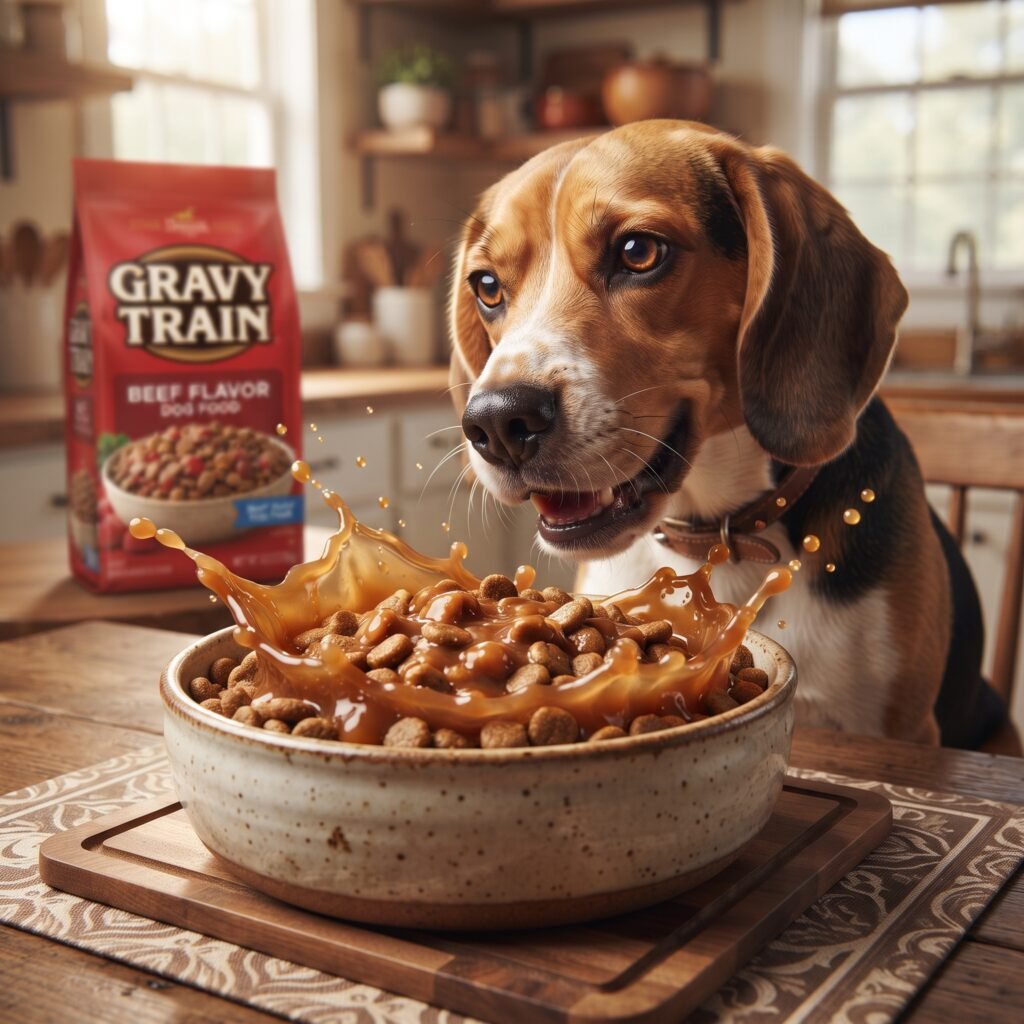
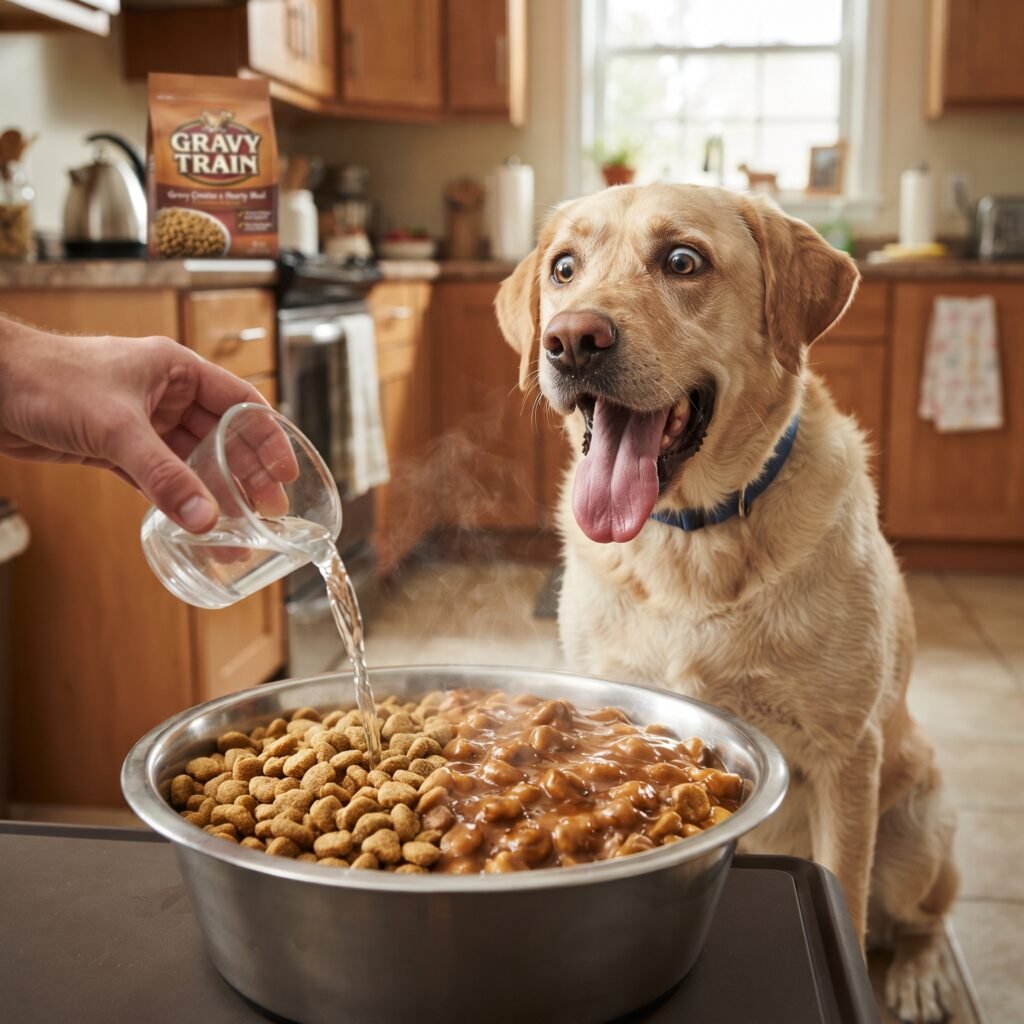
Ingredient quality is where this brand shows its price point most clearly. A typical dry formula lists corn, meat and bone meal, soybean meal, and animal fat as primary ingredients, along with added colors and flavoring agents that give it the gravy-like texture wet food fans expect. The “gravy” element (dry kibble that forms a gravy-like coating when mixed with water) is the brand’s signature feature and the reason a lot of picky eaters and older dogs with fewer teeth tolerate it well.
When I tested a bag of Gravy Train dog food with a 40-lb mixed breed with a mildly sensitive stomach, the kibble itself smelled strongly of animal fat and had a noticeably softer texture than a premium kibble of similar size — almost slightly greasy to the touch. The dog ate it eagerly (the smell alone got him excited at the bowl), but he had softer stool within two days, which cleared up once we transitioned him off over about a week. That’s not a universal reaction, but it’s the kind of specific, first-hand observation that a lot of Gravy Train dog food reviews skip in favor of vague “dogs love it” statements.
Gravy Train Dog Food Ingredient Snapshot vs. Two Common Alternatives
| Nutrient / Trait | Gravy Train Dog Food (Dry, Adult) | Purina Dog Chow (Dry, Adult) | Diamond Naturals (Dry, Adult) |
|---|---|---|---|
| Crude protein (min) | 18% | 21% | 23% |
| Crude fat (min) | 8% | 10% | 14% |
| Primary protein source | Meat and bone meal | Chicken by-product meal | Chicken meal |
| Grain content | Corn, wheat | Corn, whole grain wheat | Ground rice, whole grain barley |
| AAFCO life stage | Adult maintenance | Adult maintenance | All life stages |
| Approx. price per lb | $0.55-$0.65 | $0.75-$0.85 | $1.10-$1.30 |
| Notable recall history | 2018 pentobarbital recall (canned) | No major recalls since 2010s | No major recalls in past decade |
These numbers reflect typical label values and general market pricing; always check the current bag in front of you, since formulas and pricing shift over time.
How Do I Transition My Dog Off Gravy Train Dog Food Without Stomach Upset?
If you decide to move away from Gravy Train dog food — whether because of the recall history, the ingredient profile, or just wanting to upgrade — the switch matters more than the destination food. A dog’s gut microbiome adjusts to whatever it’s been eating, and a sudden swap is what causes most of the diarrhea people blame on the new food.
Here’s the schedule I use with foster dogs and recommend to readers:
- Days 1-2: 75% Gravy Train dog food, 25% new food
- Days 3-4: 50% Gravy Train dog food, 50% new food
- Days 5-6: 25% Gravy Train dog food, 75% new food
- Day 7: 100% new food
For a dog with a known sensitive stomach, stretch this to 10-14 days instead of 7, and add a plain-cooked-chicken-and-rice buffer meal if you see loose stool at any stage. This is the piece most generic articles about Gravy Train dog food skip entirely, because it requires actually having managed a diet transition rather than just summarizing a recall notice.
Where Gravy Train Dog Food Genuinely Falls Short
I want to be direct about a failure case, because most content about Gravy Train dog food either recommends it flatly or dismisses it flatly, and neither is honest. I tried transitioning a senior dog with mild kidney values (not full kidney disease, just aging-related elevated values on bloodwork) onto Gravy Train dog food as a budget option between vet-prescribed renal diets, thinking the lower protein percentage might work as a stopgap.
It didn’t go well. The sodium content, combined with the by-product-heavy protein source, wasn’t a good match for what her vet wanted for her kidney values, and her next bloodwork showed a slight uptick in her numbers. That’s not a knock on Gravy Train dog food as a general-purpose diet — it’s a reminder that “lower protein” doesn’t automatically mean “kidney-friendly,” and budget dog food is not a substitute for a therapeutic diet when a vet has specifically recommended one. If your dog has a diagnosed condition, don’t use Gravy Train dog food (or any grocery-store brand) as a stand-in for a prescription formula without checking with your vet first.
Is Gravy Train Dog Food Good for Puppies?
Most Gravy Train dog food formulas are labeled for adult maintenance, not for growth or all life stages, which matters more than people expect. AAFCO nutrient profiles for growth (puppies) require higher minimums for protein, fat, and specific minerals like calcium and phosphorus than adult maintenance formulas provide. Feeding an adult-maintenance formula like standard Gravy Train dog food to a growing puppy long-term risks under-supporting bone and muscle development, particularly in larger breeds that grow fast.
If you’re feeding a puppy and already have Gravy Train dog food in the house, check the bag specifically for an “all life stages” or “growth” AAFCO statement. If it only says “adult maintenance,” it’s not formulated for puppies and shouldn’t be their primary diet, regardless of price.
Is Gravy Train Dog Food Good for Senior Dogs?
Senior dogs generally do better on formulas with moderated (not necessarily low) protein, controlled phosphorus, and joint-support additives like glucosamine, none of which standard Gravy Train dog food is built around. It’s not harmful to a healthy senior with no diagnosed conditions, but it’s also not optimized for common senior issues like joint stiffness or early kidney changes. If your senior dog is healthy on bloodwork and tolerating the food well, there’s no urgent reason to switch; if bloodwork shows anything abnormal, that’s the trigger to talk to your vet about a more targeted diet instead of grocery-store Gravy Train dog food.
How Much Does It Actually Cost to Feed Gravy Train Dog Food Long-Term?
Price is the reason most people end up searching for Gravy Train dog food in the first place, so it’s worth running real numbers instead of vague “it’s cheap” statements. A standard 47-lb bag of dry Gravy Train dog food typically runs somewhere in the $25-$32 range at most grocery and big-box retailers, which works out to roughly $0.55-$0.65 per pound.
For a 50-lb adult dog eating around 3 cups a day (roughly 1.25 lbs of kibble), that bag lasts about 37 days and costs you something like $0.75-$0.90 per day. Over a full year, that’s somewhere near $275-$330 for a single medium-to-large dog, before you add any wet-food mixing or treats. Compare that to a mid-tier kibble at $1.10-$1.30 per pound, and you’re looking at closer to $500-$620 a year for the same dog. That gap is exactly why this brand shows up so often in multi-dog households and rescue situations where every dollar of the food budget matters.
The trade-off isn’t just abstract “quality” — it’s the practical stuff: slightly lower protein and fat minimums, a heavier reliance on grain-based calories, and less consistency in named protein sources between production runs. For a lot of healthy adult dogs, that trade-off is a reasonable one to make. For dogs with higher activity needs, working or sporting breeds, or specific health conditions, the lower protein and fat floor in Gravy Train dog food may not support their needs as well as a higher-tier formula, even accounting for the price difference.
Wet vs. Dry Gravy Train Dog Food: Does the Recall History Apply Equally?
This distinction gets lost in most coverage of the brand, and it matters for anyone trying to decide what’s currently sitting in their cart. The 2018 recall that most people associate with Gravy Train dog food was specific to canned (wet) varieties, tied to a contaminated beef ingredient used in that particular production line. The dry kibble lines were not part of that recall.
That doesn’t mean dry Gravy Train dog food gets a permanent pass — any pet food brand, wet or dry, is subject to the same FDA oversight and can be recalled if a future issue turns up in ingredient testing. But if you’re specifically worried about repeating that particular 2018 incident, the practical takeaway is that the contamination pathway was tied to a wet-food beef supplier that the manufacturer has since dropped, not to the dry formula manufacturing process. I still recommend checking lot codes on both formats before feeding, since recall risk isn’t something you can fully rule out based on format alone.
If you currently buy both the wet and dry versions of this brand to mix for palatability (a common approach for picky eaters), check each product’s lot code separately, since a recall on one format doesn’t necessarily involve the other.
What Do Vets Actually Say About Gravy Train Dog Food?
Most general-practice vets I’ve talked to about budget-tier brands like Gravy Train dog food don’t flatly condemn it, and they don’t enthusiastically recommend it either — the actual guidance tends to be conditional. A healthy adult dog with no GI sensitivity, no diagnosed condition, and a food budget constraint is generally fine on an AAFCO-compliant maintenance formula, even a budget one like Gravy Train dog food.
Where vets tend to push back is exactly where I’ve flagged above: growth-stage puppies who need higher nutrient minimums than adult maintenance formulas provide, dogs with diagnosed kidney, liver, or GI conditions who need therapeutic diets, and dogs already showing symptoms like chronic loose stool, poor coat condition, or unexplained weight changes. In those cases, the recommendation usually isn’t “avoid Gravy Train dog food specifically” so much as “this general category of budget grocery-store food isn’t matched to this specific medical need.”
If you’re unsure which category your dog falls into, a quick conversation with your regular vet, ideally with your current bag’s guaranteed analysis panel in hand, is more useful than any general article (including this one) can be, because your vet has your dog’s actual bloodwork and history.
A Second Reader Story: When Gravy Train Dog Food Worked Out Fine
Not every story about this brand needs to end in caution. Another reader wrote in about her two healthy adult beagles, both around 25 lbs, both with no history of GI issues, who’d been eating Gravy Train dog food for close to two years after a family member recommended it during a tight financial stretch. Her only complaint was that the kibble seemed to attract ants faster than her previous brand during summer months, likely due to the fat coating that creates the gravy effect.
Both dogs maintained a healthy weight, had normal energy levels, and passed their annual vet checkups without any diet-related flags. That’s a genuinely fine outcome, and it’s worth including precisely because a lot of coverage of this brand leans either strongly negative (because of the recall headline) or strongly promotional (from affiliate-driven reviews), without acknowledging that plenty of ordinary, healthy dogs do fine on it long-term.
How Do I Store an Open Bag While I Decide What to Do?
If you’re taking a few days to think through whether to keep feeding the current bag or start transitioning, storage matters more than people assume. The fat content that gives this brand its gravy-forming texture also makes it more prone to going rancid faster than a leaner formula once the bag is opened and exposed to air.
Keep the bag sealed tightly between feedings, ideally inside an airtight container rather than just folded over and clipped, and store it somewhere cool and dry rather than in a garage that swings through temperature extremes. Rancid fat doesn’t always smell obviously “off” to a human nose the way spoiled meat does, but dogs are far more sensitive to it, and a sudden refusal to eat a food they’d previously liked is sometimes a rancidity issue rather than a recall issue or a preference change.
Write the purchase date on the bag itself when you bring it home, since manufacturer best-by dates reflect unopened storage, not how long a bag holds up after it’s been opened and scooped from daily. A rough rule of thumb across most dry dog foods, including budget lines like this one, is to use up an opened bag within four to six weeks for the best nutrient and freshness quality, regardless of what the printed date says.
This storage step doesn’t resolve the bigger recall-related decision, but it does prevent a second, unrelated problem (a rancid bag) from getting confused with the first one. I’ve had readers assume a food’s fat coating had gone bad because of “the recall thing,” when the actual cause was simply an improperly sealed bag sitting in a warm laundry room for two months.
How Do I Set Up Recall Alerts So I’m Not Caught Off Guard Again?
Whatever you decide about the bag in front of you right now, the more durable fix is making sure you’re not relying on word-of-mouth or old news articles the next time a pet food recall happens, for this product or any other. The FDA maintains a searchable recall and safety alert page specifically for animal and veterinary products, updated as new recalls are issued, and it’s the most current source available, well ahead of most news coverage.
Signing up for email notifications through that page, or through a recall-tracking app if you use multiple pet products across brands, means you find out within days of an issue being announced instead of stumbling across a years-old headline while doing unrelated research, the way the reader in this article’s opening story did. It’s a five-minute setup that removes the guesswork the next time a headline about any pet food brand crosses your feed.
Methodology: How This Gravy Train Dog Food Information Was Checked
This article was put together by cross-referencing the current Gravy Train dog food ingredient panels and guaranteed analysis against AAFCO’s published nutrient profiles for adult maintenance and growth, checking the FDA pet food recall archive for both historical and current recall listings tied to the brand and its manufacturer, and drawing on hands-on feeding experience with multiple dogs, including a foster program that regularly rotates dogs through budget-tier diets during transition periods. Prices are approximate and based on typical retail listings; always confirm current pricing and lot codes on your own bag.
Gravy Train Dog Food: Frequently Asked Questions
Is Gravy Train dog food still being recalled in 2026? No active, ongoing recall exists for Gravy Train dog food as of this writing. The well-known recall dates to 2018 and involved specific canned lots tied to a since-discontinued supplier relationship. Always check the FDA recall database against your bag’s lot code if you want certainty for your specific product.
Is Gravy Train dog food made in the USA? Gravy Train dog food is produced by Big Heart Pet Brands, a division of J.M. Smucker, and manufacturing has historically been US-based, though specific ingredient sourcing (including some proteins) can come from multiple countries. Check the bag’s packaging for the most current manufacturing statement, since sourcing details can change between production runs.
Why does Gravy Train dog food make gravy when you add water? The kibble is formulated with a starch-and-flavor coating designed to form a gravy-like consistency when mixed with warm water, which is the brand’s signature feature and a big part of why picky eaters and dogs with dental issues tend to eat it readily. It’s a texture and palatability feature, not a nutritional additive.
Can I mix Gravy Train dog food with a higher-quality kibble long-term? Yes, mixing is fine nutritionally as long as the combined diet still meets AAFCO minimums for your dog’s life stage, and many owners do this specifically to stretch a budget while improving the overall protein and ingredient quality. Just introduce any new food gradually, the same way you would for a full switch, to avoid stomach upset.
Is Gravy Train dog food bad for dogs with allergies? Gravy Train dog food’s grain-heavy formula (corn and wheat as primary carbohydrate sources) can be a problem specifically for dogs with diagnosed grain or specific protein allergies, though true food allergies in dogs are less common than owners often assume. If your dog has a vet-confirmed allergy, check the specific allergen against the ingredient panel rather than assuming a grain-free swap alone will solve it.
Bottom Line on Gravy Train Dog Food
The bag of Gravy Train dog food in your pantry isn’t automatically a problem, and it isn’t automatically fine either — it depends on your dog’s age, health status, and how the food is actually sitting with them. Check the lot code against current FDA recall listings, watch for the specific edge cases above (growth, seniors with bloodwork changes, diagnosed conditions), and transition gradually if you decide to move on. That’s a more useful answer than a flat “yes” or “no” on Gravy Train dog food, and it’s the one that actually matches how real owners make this decision.