
Best Dog Food for Basset Hound (Top Picks for 2026)
Dog food for Basset Hound should support joints and weight control. Discover the best options for your dog.
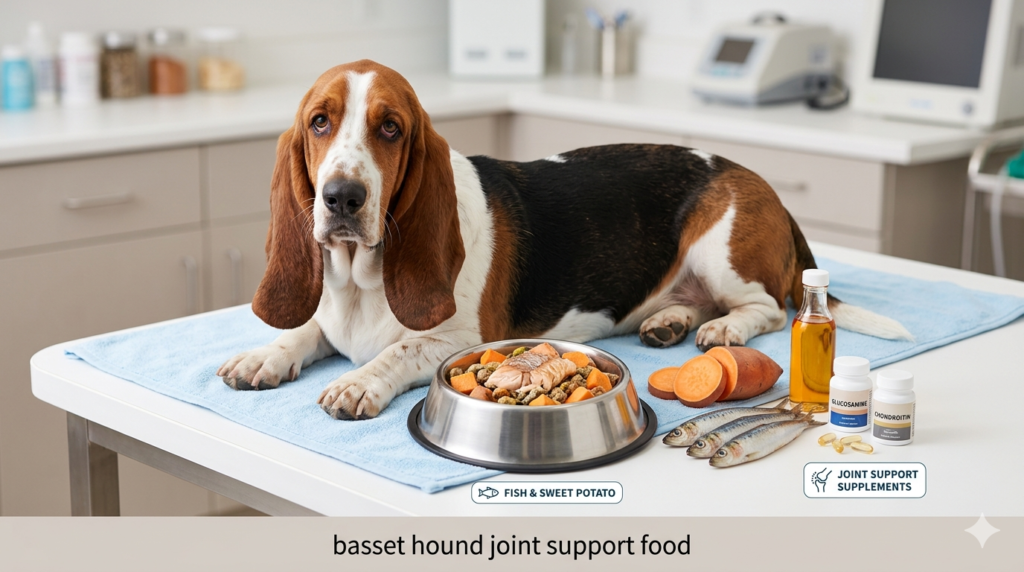
Few dog breeds are as immediately loveable as the Basset Hound — those mournful eyes, impossibly long ears, and a low-slung build that belies a surprisingly powerful scenting ability second only to the Bloodhound. Despite their relaxed, unhurried demeanor, Basset Hounds have specific and sometimes demanding nutritional needs that require genuine understanding to get right. Choosing the correct dog food for Basset Hound is not a casual decision — it has direct consequences for the breed’s well-documented health vulnerabilities, including obesity, joint problems, bloat, ear infections, and digestive sensitivity.
Understanding the Basset Hound Before Choosing a Food
Selecting the right dog food for Basset Hound begins with a genuine understanding of what this breed is — physically, metabolically, and temperamentally. Basset Hounds are classified as medium-to-large dogs, typically weighing between 40 and 65 pounds at adult maturity, with a low-slung, heavily muscled body supported by short, dense legs. Their name derives from the French word “bas,” meaning low — a direct reference to their distinctive ground-hugging silhouette that made them such effective trailing hounds in thick cover.
Despite being bred for endurance hunting — capable of tracking quarry for hours across varied terrain — today’s Basset Hound is predominantly a calm, low-to-moderate activity companion dog. This creates one of the central nutritional challenges in choosing dog food for Basset Hound: the breed’s heritage required genuine athleticism and caloric fuel, but their modern lifestyle often demands far less energy than their appetite suggests they need. Basset Hounds are notoriously enthusiastic eaters with a well-documented tendency to overeat if given the opportunity — and their relatively low daily activity levels mean excess calories accumulate quickly as body fat rather than being burned for energy.
Understanding this metabolic reality is the foundation of good dog food for Basset Hound selection. The ideal formula must be nutritionally complete and sufficiently satiating — keeping the dog feeling full and content — while remaining calorie-controlled enough to prevent the weight gain that can so rapidly compromise this breed’s joint health, cardiovascular function, and overall longevity.
Nutritional Requirements: What the Best Dog Food for Basset Hounds Must Deliver
The right dog food for Basset Hound must address the breed’s specific macro and micronutrient requirements across their entire lifespan. Here is a detailed breakdown of what the nutritional science and breed-specific guidance recommends:
High-Quality Animal Protein
Protein is the non-negotiable foundation of any quality dog food for Basset Hound. This breed’s substantial musculature requires consistent amino acid supply for maintenance, repair, and immune function. Adult Basset Hounds benefit from a protein content of 22% to 30% crude protein from clearly named animal sources. Independent reviewers and veterinary nutritionists consistently recommend chicken, turkey, salmon, lamb, and lean beef as ideal primary protein sources in dog food for Basset Hound — each delivering complete amino acid profiles with strong bioavailability.
Be cautious of dog food for Basset Hound formulas that rely heavily on plant-based proteins to inflate their protein percentage. Soy protein concentrate, pea protein, and potato protein boost numbers on the guaranteed analysis panel but deliver inferior amino acid profiles compared to animal sources. The first ingredient in any quality dog food for Basset Hound should always be a named animal protein.
Controlled, Moderate Fat Content
Fat provides the most calorie-dense macronutrient in any dog food for Basset Hound, and for a breed this prone to weight gain, fat content requires careful management. A fat content of 8% to 15% is the recommended range for most Basset Hounds — sufficient to support energy needs, coat health, fat-soluble vitamin absorption, and brain function, without contributing to the caloric excess that tips this breed toward obesity.
Omega-3 fatty acids from fish oil, salmon oil, or flaxseed are particularly valuable additions in any dog food for Basset Hound. Both EPA and DHA omega-3s reduce systemic inflammation — directly beneficial for the joint health challenges this breed faces — while supporting coat condition, skin barrier integrity, and cognitive function as dogs age.
Complex Carbohydrates and Digestive Fiber
Complex carbohydrates in a quality dog food for Basset Hound provide sustained energy release without the blood sugar spikes associated with simple sugars or refined grains. Sweet potatoes, brown rice, oats, and barley are the preferred carbohydrate sources — each providing meaningful fiber alongside their caloric contribution. Fiber is particularly important in dog food for Basset Hound formulas because it promotes satiety, helping the dog feel full longer on fewer total calories — a meaningful advantage for a breed that would happily eat well past its caloric requirements at every meal.
Joint-Supporting Micronutrients
Given the Basset Hound’s documented predisposition to hip dysplasia, elbow dysplasia, and luxating patella — conditions directly worsened by excess body weight and inadequately supported by diet — any quality dog food for Basset Hound should include meaningful quantities of glucosamine and chondroitin, either naturally derived from quality meat meals or added directly as supplements. These compounds support cartilage integrity, synovial fluid production, and joint cushioning — reducing the mechanical wear that accumulates across this breed’s relatively short-legged, long-bodied frame over years of normal movement.
Omega Fatty Acids, Vitamins, and Minerals
A complete dog food for Basset Hound must deliver a comprehensive micronutrient profile including calcium and phosphorus for bone density, zinc for immune function and skin health, B vitamins for neurological support and energy metabolism, and antioxidant vitamins A, C, and E that protect cellular health and reduce the oxidative damage associated with aging. Ear health — a significant concern in this breed given their long, low-hanging ear canals — benefits from formulas with good omega fatty acid profiles and limited allergen exposure, as chronic ear infections in Basset Hounds are frequently linked to dietary triggers.
Key Health Issues in Basset Hounds That Dog Food Can Help Manage
The Basset Hound is a breed with several well-documented health vulnerabilities, and the right dog food for Basset Hound plays a meaningful role in reducing the risk or severity of each of them:
Obesity — The Most Critical Concern
Obesity is the single most damaging health condition in Basset Hounds, and the most preventable through appropriate dog food for Basset Hound management. Excess body weight amplifies mechanical stress on already vulnerable joints, increases cardiovascular strain, elevates diabetes risk, and reduces overall life expectancy in a breed whose average lifespan is already a modest 12 to 13 years. Dog Food Advisor specifically recommends considering a “less active” or “weight management” formula for any Basset Hound that is already overweight or prone to rapid weight gain. Measuring every portion with a kitchen scale — rather than relying on the bag’s feeding guide, which frequently overstates requirements — is one of the most impactful habits any Basset Hound owner can adopt.
Bloat (Gastric Dilatation-Volvulus)
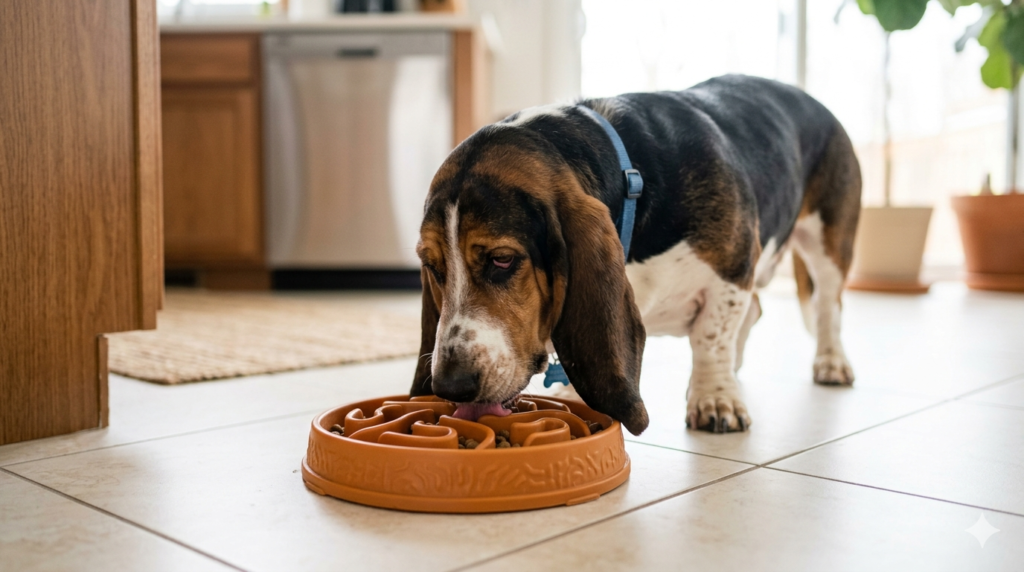
Bloat is a life-threatening emergency condition that disproportionately affects deep-chested breeds — and the Basset Hound’s chest depth places them in this high-risk category. Hepper specifically warns that citric acid in dog food for Basset Hound formulas may increase bloat risk, and recommends avoiding ingredients like brewer’s yeast, soybeans, and lentils in dogs that already struggle with gas and bloating. Practical feeding management is as important as ingredient selection: divide the daily food allowance into two to three small meals rather than one large feeding, never feed immediately before or after vigorous exercise, and use a slow-feeder bowl to extend eating time and reduce aerophagia (air swallowing during rapid eating).
Joint Disease — Hip and Elbow Dysplasia
The Basset Hound’s disproportionately long body relative to its short legs creates inherent biomechanical stress on the spine, hips, and elbow joints. Many Basset Hounds develop varying degrees of hip dysplasia, elbow dysplasia, or luxating patella over their lives. The right dog food for Basset Hound addresses joint health through multiple simultaneous mechanisms: glucosamine and chondroitin for cartilage support, omega-3 fatty acids for anti-inflammatory protection, and precisely controlled caloric density to prevent the body weight accumulation that accelerates joint damage. Starting joint-supportive dog food for Basset Hound formulas early — before symptoms appear — is significantly more effective than beginning supplementation after degeneration is already established.
Ear Infections
The Basset Hound’s long, pendulous ears create a warm, dark, poorly ventilated ear canal that is structurally prone to bacterial and yeast overgrowth. While regular ear cleaning is essential, diet plays a genuine supporting role: dog food for Basset Hound formulas that minimize common food allergens and provide strong omega-3 content reduce the systemic inflammation that makes ear infections more frequent and harder to resolve. If your Basset Hound has recurring ear infections alongside digestive symptoms like soft stools or excessive gas, dietary allergy may be contributing — and switching to a limited ingredient formula may meaningfully reduce the frequency of episodes.
Digestive Sensitivity
Many Basset Hounds have sensitive digestive systems that respond poorly to dietary changes, artificial additives, or low-quality ingredients. The ideal dog food for Basset Hound for digestive health features a short, clean ingredient list with identifiable whole-food ingredients, natural preservatives, and added probiotics to support microbiome balance. Avoid switching foods abruptly — any transition to a new dog food for Basset Hound should be made gradually over 10 to 14 days to minimize the risk of vomiting, diarrhea, or prolonged digestive disruption.
Best Dog Food for Basset Hounds: Top Formulas Reviewed for 2026
The following brands consistently earn top marks from independent reviewers, veterinary nutritionists, and verified Basset Hound owners in 2026:
1. The Farmer’s Dog (Best Overall Fresh Food)
Dogster ranks The Farmer’s Dog turkey recipe as the best overall dog food for Basset Hound currently available. As a fresh, human-grade, subscription-delivered food formulated by veterinary nutritionists with pre-portioned meals customized to your specific dog’s weight and caloric needs, The Farmer’s Dog eliminates the guesswork from portion control — a critical advantage for a breed this prone to weight gain. The high-quality protein, minimal processing, and absence of artificial additives make it a premium choice for owners prioritizing maximum nutritional integrity.
2. Orijen Dry Dog Food (Best Premium Kibble)
Dog Food Advisor recommends Orijen as the best dry dog food for Basset Hound for owners seeking a premium kibble option. Its WholePrey philosophy delivers high protein from diverse animal sources including meat, organs, and cartilage, with naturally occurring glucosamine supporting joint health. The grain-free formula supports lean muscle maintenance and weight management — though owners should discuss the grain-free DCM question with their veterinarian before committing long-term.
3. Raised Right Puppy Growth Turkey (Best for Puppies)
Dog Food Advisor specifically highlights Raised Right as the best dog food for Basset Hound puppies among fresh food options. Its exceptionally high protein content — 59.4% on a dry matter basis — combined with fish oil-sourced omega-3s and a comprehensive amino acid profile makes it ideal for the rapid growth demands of Basset Hound puppies in their first year of life. Nutritionist Laura Ward specifically praises its amino acid density and mineral balance for young, fast-growing dogs.
4. CANIDAE PURE (Best Puppy Kibble)
For owners seeking a quality dry formula puppy option, the best dog food for Basset Hound puppy from the kibble category is consistently CANIDAE PURE — featuring just nine whole-food ingredients, at least 30% crude protein, no corn, soy, wheat, or artificial ingredients, and a HealthPLUS blend of probiotics, antioxidants, and omega fatty acids added after cooking to preserve their integrity. Its simple, clean formulation is particularly suited to puppies with sensitive digestive systems.
5. Natural Balance L.I.D. (Best for Digestive Sensitivity and Allergies)
For Basset Hounds with confirmed food allergies or chronic digestive issues, Natural Balance Limited Ingredient Diet is consistently recommended as good dog food for Basset hounds with sensitivities. Single-protein, grain-free formulas with a short, recognizable ingredient list minimize allergenic exposure and simplify the identification of dietary triggers during elimination diet trials. Multiple protein options allow owners to select the option best suited to their individual dog’s history.
6. Merrick Grain-Free (Best Joint-Support Kibble)
Merrick’s grain-free formulas are specifically praised by Hepper for their meaningful glucosamine and chondroitin content — a particularly relevant feature in dog food for Basset Hound given the breed’s joint vulnerabilities. With a high crude protein level of 34%, no poultry ingredients in certain formulas (beneficial for chicken-sensitive dogs), and added probiotics for digestive support, Merrick provides a well-rounded nutritional profile at a moderate price point.
7. American Journey Active Life (Best Budget Option)
For owners seeking a quality dog food for Basset Hound at a more accessible price point, American Journey Active Life delivers beef as the first ingredient, meaningful protein and mineral content, and antioxidant-rich vitamins without by-products — representing genuine nutritional value at a lower cost than most premium alternatives.
Dog Food for Basset Hound Puppies: A Critical Developmental Window
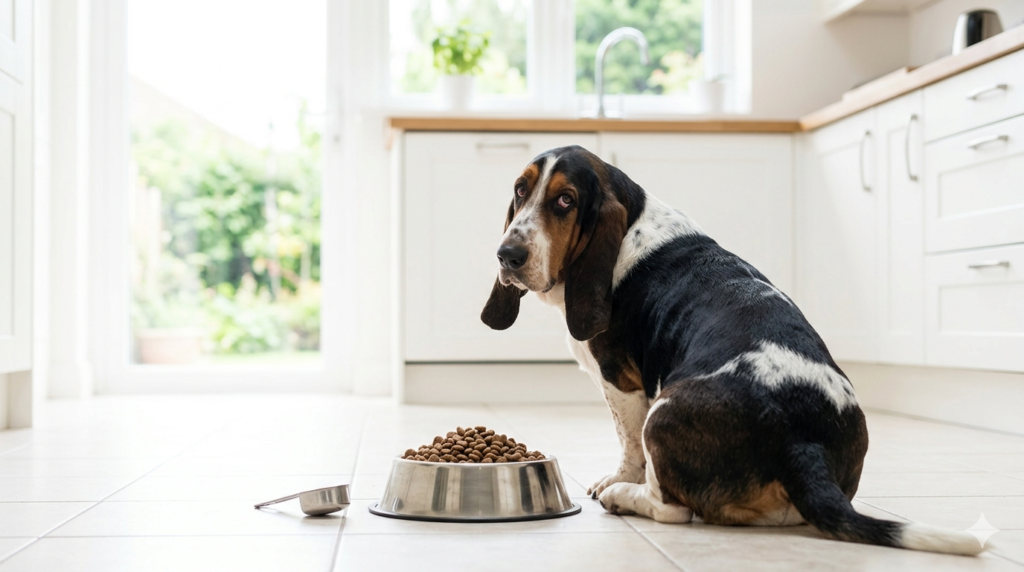
Basset Hound puppies have substantially elevated nutritional requirements relative to adults, and selecting the right dog food for Basset Hound puppies during this developmental window has lifelong consequences for skeletal integrity, joint health, and immune function. Puppies require significantly higher protein and fat content than adults to fuel rapid bone growth, muscle development, organ maturation, and immune system development.
Any dog food for Basset Hound during puppyhood must carry an AAFCO nutritional adequacy statement specifically covering “growth” or “all life stages” — adult maintenance formulas lack the elevated nutrient densities puppies require and should never be fed to growing dogs. Feed Basset Hound puppies three times daily until six months of age, then transition to twice-daily feeding as they approach adult size. From a nutrition standpoint, Basset Hounds become adults once they reach approximately 90% of their expected adult weight — typically around 12 to 18 months of age.
Despite their higher nutritional requirements, puppy portion discipline remains important. Overfeeding Basset Hound puppies — even with high-quality food — promotes excessively rapid growth that the developing skeleton cannot accommodate, increasing the risk of developmental orthopedic disease in a breed already genetically predisposed to joint issues.
Feeding Schedule and Portion Control for Basset Hounds
Even the best-formulated dog food for Basset Hound will not deliver its nutritional potential without a consistent, controlled feeding structure. These practical guidelines apply across all life stages:
- Feed two to three small meals daily: Never one large meal — dividing the daily intake reduces bloat risk, promotes more stable blood glucose, and prevents the rapid eating behavior that increases aerophagia in deep-chested breeds
- Measure every portion with a kitchen scale: Volume measurements using cups are imprecise; weight-based portioning is the most accurate approach to caloric control in a breed this prone to weight gain
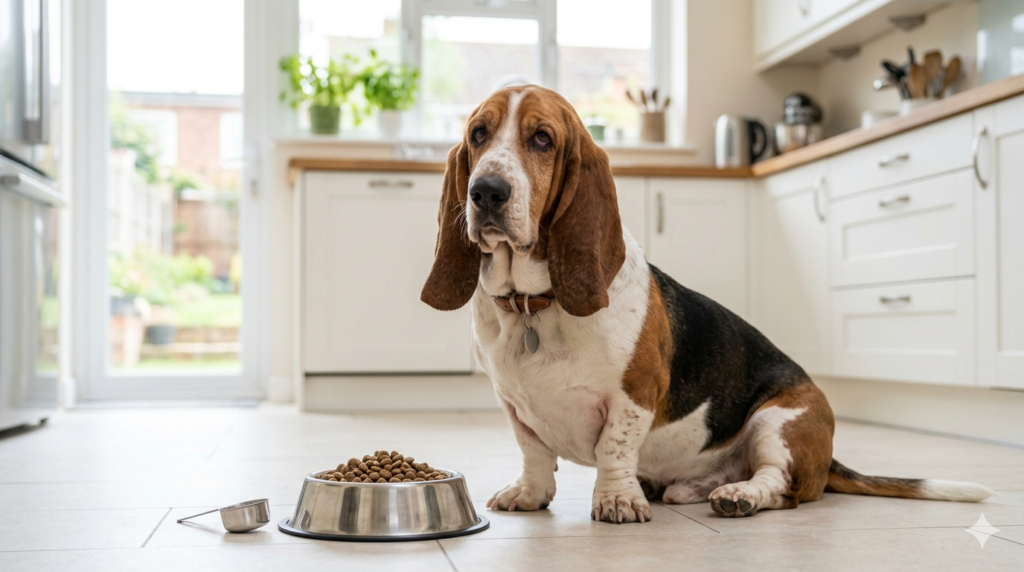
- Never free-feed: Leaving dog food for Basset Hound available at all times is a direct route to obesity in a breed that will eat opportunistically and enthusiastically regardless of hunger
- Use a slow-feeder bowl: Reduces the speed of eating, extends mealtime, decreases bloat risk, and adds mild cognitive enrichment to every meal
- Monitor body condition weekly: You should be able to feel your Basset Hound’s ribs under a thin fat layer without pressing hard, see a discernible waist from above, and see a modest abdominal tuck from the side. If ribs are buried under obvious padding, reduce daily food intake by 10% immediately
- Limit treats to 10% of daily calories: Use low-calorie treats — baby carrots, cucumber slices, or apple pieces — rather than commercial biscuits, which add meaningful calories without proportional nutritional value
Label Reading: What to Look for in Dog Food for Basset Hounds
Reading ingredient labels intelligently is an essential skill for any Basset Hound owner seeking quality dog food for Basset Hound. Here is a quick reference guide for label evaluation:
Ingredients That Belong in Quality Basset Hound Food
- Named whole protein first: deboned chicken, turkey, salmon, or beef
- Salmon oil or fish oil for omega-3 fatty acids
- Complex carbohydrates: sweet potato, brown rice, oats, or barley
- Glucosamine and chondroitin (natural or added) for joint support
- Natural preservatives: mixed tocopherols, rosemary extract
- Added probiotics: Lactobacillus or Bifidobacterium strains
- Antioxidant-rich fruits and vegetables: blueberries, carrots, spinach
Ingredients to Avoid in Dog Food for Basset Hounds
- Corn syrup or added sugars — empty calories that contribute to obesity
- Artificial colors, flavors, and chemical preservatives (BHA, BHT, ethoxyquin)
- Citric acid — potential bloat risk in deep-chested breeds per Hepper
- Brewer’s yeast, soybeans, and lentils in gas-prone individuals
- Generic “meat by-products” or “animal digest” without species identification
- Excessive starchy fillers (corn, white rice, wheat middlings) as primary ingredients
Frequently Asked Questions About Dog Food for Basset Hounds
How many calories does a Basset Hound need per day?
Basset Hounds typically require approximately 800 to 1,200 calories per day depending on age, weight, and activity level. A sedentary 55-pound adult Basset Hound at maintenance needs closer to 900 to 1,000 kcal per day. Always calculate from the specific caloric density stated on your chosen dog food for Basset Hound packaging rather than using generic estimates.
Should Basset Hounds eat grain-free food?
Unless your Basset Hound has a confirmed grain intolerance, grain-inclusive dog food for Basset Hound formulas are generally recommended. The FDA has investigated a potential link between grain-free diets high in legumes and dilated cardiomyopathy (DCM) in dogs. Pet Care Helper AI specifically recommends consulting your veterinarian before choosing grain-free, particularly for long-term feeding.
How do I prevent my Basset Hound from gaining too much weight?
The most effective approach combines a calorie-appropriate dog food for Basset Hound with precise portion measurement using a kitchen scale, twice to three-times daily feeding (never free-feeding), regular body condition monitoring, low-calorie training treats, and consistent moderate daily exercise. Weight management is most effectively addressed through food management rather than exercise alone in this low-activity breed.
When should I switch my Basset Hound from puppy to adult food?
Transition from puppy-specific to adult dog food for Basset Hound when your dog reaches approximately 90% of their expected adult weight — typically around 12 to 18 months of age. Make the transition gradually over 10 to 14 days to prevent digestive disruption.
Final Thoughts: Choosing the Right Dog Food for Your Basset Hound
The Basset Hound is a breed of genuine charm and remarkable capability — a scenting dog of extraordinary ability wrapped in one of the most endearing packages in all of dogdom. They give their families unconditional affection and steady companionship for over a decade when properly cared for. The right dog food for Basset Hound — carefully chosen, accurately portioned, consistently fed, and adjusted intelligently through every life stage — is one of the most powerful contributions you can make to those healthy years together.
Prioritize named animal protein at the top of the ingredient list, meaningful omega-3 fatty acids for joints and coat, controlled caloric density to manage the breed’s obesity risk, glucosamine and chondroitin for long-term joint protection, and a feeding schedule that keeps portions small and consistent to reduce bloat risk. Work with your veterinarian at every life stage to fine-tune the approach, and monitor your dog’s body condition weekly rather than waiting for annual check-ups to catch weight creep before it becomes a health crisis.
With the right dog food for Basset Hound in their bowl and the right level of care behind every meal, your Basset Hound will have everything they need to live a long, comfortable, and tail-wagging life.
Looking for more breed-specific nutrition guides, expert dog food reviews, and evidence-based feeding advice? Browse our blog for comprehensive resources designed to help every dog owner make confident, informed decisions at every stage of their dog’s life.