Dehydrated Dog Food: Is It Better Than Kibble? 2026
Dehydrated dog food is becoming popular, but is it better than kibble? Learn the pros, cons, and what to choose.
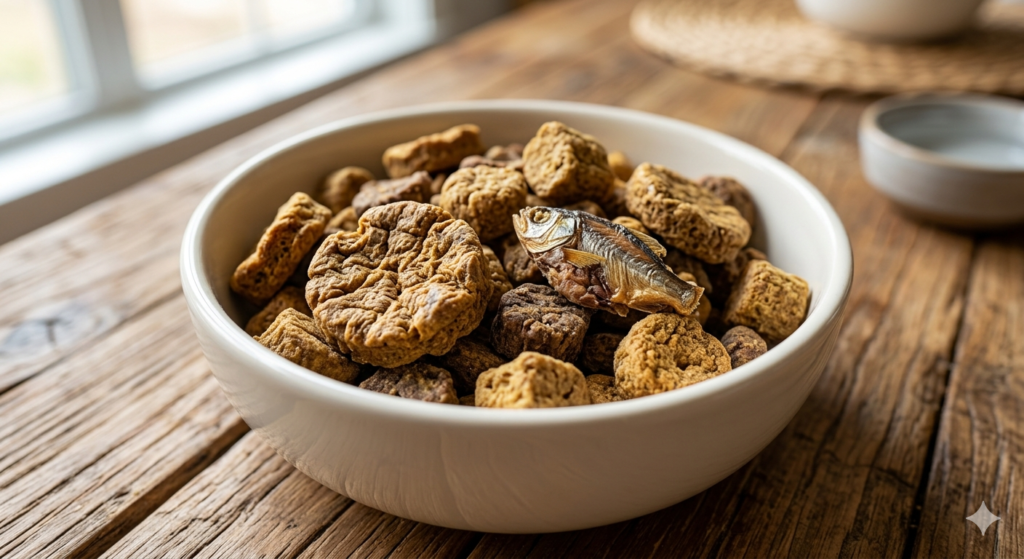
Over the past decade, dehydrated dog food has gone from a niche alternative to one of the fastest-growing segments in the pet nutrition industry. According to market research, the global dehydrated pet food market is on track to reach $1.5 billion by the end of 2026, driven by a generation of dog owners who want something better than conventional kibble — food that’s minimally processed, made from real whole ingredients, and genuinely nutritious. If you’ve been curious about making the switch to dehydrated dog food but aren’t sure where to start, this is the guide you’ve been looking for.
We’ll cover exactly what dehydrated dog food is, why it’s nutritionally superior to traditional kibble in most cases, how to choose the right formula for your dog, which brands lead the market in 2026, and how to make your own dehydrated dog food treats at home. By the end of this guide, you’ll have everything you need to make a confident, well-informed decision for your dog.
What Is Dehydrated Dog Food and How Is It Made?
Dehydrated dog food is produced through a slow, low-temperature drying process that gradually removes moisture from whole-food ingredients — typically meats, vegetables, fruits, and grains — while preserving the maximum amount of natural nutrients, enzymes, and flavor. This is fundamentally different from how conventional dry kibble is manufactured, where raw ingredients are combined into a slurry and then extruded under extreme heat and pressure that often exceeds 300°F to 500°F.
That extreme heat in standard kibble production destroys heat-sensitive vitamins, beneficial enzymes, and naturally occurring amino acids — losses that manufacturers then attempt to compensate for by adding synthetic vitamins and minerals back into the finished product. Dehydrated dog food, by contrast, uses gentle warm-air drying at significantly lower temperatures, preserving the natural nutritional integrity of every ingredient from the start. The result is a product that is far closer in nutritional profile to a fresh, whole-food meal than anything produced through conventional extrusion.
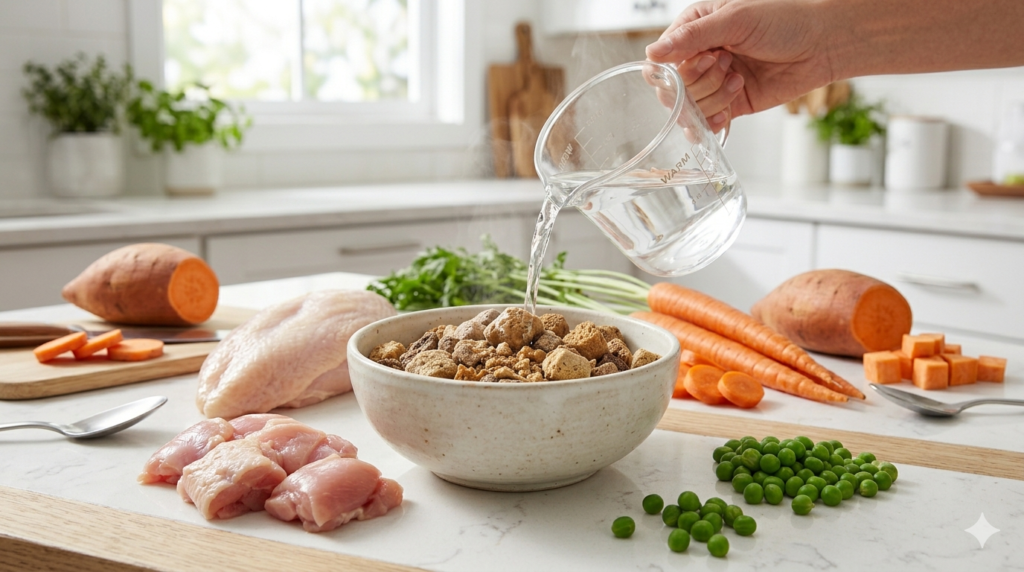
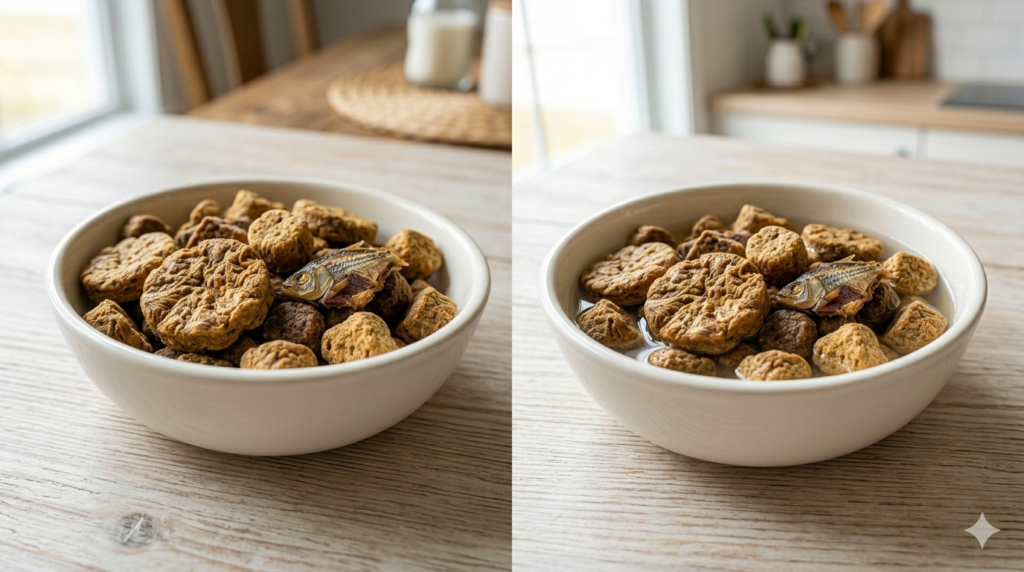
When it comes time to serve, most dehydrated dog food formulas are incredibly simple to prepare: add warm water, stir, wait two to three minutes, and serve a bowl that resembles a freshly cooked homemade meal. This combination of nutritional quality and serving convenience is a large part of why dehydrated dog food has grown so rapidly in popularity among discerning dog owners.
Why Dehydrated Dog Food Is Better Than Conventional Kibble
For dog owners making the switch from standard dry kibble, the benefits of dehydrated dog food become apparent quickly — often within the first few weeks of feeding. Here is a breakdown of the key advantages:
Superior Nutrient Retention
Because dehydrated dog food is processed at low temperatures, the vitamins, minerals, and natural enzymes present in whole-food ingredients are preserved rather than destroyed. This means your dog is absorbing nutrients from real food sources rather than relying entirely on synthetic additions — a meaningful difference in how the body processes and utilizes those nutrients at a cellular level.
Higher Digestibility
The gentle processing method used in dehydrated dog food makes the proteins, carbohydrates, and fats significantly more bioavailable than those in heavily processed kibble. Many dog owners switching to dehydrated dog food notice almost immediately that their dogs produce smaller, firmer, less odorous stools — a reliable indicator that the food is being more completely digested and utilized rather than passing through largely unabsorbed.
Whole-Food Ingredient Transparency
One of the most distinguishing features of quality dehydrated dog food is the ingredient list. Because whole foods are dehydrated individually rather than ground and blended into an unidentifiable mixture, the ingredient panels of premium dehydrated dog food brands read like a farmer’s market shopping list: dehydrated chicken, organic oats, sweet potato, carrots, spinach, flaxseed, blueberries. Every ingredient is visible, identifiable, and purposeful.
No Artificial Preservatives Needed
The dehydration process itself is the preservation mechanism in dehydrated dog food — removing the moisture that bacteria require to grow makes the food shelf-stable without the need for synthetic preservatives like BHA, BHT, or ethoxyquin. This is a significant advantage for dog owners concerned about the long-term health implications of chronic exposure to synthetic chemical preservatives.
Exceptional Palatability — Even for Picky Eaters
The rehydration process unlocks the natural aromas and flavors locked into dehydrated dog food, creating a warm, fragrant meal that even notoriously selective eaters tend to accept enthusiastically. Dogs that have long been dismissive of kibble frequently surprise their owners by eagerly finishing every meal once the switch to dehydrated dog food is made.
Honest Kitchen Dehydrated Dog Food: The Brand That Started It All
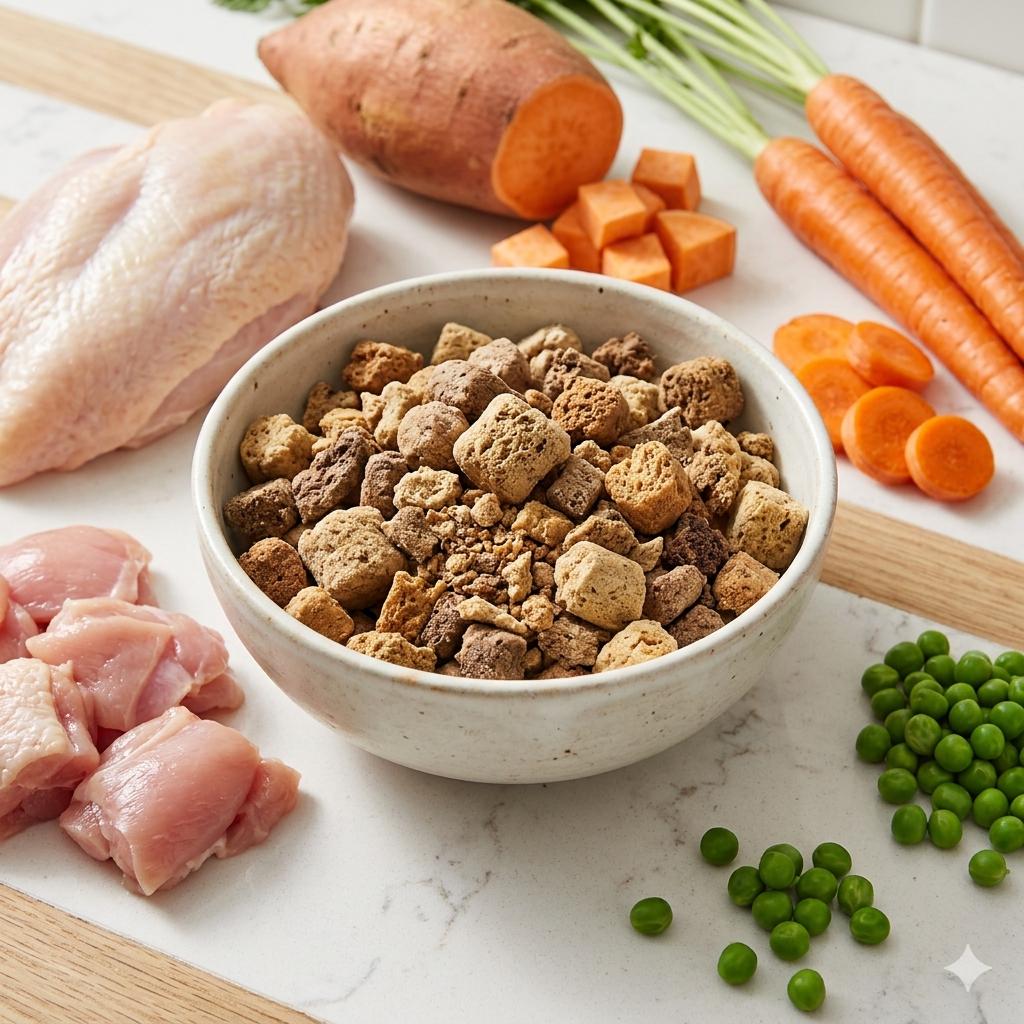
No discussion of dehydrated dog food is complete without a thorough look at The Honest Kitchen — the company that quite literally created this category. The Honest Kitchen is the world’s first human-grade dog food, with all its dog food variations made with 100% human-grade ingredients, including quality meats and whole, real produce. Founded in San Diego in 2002 by Lucy Postins, the brand emerged from a deeply personal place.
Lucy began experimenting with recipes for her Rhodesian Ridgeback, Mosi, who had recurring skin issues and ear infections. She believed Mosi’s health issues were related to his diet and noticed there were no human-grade whole-ingredient dog foods on the market, so she decided to cook up her own. That kitchen experiment became the honest kitchen dehydrated dog food empire that now sets the standard for the entire segment.
What Makes The Honest Kitchen Stand Apart
The core distinction of the Honest Kitchen dehydrated dog food line is its human-grade status — a standard that goes far beyond marketing language. Unlike most premium brands, even those labeled “natural” or “holistic,” The Honest Kitchen’s formulas truly meet human consumption standards. All meats are hormone- and antibiotic-free, vegetables and grains come from verified suppliers, and recipes avoid GMOs, preservatives, and bleach-processed ingredients.
The dehydrated food uses free-range, GAP-certified chickens, all the quinoa is certified organic, all poultry comes from suppliers with cage-free facilities, and the recipes use ranch-raised beef. Supplier accountability is built into the brand’s DNA — suppliers must meet high standards before establishing a partnership, such as having human-edible status and supporting documentation for non-GMO claims, and they must renew their documentation annually.
The Honest Kitchen Dehydrated Product Lines
The Honest Kitchen offers one of the most extensive dehydrated dog food ranges available, with four distinct sub-ranges covering a broad spectrum of nutritional needs:
- Wholemade Whole Grain: Features organic oats and barley as primary grains alongside named protein sources. Available in beef, chicken, turkey, and fish flavors. Ideal for dogs that tolerate and benefit from quality whole grains
- Wholemade Grain-Free: Replaces grains with dehydrated potatoes, lentils, and peas as carbohydrate and fiber sources. The grain-free line averages 29% protein and 35% carbohydrate, making it one of The Honest Kitchen’s highest-protein dehydrated options. Available in beef, turkey, chicken, and fish
- Gourmet Grains: The premium tier of the range, featuring two quality protein sources, quinoa, and dehydrated bone broth in each recipe. An example is the Chicken and Duck recipe, which combines free-range chicken with cage-free duck for a rich multi-protein profile
- Limited Ingredient: With just six whole ingredients per formula, this sub-range is designed specifically for dogs with food sensitivities, allergies, or highly selective palates. Available in five protein options: chicken, beef, duck, turkey, and fish
How to Serve The Honest Kitchen Dehydrated Dog Food
Serving dehydrated dog food from The Honest Kitchen couldn’t be simpler. Simply add warm water, wait 3 minutes, and serve for a fresh, wholesome meal. A 10 lb box equals 40 lbs of fresh food — each pound of dehydrated food equates to about 4 dry cups of food. This exceptional yield ratio makes The Honest Kitchen one of the most cost-effective premium dehydrated dog food options available when measured on a per-meal basis.
The food can be used flexibly: as a complete meal replacement, as a nutrient-dense topper mixed with quality kibble, or as part of an enrichment feeding routine using lick mats or puzzle feeders. Proteins in The Honest Kitchen dehydrated formulas are cooked to an internal temperature of at least 165°F prior to dehydration to ensure they are safe and free of pathogens — an important food safety distinction that separates it from truly raw diets.
Honest Kitchen Pricing
The Honest Kitchen’s dehydrated dog food is priced at the premium end of the market, reflecting its human-grade ingredient standards and ethical sourcing practices. A 4lb bag of dehydrated food is priced at approximately $44.99, while a 10lb box — which makes 40 pounds of food — is available at around $79.99. First-time customers can frequently access significant launch discounts, making the initial trial of The Honest Kitchen’s dehydrated dog food meaningfully more accessible.
Best Dehydrated Dog Food Brands in 2026: Beyond The Honest Kitchen
While The Honest Kitchen dominates the conversation around dehydrated dog food, the category has matured significantly and now features several other high-quality brands worth evaluating. When assessing the best dehydrated dog food options available in 2026, these brands consistently earn top marks from independent reviewers and dog nutrition experts:
1. ZIWI Peak Air-Dried Dog Food
Consistently ranked as the premium choice in the dehydrated dog food segment by independent review platforms, ZIWI Peak uses 96% meat, organs, and seafood from New Zealand in its formulas, with a protein profile that rivals raw feeding. Its air-dried preparation preserves nutrients effectively, and the formulas are grain-free and free from fillers. The trade-off is price — ZIWI Peak is among the most expensive options in the dehydrated dog food market — but for performance-focused feeding, it delivers exceptional nutritional density.
2. Stella & Chewy’s Freeze-Dried Raw
Stella & Chewy’s occupies a slightly different processing category — freeze-drying rather than warm-air dehydration — but the end result is similar: a shelf-stable, minimally processed dehydrated dog food with outstanding ingredient quality. Their formulas feature 95% meat, organs, and bone, with certified organic fruits and vegetables rounding out the nutritional profile.
3. Only Natural Pet EasyRaw
This is an excellent budget-friendly alternative in the premium dehydrated dog food space, combining freeze-dried raw meat with dehydrated vegetables and fruits. It offers impressive ingredient quality relative to its price point, with non-GMO formulas that work well as both complete meals and meal toppers.
4. Dr. Harvey’s Canine Health Miracle
Dr. Harvey’s takes a unique approach to dehydrated dog food with its base mix system — providing a dehydrated whole-food base that the owner combines with fresh protein of their choice. This gives maximum control over what goes into your dog’s bowl while maintaining the convenience and nutritional benefits of high-quality dehydrated ingredients.
5. Grandma Lucy’s Artisan Grain-Free
Grandma Lucy’s earns consistent praise as a premium yet more affordable alternative to The Honest Kitchen in the dehydrated dog food category. Its freeze-dried grain-free formulas use simple, recognizable whole-food ingredients and are particularly well-regarded for dogs with sensitive stomachs and food intolerances.
Food Dehydrator Dog Treats: Making Your Own at Home
One of the most exciting aspects of the dehydrated dog food revolution is how it has inspired dog owners to take control of treat-making using a home food dehydrator. The food dehydrator dog treats trend has exploded in popularity, and for good reason: homemade dehydrated treats are single-ingredient, free of all additives and preservatives, and can be tailored precisely to your dog’s preferences and dietary needs.
Best Ingredients for Homemade Dehydrated Dog Treats
A home food dehydrator opens up a wide world of healthy, wholesome treat options. Some of the most popular and nutritious choices include:
- Chicken breast or liver: Slice thinly and dehydrate at 160°F for 4 to 6 hours. The result is a high-protein, intensely aromatic treat that most dogs find irresistible
- Beef jerky strips: Lean cuts of beef, dehydrated low and slow, make durable training treats with excellent shelf life
- Sweet potato slices: One of the most popular plant-based dehydrated treats, sweet potato chews are high in fiber, beta-carotene, and natural sweetness that dogs love
- Apple slices (core and seeds removed): A light, crunchy treat rich in natural fiber and vitamin C
- Salmon skins: A rich natural source of omega-3 fatty acids that supports coat and joint health
- Banana chips: A naturally sweet, potassium-rich treat best given in moderation due to sugar content
Basic Home Dehydrator Settings for Dog Treats
Food safety is the most critical consideration when making homemade dehydrated dog food treats. Always use a food thermometer to verify that meat-based treats reach and maintain an internal temperature of at least 160°F throughout the dehydration process to eliminate bacterial pathogens. Vegetable and fruit treats can typically be dehydrated at lower temperatures of 125°F to 135°F over 6 to 12 hours depending on thickness and moisture content. Store finished treats in an airtight container and use within two to three weeks, or refrigerate to extend shelf life further.
How to Choose the Right Dehydrated Dog Food for Your Dog
With a growing number of brands and formulas available, selecting the best dehydrated dog food for your individual dog requires weighing several important factors:
Life Stage
Not all dehydrated dog food is formulated for all life stages. Puppies have elevated protein, calcium, and DHA requirements that adult formulas may not adequately meet. Always check that the AAFCO nutritional adequacy statement on the packaging covers your dog’s specific life stage — whether that’s growth, maintenance, all life stages, or senior support.
Protein Source and Allergies
If your dog has known food sensitivities, the protein source in your chosen dehydrated dog food is the most critical selection factor. Limited-ingredient dehydrated formulas — particularly those from The Honest Kitchen or Grandma Lucy’s — are ideal starting points for sensitive dogs, as they minimize the number of potential allergens in each recipe.
Grain vs. Grain-Free
Unless your dog has a confirmed grain sensitivity or allergy, whole grains like organic oats, barley, and quinoa in a dehydrated dog food formula are nutritious, digestible, and beneficial. Be aware of the ongoing FDA investigation into a potential link between grain-free diets high in peas and lentils and dilated cardiomyopathy (DCM) in dogs. Consult your veterinarian about the grain-free question before committing to a grain-free dehydrated dog food long-term.
Complete vs. Base Mix
Some dehydrated dog food products are complete and balanced meals requiring only water to serve. Others are base mixes designed to be combined with fresh protein that the owner adds. Be clear on which type you are purchasing, as a base mix used alone does not constitute a nutritionally complete diet.
Budget and Dog Size
Premium dehydrated dog food brands cost more per pound than conventional kibble, but the yield ratios of dehydrated formats mean the per-meal cost is often more reasonable than it first appears. A 10-pound box of Honest Kitchen that makes 40 pounds of food represents a very different value calculation than a 10-pound bag of kibble. Factor in yield, not just sticker price, when budgeting for dehydrated dog food.
Transitioning Your Dog to Dehydrated Dog Food
Switching to dehydrated dog food should be done gradually over 7 to 10 days to allow your dog’s digestive system to adapt without disruption. This is especially important when moving from heavily processed kibble to nutrient-dense dehydrated dog food, as the richer nutritional profile and higher digestibility can cause temporary loose stools if the transition is too abrupt.
Follow this simple transition schedule for dehydrated dog food:
- Days 1–2: 75% current food, 25% new dehydrated dog food
- Days 3–4: 50% current food, 50% new dehydrated dog food
- Days 5–6: 25% current food, 75% new dehydrated dog food
- Day 7 onward: 100% new dehydrated dog food
Always ensure fresh, clean water is freely available alongside every serving of dehydrated dog food, even after rehydration. The dehydration and rehydration cycle still means your dog benefits from additional hydration support throughout the day.
Frequently Asked Questions About Dehydrated Dog Food
Is dehydrated dog food safe for puppies?
Yes — provided the specific dehydrated dog food formula carries an AAFCO nutritional adequacy statement for growth or all life stages. The Honest Kitchen’s Grain-Free Turkey formula, for example, is AAFCO-certified for all life stages including growth, making it suitable for puppies of most breeds. Large breed puppies may need additional calcium-to-phosphorus ratio considerations, so consult your vet before starting any puppy on a new diet.
How long does dehydrated dog food last once opened?
Most dehydrated dog food is shelf-stable for 12 to 24 months in its sealed, dry form. Once opened, the dry product should be stored in an airtight container in a cool, dry place and used within 30 to 60 days for optimal freshness. Once rehydrated, any unused portion should be refrigerated and consumed within 3 to 5 days.
Can I mix dehydrated dog food with regular kibble?
Absolutely — and many dog owners do exactly this. Using dehydrated dog food as a nutrient-dense topper mixed with quality kibble is an effective way to meaningfully upgrade your dog’s nutritional intake without the full cost of a complete dehydrated dog food diet. Even a 25% to 50% incorporation of quality dehydrated dog food alongside kibble delivers measurable improvements in coat quality, digestion, and palatability for most dogs.
Has The Honest Kitchen ever had a recall?
The Honest Kitchen had one recall in 2013 related to potential Salmonella contamination in a parsley ingredient. As of April 2026, no further recalls have been noted for The Honest Kitchen. This long track record of post-recall safety — maintained through rigorous supplier auditing and human-grade facility standards — is one of the brand’s most compelling trust signals.
Final Thoughts: Is Dehydrated Dog Food Worth It in 2026?
The answer, for most dogs and most owners, is a resounding yes. Dehydrated dog food represents the closest thing to freshly cooked, whole-food home cooking that the commercial pet food market currently offers — with the shelf stability and serving convenience that busy modern dog owners actually need. The superior nutrient retention, the clean and transparent ingredient lists, the high digestibility, and the dramatic palatability improvements it brings to even the pickiest eaters make dehydrated dog food one of the most meaningful nutritional upgrades available in 2026.
Whether you choose The Honest Kitchen for its unmatched human-grade pedigree, ZIWI Peak for its extraordinary meat density, a budget-friendly option like Only Natural Pet for daily feeding, or decide to supplement your dog’s existing diet with a quality dehydrated dog food topper — you are making a choice that prioritizes real nutrition over convenience-driven compromise. And for the dogs who eat it every day, that choice makes a visible, measurable difference in how they look, feel, and thrive.
Looking for more expert dog nutrition guides, brand reviews, and feeding advice? Browse our blog for comprehensive resources designed to help you make the very best decisions for your dog at every stage of their life.