Can Puppies Eat Adult Dog Food? What Every Dog Owner Should Know in 2026
Can puppies eat adult dog food? Learn the risks, nutritional differences, and when it might be safe.
Can Puppies Eat Adult Dog Food? And Can Adult Dogs Eat Puppy Food? (Complete, Clear Guide)
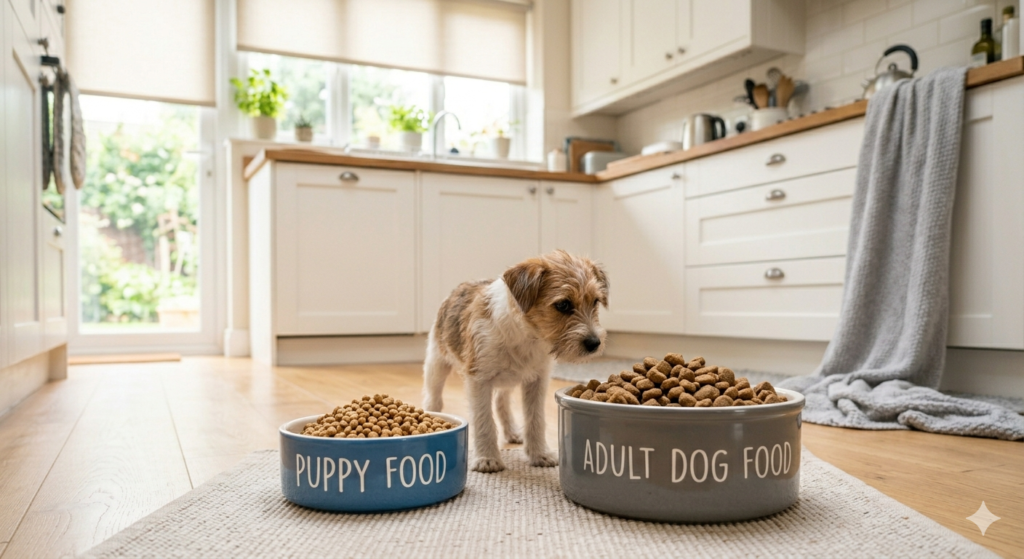
If you’re wondering can puppies eat adult dog food (or can my puppy eat adult dog food / can a puppy eat adult dog food), you’re usually dealing with a real-life situation: you ran out of puppy food, your puppy stole the adult dog’s bowl, or you’re trying to simplify feeding.
You may also be asking the opposite: can adult dogs eat puppy food / can an adult dog eat puppy food—because sometimes adult dogs love the richer puppy formula.
Here’s the honest answer:
Puppies should usually NOT eat adult dog food as their main diet, because puppies need different nutrient levels for safe growth.
Adult dogs can eat puppy food occasionally, but it’s often too calorie-dense for long-term adult feeding unless there’s a specific reason and you manage portions carefully.
Let’s break it down simply.
Why Puppies and Adults Need Different Food
Puppies are building a body
Puppies need:
higher calorie density (more energy for growth)
higher protein and fat (for development)
carefully balanced minerals (especially calcium and phosphorus for bones)
Adult formulas are built for maintenance, not growth.
Adults are maintaining a body
Adults need:
stable calories to prevent weight gain
nutrition that supports long-term health (without “growth-level” density)
That’s why puppy food often feels “richer” and more exciting to adult dogs.
Can Puppies Eat Adult Dog Food?
Short answer: sometimes briefly, but it’s not ideal.
If your puppy eats adult dog food one time (or for a day because you ran out), it’s usually not an emergency. The bigger risk is long-term feeding, because adult food may not provide the right nutrient balance for growth.
When it’s more risky
It’s more concerning if:
your puppy is very young (tiny reserves, fast growth)
your puppy is a large-breed puppy (growth needs are more sensitive)
you feed adult food as the main diet for weeks/months
What can happen if a puppy eats adult food long-term?
Potential problems include:
slower or uneven growth
weaker muscle development
improper bone mineral balance (especially important in large breeds)
less optimal brain/eye development depending on formula
Not every puppy will have obvious problems immediately, but “looks fine” isn’t the same as “nutritionally ideal.”
Can My Puppy Eat Adult Dog Food in an Emergency?
Yes—for a short time if you have no other option, but do it smart:
Best “emergency plan”
Use the adult food you already have (don’t suddenly add lots of new human foods).
Feed smaller, more frequent meals if your puppy is young.
Buy puppy food as soon as possible—especially if it’s a large-breed puppy.
If it’s a very young puppy (under ~8–10 weeks): don’t “wait it out” long—get appropriate puppy nutrition quickly and contact a vet if you’re unsure.
Can Adult Dogs Eat Puppy Food?
Short answer: yes, but it can cause weight gain.
An adult dog can eat puppy food occasionally without harm, but puppy food is typically:
higher in calories
higher in fat
sometimes higher in certain nutrients designed for growth
So the common outcomes are:
weight gain
soft stool or stomach upset (especially if switched suddenly)
increased “begging” appetite because it’s richer and tastier
When puppy food may actually be helpful for an adult dog
There are a few situations where a vet might recommend a higher-calorie diet:
underweight adult dogs
very high-activity working dogs
recovery periods (depending on the dog and vet plan)
Even then, it’s usually better to use an adult formula designed for performance/weight gain rather than a random puppy formula—unless your vet specifically recommends it.
Can an Adult Dog Eat Puppy Food Long-Term?
Usually not recommended unless:
your vet tells you to for a specific health reason
you control portions strictly
you monitor weight and stool carefully
Why? Because many adults will gain weight fast on puppy food, and obesity increases the risk of joint issues, diabetes, and heart strain over time.
What About “All Life Stages” Dog Food?
This is the key exception.
Some dog foods are labeled “All Life Stages” (or “for growth and maintenance”). These formulas are designed to meet puppy growth requirements and adult maintenance needs.
Is All Life Stages safe for puppies?
Usually yes—if the label specifically includes growth.
Is All Life Stages safe for adults?
Yes, but:
it can be calorie-dense
portion control matters
Large-breed puppy note (important)
If you have a large-breed puppy (think: Labrador, German Shepherd, Golden, Great Dane, etc.), look for an “All Life Stages” formula that specifically states it is appropriate for large-breed growth, or use a dedicated large-breed puppy formula. Large-breed puppies have more sensitive mineral balance needs.
Common Real-Life Situations (Fast Answers)
“My puppy ate adult dog food one time—should I worry?”
Usually no. Watch for mild stomach upset (soft stool, gas). Go back to puppy food.
“My puppy keeps eating the adult dog’s food.”
This is common in multi-dog homes. Fix it by:
feeding separately
picking up bowls after meals
using baby gates or crate feeding
scheduled meals instead of free-feeding
“My adult dog stole puppy food.”
Also common. Usually fine once, but don’t let it become routine. Watch weight.
How to Switch Between Puppy and Adult Food Safely
If you’re transitioning (either direction), do it slowly:
Days 1–3: 25% new + 75% old
Days 4–6: 50% new + 50% old
Days 7–9: 75% new + 25% old
Day 10+: 100% new
This reduces diarrhea risk.
When Should Puppies Switch to Adult Dog Food?
Most dogs transition to adult food when growth slows.
General guideline:
Small breeds: around 9–12 months
Medium breeds: around 12 months
Large/giant breeds: often 12–18+ months
Your vet can give a more accurate recommendation based on breed and growth rate.
Signs the Food Isn’t the Right Match
Whether it’s puppy on adult food, or adult on puppy food, watch for:
persistent soft stool or diarrhea
vomiting
rapid weight gain or weight loss
low energy
poor coat quality
excessive hunger (common in calorie mismatch)
abnormal growth patterns (puppies)
If these happen, the diet may not match the dog—or the transition is too fast—or there’s another health issue.
Best Practices for Multi-Dog Homes (Puppy + Adult)
If you have a puppy and adult dog in the same house, this is the cleanest setup:
Separate feeding areas (different rooms or behind a gate)
Timed meals (15–20 minutes, then pick up bowls)
Correct food per dog (puppy formula for puppy, adult formula for adult)
No free-feeding if bowl stealing is happening
This prevents “accidental diet mixing” which is the most common reason owners end up searching this keyword.
FAQ
Can puppies eat adult dog food?
They can eat it occasionally, but puppies should ideally be on puppy (growth) nutrition for proper development.
Can a puppy eat adult dog food in an emergency?
Yes for short-term. Return to puppy/growth food as soon as possible, especially for large-breed puppies.
Can adult dogs eat puppy food?
Yes occasionally, but puppy food is often richer and may cause weight gain if fed long-term.
Can an adult dog eat puppy food long-term?
Not usually recommended unless your vet advises it and you manage calories carefully.
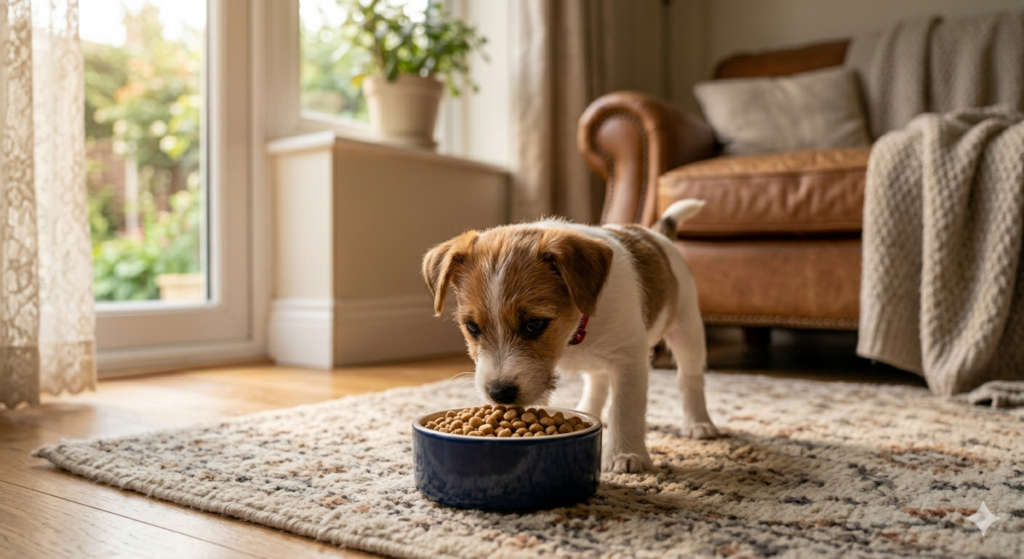
The Real Difference: Puppy Nutrition vs Adult Nutrition
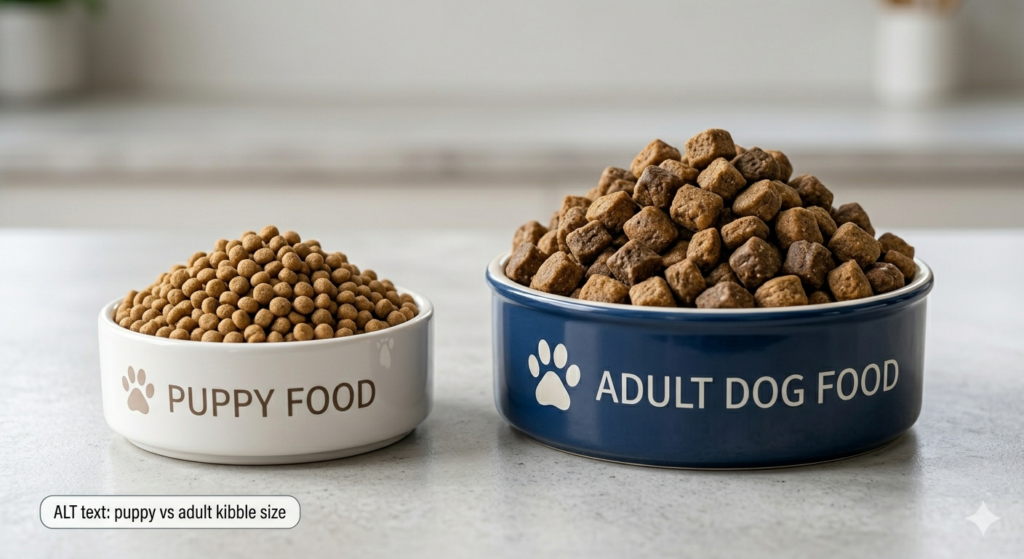
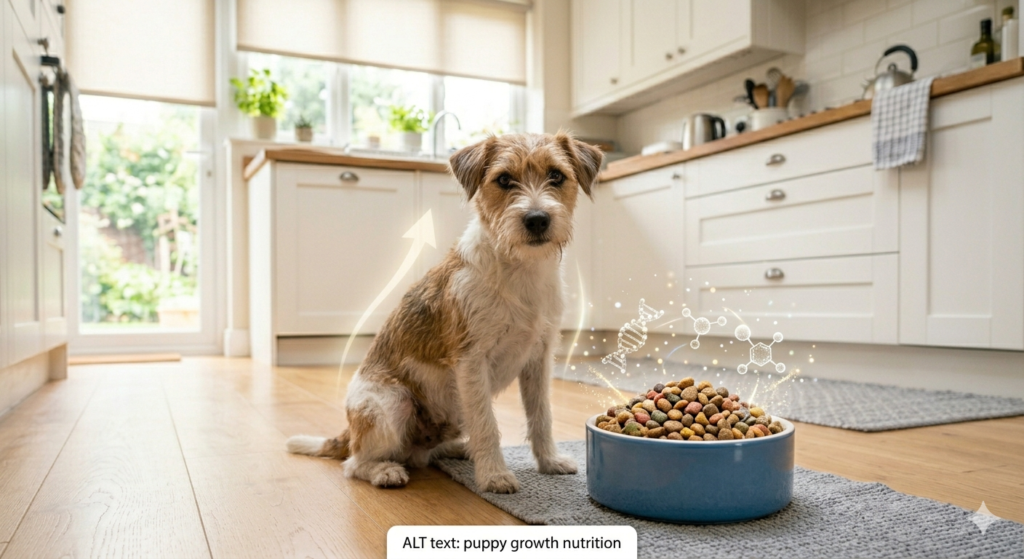
When owners ask can puppies eat adult dog food, they often think puppy food is just “smaller kibble.” It’s not. Puppy formulas are designed around growth needs, which usually means:
Higher calorie density (growth burns energy fast)
Higher protein and fat to support development
DHA (commonly added for brain/eye development)
Mineral balance that supports safe bone growth (very important for large breeds)
Adult formulas focus on maintenance:
calories are usually lower per cup
nutrients are designed to maintain body condition, not build rapid growth
mineral ratios may not be ideal for a growing puppy long-term
That’s why puppies can “seem fine” on adult food for a short time but still not be getting ideal growth nutrition.
Large-Breed Puppies: Why This Matters Even More
If you have a large-breed puppy (Labrador, German Shepherd, Golden, Boxer, Great Dane, etc.), the question can my puppy eat adult dog food becomes more serious.
Large-breed puppies have sensitive needs around:
calcium and phosphorus balance
growth rate control (too fast growth can stress joints)
Many large-breed puppy formulas are designed specifically to help prevent excessive growth rate and keep mineral balance safe. Feeding a random adult food long-term may increase the risk of joint and bone issues in certain dogs.
Best practice: If your puppy is large-breed, use a large-breed puppy food or an “All Life Stages including large breed growth” formula.
Can Adult Dogs Eat Puppy Food? Why Adults Gain Weight So Easily
Adult dogs can eat puppy food, and many will happily do it because it’s richer and more palatable. But puppy food often leads to:
weight gain
softer stool (fat-rich diets can do this)
extra hunger behavior (because it tastes better and is calorie dense)
less stable body condition over time
So if you’re asking can an adult dog eat puppy food, the key is: yes, but monitor weight and stool closely.
Who may benefit from puppy food temporarily?
Sometimes vets recommend higher-calorie diets for:
underweight dogs
very active working dogs
dogs recovering from illness (case-by-case)
Even then, it’s often better to use an adult performance diet designed for that purpose rather than a random puppy formula—unless your vet guides it.
“I Ran Out of Puppy Food”: What to Do Tonight (Safe Approach)
One of the most common reasons people search can a puppy eat adult dog food is because they ran out of puppy food.
Here’s the safest short-term plan:
Use the adult food you have for 1–2 days if needed.
Keep meals smaller and more frequent if your puppy is young.
Return to puppy food as soon as possible.
Avoid stuffing your puppy with lots of human foods—sudden additions often cause diarrhea.
If your puppy is tiny, very young, or has health issues, it’s smart to call your vet for guidance instead of guessing.
What About “All Life Stages” Food? (Best Option for One Bag)
If you want one food that both dogs can eat, the best “single bag” choice is usually a formula labeled:
All Life Stages
orGrowth and Maintenance
This means the food is designed to meet nutrient needs for puppies and adults (growth included). That said, it can still be calorie dense, so adults often need smaller portions to prevent weight gain.
Tip for multi-dog homes:
All Life Stages can simplify feeding if:
your adult dog maintains weight easily
you measure portions carefully
your puppy is not a very large breed needing very specific growth control (ask your vet)
How to Prevent Bowl Stealing in Puppy + Adult Homes
Many households struggle because:
puppy eats adult food (not ideal)
adult dog eats puppy food (leads to weight gain)
Best solutions:
feed in separate rooms
use baby gates
crate feed one dog
feed timed meals (15–20 min) and pick up bowls
don’t free-feed when you have two dogs
This eliminates “mixing diets” which is the #1 reason owners run into digestion and weight problems.
Common Mistakes That Make Feeding Problems Worse
Mistake 1: Switching back and forth daily
One day adult food, one day puppy food, then new brand, then topper…
That almost guarantees digestive upset. Consistency is key.
Mistake 2: Trying to “replace puppy nutrition” with human foods
Adding meat, rice, cheese, etc. doesn’t recreate the balanced mineral profile a puppy needs.
Mistake 3: Overfeeding because the puppy looks hungry
Puppies are often hungry. It doesn’t always mean they need more food—it may mean:
the portion is fine but the schedule needs adjusting
treats are confusing appetite signals
Mistake 4: Letting the adult dog eat puppy food long-term
Adult weight gain sneaks up fast and becomes harder to reverse.
When Should You Switch a Puppy to Adult Food?
Typical ranges:
Small breeds: around 9–12 months
Medium breeds: around 12 months
Large breeds: 12–18 months (sometimes longer)
Your vet can give the best timeline based on growth curve and body condition.
Extra FAQ Section (SEO Boost)
Can puppies eat adult dog food as their main diet?
Not recommended long-term. Puppies need growth nutrition and careful mineral balance.
Can my puppy eat adult dog food sometimes?
Yes, short-term, especially if you ran out. Return to puppy food quickly.
Can adult dogs eat puppy food?
Yes occasionally, but long-term it can cause weight gain.
Can an adult dog eat puppy food if it’s “All Life Stages”?
All Life Stages food is designed to work for both, but adults usually need smaller portions.
Extended Conclusion
So, can puppies eat adult dog food? A healthy puppy can eat it temporarily, but for best growth and development, puppies should be on a food labeled for growth (puppy) or All Life Stages. And can adult dogs eat puppy food? Yes, but it’s usually too calorie-dense for long-term adult feeding unless there’s a specific reason and portions are controlled.