Are Potatoes in Dog Food Bad? The Truth May Surprise You
Are potatoes in dog food bad? Discover the truth about nutrition, safety, and whether you should avoid them.
Are Potatoes in Dog Food Bad? What Potatoes Really Do in Kibble (and When to Worry)
If you’re asking “are potatoes in dog food bad?” you’ve probably seen two totally different opinions online:
One side says potatoes are a safe carbohydrate and a common ingredient.
The other side warns potatoes could be linked to heart issues (DCM) or “filler” diets.
The truth sits in the middle:
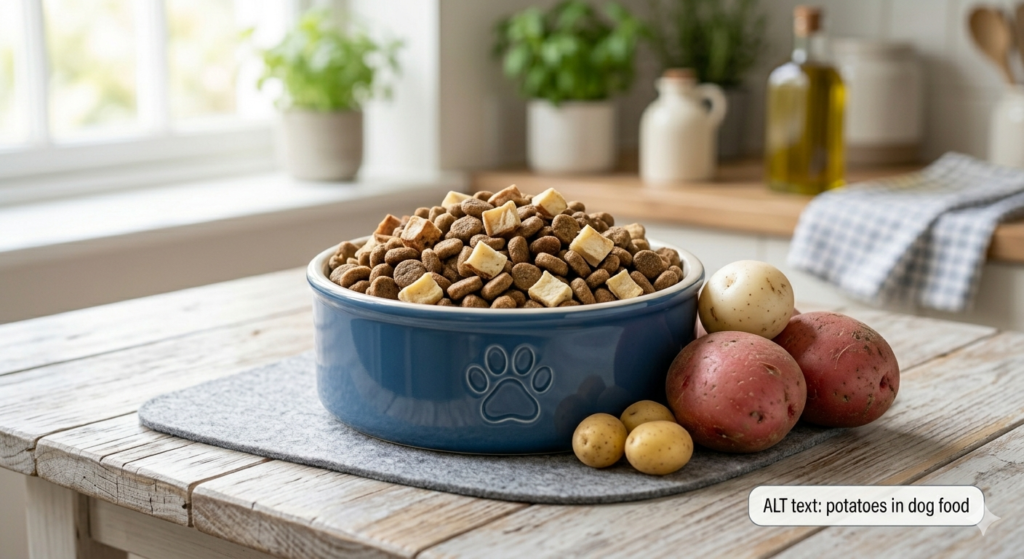
Potatoes are not automatically bad for dogs. Cooked potato ingredients can be a digestible carbohydrate source in dog food, and they also contain nutrients.
But potatoes can become a concern in specific situations, especially when they appear as a major ingredient (often with legumes) in certain “grain-free” diets that the FDA has investigated in connection with diet-associated dilated cardiomyopathy (DCM).
This guide explains when potatoes are fine, when they might be a red flag, and how to judge a dog food label correctly.
What “Potatoes in Dog Food” Usually Means
In dog food, potatoes show up in different forms, such as:
whole potatoes
potato flour
potato starch
sweet potatoes (different plant, similar role as a starchy carb)
They’re mainly used as:
a carbohydrate source for energy
a binder/texture ingredient in kibble
an alternative to grains in many grain-free formulas
Pet nutrition experts note potatoes have been used in pet foods for years and provide carbohydrates, fiber, and a range of nutrients.
Are Potatoes Bad for Dogs in General?
For most healthy dogs, cooked potatoes in appropriate amounts are not inherently harmful.
Two important safety notes:
Raw potatoes can contain solanine, which can be toxic—cooking reduces solanine levels.
Potato-based human foods (fries, chips, buttered/seasoned mashed potatoes) are not good dog treats because fat, salt, and seasonings can cause GI upset.
So in commercial dog food, where the potato ingredient is cooked/processed, potatoes are generally used as a normal starch source.
Why Some People Say Potatoes Are “Bad”: The DCM Concern
This is the biggest reason the question exists.
What the FDA actually says
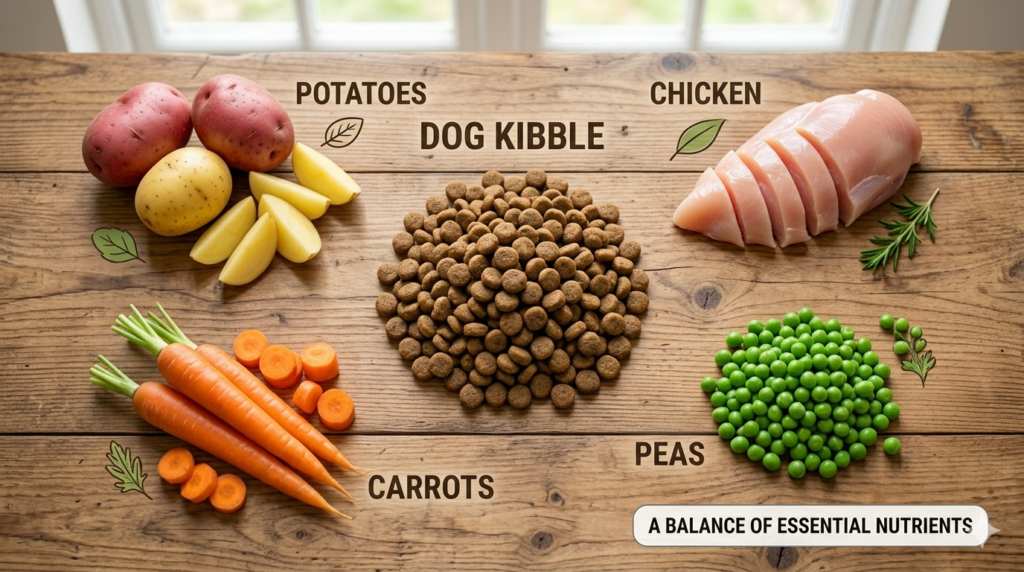
The FDA began investigating reports of canine DCM in dogs eating certain pet foods—many labeled “grain-free”—that contained a high proportion of peas, lentils, and/or potatoes in various forms as main ingredients.
What that means (without exaggeration)
The FDA is investigating a potential association, not declaring potatoes “toxic.”
Many reported diets had legumes and/or potatoes high on the ingredient list (within the first 10 ingredients).
The issue is still being studied; it may involve formulation factors (nutrient balance, bioavailability, processing, ingredient interactions), not just one ingredient.
AKC has also published updates noting research into diet-associated DCM and that it has been linked to diets with peas, lentils, and possibly potatoes.
There’s also peer-reviewed research describing analysis of diets associated with DCM that contained pulses and potatoes as major ingredients.
The Real Question: How Much Potato Is in the Food?
Instead of “potatoes = bad,” ask:
“Are potatoes one of the main ingredients?”
If potatoes (or potato starch/flour) appear very high in the ingredient list—especially alongside multiple legumes (peas, lentils, chickpeas)—that’s when some owners and vets become more cautious, due to the FDA’s DCM investigation context.
“Is the diet grain-free and heavy in legumes/potatoes?”
Grain-free isn’t automatically harmful, but if your dog is in a DCM-risk breed or you’re concerned, you might prefer a grain-inclusive formula or talk to your vet.
Are Sweet Potatoes in Dog Food Bad?
Sweet potatoes are often treated similarly: generally safe when cooked and used appropriately, and they’re commonly used in commercial dog foods and treats.
However, sweet potatoes have also appeared in discussions of diet-associated DCM when diets are heavy in pulses/potatoes as major ingredients. Some DCM-associated diet analyses include sweet potatoes in the “3P” (pulses/potatoes) category.
Again: it’s about the overall formula and ingredient balance, not fear of one vegetable.
Benefits of Potatoes in Dog Food
When used properly, potato ingredients can offer practical benefits:
Digestible energy (starch)
Palatability and texture help in kibble manufacturing
Fiber and micronutrients (depending on form)
Pet nutrition resources note potatoes can contribute nutrients and have been used historically as a beneficial ingredient in diets.
When Potatoes Might Not Be a Great Choice
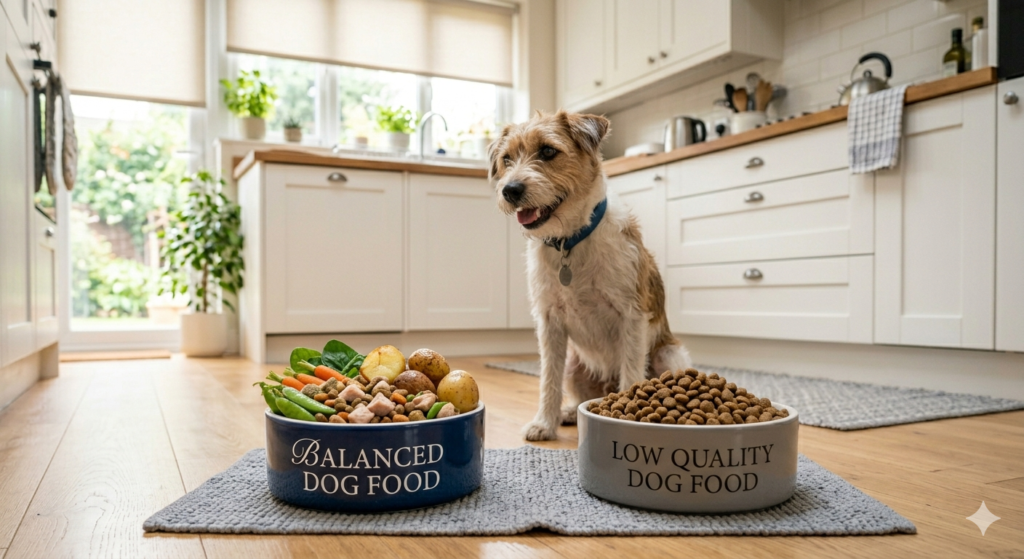
Potatoes may be less ideal in these cases:
1) Your dog needs a lower-carb diet (vet-guided)
Some dogs with specific health needs may require specialized nutrition. (Always follow your vet for medical conditions.)
2) Your dog has chronic GI sensitivity
Some dogs do better on rice or oats; others do fine on potato. It’s individual.
3) You’re managing weight gain
Potatoes are calorie-dense carbohydrates. Weight control is mostly about total calories and portion size, but carb-heavy foods can be easier to overfeed.
4) You’re concerned about diet-associated DCM
If you have a breed at risk or you want to minimize uncertainty, consider:
choosing a grain-inclusive recipe
avoiding foods where legumes/potatoes dominate the top ingredients
asking your vet about heart screening if you’re concerned
FDA continues to investigate the potential link.
How to Decide if a Potato-Containing Dog Food Is “Good”
Use this simple checklist:
1) Check the AAFCO statement
Look for “complete and balanced” for your dog’s life stage. (That’s a baseline quality marker.)
2) Look at the first 10 ingredients
If potatoes are present but not dominating, it’s usually less concerning.
If you see multiple legumes + potatoes dominating the first ingredients, and you’re worried about DCM, consider alternatives.
3) Look at your dog’s results
The best food is the one your dog thrives on:
firm stool
healthy coat/skin
stable weight
good energy
4) Talk to your vet if your dog is high-risk
If your dog is a breed predisposed to DCM or has heart concerns, it’s worth discussing diet choices with your vet and referencing the FDA’s investigation.
FAQ
Are potatoes in dog food bad for all dogs?
No. Potatoes aren’t automatically harmful; cooked potato ingredients are commonly used.
Why do grain-free dog foods use potatoes?
Potatoes can replace grains as a carbohydrate source and help with kibble structure.
Are potatoes linked to DCM?
The FDA is investigating reports of DCM in dogs eating certain diets—many grain-free—where peas/legumes and/or potatoes were major ingredients.
Should I avoid potatoes completely?
Not necessarily. If you’re concerned about DCM, focus on the overall formula (how dominant potatoes/legumes are) and consult your vet.

Potatoes in Dog Food: What Type of Potato Are We Talking About?
When people ask are potatoes in dog food bad, they’re often thinking of “whole potatoes,” but dog foods use potatoes in multiple forms. Each form plays a slightly different role:
1) Whole potatoes
Provide starch (energy), some fiber, and micronutrients
Usually appear as “potatoes” on the label
Often used in grain-free recipes
2) Potato flour
Finely ground potato; adds starch and helps kibble hold shape
Can raise carbohydrate content depending on how high it appears in the list
3) Potato starch
Very concentrated starch with little fiber
Often used as a binder in kibble or treats
Can contribute calories without adding much nutrition beyond energy
4) Sweet potatoes
Different plant, similar “starchy carb” role
Often used for palatability and perceived “whole food” appeal
Still a carbohydrate source and still calorie-dense
Why it matters: A food that has a small amount of potato starch low on the list is different from one where potatoes/sweet potatoes are a top ingredient and drive most of the carb structure.
Are Potatoes Just “Fillers”? (The Real Answer)
“Filler” is more of a marketing word than a nutritional one. In dog nutrition, dogs need:
protein (amino acids)
fat (fatty acids)
vitamins/minerals
energy (which can come from fat and/or carbohydrates)
Potatoes are commonly used as an energy source and kibble-structure ingredient. They can be useful, but they can also be overused.
A fair way to evaluate it is:
Potatoes are not inherently bad, but they’re usually not the reason a food is “excellent,” either.
The best foods are balanced, digestible, and match your dog’s needs—regardless of whether the carb is potato, rice, oats, barley, or sweet potato.
Potatoes and Weight Gain: A Practical Concern
For many owners, the “bad” outcome isn’t toxicity—it’s calorie creep.
Potato-based diets can be:
calorie-dense
easy to overfeed (especially if your dog is less active)
Signs your dog may be overfed (even if the food is “good”)
waist disappears (from above)
ribs hard to feel under light pressure
energy drops
stool volume increases a lot (sometimes diet composition related)
Best tip: Evaluate portions based on body condition, not just the bag chart. If your dog is gaining weight on a potato-containing food, you don’t always need a new brand—you may need a smaller portion or a formula with fewer calories per cup.
Are Potatoes Hard to Digest for Dogs?
For most dogs, cooked/processed potato ingredients are digestible. But individual dogs vary. Some dogs may get:
gas
soft stool
inconsistent stool
itchiness (rarely true allergy; more commonly intolerance)
When potatoes might contribute to GI upset
Your dog has a sensitive stomach
The food is very rich (high fat + potato-based carbs)
The recipe uses multiple legumes + potatoes, leading to more fermentation for some dogs
If stool becomes consistently soft after switching to a potato-heavy food, that’s a useful signal that the formula may not be ideal for your dog.
Can Dogs Be Allergic to Potatoes?
True food allergies (immune reaction) are less common than people think, and when they occur, they’re usually triggered by proteins (chicken, beef, dairy, etc.). Potato allergy is possible, but it’s not among the most common.
More often, owners see a food intolerance pattern:
soft stool
gas
occasional vomiting
inconsistent appetite
If you suspect food allergy (itching, ear infections, skin flare-ups), the most reliable method is a vet-guided elimination diet, not guessing from one ingredient.
Raw Potatoes vs Potatoes in Dog Food (Important Safety Difference)
A key reason potatoes get a “bad” reputation is confusion with raw potatoes.
Raw potatoes can contain solanine, which can be toxic in higher amounts.
Commercial dog food potatoes are cooked/processed, which reduces solanine risk.
So the “potatoes are toxic” argument usually applies to raw potato exposure, not normal kibble ingredients.
Potatoes and the DCM Discussion (How to Think About It Safely)
The biggest modern controversy around potatoes comes from diet-associated DCM discussions.
The smart, non-panicky way to interpret it
The FDA investigated reports of DCM in dogs eating certain diets—many labeled grain-free—where legumes and/or potatoes were common among top ingredients.
This does not mean “potatoes cause DCM.” It means the overall formulation pattern is under investigation.
What to do if you’re worried
If you want to minimize uncertainty:
choose a grain-inclusive diet
avoid foods where the top ingredients are multiple legumes + potatoes
talk to your vet if your dog is in a higher-risk breed or has heart history
This keeps you practical without fear-driven decisions.
Grain-Free vs Grain-Inclusive: Which One Is “Better”?
Neither is automatically better for every dog.
Grain-inclusive can be great if:
your dog does well on rice/oats/barley
you want a more traditional carb base
you’re cautious about grain-free patterns
Grain-free can be fine if:
your dog has a diagnosed grain intolerance (rare)
your dog’s digestion and health are excellent on it
your vet has no concerns based on your dog’s risk factors
The best choice is the one your dog consistently thrives on, with the least risk for your situation.
How to Read a Label When Potatoes Are Included (Easy Checklist)
If you want to answer are potatoes in dog food bad for a specific product, do this:
Step 1: Scan the first 10 ingredients
Ask:
Are potatoes/sweet potatoes in the first 5 ingredients?
Are there multiple legumes in the first 10 (peas, lentils, chickpeas)?
If yes, potatoes are likely a major carb driver.
Step 2: Check the AAFCO nutritional adequacy statement
Look for “complete and balanced” for your dog’s life stage (adult maintenance, growth/puppy, all life stages).
Step 3: Look at fat percentage (very important)
Many “potato foods” that upset stomachs are actually too fatty for that dog.
Step 4: Look at calories per cup
If calories are high, portion control matters more.
Step 5: Watch your dog’s results (the best test)
Over 2–4 weeks (after a slow transition), look for:
firm stool
calm skin/ears
stable weight
good energy
When You Should Avoid Potato-Heavy Foods
Potatoes may be better avoided (or used in smaller amounts) if:
your dog gains weight easily
your dog has chronic soft stool on those formulas
your dog needs a special diet for medical reasons (vet-guided)
you’re worried about grain-free/legume-heavy formulas and want a simpler approach
Again: it’s not that potatoes are “poison.” It’s that the formula pattern might not match your dog’s needs.
Better Carbohydrate Alternatives (If You Want to Switch)
If potatoes don’t suit your dog, common alternatives in dog foods include:
rice (white/brown)
oats
barley
quinoa (in some formulas)
pumpkin (more fiber-based)
corn (controversial online but can be digestible for many dogs)
There’s no perfect carb—what matters is digestibility and your dog’s tolerance.
Extended Conclusion (Add-On)
So, are potatoes in dog food bad? Not automatically. Potatoes can be a normal, digestible carbohydrate ingredient in many diets. The real concerns usually come from:
how dominant potatoes are in the formula
whether the recipe is legume-heavy grain-free
your dog’s individual digestion and weight response
The best approach is label-based and dog-based: check ingredient balance, life-stage adequacy, fat level, calories, and your dog’s stool/coat/weight results over time.