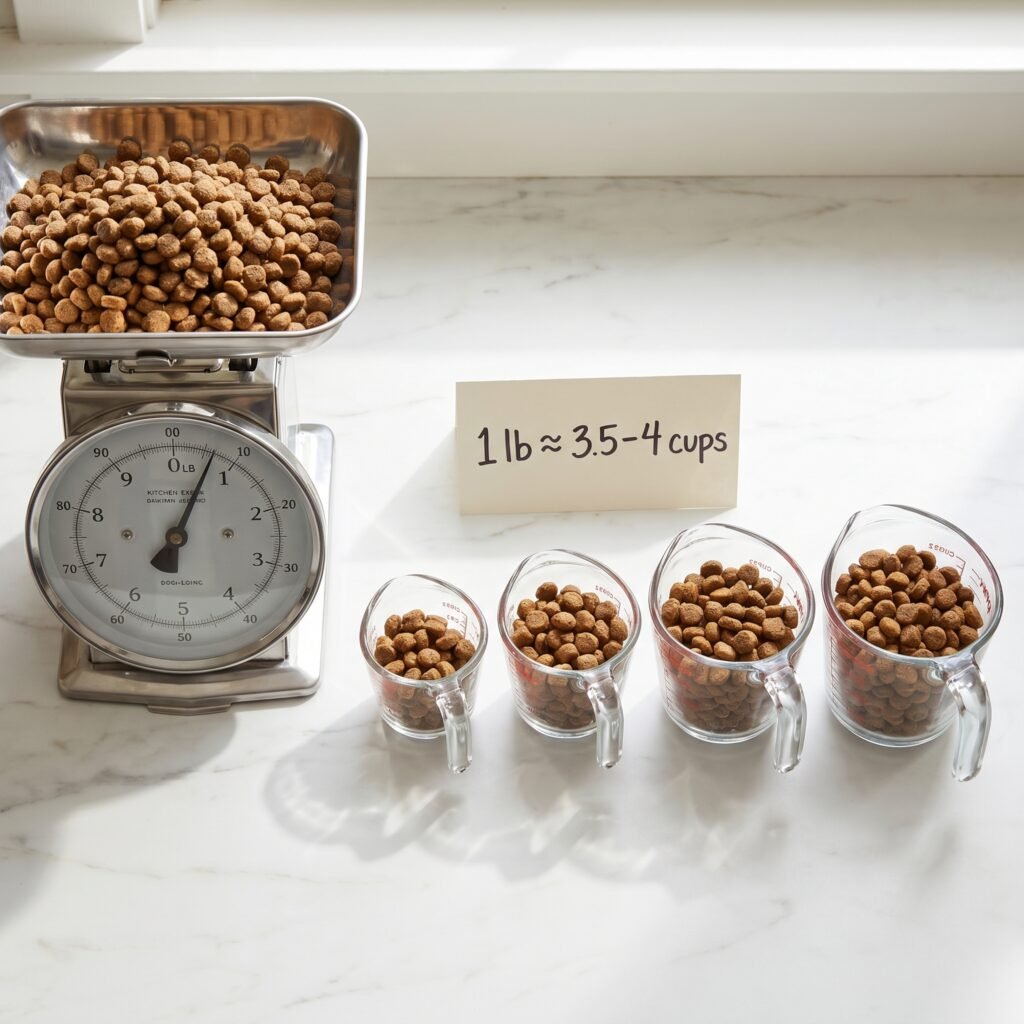
How Many Cups in a Pound of Dog Food? Easy Guide

How many cups in a pound of dog food? Learn the exact conversion and how to measure your dog’s food correctly.

how many cups in a pound of dog food

How Many Cups in a Pound of Dog Food? Accurate Conversions, 30-Lb Bag Math, and the Best Way to Measure

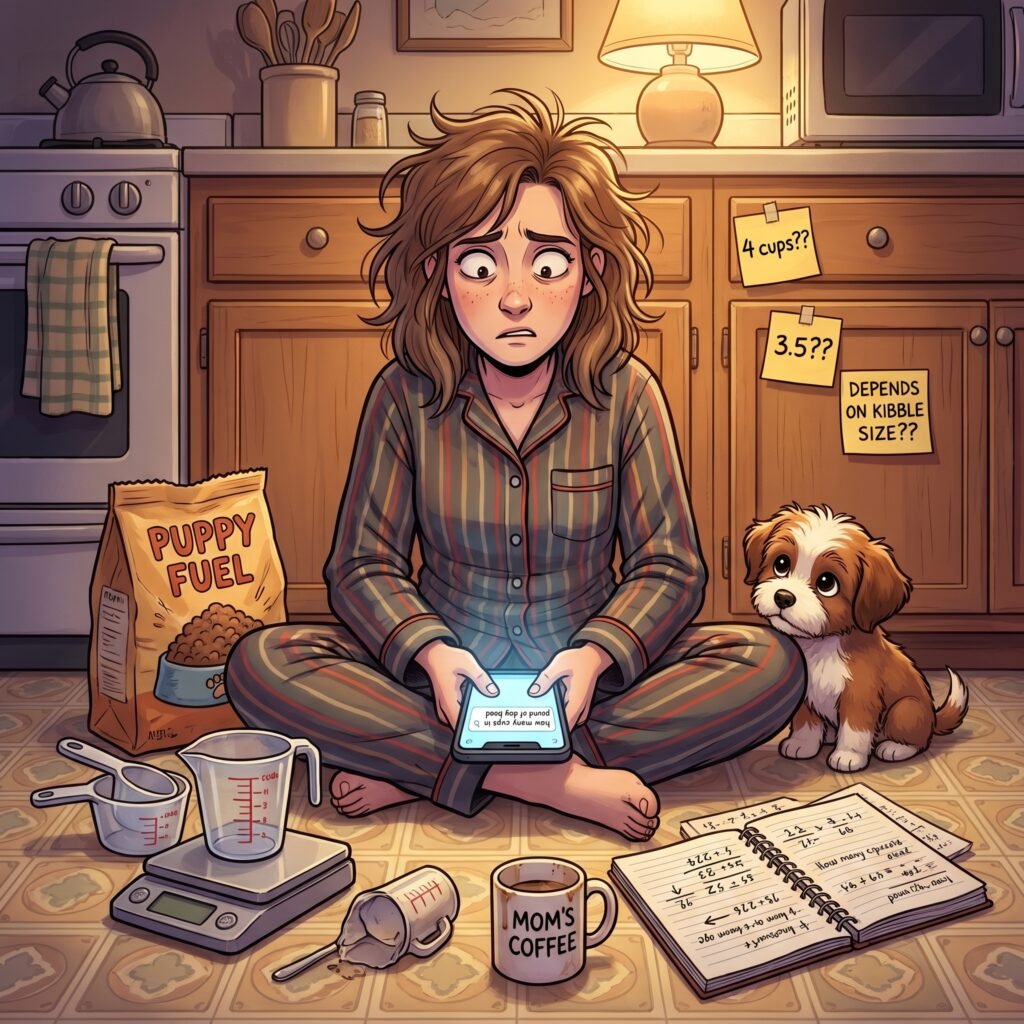
If you’ve ever asked how many cups in a pound of dog food, you’re trying to solve a real-life problem: How much should I feed, how long will this bag last, and how much do I need to buy? You’ll also see the same question phrased as how many cups of dog food in a poundhow many pounds in a cup of dog food, or how many cups of dry dog food in a pound. And one of the most practical versions is: how many cups in a 30 pound of dog food.

Here’s the truth that makes everything easier:

There is no universal “cups per pound” number that works for all kibble.
A cup is volume. A pound is weight. Kibble density changes from brand to brand and even recipe to recipe.

Still, you can get a reliable answer using the methods in this guide—plus you’ll learn how to calculate bag duration, feeding cost, and why weighing food is more accurate than scooping.


The Quick Answer: How Many Cups in a Pound of Dog Food?

For most dry dog foods, the common estimate is:

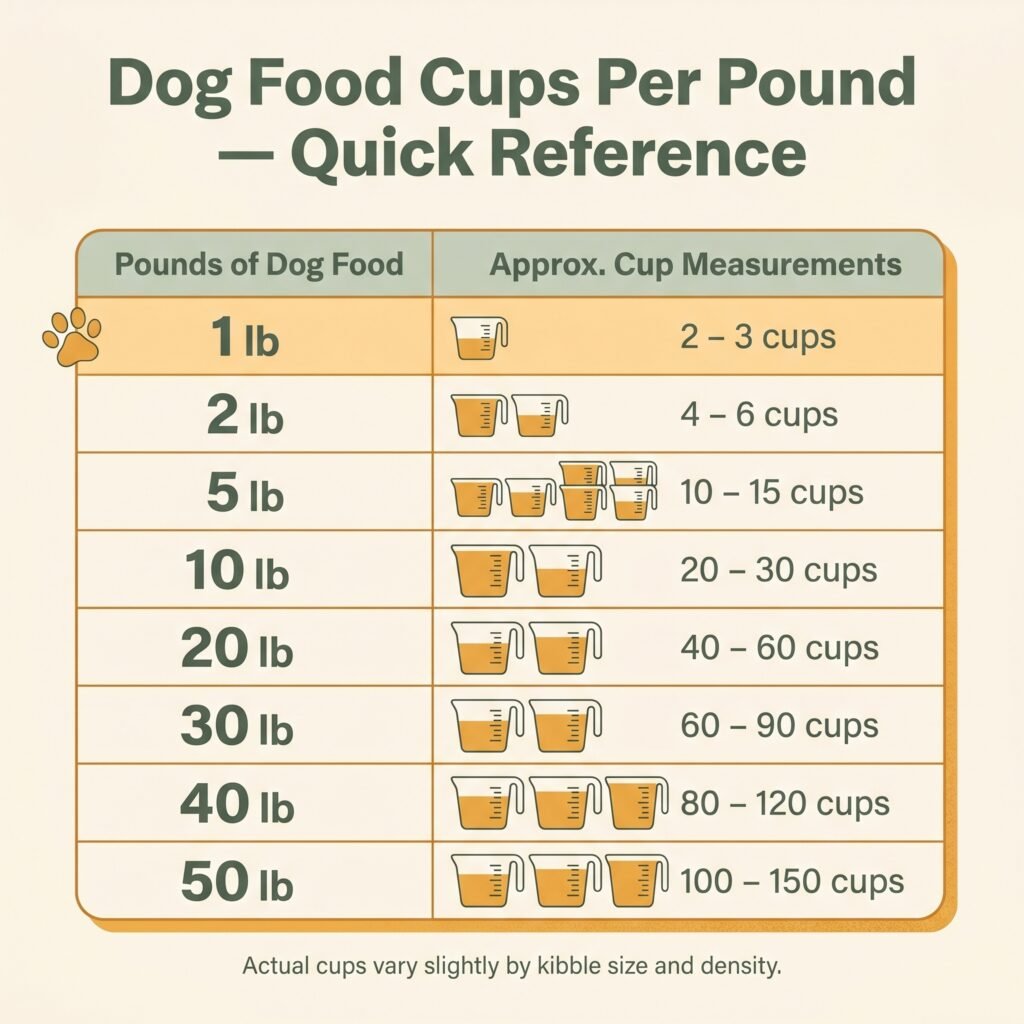
  • 1 pound of dog food ≈ 3 to 4 cups

But depending on the kibble’s density, it can range wider:

  • 1 pound of dry dog food ≈ 3 to 5 cups

That range is not “vague”—it’s realistic. Some kibbles are light and airy; others are small and dense.

If you want a fast estimate and don’t have a scale, use 3.5 cups per pound as a practical middle-ground.


Why the Answer Changes Between Brands

When people search how many cups of dog food in a pound, they’re often surprised that the number isn’t fixed. Here’s why it varies:

1) Kibble size and shape

Small pieces pack tighter (more weight per cup), while larger or irregular shapes trap more air (less weight per cup).

2) Density (ingredients and processing)

Higher-fat or meat-heavy recipes can be denser. Some grain-inclusive formulas can be lighter. Processing and expansion during extrusion also changes how “puffy” the kibble becomes.

3) Moisture content differences

Dry food is low moisture, but not identical across all products. Small differences add up across a whole bag.

4) Measuring method

A “cup” can vary based on:

  • whether you level it off

  • whether you pour gently or pack it down

  • the scoop size (not all “cups” are identical if you’re using a random scoop)

Bottom line: two foods can both say “feed 2 cups per day” and still deliver different calories and different weights.

how many cups of dog food in a pound

How Many Cups of Dry Dog Food in a Pound (Best Methods)

Method 1: Check the bag for grams per cup (best if available)

Many brands list something like:

  • “1 cup = ___ kcal”

  • or “___ grams per cup” (sometimes on feeding charts)

If you have grams per cup, you can convert perfectly.

Method 2: Weigh one cup once (most accurate at home)

This is the easiest accurate method:

  1. Get a kitchen scale.

  2. Place an empty measuring cup on the scale and tare/zero it.

  3. Fill 1 level cup with kibble.

  4. Record the weight in grams.

Then use:

  • 1 pound = 454 grams

  • cups per pound = 454 ÷ (grams per cup)

Example:
If 1 cup weighs 120 g
→ 454 ÷ 120 = 3.78 cups per pound

That’s your exact answer for that food.

Method 3: Use ounces if you don’t like grams

  • 1 pound = 16 ounces

  • cups per pound = 16 ÷ ounces per cup

But most kitchen scales show grams more reliably.


How Many Pounds in a Cup of Dog Food?

This question is the reverse: how many pounds in a cup of dog food.

Once you know cups per pound, do:

  • pounds per cup = 1 ÷ (cups per pound)

Example: If your kibble is 4 cups per pound
→ pounds per cup = 1 ÷ 4 = 0.25 lb per cup

Here’s a quick reference:

  • If 1 lb = 3 cups, then 1 cup ≈ 0.33 lb

  • If 1 lb = 4 cups, then 1 cup = 0.25 lb

  • If 1 lb = 5 cups, then 1 cup = 0.20 lb

how many pounds in a cup of dog food

How Many Cups in a 30 Pound of Dog Food?

This is the most useful real-world question. Once you have cups per pound, the formula is simple:

  • cups in bag = bag weight (lb) × cups per pound

Because cups per pound varies, here are realistic estimates for a 30 lb bag:

Common 30-lb bag cup ranges

  • If 1 lb = 3 cups → 30 lb = 90 cups

  • If 1 lb = 3.5 cups → 30 lb = 105 cups

  • If 1 lb = 4 cups → 30 lb = 120 cups

  • If 1 lb = 4.5 cups → 30 lb = 135 cups

  • If 1 lb = 5 cups → 30 lb = 150 cups

Most common estimate for a 30 lb bag: 90 to 120 cups
(And if your kibble is small and dense, you’ll often be closer to 90–105.)


“How Long Will My Dog Food Bag Last?” (Cup-Based Calculator)

Once you know total cups in the bag, you can estimate bag duration:

  • days the bag lasts = total cups ÷ cups fed per day

Example 1: Dog eats 2 cups/day

If 30 lb bag has 105 cups:
105 ÷ 2 = 52.5 days

If 30 lb bag has 120 cups:
120 ÷ 2 = 60 days

Example 2: Dog eats 3 cups/day

105 ÷ 3 = 35 days
120 ÷ 3 = 40 days

how many cups of dry dog food in a pound

Example 3: Dog eats 4 cups/day

105 ÷ 4 = 26 days
120 ÷ 4 = 30 days

This is why knowing your real cups-per-pound is useful—your bag duration estimate can be off by weeks otherwise.

The SEO-Friendly “Quick Conversion Table” (Use for Estimates)

These are typical estimates for many dry dog foods:

EstimateCups per 1 lbCups in 30 lb bag
Dense kibble3.090
Medium-dense3.5105
Common average4.0120
Light kibble4.5135
Very light5.0150

If you want the best accuracy: weigh 1 cup once.


Why Measuring by Cups Can Cause Overfeeding

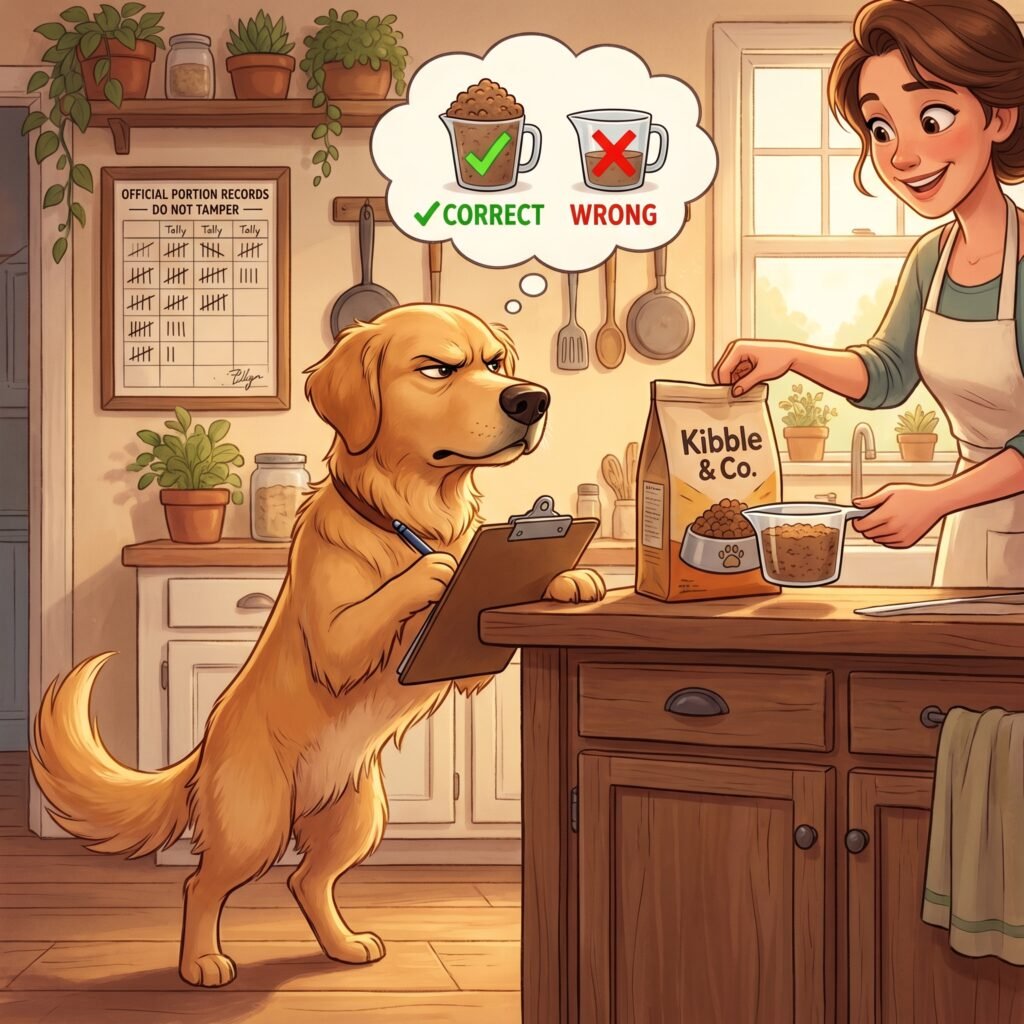
This matters for dog health. Scooping can vary more than people think.

Common issues:

  • “Heaping cups” without realizing it

  • Different family members scoop different amounts

  • Kibble settles in the container over time

  • Your dog food changed (new formula = new density)

Even a small overfeed like ¼ cup per day can lead to noticeable weight gain over months—especially in small dogs.


The Best Way to Measure Dog Food (If You Want Accuracy)

If you want consistent feeding for weight control, the best approach is:

✅ Feed by grams, not by cups.

Here’s why:

  • grams are precise

  • your dog gets consistent calories

  • you can adjust portions by small amounts

How to switch from cups to grams

  1. Weigh your usual daily portion in grams.

  2. Feed that weight daily.

  3. If your dog gains weight, reduce by 5–10%.

  4. If your dog loses too much, increase slightly.

This method is what many vets recommend for weight management.


Tips for Buying the Right Bag Size Using Cup Math

People often buy dog food based on “what looks big enough.” You can buy smarter:

Step 1: Know daily cups

Example: dog eats 2.5 cups/day

Step 2: Estimate bag cups (use 3.5–4 cups per lb if unsure)

Example: 30 lb bag ≈ 105–120 cups

Step 3: Estimate duration

105 ÷ 2.5 = 42 days
120 ÷ 2.5 = 48 days

Step 4: Decide if that fits freshness

Many owners prefer to use a bag within 4–6 weeks after opening (for freshness and smell). If your bag lasts 3 months, you might want a smaller size or better airtight storage.


Storage Affects Accuracy (and Freshness)

If kibble absorbs moisture or is stored loosely, it can:

  • change weight per cup slightly

  • lose freshness faster

  • smell stale (some dogs then eat less)

Best storage practices:

  • keep the food in its original bag (the lining protects it)

  • place that bag inside an airtight container

  • keep it cool, dry, and away from sunlight

  • seal the bag tightly between uses


Common Questions and Answers

How many cups in a pound of dog food exactly?

There’s no universal exact number. Most dry dog foods fall around 3–4 cups per pound, but it can range 3–5 cups depending on kibble density.

How many cups of dry dog food in a pound for small-bite kibble?

Small-bite kibble often packs tighter, so you may get fewer cups per pound (closer to 3–3.5) because each cup weighs more.

How many pounds in a cup of dog food?

It depends on density. If your kibble is 4 cups per pound, then 1 cup = 0.25 lb. If it’s 3 cups per pound, then 1 cup ≈ 0.33 lb.

How many cups in a 30 pound of dog food?

Typically 90–120 cups for most foods. If the kibble is very light it can be higher; if it’s dense it can be closer to 90–105.

Why does my dog’s bag feeding chart not match my cup conversions?

Feeding charts are based on calorie targets and typical scoop volume assumptions. Different kibble densities and different scoop habits can create differences—this is why weighing portions is more accurate.

Scroll to Top