
What Is Chicken Meal in Dog Food? Ingredients Explained
What is chicken meal in dog food and is it healthy for dogs? Learn how chicken meal is made and why it’s used in many dog foods.
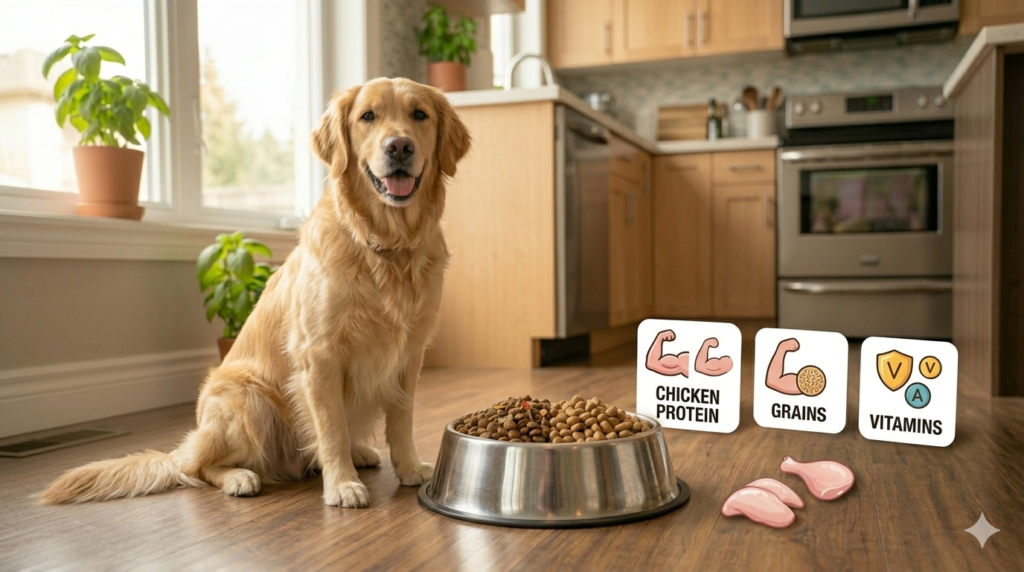
What Is Chicken Meal in Dog Food? Meaning, What It’s Made Of, and Chicken By-Product Meal Explained
If you’ve ever flipped a dog food bag over and wondered what is chicken meal in dog food, you’re not alone. You’ll also see questions like what is chicken meal in dog food made of, what is chicken meal in dry dog food, and what is chicken meal in dog food mean—especially because “meal” sounds mysterious if you’re not used to reading pet food labels.
This guide explains:
What chicken meal is (and why it’s used)
What it’s made of
How it compares to chicken by-product meal
Why “meal” is common in dry kibble
How to judge quality beyond marketing buzzwords
What Is Chicken Meal in Dog Food Mean?
In pet food labeling, “meal” doesn’t mean a dinner plate—it means an ingredient that has been rendered (cooked to remove moisture and separate components), then dried and ground into a concentrated powder.
A helpful way to think about it:
Fresh chicken is heavy because it contains a lot of water.
Chicken meal is chicken with most of that water removed, so it’s more concentrated by weight.
Purina describes chicken meal as rendered chicken meat that has been dried and ground, and that it can include clean flesh, skin, and/or accompanying bone—but not feathers, heads, feet, or intestinal contents.
What Is Chicken Meal in Dog Food Made Of?
Chicken meal is made from chicken tissues after rendering and drying. In general, it includes:
Clean chicken flesh
Skin
Sometimes bone
AAFCO’s ingredient standards (commonly referenced for pet food definitions) describe “poultry meal” as the dry rendered product from a combination of clean flesh and skin, with or without accompanying bone, derived from poultry parts or whole carcasses—excluding feathers, heads, feet, and entrails.
When the ingredient is specifically labeled “chicken meal”, it should correspond to chicken (not a mix of poultry types).
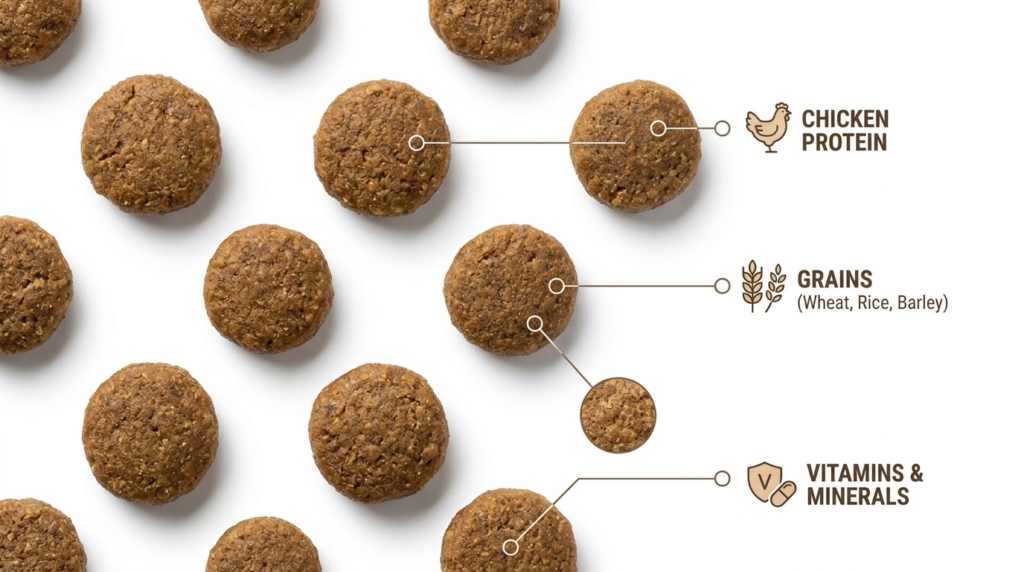
What Is Chicken Meal in Dry Dog Food, and Why Is It So Common?
You’ll see chicken meal a lot in kibble because dry dog food is low-moisture by design. Kibble has to be shelf-stable, which means manufacturers want ingredients that:
Work well in extrusion (kibble-making)
Are nutrient-dense
Have low moisture content
Fresh chicken can still be used in dry food, but because it contains so much water, it may appear high on the ingredient list by weight—even though much of that weight is moisture. Chicken meal is already dried, so it delivers more concentrated protein and minerals per pound of ingredient.
Is Chicken Meal “Bad” or “Low Quality”?
Not automatically. “Meal” is a form, not a quality grade.
Chicken meal can be:
A highly useful, concentrated animal protein ingredient in kibble
Or a lower-quality ingredient if the source material and manufacturing controls are poor
What matters most is:
The manufacturer’s quality control
The overall formula (protein, fat, digestibility)
How your dog does on it (stool, coat, energy)
The term “meal” itself is not a red flag.
What Is Chicken By-Product Meal in Dog Food?
Now to the second keyword people search: what is chicken by product meal in dog food.
AAFCO describes “poultry by-product meal” (the category chicken by-product meal falls under) as the ground, rendered, clean parts of the carcasses of slaughtered poultry—such as necks, feet, undeveloped eggs, and intestines—exclusive of feathers except in unavoidable trace amounts from good processing practices.
So chicken by-product meal is essentially:
Chicken “by-products” (nutritious non-muscle parts) that are rendered and dried into a meal form
Important note: By-products are not automatically “trash.” In nature, many canines and wild animals consume organ and connective tissues. The key issue is transparency and quality control, not the word “by-product” alone.
AAFCO also defines “byproducts” broadly as secondary products produced in addition to the principal product.
Chicken Meal vs Chicken By-Product Meal: What’s the Difference?
Here’s the simplest difference:
Chicken meal
Mostly flesh and skin, with or without bone
Excludes feathers, heads, feet, and entrails
Chicken by-product meal
Rendered non-muscle parts like necks, feet, undeveloped eggs, intestines (and related “clean parts” allowed by definition)
Excludes feathers except unavoidable trace amounts
Which is “better”?
It depends on your goal:
If you want a more “muscle-meat-forward” profile, you may prefer chicken meal.
If you’re okay with organ and other parts (which can be nutrient-rich), by-product meal can still be a legitimate animal-protein ingredient.
What matters more is:
Overall nutrient profile (protein/fat/fiber)
Digestibility
Your dog’s tolerance
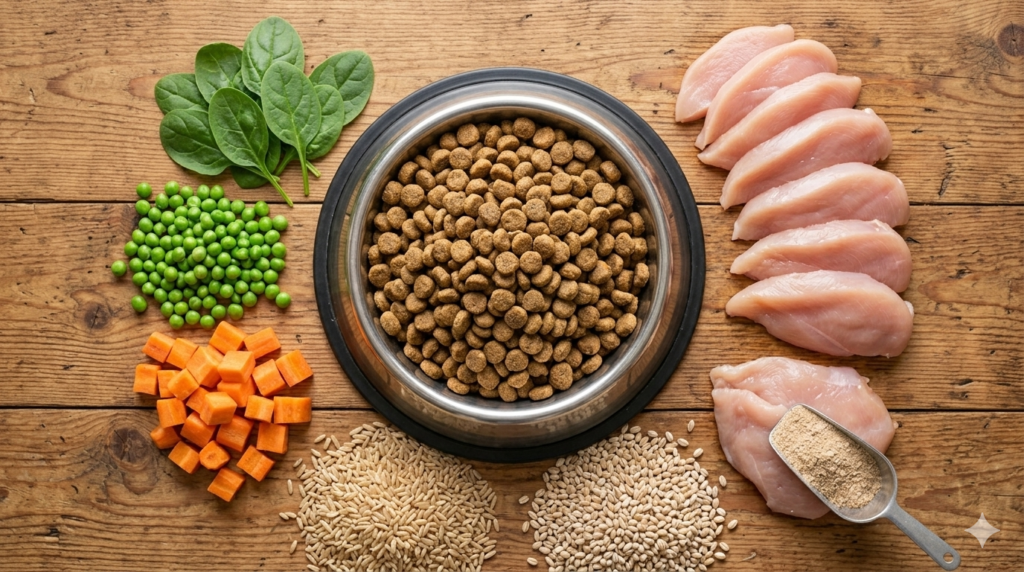
Does Chicken Meal Mean “Feathers and Beaks”?
This is one of the biggest myths.
Both AAFCO’s “poultry meal” definition and Purina’s description state that chicken meal does not contain feathers and excludes heads, feet, and intestinal contents.
For by-product meal, feathers are excluded except for trace amounts that might occur unavoidably under good processing practices.
So: the scary “it’s made of feathers” claim is generally not consistent with the ingredient definitions.
Why Dog Food Companies Use Chicken Meal
Manufacturers use chicken meal because it can help create a stable, affordable, high-protein kibble formula.
Common reasons:
Concentrated protein in dry recipes
Stable shelf life (low moisture)
Reliable formulation (consistent nutrient contribution batch to batch)
Often cost-effective compared to using only fresh meat in kibble
Chicken meal can also contribute minerals (like calcium and phosphorus) when it includes bone—useful for balance when formulated correctly.
How to Tell If Chicken Meal in a Dog Food Is “Good”
Instead of judging the label emotionally, use a practical checklist:
1) Look at the full ingredient context
Is chicken meal the main animal ingredient? Are there multiple animal proteins? Are there lots of vague terms?
2) Check the AAFCO statement
You want “complete and balanced” for your dog’s life stage. (This is one of the most important label signals.)
3) Check guaranteed analysis
Protein and fat levels should match your dog’s needs (active vs couch potato; puppy vs adult vs senior).
4) Watch your dog’s results
The best dog food is the one that produces:
Firm stool
Healthy coat
Stable weight
Good energy
No chronic itching or ear issues
Common Questions
What is chicken meal in dog food made of?
Rendered, dried chicken tissues—typically clean flesh and skin, with or without bone (definition excludes feathers, heads, feet, and entrails).
What is chicken meal in dry dog food?
A dried, concentrated animal-protein ingredient used frequently in kibble because it’s low moisture and nutrient-dense.
What is chicken by product meal in dog food?
Rendered, dried by-products (clean parts of the carcass such as necks, feet, undeveloped eggs, intestines), excluding feathers except trace amounts.
Is chicken meal better than “real chicken”?
Not automatically. Fresh chicken contains a lot of water; chicken meal is more concentrated in dry food. Both can be used well in balanced formulas.
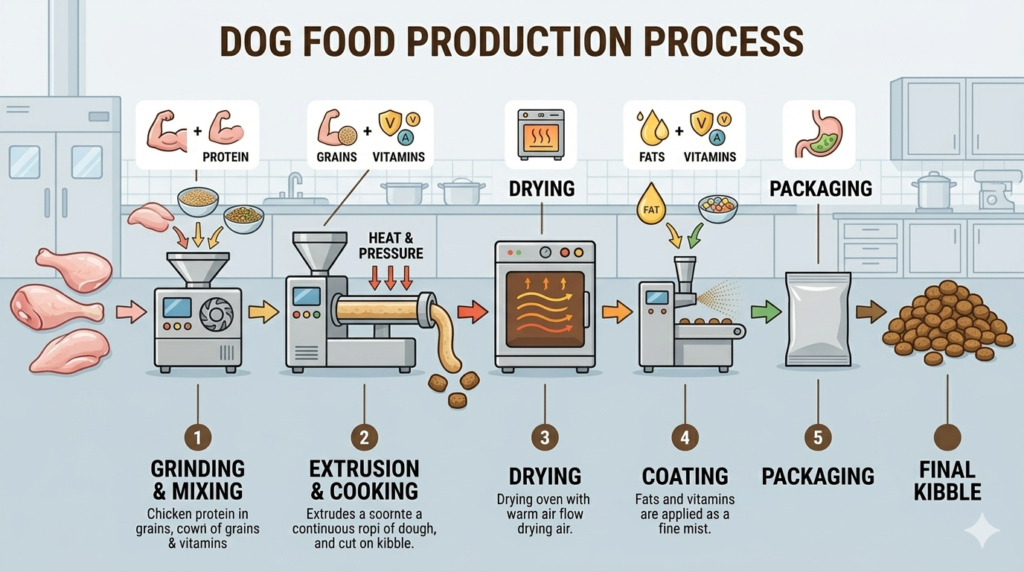
How Chicken Meal Is Made (Simple Step-by-Step)
People often ask what is chicken meal in dog food made of because “meal” sounds processed. Here’s what “meal” typically means in pet food manufacturing:
Chicken parts are collected (based on the ingredient definition for “chicken meal,” this is generally flesh/skin and sometimes bone).
Rendered (cooked) at controlled temperatures to remove most moisture and separate fat from protein/mineral solids.
Dried further so it becomes shelf-stable.
Ground into a consistent powder-like ingredient.
The result is a concentrated animal ingredient that is easier to formulate into kibble than fresh meat alone.
Why Chicken Meal Often Appears “Higher” on the Ingredient List
Ingredient lists are ordered by weight before cooking. Fresh chicken contains a lot of water. During kibble processing, that moisture is reduced dramatically.
That means:
A food can list fresh chicken first, but after cooking it contributes less actual meat solids than you’d expect.
Chicken meal is already dried, so it tends to represent more “meat solids” per pound at formulation time.
This is why you’ll see many dry foods use a mix of:
fresh chicken (for palatability/marketing and some nutrition)
chicken meal (for concentrated protein and stable formulation)
So what is chicken meal in dry dog food? Often, it’s the ingredient that helps the food deliver consistent protein density in a shelf-stable kibble.
Is Chicken Meal “Better” Than Fresh Chicken?
Not automatically — they’re different forms of the same animal source.
Chicken meal advantages (especially in kibble)
More protein/minerals per pound because water is removed
More consistent nutrient contribution
Often helps maintain a stable macro profile (protein/fat)
Easier to make a dry, crunchy kibble with predictable texture
Fresh chicken advantages
Can improve taste and aroma
Often feels more “whole food” to buyers
Contributes moisture at mixing stage (but that moisture doesn’t remain in kibble)
A well-formulated kibble can use either (or both) effectively.
The “Ash” and Bone Myth: What You Should Know
Some pet owners worry that chicken meal is “full of ash” or “too much bone.”
Here’s the reality:
When bone is included, it contributes minerals like calcium and phosphorus.
Minerals are not bad — they’re required — but they must be balanced.
If a food is properly formulated for the life stage (puppy vs adult), those mineral levels should be appropriate. This is why the AAFCO nutritional adequacy statement matters more than one ingredient alone.
When bone/mineral levels matter most
Large breed puppies (mineral balance is especially important)
Dogs with kidney disease (they may need specific nutrient control under vet guidance)
For healthy adult dogs, chicken meal is commonly used without issues.
Chicken Meal vs Chicken By-Product Meal: Deeper Differences
You already know the basic difference:
Chicken meal is typically more focused on flesh/skin (and sometimes bone).
Chicken by-product meal uses other “clean parts” (like organ and connective parts allowed under definition).
Here’s the practical perspective:
Chicken by-product meal can still be nutritious
Organs and connective tissues can contain valuable nutrients (amino acids, vitamins, minerals). Some dogs do fine on it.
Why some owners still prefer chicken meal
It feels more “meat-forward”
It’s clearer for people who want mostly muscle-meat style ingredients
Some dogs do better on simpler, more consistent protein sources
Neither term alone guarantees quality. The manufacturer’s sourcing and processing standards matter.
Does Chicken Meal Cause Allergies?
A common question behind what is chicken meal in dog food mean is: “Is it bad for allergies?”
Chicken meal itself isn’t inherently more allergenic than chicken meat. If a dog is allergic to chicken, they may react to:
chicken meal
fresh chicken
chicken fat (less common, but possible)
any chicken-derived ingredient
Important difference:
Food allergies are less common than food intolerances. Many dogs have stomach sensitivity rather than true immune allergies.
If you suspect chicken sensitivity
Choose a diet with a different main protein (salmon, lamb, turkey, etc.)
Transition slowly
Track stool, itchiness, ears, and skin over 3–6 weeks
Talk to a vet if symptoms are severe or persistent
How to Judge the Quality of Chicken Meal in a Dog Food
Instead of focusing on “meal = bad” or “meal = good,” use these quality indicators:
1) “Named” meal vs “generic” meal
Chicken meal (named species) is clearer.
Generic terms like “meat meal” or “poultry meal” can be less specific (not always bad, but less transparent).
2) Brand consistency and transparency
Brands that consistently produce stable formulas and publish feeding guidance clearly tend to be more reliable.
3) Guaranteed analysis matches your dog
Active dog → may need higher protein/fat
Low activity dog → moderate fat helps avoid weight gain
Sensitive stomach dog → moderate fat + digestible ingredients often help
4) Your dog’s results
This is the strongest test:
firm stool
good coat
stable weight
normal energy
no chronic itching/ear issues
If your dog thrives, that chicken meal is doing its job.
Why Chicken Meal Is Popular in “High Protein” Kibbles
If you’ve ever read “high protein” on a bag, chicken meal is often involved because it helps raise protein concentration without adding extra moisture.
But remember: protein percentage alone isn’t everything.
Digestibility matters
Fat matters
Total calorie density matters
Some dogs do great on high-protein formulas; others get loose stools if the fat is too rich.
Chicken Meal in “Limited Ingredient” Diets
Some limited-ingredient diets use chicken meal as the primary protein because it’s consistent and concentrated.
However, “limited ingredient” is most useful when:
The formula truly has a simplified ingredient list
There aren’t multiple mixed proteins
You’re trying to identify a trigger ingredient
If your dog has a sensitive stomach, limited ingredient diets can be helpful — but the transition must be slow.
Quick Troubleshooting: If Your Dog Reacts After Switching Foods
If your dog starts having issues after switching to a food that uses chicken meal, it might not be the meal itself.
Common causes:
switched too quickly
fed too much (new food may be calorie-dense)
treats/toppers added during switch
dog sensitive to fat level or fiber balance
unrelated illness (parasites, infection)
If diarrhea/vomiting persists or your dog becomes lethargic, contact a vet.
Extra FAQ
What is chicken meal in dog food mean?
It means chicken ingredients that have been cooked to remove moisture, then dried and ground into a concentrated ingredient for kibble.
What is chicken meal in dog food made of?
Typically chicken flesh/skin and sometimes bone (depending on definition and manufacturer).
What is chicken meal in dry dog food used for?
To provide concentrated protein and stable formulation in low-moisture kibble.
Is chicken by-product meal worse?
Not automatically. It depends on sourcing, formulation quality, and your dog’s tolerance.
Final Add-On Summary
Chicken meal is one of the most common and practical animal ingredients in dry dog food because it’s concentrated, consistent, and shelf-stable. It isn’t automatically “low quality,” and it isn’t automatically “premium” either. The real quality signal is the whole formula (life-stage adequacy, protein/fat balance, digestibility) and how your dog does on it over time.