
The Best Dog Food for Sensitive Stomachs & Digestive Issues
Find dog food for sensitive stomach formulated to support digestion.

Dog Food for Sensitive Stomach: Choosing the Best Dog Food for Sensitive Stomach and Digestive Support
Digestive issues are common in dogs, and many pet owners search for dog food for sensitive stomach when they notice symptoms like loose stool, gas, or vomiting. Finding the best dog food for sensitive stomach can make a major difference in your dog’s comfort and overall health. Whether you’re comparing best dog foods for sensitive stomach, exploring options labeled dog food for sensitive stomachs, or looking for the best dog food for sensitive stomach and diarrhea, this guide explains causes, ingredients, and how to choose wisely.
What Is a Sensitive Stomach in Dogs?
A sensitive stomach means a dog has difficulty digesting certain ingredients or food types. This may result in digestive discomfort after eating.
Common signs include:
Diarrhea
Soft stool
Vomiting
Excess gas
Reduced appetite
Stomach noises
Occasional upset is normal, but frequent symptoms may indicate dietary sensitivity.
Causes of Sensitive Stomach in Dogs
Several factors can contribute to digestive sensitivity.
Possible causes:
Food intolerance
Sudden diet change
Low-quality ingredients
High fat content
Food allergies
Stress
Identifying triggers helps select appropriate food.
What Makes Dog Food for Sensitive Stomach Different?
Dog food for sensitive stomachs typically focuses on digestibility and gentle ingredients. These formulas are designed to reduce strain on the digestive system.
Key characteristics include:
Limited ingredients
Easily digestible proteins
Moderate fat levels
Added probiotics
Simple carbohydrate sources
Balanced formulation helps reduce irritation.

Best Dog Food for Sensitive Stomach: Key Ingredients to Look For
When searching for the best dog food for sensitive stomach, ingredient quality matters.
Look for:
Single animal protein source
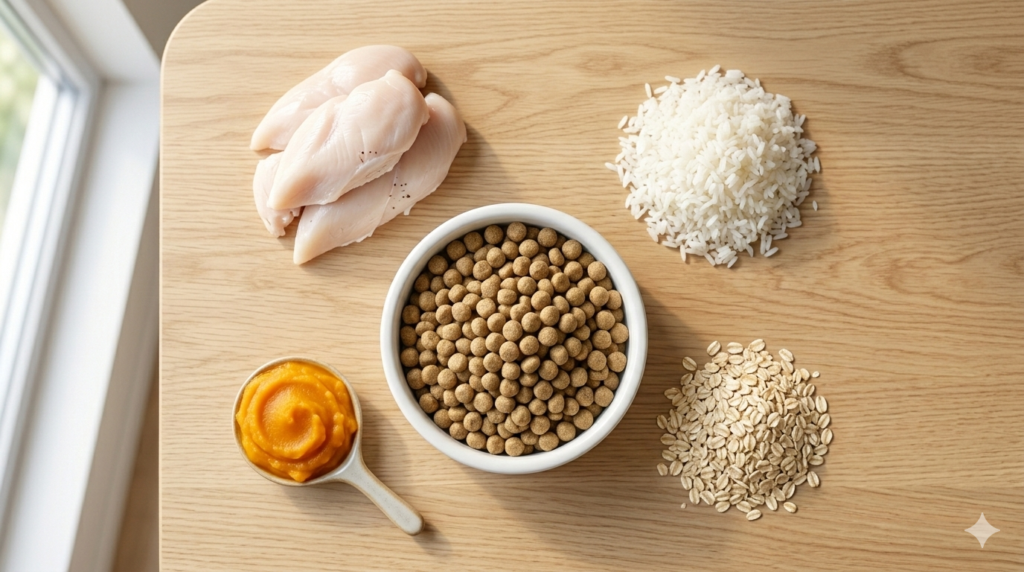
Rice or oatmeal
Pumpkin or fiber sources
Probiotics
Prebiotics
Simple, recognizable ingredients improve digestion.
Protein Choices for Sensitive Dogs
Protein type plays a major role in digestive tolerance. Novel or easily digestible proteins may reduce irritation.
Common gentle protein sources:
Chicken
Turkey
Salmon
Lamb
Limited-protein formulas help identify sensitivities.
Dog Food for Sensitive Stomach and Diarrhea
If your dog experiences frequent loose stool, selecting the best dog food for sensitive stomach and diarrhea becomes especially important.
Helpful features include:
Moderate fiber
Highly digestible carbohydrates
Balanced fat
Probiotic support
These elements support stool consistency and gut balance.
Role of Fiber in Digestive Health
Fiber regulates stool formation and intestinal movement. Too little fiber may lead to loose stool, while too much can cause gas.
Balanced fiber sources:
Pumpkin
Beet pulp
Oatmeal
Brown rice
Proper fiber balance stabilizes digestion.
Probiotics and Gut Health
Probiotics are beneficial bacteria that support healthy gut balance. Many best dog foods for sensitive stomach include probiotic blends.
Benefits include:
Improved digestion
Reduced diarrhea
Enhanced nutrient absorption
Balanced gut flora
Healthy gut bacteria contribute to stable digestion.
Avoiding Common Irritants
Dogs with sensitive stomachs may react to certain ingredients.
Common irritants include:
Artificial colors
Artificial preservatives
Excessive fat
Multiple protein blends
Sudden ingredient changes
Simpler formulas reduce risk of upset.
Transitioning to New Dog Food
Switching too quickly can worsen digestive issues. Gradual transitions allow the digestive system to adjust.
Recommended transition:
25% new food
50% new food
75% new food
100% new food
Slow introduction minimizes upset.
Wet vs Dry Food for Sensitive Stomachs
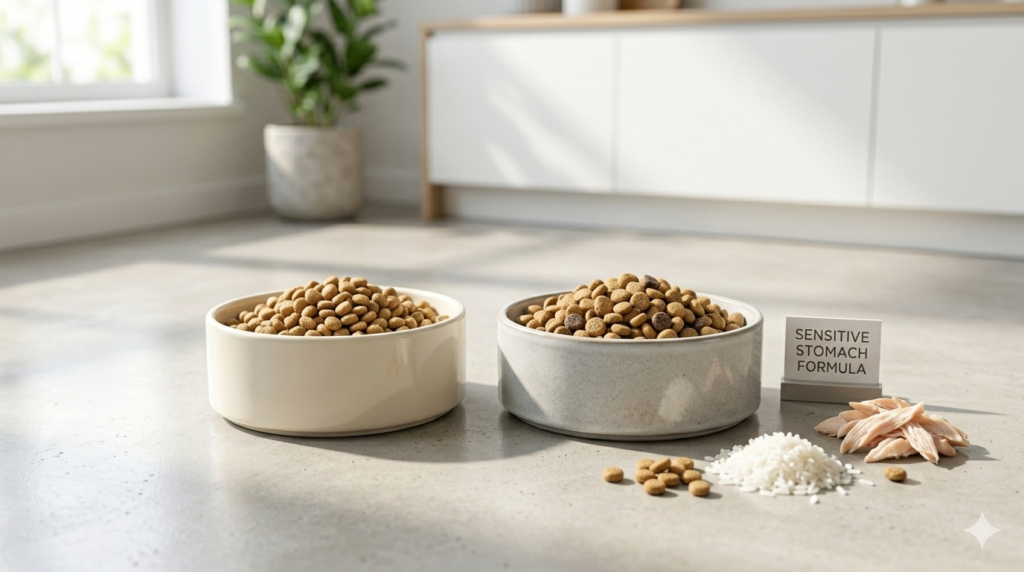
Both wet and dry options can work. Wet food may be easier to digest due to moisture content, while dry food supports dental health.
Choice depends on:
Individual tolerance
Texture preference
Calorie needs
Consistency matters more than format.
Puppies and Sensitive Stomachs
Puppies can experience digestive sensitivity as their systems develop. Puppy-specific sensitive formulas ensure proper growth while being gentle on digestion.
Growth-focused formulas balance:
Protein
Fat
Calcium
Digestibility
Life-stage matching is essential.
When to Consult a Veterinarian
Persistent diarrhea, vomiting, or weight loss requires professional evaluation. Dietary sensitivity should be distinguished from infections or medical conditions.
Seek veterinary advice if symptoms are:
Frequent
Severe
Accompanied by lethargy
Associated with blood in stool
Proper diagnosis ensures correct treatment.
Frequently Asked Questions
What is the best dog food for sensitive stomach?
The best option includes digestible protein, moderate fat, and simple ingredients.
Can dog food cause diarrhea?
Yes, certain ingredients or sudden changes can trigger loose stool.
Should I choose grain-free food?
Not all sensitive dogs require grain-free diets; digestibility matters more.
Are probiotics helpful?
Yes, they support gut balance.
How long does it take to improve digestion?
Improvement may appear within several days after switching.
Understanding the Dog Digestive System
A dog’s digestive system processes food differently from humans. Dogs have shorter digestive tracts and rely heavily on stomach acids and enzymes to break down proteins and fats. When a dog has a sensitive stomach, the digestive system may struggle to process certain ingredients efficiently.
Digestive sensitivity may cause:
Slower nutrient absorption
Incomplete digestion
Intestinal irritation
Selecting the best dog food for sensitive stomach can help reduce stress on the digestive system.
The Role of Easily Digestible Ingredients
Digestibility is one of the most important factors when choosing dog food for sensitive stomachs. Highly digestible foods break down quickly and are absorbed efficiently, reducing strain on the gastrointestinal tract.
Examples of digestible ingredients include:
Chicken
Turkey
White rice
Oatmeal
Sweet potatoes
These ingredients provide nutrients while remaining gentle on digestion.
Fat Content and Digestive Comfort
Fat provides energy, but excessive fat can irritate sensitive stomachs. Dogs with digestive issues often benefit from moderate fat levels rather than high-fat formulas.
Balanced fat levels help prevent:
Loose stool
Vomiting
Pancreatic stress
Digestive discomfort
Many best dog foods for sensitive stomach formulas maintain carefully controlled fat levels.
The Importance of Limited Ingredient Diets
Limited ingredient diets simplify the ingredient list, making it easier to identify potential food sensitivities. When dogs react poorly to certain foods, reducing the number of ingredients may help isolate triggers.
Benefits of limited ingredient formulas include:
Fewer allergens
Easier digestion
Reduced digestive irritation
Clear ingredient transparency
Many veterinarians recommend limited ingredient diets for dogs with recurring digestive issues.
Prebiotics vs Probiotics
Gut health plays a major role in digestion. Many sensitive stomach formulas include prebiotics and probiotics to support intestinal balance.
Probiotics
Live beneficial bacteria
Help maintain gut flora balance
Prebiotics
Fiber compounds that feed beneficial bacteria
Together, these components support healthy digestion and stool formation.
Hydration and Digestive Health
Proper hydration helps food move smoothly through the digestive system. Dogs with digestive sensitivity benefit from consistent water intake.
Hydration supports:
Nutrient absorption
Smooth digestion
Stool consistency
Gut lining health
Wet food or adding moisture to dry food may sometimes improve tolerance.
Identifying Food Intolerances
Some dogs react negatively to certain ingredients. Food intolerances differ from allergies but may cause digestive symptoms.
Common intolerance triggers include:
Dairy products
Excess fat
Certain grains
Artificial additives
Elimination diets may help identify problematic ingredients.
Dog Food for Sensitive Stomach and Diarrhea: Stabilizing Digestion
Dogs experiencing diarrhea often benefit from foods designed for gentle digestion. The best dog food for sensitive stomach and diarrhea typically contains balanced fiber and simple carbohydrates.
Helpful ingredients may include:
Pumpkin
Rice
Oatmeal
Digestible proteins
These components support stool firmness and gut stability.
Gradual Diet Transitions Reduce Stress
Sudden diet changes are one of the most common causes of digestive upset. Even high-quality food can cause problems if introduced too quickly.
Recommended transition schedule:
Day 1–2 → 25% new food
Day 3–4 → 50% new food
Day 5–6 → 75% new food
Day 7 → 100% new food
This gradual shift allows gut bacteria to adapt.
Portion Control and Feeding Schedule
Overfeeding can overwhelm the digestive system, especially in sensitive dogs. Smaller, regular meals may improve digestion.
Helpful feeding strategies include:
Consistent meal times
Smaller portions
Avoiding table scraps
Limiting treats
Routine feeding supports digestive stability.
Stress and Digestive Sensitivity
Dogs can develop digestive upset during stressful situations such as travel, environmental changes, or routine disruption. Stress affects gut motility and microbial balance.
Signs stress may affect digestion include:
Temporary diarrhea
Reduced appetite
Stomach noises
Maintaining consistent routines may help reduce these episodes.
Monitoring Your Dog’s Response to New Food
After switching to a sensitive stomach formula, monitor your dog’s condition for improvement.
Positive signs include:
Firm stool
Reduced gas
Improved appetite
Higher energy levels
Digestive improvement may appear within several days.
Extended Conclusion
Dogs with sensitive stomachs require carefully balanced nutrition designed to support digestion while minimizing irritation. Highly digestible proteins, moderate fat levels, balanced fiber, and beneficial gut-supporting ingredients play key roles in maintaining gastrointestinal health. Whether choosing dog food for sensitive stomach, comparing the best dog foods for sensitive stomach, or selecting the best dog food for sensitive stomach and diarrhea, ingredient simplicity and gradual transitions are essential.
By selecting appropriate formulas and maintaining consistent feeding habits, many dogs experience significant improvements in digestion, comfort, and overall health.