
can dogs eat mango ? 2026
Can dogs eat mango? Learn if can dogs eat mango safely and how much is okay for your pet.
Can Dogs Eat Mango? Safety, Benefits, and Feeding Guide for Fresh and Dried Mango
Many pet owners ask can dogs eat mango safely when sharing fruit snacks with their pets. Questions like can dog eat mango, can dogs eat mangos, or can dogs eat mangoes are common because mango is sweet, soft, and nutrient-rich. While mango is not toxic to dogs, proper preparation and portion control are essential. This guide explains when mango is safe, how much to feed, and whether dried mango is appropriate.
Can Dogs Eat Mango?
Yes, dogs can eat ripe mango flesh in small amounts. Mango is non-toxic and generally safe for healthy dogs when served plain and properly prepared. The fruit contains vitamins, fiber, and antioxidants that can provide nutritional variety as an occasional treat.
However, mango should never replace balanced canine nutrition.
Nutritional Benefits of Mango for Dogs
Mango provides several nutrients that may support health when fed occasionally.
Key nutrients include:
Vitamin A
Vitamin C
Vitamin E
Fiber
Antioxidants
These compounds support immune function, skin health, and cellular protection in moderation.
Can Dogs Eat Mangos or Mangoes in Any Form?
Both spellings refer to the same fruit, and the safety guidance is identical. Whether owners ask can dogs eat mangos or can dogs eat mangoes, the answer remains that ripe mango flesh is safe in small portions.
Preparation matters more than wording. Only the soft edible fruit should be offered.
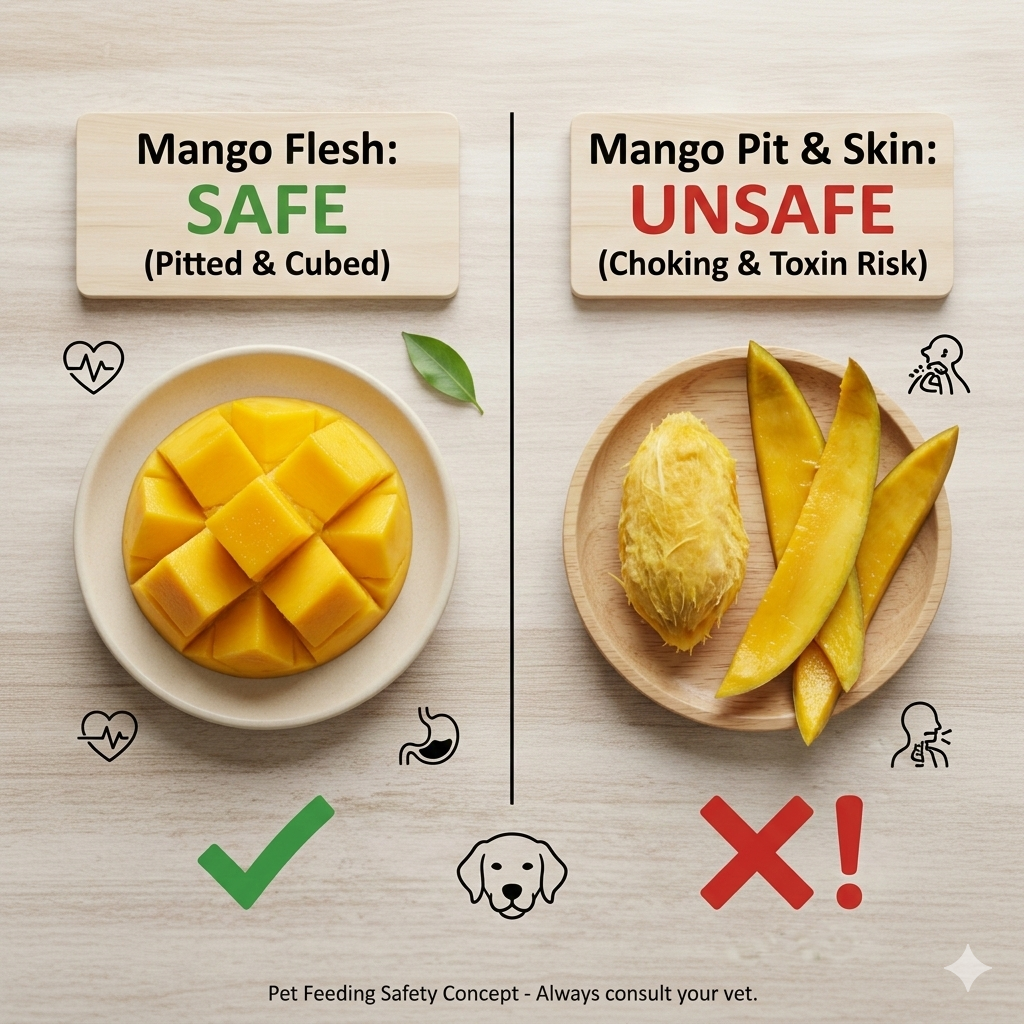
Can Dog Eat Mango Skin or Pit?
Only the inner flesh is safe. Mango skin is tough and difficult to digest, while the pit is a choking hazard and may obstruct digestion.
Always remove:
Skin
Pit
Fibrous core
Cut flesh into small pieces before feeding.
Portion Size: How Much Mango Can Dogs Eat?
Because mango contains natural sugar and fiber, portions should be limited.
General guideline:
Small dogs → tiny cubes
Medium dogs → few cubes
Large dogs → small handful
Fruit treats should remain a small percentage of daily calories.
Digestive Effects of Mango in Dogs
Mango contains soluble fiber, which supports digestion in small amounts. However, excess fruit intake may cause:
Loose stool
Gas
Mild stomach upset
Gradual introduction helps assess tolerance.
Can Dogs Eat Dried Mango?
Many owners ask can dogs eat dried mango. Unsweetened dried mango is not toxic, but it is concentrated in sugar and calories compared with fresh fruit. Dried fruit also lacks moisture, making it less ideal for dogs.
If offered:
Use very small amounts
Ensure no added sugar
Avoid preservatives
Fresh mango is always the safer option
Can Dogs Eat Mango for Hydration?
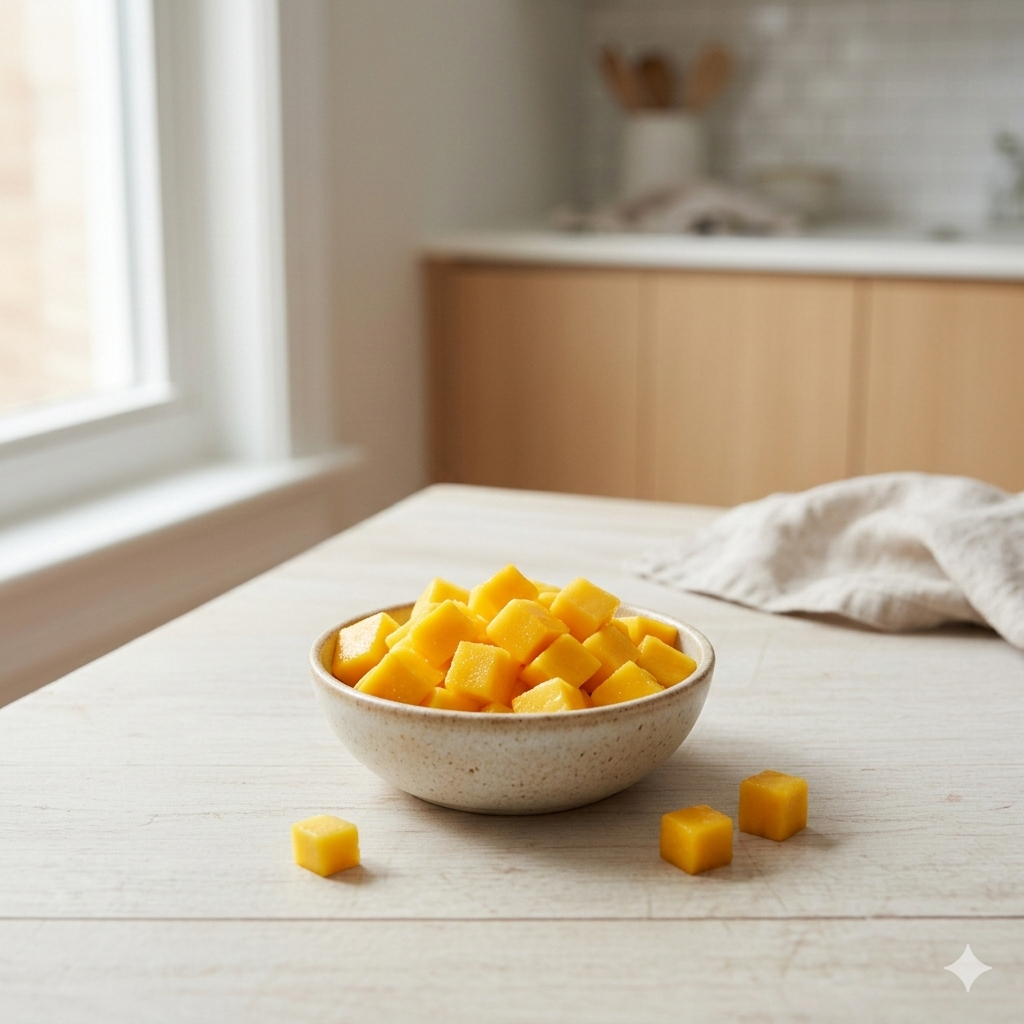
Fresh mango contains moderate moisture, which can contribute to hydration and provide a refreshing texture. Chilled mango cubes may be especially appealing in warm weather.
However, fruit cannot replace water intake.
Puppies and Mango
Puppies can eat tiny amounts of ripe mango after weaning, but their digestive systems are sensitive. Portions should be very small and offered occasionally.
Observe for:
Stool changes
Gas
Refusal
Balanced puppy food remains the primary nutrition source.
Dogs With Health Conditions
Some dogs should limit fruit intake, including mango.
Use caution if dog has:
Diabetes
Obesity
Sensitive digestion
Pancreatitis history
Natural sugars may affect metabolism in sensitive dogs.
Mango vs Other Fruits for Dogs
Compared with other fruits:
Banana → higher starch
Apple → lower sugar
Blueberry → lower calorie
Mango → sweeter, softer
Mango is safe but should be fed less frequently than lower-sugar fruits.

Safe Preparation Steps
Before feeding mango:
Wash fruit
Remove skin
Remove pit
Cut small cubes
Serve plain
Proper preparation prevents choking and digestive issues.
Signs of Mango Intolerance
Although uncommon, some dogs may react poorly.
Possible signs:
Soft stool
Gas
Vomiting
Refusal
If symptoms occur, discontinue feeding.
Frequently Asked Questions
Can dogs eat mango safely?
Yes, ripe mango flesh is safe in moderation.
Can dogs eat mangos or mangoes?
Yes, both refer to the same fruit.
Can dog eat mango skin?
No, skin is tough and hard to digest.
Can dogs eat dried mango?
Small amounts of unsweetened dried mango may be tolerated, but fresh is better.
Is mango healthy for dogs?
In moderation, it provides vitamins and fiber.

Why Dogs Are Attracted to Sweet Fruits Like Mango
Dogs naturally prefer sweet flavors because sweetness signals safe energy sources in nature. Mango has a soft texture and strong aroma, which makes it appealing to many dogs. When owners ask can dogs eat mango, the question often comes from dogs showing interest in fresh fruit during meals or snacks.
While dogs may enjoy sweet fruit, their digestive systems are not designed for high sugar intake. Occasional fruit treats are acceptable, but frequent feeding is unnecessary for canine nutrition.
Natural Sugar Content in Mango
Mango contains more natural sugar than many dog-safe fruits. Even though the sugar is natural, it still contributes calories and affects digestion if fed excessively.
Sugar-related concerns include:
Weight gain
Blood sugar fluctuations
Loose stool
Dental residue
This is why moderation is essential when deciding how often dogs can eat mango.
Fresh Mango vs Dried Mango for Dogs
Many pet owners wonder can dogs eat dried mango compared with fresh fruit. The main difference is moisture content and sugar concentration.
Fresh mango:
Contains water
Lower sugar density
Softer texture
Easier digestion
Dried mango:
Concentrated sugar
Sticky texture
Higher calories
Harder chewing
Because drying removes water, sugar becomes concentrated, making dried fruit less suitable for dogs. Fresh fruit is always preferred.
Fiber in Mango and Digestive Effects
Mango provides soluble fiber, which can support digestion in small amounts. Fiber helps regulate stool consistency and intestinal movement.
However, excess fiber from fruit may cause:
Gas
Loose stool
Mild discomfort
Dogs vary in fiber tolerance, so small portions remain safest.
Cooling and Hydration Benefits
Fresh mango contains moisture and can provide a refreshing sensation when chilled. Small chilled cubes may be appealing in warm weather.
Hydration-supportive snacks like fresh fruit:
Provide moisture
Add texture variety
Improve treat interest
They should complement, not replace, water intake.
Can Dogs Eat Mango as Training Treats?
Because mango is soft and easy to chew, small pieces can be used occasionally as training rewards. However, due to sugar content, it should not be the primary training treat.
For frequent training, lower-sugar foods are better. Mango works best as an occasional high-value reward.
Comparing Mango With Other Dog-Safe Fruits
Compared with common fruits:
Apple → lower sugar
Blueberry → lower calorie
Banana → similar sweetness
Mango → softer, juicier
Mango is safe but sweeter than many alternatives, so feeding frequency should be lower.
Dogs That Should Avoid Mango
Some dogs should limit or avoid mango entirely due to metabolic or digestive sensitivity.
Avoid or limit if dog has:
Diabetes
Obesity
Pancreatitis
Chronic digestive disease
Natural fruit sugars can worsen these conditions.
Introducing Mango to a Dog for the First Time
When offering mango initially:
Give a tiny cube
Observe for 24 hours
Monitor stool
Increase slightly if tolerated
Gradual introduction prevents digestive upset.
Signs of Overfeeding Mango
Too much fruit may cause digestive imbalance.
Possible signs:
Soft stool
Gas
Reduced appetite
Vomiting
Reducing portion typically resolves symptoms.
Storage and Freshness Safety
Fresh mango spoils quickly after cutting. Spoiled fruit may irritate digestion.
Safe storage:
Refrigerate cut fruit
Use within few days
Avoid fermented smell
Discard moldy pieces
Only fresh fruit should be fed to dogs.
Behavioral Enrichment Through Fruit Variety
Occasional fruit treats provide sensory variety in taste and texture. Dogs benefit from occasional novelty foods in safe amounts.
Fruit enrichment supports:
Treat motivation
Sensory stimulation
Engagement
Reward variation
Variety should remain balanced and moderate.
Extended Conclusion
Mango is a safe and enjoyable fruit treat for dogs when served fresh, peeled, and in small portions. Its natural sweetness, soft texture, and vitamin content make it appealing, but higher sugar levels compared with many fruits mean it should be offered less frequently. Fresh mango is significantly safer than dried mango due to lower sugar concentration and easier digestion.
With careful portion control, proper preparation, and attention to individual tolerance, mango can be an occasional addition to a dog’s treat variety without disrupting overall nutritional balance.