
Best Dog Food for Skin Allergies: How to Actually Choose One (Not Just a List)

Short answer: The best dog food for skin allergies depends on whether the itching is actually food-driven. If your vet suspects a true food allergy, a hydrolyzed protein diet or a strict novel-protein limited-ingredient diet run for 8-12 weeks is the gold standard. If the itching is seasonal or year-round without a diet link, the best dog food for skin allergies won’t fix it — you need an environmental allergy workup first.
Why “just switch the food” is usually the wrong first move
I’ve had three different dogs walk through my door over the years with owners convinced they needed the best dog food for skin allergies, cash in hand, ready to buy whatever bag I pointed at. Two of them didn’t have a food allergy at all. They had environmental atopic dermatitis — dust mites, pollen, grass — and no diet on earth was going to touch it.
That’s the uncomfortable truth nobody selling dog food wants to lead with. Food allergies account for a real but genuinely minority slice of itchy-dog cases compared to atopic dermatitis and flea allergy dermatitis. Veterinary dermatologists generally treat diet as one branch of a much bigger diagnostic tree, not the first branch.
So before we get into which bag to buy, here’s the actual decision framework: does the itching show a seasonal pattern, is it concentrated on the face/ears/paws/armpits, and has it responded to anything besides diet change? Those three answers tell you whether a food trial is even worth the money and the two-to-three-month commitment it requires.
How do you know if your dog’s skin allergy is actually food-related?
The clearest signal is a lack of seasonality. A dog with year-round itching, especially concentrated around the ears, paws, and rear end, with GI symptoms like soft stool or gas layered on top, is a much stronger candidate for a food-driven reaction than a dog who flares every spring and calms down every winter.
Vets typically confirm this with an elimination diet trial rather than a blood or saliva allergy test — those tests have a well-documented reputation for producing false positives in dogs, which is why most board-certified veterinary dermatologists don’t rely on them for food allergy diagnosis. The elimination trial is slower, but it’s the only method with real diagnostic weight behind it.
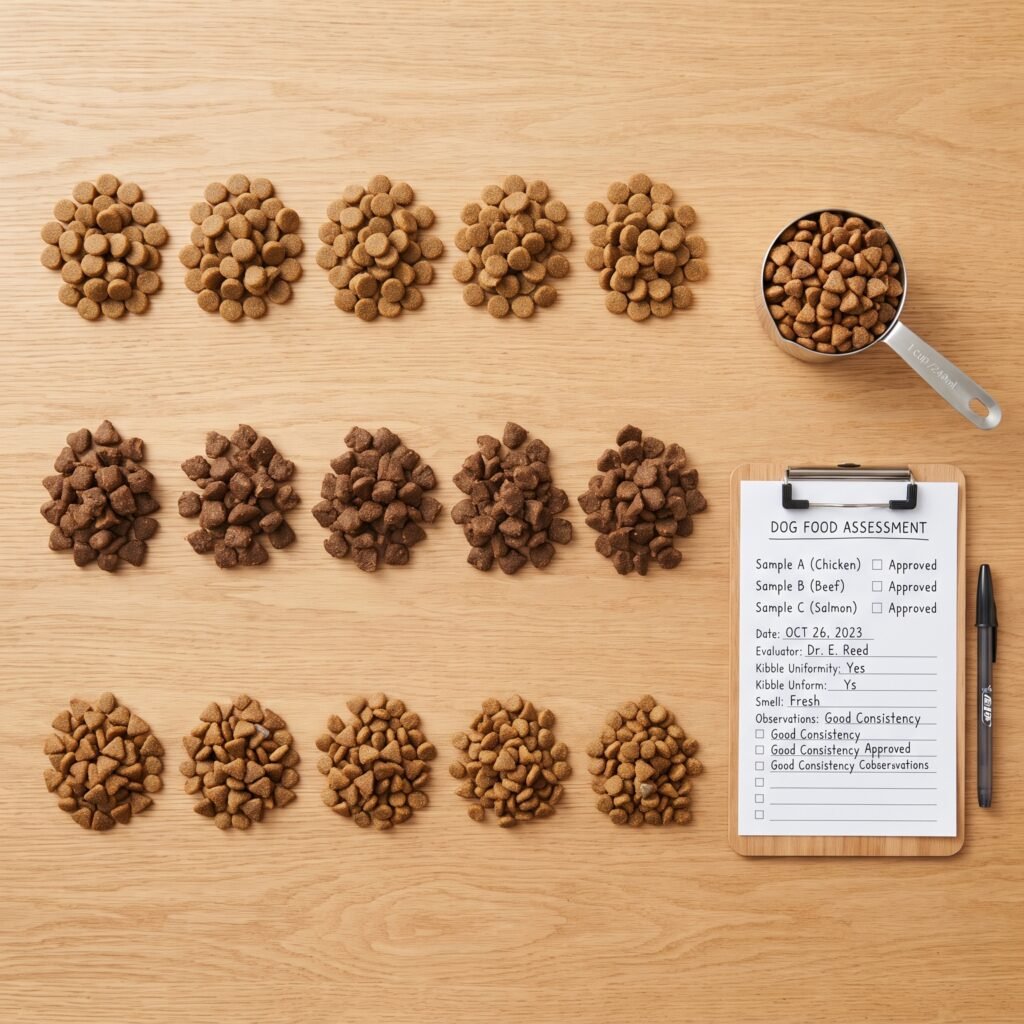
When I ran a trial with a 40-lb mixed breed named Biscuit, we picked a hydrolyzed diet specifically because his history included beef, chicken, and lamb — nearly every common protein was already a suspect. A novel-protein diet would have meant gambling on something he’d truly never eaten, which is harder to guarantee with a dog who’d been fed table scraps his whole life.
What’s the difference between hydrolyzed, novel-protein, and limited-ingredient diets?
This is where most best dog food for skin allergies roundups get vague, so let’s get specific.
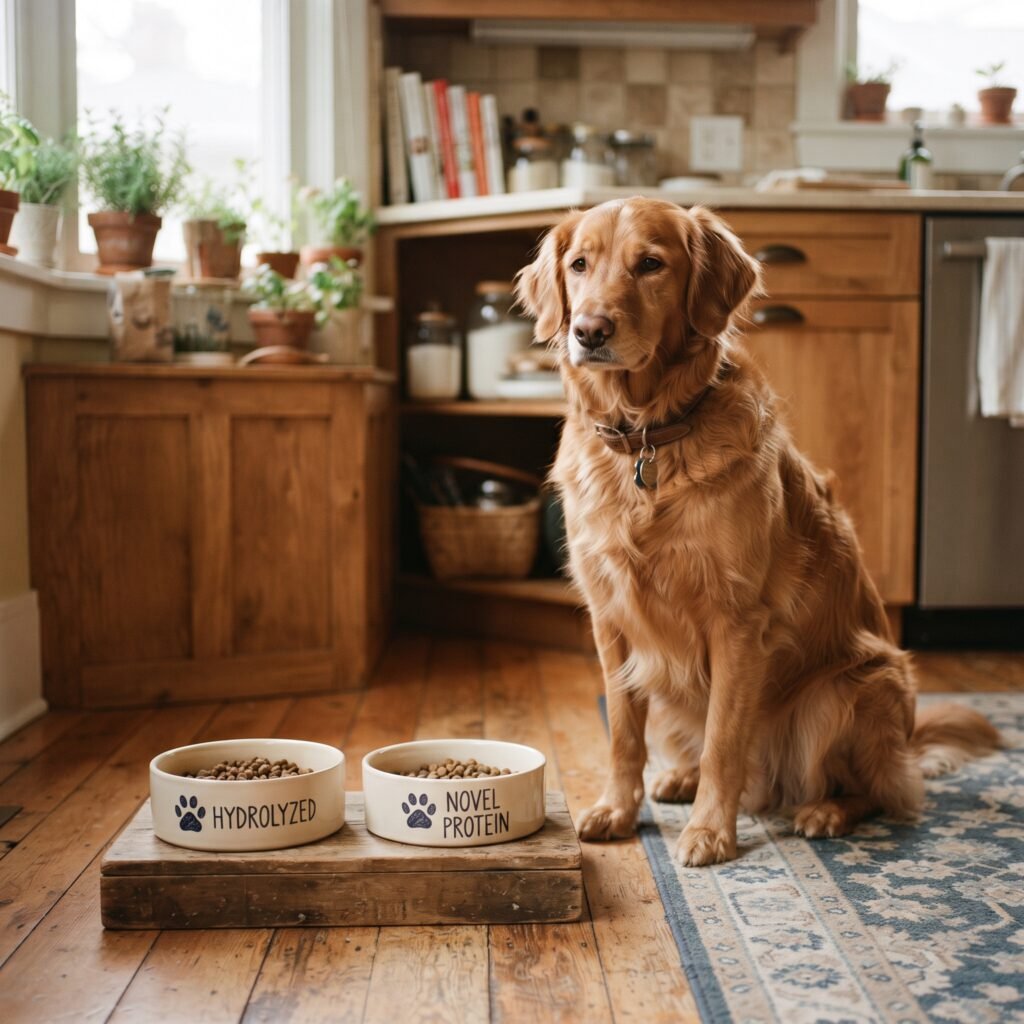
Hydrolyzed protein diets break protein molecules down so small the immune system can’t recognize them as an allergen trigger, regardless of the original protein source. They’re the most reliable option for a diagnostic trial, they require a prescription, and they’re the ones your vet will reach for first if the dog has a messy, unclear feeding history.
Novel-protein diets use a protein and carbohydrate source the dog has genuinely never eaten — kangaroo, venison, rabbit — on the theory the immune system has nothing to react to. These work well for dogs with a clean, well-documented feeding history, but they fail fast if “novel” turns out to be something the dog snuck at a barbecue two years ago.
Limited-ingredient diets simply reduce the number of total ingredients, which helps identify problem foods later but isn’t inherently hypoallergenic. A limited-ingredient diet built around chicken is useless for a chicken-allergic dog, no matter how short the ingredient list is.
Comparison: Diet types for a dog food skin allergy trial
| Diet Type | Typical Cost (30-lb bag) | Prescription Needed? | Best For | Trial Reliability |
|---|---|---|---|---|
| Hydrolyzed protein | $75-$110 | Yes | Dogs with unclear/varied feeding history | Highest |
| Novel protein (kangaroo, venison, rabbit) | $55-$85 | Usually no | Dogs with a clean, documented diet history | High, if truly novel |
| Limited-ingredient (common proteins) | $40-$65 | No | Narrowing down which specific protein is the trigger, post-diagnosis | Moderate |
| Grain-free, non-hydrolyzed, non-limited | $45-$70 | No | Not a diagnostic tool — grain is rarely the actual allergen | Low |
Note the last row. Grain-free marketing latched onto skin allergies hard over the past decade, but true grain allergies are uncommon in dogs compared to reactions to specific animal proteins like beef, dairy, and chicken. Buying grain-free alone, without addressing protein source, is one of the most common wasted purchases I see.
How long does a dog food elimination trial actually take?
Plan for 8 to 12 weeks of strict adherence — no treats, no flavored medications, no counter-surfing, nothing except the trial diet and water. This is the part that sinks most attempts. Owners do beautifully for three weeks, see partial improvement, get impatient, and slip in a dental chew “just this once.”
That one dental chew can reset the clock, because you can’t tell whether the relapse came from the treat or from natural symptom variation. I tell people to treat the trial period like a science experiment they’re personally running, because that’s exactly what it is.
If you’re managing a multi-dog household, this gets harder — the trial dog needs to be physically separated during every other pet’s mealtime, including cleanup of dropped kibble. I’ve seen a trial fail specifically because a cat’s food bowl sat six inches from the dog’s, and shared licking undid two months of progress.
The time the “obvious” choice didn’t work
Here’s the part most articles skip. With Biscuit, we started him on a hydrolyzed chicken-liver-based formula, textbook-correct given his history. Six weeks in, his paw-licking hadn’t budged and he’d developed loose stool that wasn’t there before.
Turned out the binder in that particular formula used a pea protein concentrate, and pea protein — while not a classic allergen — was apparently enough to upset his gut on its own, separate from any true allergy. We switched him to a different hydrolyzed formula with a different carbohydrate base, and within three weeks the paw-licking dropped noticeably. The lesson: even within the “correct” diet category, formulation details matter, and a failed six weeks doesn’t necessarily mean the whole approach was wrong — sometimes it means the specific product was wrong.
That’s the kind of dead-end that a generic list of the best dog food for skin allergies will never warn you about, because it requires having actually run a trial that stalled partway through.

What should you do once you’ve identified the trigger?
Once an elimination trial confirms improvement, vets typically recommend a food challenge: reintroducing the old diet or the suspected protein to confirm symptoms return. It sounds counterintuitive to make your dog itchy again on purpose, but without that confirmation step, you’re guessing at causation instead of confirming it.
After confirmation, you can usually transition off the expensive hydrolyzed prescription formula and onto a more affordable limited-ingredient diet built around a protein you now know is safe. This is where budget-conscious owners can actually save money long-term, since hydrolyzed diets are consistently the priciest tier.
Budget vs. prescription: how to decide what to actually buy
If cash is tight and your dog’s case is mild — occasional scratching, no open sores, no secondary skin infections — a novel-protein limited-ingredient diet from a reputable manufacturer is a reasonable starting point, provided you’re honest about the dog’s full feeding history. Plenty of owners searching for the best dog food for skin allergies are really asking a budget question first and a diagnosis question second, and that’s a fair place to start if the symptoms are mild. If the case is severe, chronic, or the feeding history is messy, the extra cost of a prescription hydrolyzed diet usually pays for itself by getting you a real answer instead of another inconclusive trial.
Either way, checking a brand’s recall history before committing to eight weeks of strict feeding is worth the ten minutes it takes. The FDA maintains a public recall database, and a pattern of repeated recalls is a legitimate reason to skip a brand regardless of how well-marketed its allergy formula is — no bag claiming to be the best dog food for skin allergies is worth the risk if its recall history looks shaky.
It’s also worth separating “best” from “most expensive.” I’ve seen owners assume the priciest prescription bag on the shelf must be the best dog food for skin allergies for their situation, when a well-chosen limited-ingredient diet at a third of the cost would have done the same job, because the dog’s history was clean enough to skip hydrolyzed protein entirely. Price is a signal of processing cost, not of fit — the fit comes from matching the diet type to what you actually know about the dog.
One more budget-stretching move: once you’ve confirmed a safe protein through a trial, you’re no longer locked into a single “allergy formula” line at all. A standard limited-ingredient diet built around that confirmed protein can function as the best dog food for skin allergies for your specific dog going forward, even if it isn’t marketed with allergy language on the bag — the confirmed ingredient list matters more than the label’s marketing claim.
Methodology: how this was evaluated
For this piece, formulas were assessed against AAFCO nutrient adequacy statements, cross-checked against publicly available FDA recall records, and evaluated for ingredient sourcing transparency (whether the manufacturer discloses protein origin and manufacturing location on request). None of the specific product recommendations here should replace an actual veterinary diagnosis — the best dog food for skin allergies conversation should always end with your vet confirming the diagnosis, not with a bag on a shelf.
Frequently asked questions
Can a dog food allergy suddenly develop after years of eating the same food? Yes — food allergies typically develop after repeated exposure to a protein, not on first contact, so a dog can eat chicken safely for years and then develop a reaction. This is actually common and is part of why “novel protein” trials work: the immune system hasn’t had time to build a reaction to something new.
Is grain-free dog food better for skin allergies? Not inherently. True grain allergies are relatively rare in dogs, and animal proteins like beef, dairy, and chicken are more frequently implicated, so grain-free alone rarely resolves a genuine food allergy.
How much does a vet-prescribed hydrolyzed diet cost compared to regular dog food? Expect roughly 40-70% more per bag than a standard adult maintenance formula, largely due to the processing required to hydrolyze the protein and the prescription-only distribution model.
Can I do a food trial with home-cooked meals instead of a commercial diet? Yes, and some vets prefer this for maximum ingredient control, but home-cooked elimination diets require a veterinary nutritionist’s input to stay nutritionally complete — an unbalanced homemade trial can create new health problems while you’re solving the skin issue.
Will switching to the best dog food for skin allergies help if my dog’s itching is worse in spring and summer? Probably not on its own. A seasonal pattern points toward environmental allergens like pollen or grass, and while diet can support overall skin barrier health, it’s not a substitute for treating the environmental trigger directly.
The bottom line
There isn’t a single best dog food for skin allergies that works across every dog, because “skin allergy” isn’t one condition — it’s a symptom with several different possible causes. The right move is sequencing: rule out non-food causes, run a real elimination trial if food is suspected, choose the diet type that matches your dog’s actual feeding history and your budget, and confirm with a challenge before committing long-term.
If you take one thing from this: the best dog food for skin allergies is the one matched to a confirmed trigger, run correctly for the full trial period, not the one with the best-looking bag.